Introduction
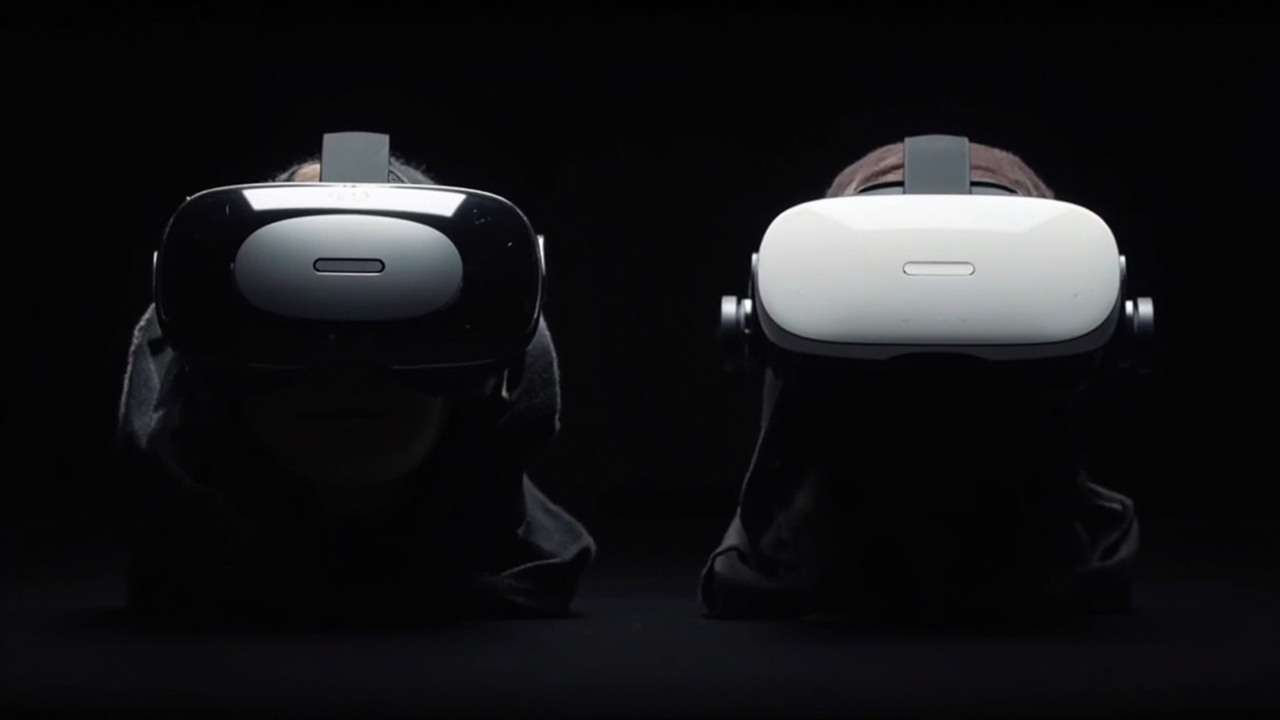
There is no nicer way to say this: the price gap between the Apple Vision Pro M5 ($3,499) and the Meta Quest 3 ($499.99) is roughly 7×. Both launched into the same category — standalone mixed-reality headsets — and both are routinely called “the two best consumer XR devices you can buy in 2026” (Sources: tech-insider.org Vision Pro vs Quest 3, MacObserver Vision Pro M5 vs Quest 3).
So this is not a normal “two products at similar prices” comparison. It is a value-engineering question: is the Vision Pro’s premium worth 7× the upfront cost, or is the Quest 3 the smarter spend for 90% of buyers?
The Vision Pro got an October 2025 refresh with an M5 chip, up to 120 Hz refresh, a more comfortable Dual Knit Band, and a small battery bump to 2.5 hours of general use — all while holding the $3,499 price (Source: Apple Support tech specs, AppleInsider M5 review roundup). Meta, meanwhile, cut the Quest 3 to $499.99 after the Quest 3S took over the $299–$349 budget slot in April 2026 (Source: NexRagear Quest 3 price guide, VREddie Quest 3 review).
We will look at the cost-per-use math, the durability story, and the ecosystems — because in 2026 the headset market still splits cleanly into “Apple’s $3,499 polish” and “everyone else’s $500 reality.”
The Verdict First
- Choose the Meta Quest 3 ($499.99) if you want VR/MR gaming, fitness apps, and the largest standalone game library on the planet. You get a Snapdragon XR2 Gen 2 chip, pancake lenses, full-color passthrough, and 2.4–2.9 hours of measured battery — for 86% less upfront than the Vision Pro (Source: VREddie review, Tom’s Hardware Quest 3 review).
- Choose the Apple Vision Pro M5 ($3,499) only if you will genuinely use it as a multi-window productivity display replacement (4K-per-eye micro-OLED makes real text work possible), if you live inside the Apple ecosystem, or if you are a developer/creator targeting visionOS. On Android or for casual media, it is a $3,000 pair of AAC-style limitations.
- Skip both if you are “just curious” — try a friend’s Quest 3 first, or look at a refurbished Meta Quest 2 (sub-$200) before committing.
Key Comparison Points
Price vs Real Cost Per Use
The sticker shock is the headline; the math is what hurts.
| Cost Factor | Apple Vision Pro M5 | Meta Quest 3 |
|---|---|---|
| Launch / Current MSRP (USD) | $3,499 (Oct 2025) | $499.99 (2024; steady) |
| Base Storage | 256 GB | 128 GB |
| Higher Storage Tier | $3,699 (512 GB) / $3,899 (1 TB) | $599.99 (512 GB) |
| Replacement Battery Pack | $199 (Apple official) | Built-in (replaceable battery ~$80 third-party) |
| Battery Life (measured, mixed use) | 2.5 hrs general use / 3 hrs video playback | 2.4 hrs gaming / up to 2.9 hrs media |
| Annual Use @ 1 hr/day | 365 hrs | 365 hrs |
| Effective Years of Use (battery-limited) | ~3–5 yrs (battery pack degrades; ~500 cycles) | ~3–5 yrs (integrated battery, similar limit) |
| Amortized Cost / Year (3-yr) | $1,166 | $167 |
| Amortized Cost / Year (5-yr) | $700 | $100 |
| Realistic Resale @ 3 yrs | ~50% (Apple premium holds) | ~30% (commodity Android XR) |
Two takeaways:
- Meta saves you $3,000 on day one — and roughly $2,500 over 5 years on a straight-line cost-per-year basis.
- Apple’s battery degrades the same way, but its $199 replacement battery is itself a notable cost line the Quest 3 largely avoids (most Quest 3 owners just use it plugged in past year 3).
If you are on the fence: at $499.99, the Quest 3 is one of the cheapest “real” pieces of consumer electronics you can buy in 2026. At $3,499, the Vision Pro is the price of a used car. Both can be the “right” answer — but only if your usage matches the cost.
Build Quality and Durability
The two headsets take philosophically opposite approaches to physical design — and both are defensible for what they are.
Apple Vision Pro M5 — Apple-grade premium, with known ergonomic limits:
- ~650 g (1.43 lb) front-loaded — among the heaviest consumer headsets
- Glass front, aluminum frame, fabric Light Seal
- Dual Knit Band (new for M5 model) — addresses weight but does not eliminate it
- External battery on a tethered cable (~350 g additional in pocket)
- No IP rating
- No folding hinge; semi-rigid form factor
Meta Quest 3 — lighter, plasticky, more “toy-like,” but more forgiving:
- 515 g (1.13 lb) total — ~135 g lighter than Vision Pro alone (Source: VREddie specs)
- Pancake lens design enables a slimmer optical stack
- Built-in battery (no cable)
- Adjustable fabric strap, optional Elite Strap sold separately ($69)
- No IP rating
- Three-position IPD slider (vs Apple’s automatic motor-driven lenses)
For long sessions (1+ hour), the Quest 3’s lighter weight is the kind of number you only appreciate on a 6-hour gaming marathon. For stationary productivity, the Vision Pro’s micro-OLED displays and balanced weight distribution (with Dual Knit Band) make 2-hour work blocks feasible — though Apple itself still advertises 2.5 hours of general use before the external battery taps out (Source: Apple Support tech specs).
Build quality itself is the one area Apple clearly wins: glass and aluminum vs plastic and fabric. But “build quality” is not the same as “comfort for 5 hours.”
Feature Breakdown
This is where the two headsets split into different products, not just “same category, different brand.”
| Feature | Apple Vision Pro M5 | Meta Quest 3 |
|---|---|---|
| Chip | Apple M5 (10-core CPU, 10-core GPU) + R1 sensor coprocessor | Qualcomm Snapdragon XR2 Gen 2 |
| Displays | Dual micro-OLED, ~4K per eye (23M pixels total) | Dual LCD, 2064 × 2208 per eye (~4.5M pixels total) |
| Refresh Rate | Up to 120 Hz (new for M5) | 72 / 90 / 120 Hz (mode-dependent) |
| Passthrough | High-resolution color, very low latency | Full-color, lower resolution, more noise in low light |
| Tracking | Eye + hand + voice (Siri) | Hand + controllers + voice (Meta AI) |
| Controllers | None (hand-only) | Touch Plus controllers (haptic, ring-free) |
| Eye Tracking | Yes | No |
| Face Tracking (Persona) | Yes (improved in visionOS 26) | No |
| App Library | ~2,000+ native visionOS apps | ~1,000+ Quest Store + Steam Link + sideload |
| Spatial Video / Photo | Yes (Apple native, iPhone 15 Pro/16/17 capture) | Limited (3rd-party workarounds) |
| Working as Mac Display | Yes (Mac Virtual Display) | No (limited virtual desktop apps) |
| Weight | ~650 g + 350 g battery | 515 g |
| Battery (General Use) | 2.5 hrs (Apple claim) | 2.4 hrs (Tom’s Hardware measured gaming) |
| Operating System | visionOS 26 (Apple-controlled) | Meta Horizon OS (Android-based) |
| Open Sideloading | No (App Store only) | Yes (developer mode + SideQuest) |
The two genuinely diverge here:
- Vision Pro is a spatial computer first, entertainment device second. The micro-OLED panels and M5 chip make multi-window productivity actually usable; eye-tracking lets you select windows without controllers. Mac Virtual Display is the killer app for Mac users who want a private 4K-per-eye screen on a plane.
- Quest 3 is a gaming and social VR platform first, productivity tool second. The Snapdragon XR2 Gen 2 + Touch Plus controllers + 1,000+ game library (Beat Saber, Asgard’s Wrath 2, Resident Evil 4 VR, etc.) is the reason the Quest line has sold 20M+ units cumulatively. Sideloading means you are not locked to Meta’s store (Source: VREddie review).
Neither does both jobs equally well — which is why your primary use case matters more than spec sheet benchmarks.
Pros and Cons
Apple Vision Pro M5 — Pros
- Best-in-class micro-OLED displays — true 4K-per-eye, deep blacks, no screen-door effect; makes real text work possible
- Industry-leading passthrough — high resolution, low latency; the gold standard for mixed reality
- Eye + hand tracking — feels futuristic; no controllers needed
- visionOS 26 + Apple ecosystem — native Spatial Video from iPhone 15 Pro/16/17, Mac Virtual Display, Apple TV+
- Premium build — glass, aluminum, fabric; looks and feels like an Apple product
- 120 Hz refresh rate (new with M5) — smoother scrolling, less eye fatigue
- Strong resale value — Apple hardware holds ~50% at 3 years vs ~30% for Quest
- visionOS app library growing fast — 2,000+ native apps as of mid-2026
Apple Vision Pro M5 — Cons
- $3,499 starting price — 7× the Quest 3; out of reach for most consumers
- 650 g + tethered battery — heavy; facial pressure during long sessions is common
- 2.5 hours of battery life (general use) — usable while charging but not portable
- No controllers — fine for Apple-native UX, limiting for serious VR gaming
- visionOS app library still small vs Quest ecosystem; no Steam VR, no native YouTube VR
- Locked ecosystem — no sideloading, App Store only
- Not shareable across users — Light Seal custom-fit during purchase
- Still no killer consumer app — Mac Virtual Display is the closest thing
Meta Quest 3 — Pros
- $499.99 price — accessible; you can buy one on a normal credit card
- Snapdragon XR2 Gen 2 — doubles Quest 2 GPU performance; runs all current Quest titles smoothly
- Pancake lenses + 120 Hz support — much sharper than Quest 2; no god rays
- Full-color passthrough — solid mixed reality for everyday apps (workout overlays, multitask monitors)
- Touch Plus controllers — best-in-class VR haptics; no Quest game requires hand-only input
- 1,000+ Quest Store games + Steam Link + sideloading — by far the largest VR content ecosystem
- Lighter (515 g) + built-in battery — more comfortable for long gaming sessions
- 3-position IPD slider — easy to share between multiple household members
- Fitness ecosystem — Supernatural, Beat Saber, Les Mills Body Combat dominate the VR-fitness niche
Meta Quest 3 — Cons
- LCD, not OLED — blacks are gray-ish; contrast is meh; text work is “fine,” not “great”
- Passthrough is noisy in low light; not as crisp as Vision Pro’s
- No eye/face tracking — Persona-style avatars are cartoonish at best
- Facebook/Meta account required — privacy trade-off; account deletion locks the device
- 2.4 hr gaming battery — comparable to Vision Pro but still short
- Plastic build — feels cheaper than the price suggests
- Ads in the Meta Horizon OS home screen — yes, really
- No native spatial video capture from iPhone — Apple locks this to Vision Pro / iPhone pairing
Best For / Skip If
Choose the Apple Vision Pro M5 if you are:
- A MacBook-using creative professional who wants a private 4K-per-eye workspace on planes, trains, or in coffee shops. Mac Virtual Display + multi-window productivity is the one use case where the Vision Pro justifies its price.
- An Apple ecosystem power user with an iPhone 15 Pro/16/17 capturing Spatial Video and a library of Apple TV+ 3D titles.
- A visionOS developer or researcher building the next generation of spatial apps.
- Someone for whom the $3,499 is <2% of annual income and you already own Apple hardware across the board.
Choose the Meta Quest 3 if you are:
- A VR gamer who wants Beat Saber, Asgard’s Wrath 2, Resident Evil 4 VR, or any of the 1,000+ Quest titles without a PC tether.
- A fitness user who will actually use Supernatural or Beat Saber regularly (the Quest is one of the cheapest “gym replacements” you can buy).
- A first-time XR buyer who wants to test whether mixed reality fits their life before committing thousands of dollars.
- A household with multiple users — the Quest 3’s adjustable IPD and lighter build make it easy to share.
- A developer targeting the largest standalone VR install base (Quest has ~20M+ units sold cumulatively).
Skip both if you:
- Only watch Netflix or YouTube — a $500 4K OLED TV and a $300 soundbar will serve you better for years.
- Get motion sickness easily — both headsets can trigger it; try a friend’s unit first.
- Already own a Quest 2 — the upgrade jump is meaningful but not generational; wait for Quest 4.
- Want a true AR experience (transparent lenses, all-day wear) — neither of these is there yet; look at Meta Orion or Xreal Air 2 Ultra instead.
Bottom Line
The Apple Vision Pro M5 is the best mixed-reality hardware you can buy in 2026. It is also 7× more expensive than the Meta Quest 3, and for 90% of buyers the Quest 3 delivers 70% of the experience at 14% of the price.
The real question is not “which is better?” It is “which fits your actual life?”
If your answer is “I want a private 4K workspace that runs visionOS and pairs with my Mac” — the Vision Pro is the only game in town, and the math works. If your answer is “I want to play Beat Saber, try VR fitness, and explore mixed reality without a $3,500 bet” — the Meta Quest 3 at $499.99 is one of the best-value electronics purchases of 2026.
Buy smart. Get more value. And remember: a headset that sits on a shelf because it is too uncomfortable to wear is the most expensive paperweight in your house.