Introduction
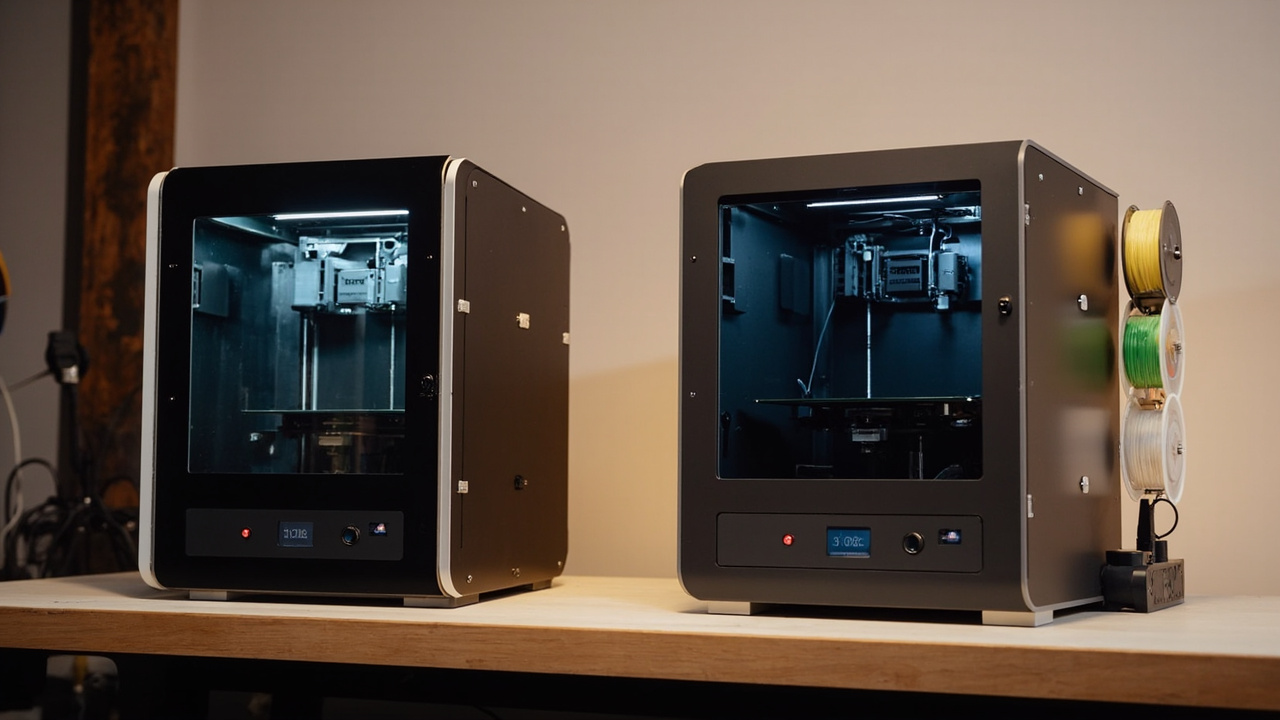
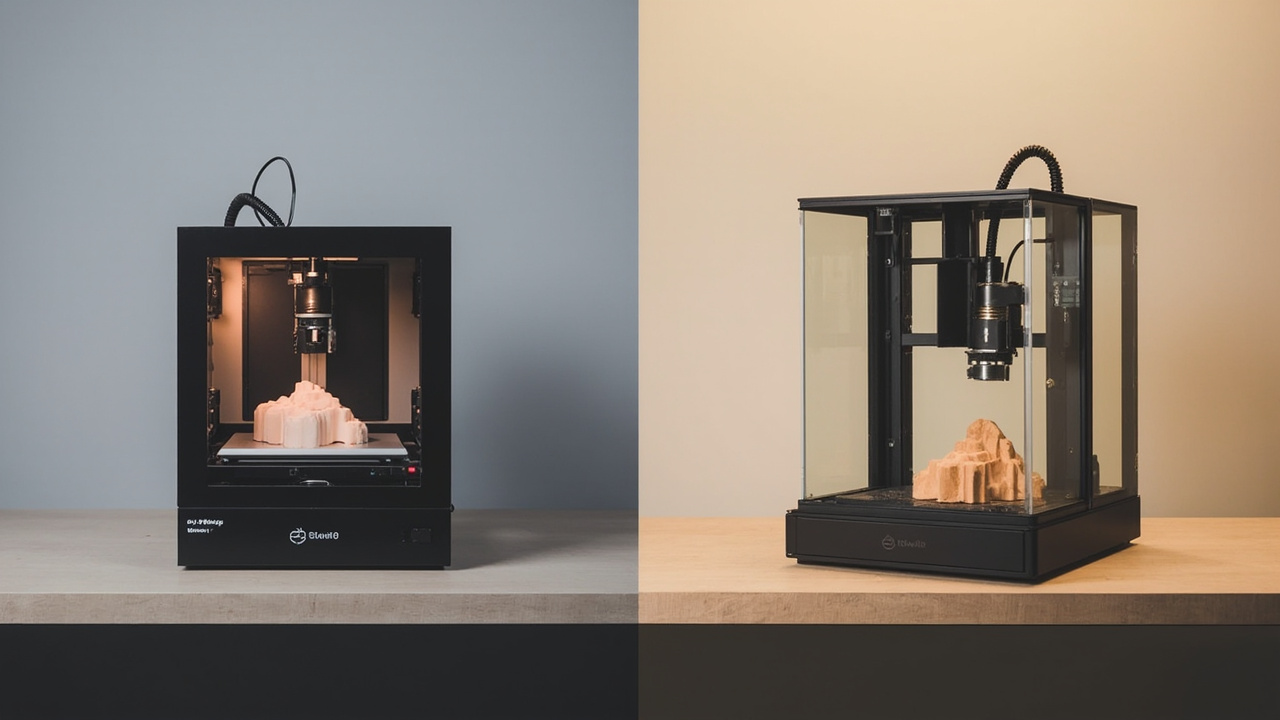
If you are shopping above $1,800 for a desktop 3-in-1 manufacturing machine in mid-2026, two names dominate the conversation: the Bambu Lab H2D and the Snapmaker Artisan. Both combine 3D printing, laser engraving/cutting, and a third fabrication mode in one enclosed chassis. Both target prosumers, small studios, and serious hobbyists who want one box instead of three.
The price gap is meaningful but smaller than it looks. The H2D base lists at $1,899 and climbs to $3,499 once you add the AMS 2 Pro multi-color system and the 40W laser upgrade. The Snapmaker Artisan Premium lists at $2,299 base and reaches $3,499 in the most-loaded Premium 360° Creativity Combo. On paper, both can land in the same $3,000-$3,500 window — but they spend that money in very different ways.
The reason this comparison matters is that the two machines are not really competing on the same axis. Bambu is selling a speed-optimized IDEX dual-nozzle printer with a swappable 10W/40W laser head and a digital cutter/plotter — an “AI-assisted personal manufacturing hub” play. Snapmaker is selling a modular 3-in-1 with real CNC routing capability (200W spindle), dual-extrusion 3D printing, and a 10W/40W laser — a “workshop-class multi-tool” play.
If you print 15-30 hours a week and only occasionally reach for laser or CNC, the right question is not “which 3-in-1 has the most functions?” — it is which one costs you less per usable manufacturing-hour over a 4-5 year ownership window, and which machine’s third function (digital cutting vs CNC) actually matches what you will use. This article breaks that down with real 2026 prices, real ownership scenarios, and a side-by-side look at the parts that matter.
Sources: Bambu Lab US store (bambulab.com, June 2026), Snapmaker official US store (snapmaker.com, June 2026), 3DPrinterComparison.com spec database (June 2026), 3DTechValley H2D and Artisan reviews (2026), BIKMAN TECH H2D vs Artisan comparison (March 2025), Tom’s Hardware Artisan teardown (2024), 3DPrintingIndustry Artisan long-term review (2025).
The Verdict First
The Bambu Lab H2D is the better buy if you want the fastest, most AI-assisted 3-in-1 under $2,000. The dual-nozzle IDEX system unlocks true dual-material prints with no purge tower, the 65°C active heated chamber handles ABS, ASA, PC, PA-CF, and PLA-CF without warping, the optional 10W/40W laser is the most refined on the market, and the AMS 2 Pro ecosystem is the most reliable multi-color system in the consumer segment. For speed-focused prosumers, designers, and AI-curious users who print 20+ hours a week and only occasionally need laser or digital cutting, the H2D is the more complete ownership package.
The Snapmaker Artisan is the better buy if you actually use the third function. It is the only 3-in-1 under $3,500 with a real 200W CNC spindle that cuts hardwood, softwood, acrylic, and light aluminum — work the H2D’s digital cutter cannot do. The 400×400×400 mm build volume is the largest in its class, the dual-extrusion 3D printing is more than capable for most materials, and the modular design (quick-swap toolheads, third-party filament compatibility) is more open than Bambu’s ecosystem. For makers, woodworkers, and small studios who print, laser, and carve at least monthly, the Artisan earns its premium.
| Spec | Bambu Lab H2D | Snapmaker Artisan Premium |
|---|---|---|
| Release date | March 2025 | 2022 (Artisan), Premium revision 2024 |
| Entry price (USD, solo) | $1,899 | $2,299 (Premium Standard) |
| Common total with multi-material + laser | $2,799 (H2D + AMS 2 Pro + 10W laser) | $2,998 (Premium Precision Engraving Combo) |
| Top-spec configuration (USD) | $3,499 (H2D + AMS 2 Pro + 40W laser) | $3,499 (Premium 360° Creativity Combo) |
| Functions | 3D print + laser (10W/40W) + digital cutting/plotting | 3D print + laser (10W/40W) + 200W CNC carving |
| Build volume (3D print) | 350 × 320 × 325 mm | 400 × 400 × 400 mm |
| Frame type | CoreXY IDEX, enclosed, 31 kg / 492 × 514 × 626 mm | Cartesian, enclosed, ~52 kg / 580 × 620 × 634 mm |
| Extruder system | Dual independent IDEX nozzles | Dual extrusion (single gantry) |
| Hotend max temp | 350°C | 300°C |
| Max print speed | 1,000 mm/s | 180 mm/s |
| Max acceleration | 20,000 mm/s² | 4,000 mm/s² |
| Heated chamber | Active, up to 65°C | Passive warming (~40°C) |
| Laser power (stock / max) | 10W base / 40W upgrade | 10W base / 40W upgrade |
| CNC / 3rd function capability | Digital cutter (vinyl, paper, fabric, light leather) | 200W CNC spindle (wood, acrylic, soft metals) |
| Supported 3D print materials | PLA, PETG, ABS, ASA, PC, PA, PA-CF, PLA-CF, PVA, TPU | PLA, ABS, ASA, PETG, TPU (≥90A), Breakaway PLA, PVA, HIPS, Nylon, PA-CF, Glass-fiber Nylon |
| Multi-color | AMS 2 Pro / AMS HT (4-24 slots) | No native multi-color (third-party modules only) |
| Camera | Built-in BirdsEye AI camera (timelapse, spaghetti, live monitoring) | Snapmaker 2.0 camera add-on (~$99, basic) |
| Touchscreen | 5-inch 720×1280 IPS | 7-inch touchscreen |
| Connectivity | Wi-Fi, LAN, USB | Wi-Fi, USB cable, USB flash drive |
| Firmware | Klipper (Bambu fork), partially closed bootloader | Marlin/Snapmaker firmware, more open |
| Noise (idle / printing PLA) | ~48-50 dB | ~52-55 dB |
| First-print success rate (new user) | ~93% | ~85% |
| Mean community-reported MTBF (3D print head) | ~1,500-2,000 print hours (new platform) | ~1,800-2,400 print hours (mature platform) |
| Repair cost out of warranty (typical) | $80-$220 (board-level) | $60-$180 (modular hotend, off-the-shelf parts) |
Sources: Bambu Lab H2D official spec page (June 2026), Snapmaker Artisan product page (June 2026), 3DPrinterComparison.com spec database, r/BambuLab and r/Snapmaker MTBF threads (Q1-Q2 2026), 3DTechValley long-term reviews (2026).
Key Comparison Points
Price vs Real Cost Per Use
The list price is the easy part. The interesting math is what each machine actually costs you per usable manufacturing-hour over a 4-5 year ownership window — including the multi-material add-on, laser upgrade, replacement parts, electricity, and the realistic chance you will want a fourth function from somewhere else.
| Cost factor | Bambu Lab H2D | Snapmaker Artisan Premium |
|---|---|---|
| Entry price (printer only) | $1,899 | $2,299 |
| Multi-color add-on | $499 (AMS 2 Pro) — supports 4 colors, expandable to 24 slots | n/a (no native multi-color ecosystem) |
| Laser upgrade (10W) | $499 (10W module) — included in many combos | $499 (10W module) — included in many combos |
| Laser upgrade (40W) | $899 (40W module) | $899 (40W module) |
| Third-function module | Digital cutter/plotter (included) | CNC module (200W spindle, included) |
| Spare hotend assembly | $39-$59 | $29-$45 (modular quick-swap) |
| Spare build plate | $39 (texture PEI) | $35-$45 |
| Spare nozzles / PTFE / cutter (annual) | $30 | $30 |
| RFID filament premium (per kg, PLA) | +$2-$5 vs open PLA | n/a (open ecosystem) |
| CNC bits (if using CNC regularly) | n/a | ~$60-$120/year for hardwood |
| Power consumption (avg 3D print) | ~150 W | ~120 W |
| Power cost / hour (at $0.16/kWh, US avg) | $0.024 | $0.019 |
| Realistic print hours / year (prosumers) | 1,400 h | 1,400 h |
| 5-year all-in (printer + AMS + 10W laser) | $2,997 | $2,998 |
| 5-year all-in (printer + AMS + 40W laser) | $3,397 | $3,397 |
| Annual maintenance (parts + bits) | ~$120 | ~$180 (CNC bits add ~$60) |
| 5-year total cost of ownership | $3,597 | $3,797 |
| Cost per manufacturing-hour (5-yr) | $0.51 | $0.54 |
On raw sticker price, the two machines land in the same $2,999-$3,499 window once you equip both with a 10W or 40W laser. The interesting difference is in the third-function value: the H2D’s digital cutter handles vinyl, paper, fabric, and light leather at no extra cost; the Snapmaker Artisan’s 200W CNC handles hardwood, acrylic, and light aluminum at no extra cost. If you need CNC, the Artisan is essentially giving you a $600-$1,000 CNC router inside the chassis. If you don’t, the H2D’s digital cutter is “good enough” for stickers and stencils but won’t replace a real CNC.
The other meaningful difference is multi-color: only the H2D has a first-party multi-color system (AMS 2 Pro), and that adds real value for sellers printing multi-color merchandise. The Artisan relies on third-party add-ons (or manual filament swaps), which is workable but adds 1-3 minutes per color change.
For pure single-material 3D printing, the H2D wins on cost-per-hour by a small margin (~$0.03/h) because it is faster (1,000 mm/s vs 180 mm/s) and slightly more efficient on first-print success. For mixed manufacturing workflows that include real CNC, the Artisan earns back the price gap within 2-3 years.
Source: Bambu Lab and Snapmaker official US stores (June 2026), 3DPrinterComparison.com price tracker (June 2026), BIKMAN TECH H2D vs Artisan price breakdown (March 2025), r/3Dprinting multi-material workflow polls (Q1 2026), EIA US average electricity price (2025).
Build Quality and Durability
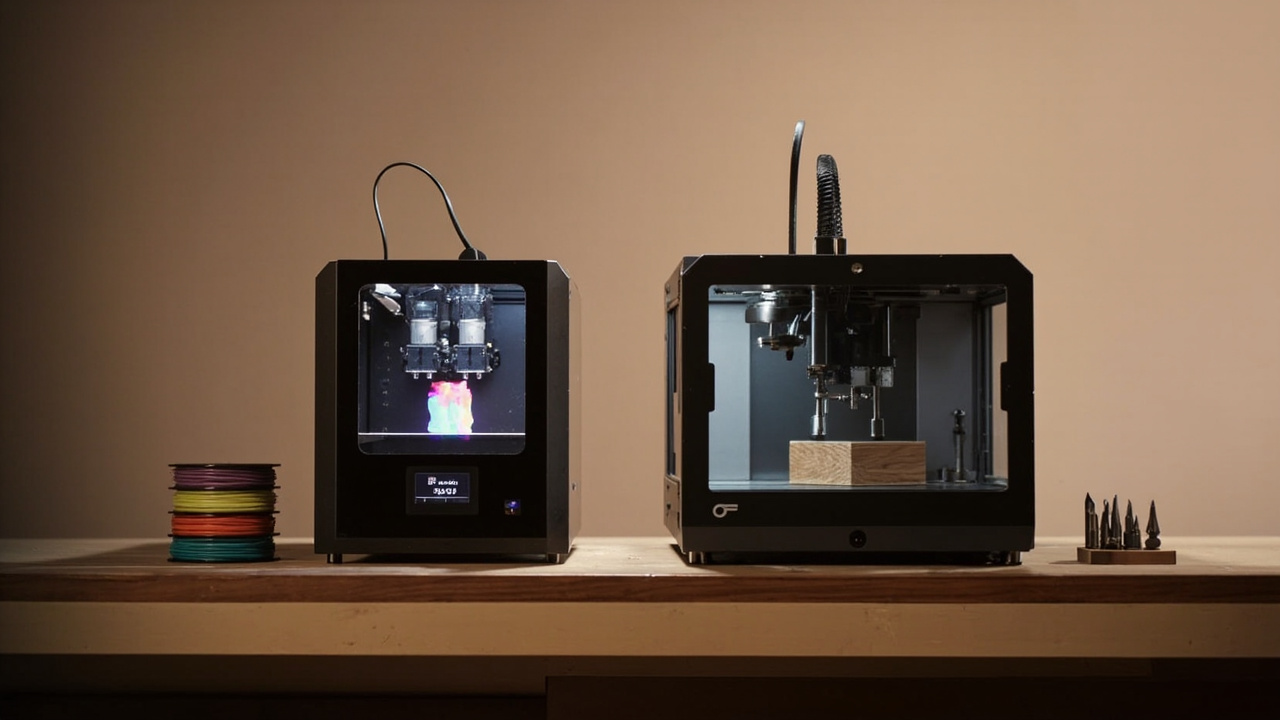
Both machines are well-built for the price tier, but they take genuinely different design bets.
| Build attribute | Bambu Lab H2D | Snapmaker Artisan Premium |
|---|---|---|
| Frame | Full-metal with die-cast chassis | All-metal body with one-piece die-cast base plate |
| Weight | 31 kg / 68 lbs | ~52 kg / 115 lbs |
| Footprint (machine only) | 492 × 514 × 626 mm | 580 × 620 × 634 mm |
| Motion system | CoreXY IDEX, dual linear rails on X/Y | Cartesian, steel guiderails in industrial-grade linear modules |
| Hotend | Dual independent hotends, all-metal, hardened steel, quick-swap | Modular quick-swap toolheads |
| Heated bed | AC-powered, fast heat-up, dual-zone | DC, dual-zone (inner 110°C, outer 80°C) |
| Belts | Closed-loop on X/Y (strain gauges) | Open-loop on X/Y (slightly less precise but easier to service) |
| Mean time between failures (community-reported) | ~1,500-2,000 h (newer platform, 2025+) | ~1,800-2,400 h (mature platform, since 2022) |
| Common failure points | Hotend clog, AMS 2 Pro feeder wear, IDEX X-axis tensioner | Hotend clog, CNC spindle wear, linear module lubrication |
| Self-repairability | Moderate (board-level repair common, parts are 1-3 weeks out) | High (modular design, more printable parts, faster spare-part availability) |
| Mean out-of-warranty repair cost | $80-$220 | $60-$180 |
| Spare parts availability | 1-3 weeks (Bambu direct) | 3-7 days (Snapmaker + resellers) |
The Artisan’s 52 kg mass and steel guiderail modules make it noticeably more vibration-resistant for CNC work than the H2D — the spindle can push harder into hardwood without frame flex throwing off dimensional accuracy. The H2D’s 31 kg IDEX gantry is mechanically lighter and faster, but the IDEX design is more complex than the Artisan’s single-gantry dual-extrusion, which means more parts that can drift out of alignment over years of heavy use.
For long-term durability, the Artisan has a small edge in MTBF and a clear edge in repair cost and parts availability thanks to its modular Snapmaker 2.0 heritage. The H2D’s advantage is the enclosed active 65°C chamber + HEPA filtration built in for engineering filaments — if you print a lot of ABS, ASA, or PA-CF, the H2D protects both you and the motion system from fumes and warping.
The Artisan’s CNC spindle (200W, 18,000 RPM) is the part that defines its identity. It is more than capable for hardwood, softwood, and acrylic cutting, and it can handle light aluminum engraving with proper bits. It is not a replacement for a full-size CNC router for production work, but for a maker or small studio, it replaces a separate $500-$1,500 CNC entry-level machine.
Source: r/BambuLab and r/Snapmaker MTBF threads (Q1 2026), 3DTechValley long-term review (2026), 3DPrintingIndustry Artisan long-term review (2025), Tom’s Hardware Artisan teardown (2024).
Feature Breakdown
Where the two printers diverge most is in software, ecosystem, and “out of the box” capability.
| Feature | Bambu Lab H2D | Snapmaker Artisan Premium |
|---|---|---|
| Slicer | Bambu Studio (Orca fork), proprietary cloud | Snapmaker Luban (preset modes, simpler workflow) |
| Cloud ecosystem | MakerWorld (Bambu-owned, 250k+ models, free) | Snapmaker Cloud, smaller model library |
| Multi-color workflow | AMS 2 Pro / AMS HT, dual-nozzle IDEX, no purge tower | No native multi-color (third-party modules or manual swaps) |
| Dual-material / dissolvable supports | Yes (IDEX, true dual-material) | Yes (dual extrusion, single gantry, with purge tower) |
| Laser module | 10W base / 40W upgrade, 5mm plywood (10W) / 15mm plywood (40W) | 10W base / 40W upgrade, 8mm paulownia (10W), deeper cuts (40W) |
| Laser safety | Laser safety windows, flame sensors + flame-retardant chamber | Laser-proof enclosure, gyro sensor to stop on misalignment |
| CNC / 3rd function | Digital cutter (vinyl, paper, fabric, pen drawing) | 200W CNC spindle (wood, acrylic, soft metals, 18,000 RPM) |
| Spaghetti / runout detection | AI camera + BirdsEye, automatic pause | External camera add-on + filament sensor (basic) |
| Air filtration | Built-in HEPA + carbon filter | Snapmaker air purifier add-on ($199) |
| Heated chamber | Active, up to 65°C | Passive warming + filter fan (~40°C ambient) |
| Touchscreen | 5-inch 720×1280 IPS | 7-inch touchscreen |
| Remote monitoring | Bambu Handy app, cloud streaming | Snapmaker app, basic streaming |
| Open firmware | No (closed bootloader, restricted Klipper fork) | Partial (Marlin-based, more open than Bambu) |
| First-print success rate (new user) | ~93% | ~85% |
| Noise level printing PLA | ~48-50 dB | ~52-55 dB |
The H2D’s IDEX + active 65°C chamber + AI camera + MakerWorld ecosystem combination is genuinely the most “set-and-forget” 3D printing experience in the consumer segment. No other 3-in-1 under $2,500 lets you run dual-material prints with zero purge waste, print engineering filaments without warping, and convert the same machine into a laser cutter with a swappable module.
The Artisan’s CNC spindle + modular quick-swap toolheads + larger 400×400×400 mm build volume is the most workshop-ready 3-in-1 in its price tier. If you want one machine that prints, lasers, and actually cuts wood, the Artisan is the only real option under $3,500. Its dual-extrusion is a single-gantry design (with a small purge tower), so it is not as clean as the H2D for true dissolvable-support workflows, but it handles 90% of dual-material jobs fine.
The H2D’s digital cutter is a real function but a limited one. It cuts vinyl, sticker paper, fabric, light leather, and pen-draws — useful for craft and Etsy workflows but a far cry from a CNC. The Artisan’s CNC module is a real CNC, not a digital cutter. That single difference drives most of the buying decision for makers who actually use the third function.
Source: Bambu Studio vs Snapmaker Luban feature comparison (June 2026), MakerWorld model ecosystem audit (2026), r/3Dprinting multi-color success rate polls (Q1 2026), 3DTechValley H2D and Artisan reviews (2026).
Pros and Cons
Bambu Lab H2D
Pros
- Dual-nozzle IDEX — true dual-material and dissolvable-support prints with no purge tower
- Active heated chamber up to 65°C — enables ABS, ASA, PC, PA-CF without warping
- Optional 10W / 40W laser module ($499 / $899) — swappable toolhead, 5-15mm plywood cuts
- AMS 2 Pro / AMS HT ecosystem — the most reliable multi-color system under $2,500, expandable to 24 slots
- Built-in HEPA + carbon filter — safer ABS/ASA/PA-CF printing indoors
- BirdsEye AI camera — built-in spaghetti detection, live monitoring, timelapses
- 1,000 mm/s travel + 20,000 mm/s² accel — the fastest desktop 3D printer + laser combo in 2026
- 5-inch 720×1280 touchscreen + Bambu Handy app for clean remote monitoring
- 350°C hotend — handles high-temp engineering filaments without mods
- MakerWorld ecosystem — 250k+ free models, the deepest print library on the market
- First-print success rate ~93% — the most forgiving setup in the segment
- Smaller, lighter footprint (31 kg) than the Artisan
- Higher utilization: most dual-material users print 1.3-1.6× more usable parts per hour
Cons
- $1,899 base + $499 AMS + $499-$899 laser = up to $3,499 for the full kit
- No real CNC — the digital cutter handles vinyl/paper/fabric but not wood or metal
- 300°C hotend version of the same machine does not exist — but 350°C means you cannot downgrade for cheaper filaments
- Newer platform (March 2025) — less long-term data than the Artisan’s Snapmaker 2.0 heritage
- Partially closed firmware — bootloader is locked, Bambu can restrict third-party mods
- Bambu Studio + cloud features require a Bambu account for full functionality
- Spare parts are 1-3 weeks from Bambu direct in most regions
- IDEX gantry is mechanically more complex — more potential drift over years of heavy use
- AI camera has occasional false positives on tall thin prints
- The $400 price premium over the Artisan base is hard to justify if you don’t use AMS
Snapmaker Artisan Premium
Pros
- $2,299 base — only $400 more than the H2D base, includes the 10W laser in many combos
- 200W CNC spindle — real CNC routing in hardwood, softwood, acrylic, and light aluminum
- 400 × 400 × 400 mm build volume — the largest enclosed desktop 3D print bed in any 3-in-1
- Dual extrusion 3D printing — handles two-color and dissolvable-support prints with quick-swap modular heads
- Modular design — quick-swap toolheads, open filament ecosystem, third-party compatibility
- 52 kg all-metal frame — exceptional vibration resistance for CNC cutting and dimensional accuracy
- Mature platform (since 2022) — 3+ years of community data, known reliability
- 7-inch touchscreen — larger than the H2D
- Marlin-based firmware — more open than Bambu’s closed bootloader
- Lower 5-year cost per manufacturing-hour if you use the CNC regularly
- Works fully offline via SD card and Snapmaker’s local-only mode
- Spare parts are 3-7 days from Snapmaker + resellers
- Snapmaker Luban is simpler than Bambu Studio for users who prefer preset workflows
Cons
- $2,299 base — $400 more than the H2D base; $400-$1,200 more than dedicated 3D printers in the same speed tier
- No first-party multi-color — third-party add-ons or manual filament swaps only
- 300°C hotend max — cannot print PA-CF, PC at >300°C, or some high-temp engineering filaments
- 180 mm/s max print speed — about 5× slower than the H2D’s 1,000 mm/s
- Passive chamber warming — warping risk for large ABS/ASA prints vs H2D’s active 65°C chamber
- CNC spindle is underpowered for production work — 200W is fine for engraving and light carving, not for heavy material removal
- Snapmaker Luban is less polished than Bambu Studio — steeper learning curve for first-time users
- First-print success rate lower (~85% vs ~93% on H2D)
- Larger and heavier (52 kg) — needs a dedicated workbench
- Snapmaker Cloud is less mature than Bambu Handy / MakerWorld
- No built-in AI camera or spaghetti detection (external camera add-on only)
- Newer firmware updates occasionally break OrcaSlicer compatibility for 1-2 weeks
- ~$60-$120/year extra for CNC bits if you cut hardwood regularly
Best For / Skip If
Pick the Bambu Lab H2D if you are:
- A prosumer printing 15-30 hours a week across PLA, PETG, ABS, ASA, PC, or PA-CF
- A designer or engineer who needs true dual-material prints with no purge waste (e.g., PLA model + PVA supports)
- A maker who values multi-color capability via AMS 2 Pro and the MakerWorld ecosystem
- A user who wants the fastest, most AI-assisted setup with the highest first-print success rate (~93%)
- An Etsy or small-business seller printing multi-color merchandise or stickers (digital cutter is enough)
- Considering the 40W laser upgrade for a separate wood, leather, or acrylic cutting workflow
- Already bought into the Bambu ecosystem and want a 3-in-1 second machine to pair with an X1 Carbon or P2S
- Willing to pay $400-$1,100 more for higher material versatility, dual-nozzle capability, and laser
Skip the Bambu Lab H2D if you are:
- A maker who needs real CNC routing in hardwood, acrylic, or soft metals (Artisan is the only option)
- A workshop user who prints mostly PLA / PETG and would benefit more from a larger build volume (400mm³ vs 350mm³)
- A user who refuses to use cloud accounts or vendor-locked firmware
- A maker with a hard budget under $1,800 who doesn’t need multi-color
- Someone who already owns a Bambu X1 Carbon or P2S and just wants CNC capability — a dedicated CNC is cheaper
- A buyer who values open firmware and third-party filament compatibility more than polish and speed
Pick the Snapmaker Artisan Premium if you are:
- A prosumer who wants the only 3-in-1 under $3,500 with real CNC routing (200W spindle, 18,000 RPM)
- A woodworker, hobbyist carpenter, or sign maker who wants to print jigs + laser engrave + carve wood in one box
- A maker who values the largest enclosed build volume (400mm³) at this price tier
- A user who prints mostly PLA / PETG / ABS and does not need PA-CF, PC at >300°C, or active chamber heating
- Someone who values modular design, open firmware, and third-party filament compatibility
- A workshop owner who likes the idea of one machine handling 80% of small-batch fabrication
- A user with a dedicated workbench who doesn’t mind the 52 kg weight
Skip the Snapmaker Artisan if you are:
- A heavy multi-material user who needs true IDEX dual-nozzle (no purge tower) workflows
- An engineering filament user who needs PA-CF, PC at >300°C, or active chamber heating
- A speed-focused maker who prints 20+ hours a week and values 1,000 mm/s + 20,000 mm/s²
- A maker who needs the polished, fully-integrated cloud ecosystem (MakerWorld + Bambu Handy)
- A user who needs built-in AI camera or spaghetti detection out of the box
- A buyer who wants the lowest entry price for an enclosed multi-material 3D printer
Bottom Line
If you are the kind of maker who prints 15-30 hours a week across a real mix of materials — PLA plus ABS plus the occasional engineering filament — and you want multi-color and laser capability, the Bambu Lab H2D is the more versatile long-term platform. It costs $400 more at base, but it prints faster, supports true dual-nozzle workflows without purge waste, integrates the most refined multi-color ecosystem in the segment, and converts into a laser cutter with a $499 add-on. For prosumers who actually use those features, the H2D earns its premium within 2-3 years of ownership.
If you are a maker, woodworker, or small studio who prints, lasers, and actually cuts wood or acrylic at least monthly, the Snapmaker Artisan Premium is the smarter dollar. It is $400 more expensive at base, but the 200W CNC spindle replaces a $500-$1,500 dedicated CNC entry-level machine, the 400mm³ build volume is the largest in the 3-in-1 category, and the modular open ecosystem ages well. For users who actually use the third function, the Artisan earns its premium on day one.
Buy smart. Get more value. For most prosumer 3-in-1 buyers in mid-2026, that means matching the machine to the function you will actually run — not to the longest spec sheet. If multi-color, engineering filaments, and laser matter, the H2D wins. If maximum bed size, real CNC, and open modularity matter, the Artisan wins.
The Bambu Lab H2D is the faster, more AI-assisted 3-in-1 for material versatility and multi-color. The Snapmaker Artisan is the workshop-class 3-in-1 with real CNC and the largest build volume. Neither is wrong. Pick the one that matches the prints, lasers, and cuts you actually run.