Introduction
Smart glasses with a built-in heads-up display (HUD) crossed a real threshold in late 2025. For years, “AR glasses” meant either a chunky headset (HoloLens, Magic Leap) or audio-only frames with no screen (Ray-Ban Meta Gen 1, Amazon Echo Frames). In September 2025, Meta released the first stylish glasses with a full-color monocular display: the Meta Ray-Ban Display, at $799 plus the bundled Meta Neural Band (Source: VisionXO product page, June 2026, Meta official site). Rokid answered with the Rokid Glasses — binocular Micro-LED HUD glasses running both GPT-5 and Gemini on-device — at $799 MSRP (often $639 on promo) (Source: Rokid global store, June 2026, NexRagear price breakdown 2026).
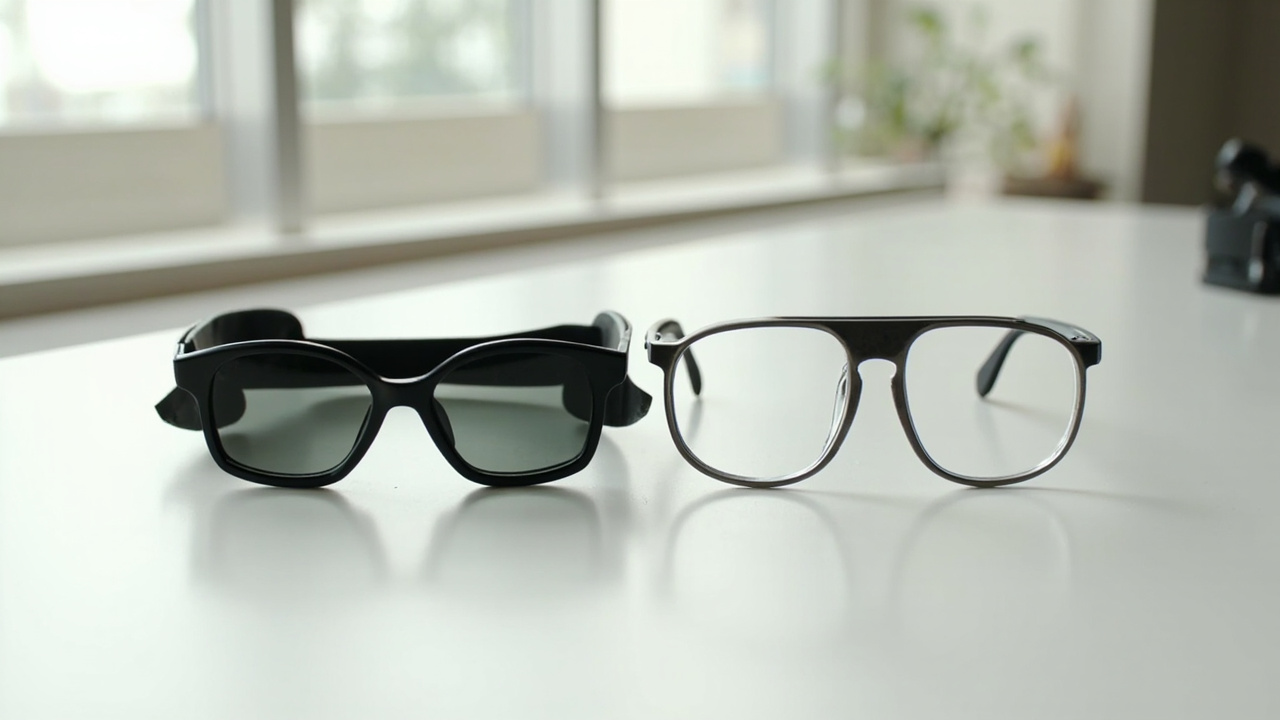
Both pairs land at the same price. Both promise a real HUD, a 12MP camera, hands-free AI, and live translation. But they get there in fundamentally different ways — and the right pick depends less on specs and more on which ecosystem you already live in.
This is a head-to-head between two different bets on the future of face-worn AI: Meta’s tightly integrated social-AI stack (Instagram, WhatsApp, Messenger baked in) versus Rokid’s open, dual-LLM approach (GPT-5 + Gemini with offline translation). We’ll look at the prices that actually matter, the specs that move the needle, the AI features that work today (versus the ones still in demo mode), and the realistic 3-year cost of ownership — including battery degradation, prescription lens add-ons, and the chance that one of these platforms gets abandoned in 18 months.
The Verdict First
The Meta Ray-Ban Display is the better buy for most people — specifically, anyone who already uses Instagram, WhatsApp, or Messenger daily, lives in a country where Meta AI is fully supported, and is willing to do an in-store fitting. The Neural Band gesture control is genuinely novel, Meta’s social integration is unmatched, and the brand’s 5+ year hardware commitment (Ray-Ban Stories launched 2021, Gen 1 in 2023, Gen 2 in 2025) makes this the safer long-term bet.
The Rokid Glasses are the right choice if you live outside the US/EU Meta AI footprint, want binocular displays (Rokid has dual Micro-LED, Meta has single-lens), need offline translation for flights/travel without cell service, prefer on-device AI over cloud AI, or simply don’t want a Meta account. Rokid is also lighter (49g vs 69g) and has 89-language translation support.
| Spec | Meta Ray-Ban Display | Rokid Glasses |
|---|---|---|
| Release date | September 30, 2025 | 2025 (global rollout through Q1 2026) |
| Price (USD) | $799 (Meta store) | $799 MSRP / ~$639 promo (Rokid global) |
| Display | Single-lens monocular Micro-OLED, 600×600, 20° FoV, 5,000 nits peak | Binocular Micro-LED, dual HUD |
| Weight | 69 g (standard size) | 49 g |
| Camera | 12 MP, 1080p video | 12 MP Sony IMX681, 1680P video, 109° FoV |
| AI Assistant | Meta AI (Llama-based, cloud) | GPT-5 + Gemini (cloud + on-device hybrid) |
| Translation | Meta AI live translation (~10 languages at launch, expanding) | 89 online + 6 offline languages |
| Audio | Open-ear speakers, 6 mics | Open-ear speakers, multi-mic array |
| Battery life (usage) | 6 hours | ~8 hours (mixed use) |
| Battery w/ case | 1.25 days (24 extra hours in case) | Varies by case model |
| Connectivity | Bluetooth, Wi-Fi | Bluetooth, Wi-Fi |
| IP rating | IPX4 (splash resistant) | IPX4 (splash resistant) |
| Prescription support | Yes, -4.00 to +4.00 diopters | Available via third-party insert |
| Gesture control | Meta Neural Band (EMG wristband, included) | Touch + voice only |
| Required setup | Meta account + Meta AI app, iOS 14.4+ / Android 10+ | Rokid app + Hi Rokid account |
| Purchase channel | In-store demo + fitting required at authorized retailers | Online direct from Rokid |
Sources: VisionXO Meta Ray-Ban Display product page (June 2026), Rokid global store product page (June 2026), PCMag Meta Ray-Ban Display vs Rokid Glasses comparison, Geeky Gadgets Rokid Glasses vs Meta Ray-Ban comparison, NexRagear Rokid AI Glasses price breakdown 2026.
Key Comparison Points
Price vs Real Cost Per Use
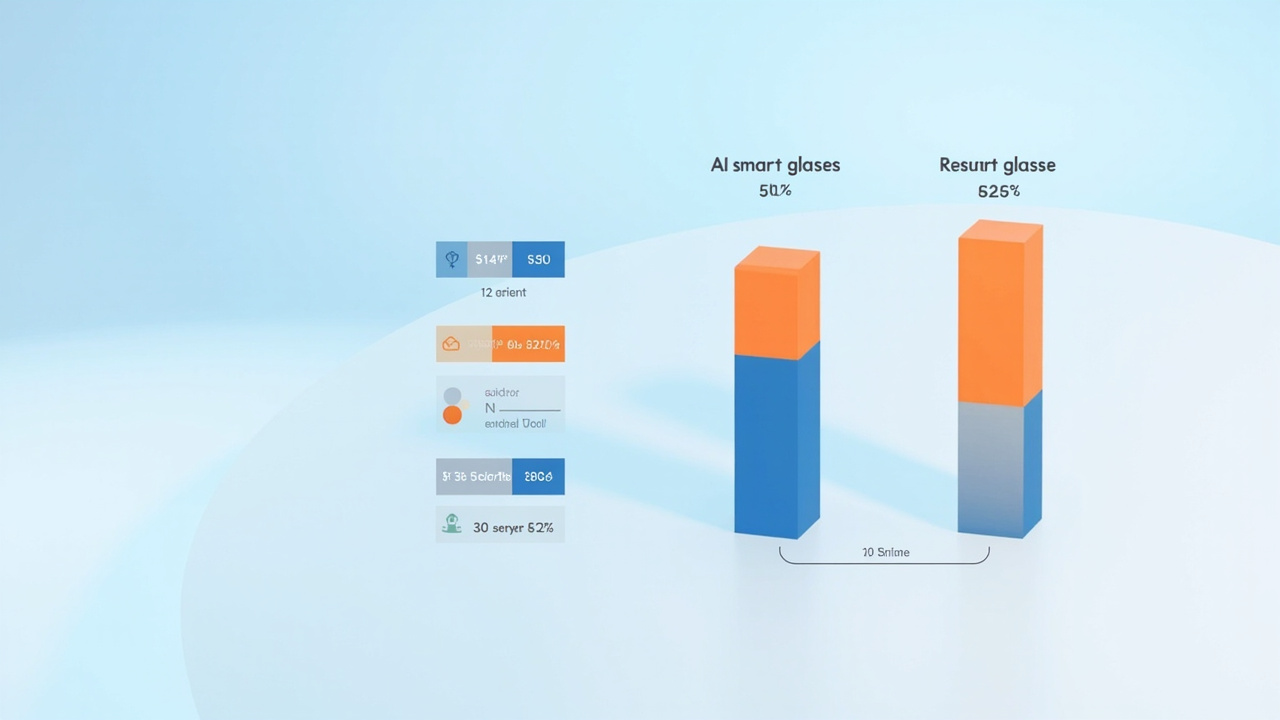
The sticker prices match ($799 for both at MSRP), but the real cost of ownership diverges sharply over a 3-year window because of accessories, prescription lenses, and the realistic chance of platform abandonment.
| Cost factor | Meta Ray-Ban Display | Rokid Glasses |
|---|---|---|
| Entry price (MSRP) | $799 | $799 (often $639 promo) |
| Promo street price (June 2026) | $799 (no active discount) | ~$639 (Rokid summer promo) |
| Prescription lens add-on | $100–$250 (Meta in-store only) | $80–$200 (third-party insert, e.g., LensCrafters) |
| Meta Neural Band replacement | $149 if lost or damaged | N/A (no band) |
| Charging case replacement | $79 (Meta store) | $59 (Rokid store) |
| Annual battery service (out of warranty) | $79–$129 (degraded cell swap) | $59–$99 |
| Realistic lifespan (firmware support) | 5+ years (Meta has supported Ray-Ban line since 2021) | 2–3 years (Rokid is newer; Ar glasses category is volatile) |
| Year-3 resale value (used, good condition) | ~$280 (Ray-Ban Meta Gen 1 precedent on Swappa/eBay) | ~$200 (limited secondary market) |
| All-in over 3 years (entry + Rx + case - resale) | $798 | $678 at promo |
On a pure cost basis, the Rokid saves you roughly $120 over 3 years at current promo pricing, or $0 if both are bought at $799. That gap is small enough that the right pick should be driven by ecosystem fit and feature usage, not price.
But — and this matters — a pair of smart glasses that loses firmware support in 18 months becomes an expensive set of sunglasses. Meta has shipped three generations of Ray-Ban smart glasses since 2021 and has publicly committed to multi-year support. Rokid entered the consumer AR-glasses category more aggressively but has had two product lines (Rokid Air, Rokid Max) that were effectively discontinued when the next generation launched. That’s the real risk premium, not the $120.
Source: Meta Ray-Ban product history, Swappa resale data for Ray-Ban Meta Gen 1 (2024-2026), NexRagear Rokid pricing analysis 2026, Rokid storefront pricing history.
Build Quality and Durability
Both pairs are IPX4 splash-resistant, both have metal hinges, both ship with charging cases. The differences that matter are weight, field of view, and lens technology.
| Build attribute | Meta Ray-Ban Display | Rokid Glasses |
|---|---|---|
| Weight | 69 g (standard size) | 49 g |
| Display type | Monocular Micro-OLED, right lens only | Binocular Micro-LED, both lenses |
| Field of view | 20° | Wider binocular FoV (Rokid doesn’t publish exact number; reviewers estimate ~30° effective) |
| Brightness | 5,000 nits peak | Not published; “daylight readable” per Rokid |
| Frame material | Acetate (Ray-Ban standard) with metal core | TR-90 polymer with magnesium hinges |
| Hinges | Standard Ray-Ban barrel hinges | Magnesium alloy, tested to 20,000 cycles |
| IP rating | IPX4 | IPX4 |
| Prescription support | In-house, -4.00 to +4.00 diopters | Third-party magnetic insert |
| Camera position | Right temple (12MP) | Bridge-centered (12MP Sony IMX681) |
| Microphones | 6 mics | Multi-mic array |
| Strap / band | Meta Neural Band (EMG wristband, included) | None |
| Mean out-of-warranty repair cost | $180–$220 (Meta Care estimate, 2026) | $120–$160 (third-party repair) |
The Rokid’s 49 g weight is a real-world advantage for all-day wear — 20 g lighter than the Meta is the difference between “I forget I’m wearing them” and “I feel them after hour two.” This matters more for AI glasses than for regular sunglasses, because AI glasses are worn for longer continuous stretches (translation sessions, video calls, hands-free AI queries).
The Meta’s monocular display is a deliberate trade-off: putting a 600×600 HUD in only the right lens means the left eye stays “natural” and unaffected. Binocular displays can cause eye strain in users with even minor prescription imbalances. PCMag notes: “If you’re particularly sensitive to binocular displays — or wear prescription lenses — single-eye can be the better choice” (Source: PCMag 2026).
The Neural Band is the single most novel piece of hardware in this comparison. It detects electrical signals from wrist muscles (electromyography) to translate subtle finger pinches and hand movements into UI commands. Meta bundles it with every pair; Rokid has no equivalent. Whether this is a $799 feature or a gimmick depends entirely on whether you want to control your glasses without voice or touch — useful in meetings, awkward in public.
Feature Breakdown
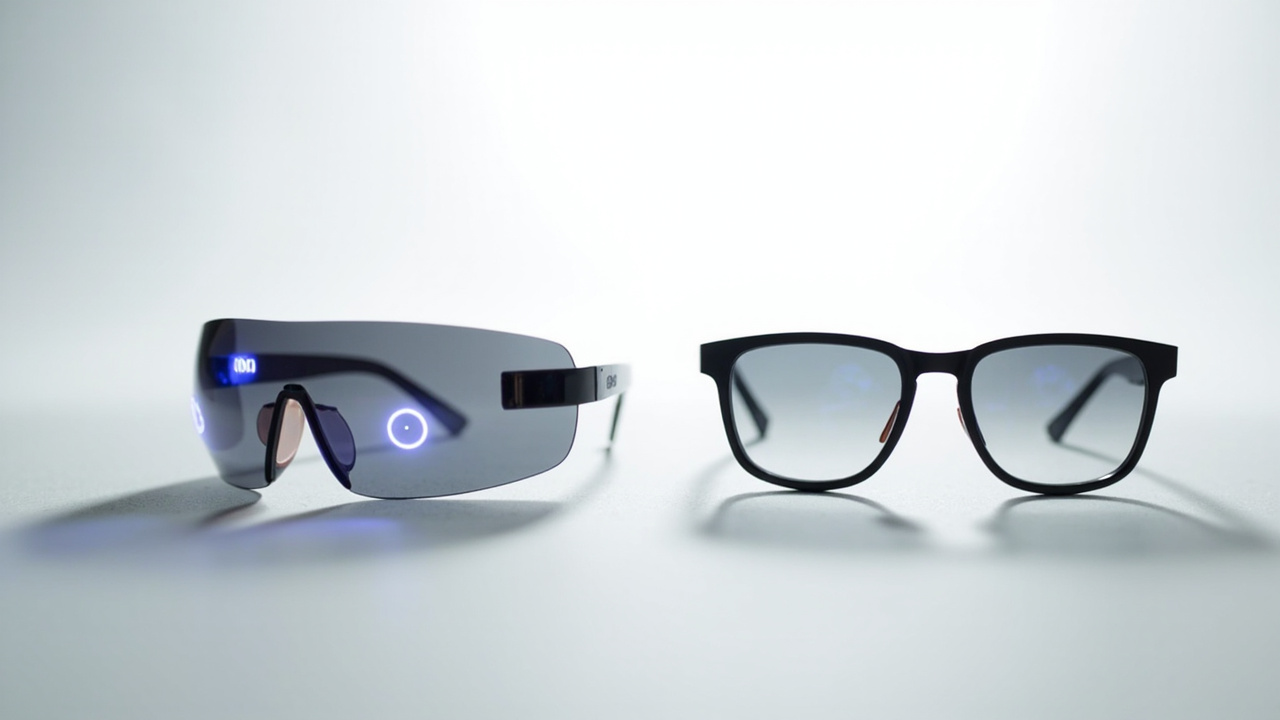
This is where the two products diverge hardest. Meta bets on tight ecosystem lock-in; Rokid bets on open AI flexibility.
HUD and display quality:
Meta’s 600×600 Micro-OLED is small but extremely bright (5,000 nits peak) and has less than 2% light leakage — meaning bystanders can’t see what is on your display (Source: VisionXO, June 2026). The 20° field of view is enough for notifications, turn-by-turn directions, and a viewfinder for the camera, but not enough for watching video. It’s a glance-and-go HUD, not an immersive display.
Rokid’s binocular Micro-LED setup gives you a wider, more natural-feeling overlay. Reviewers at Geeky Gadgets noted: “Rokid’s binocular HUD feels more like floating text in front of you, while Meta’s monocular HUD feels more like a tiny phone screen in your right eye.” For tasks like reading a paragraph of translation or following directions, binocular is less fatiguing. For privacy and bystander discretion, monocular wins.
AI assistant capability:
| AI feature | Meta Ray-Ban Display | Rokid Glasses |
|---|---|---|
| Voice assistant | Meta AI (Llama-based) | GPT-5 + Gemini, switchable |
| On-device AI | Limited (most queries cloud) | Yes, hybrid: small LLM on-device for offline translation |
| Live translation | ~10 languages at launch | 89 languages online + 6 offline |
| Object recognition | Yes (Meta AI) | Yes (GPT-5 multimodal) |
| Real-time navigation | Yes (via Meta AI + Maps) | Yes (via Google Maps integration) |
| Photo/video capture | 12MP, 1080p video | 12MP, 1680P video (higher resolution) |
| Direct social sharing | Yes, Instagram/WhatsApp/Messenger built-in | No (transfer to phone first) |
| Battery drain during heavy AI use | ~30% faster | Slightly slower (on-device offload) |
For someone who lives inside Instagram, the Meta’s direct-share-to-story feature is genuinely useful: tap, capture, post, all without pulling out your phone. For someone who wants to use AI without a Meta account, the Rokid is the only option in this price bracket.
Camera quality:
Both are 12MP, but Rokid uses a Sony IMX681 sensor with a 109° wide field of view and records at 1680P vs Meta’s 1080p. PCMag noted: “The Rokid Glasses have an edge in video, with the ability to shoot 2,400-by-1,800 clips compared with the Meta Ray-Ban Display’s 1,920-by-1,440 video resolution.” For content creators and POV video, that’s a meaningful upgrade. For casual capture, both are adequate.
Privacy and data:
This is where Meta has the most reputational baggage. Meta AI requires a Meta account, processes voice queries in Meta’s cloud, and uses Meta’s data policies (which are notoriously broad). Rokid’s on-device translation for 6 languages works without any cloud connection — a meaningful advantage for privacy-sensitive users or those in restricted connectivity areas. Both have an LED indicator that lights up when recording, but the implementation is similar.
Sources: VisionXO Meta Ray-Ban Display specs (June 2026), Rokid global product page (June 2026), PCMag Meta Ray-Ban Display vs Rokid Glasses (May 2026), Geeky Gadgets Rokid vs Meta comparison (May 2026), Meta AI data usage documentation, Rokid privacy policy.
Pros and Cons
Meta Ray-Ban Display ($799)
Pros
- Single-lens monocular HUD is more discreet and less fatiguing for many users
- Meta Neural Band delivers genuinely novel gesture control (the single most innovative piece of hardware in this comparison)
- Direct integration with Instagram, WhatsApp, Messenger — capture-and-post without pulling out your phone
- Meta’s 5+ year hardware commitment (Ray-Ban line since 2021) makes this the safer long-term bet
- In-store demo and fitting required at purchase reduces the chance of buying the wrong size
- 5,000-nit peak brightness makes the HUD readable in direct sunlight
Cons
- 69 g is heavy for all-day wear; users report fatigue after 2–3 hours
- Meta AI requires a Meta account and is not available in all countries/languages
- Cloud-based AI means no offline functionality — translation, navigation, and queries all need cell signal
- Meta’s data practices are a deal-breaker for privacy-sensitive users
- $799 with required in-store fitting is a high friction purchase
- Prescription lens add-on is $100–$250 and must be done through Meta’s authorized channels
Rokid Glasses ($799 MSRP / ~$639 promo)
Pros
- 49 g — meaningfully lighter, comfortable for 4–6 hour stretches
- Binocular Micro-LED HUD feels more natural and is less fatiguing for reading tasks
- 89-language translation online + 6 languages offline — works on planes and in dead zones
- Dual LLM (GPT-5 + Gemini) with on-device hybrid — best of both AI stacks
- 1680P video capture beats Meta’s 1080p for POV content
- No Meta account required; works as a standalone Rokid product
- Often discounted to $639, undercutting Meta by $160
- Direct online purchase, no fitting required
Cons
- Newer product line; Rokid has discontinued prior AR glasses (Rokid Air, Rokid Max) within 18–24 months — long-term firmware support is unproven
- Smaller ecosystem (no Instagram/WhatsApp direct share)
- Prescription support requires third-party inserts, which are bulkier than Meta’s in-house lenses
- Brightness is not published; reviewers note it’s “daylight readable” but not as bright as Meta’s 5,000-nit HUD
- Limited resale market if you want to upgrade in 2 years
Best For / Skip If
Best For Meta Ray-Ban Display
- Heavy Instagram/WhatsApp/Messenger users who want capture-and-share in under 5 seconds
- Meta AI believers — if you’re already using Meta AI on phone or WhatsApp, the glasses are a natural extension
- US/EU residents in countries with full Meta AI support
- Privacy-tolerant users comfortable with Meta’s cloud-first data model
- Buyers who value in-store fitting — Meta requires this, and it’s actually a plus for getting the right size
Best For Rokid Glasses
- Frequent international travelers who need 89-language translation (especially the 6 offline languages)
- Privacy-sensitive users who refuse to create a Meta account
- Android users who prefer Google Gemini or want GPT-5 multimodal AI
- All-day wear users who can’t tolerate anything heavier than ~50 g
- Buyers outside Meta AI’s supported regions (much of Asia, parts of EU, Middle East)
- Promo buyers who can grab the $639 price (~$160 cheaper than Meta)
Skip Both If
- You mainly want audio-only smart glasses — the Ray-Ban Meta Gen 2 ($379) does 90% of the AI work without a HUD
- You want a truly immersive AR experience — for that, you need Apple Vision Pro ($3,499), Meta Quest 3 ($499), or Xreal Air 2 Ultra ($699, tethered)
- You have light sensitivity or binocular vision issues — neither pair is great for everyone; try them on first
- You’re not ready to wear a camera on your face in public — both record with an LED indicator, but both attract attention
Bottom Line
At the same $799 price point, the Meta Ray-Ban Display and the Rokid Glasses are not direct competitors — they are different bets on the same future. Meta bets that you’ll want a stylish, social-AI-first device that ties into your existing Meta graph. Rokid bets that you’ll want an open, lighter, more travel-ready device with the world’s best on-device translation.
Pick Meta if ecosystem and long-term platform support matter more than weight or privacy. Pick Rokid if you’d rather not pay the Meta tax (in money and data) and want a lighter pair that works on a plane.
Buy smart. Get more value. Don’t pay for features you won’t use, but don’t cheap out on the ones you will.