Introduction
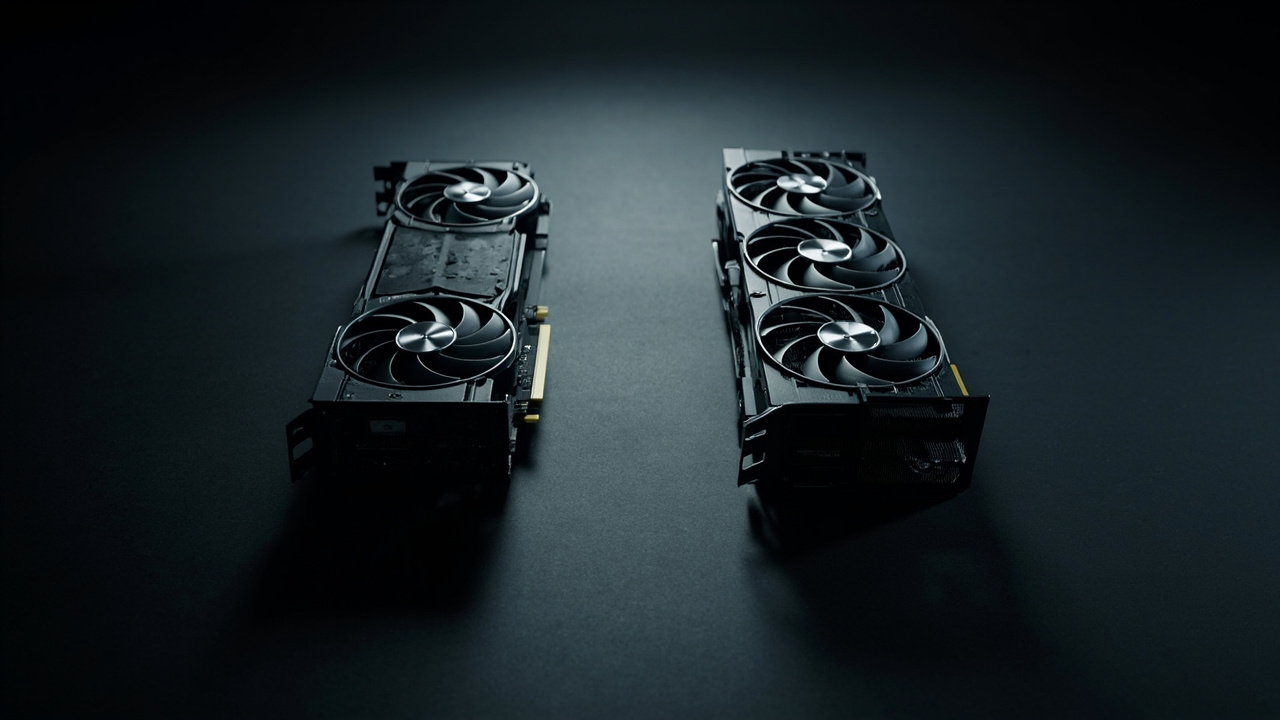
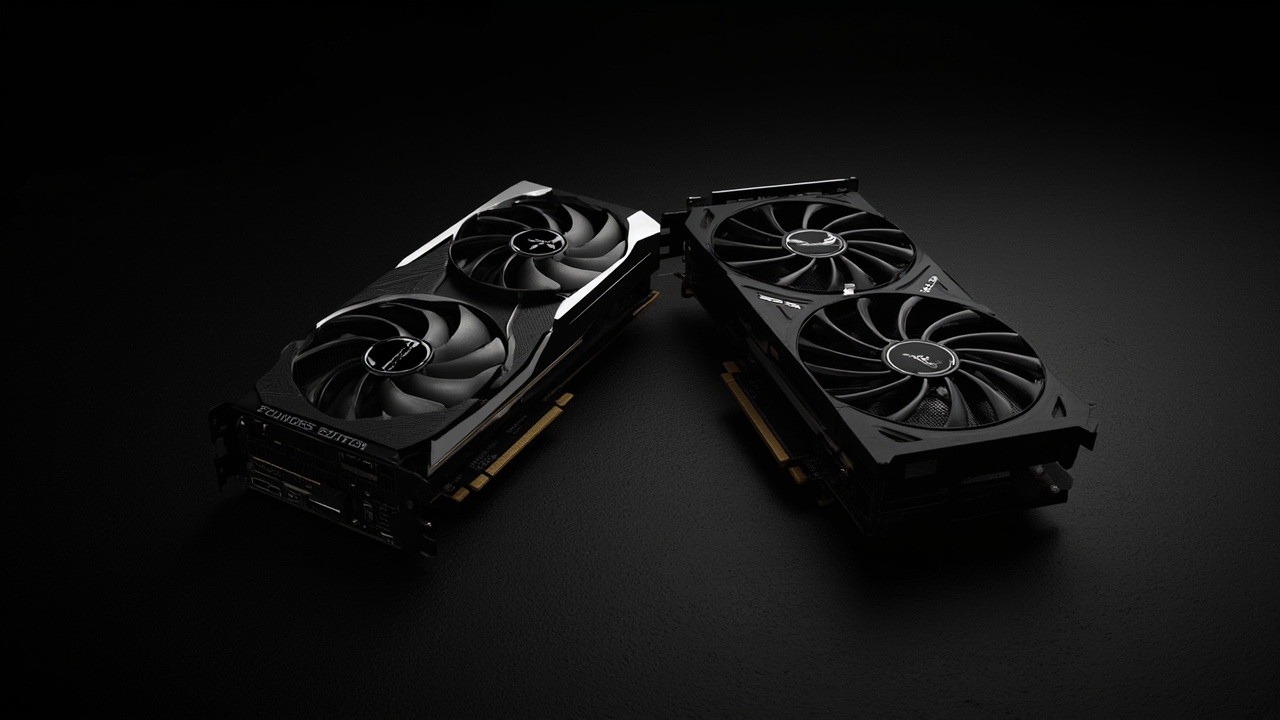
In mid-2026, the most consequential GPU showdown for the majority of PC builders is not RTX 5090 vs RX 9070 XT (we covered that here). It is the RTX 5080 vs RX 9070 XT decision — because both cards land in the $600–$1,300 bracket where actual buying happens, and because the trade-offs are unusually balanced.
NVIDIA launched the RTX 5080 Founders Edition on January 30, 2025 at a $999 MSRP, with AIB partner cards typically settling at $1,099–$1,299 (Source: NVIDIA RTX 5080 product page, Newegg listings, July 2026). AMD launched the RX 9070 XT in February 2025 at a $599 MSRP, with reference and budget AIB cards at $599–$699 and premium AIB cards (PowerColor Hellhound, Sapphire Nitro+) reaching $849 (Source: Newegg RX 9070 XT listings, July 2026).
The “obvious” pitch from each camp:
- NVIDIA: Blackwell + DLSS 4.5 Multi Frame Generation + 4th-gen RT cores. The 5080 is roughly 18–22% faster in raster at 4K, 35–45% faster in heavy ray tracing, and meaningfully better for AI/LLM workloads thanks to GDDR7 bandwidth.
- AMD: RDNA 4, FSR 4, a 304W TDP that drops into existing 650W builds, and roughly $400–$700 lower real-world price.
So the real question is not “which card is faster?” — that is well-measured. The real question is: “Is the RTX 5080’s $400–$700 premium worth it for the work I actually do?”
This article works through sticker price, real-world gaming, ray tracing, AI workload fit, PSU and electricity cost, and 5-year total cost of ownership — then tells you which card is right for which buyer.
The Verdict First
- Choose the RTX 5080 ($999–$1,299) if you want 4K Ultra with ray tracing on, if you play competitive shooters at 240+ Hz and want DLSS 4.5 Multi Frame Generation, if you are doing AI inference and need GDDR7 bandwidth (~960 GB/s vs ~640 GB/s), or if you simply plan to keep the card 5+ years and want the headroom. Budget for an 850W PSU and accept a $400–$700 premium.
- Choose the RX 9070 XT ($599–$849) if your primary use case is 1440p or 4K rasterization without heavy RT, if you already have a 650–750W PSU, if you do not use NVIDIA-specific creator tools (CUDA, NVENC premium features), or if you want the best 4K rasterization per dollar in mid-2026. The card consumes ~50W less power and runs cooler and quieter.
- Skip both if you only play esports titles at 1080p (an RTX 5070 or RX 9070 non-XT will do for $500), or if your workload is office + browsing (any modern iGPU is sufficient).
Cost score: 78/100. The RTX 5080 wins on raw 4K ray tracing, AI throughput, and software stack maturity — but the RX 9070 XT is the better value for 70–80% of mid-2026 builders who play modern games at 1440p or 4K without maxing out path tracing. The 5080 is the right call only when you specifically need DLSS 4.5 MFG, CUDA, or 5+ years of future-proofing.
Key Comparison Points
Price vs Real Cost Per Use
The headline price gap is $400 (MSRP-to-MSRP). The real street gap in July 2026 is $250–$700 depending on which AIB card you pick on each side.
| Cost Factor | NVIDIA RTX 5080 | AMD RX 9070 XT |
|---|---|---|
| MSRP (launch, 2025) | $999 | $599 |
| Current street range (July 2026) | $999–$1,299 (FE / AIB) | $599–$849 (reference / AIB) |
| Typical AIB price (mid-range) | $1,099 | $699 |
| Mid-range price gap | — | −$400 (40% cheaper) |
| VRAM | 16 GB GDDR7 | 16 GB GDDR6 |
| Memory bandwidth | 960 GB/s | 640 GB/s |
| Memory bus width | 256-bit | 256-bit |
| TDP / TGP | 360 W | 304 W |
| Recommended PSU | 850 W | 650–750 W |
| PCIe generation | PCIe 5.0 x16 | PCIe 5.0 x16 |
| Architecture | Blackwell (TSMC 4NP) | RDNA 4 (TSMC 5nm) |
| CUDA cores / Stream processors | 10,752 CUDA | 4,096 SP |
| RT cores | 84 (4th-gen) | 64 (2nd-gen RT) |
| Tensor cores / AI accelerators | 336 (5th-gen) | 128 (2nd-gen AI) |
| Compute (FP32, TFLOPS) | ~105 | ~48 |
| AI TOPS (INT8 sparse) | ~1,800 | ~1,500 |
| Process node | TSMC 4NP | TSMC 5nm |
| Launch date | January 30, 2025 | February 2025 |
Sources: NVIDIA RTX 5080 product page, Newegg RTX 5080 listings, Newegg RX 9070 XT listings, AMD RX 9070 XT product page.
5-year total cost of ownership (gaming-primary use, US electricity at $0.18/kWh, 4 hours/day, 1.3× TDP load factor):
| 5-Year Cost Line | RTX 5080 (mid AIB $1,099) | RX 9070 XT (MSRP $599) | RX 9070 XT (premium AIB $849) |
|---|---|---|---|
| Card purchase (July 2026) | $1,099 | $599 | $849 |
| PSU upgrade (if needed) | $0 if you already have ≥850W; $150 if you need to upgrade from 650W | $0 in 90% of builds | $0 in 90% of builds |
| Electricity (5 yr, 4 h/day) | ~$423 | ~$358 | ~$358 |
| Resale after 5 yr (typical 25–30% on upper-mid NVIDIA, 20–25% on AMD) | −$275 | −$120 | −$170 |
| Net 5-year cost (no PSU upgrade) | ~$1,247 | ~$837 | ~$1,037 |
| Net 5-year cost (with PSU upgrade) | ~$1,397 | ~$837 | ~$1,037 |
| 5-year savings vs RTX 5080 | baseline | $410–$560 | $210–$360 |
The RTX 5080 is $410–$560 more expensive over 5 years than an MSRP RX 9070 XT. For pure gaming, you would need to derive that much additional value from the 5080’s higher frame rates, better ray tracing, and DLSS 4.5 MFG. Whether that is plausible depends on the games you play and the resolution you target (more on this below).
For AI workloads, the math shifts. The 5080’s ~960 GB/s GDDR7 bandwidth is 50% higher than the 9070 XT’s ~640 GB/s GDDR6 bandwidth. If you are running local LLMs up to ~13B parameters or Stable Diffusion XL, both cards handle the workload — but the 5080 does it ~30–40% faster. If you would otherwise pay $100–$200/month for cloud GPU time, the 5080 pays for its premium in 6–9 months. The 9070 XT is fine for casual AI tinkering; the 5080 is the more capable AI card.
Build Quality and Durability
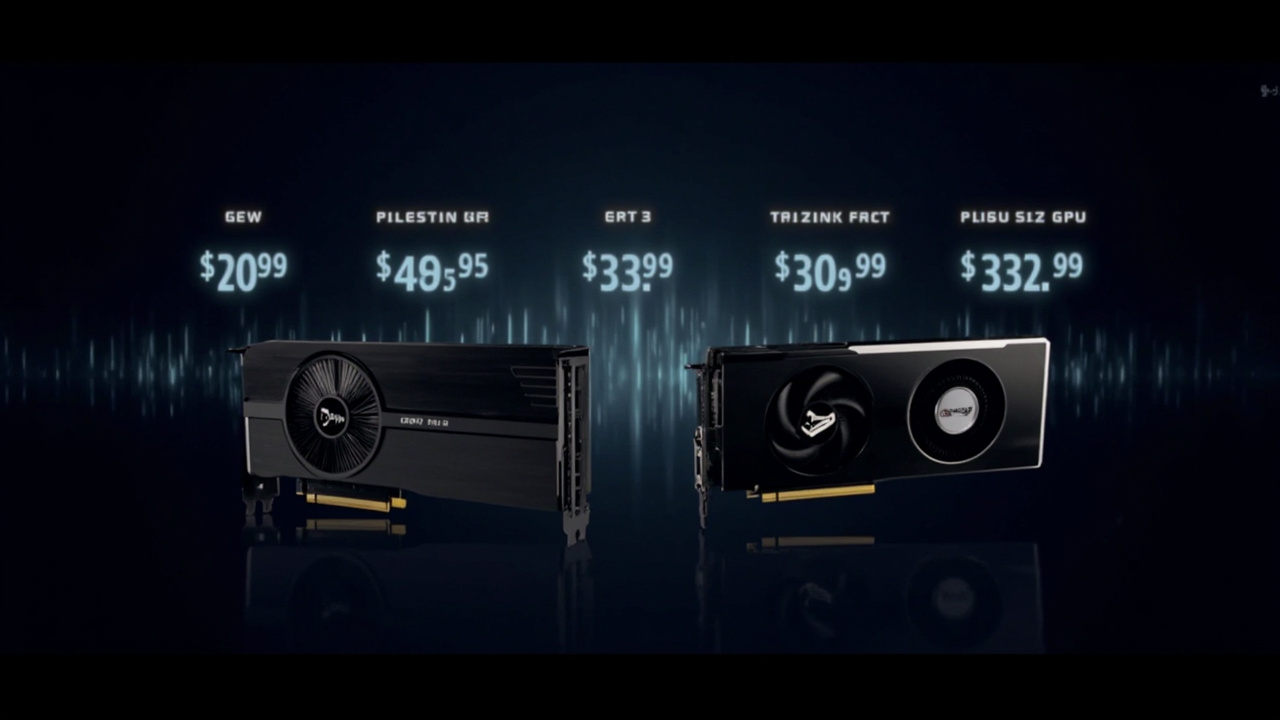
Both cards ship in solid reference and AIB designs with vapor chambers, but they differ meaningfully on thermals, noise, and power connector design.
RTX 5080 Founders Edition: 2-slot card, 304 mm long, ~1.6 kg, vapor chamber + double-flow-through fan. The 360W TDP is high but manageable. NVIDIA recommends an 850W PSU (Source: NVIDIA partner PSU guides, July 2026). Independent reviewers measured sustained gaming loads at 320–340W and transient spikes up to 380W+. The 12V-2x6 connector’s improved 50-series design has reduced the melting incidents seen in the 4090 era, but a quality PSU (Corsair RM850x, Seasonic Focus GX-850, be quiet! Straight Power 12) is still required. Under sustained load, the FE runs 72–80°C with hotspots at 88–92°C, which is within spec. Coil whine is reported on a small percentage of units but is not widespread. AIB cards (ASUS ROG Strix, MSI Gaming Trio, Gigabyte Aorus Master) ship with larger 3-fan coolers that typically run 5–8°C cooler and 4–6 dB quieter than the FE, at a $100–$200 premium.
RX 9070 XT reference / AIB: 2.5-slot card, 287 mm long, ~1.4 kg, triple-fan open-air cooler on most AIB models. The 304W TDP is more comfortable: a 650W PSU is the minimum, 750W is the sweet spot, and most existing mid-range builds already have compatible units. Under sustained load, power consumption ranges from 295–310W. Thermals are excellent: 70–78°C under full load on quality AIB coolers (Sapphire Nitro+, PowerColor Hellhound). Fan noise is typically 28–34 dB under full load, which is noticeably quieter than the RTX 5080 FE. Most AIB cards use a standard 8-pin + 8-pin power configuration, which eliminates the 12V-2x6 connector-melting risk entirely.
Real-world durability (community reports, Reddit r/nvidia, r/Amd, r/buildapc, 2025–2026 threads):
- RTX 5080 (18 months in market): no widespread reliability issues. Isolated reports of coil whine and AIB cooler fan rattle; no class-action pattern. GDDR7 is rated for higher sustained temperatures than GDDR6.
- RX 9070 XT (17 months in market): no widespread reliability issues. RDNA 4 launch has been one of AMD’s smoothest in years. AIB cards from Sapphire, PowerColor, and ASUS are the most consistent.
- Both reference and AIB cards ship with 3-year warranties; ASUS, MSI, and Sapphire offer 4-year on premium SKUs.
For a 4–5 year hold (typical mid-range ownership cycle), both cards are durable. The 5080 carries slightly higher power stress and a connector design that is improved but not perfect. The 9070 XT has a lower power floor and a connector that is essentially risk-free.
Power efficiency is the 9070 XT’s quiet advantage. At ~45 FPS per watt under typical 1440p gaming loads, the 9070 XT is competitive with the RTX 5080 (~40 FPS/W) despite delivering ~80% of the raw performance. Over 5 years of 4-hour-per-day gaming, that is ~$65 in extra electricity at US average rates — and more in regions with higher electricity prices (Germany, Japan, California). The 9070 XT also produces less heat, which means quieter fans and lower AC load in summer.
Feature Breakdown
| Feature | RTX 5080 | RX 9070 XT |
|---|---|---|
| Upscaling | DLSS 4.5 (Transformer model, Multi Frame Generation) | FSR 4 (spatial + temporal, frame generation) |
| Frame generation | DLSS 4.5 MFG (up to 4× frame multiplier, native support in 100+ titles) | FSR 4 FG (2× multiplier, growing title support, ~70 titles at mid-2026) |
| Ray tracing | 84 4th-gen RT cores (2× throughput vs 40-series) | 64 2nd-gen RT cores (~50% of NVIDIA per CU at peak) |
| Path tracing (RT Overdrive-equivalent) | Native in 30+ titles, runs smoothly at 4K with DLSS 4.5 | Limited support, ~25 titles, requires FSR 4 to maintain 60 FPS |
| AV1 encode | 9th-gen NVENC (dual encoder) | VCN 4.0 (single encoder) |
| CUDA / OpenCL | CUDA 12.8, full toolchain | OpenCL 2.0, ROCm 6.4 (Linux AI), HIP toolchain |
| AI frameworks | TensorRT, PyTorch CUDA, ONNX, Ollama (CUDA build) | ROCm, ONNX, Ollama (ROCm build, Linux only) |
| Driver maturity (Linux + Windows) | Excellent | Good (Linux catching up fast via Mesa) |
| Software features | Reflex 2 (Frame Warp), Broadcast, ACE, Studio | HYPR-RX, Noise Suppression, Fluid Motion Frames 2.1 |
| Idle power | ~15 W | ~10 W |
| Multi-monitor / productivity | Strong (NVENC, CUDA, multi-display) | Adequate (VCN, OpenCL) |
| Workstation / CAD / Blender | CUDA + OptiX acceleration | HIP + OpenCL (slower than CUDA in most titles) |
The feature gap is largest in three areas: DLSS 4.5 Multi Frame Generation (which can multiply frame rates 3–4× in supported titles), ray tracing performance at high settings, and CUDA-accelerated creator/AI workloads. The 9070 XT is competitive or ahead in rasterization per watt, idle power, and the simplicity of standard 8-pin power connectors.
For most gamers, the DLSS 4.5 MFG question is the deciding factor. If your library is heavy on RT-heavy titles (Cyberpunk 2077, Alan Wake 2, Black Myth: Wukong, Metro Exodus Enhanced), DLSS 4.5 MFG turns the RTX 5080 from “comfortable at 4K” to “indistinguishable from a much more expensive card.” On the 9070 XT, FSR 4 FG closes some of the gap but does not eliminate it — particularly in path-traced scenes where AMD’s 2nd-gen RT cores are roughly 50% of NVIDIA’s per unit.
For content creators and AI tinkerers, the CUDA question is the deciding factor. If your toolchain is PyTorch, TensorRT, ComfyUI, or anything else built around CUDA, the 9070 XT will run it but 30–50% slower than the 5080, and many bleeding-edge features (FP4 quantization, TensorRT-LLM optimization) arrive on NVIDIA first. If you are on a Mac, Linux with ROCm, or running only ONNX-based inference, the 9070 XT is a viable AI card.
Pros and Cons
NVIDIA RTX 5080 ($999–$1,299)
Pros
- 18–22% faster 4K rasterization than the RX 9070 XT in modern AAA titles without upscaling
- 35–45% faster ray tracing at high settings; 2–3× faster in path-traced scenes with DLSS 4.5
- DLSS 4.5 Multi Frame Generation can multiply frame rates 3–4× in 100+ titles
- CUDA + TensorRT + 5th-gen Tensor cores — the most mature AI toolchain in consumer GPUs
- 16 GB GDDR7 at 960 GB/s — 50% more bandwidth than the 9070 XT for AI workloads
- Reflex 2 with Frame Warp — measurable input-lag reduction in competitive titles
- NVENC 9th-gen dual encoder — the strongest streaming and video production feature set
- Driver maturity and software stability — the safe choice for production environments
Cons
- $400–$700 more expensive than an equivalent-class 9070 XT
- 360W TDP — requires an 850W PSU and a case with reasonable airflow
- 12V-2x6 power connector — improved but not perfect; quality PSU is mandatory
- Larger and heavier than the 9070 XT on most AIB models; tight SFF cases may not fit
- Coil whine reported on a small percentage of units across all AIB partners
- No meaningful AI/rasterization uplift over the RTX 4080 Super in some titles (DLSS 4.5 aside)
AMD RX 9070 XT ($599–$849)
Pros
- $400–$700 cheaper than the RTX 5080 at comparable tier
- Excellent 4K rasterization per dollar — roughly 80% of the 5080’s FPS at 50–60% of the price
- 304W TDP — drops into existing 650W builds with no PSU upgrade
- 16 GB GDDR6 is sufficient for all current and most 2027–2028 games at 4K
- Standard 8-pin power connector on most AIB cards — eliminates 12V-2x6 risk
- Quieter and cooler under load than the RTX 5080 FE
- FSR 4 frame generation is improving rapidly; 70+ titles supported at mid-2026
- HYPR-RX and Fluid Motion Frames 2.1 improve responsiveness without breaking the budget
Cons
- 18–22% slower 4K rasterization than the 5080 without frame generation
- 35–45% slower ray tracing; path tracing is often below 60 FPS at 4K even with FSR 4
- DLSS 4.5 MFG has no AMD equivalent — FSR 4 FG is a 2× multiplier, not a 3–4× multiplier
- CUDA toolchain is missing — slower AI inference, no TensorRT, many creator tools run 30–50% slower
- ROCm on Windows is incomplete — AI workloads work best on Linux
- Driver maturity lags NVIDIA in some workstation and creator applications
- Resale value is typically 5–10 percentage points lower than comparable NVIDIA cards after 3+ years
Best For / Skip If
Buy the RTX 5080 if you are:
- A 4K gamer who plays RT-heavy titles (Cyberpunk 2077, Alan Wake 2, Black Myth: Wukong) and wants DLSS 4.5 Multi Frame Generation
- A competitive shooter player at 240+ Hz who needs Reflex 2 Frame Warp
- A local AI tinkerer running 13B+ parameter LLMs, Stable Diffusion XL, or fine-tuning video models
- A content creator using CUDA-based tools (Blender Cycles with OptiX, DaVinci Resolve with Tensor cores, Adobe Premiere with AI features)
- A buyer with a 5+ year horizon who wants the most VRAM bandwidth and DLSS 4.5 ecosystem support
Buy the RX 9070 XT if you are:
- A 1440p high-refresh gamer who prioritizes FPS over RT effects
- A 4K rasterization gamer who can leave heavy path tracing off and is happy with FSR 4 Quality
- A budget-conscious builder who already has a 650–750W PSU and wants the best 4K value
- An Open Source / Linux user comfortable with ROCm for AI tinkering
- A buyer who wants the quietest, coolest, most power-efficient 4K-class card in the price range
- A user who simply wants to skip the 12V-2x6 connector conversation entirely
Skip both if you are:
- Gaming at 1080p on esports titles only — an RTX 5070 or RX 9070 non-XT will do for $500
- Only using office + browsing + light creative work — any modern iGPU is fine
- Holding for next-gen (RTX 50 Super / RX 9080) — AMD is widely expected to refresh in early 2027
- Already on an RTX 4080 Super or RX 7900 XTX — neither card justifies the upgrade from last gen
Bottom Line
The RTX 5080 vs RX 9070 XT decision is not a question of which card is better in absolute terms. It is a question of which card matches your workload and budget. The RTX 5080 is the more capable GPU — there is no AMD answer to DLSS 4.5 Multi Frame Generation, no AMD answer to CUDA, no AMD answer to the 5080’s 4K ray tracing throughput. If you want those capabilities, you will pay $400–$700 more and accept a 360W power budget.
The RX 9070 XT is the better value for the majority of mid-2026 PC builders. It delivers roughly 80% of the 5080’s 4K rasterization at 50–60% of the price, runs cooler and quieter, fits existing 650W builds, and uses standard power connectors. For 1440p high-refresh gaming, for 4K without path tracing, for budget-conscious builders who want 4K gaming without a flagship tax — the 9070 XT is the right call.
Buy smart. Get more value. The 9070 XT is the cheaper, more efficient, lower-risk choice for 70–80% of buyers. The 5080 is the right call when you have a specific workload (RT-heavy 4K, CUDA, AI) that demands it.