Introduction
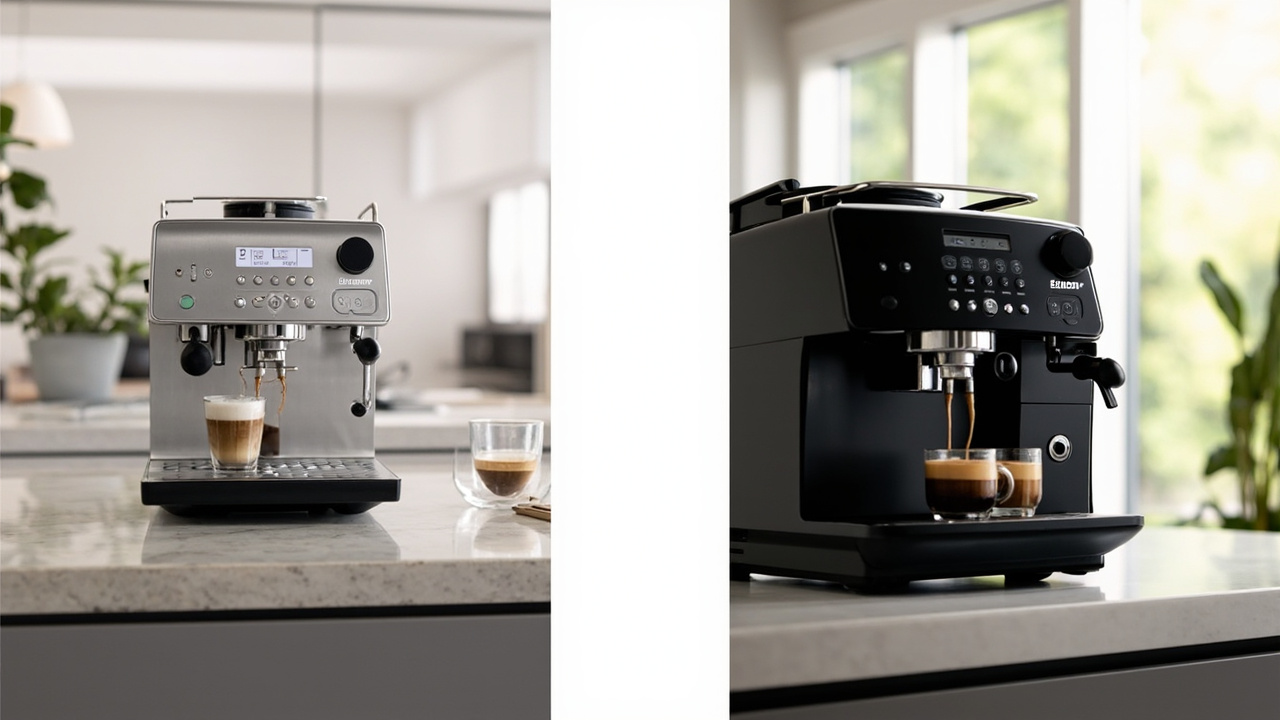
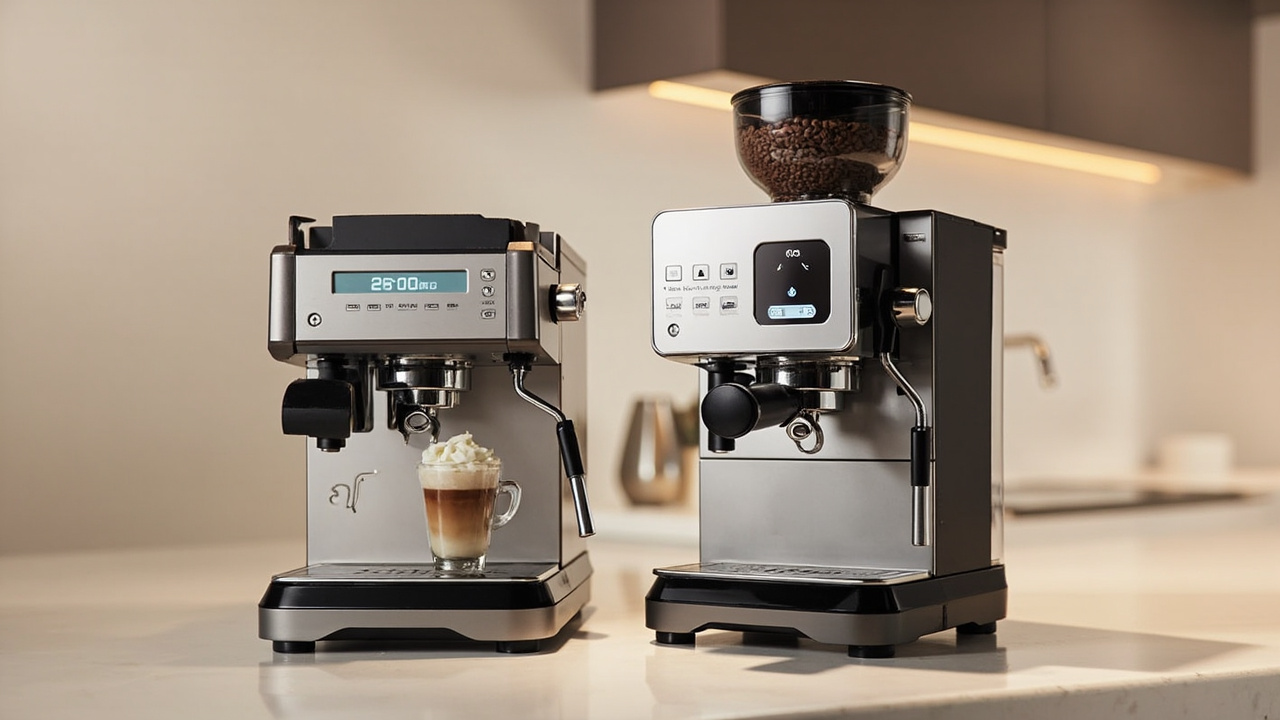
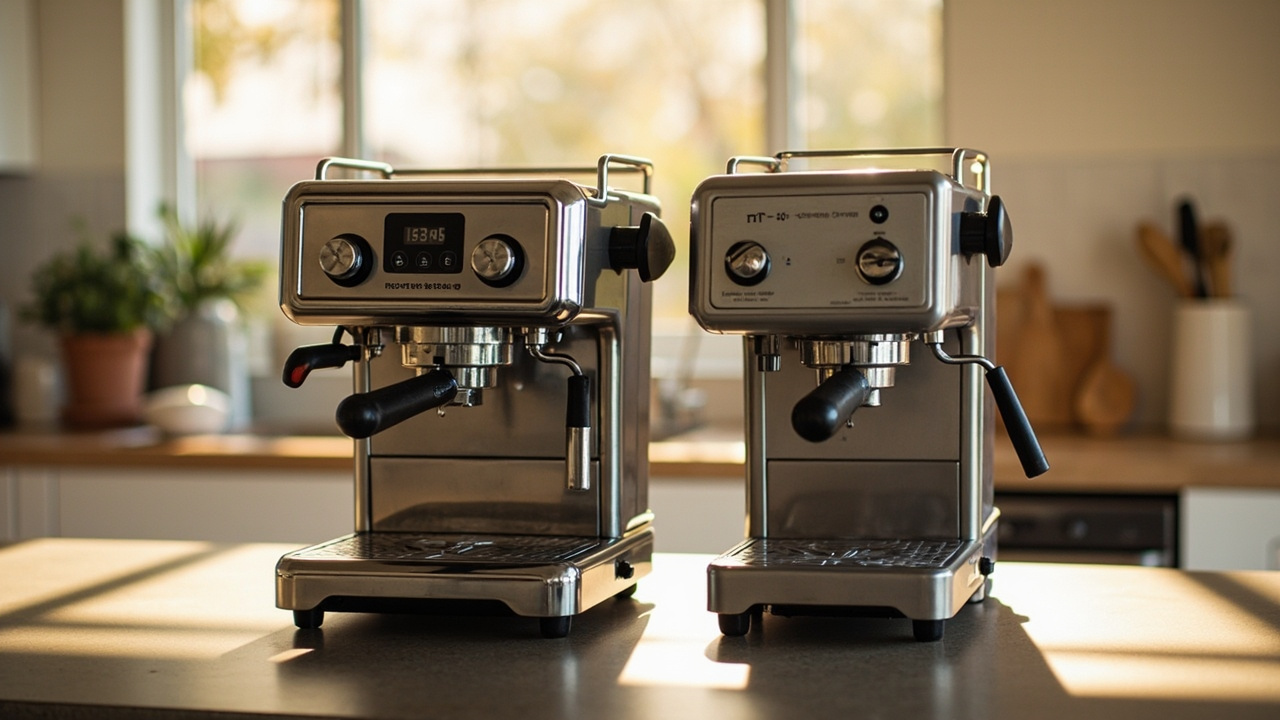
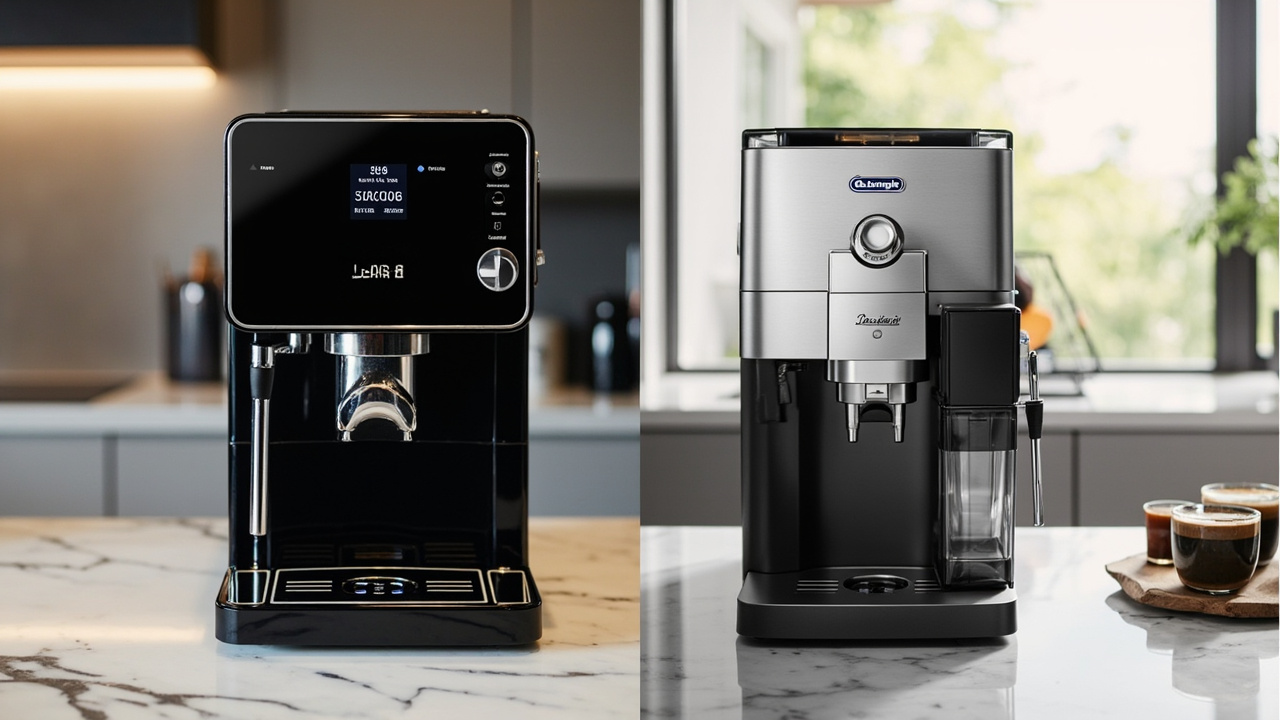
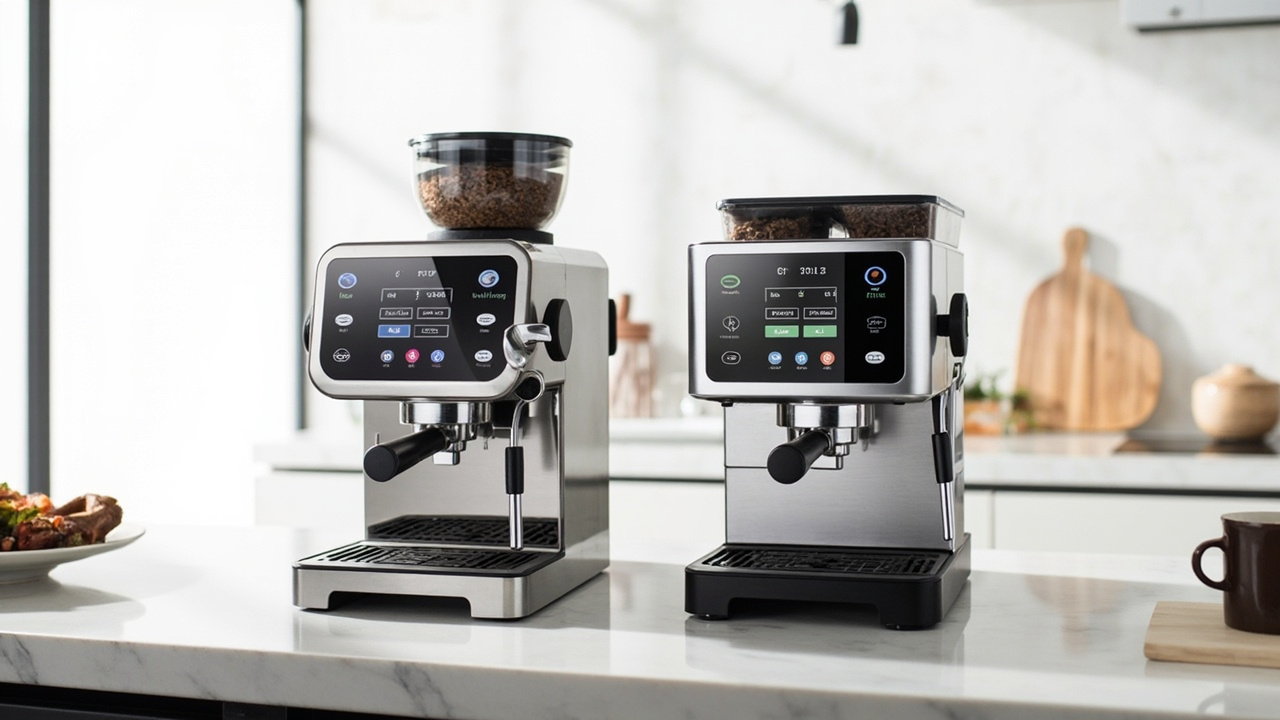
If you’ve moved past “I just want an espresso machine” and you’re now shopping in the ~$1,000 semi-auto tier, you’ve probably narrowed the field to two names: Breville and De’Longhi. In 2026, the head-to-head that comes up most often on Reddit and in buying guides is the Breville Barista Touch (BES880) against the De’Longhi La Specialista Opera (EC9555M).
They look similar at a glance — both are brushed-steel all-in-ones with built-in grinders, both target the “I want café drinks at home but I don’t want to learn barista technique” buyer, both sit at $999 and $1,099 respectively. The price gap is small enough to feel almost accidental, and the feature gap is wide enough that choosing the wrong one for your habits will leave you with a $1,000 machine you don’t enjoy.
The interesting question isn’t which one wins on a spec sheet. It’s which one delivers a lower cost per drink over a realistic 5–7 year ownership window, given how you actually use it.
The Verdict First
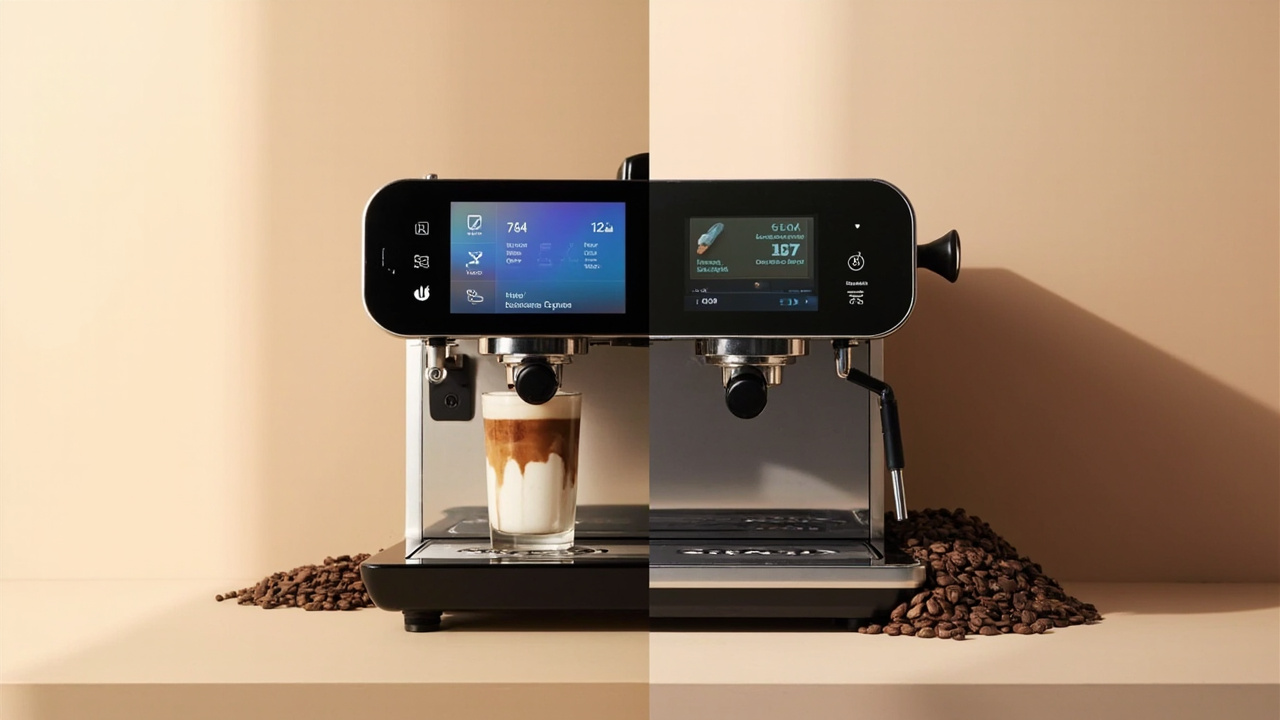
- Choose the Breville Barista Touch ($999) if you want the fastest workflow, the deepest drink customization (8 saved profiles, 30 grind settings, PID-controlled temperature), and you drink mostly hot milk drinks or straight espresso. The 3-second ThermoJet heat-up and the touchscreen experience genuinely change a morning routine (Source: Breville BES880 product page, Essential Coffee Co. retailer listing).
- Choose the De’Longhi La Specialista Opera ($1,099) if you regularly drink cold coffee, iced lattes, or cold brew-style espresso, value a heavier, more metal-bodied build, or simply prefer the LatteCrema one-touch milk system over a touchscreen with a manual override (Source: fluentincoffee.com 2026 guide, Tom’s Guide review).
- Skip both if you don’t drink espresso at least 4 days a week — at $1,000+ amortized over 5+ years, the cost-per-cup math only works with regular use. A $400 Bambino Plus + separate grinder is the better financial call for casual drinkers.
Key Comparison Points
Price vs Real Cost Per Use
Both machines sit in the same neighborhood on sticker price, but the amortized cost per drink and the electricity draw are the numbers that actually matter over 5+ years.
| Cost Factor | Breville Barista Touch (BES880) | De’Longhi La Specialista Opera (EC9555M) |
|---|---|---|
| Sticker Price (MSRP, 2026) | $999 | $1,099 (Source: fluentincoffee.com 2026 guide) |
| Power Draw (rated max) | 1,680 W | ~1,450 W (typical De’Longhi semi-auto class) |
| Heat-up Energy per Use | ThermoJet 3 s, ~1.4 Wh/session | Thermoblock 30+ s, ~12 Wh/session |
| Active Brewing (per drink) | ~40 Wh | ~50 Wh |
| Annual Electricity (~3 drinks/day) | ~13 kWh ≈ $2.30/year | ~18 kWh ≈ $3.20/year |
| Likely Lifespan (forum reports) | 5–8 years | 5–8 years |
| Cost per Year (5-yr amortized) | $200 + $2.30 = $202.30 | $220 + $3.20 = $223.20 |
| Cost per Drink (3/day, 5-yr) | ~$0.18 | ~$0.20 |
The Breville saves you $20–25/year on amortization and electricity, and a meaningful chunk of energy comes from that 3-second ThermoJet heat-up that uses 32% less energy than a Thermoblock (Source: Breville BES880 product page).
The bigger hidden cost on both machines is water filter replacement and descaler. Breville bundles a ClaroSwiss water filter and hardness test strip; De’Longhi recommends their own EcoDecalk descaler every 2–3 months. Both add ~$30–50/year if you follow the maintenance schedule — but skipping it is the #1 cause of premature pump failure on both, so don’t skip it.
The other cost variable is what you stop buying. A household of two doing 3 espresso drinks per day at home vs. a $5 café latte saves ~$2,200/year. That’s a payback of 5–6 months on either machine, no matter which one you pick.
Build Quality and Durability
| Build Factor | Breville Barista Touch (BES880) | De’Longhi La Specialista Opera (EC9555M) |
|---|---|---|
| Dimensions (W × D × H) | 12.4” × 12.8” × 13.4” (315 × 325 × 340 mm) | 11.4” × 14.2” × 14.6” (290 × 360 × 370 mm) approx. |
| Weight | ~23 lb (10.4 kg) | ~26 lb (11.8 kg) — heavier, more metal |
| Cabinet Finish | Brushed stainless steel, BPA-free water tank | Brushed stainless steel with more metal body panels |
| Portafilter | 54 mm stainless steel | 54 mm stainless steel |
| Grinder Burrs | Hardened steel conical, 30 settings | Stainless steel conical, 8 settings |
| Pump Pressure | 15-bar Italian pump | 19-bar Italian pump |
| Heating System | ThermoJet (3 s heat-up) | Thermoblock (30+ s heat-up) |
| Display | Full-color touchscreen + 5 pre-set drinks | TFT color display with Cold Extraction menu |
| Saved Profiles | 8 customizable drinks | Limited (recipe-driven) |
| Warranty | 2 years (Breville USA) | 1 year (De’Longhi USA) |
The Breville wins on warranty (2 years vs. 1) and on grind adjustability — 30 settings vs. 8 is a meaningful difference if you ever switch between light and dark roasts or single-origins (Source: Essential Coffee Co. retailer listing, fluentincoffee.com 2026 guide).
The De’Longhi wins on perceived build heft and on the 19-bar pump (which is largely a marketing number — both extract at real 9-bar brewing pressure; the 19-bar is the boiler’s max, not the puck pressure). The Opera’s larger footprint is a real concern on small counters.
For long-term reliability, both brands’ most common failure modes are similar: scale-clogged pumps and grinder motor wear after 5+ years. Breville’s longer warranty and more accessible service network (more authorized repair centers in the US) tip the long-term durability edge toward Breville by a small margin.
Feature Breakdown
Where the two machines actually diverge in day-to-day use:
| Feature | Breville Barista Touch | De’Longhi La Specialista Opera |
|---|---|---|
| Cold brew / iced espresso | Not a first-class feature | Cold Extraction Technology (dedicated mode) |
| Milk texturing | Auto MilQ wand, 8 texture levels, 104–167°F (40–75°C) | LatteCrema automatic carafe, set-and-forget |
| Manual steam wand mode | Yes (same wand, manual mode) | Yes, with separate traditional wand |
| Grind adjustment | 30 settings, digital | 8 settings, manual dial |
| Temperature control | PID digital | Thermoblock (less precise) |
| Saved user profiles | 8 named profiles | No |
| Pre-programmed drinks | 5 (Espresso, Americano, Latte, Cappuccino, Flat White) | 4 + Cold Extraction menu |
| App integration | None | None |
| Auto on/off | Yes | Yes |
| Dosing | Automatic, dose control | Smart Tamping Station, sensor-based |
The single biggest differentiator is the Cold Extraction Technology on the De’Longhi. If you regularly make iced lattes or cold brew-style espresso at home, this is a real workflow improvement — Breville has no equivalent. The Tom’s Guide review specifically calls out the Opera’s cold extraction as a standout feature for 2026 iced-coffee drinkers (Source: Tom’s Guide review).
For milk drinks, the philosophies differ: Breville gives you a touchscreen-controlled automatic steam wand with 8 texture levels and full temperature control, so you can dial in latte art microfoam or just let it run hands-free. De’Longhi’s LatteCrema carafe is more “set the carafe, press a button, walk away” — great for hands-free milk drinks, less ideal if you want to practice latte art.
For saved profiles — if multiple people in your household want different drinks every morning (one wants a flat white, one wants a doppio, one wants a decaf latte), the Barista Touch is meaningfully better with 8 named, customizable profiles.
Pros and Cons
Breville Barista Touch (BES880) — Pros
- 3-second ThermoJet heat-up genuinely changes morning workflow
- 30 grind settings give you real dial-in control for different beans
- 8 saved user profiles — best in class for multi-user households
- 2-year warranty (longer than De’Longhi)
- PID temperature control for consistent extraction
- Auto MilQ wand offers 8 texture levels with full temperature control
- 32% less energy per session than Thermoblock designs
Breville Barista Touch (BES880) — Cons
- No dedicated cold extraction mode — iced espresso requires manual workaround
- Touchscreen can feel slow or laggy after firmware updates (forum-reported)
- More moving parts (touchscreen + auto-frother) = more potential service points
- Replacement ClaroSwiss water filters cost ~$30/year if you follow maintenance
- Heavier learning curve to actually use all 8 profiles
De’Longhi La Specialista Opera (EC9555M) — Pros
- Cold Extraction Technology — best-in-class for iced and cold brew-style drinks
- Heavier, more metal-bodied build — feels more premium in the hand
- LatteCrema automatic milk carafe is genuinely set-and-forget
- Smart Tamping Station with sensor-based dosing — fewer user errors
- 19-bar pump (mostly cosmetic, but a real spec)
- Larger water tank capacity (~2 L vs. Breville’s ~2 L — comparable)
- 1-year warranty covers manufacturing defects
De’Longhi La Specialista Opera (EC9555M) — Cons
- $100 more expensive than the Breville (10% higher entry cost)
- Only 8 grind settings — much less flexibility for bean rotation
- Only 1-year warranty (half of Breville’s)
- No saved user profiles — each person re-dials their drink manually
- Thermoblock heating (30+ s) — slower than Breville’s ThermoJet
- Cold Extraction adds ~$50–80/year in bean usage for regular cold-drink households
- Less responsive customer service per Reddit long-term reliability threads
Best For / Skip If
Buy the Breville Barista Touch if you are:
- A hot-drink household that drinks espresso, lattes, cappuccinos, flat whites, and americanos
- Someone who rotates between different beans or roasts and wants real grind adjustability
- A multi-user home (2+ people with different drink preferences) — the 8 saved profiles pay off immediately
- A buyer who values 2-year warranty and US service network access
- Anyone who wants faster morning workflow (3-second heat-up is genuinely noticeable)
Buy the De’Longhi La Specialista Opera if you are:
- A cold-coffee household that drinks iced lattes, cold brew, or cold espresso year-round
- A buyer who values heavier, more metal-bodied build for a premium countertop presence
- A latte-and-go user who doesn’t want to learn steam wand technique — LatteCrema is genuinely hands-free
- Someone who already owns De’Longhi accessories and wants brand continuity
Skip both if you:
- Drink espresso less than 4 days per week — at $1,000+ amortized over 5 years, the cost-per-cup math is bad. Get a $400 Bambino Plus + a Baratza Encore grinder instead
- Want true café-level espresso control — step up to a Breville Dual Boiler or Profitec Pro 300
- Want push-button fully automatic — go to De’Longhi Dinamica Plus or Jura E8 instead
- Have less than 18 inches of counter depth — both machines are large
Bottom Line
For most home espresso drinkers in 2026, the Breville Barista Touch is the better value at $999 — 30 grind settings, 8 saved profiles, 2-year warranty, 3-second heat-up, and ~$20/year lower operating cost. It is the more capable machine for the same-or-less money.
The De’Longhi La Specialista Opera is the right pick for a narrower audience: people who drink cold coffee or iced espresso regularly, want a heavier-feeling build, and prefer the LatteCrema “set-and-forget” milk workflow over a touchscreen with manual override. If that’s you, the $100 premium is reasonable for the Cold Extraction feature alone.
Neither machine is a mistake at this price tier. The mistake is buying a $1,000 semi-auto and using it twice a month. Both machines pay for themselves in 5–6 months if you actually replace daily café visits with home espresso. Buy smart. Get more value.