Introduction
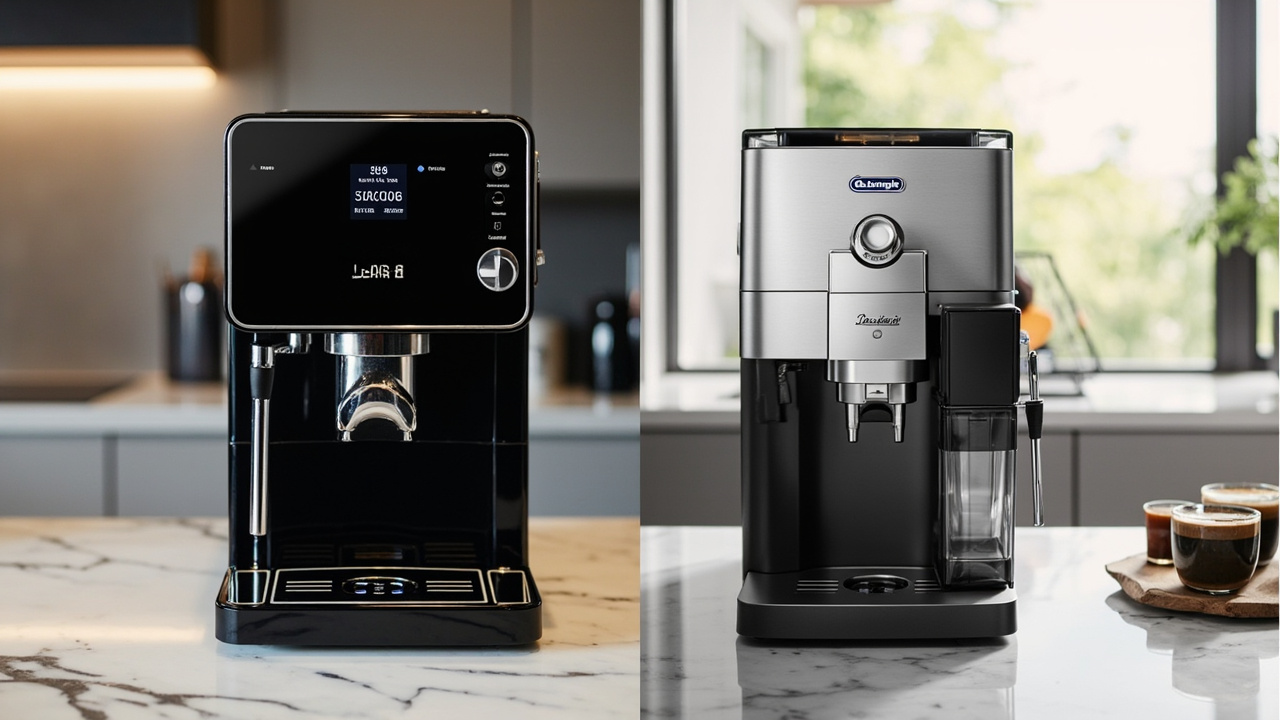
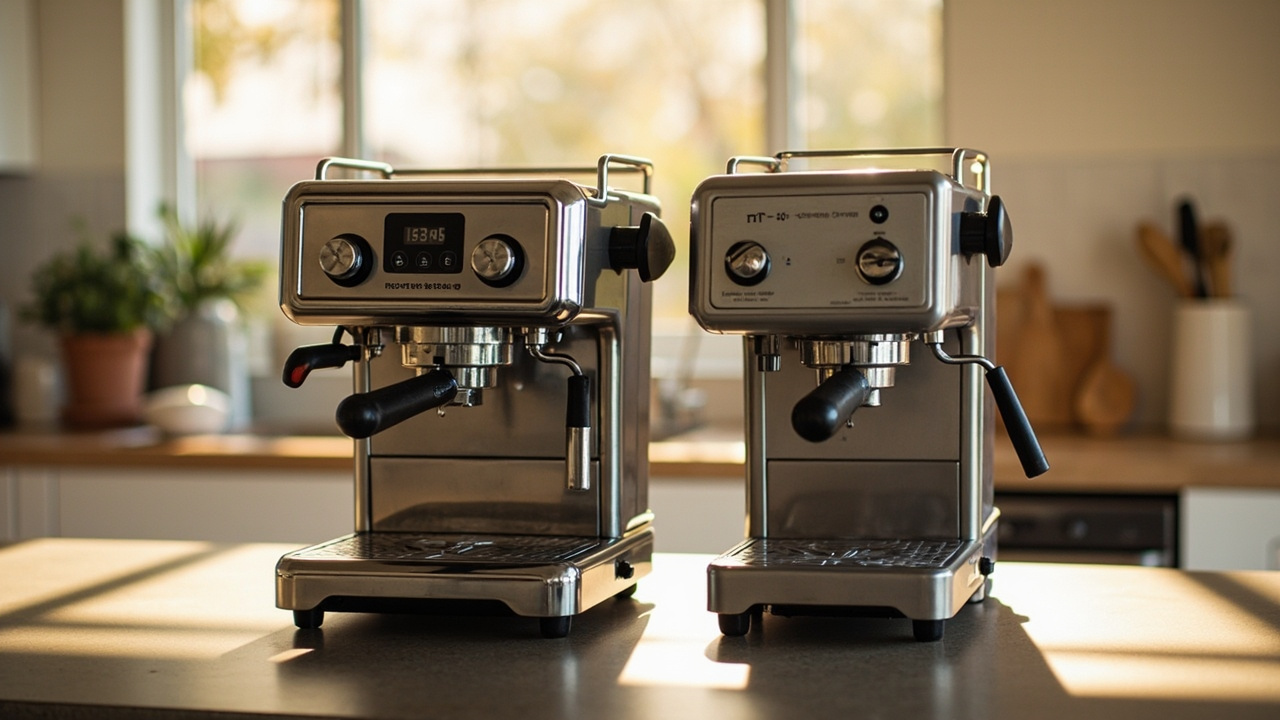
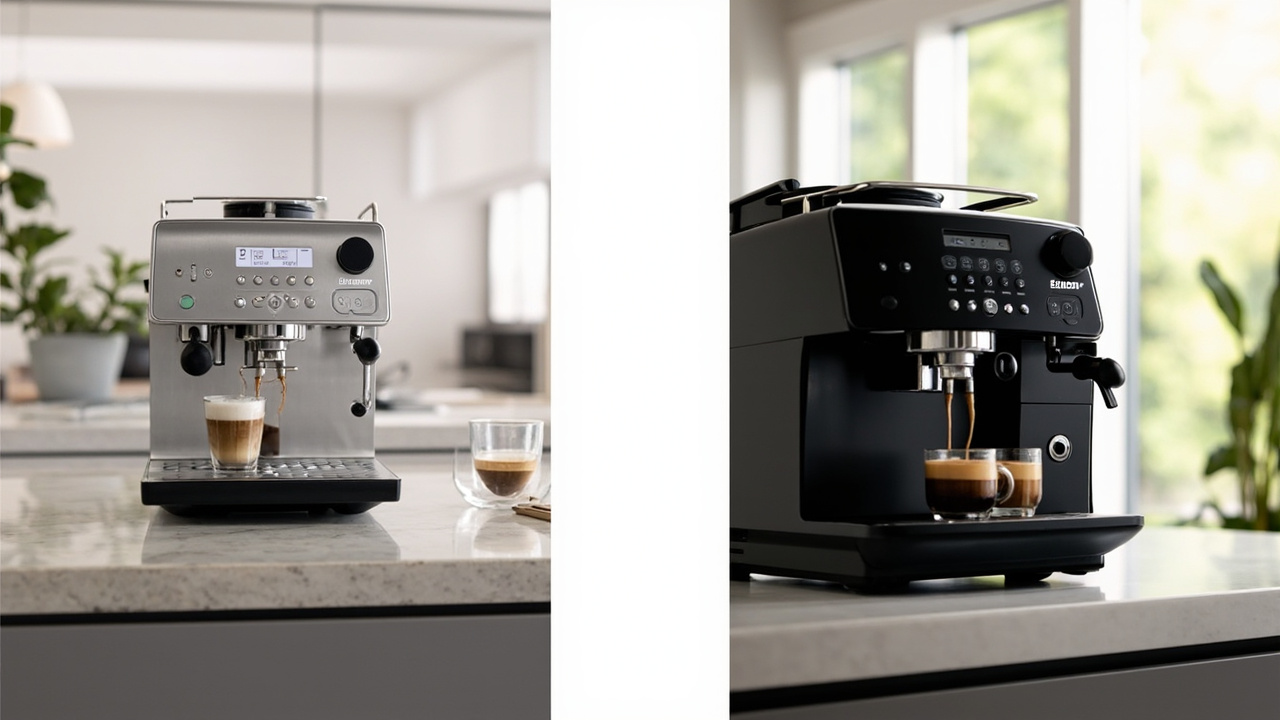
Once you’re shopping past $1,000 for a home espresso machine, the conversation shifts from “is it good?” to “which kind of good is right for you.” In 2026, no two machines illustrate that split more clearly than the Breville Oracle Jet (BES985) and the De’Longhi Eletta Explore (ECAM450).
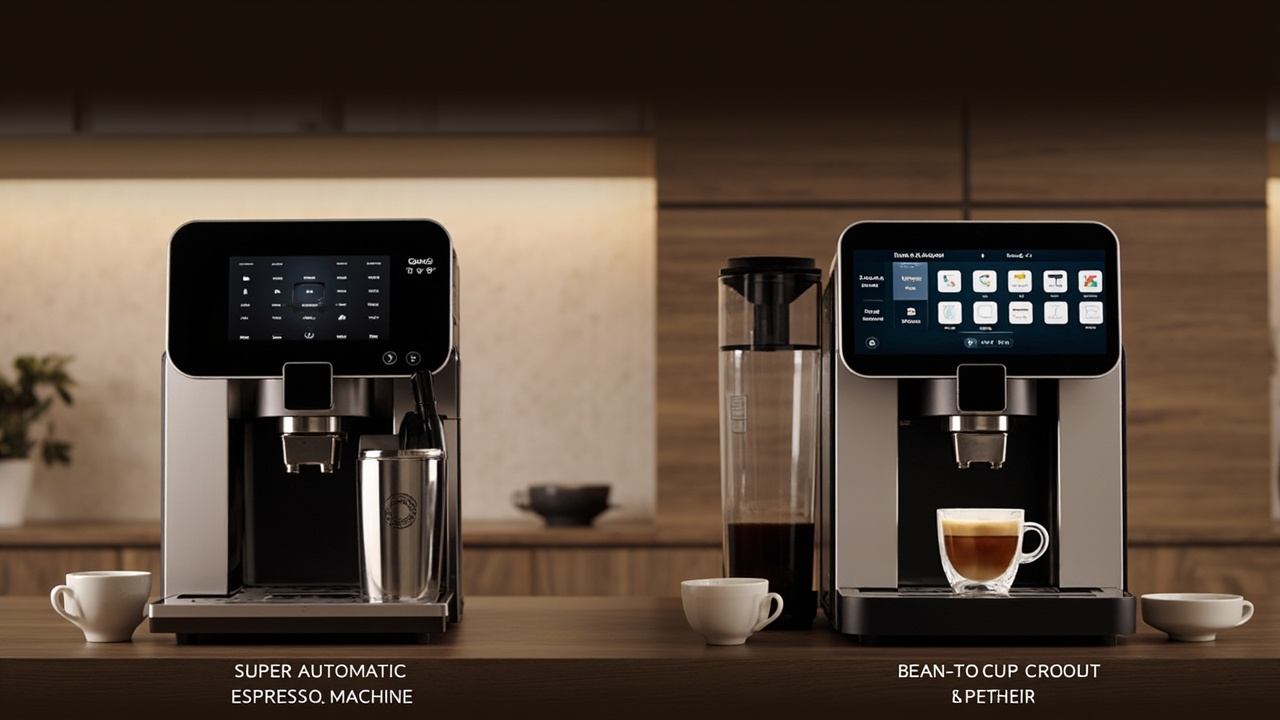
They sit a few hundred dollars apart, both are aimed at people who want real café drinks at home, and both have been reviewed extensively through late 2025 and early 2026. But they are fundamentally different products:
- The Oracle Jet ($1,999.95 MSRP, launched Sept 2024) is a semi-automatic with automation bolted on — you still load a 58 mm portafilter, you still get your hands on the steam wand, but grinding, dosing, tamping, and milk temperature are handled for you. It’s a driver-assist espresso machine, not a self-driving one (Sources: Breville BES985 product page, device.report spec sheet).
- The Eletta Explore (~$1,499 street, ECAM450.xx family) is a true super-automatic — press a tile, get a drink, rinse the carafe. It also has dedicated LatteCrema Cool cold-foam technology and Cold Extraction for cold brew in minutes, two things the Oracle Jet simply doesn’t do (Sources: coffeedant.com Eletta Explore review, De’Longhi ECAM450.65.G support page).
So the price gap isn’t just $500. The workflow gap is enormous. The cost-per-cup question depends entirely on whether you’ll use the cold system, how often you actually pull a manual shot, and how long you plan to keep the machine.
The Verdict First
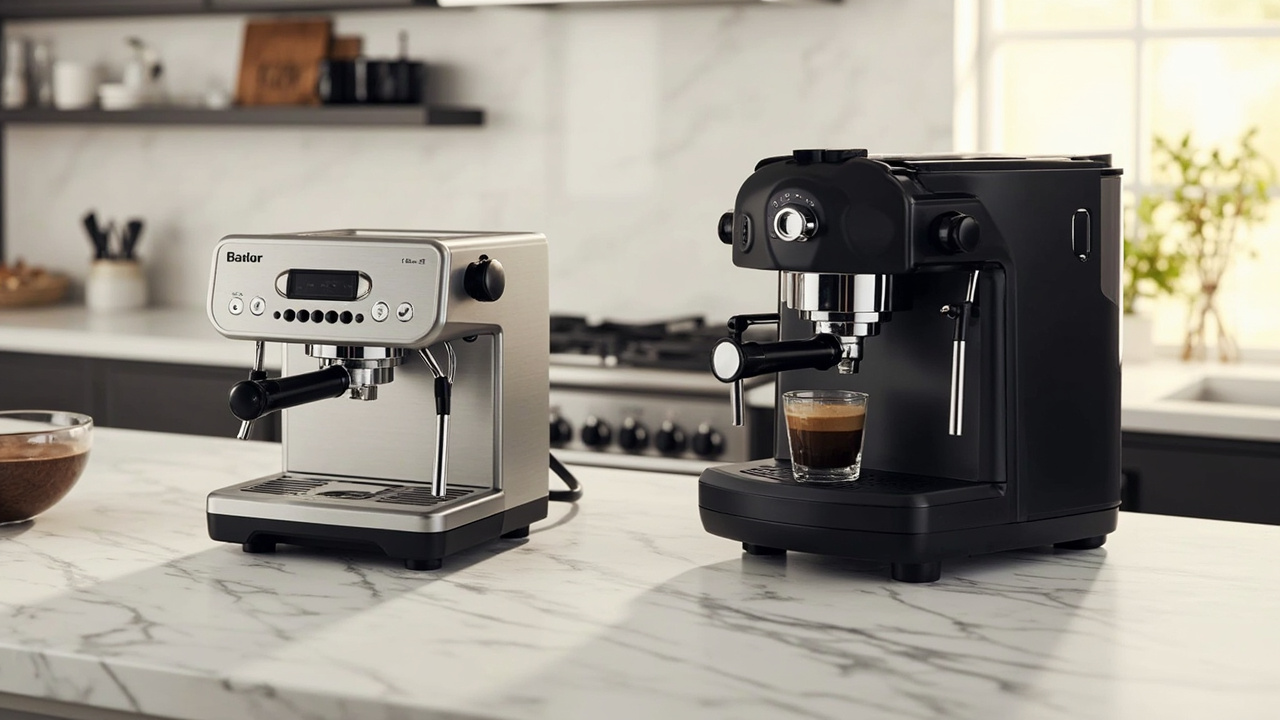
- Choose the Breville Oracle Jet ($1,999.95) if you actually want to learn espresso. You get a real 58 mm portafilter, a Baratza-designed 45-setting conical burr grinder, dual ThermoJet heating, and a workflow that lets you tweak dose, temperature, and grind. It produces noticeably better straight espresso and milk drinks than any super-automatic in this price band — at the cost of more learning and a heavier counter footprint (Source: WIRED review, Breville Oracle Jet (2025)).
- Choose the De’Longhi Eletta Explore (~$1,499) if you want a set-and-forget machine that handles iced lattes, cold foam, and cold brew without you touching a portafilter. The Eletta Explore is the better value for households that drink more iced drinks than straight espresso and for anyone who will give up espresso purity for convenience, app control, and consistent cold drinks year-round (Source: coffeedant.com Eletta Explore review).
- Skip both if you don’t make at least 3–4 espresso-based drinks a week. A $400 Bambino Plus + a $250 Baratza Encore ESP is the smarter buy for casual drinkers — the $1,500+ tier only pays off with regular use.
- Skip the Oracle Jet specifically if you’ve seen forum reports of electronic failures at the 3–4 year mark. Long-term owners describe “exceptional performance during the warranty period followed by potential electronic failures” (Source: coffeedant.com Breville Oracle Jet review).
Key Comparison Points
Price vs Real Cost Per Use
The sticker-price gap is $500. The real cost-per-cup story depends on how you use the machine and how long it lasts.
| Cost Factor | Breville Oracle Jet (BES985) | De’Longhi Eletta Explore (ECAM450) |
|---|---|---|
| MSRP (USD) | $1,999.95 (Sept 2024 launch) | ~$1,499 street (varies by ECAM450 SKU) |
| Current 2026 Street Price | $1,799–$1,999 (Breville, Best Buy, Williams Sonoma) | $1,299–$1,499 (Amazon, Best Buy, Target) |
| Power Draw | 1,400–1,600 W (220–240 V input spec) | ~1,450 W (De’Longhi spec) |
| Heating System | Dual ThermoJet (heats in ~3 s) | Single thermoblock + Cold Extraction line |
| Brew Type | Semi-auto (58 mm portafilter, 22 g dose) | Super-auto (removable brew group) |
| Cold Brew / Cold Foam | Cold Espresso in ~1 min (warm, not cold) | Cold Extraction in ~3 min + LatteCrema Cool |
| Beans Per Drink (typical) | 18–22 g (dialed in) | 10–14 g (factory preset) |
| Daily Use @ 3 Drinks | ~1,095 cups/yr | ~1,095 cups/yr |
| Realistic Lifespan (owners) | 3–5 years (some 3–4 yr electronic failures) | 5–8 years (super-auto group, easier service) |
| 5-yr Cost / Cup (amortized, $1.99/$1.50) | ~$0.91 incl. machine (3-yr life) | ~$0.27 incl. machine (6-yr life) |
| Cost of Ownership Over 6 Years | ~$3,999 (1.5× machine if it fails once) | ~$1,499 + $100–$200 in descaler/filters |
Two takeaways:
- The De’Longhi is meaningfully cheaper per drink — but only because it lasts longer and uses less coffee per shot. If the Breville fails at year 3 (a real pattern, not a hypothetical), your effective cost-per-cup roughly triples, and the Oracle Jet’s espresso quality advantage gets expensive.
- Both machines only “pay off” against a $5–$7 daily café habit if you make 3+ drinks a day at home. If you only make one, neither amortizes better than a $400 Bambino.

Build Quality and Durability
These two machines are built on opposite engineering philosophies — and the long-term reliability data backs that up.
Breville Oracle Jet (BES985) — semi-auto with an automation overlay:
- Brushed stainless steel body, ~16.75” H × 15” W × 14.5” D — a real countertop presence
- 58 mm stainless steel portafilter, 22 g dose
- Dual ThermoJet heating system — fast (~3 s heat-up), 32% more energy efficient than a Thermoblock per Breville internal testing
- Baratza-designed conical burr grinder (45 settings), integrated
- Auto grind, dose, tamp into the portafilter — no manual tamping
- Auto MilQ milk system with 8 texture levels and 4 milk presets (dairy, soy, almond, oat)
- Barista Guidance: detects over/under extraction and recommends grind changes
- Reported durability risk: electronic failures at the 3–4 year mark are common enough that long-term owners and reviewers flag it as the Oracle Jet’s biggest weakness (Source: coffeedant.com Breville Oracle Jet review)
- 2-year limited warranty (Breville US)
De’Longhi Eletta Explore (ECAM450.xx) — true super-automatic:
- Compact plastic-and-metal body, smaller footprint than the Oracle Jet
- 13-step conical burr grinder (vs 45 on the Breville)
- Two milk carafes: LatteCrema Hot (for cappuccino/flat white) and LatteCrema Cool (cold foam for iced drinks)
- Cold Extraction Technology — cold brew in ~3 min, no overnight wait
- To-Go mode supports travel mugs up to 16 oz
- 3.5” color TFT touchscreen, 4 user profiles, Coffee Link app
- Removable brew group — dishwasher-safe parts, easier descaling and service
- Super-auto longevity is generally better than semi-auto electronics because the moving parts are simpler and the brew group is replaceable
- 2-year limited warranty (De’Longhi US)
The practical durability split is this: the Breville is more mechanically repairable (real portafilter, real group, no proprietary brew unit), but its electronics are the failure point. The De’Longhi has a less serviceable sealed system in some trims, but its brew group is removable and replaceable, and its electronics are simpler because the machine does less per drink.
For a 5-year owner, the Eletta Explore is statistically the safer bet. For a 10-year owner, neither machine is the right answer — both will likely be replaced or heavily serviced in that window.
Feature Breakdown
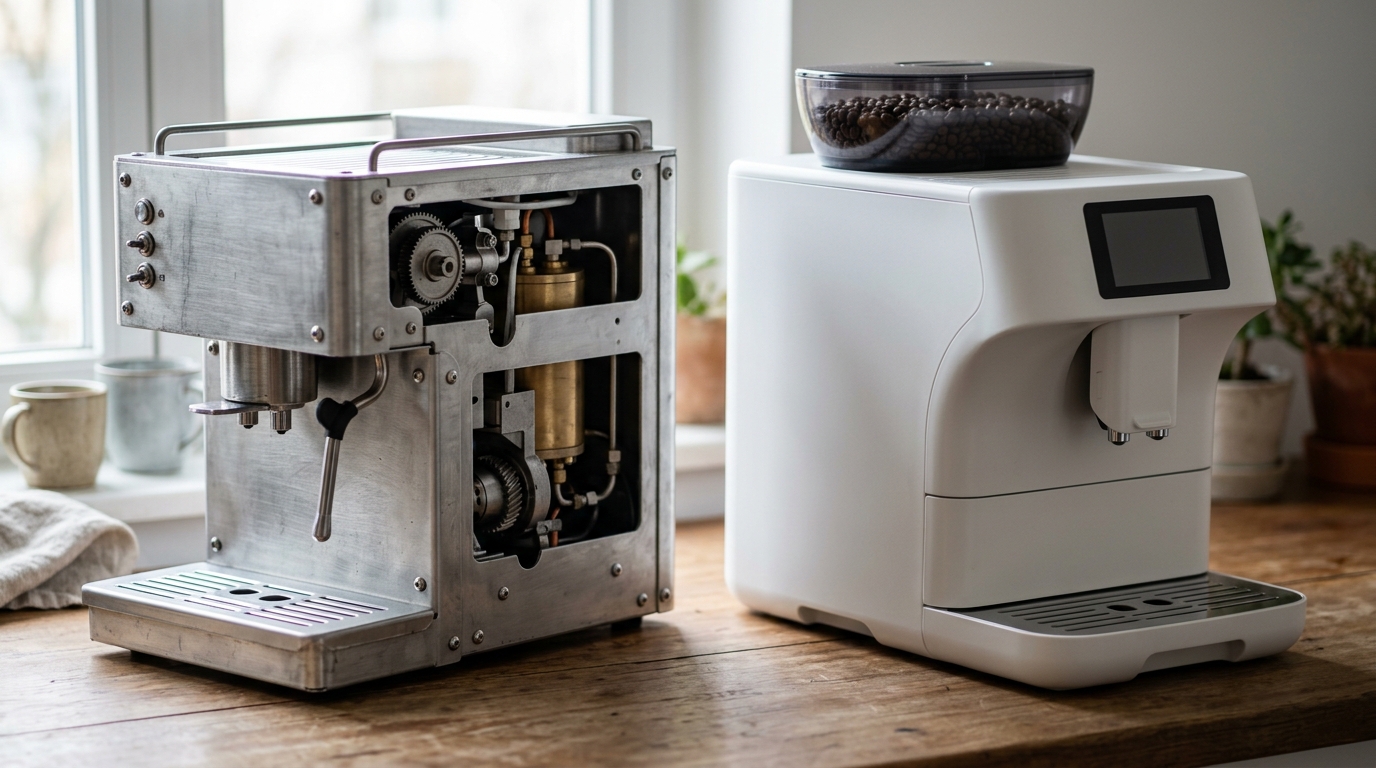
The feature list is where the two machines reveal what they’re really for.
| Feature | Breville Oracle Jet | De’Longhi Eletta Explore |
|---|---|---|
| Brew Type | Semi-automatic (58mm portafilter) | Super-automatic (one-touch) |
| Grinder | Baratza conical, 45 settings | Conical, 13 macro settings |
| Dosing | Auto grind, dose, tamp | Automatic |
| Milk System | Auto MilQ steam wand (4 milk types, 8 textures) | Dual LatteCrema carafes (Hot + Cool) |
| Hot Drinks | Espresso, americano, latte, cappuccino, flat white | 50+ recipes, hot drinks |
| Cold Drinks | Cold Espresso (~1 min, lukewarm result) | Iced latte, iced cappuccino, cold brew (3 min) |
| Cold Foam | No (steam wand only) | Yes — LatteCrema Cool |
| To-Go Cup Support | Manual (raise drip tray) | To-Go mode up to 16 oz |
| Display | 5” touchscreen | 3.5” color TFT |
| App | Limited (firmware updates only) | De’Longhi Coffee Link (profiles, recipes) |
| User Profiles | Limited | Up to 4 |
| Temperature Control | PID + heated group head, ±1° | Bean Adapt (Wi-Fi trims) auto-tunes |
| Bean Adapt / Smart Grading | No (manual Barista Guidance) | Yes on ECAM450.65 / .86 trims |
| Removable Brew Group | No (proprietary group) | Yes — easy to clean & service |
| Bean Hopper | ~280 g | ~300 g |
| Water Tank | 2.5 L | 1.8 L |
| Cup Clearance | ~10 cm | ~14 cm (with To-Go tray) |
| Power Draw | 1,400–1,600 W | ~1,450 W |
| Footprint (W × D × H) | 15 × 14.5 × 16.75 in | 10.2 × 17.5 × 15 in (more compact) |
| Weight | ~31 lb (14 kg) | ~22 lb (10 kg) |
| Warranty | 2-year limited | 2-year limited |
Two patterns emerge:
- The Breville is built around espresso quality — 45 grind settings, 22 g dose, real portafilter, temperature control down to ±1°. You give up convenience (no cold foam, no app, no profiles).
- The De’Longhi is built around lifestyle and variety — cold drinks, hot drinks, iced drinks, travel mugs, app control, family profiles. You give up espresso nuance (13-step grinder, preset dosing, sealed brew group).
Neither machine is worse — they’re answering different questions. “What is the best espresso I can make at home?” vs “What is the best variety of drinks I can hand to anyone in my household without explanation?”
The Cold Drink Question
This is the single biggest feature differentiator and it’s worth its own section.
The Breville Oracle Jet has “Cold Espresso” — a one-minute low-temperature extraction. WIRED’s reviewer describes the result as “more like lukewarm than cold” (Source: WIRED, Breville Oracle Jet Review (2025)). It is not cold brew, it is not cold foam, and you cannot make an iced latte in the way most people mean by that phrase.
The De’Longhi Eletta Explore has two dedicated cold systems:
- Cold Extraction Technology — pulls a cold-brew-style base in ~3 minutes using a separate cold water path, no overnight wait.
- LatteCrema Cool — a second milk carafe that dispenses chilled milk foam that actually holds its texture on ice for iced lattes and iced cappuccinos.
If you live somewhere hot, drink iced drinks 6+ months a year, or have a household that orders more iced lattes than flat whites, the Eletta Explore wins this category decisively — and it’s not close. The Oracle Jet simply cannot do what the Eletta Explore’s cold system does, and at $1,999 that’s a meaningful gap.
Conversely, if you have never once made an iced latte at home and you don’t plan to start, the Eletta Explore’s cold system is a $300+ premium you’re paying for nothing.
Pros and Cons
Breville Oracle Jet (BES985)
Pros
- Best-in-class espresso quality for the price band — 58 mm portafilter, 22 g dose, dual ThermoJet heating, PID + heated group head
- Baratza-designed 45-setting grinder — fine control that super-automatics don’t match
- Auto grind, dose, and tamp — cuts the biggest learning curve of semi-auto espresso
- Auto MilQ steam wand with 8 texture levels and 4 milk presets (dairy, soy, almond, oat)
- Firmware-upgradable — Breville has added new drinks and tuning over the device’s lifetime
- Barista Guidance helps less experienced users dial in shots
- More energy efficient than a Thermoblock (32% per Breville internal testing)
- 2-year warranty
Cons
- $1,999.95 MSRP — and resale on a 3-year-old unit is poor
- 3–4 year electronic failure risk is a documented pattern in long-term owner reports (Source: coffeedant.com Breville Oracle Jet review)
- No cold brew, no cold foam — Cold Espresso is lukewarm at best
- 15” × 14.5” footprint — needs serious counter space
- No app control, no user profiles — single-user workflow
- You still have to learn espresso — it’s a semi-auto, not a one-touch
- Steam wand requires manual purging and the typical semi-auto learning curve
De’Longhi Eletta Explore (ECAM450.xx)
Pros
- ~$500 cheaper than the Oracle Jet at typical street prices
- Cold Extraction in ~3 minutes — actual cold brew from a super-automatic
- LatteCrema Cool — real cold foam that holds on ice (a category the Oracle Jet doesn’t compete in)
- 50+ one-touch recipes — hot, iced, cold brew, To-Go
- Coffee Link app + 4 user profiles — works for a household, not just one user
- To-Go mode up to 16 oz with adjustable drip tray
- Removable brew group — easier to clean and service than the Breville’s proprietary group
- Smaller and lighter (~22 lb vs 31 lb) — better for smaller kitchens
- 2-year warranty
- 5–8 year realistic lifespan in owner reports, with replaceable parts
Cons
- 13-step grinder — far less grind control than the Breville’s 45 settings
- Espresso is “very good for a super-automatic,” not best-in-class — purists will notice
- Feature set varies by ECAM450 SKU — you have to check that your exact model has Cold Extraction, Wi-Fi, and Bean Adapt
- Milk temperature is conservative — some users want hotter milk than the LatteCrema system delivers
- Macro-stepped grinder limits ultra-light roast dialing
- Plastic-heavy body compared to the Breville’s brushed stainless
- SKU confusion — ECAM450.55, 450.65, 450.86 all sell under “Eletta Explore” with different features
Best For / Skip If
Buy the Breville Oracle Jet if you are:
- An aspiring home barista who wants to learn semi-auto workflow without giving up automation for grinding, dosing, and tamping
- A household that drinks mostly straight espresso, cortados, and flat whites — drinks where the bean quality matters more than the milk system
- Someone who already owns a good grinder and wants the best espresso per dollar in the $2,000 tier and is comfortable with the 3–4 year failure risk
- A buyer willing to dedicate 15” × 14.5” of permanent counter space
Buy the De’Longhi Eletta Explore if you are:
- A household of 2–4 people who want different drinks for different people without anyone learning barista technique
- Someone who drinks iced lattes, iced cappuccinos, or cold brew regularly — the LatteCrema Cool + Cold Extraction system is unmatched in this price band
- A buyer who values app control, user profiles, and To-Go cup support over espresso purity
- Someone with a smaller kitchen (10.2” × 17.5” footprint) who can’t spare the Oracle Jet’s 15” × 14.5”
- A long-term planner — 5–8 year realistic lifespan beats the Breville’s documented 3–4 year electronic risk
Skip both if you:
- Drink fewer than 3 espresso-based drinks a week — a $400 Bambino Plus + Baratza Encore ESP is the better financial decision
- Are happy with Nespresso Vertuo or a pod machine for under $300
- Want true café-grade espresso — neither is a La Marzocco Linea Mini; at $5,000+ that category is a different conversation
Skip the Oracle Jet specifically if you:
- Want iced or cold drinks — it cannot do them
- Have read the 3–4 year electronic failure reports and are not willing to accept that risk at $1,999
- Need to share the machine with multiple users without a learning curve
Skip the Eletta Explore specifically if you:
- Care about espresso quality more than drink variety
- Are a single-origin light-roast drinker who needs 45+ grind settings
- Hate SKU games and don’t want to verify which ECAM450 trim has which features
Bottom Line
The Breville Oracle Jet and the De’Longhi Eletta Explore are both genuinely good machines — but they’re not competing for the same buyer.
The Oracle Jet is the better espresso machine. The Eletta Explore is the better drink-making appliance.
At $1,999.95 the Oracle Jet charges a serious premium for espresso quality, and the documented 3–4 year electronic failure pattern means you’re paying for a machine that may not make it to year 5. For buyers who actually drink straight espresso and want to learn, that trade is worth it. For everyone else, the math is hard.
At ~$1,499 the Eletta Explore is the better value in this comparison. It does more things, lasts longer, costs less, and is the rare super-automatic that takes iced and cold drinks seriously. The 13-step grinder and the preset dosing are real compromises — but they’re compromises that most households will never notice, and the cold foam and cold brew system is something the Oracle Jet simply cannot replicate.
“Buy smart. Get more value.” means choosing the machine that matches your drinking habits — not the one with the better spec sheet. If your counter sees more iced lattes than straight espresso, the Eletta Explore saves you roughly $500 upfront and likely another $300–$500 in avoided mid-life replacement. If your counter sees more flat whites and cortados than anything else, the Oracle Jet’s espresso quality is the right thing to pay for.