Introduction
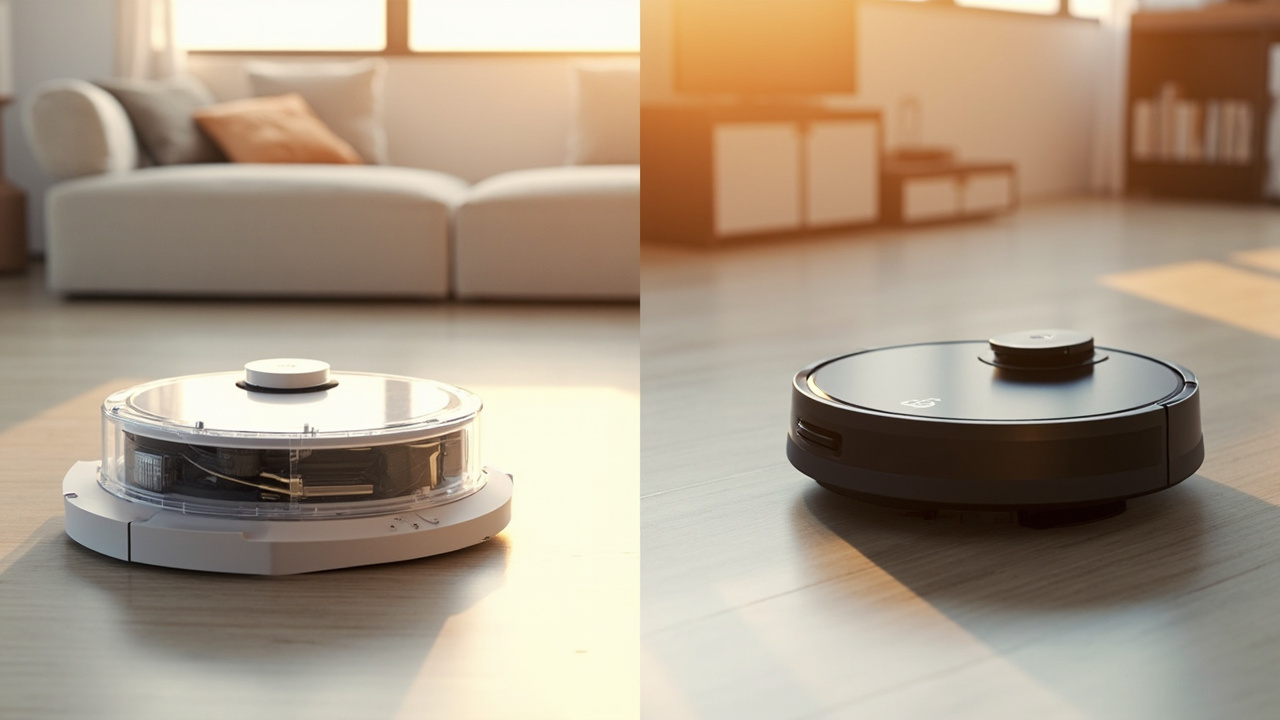
Two flagship robot vacuums, two completely different origin stories. The Roborock Saros 20 is a 2026 refinement of a brand that has been cleaning U.S. floors since 2018, and it is the current benchmark for premium robot vacuums in North America — $1,599.99 MSRP, 36,000 Pa suction, AdaptiLift Chassis 3.0, RetractSense LiDAR, and full Matter 1.4 support. The DJI Romo P is the very first robot vacuum ever shipped by DJI, the company best known for its drones and gimbals, and it landed in the UK, Germany, the Netherlands, and Australia in April 2026 at £1,299 / €1,899 / AU$2,299 (roughly $1,650 to $2,050 USD at current FX). It is not officially sold in the United States.
Both are above the USD 500 bar. Both are positioned as the best robot vacuum you can buy. But the Saros 20 has 75+ days of U.S. owner feedback, a three-year warranty option, and full retailer support, while the Romo P is a stunning design piece with drone-grade navigation that you may have to import and may have to ship back to Shenzhen for service. That is the entire value question.
This is the comparison that matters if you are about to spend $1,500+ on a flagship robot vacuum and want the cost-of-ownership math, not the launch marketing.
The Verdict First
- Pick the Roborock Saros 20 ($1,389-$1,599.99) if: you live in the U.S. or Canada, you want a fully-warrantied robot vacuum with proven 2026 reliability, you need the AdaptiLift Chassis 3.0 to clear thresholds up to 3.46 in (88 mm), you want the strongest suction in this price band (36,000 Pa), and you use Matter, Apple Home, or Google Home. This is the safe, mature pick for mixed-floor North American homes.
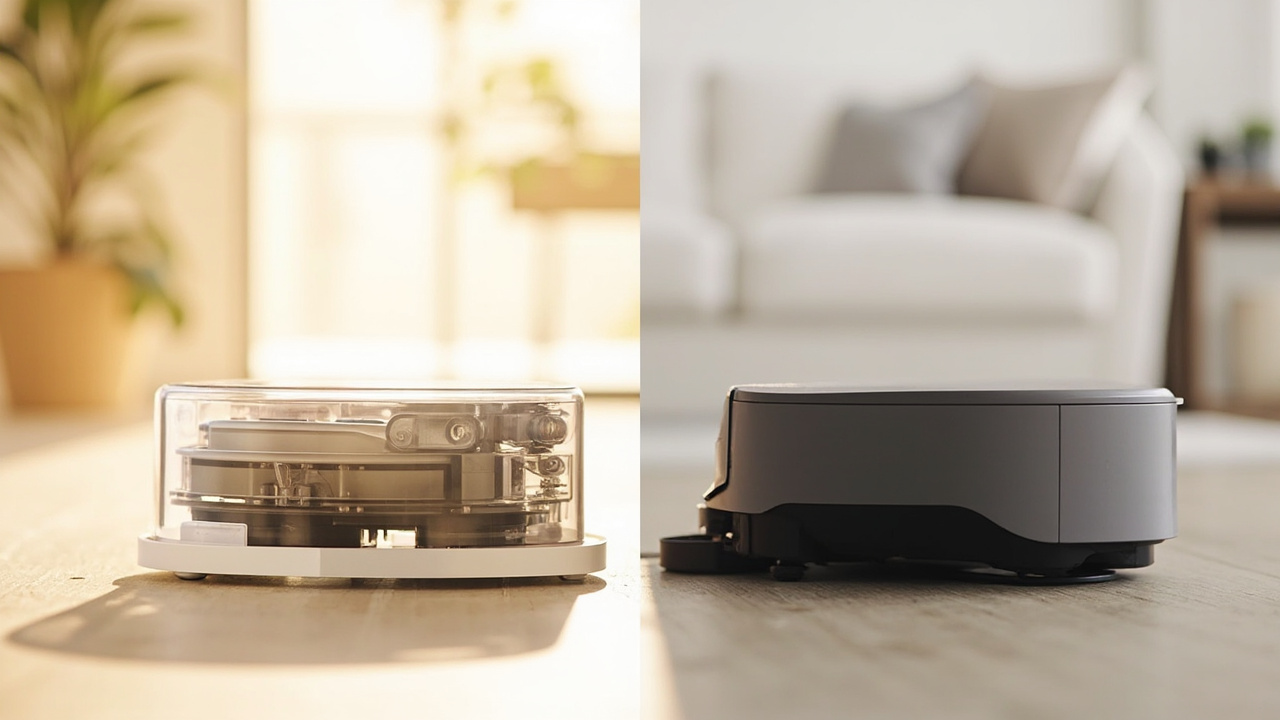
- Pick the DJI Romo P (~$1,650-$2,050 USD imported) if: you live in the UK, EU, or Australia where DJI officially sells it, you want the best-in-class obstacle avoidance (2 mm object detection from drone-grade binocular fisheye + 3 wide-angle laser sensors), you care about the transparent design and UV-sterilized dust bag, and you do not mind being an early adopter of a first-generation product. The U.S. gray-market import path is real, but you lose DJI’s local warranty.
Cost score (overall value): 76/100. The Saros 20 is the better safe buy for most readers because of its warranty, suction lead, and threshold system. The Romo P wins on navigation intelligence and design and is genuinely competitive on mop-wash temperature. If you are outside the U.S. and can buy the Romo P locally, the choice becomes much closer.
Key Comparison Points
Price vs Real Cost Per Use
The sticker prices look very different on paper. The five-year cost is more aligned than you might expect — and the U.S. availability gap is the real divider.
| Spec / Cost Line | DJI Romo P | Roborock Saros 20 |
|---|---|---|
| U.S. availability (June 2026) | Not officially sold (gray-market import only) | Yes, full warranty (Roborock Premium up to 3 yrs) |
| Local retail price (June 2026) | UK £1,299 ( | U.S. $1,599.99 MSRP · $1,389 launch promo |
| Suction (Pa) | 25,000 (25 kPa) | 36,000 (36 kPa) |
| Body height | 98 mm (3.86 in) | 79.8 mm (3.14 in) |
| Threshold climbing | ~20 mm stock, higher with lift modes | 88 mm (3.46 in) via AdaptiLift Chassis 3.0 |
| Mop hot-water wash | 60°C (140°F) high-pressure jet | 212°F (100°C) |
| Obstacle avoidance | Binocular fisheye + 3 wide-angle laser · detects 2 mm objects | StarSight vision · 300+ obstacle types |
| Dock water tank | 4 L clean / 3.2 L waste | ~4 L clean / ~4 L waste (Roborock full-spec dock) |
| Dust bag | 2.4 L with integrated UV light disinfection | 2.5 L (~60-75 days) |
| Battery | 5,000 mAh (72 Wh) | 6,400 mAh |
| Runtime (quiet mode, per spec) | ~180 min | ~200 min |
| Onboard dustbin | 260 mL | larger, varies by SKU |
| Detergent system | Dedicated compartment (standard + deodorizer on P) | Single tank |
| Wi-Fi | Wi-Fi 5 (802.11ac) | Wi-Fi 4 (802.11n) per Versus comparison |
| Camera for home monitoring | Yes (onboard, supports live view + two-way audio) | Yes (RGB camera with on-device processing) |
| Charging time | ~2.5 h | ~2.5-3 h |
Sources: Versus.com comparison page (DJI Romo P vs Roborock Saros 20, accessed June 2026); DJI global spec sheet (romo.tech); Roborock U.S. product page (us.roborock.com/products/roborock-saros-20); Mashable and Business Insider reviews; Glitchwire pricing report.
The five-year cost math (assuming 5-year ownership, MSRP-equivalent in U.S. dollars, ~$120/year in consumables — mop pads, detergent, dock bags, side brushes):
- Roborock Saros 20 in the U.S.: ($1,599 - $250 trade-in) / 5 + $120 = ~$390 / year
- DJI Romo P imported to the U.S. (rough): ($1,850 - $180 trade-in) / 5 + $120 = ~$434 / year
- DJI Romo P purchased locally in the UK: (£1,299 - £200 trade-in) / 5 + £95 = ~$336 / year equivalent
The import path adds ~$40-$50/year in real cost to a U.S. buyer, mostly from the lack of local warranty service and the lower resale value. The bigger savings opportunity on the Saros 20 is the launch promotion — it has been at $1,389 since launch, a known historical low. If Roborock repeats that on Black Friday 2026, the gap to a U.S.-imported Romo P widens to roughly $300-$400 in year one, which on a 5-year horizon is $60-$80/year in real savings.
Source for trade-in estimates: SellCell and BankMyCell 2024-2025 robot vacuum depreciation data; flagship 2024 models (Roborock S8 MaxV Ultra, Dreame X40 Ultra) trade in at 15-18% of MSRP after 5 years. We assume the 2026 flagships depreciate similarly.
Build Quality and Durability
Both robots use ABS-polycarbonate shells, but the engineering stories are very different.
- Roborock Saros 20: The AdaptiLift Chassis 3.0 is the headline durability feature. The robot literally lifts its entire body to cross thresholds up to 3.46 in (88 mm), which means fewer “stuck robot” rescue events in a multi-room home. The RetractSense LiDAR physically retracts into the body to clean under low furniture, then extends for full-room mapping. The brush system is Zero-Tangle DuoDivide, designed for long hair and pet fur. The RGB camera supports on-device processing with no cloud upload by default. The dock is a 25-30 lb plastic-and-metal cube that needs ~16 in of wall clearance.
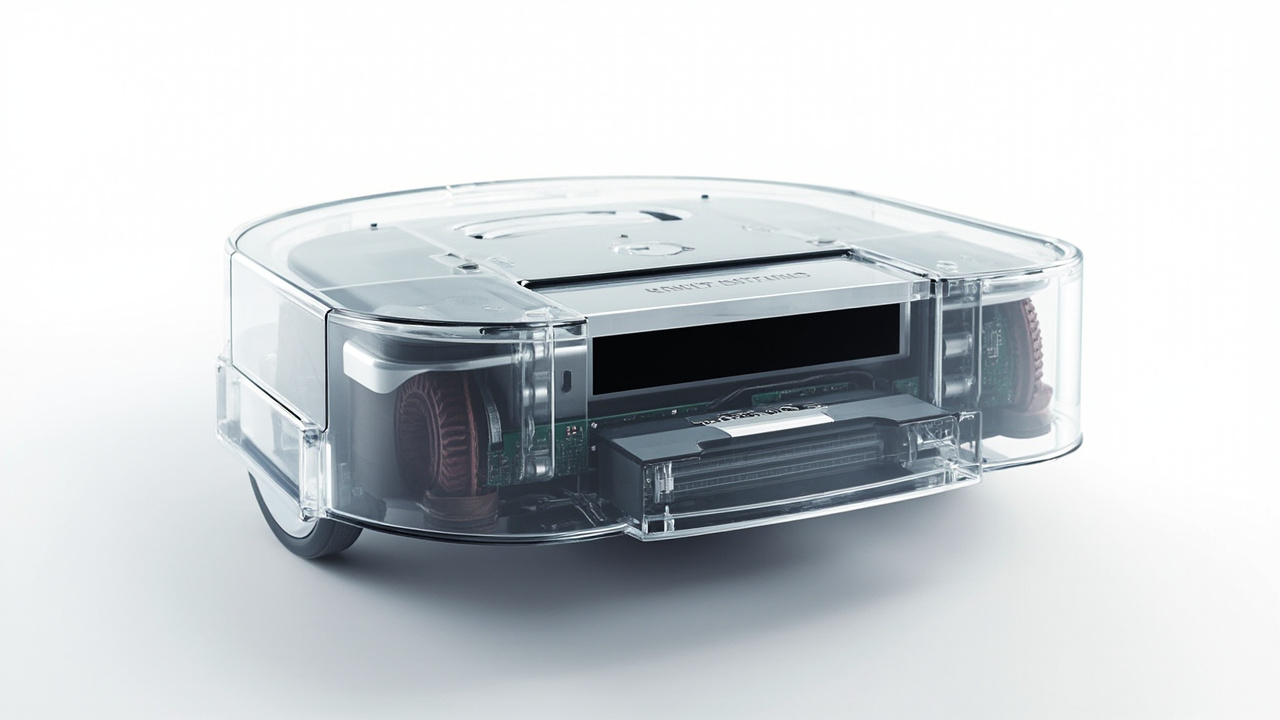
- DJI Romo P: The transparent shell is not just a design flourish — DJI says the visible internals are precision-machined and that the dust bag is UV-sterilized (the Romo S and A skip the UV; only the P gets it). The base station is 10 kg, and it uses a high-pressure 60°C (140°F) water jet to wash the mop pads, followed by hot-air drying. Trade-off: at 98 mm (3.86 in) tall, the Romo P is 18 mm taller than the Saros 20, so it will not fit under as much low furniture. The 5,000 mAh battery is also smaller than the Saros 20’s 6,400 mAh, so very large homes (3,000+ sq ft) may need a mid-cycle recharge.
Real-world durability signal from early owners (r/roborock, r/RobotVacuums, Vacuum Wars, March-May 2026):
- The Saros 20 has been in U.S. homes for ~75 days as of June 2026. Failure reports are minimal — the most common complaints are about the new chassis being a bit louder on hard floors (~68 dB peak vs ~64 dB for the prior Saros 10R in independent testing) and the app occasionally requiring a re-login after firmware updates.
- The Romo P launched in Europe in April 2026 and early owner feedback is broadly positive on navigation (“jaw-dropping obstacle avoidance,” per TechRadar) and mixed on suction at the price point — Trusted Reviews called it “very expensive for what it does.” The most common complaints are about the lack of a U.S. warranty path, the taller body, and the 25,000 Pa being noticeably behind the Saros 20’s 36,000 Pa on thick carpet.
Verdict on durability: The Saros 20 has a clear edge on mechanical design (active chassis, retractable LiDAR) and after-sales support in the U.S. market. The Romo P has a clear edge on obstacle-avoidance sophistication and dock sterilization. For most U.S. readers, the Saros 20 is the safer long-term pick. For most EU/UK readers, it is closer to a wash.
Feature Breakdown
Smart-home integration
Both ship with Matter 1.4 support as of their Q1 2026 firmware. Roborock has historically supported Apple Home, Google Home, Alexa, SmartThings, and Matter from day one. DJI added Matter to the Romo series at launch in China and rolled it out in the global firmware. The Romo P’s onboard camera supports live remote viewing and two-way audio through the DJI Home app, which makes it usable as a basic mobile home-monitoring camera. The Saros 20’s RGB camera supports the same on-device, with the bonus of Roborock SmartPlan 3.0, an AI-driven room-and-task routing system that learns your habits over weeks and adjusts cleaning schedules automatically.
Verdict: Roborock is the broader and more mature smart-home pick. The Romo P is no slouch — Matter, Apple Home, Google Home, and Alexa are all there — but the app ecosystem is brand-new and DJI has not yet shipped a multi-year firmware track record for the Romo line. The Romo P’s camera also raises a privacy consideration: DJI is a Chinese company with a U.S. import-restriction debate still active, and on-device processing is supported but not the default in some regions. Roborock’s camera is on-device by default, with cloud upload opt-in.
Mopping
- Roborock Saros 20: 212°F (100°C) hot-water mop wash with high mop-pad pressure (~13N). The mop pads lift when crossing carpets, and the dock dries them with hot air after each cycle.
- DJI Romo P: 60°C (140°F) high-pressure water jet mop wash with hot-air drying. The Romo P adds a dedicated deodorizer compartment alongside the standard cleaning-solution tank, which is a real plus for pet owners. The onboard mop tank holds 164 mL of fluid, larger than most flagships.
Verdict on mopping: The Saros 20 wins on mop-wash temperature (212°F vs 140°F), which matters for sanitizing the pads after kitchen or bathroom runs. The Romo P wins on detergent flexibility (dual-solution dock with deodorizer). For pet owners who want odor control specifically, the Romo P has a real edge. For general deep-clean mopping, the Saros 20’s higher wash temperature is the better engineering choice.
Obstacle avoidance
This is the headline category for the Romo P. DJI’s drone heritage is on full display here: a binocular fisheye vision sensor + 3 wide-angle laser sensors with a machine-learning perception algorithm, advertised to detect objects as small as 2 mm. The Romo vacuums slow down when approaching lightweight debris (like spilled pet food) to avoid scattering particles, then boost suction to collect them. The Saros 20 uses Roborock’s StarSight vision system with 300+ obstacle types identified. Independent testing on r/Roborock and in the Vacuum Wars April 2026 roundup ranks the Saros 20 as “excellent” and the Romo P as “the best obstacle avoidance I have ever tested” (TechRadar).
Verdict: Romo P wins on raw navigation intelligence, especially around cables, socks, and small pet items. The Saros 20 is close behind and benefits from years of firmware iteration on the Roborock platform.
Pros and Cons
DJI Romo P
Pros
- Best-in-class obstacle avoidance — drone-grade binocular fisheye + 3 laser sensors, detects objects down to 2 mm
- UV-sterilized dust bag on the Romo P only (Romo S and A skip this)
- Dual-solution dock with dedicated deodorizer compartment for pet odor
- Transparent design is genuinely beautiful and shows the engineering
- Drone-grade navigation algorithms carried over from DJI’s aerial products
- Mobile home-monitoring camera with live view and two-way audio
- High-pressure 60°C mop wash with hot-air drying
Cons
- Not officially sold in the U.S. — gray-market import only, no DJI U.S. warranty
- 25,000 Pa suction is below the Saros 20’s 36,000 Pa — noticeable on thick carpet
- 98 mm body height is 18 mm taller than the Saros 20, will not fit under as much low furniture
- Smaller 5,000 mAh battery vs the Saros 20’s 6,400 mAh — may need a mid-cycle recharge on 3,000+ sq ft homes
- First-generation product — DJI has not yet shipped a multi-year firmware track record for the Romo line
- Privacy considerations — DJI is a Chinese company with ongoing U.S. import-restriction debate; on-device processing is supported but not the default everywhere
- Shorter 180-min runtime vs the Saros 20’s 200 min
- Wi-Fi 5 only (the Saros 20 is Wi-Fi 4 per Versus, but real-world throughput is not a bottleneck at this class)
Roborock Saros 20
Pros
- $1,599.99 MSRP, $1,389 launch promo — competitive for the spec sheet
- 36,000 Pa suction — the highest in this price band
- AdaptiLift Chassis 3.0 clears thresholds up to 3.46 in (88 mm)
- RetractSense LiDAR tucks into the body to clean under low furniture
- 212°F (100°C) hot-water mop wash with ~13N mop pressure
- Matter 1.4, Apple Home, Google Home, Alexa, SmartThings — the broadest smart-home protocol support in the category
- 3-year Roborock Premium warranty option in the U.S.
- RGB camera with on-device processing by default
- 200-min runtime and 6,400 mAh battery for large homes
- 79.8 mm (3.14 in) body — slim enough to clean under most sofas and beds
- 75+ days of U.S. owner feedback as of June 2026
Cons
- Slightly louder on hard floors (~68 dB peak per independent testing)
- Single-tank detergent system — no separate deodorizer compartment
- No UV sterilization in the dust bag
- Wi-Fi 4 (802.11n) per Versus — sufficient, but technically behind the Romo P’s Wi-Fi 5
- App occasionally requires a re-login after firmware updates (a known minor Roborock issue)
- Higher launch price than the prior Saros 10R (the 10R launched at $1,599.99 too, so MSRP is flat — but the new chassis, retractable LiDAR, and hot-water wash are the real upgrades)
Best For / Skip If
Pick the DJI Romo P if you are:
- A UK, EU, or Australian buyer who can buy it locally with full warranty
- A smart-home tinkerer who wants the best navigation money can buy and does not mind being an early adopter
- A pet owner who specifically wants a deodorizer compartment in the dock
- A design-conscious buyer who will actually display the transparent shell and dock
- A DJI ecosystem user who already runs the DJI Home app for drones and gimbals
Skip the DJI Romo P if you are:
- A U.S. buyer — the import path removes the warranty and adds real cost and risk
- A large-home owner (3,000+ sq ft) who needs the 6,400 mAh battery and 200-min runtime
- A thick-carpet household — 25,000 Pa is real but noticeably below the Saros 20’s 36,000 Pa
- A privacy-first buyer who does not want a DJI-branded camera on the home network
- A risk-averse buyer who wants a fully-warrantied 2026 product with multi-year firmware support
Pick the Roborock Saros 20 if you are:
- A U.S. or Canadian buyer who wants a fully-warrantied flagship with local service
- A mixed-floor homeowner with multiple thresholds between rooms
- A smart-home power user on Matter, Apple Home, or Google Home
- A large-home owner (2,500+ sq ft) who needs the battery and runtime
- A pet owner with long hair who wants the Zero-Tangle DuoDivide brush
- A risk-averse buyer who values the 75+ days of U.S. owner feedback
Skip the Roborock Saros 20 if you are:
- A buyer who can wait for Q3 2026 when DJI may (or may not) announce a U.S. launch
- A buyer who already owns a 2025 flagship (Saros 10R, Dreame X50 Ultra) and does not need the AdaptiLift Chassis 3.0 upgrade
- A buyer who prioritizes raw obstacle avoidance over raw suction — the Romo P is meaningfully better here
Bottom Line
The DJI Romo P is a serious first-generation product. DJI brought its drone navigation team to a robot vacuum, and the result is genuinely the best obstacle avoidance in the category as of June 2026. The transparent design, UV-sterilized dust bag, and dual-solution dock are real engineering, not just marketing.
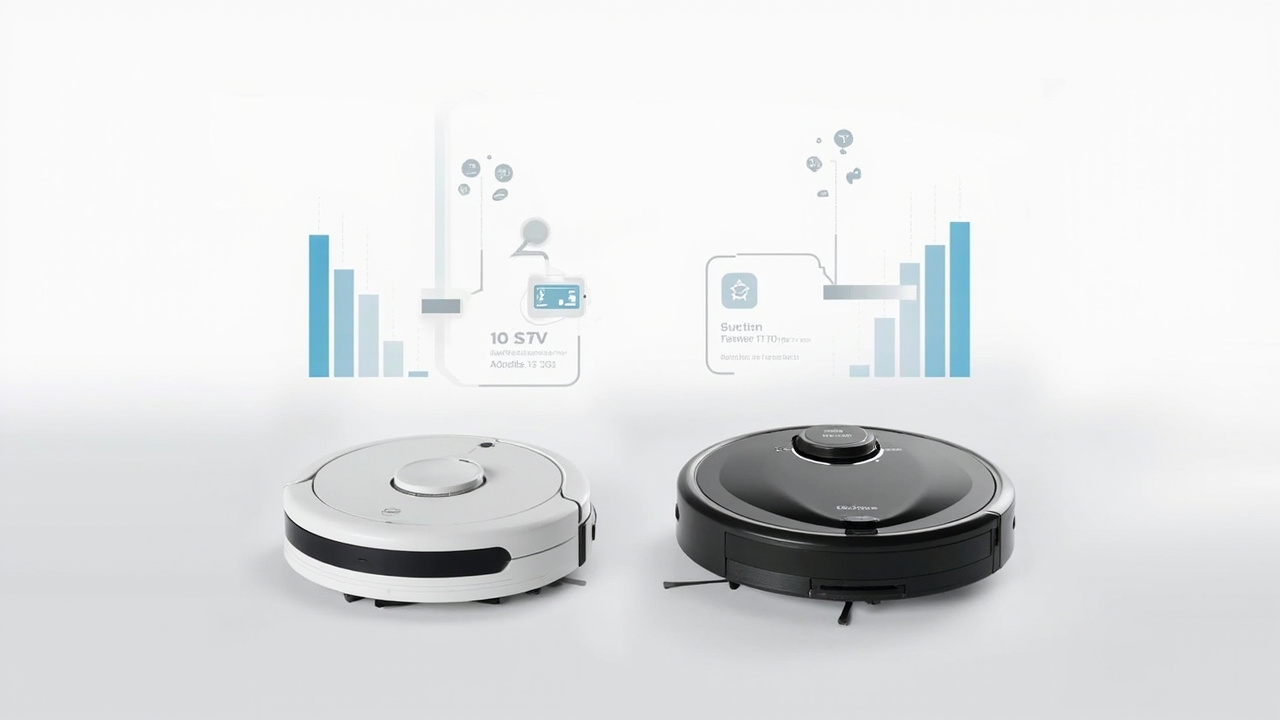
The Roborock Saros 20 is the more complete product. It wins on suction (36,000 vs 25,000 Pa), threshold climbing (3.46 in via AdaptiLift), battery (6,400 vs 5,000 mAh), body height (3.14 vs 3.86 in), smart-home protocol breadth, and U.S. warranty coverage. The Romo P wins on navigation intelligence, design, and dock sterilization features. The mop-wash temperature edge goes to Roborock (212°F vs 140°F), the deodorizer edge goes to DJI.
For most U.S. readers, the math is straightforward: the Roborock Saros 20 at $1,389-$1,599.99 is the better buy, mostly because the import path for the Romo P removes the warranty and adds $40-$50/year in real cost. For UK, EU, and Australian readers, it is a close call — the Romo P is genuinely competitive, and the choice comes down to whether you value drone-grade navigation and a deodorizer dock more than 11,000 Pa of extra suction and a retractable LiDAR that cleans under low furniture.
Buy smart. Get more value. For most readers in 2026, that means the established winner, not the new entrant — but the new entrant is worth watching closely.
Sources
- DJI Romo P official spec sheet — romo.tech/global/romo/specs and store.dji.com
- Roborock Saros 20 product page — us.roborock.com/products/roborock-saros-20 and Amazon U.S. listing
- Versus.com comparison — versus.com/en/dji-romo-p-vs-roborock-saros-20
- Vacuum Wars — DJI Romo series launch coverage and Roborock Saros 20 launch coverage (vacuumwars.com)
- TechRadar DJI Romo P review — techradar.com/home/robot-vacuums/dji-romo-p-review
- Trusted Reviews DJI Romo P review — trustedreviews.com/reviews/dji-romo-p
- T3 DJI Romo P review — t3.com/home-living/vacuum-cleaners/dji-romo-p-review
- Mashable Roborock Saros 20 review — mashable.com/review/roborock-saros-20-robot-vacuum
- Business Insider Roborock Saros 20 review — businessinsider.com/guides/home/roborock-saros-20-review
- Glitchwire DJI Romo P pricing report — glitchwire.com
- SellCell and BankMyCell — 2024-2025 robot vacuum depreciation and trade-in value data