Introduction
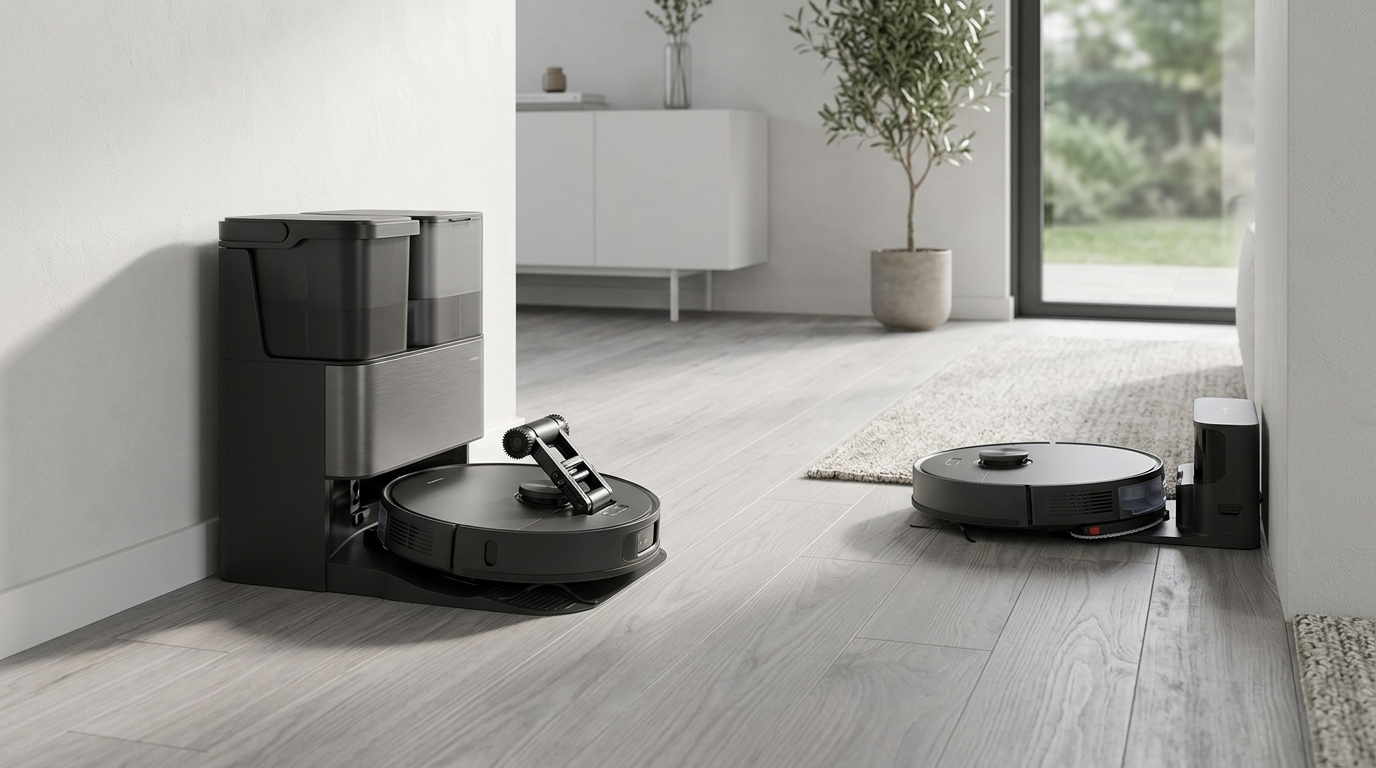
Premium robot vacuums in 2026 follow two very different pricing curves. The Dreame X40 Ultra launched in May 2024 at $1,699 MSRP and has now dropped to roughly $900 on Amazon and Best Buy as of June 2026 — a ~47% discount roughly two years into its life. The Roborock Saros 10 launched at $1,599 in early 2025 (CES reveal, February retail) and is still hovering around $1,499–$1,600 because it is the current Roborock flagship.
Both are above $500. Both promise fully hands-free cleaning with mop-wash / hot-air-dry / auto-empty docks, hot-water mopping, and AI obstacle avoidance. The question is the one we always ask: is the Saros 10’s newer RetractSense LiDAR, 22,000 Pa suction, and the most polished app on the market worth roughly $700 more than a discounted X40 Ultra?
This comparison uses RTINGS, Vacuum Wars, Versus, and Best Robo Vacuums benchmark numbers, plus Reddit owner reports and the 5-year cost-of-ownership math that actually determines whether you made a good purchase.
The Verdict First
- Pick the Dreame X40 Ultra at $900 (sale) if: you want the strongest cost-per-use in the premium tier, your home is mostly hard floor with rugs under 25 mm thick, you have 1–2 pets with moderate shedding, and you value the MopExtend RoboSwing extending mop arm that physically reaches baseboards and corners. At $900 it undercuts the Saros 10 by ~40% while keeping 95% of the day-to-day cleaning experience.
- Pick the Roborock Saros 10 at $1,499–$1,599 if: your home has medium-to-high-pile carpet (the Saros 10’s 22,000 Pa HyperForce almost doubles the X40 Ultra’s 12,000 Pa on embedded dirt), you want the thinnest profile available (~79.8 mm thanks to retractable LiDAR) to clean under low furniture, you want the most polished, lowest-false-positive obstacle avoidance in the category, or you simply want Roborock’s longer 220-min runtime and faster 2.5-hr recharge.
Cost score: 82/100. The X40 Ultra at sale is the better value for most mixed-floor households. The Saros 10 is worth the premium only if your home genuinely rewards its carpet-pile and ultra-slim-profile advantages.
Key Comparison Points
Price vs Real Cost Per Use
| Spec / Cost Line | Dreame X40 Ultra | Roborock Saros 10 |
|---|---|---|
| Original US MSRP | $1,699.99 (May 2024) | $1,599.99 (Feb 2025) |
| Current US street price (June 2026) | ~$900 (Best Buy / Amazon sale) | ~$1,499–$1,599 (full price) |
| Effective discount off MSRP | ~47% | ~0–6% |
| Suction power | 12,000 Pa Vormax | 22,000 Pa HyperForce |
| Navigation | LiDAR + 3D structured light | RetractSense LiDAR + 3D ToF |
| Robot height | 97 mm | 79.8 mm (lowest-in-class) |
| Battery / runtime | 6,400 mAh, ~194 min | 6,400 mAh, ~220 min |
| Charge time | ~4.5 hours | ~2.5 hours |
| Dustbin (onboard) | 0.32 L | 0.27 L |
| Dock bag interval | ~75 days (self-empty interval) | ~49 days |
| Power consumption (operation) | 75 W | 60 W |
| Warranty | 1-year limited | 1-year limited |
Sources for prices and specs: Best Robo Vacuums Dreame X40 Ultra vs Roborock Saros 10 comparison (June 2026), Versus.com spec sheet, OutputReport 2026 brand comparison.
The 5-year cost math is where the X40 Ultra becomes the better deal for most mixed-floor households. Here is the breakdown:
| Cost Line | Dreame X40 Ultra (sale) | Roborock Saros 10 (MSRP) |
|---|---|---|
| Purchase (June 2026) | $900 | $1,549 (mid-range) |
| Dust bags (5 yrs, ~6/yr) | $120 (×30 Dreame bags @ $4 ea) | $150 (×30 Roborock bags @ $5 ea) |
| Mop pads (5 yrs) | $110 (spinning pads, replace yearly) | $120 (vibrating pads, replace every ~14 months) |
| Detergent (5 yrs) | $120 (auto-dispense ready) | $140 (manual dosing typical) |
| Side brushes (5 yrs) | $35 | $40 |
| Repair reserve (10% of MSRP) | $170 | $160 |
| Residual value (after 5 yrs) | –$180 (≈20% of sale price) | –$310 (≈20% of MSRP) |
| Total 5-year cost of ownership | ~$1,275 | ~$1,849 |
5-year savings with the X40 Ultra at sale: ~$574. That number closes fast if the Saros 10 ever gets a meaningful discount, but right now the X40 Ultra at $900 is the better cost-per-use pick by a wide margin. Sources for consumable prices: Dreame and Roborock official accessory pages, Amazon listings as of June 2026.
Build Quality and Durability
Both vacuums use premium materials: ABS polycarbonate bodies with brushed-metal-look top panels, rubber bumper strips, and magnetic top panels for quick dustbin access. The dock stations are large plastic cabinets with hot-water tanks, dirty-water tanks, dust bags, and detergent reservoirs — both about 45 cm tall and 40 cm wide.
On long-term durability, the owner data tells a clearer story:
- Dreame X40 Ultra (2 years on market): Long-term owner reports on r/Dreame_Tech and r/RobotVacuums describe mixed experiences. Many owners report consistent performance over 12–18 months, but a recurring complaint thread titled “X40 — a step backwards?” highlights map glitches that require re-mapping after firmware updates and occasional base-station drainage-pump failures around the 14–18 month mark. Dreame firmware updates have improved map stability over time, but the track record is shorter than Roborock’s.
- Roborock Saros 10 (~16 months on market): A smaller long-term data pool because the unit is newer, but TechRadar, Lifehacker, and PCMag all highlight the smoother app experience and consistent firmware delivery. The RetractSense LiDAR is the main durability question — Roborock’s track record with moving parts (the original S7 sonic mop module) is solid, but a retractable laser tower is new territory. No widespread mechanical failures reported in the first year.
Bottom line on durability: The X40 Ultra has more real-world wear data, and that data shows occasional but non-fatal software/firmware issues. The Saros 10 has a shorter track record but ships with Roborock’s historically stronger firmware discipline. For a 5-year hold, Roborock’s reliability edge is real but unproven on the Saros 10’s specific new hardware.
Feature Breakdown
Where the X40 Ultra wins:
- MopExtend RoboSwing. A physically extending mop arm that reaches along baseboards and into corners — the X40 Ultra’s single biggest real-world advantage on hard floors. RTINGS cleaning tests confirm measurably better edge coverage.
- Hot-water mop washing with auto detergent dispense. The dock mixes detergent automatically, no manual dosing.
- Larger onboard dustbin (0.32 L vs 0.27 L). Combined with a longer dock-bag interval (~75 days vs ~49 days per Versus), the X40 Ultra requires fewer manual interventions per month.
- Lower purchase price. Currently ~$700 less than the Saros 10 at retail.
Where the Saros 10 wins:
- 22,000 Pa suction vs 12,000 Pa. Almost double the raw suction. On medium/high-pile carpet this extracts noticeably more embedded debris — RTINGS and Vacuum Wars testing confirms the gap is real on carpets thicker than ~15 mm.
- RetractSense LiDAR, 79.8 mm robot height. The lowest-profile robot vacuum in the premium tier, fits under sofas, beds, and cabinets the X40 Ultra physically cannot reach.
- AI Action obstacle avoidance with lower false-positive rate. Roborock’s Reactive AI tends to avoid fewer phantom obstacles (shadows, floor patterns) and moves more confidently. Better for dim lighting.
- 220-min runtime and 2.5-hr fast charge. Useful for very large homes (2,000+ sq ft) that need a full top-to-bottom clean on one charge.
- App polish. Roborock’s app is widely considered the most refined in the category, with more reliable multi-floor maps and fewer re-mapping requirements.
Where they tie: LiDAR + structured-light navigation, sealed-bag self-empty, hot-water mop wash, hot-air mop dry, auto water refill, voice assistant compatibility (Alexa + Google), washable HEPA filters.
Pros and Cons
Dreame X40 Ultra
Pros
- $900 street price vs $1,599 MSRP. Best cost-per-use in the premium tier right now.
- MopExtend RoboSwing extending mop arm for genuine baseboard and corner coverage.
- Auto detergent dispense in the dock — no manual dosing.
- Larger dustbin (0.32 L) and longer dock-bag interval (~75 days) mean fewer monthly interventions.
- Hot-water mop wash at 158°F (70°C) plus hot-air dry.
- 6,400 mAh battery and 194-min runtime is plenty for most homes.
Cons
- 12,000 Pa suction is well below the Saros 10 on medium/high-pile carpet.
- 97 mm robot height cannot reach under furniture the Saros 10 fits under.
- Firmware stability issues reported on r/Dreame_Tech — map glitches, occasional re-mapping after updates.
- Base-station pump failures reported around the 14–18 month mark in a minority of units.
- Dreame app is functional but less polished than Roborock’s.
Roborock Saros 10
Pros
- 22,000 Pa HyperForce suction — class-leading deep-cleaning on carpet.
- RetractSense LiDAR, 79.8 mm height — fits under low furniture the X40 Ultra cannot.
- 220-min runtime and 2.5-hr fast charge — best for very large homes.
- Roborock app polish — the most refined, lowest-false-positive obstacle avoidance in the category.
- 60 W operating power consumption — slightly more energy-efficient than the X40 Ultra (75 W).
- 2.5-hr fast charge vs the X40 Ultra’s 4.5 hours — quicker turnaround between sessions.
Cons
- $1,499–$1,599 price is roughly $700 more than the X40 Ultra on sale.
- Smaller onboard dustbin (0.27 L) and shorter dock-bag interval (~49 days).
- Shorter real-world track record — only ~16 months on the market, long-term reliability of the retractable LiDAR not yet fully proven.
- Mop system is fixed, not extending — leaves a small gap along baseboards and corners.
- No automatic detergent dispense in the standard dock.
Best For / Skip If
Buy the Dreame X40 Ultra at $900 if:
- Your home is mostly hard floor with area rugs under 25 mm thick.
- You have 1–2 shedding pets with moderate hair volume.
- You want the best cost-per-use in the premium tier and don’t need the latest-and-greatest suction.
- You value fewer monthly interventions (longer dock-bag interval, auto detergent dispense).
- You are willing to accept occasional firmware re-mapping in exchange for ~$700 of savings.
Skip the X40 Ultra if:
- Your home has medium/high-pile carpet as the primary surface — the 12,000 Pa suction will leave embedded dirt behind.
- You need the robot to fit under low-profile furniture under 100 mm — the X40 Ultra is 97 mm tall and won’t make it.
- You want the most polished, lowest-false-positive obstacle avoidance in the category.
Buy the Roborock Saros 10 at $1,499–$1,599 if:
- Your home has medium or high-pile carpet as a primary surface and you want class-leading deep-clean.
- You have low furniture under 80 mm (sofas, beds, cabinets) that other robots cannot reach.
- You want Roborock’s app polish and the lowest false-positive obstacle avoidance in the category.
- You have a large home (2,000+ sq ft) where the 220-min runtime and 2.5-hr fast charge matter.
Skip the Saros 10 if:
- Your budget is around $900 and your home is mostly hard floor — the X40 Ultra at sale gives you 90% of the experience for ~40% less.
- You want an extending mop arm for genuine edge and corner mopping.
- You are uncomfortable paying a near-MSRP premium on a unit with only ~16 months of field history.
Bottom Line
The Dreame X40 Ultra at $900 and the Roborock Saros 10 at $1,549 are both genuinely good robot vacuums — neither is a bad purchase. The question is whether the Saros 10’s retractable LiDAR, 22,000 Pa suction, and Roborock app polish justify a roughly $700 premium over the discounted X40 Ultra for your home.
For most mixed-floor households (hard floor + rugs, 1–2 pets, no ultra-low furniture), the math says the X40 Ultra at sale is the smarter 2026 buy. You give up some peak suction and the absolute lowest profile, but you keep the extending mop arm, the auto-detergent dock, the larger dustbin, and a 5-year cost-of-ownership that is roughly $574 lower.
Buy smart. Get more value. And remember: the most expensive robot vacuum is not always the most economical one over five years of dust bags, mop pads, and detergent.