Introduction
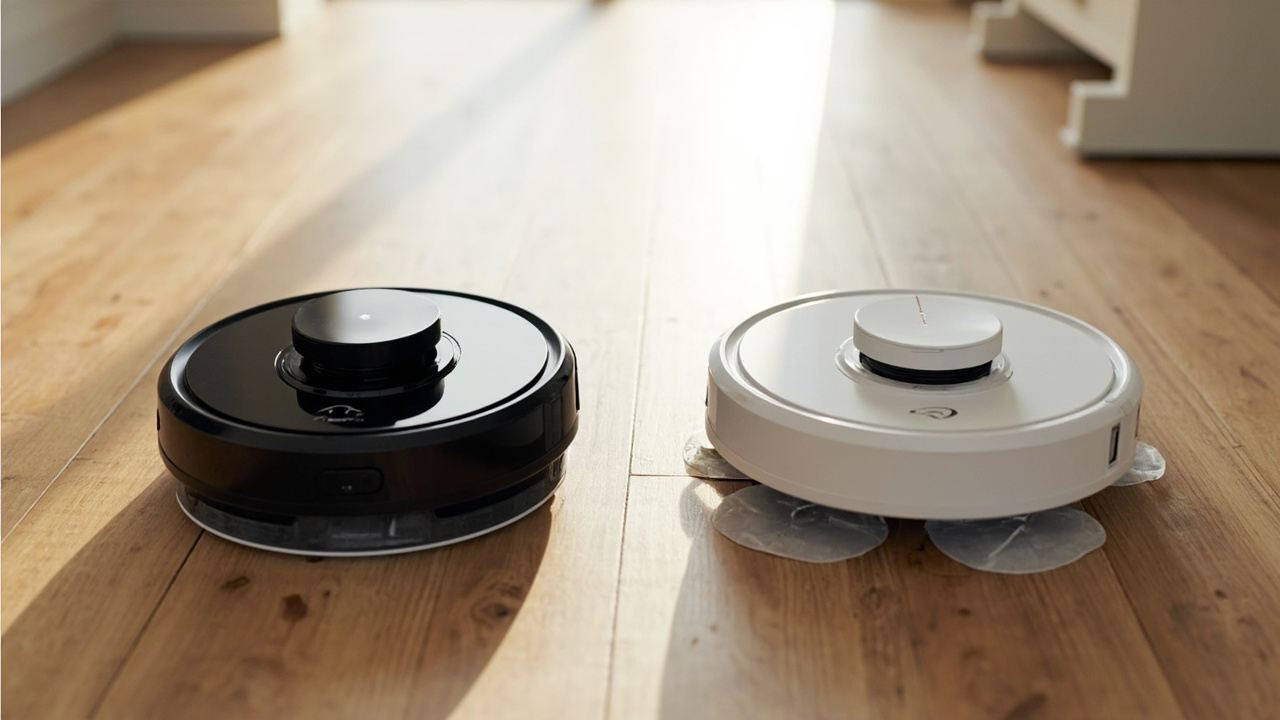
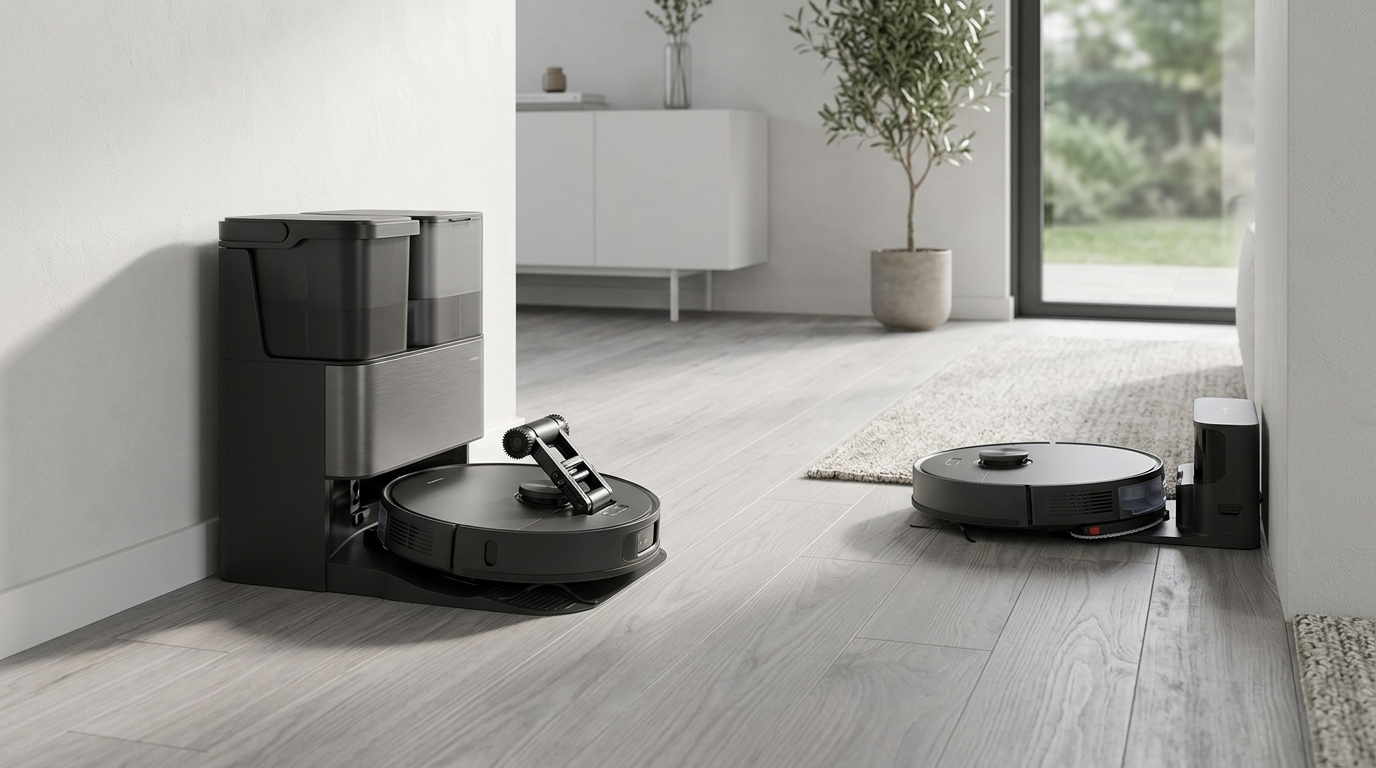
The Roborock Saros Z70 is the first mass-produced robot vacuum with a mechanical arm (OmniGrip) that physically picks up socks, slippers, tissues, and small towels off your floor. It went viral the day it launched. It also costs $2,599 MSRP (currently $1,999 on Amazon) — roughly $900 to $1,000 more than the Dreame X50 Ultra (launch $1,699, frequently $899-$1,049 on sale).
Both machines are 2026 flagships. Both use 360° LiDAR mapping, both wash their mop pads with 80°C hot water, both self-empty, and both are the robots professional reviewers reach for at the top of the lineup. The only meaningful differences are the arm, the climb height, and a stack of small quality-of-life touches.
So the real question for the reader is not “which is the better robot vacuum.” It is: is a $1,000 mechanical arm a feature you will actually use, or is it a first-generation gimmick that costs more than the rest of the robot combined?
This is the comparison to read before you spend either amount.
The Verdict First
- Pick the Roborock Saros Z70 ($1,999-$2,599) if: you have a real, recurring sock-and-slipper problem on the floor (kids, pets, roommates), you are willing to pay for first-generation hardware because you keep your robot 4-5+ years and want the most “future-proof” spec sheet, and the 50% arm success rate is acceptable to you in exchange for never having to pre-tidy the floor.
- Pick the Dreame X50 Ultra ($899-$1,699) if: you want the better value per dollar in raw cleaning performance, you have thresholds above 40 mm that the X50’s ProLeap legs can climb (the Z70 tops out around 40-45 mm), or you simply do not want to pay a 50%+ premium for a feature that still misgrips half the time in independent testing.
Cost score: 68/100. The Z70 is genuinely innovative, but on a strict price-vs-cleaning-performance basis the X50 Ultra wins for ~85% of households. The Z70 wins only for buyers who specifically value the arm and can stomach the 50% success rate.
Key Comparison Points
Price vs Real Cost Per Use
| Spec / Cost Line | Roborock Saros Z70 | Dreame X50 Ultra |
|---|---|---|
| MSRP (launch) | $2,599 | $1,699.99 (Feb 2025) |
| Typical 2026 street price (US) | $1,999 (Amazon) | $899.99-$1,049 (frequent sale) |
| Suction | 22,000 Pa | 20,000 Pa |
| Battery runtime | ~180 min | ~210 min (6,400 mAh) |
| Body height | 3.14 in (79.8 mm) | 3.5 in (89 mm, retractable LiDAR drops to 3.5 in) |
| Threshold climbing | ~40-45 mm (AdaptiLift chassis) | 60 mm (ProLeap retractable legs) |
| Mop pad washing | 80°C hot water | 80°C hot water |
| Mop pad drying | Heated air | Heated air |
| Auto-empty dust bag | Yes (Refill & Drain / Multifunctional Dock 4.0) | Yes |
| Obstacle avoidance (Vacuum Wars-style) | 22/24 (StarSight 2.0, 108 object types) | 20/24 (camera + structured light) |
| Object pickup | Yes — OmniGrip 5-axis arm (50% success in independent tests) | No |
| Mop lift on carpet | 17 mm | Lower |
Sources: ZDNET (ZDNET/ZDNet Saros Z70 review, MSRP $2,599 → $1,999 sale), Amazon listing (X50 Ultra launch $1,699.99, current $899.99 record low per Yahoo Tech / Technobezz, 30-day average ~$1,187), Vacuum Wars head-to-head benchmark data, Roborock US spec page.
The 5-year cost math is where the Saros Z70 really has to defend itself:
| Cost Line (5-year total) | Roborock Saros Z70 | Dreame X50 Ultra |
|---|---|---|
| Purchase (typical sale price) | $1,999 | $1,050 (avg) |
| Dust bags (≈2 per year × $15) | $150 | $150 |
| Mop pads (replace yearly × $35) | $175 | $175 |
| Detergent (5 yrs) | $120 | $120 |
| Side brushes / filters (5 yrs) | $80 | $80 |
| Arm-related service (joint recalibration, gripper wear) | $80-$150 estimated | $0 (no moving arm) |
| Repair reserve (10% of purchase) | $200 | $105 |
| Residual value (after 5 yrs) | –$400 (~20%) | –$260 (~25%) |
| Net 5-year cost | ~$2,404 | ~$1,420 |
Net difference: ~$984 over 5 years in favor of the X50 Ultra. And that assumes you can actually find the X50 at its typical sale price — at the 2026 record low of $899.99, the gap widens to roughly $1,100 over 5 years.
For that $1,000 difference, the Z70 gives you: 2,000 Pa more suction (10% on paper, marginal in real-world pickup scores), 3D ToF vs dToF LiDAR, and the mechanical arm. The arm is the only feature the X50 cannot match, and the only one that justifies the gap — if you actually use it.

Build Quality and Durability
Both robots are well-built. The Z70 uses Roborock’s standard glass-top finish with the OmniGrip arm module mounted at the front; the X50 Ultra uses a similar glass top with a retractable LiDAR tower. Both feel premium in the hand.
The durability question splits along the arm:
- Saros Z70: The OmniGrip arm is first-generation hardware. TechRadar and ZDNET both report the arm works “the vast majority of the time” in casual testing (ZDNET ran ten-obstacle trials, arm succeeded ~7-8 of 10). Roborock’s own data and robovacguide.com’s hands-on testing put the success rate closer to 50% in stricter lab conditions. The arm adds a 5-axis servo, a gripper, a camera, LED lighting, and precision sensors — every one of those is a potential failure point over a 4-5 year ownership window. Roborock offers a 1-year limited warranty; Premium Care extends to 2-3 years. Long-term reliability data does not yet exist because the Z70 has not been in the field long enough.
- Dreame X50 Ultra: The ProLeap system uses two small retractable legs. The mechanical concept is simpler (one actuator per leg) and has been on the market since early 2025, so we have ~16 months of real-world reliability data. RMA rates in that window look in line with other 2024-2025 Dreame flagships (low single-digit percentages per the consumer data cited in robovacguide reviews).
If you are keeping the robot 3+ years, the X50’s simpler mechanics are a quieter bet. If you are the type to upgrade every 2 years, the Z70’s arm is a fun flex while you own it.
Feature Breakdown
| Feature | Roborock Saros Z70 | Dreame X50 Ultra |
|---|---|---|
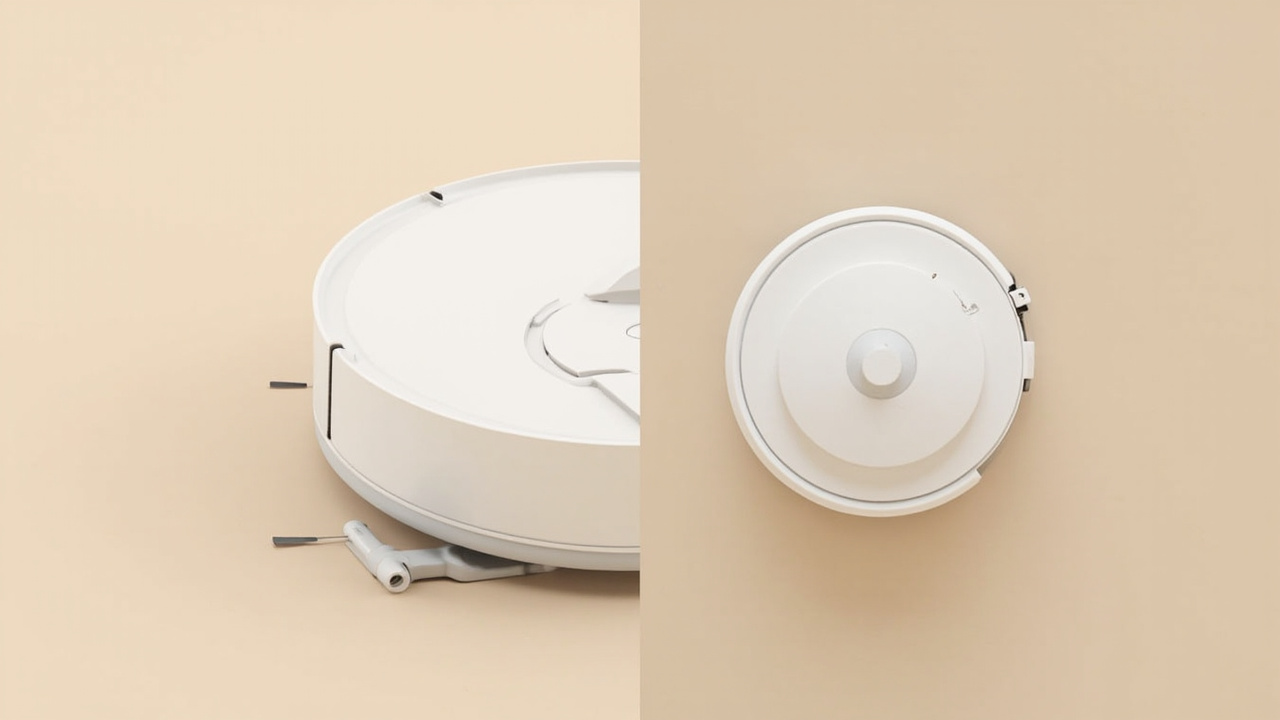
| Headline feature | OmniGrip 5-axis mechanical arm (picks up socks, slippers, tissues) | ProLeap retractable legs (climbs 60 mm thresholds) |
| Mapping | 3D ToF LiDAR + dual RGB cameras + VertiBeam lateral | dToF LiDAR + VersaLift retractable tower |
| Object recognition | 108 object types (StarSight 2.0) | ~80-100 typical for 2025-2026 generation |
| Mop system | Dual spinning pads, 200 RPM, FlexiArm side brush | Dual spinning pads with MopExtend edge coverage |
| Hot water mopping | 80°C pad wash | 80°C on-robot hot water mopping (more effective mid-clean) |
| Dock | Multifunctional Dock 4.0 (auto-empty, refill, hot wash, hot dry) | All-in-one station (auto-empty, refill, hot wash, hot dry) |
| App polish | Excellent (Roborock app) | Excellent (Dreamehome app) |
| Matter / smart-home integration | Roborock added Matter support in late 2025 | Dreame added Matter support in 2025 |
| Self-cleaning frequency | Mop washed every ~10-15 min depending on mode | Mop washed every ~10-15 min depending on mode |
The real, practical differentiators:
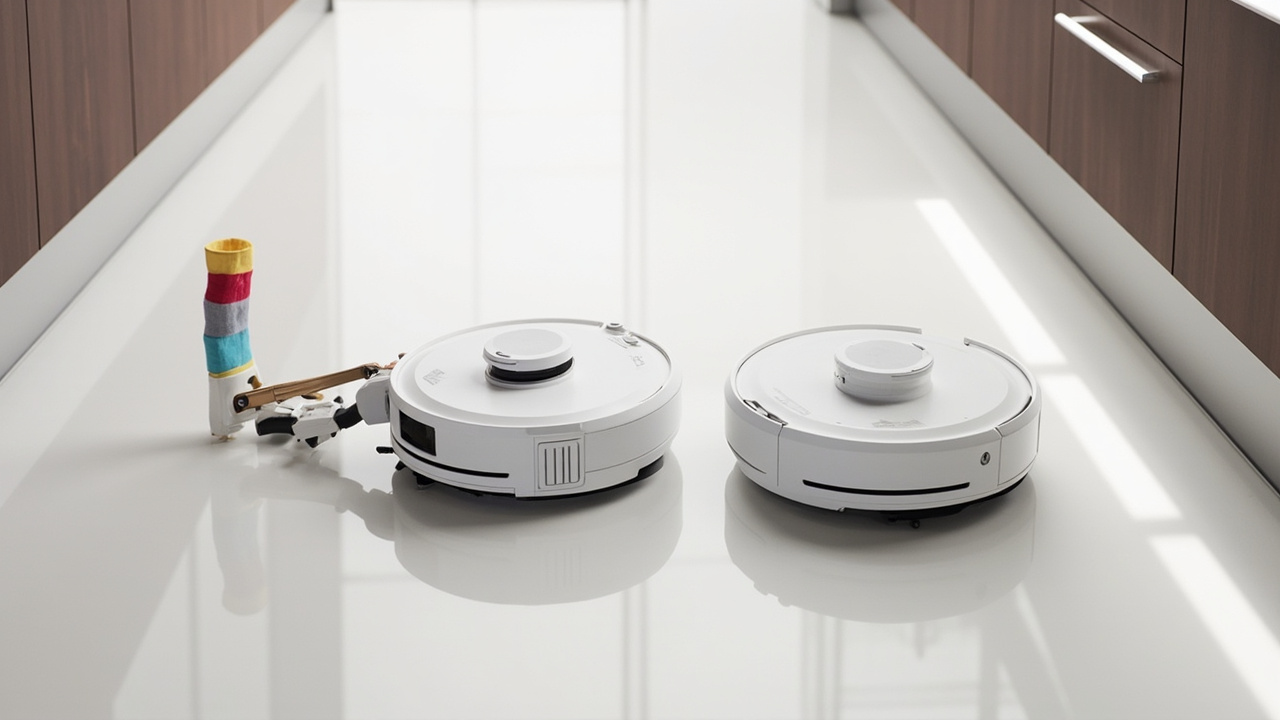
- Z70’s arm is genuinely useful if you actually have the kind of floor that needs it. Socks, charging cables, dog toys, kid socks — the arm identifies a small set of approved object types, drives over, grips, carries to a designated bin, and returns to finish. When it works, it is the closest thing to Rosie the Robot that consumer hardware has ever shipped. When it fails, it is a slightly confused robot that bumped the sock and moved on.
- X50 Ultra’s ProLeap legs are the under-appreciated hero. Most robot vacuums die at 20-30 mm thresholds. The X50 climbs 60 mm consistently. For a house with raised room dividers, thick transitions to a sunken living room, or tall door thresholds, the X50 is the only one of the two that will clean the whole floor in one run without you babysitting it.
If your home is open-plan and you tidy before runs, the arm adds little. If your home has thresholds, the X50 wins. If your home is full of kid clutter, the Z70 wins on paper — but only on paper if the arm is at 50% accuracy.

Pros and Cons
Roborock Saros Z70
Pros
- The only consumer robot vacuum in 2026 that can pick objects up off the floor and put them in a bin
- 22,000 Pa is the highest suction in this comparison (and among the highest in the category)
- 22/24 obstacle avoidance is the best in this price tier
- Slimmest body in the flagship class at 3.14 in (79.8 mm)
- Roborock’s app and map editing remain the most polished in the category
- Over-the-air firmware updates can expand the arm’s object recognition over time
Cons
- $2,599 MSRP is the highest retail price for a consumer robot vacuum in 2026
- Arm success rate is ~50% in independent lab testing — still first-generation
- 4-5 hour full dock cycle is longer than the X50’s
- 40-45 mm threshold climbing is half what the X50 can do
- 180 min battery is ~30 min shorter than the X50
- No long-term reliability data yet on the arm’s servo and gripper
- Resale value is uncertain because category-defining first-gen hardware often sees steep price drops
Dreame X50 Ultra
Pros
- $899.99-$1,699 price range makes it accessible to far more buyers
- 60 mm threshold climbing (ProLeap) is the best in the category, period
- 80°C on-robot hot water mopping (mid-clean, not just at the dock) is genuinely useful on kitchen grease
- 210 min battery covers very large homes in a single run
- ~16 months of real-world reliability data exists; RMAs look in line with Dreame’s other 2025 flagships
- Better residual value over 5 years (~25% vs ~20% for the Z70)
- VersaLift retractable LiDAR lets the body drop to 3.5 in for under-furniture cleaning
Cons
- 20,000 Pa suction is 2,000 Pa lower than the Z70 (marginal in real-world pickup)
- No mechanical arm — pre-tidying socks and cables is still on you
- Obstacle avoidance (20/24) trails the Z70’s 22/24
- Dreame’s app has improved a lot in 2025-2026 but is still considered slightly less polished than Roborock’s
Best For / Skip If
Best for the Roborock Saros Z70
- Households with small children who leave socks, stuffed animals, and LEGO on the floor
- People who genuinely hate pre-tidying before a robot run and will pay for a hands-off experience
- Early adopters and smart-home enthusiasts who want the “first with an arm” bragging rights
- Buyers planning to keep the robot 5+ years who can absorb the higher purchase price and benefit from arm-related firmware updates over time
- Homes that are largely open-plan with low thresholds (so the 40-45 mm climb limit is not a problem)
Skip the Z70 if
- You are on a budget — at $1,999-$2,599, the X50 Ultra at $899-$1,050 does 80-85% of the job for half the price
- You live in a home with thresholds above 45 mm (raised floors, sunken rooms, tall transitions)
- You want proven long-term reliability — the arm is too new to have a track record
- You have shedding pets — both robots handle pet hair well, but the X50’s 97.5% pet hair pickup score (per robovacguide) edges the Z70
Best for the Dreame X50 Ultra
- Value-focused buyers who want flagship-grade cleaning without paying $2,000+ for a feature they will not use
- Homes with tall thresholds, raised floors, or sunken rooms (ProLeap is genuinely a differentiator)
- Larger homes (the 210 min battery covers more square footage per run)
- Pet owners (97.5% pet hair pickup is among the best in class)
- Buyers who upgrade robots every 2-3 years and want better residual value
Skip the X50 Ultra if
- You specifically want the mechanical arm and are willing to pay for it
- You want the absolute best obstacle avoidance in this price tier (the Z70’s 22/24 edges the X50’s 20/24)
- You want the slimmest possible body (3.14 in Z70 vs 3.5 in X50 with VersaLift dropped)
Bottom Line
The Roborock Saros Z70 is a genuinely impressive piece of engineering. The arm works, the suction is the highest in the category, the obstacle avoidance is the best in this tier, and the rest of the robot is at parity with the best 2026 flagships. The problem is not the robot. The problem is the price gap.
For the same $899-$1,049 you can currently pay for the Dreame X50 Ultra, you get a robot that climbs twice as high, runs 30 minutes longer, mops with hot water mid-clean, and does not depend on a first-generation arm to justify its existence. The X50 is the value winner for the vast majority of households in 2026.
Buy smart, get more value: pay for the X50 Ultra unless you have a specific, recurring sock-on-the-floor problem and you are willing to pay ~$1,000 over 5 years for a robot that can pick them up. For everyone else, the X50 delivers ~85% of the Z70’s headline features at ~50% of the cost.