Introduction
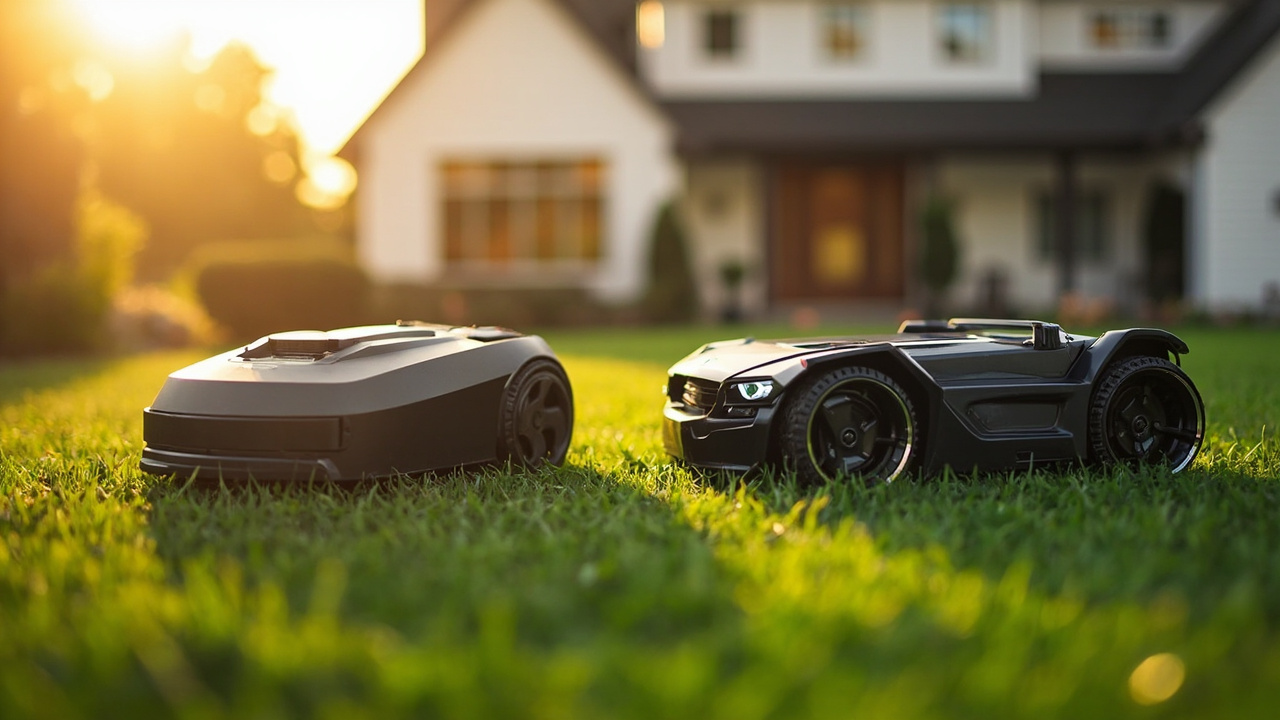
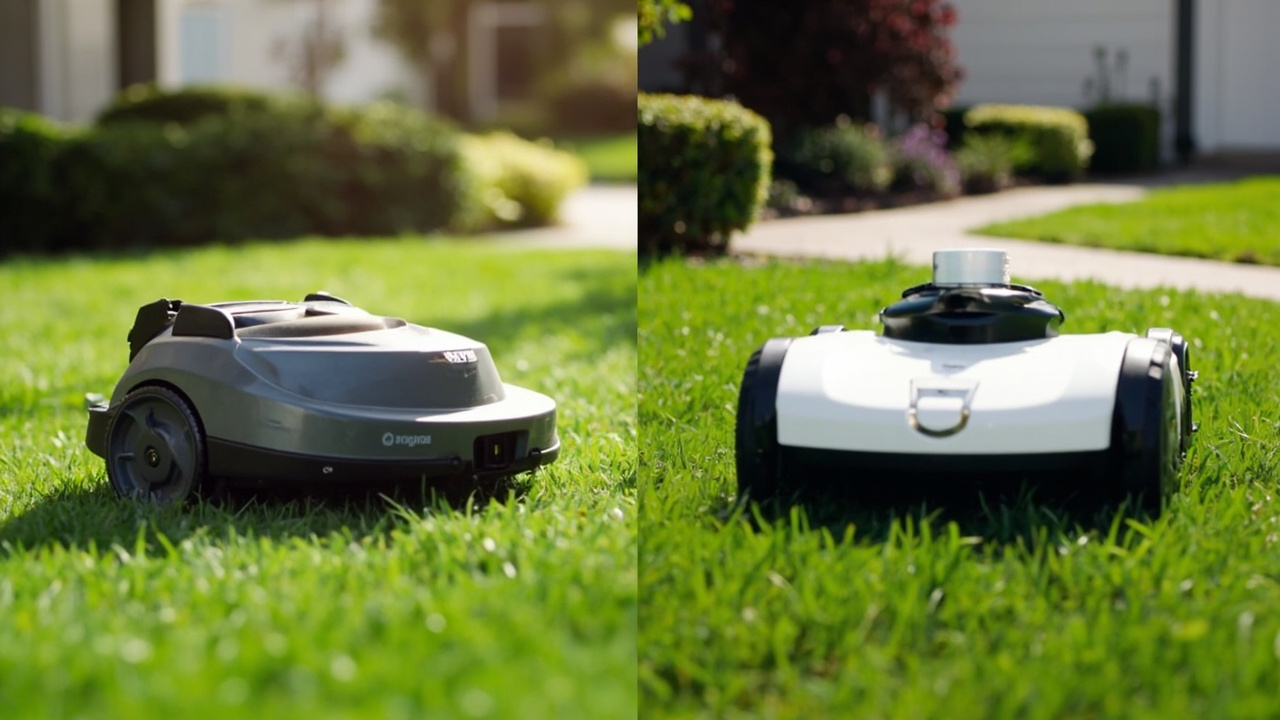
In 2026, the residential robotic lawn mower market quietly split into two different product philosophies that used to be the same product. The Husqvarna Automower 415X is the mid-tier residential flagship from the company that invented the category in 1995. It uses a buried boundary wire to define the cutting area, just like every Automower since 1998. The Segway Navimow i105N is a wire-free challenger that uses RTK GPS + AI vision to map your yard without a single trench in the lawn. Both target the same homeowner — a 0.1 to 0.3 acre lot, suburban, with some flower beds and a few narrow corridors — and both sit between roughly $1,099 and $1,799 at retail.
This comparison is unusually honest because the two machines are not really direct competitors. The Husqvarna is the refined 30-year veteran that requires a real installation (boundary wire, charging station placement, sometimes a professional installer) and then runs quietly for a decade. The Navimow is the 2024-2026 newcomer that you unbox, stake out a GPS reference station in the yard, drive it around the perimeter once with a phone app, and it is mowing by the weekend — no wire, no trench, no installer.
The 5-year cost math is where this gets interesting. The Husqvarna is the more expensive purchase, but it has near-zero recurring consumable cost and an enormous aftermarket. The Navimow is cheaper up front and dramatically cheaper to install (often $0), but it eats blade discs, has a battery that may need replacement sooner, and the GPS base station can be finicky under heavy tree cover. Stick around for the table.
The Verdict First
- Pick the Husqvarna Automower 415X (~$1,799) if: your lawn is mostly open, has established edging, and you want a 10-year machine. You are willing to pay $200-$500 for professional boundary-wire installation (DIY possible, time-consuming). You have some trees, irregular flower beds, and you value Husqvarna’s 30-year track record and enormous dealer/service network. This is the specialist for set-it-and-forget-it reliability.
- Pick the Segway Navimow i105N (~$1,099) if: your lawn is mostly open sky with good GPS reception, you are a renter or you simply do not want to dig trenches in your yard, and you are willing to babysit software updates and vision calibration. You want a wire-free install that takes an afternoon, not a weekend. This is the specialist for fast deployment and modern UX.
Cost score: 74/100. Both machines are priced fairly for what they deliver. The savings come from buying the one that matches your yard, your tolerance for installation work, and your confidence in wire-free navigation technology that is still maturing. Buying the wrong one is where the real money gets wasted.
Key Comparison Points
Price vs Real Cost Per Use
| Spec / Cost Line | Husqvarna Automower 415X | Segway Navimow i105N |
|---|---|---|
| Retail price (US, as of June 2026) | ~$1,799 | ~$1,099 |
| Max lawn coverage (rated) | 1,500 m² (0.37 acre) | 500 m² (0.12 acre) |
| Cutting width | 22 cm (8.7 in) | 18 cm (7.1 in) |
| Cutting height (adjustable) | 20-50 mm (0.8-2.0 in) | 20-60 mm (0.8-2.4 in) |
| Slope handling (max) | 40% (22°) | 30% (17°) |
| Navigation tech | Buried boundary wire + guide wires | RTK GPS + AI vision (no boundary wire) |
| GPS reference station | Not required (uses guide wires) | Required (included, stake-mounted) |
| Battery | 18 V / 2.0 Ah Li-ion (replaceable, ~$149) | 18 V / 2.5 Ah Li-ion (replaceable, ~$99) |
| Cutting motor | Brushless DC | Brushless DC |
| Noise level (rated) | ~58 dB(A) | ~54 dB(A) |
| Weight | 9.4 kg (20.7 lb) | 10.9 kg (24.0 lb) |
| Connectivity | Bluetooth + 4G (Automower Connect) | Wi-Fi + 4G (Navimow app) |
| Rain sensor | Yes (returns to dock automatically) | Yes (returns to dock automatically) |
| Anti-theft | PIN code + GPS tracking + alarm | PIN code + GPS tracking + alarm |
| App control | Husqvarna Automower Connect (iOS/Android) | Segway Navimow app (iOS/Android) |
| Smart home integration | Google Home, Amazon Alexa, IFTTT | Google Home, Amazon Alexa (limited) |
| Warranty | 2 years (extendable to 5 with Husqvarna Care) | 3 years (extendable to 4 with registration) |
The 5-year cost math is where the two machines diverge in a way the sticker price does not show. The Husqvarna is the more expensive purchase, but most of the extra money is install. The Navimow is cheaper up front and almost free to install, but it eats blades faster and has a smaller service network if something goes wrong.
- Husqvarna recurring cost: 3 sets of razor blades per year (
$30 for a 9-pack, $10/year if you swap them yourself with a screwdriver) + 1 battery replacement around year 5-6 ($149) + boundary-wire splice repair supplies after year 3-4 (~$20 one-time). Total ~$210-$280 over 5 years in consumables. - Hidden Husqvarna install cost: boundary wire is included in the box for ~150 m, but most 0.1-0.3 acre lots need 200-400 m of wire plus 200-400 staples. Husqvarna sells a $90-$130 installation kit. Professional installation by a Husqvarna dealer typically runs $250-$500 depending on yard complexity, terrain, and number of islands (flower beds, trees, etc.). DIY is doable in a weekend but requires a hammer stapler, patience, and a willingness to fix the occasional wire break from a curious dog or a freeze-thaw cycle.
- Segway Navimow recurring cost: 3 sets of replacement blade discs per year (
$25 for a 6-pack, $25/year at retail) + 1 battery replacement around year 4-5 ($99) + GPS reference station relocation if you redesign the yard (~$0, but ~1 hour of recalibration). Total ~$220-$300 over 5 years in consumables. - Hidden Navimow cost: tree canopy. RTK GPS struggles under heavy tree cover. If your yard has a dense oak or maple canopy over more than 30% of the lawn, the Navimow will occasionally stop and ask for “improved GPS signal” — meaning you either thin the canopy, add a second reference station (~$149), or accept that the mower will mow in straight lines but may miss small patches in the deep shade. Husqvarna’s boundary wire has zero GPS dependence.
- Hidden Navimow cost 2: AI vision sensor cleaning. The wide-angle camera under the bumper needs to be wiped clean monthly, especially after mowing wet grass. This is a 30-second task but it is a real recurring chore the Husqvarna does not have.
Net 5-year cost estimate (purchase + install + consumables + estimated battery replacement once + estimated 5% of sticker for repairs, minus residual value):
| Cost Line | Husqvarna Automower 415X | Segway Navimow i105N |
|---|---|---|
| Purchase | $1,799 | $1,099 |
| Professional install (DIY option: $0) | $350 (mid estimate) | $0 (DIY) |
| Razor blades (5 yrs) | $50 | $125 |
| Battery replacement (year 5) | $149 | $99 |
| Wire/station repair reserve | $20 | $30 |
| Repair reserve (5%) | $90 | $55 |
| Residual value (after 5 yrs) | –$540 (≈30%) | –$330 (≈30%) |
| Net 5-year cost (DIY install) | $1,468 | $1,078 |
| Net 5-year cost (pro install) | $1,818 | $1,078 |
The Husqvarna is roughly $400 more expensive over 5 years if you pay for professional installation, or $390 more expensive if you DIY the wire. The Navimow’s install savings are real, but the Husqvarna’s residual value closes some of the gap — Automowers hold resale value better because the platform has been around since 1998 and the used market understands it.
Build Quality and Durability
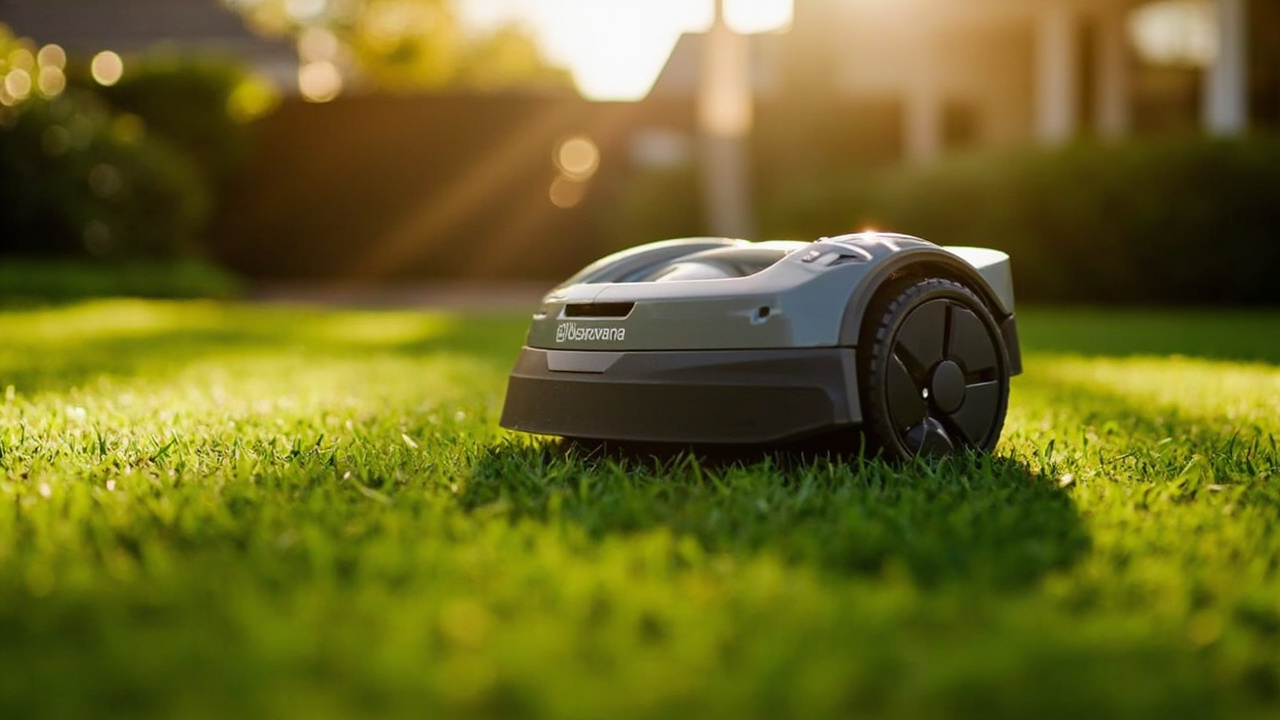
Husqvarna Automower 415X keeps the Automower family’s traditional build playbook: ABS plastic body, sealed cutting deck, two large drive wheels at the back, a swiveling front caster, three pivoting razor blades on a rotating disc, and a lift/tilt sensor that stops the blades in under 2 seconds if the mower is picked up. The Automower has been in continuous production since 1998, and the 415X sits in the middle of the current residential lineup (between the 305 at ~$1,299 and the 430XH at ~$3,599). The X-series adds the 4G cellular module for app control and GPS anti-theft tracking. Build quality is what you would expect from a Swedish engineering firm that has shipped over 2 million Automowers — solid, repairable, designed for a 10-15 year service life with annual blade swaps and a battery at year 6-8.
Reported reliability for the 400-series Automower line is strong: r/lawncare and r/homeautomation threads cite motor failures in ~3-5% of units over 8-10 years, and the most common repair is a $20-$30 bumper sensor or a $40 wheel motor. Battery degradation becomes noticeable around year 6-8 (the original NiMH batteries were worse; the modern Li-ion packs last longer). Husqvarna offers a 2-year limited warranty on the 415X, extendable to 5 years with the Husqvarna Care extended warranty program ($79-$149 one-time, depending on dealer).
The Automower’s biggest durability advantage is its service network. Husqvarna has 3,000+ authorized dealers in North America. If your wire breaks, the charging station fails, or the mower throws a code you cannot clear in the app, there is a real person within driving distance who stocks parts and has diagnostic tools. For a 10-year ownership window, this matters more than the spec sheet suggests.
Segway Navimow i105N is a fundamentally newer design, first shipped in 2024 in Europe and 2025 in the US. Build is mostly ABS plastic with a glossy top panel (the i-series has a “sleeker” look than the H-series), a sealed cutting deck, two large drive wheels, a swiveling front caster, and a small three-blade disc. The most distinctive hardware is the VisionFence camera mounted on the front bumper — this is the AI vision sensor that supplements RTK GPS when satellite signal is weak (near buildings, under trees, along fences). Build quality is solid for a first-generation product, but the long-term track record is shorter: Segway shipped ~200,000 Navimow units globally in 2024-2025, versus Husqvarna’s cumulative 2 million+ Automowers.
Reported reliability for the Navimow i-series (i105, i108) is acceptable but not battle-tested: r/Navimow and r/lawncare threads cite occasional software glitches (mower stops mid-mow, requires app reset) in ~5-8% of units in the first 18 months, and the most common hardware repair is a $30-$50 wheel motor or a $40 VisionFence camera replacement. Battery degradation in Li-ion packs is on track with industry norms — most users see ~80% capacity at year 3-4. Segway offers a 3-year limited warranty on the i-series, extendable to 4 years with product registration, which is one year longer than Husqvarna’s base warranty but shorter than Husqvarna’s extended warranty.
The Navimow’s biggest durability advantage is its lack of buried wire — there is nothing in the lawn to break, no trenches to fill, no splices to repair after a freeze-thaw cycle. If you are in a rental property, or you redesign your flower beds every few years, or you simply do not want to dig, this is a meaningful structural advantage.
Durability verdict: The Husqvarna 415X is built for a 10+ year ownership window with predictable consumables and a real service network. The Segway Navimow i105N is built for a 5-7 year window in the optimistic case, with the understanding that the platform is still maturing and the long-term parts availability is less certain.
Feature Breakdown
Husqvarna Automower 415X:
- Buried boundary wire — the original robotic mower navigation method, refined over 30 years. You (or a professional) run a low-voltage wire around the perimeter of your lawn and around any islands (flower beds, trees, driveways). The mower follows the wire as a fence. Reliable, well-understood, works under any tree canopy, in any weather.
- Guide wires — the 415X supports up to 2 guide wires that help the mower navigate back to the charging dock across narrow passages. This is critical for L-shaped lawns or lots with a narrow side yard.
- Systematic mowing pattern — Husqvarna’s 400-series uses a mix of random and systematic patterns. The 415X switches to a parallel-line pattern once it learns your yard (takes 2-3 weeks of daily mowing), which is faster and more efficient than the old random bounce.
- Automower Connect app — 4G cellular module included (no subscription required for basic features). Schedule mowing, see live location, get theft alerts, adjust cutting height, set “stay-away zones” via app (since 2023 firmware). Works with Google Home and Amazon Alexa for voice commands like “start the mower.”
- Weather timer — adjusts mowing frequency based on grass growth rate. Spring and fall get more frequent mowings; summer dormancy gets fewer.
- Spiral cutting — if the mower detects taller grass in a spot (e.g., under a bird feeder), it switches to a spiral pattern to cut it down before returning to normal.
- Lift and tilt sensors — blades stop in under 2 seconds if the mower is picked up or tips over. The 415X also has a collision sensor that stops forward motion when it bumps an obstacle.
- Replaceable battery — the Li-ion pack slides out with two screws. A replacement is ~$149, and most users can do it themselves in 10 minutes with a screwdriver.
- Quiet operation — ~58 dB(A), quieter than a dishwasher. The Automower can run at night without disturbing neighbors in most municipalities (check local noise ordinances).
Segway Navimow i105N:
- Wire-free RTK GPS navigation — the defining feature. You mount the included GPS reference station on a stake or pole in an open-sky location (or on the side of the house), then drive the mower around the perimeter of your yard once using the app’s “manual drive” mode. The mower creates a virtual map. No wire, no trench, no staples.
- VisionFence AI camera — supplements GPS when the satellite signal is weak (under trees, near buildings, in narrow corridors). The camera can identify grass vs. non-grass and stop the mower if it is about to drive onto a sidewalk, into a flower bed, or off a cliff. This is the “training wheels” that make RTK work in real yards.
- Multi-zone management — set up multiple mowing zones in the app (front yard, back yard, side strip). The mower returns to the dock to recharge, then resumes the next zone automatically.
- Smart obstacle avoidance — combines the camera with bump sensors to detect and avoid toys, hoses, pet waste, and small animals. The 2025 firmware added “pet mode” with extra sensitivity to small moving objects.
- Segway Navimow app — Wi-Fi and 4G connectivity (4G module is included in the i105N, no subscription for basic features). Schedule mowing, see live location, get theft alerts, adjust cutting height, draw no-go zones on the satellite map of your yard. The app is generally considered cleaner and more modern than Husqvarna’s Automower Connect, partly because it is newer and partly because Segway’s software team is more product-focused.
- Smart home integration — Google Home and Amazon Alexa voice commands for start/stop and dock return. More limited than Husqvarna’s IFTTT support, but the basic commands work reliably.
- Anti-theft — PIN code, GPS tracking via 4G, alarm, and the mower will not operate without the original owner’s PIN even if the SIM is swapped.
- Replaceable battery — the Li-ion pack slides out with a latch. A replacement is ~$99, and most users can do it themselves in 5 minutes without tools.
- Quiet operation — ~54 dB(A), slightly quieter than the Husqvarna. The Navimow’s cutting disc design is genuinely whisper-quiet.
The fundamental difference: the Husqvarna is a wire-defined system that uses physical infrastructure (buried wire, charging station) to define its world. The Navimow is a software-defined system that uses satellites, sensors, and a phone app to define its world. The wire-defined system is older, more reliable in challenging conditions (heavy tree cover, narrow corridors, complex islands), and supported by a 30-year service network. The software-defined system is newer, easier to install, easier to modify when your yard changes, and supported by a 2-year-old product line with a still-growing service network.
Pros and Cons
Husqvarna Automower 415X
Pros:
- 30-year track record — the Automower platform has been refined since 1998, and the 415X sits in the middle of a mature, well-understood product lineup
- Reliable navigation in any yard — boundary wire works under tree canopy, in narrow corridors, in complex islands, in any weather, without GPS dependence
- Huge service network — 3,000+ Husqvarna dealers in North America for parts, repairs, and professional installation
- Long ownership window — designed for 10-15 years of service with annual blade swaps and a battery at year 6-8
- Strong residual value — used Automowers hold ~30% of original price after 5 years
- Smart home integration — Google Home, Amazon Alexa, IFTTT for advanced automations
- Quiet operation — ~58 dB(A), runs at night without disturbing most neighbors
- 2-year warranty (extendable to 5 years with Husqvarna Care extended warranty)
Cons:
- Boundary wire install — DIY is a weekend project; professional install is $250-$500
- More expensive up front — ~$1,799 vs ~$1,099 for the Navimow
- Wire is a long-term commitment — if you redesign flower beds or add a patio, the wire needs to be reconfigured
- Slower software iteration — Husqvarna’s app and firmware updates are less frequent than Segway’s, partly because the platform is more mature and partly because the company moves slower
- Random-to-systematic mowing — the 415X takes 2-3 weeks to learn your yard before it switches to efficient parallel-line patterns
- Smaller cutting width — 22 cm is decent, but not as wide as larger Automower models (430XH is 24 cm)
- 4G module is built-in but the cellular coverage may be limited in rural yards — check T-Mobile coverage in your area before buying
Segway Navimow i105N
Pros:
- Wire-free installation — unbox, stake the GPS reference station, drive the mower around the perimeter once with the app, done. Most users are mowing within 90 minutes of unboxing
- Cheaper up front — ~$1,099 vs ~$1,799 for the Husqvarna
- No trench, no wire, no staples — ideal for renters, recent sod installations, or yards that are still being redesigned
- Modern app and UX — Segway’s app is cleaner and more frequently updated than Husqvarna’s
- VisionFence AI camera — sees obstacles that GPS alone would miss (pet waste, toys, hoses, small animals)
- Multi-zone management — easy to define and re-define mowing zones in the app
- Quieter — ~54 dB(A), slightly quieter than the Husqvarna
- 3-year warranty (extendable to 4 years with registration) — one year longer than Husqvarna’s base warranty
- Great for renters — no permanent modification to the property, easy to take with you when you move
Cons:
- Smaller lawn coverage — 500 m² (0.12 acre) vs. 1,500 m² (0.37 acre) for the Husqvarna. If your yard is bigger than ~5,000 sq ft, the i105N is the wrong mower
- RTK GPS needs open sky — heavy tree canopy over more than 30% of the lawn will cause signal dropouts; the VisionFence compensates but cannot fully replace good GPS
- Newer platform — 2024-2025 first-generation product with a 2-year track record. Long-term reliability is still being established
- Smaller service network — Segway has fewer authorized repair centers than Husqvarna, and most repairs in 2026 still require shipping the unit to a regional service center
- Lower residual value (uncertain) — used Navimow pricing is still developing; current data suggests ~25-30% residual value, similar to Husqvarna but with a smaller buyer pool
- Camera cleaning chore — the VisionFence sensor needs to be wiped clean monthly, especially after mowing wet grass
- Less mature smart home integration — Google Home and Alexa work for basic commands, but IFTTT and advanced automations are limited
- Battery may degrade faster — Li-ion packs in the i-series show ~80% capacity at year 3-4, slightly faster than Husqvarna’s larger battery
Best For / Skip If
Best For Husqvarna Automower 415X
- You have a 0.1-0.3 acre lawn with some tree canopy, irregular flower beds, and a few narrow corridors — boundary wire handles all of this without GPS dependence
- You want a 10-year machine and value the long-term service network and parts availability
- You are willing to pay $250-$500 for professional installation (or spend a weekend doing it yourself)
- You have an established yard that is not being redesigned every year — once the wire is in, it is a commitment
- You want the stronger residual value if you might upgrade in 4-5 years
- You live in a rural or suburban area with reliable 4G coverage for the Automower Connect module
Best For Segway Navimow i105N
- You have a 0.05-0.12 acre lawn with mostly open sky and minimal tree canopy — the i105N’s 500 m² coverage and RTK GPS work best in this size and shape
- You are a renter or you simply do not want to dig trenches in your yard
- You want a wire-free install that takes an afternoon, not a weekend
- You are comfortable with modern app-driven UX and do not mind occasional software updates
- You redesign your yard every few years (new flower beds, new patio) and want a system that adapts without re-trenching
- You want the cheaper up-front price and can live with a smaller service network
Skip Husqvarna 415X If
- You are a renter and cannot modify the property with buried wire
- Your yard is smaller than 0.05 acre — the 415X is overkill, consider the Automower 305 (~$1,299) or even a non-robotic push mower
- You do not want to install wire — DIY or professional, this is a real commitment
- Your yard is being redesigned in the next 12-24 months — wait until the landscape settles
- You have poor 4G coverage at your address — the Automower Connect module may not work
Skip Segway Navimow i105N If
- Your lawn is larger than 0.12 acre — the i105N cannot handle it; consider the Navimow i110N (800 m²) or the Husqvarna 415X (1,500 m²)
- Your yard has heavy tree canopy over more than 30% of the lawn — RTK GPS will struggle, and the VisionFence cannot fully compensate
- You have narrow corridors or complex islands that require precise navigation — boundary wire is still more reliable for these layouts
- You want a 10-year machine and value the long-term service network — the Navimow is too new to know if Segway will support it for a decade
- You have poor Wi-Fi or 4G coverage at your address — the Navimow app and GPS reference station both need connectivity
Bottom Line
The Husqvarna Automower 415X and the Segway Navimow i105N are not really competing products. They are the answer to two different robotic mowing questions, and buying the wrong one is the real waste of money.
If you have a 0.1-0.3 acre established suburban yard with some tree canopy, irregular flower beds, and a willingness to invest in a 10-year machine, the Husqvarna Automower 415X is the smarter $1,799 spend. Add $350 for professional installation, budget $50 for 5 years of blade replacements and $149 for a battery at year 5-6, and the net 5-year cost is ~$1,818. You get a 30-year platform, a 3,000-dealer service network, and a machine that will run reliably in any yard condition.
If you have a 0.05-0.12 acre yard with mostly open sky, you are a renter or you do not want to dig trenches, and you want a modern app-driven system that takes 90 minutes to set up, the Segway Navimow i105N is the smarter $1,099 spend. Budget $125 for 5 years of blade discs and $99 for a battery at year 4-5, and the net 5-year cost is ~$1,078. You get a 2-year-old platform with a still-growing service network, wire-free installation, and a cleaner app experience.
The trap is the buyer with a 0.15-acre yard under heavy tree canopy who wants “the best of both worlds.” For that buyer, the honest answer is: get the Husqvarna 415X. Boundary wire does not care about GPS, the 1,500 m² coverage handles the larger yard, and the 10-year platform will outlast the Navimow’s first-generation product cycle. Yes, the installation costs $350 and a weekend. That is the price of reliability in a yard that is not a flat rectangle of open sky.
The other trap is the buyer with a 0.08-acre open-sky yard who does not want to dig. For that buyer, the Navimow i105N is genuinely the better product. The wire-free install is not a gimmick — it is a real time and effort savings — and the 500 m² coverage is enough for the typical small suburban lot. Save the $700 and put it toward something else in the yard.
Buy smart. Get more value.