Introduction
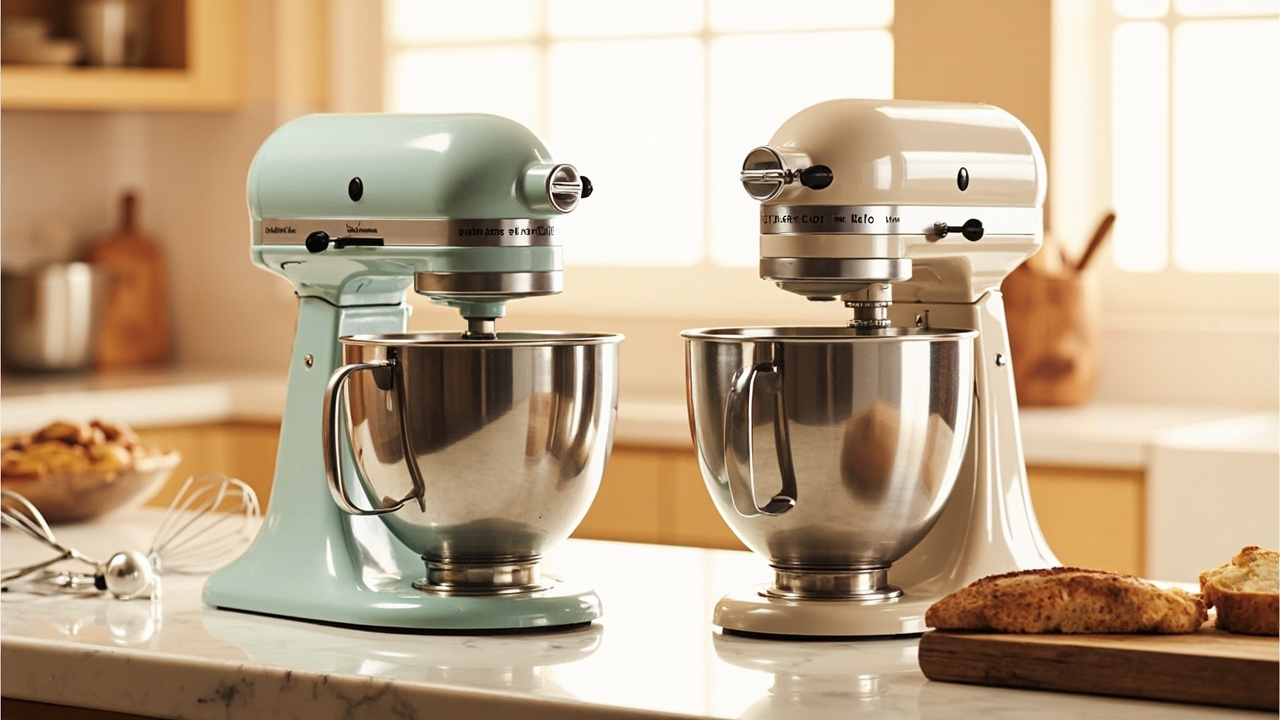
Once you’ve accepted that a $40 hand mixer won’t survive a weekly sourdough schedule, the next question is always the same: KitchenAid or Ankarsrum? Both are >$500 stand mixers with 5+ year reputations, but they take opposite engineering approaches to the same problem.
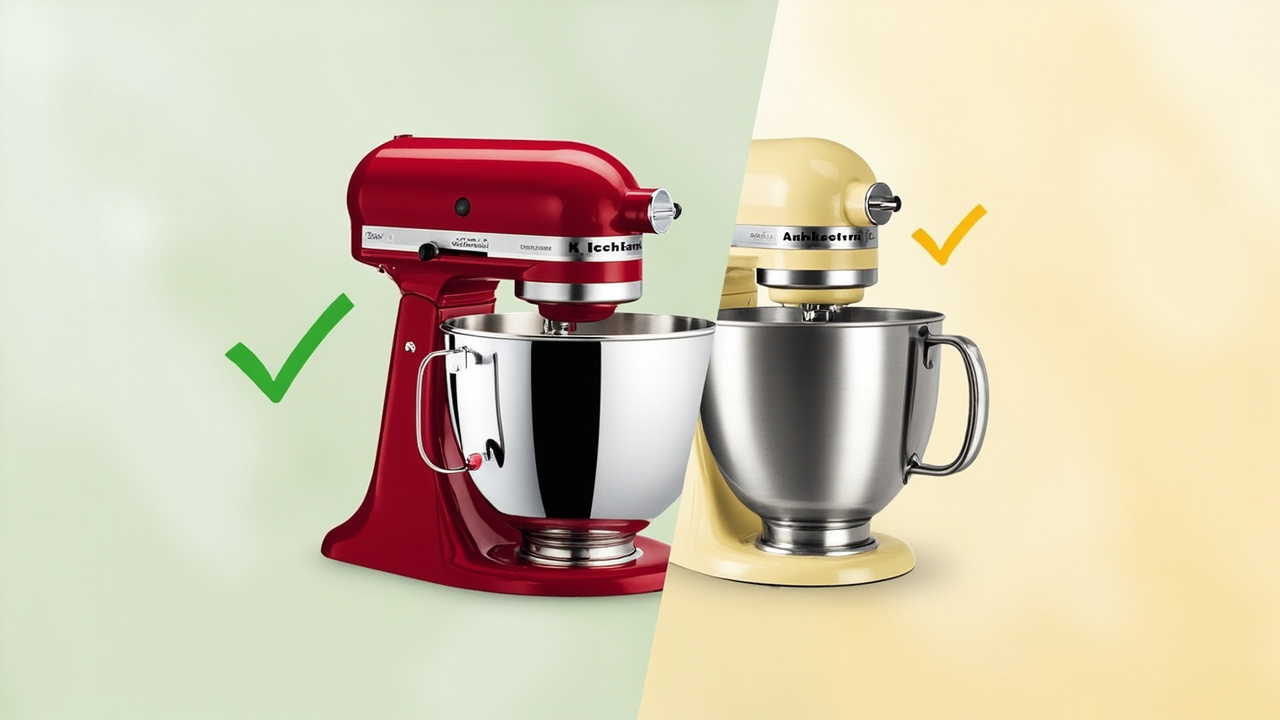
The KitchenAid Artisan 5-Quart (KSM195) is the most-recognized tilt-head planetary mixer in the world. Direct-drive motor in the head, planetary mixing action, 10+ color options, hundreds of attachments. It is the default “I want a real stand mixer” purchase in North America.
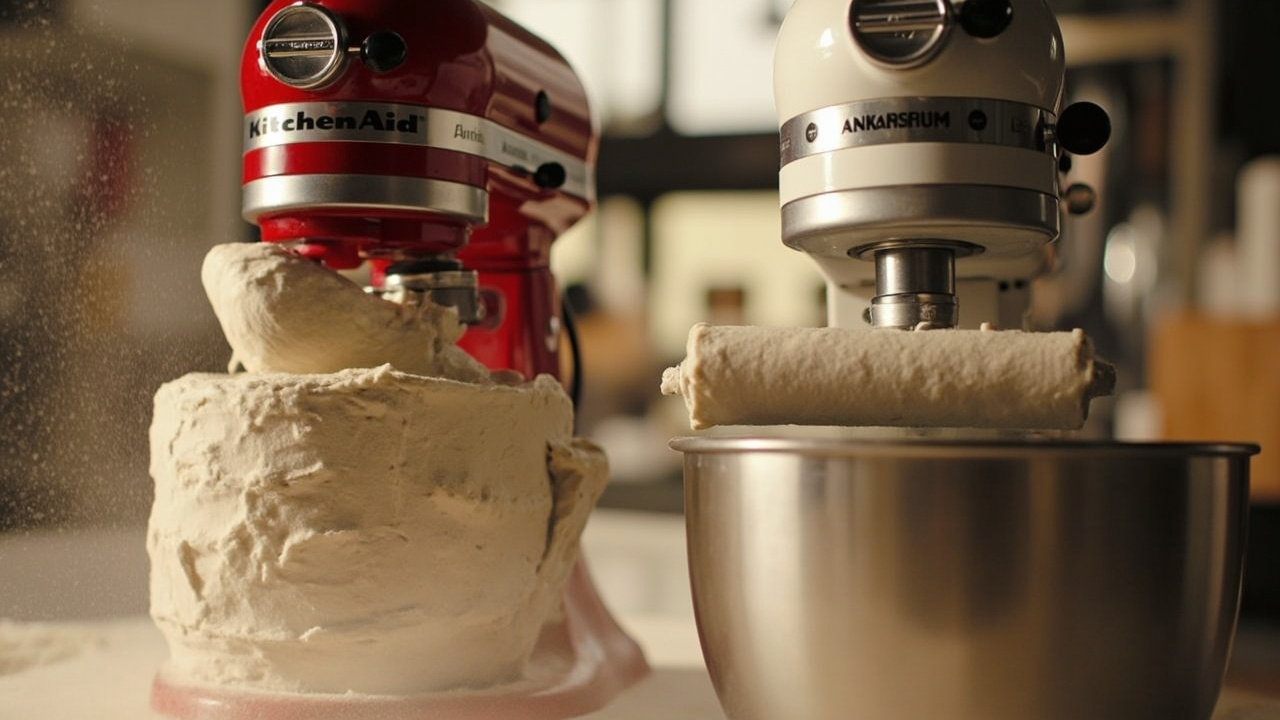
The Ankarsrum Assistent Original (6230) is a Swedish bottom-drive design that’s been in continuous production since 1940. The motor sits in the base, the bowl rotates, and a long dough roller replaces the traditional dough hook. It is the default “I make a lot of bread and I want a machine that won’t die on enriched dough” choice in serious home-baking circles.
The two machines overlap in price, size, and outcome, but the day-to-day experience is genuinely different. The wrong choice for your baking style will leave you with a $700+ machine you resent.
The Verdict First
- Choose the KitchenAid Artisan 5-Quart ($450–$700 with bowl-lift attachments bundle) if you make a mix of cakes, cookies, frostings, and the occasional bread loaf, want the largest after-market attachment ecosystem (pasta, meat grinder, spiralizer, food processor), and you value color choice and brand recognition. The Artisan is the safer, more flexible all-rounder (Source: Wirecutter best stand mixers guide, Serious Eats review).
- Choose the Ankarsrum Assistent Original ($799–$999 depending on bundle) if you bake bread at least 2–3 times a week, work with wet doughs (50%+ hydration), enriched doughs (brioche, panettone), or stiff sourdough (≤45% hydration), and you want a machine with a 7-year warranty and a metal gear train that hobbyist bakers routinely run for 20+ years. The Ankarsrum is the right tool for dough-first bakers (Source: The Perfect Loaf Ankarsrum review, King Arthur Baking Ankarsrum guide).
- Skip both if you bake less than once a month — a $40–$80 hand mixer (or a $150 KitchenAid Classic) is the better financial call. Both machines pay for themselves only when used weekly.
Key Comparison Points
Price vs Real Cost Per Use
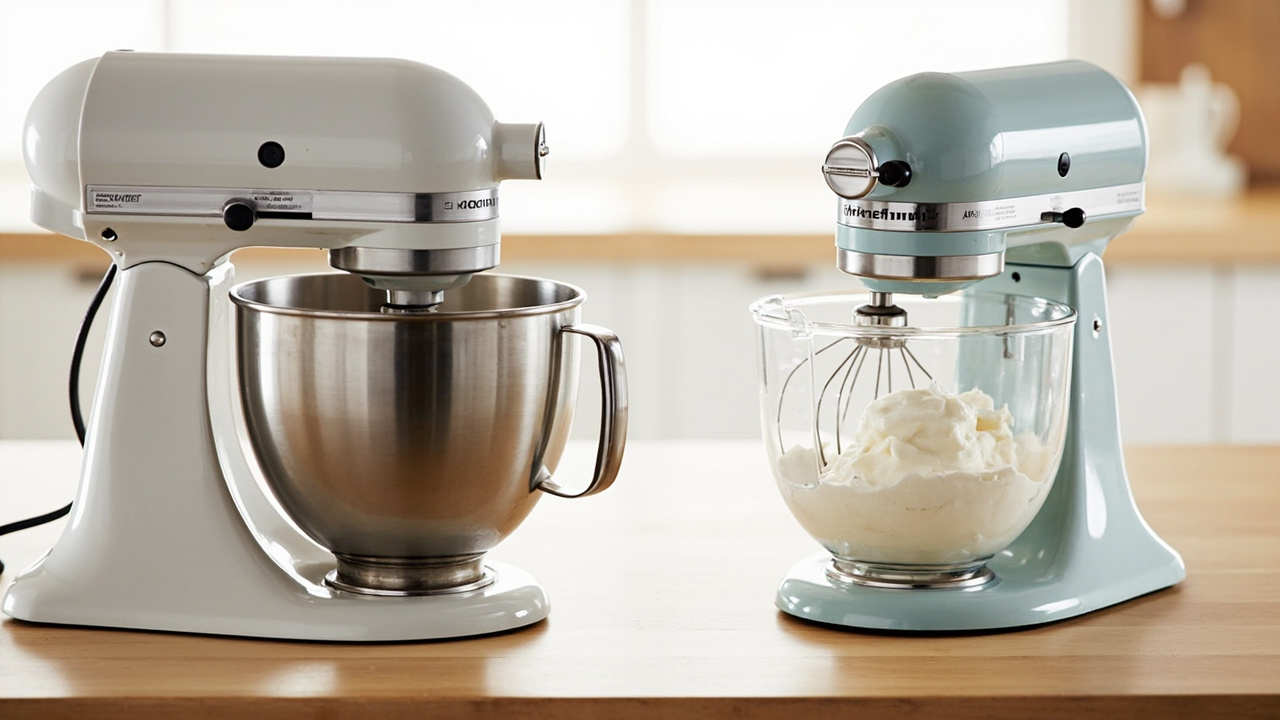
Both machines are >$500, but the sticker price hides very different accessory, replacement-part, and electricity math over a realistic 8–15 year ownership window.
| Cost Factor | KitchenAid Artisan 5-Quart (KSM195) | Ankarsrum Assistent Original (6230) |
|---|---|---|
| Sticker Price (USD, 2026) | $449.99 bare / $549–$700 with typical bowl, attachments bundle | $799 bare / $899–$999 with dough roller + whisk + bowl-scraper bundle (Source: Ankarsrum US site) |
| Motor Power (rated) | 325 W (0.44 hp) | 1,500 W peak / 550 W continuous |
| Motor Type | Direct-drive AC, all-metal gear | Belt-drive induction, metal gear train |
| Bowl Capacity | 5 qt (4.7 L) stainless | 7.4 qt (7 L) stainless + 3.5 qt (3.3 L) secondary bowl |
| Typical Batch Size (sourdough) | Up to 3.5 lb (1.6 kg) total dough | Up to 5 lb (2.3 kg) total dough — ~45% larger |
| Electricity per Batch (kWh) | ~0.04 kWh ≈ $0.005 | ~0.10 kWh ≈ $0.013 |
| Annual Electricity (2 batches/week) | ~$0.55/year | ~$1.35/year |
| Replacement Parts — Common Wear | Planetary gear grease every 5 yrs (~$25) | Drive belt every 7–10 yrs (~$15) |
| Warranty | 1 year (5-year replacement on Premium Power Hub models sold in 2024+) | 7 years |
| Likely Lifespan (forum reports) | 8–15 years with motor/gear service | 15–25+ years |
| Resale Value (5-yr, used) | 35–45% | 50–60% |
The upfront savings clearly go to KitchenAid: a $549 Artisan bundle is $250–$400 cheaper than a comparable Ankarsrum bundle. Over a 10-year window, though, the math is closer than the sticker suggests:
- Ankarsrum’s 7-year warranty vs. KitchenAid’s 1-year is a real risk hedge. If the Ankarsrum’s belt or motor fails in year 5, you’re covered. If the Artisan’s gear train fails in year 3, you pay out of pocket (~$80–$150 for parts + service).
- Resale value favors Ankarsrum because the used market for them is small and the machines genuinely outlast a generation of KitchenAid Artisan units.
- Replacement-part cost is comparable ($15–$50 every 5+ years) but the Ankarsrum’s parts are simpler and more user-replaceable — the drive belt swap is a 10-minute job, while the KitchenAid planetary gear regrease requires partial disassembly.
For a $100,000 mortgage-paying household baking 2 loaves a week, the Ankarsrum’s $250–$400 upfront premium works out to roughly $0.30–$0.50 per loaf amortized over 10 years. That’s a small fraction of a single artisan loaf’s flour cost.
The bigger hidden cost on both machines is attachments you don’t need. The KitchenAid “value bundles” often include 8+ attachments you’ll use twice. The Ankarsrum’s bundles are more focused (dough roller, dough hook, balloon whisk, beater, bowl scraper) — and the entire attachment ecosystem is meaningfully smaller, which most bakers consider a feature, not a bug.
Build Quality and Durability
| Build Factor | KitchenAid Artisan 5-Quart (KSM195) | Ankarsrum Assistent Original (6230) |
|---|---|---|
| Dimensions (W × D × H) | 8.7” × 14.6” × 13.9” (221 × 370 × 353 mm) | 14.2” × 11.0” × 13.0” (361 × 280 × 330 mm) — wider footprint |
| Weight | ~25 lb (11.3 kg) | ~22 lb (10 kg) |
| Body Material | Die-cast zinc + painted steel | Steel base, plastic top cover, stainless bowls |
| Bowl-Lock Mechanism | Twist-lock on planetary shaft | Twist-and-lift on rotating bowl base |
| Head Movement | Tilt-head (pivots back) | Front-removable top with the column-locking lever |
| Gearing | All-metal planetary gear, direct-drive | Belt-driven metal worm-gear train |
| Noise (typical knead) | 72–78 dB | 65–70 dB (belt drive is meaningfully quieter) |
| Color Options | 10+ (matte, glossy, limited editions) | 5 standard (linen, cream, red, black, orange sparkle) |
| Warranty | 1 year (US) | 7 years (US) |
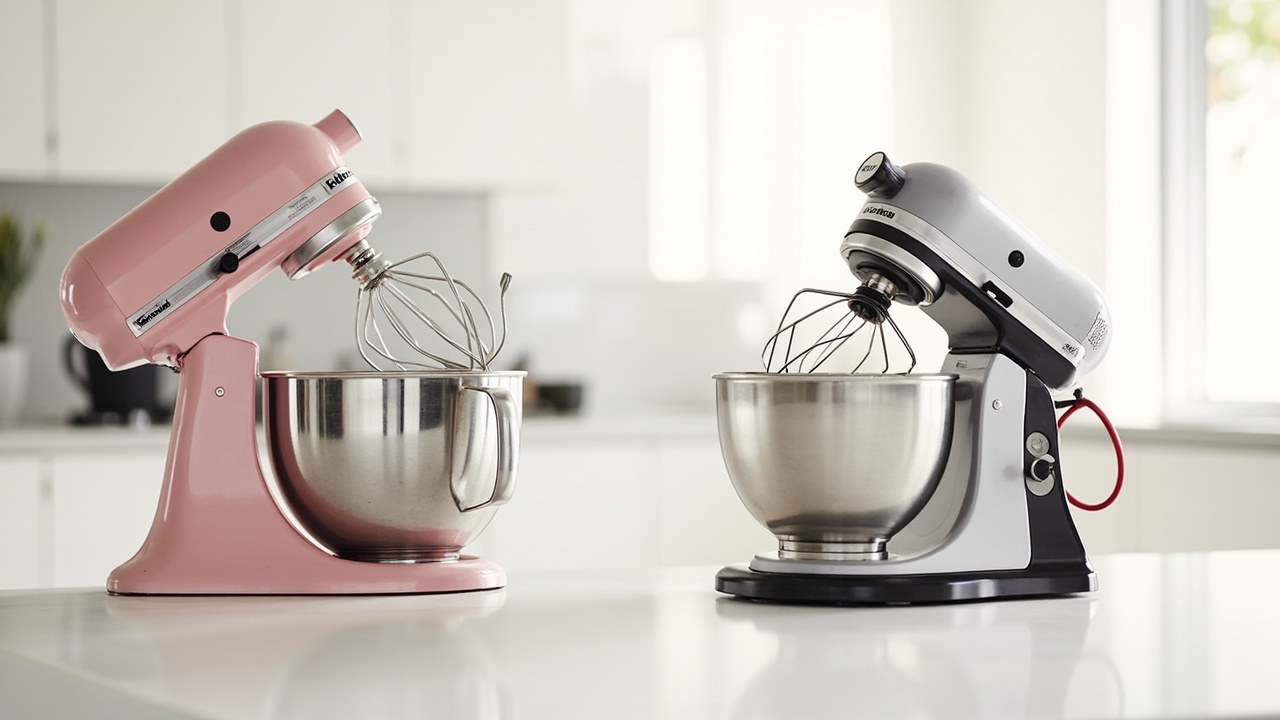
The KitchenAid wins on perceived color choice, attachment ecosystem, and US service network (Whirlpool-authorized repair centers in most cities). The Artisan’s die-cast build is heavier and arguably feels more “premium” in the hand. The tilt-head is genuinely faster for swapping attachments if you make lots of small batches.
The Ankarsrum wins on warranty, belt-drive noise, dough capacity, and motor reserve for heavy doughs. The bottom-drive design means the bowl spins instead of the head, which has two real consequences:
- More contact between the dough roller and the bowl — the roller stays in one orientation and the dough is pushed against it by the rotating bowl. This kneads more efficiently and cools the dough less than a planetary hook, which is why brioche and panettone bakers prefer it (Source: King Arthur Baking Ankarsrum guide).
- The motor isn’t in the head — the 1,500W peak motor is a belt-driven induction design in the base, which has much more thermal headroom than the KitchenAid’s 325W direct-drive head motor. For a 4-lb enriched dough, this is the difference between “machine is fine” and “the head smells hot and you stop early.”
The Ankarsrum is also noticeably quieter (65–70 dB vs. 72–78 dB in hobbyist reviewer tests). On a 12-minute knead cycle, that’s a real difference if you bake while someone else is sleeping.
For long-term reliability, both machines can last 10+ years with basic maintenance. The Ankarsrum’s longer warranty, simpler belt-replacement, and metal-gear construction edge it out for the “set it and forget it for 20 years” buyer. The KitchenAid’s wider US service network edges it out for the buyer who wants drop-off service for any future issue.
Feature Breakdown
Where the two machines actually diverge in day-to-day use:
| Feature | KitchenAid Artisan 5-Quart | Ankarsrum Assistent Original |
|---|---|---|
| Mixing Action | Planetary (head turns, whisk covers bowl) | Bottom-drive (bowl turns, roller/whisk remains stationary) |
| Best for Bread | Good up to 3.5 lb dough | Excellent up to 5 lb dough |
| Best for Cakes/Cookies | Excellent (planetary is the gold standard) | Good (bowl-scraper + whisk combo works) |
| Best for Whipped Cream/Meringue | Excellent (planetary whisks with head) | Excellent (dual-whisk attachment is fast) |
| Best for Enriched Dough (Brioche) | Adequate — head motor can overheat on heavy batches | Excellent — bottom-drive has thermal headroom |
| Best for Cold Butter/Pastry | Excellent — planetary is the standard for pie dough | Adequate — bowl-scraper required, slower |
| Attachment Ecosystem | 15+ attachments (pasta, meat grinder, juicer, spiralizer, food processor) | 6+ attachments focused on baking (dough roller, dough hook, whisk, beater, blender, citrus juicer) |
| Bowl Sizes | 1 (5 qt) | 2 (7.4 qt + 3.5 qt secondary) |
| Cleaning | Head, whisk, bowl — dishwasher safe | Roller, bowl, scraper — dishwasher safe; base wipes down |
| Storage | Tilt-head means it stands ~14” tall, fits under standard cabinets | Open-top design stores at ~13” tall, but wider footprint |
| Tilt-Head Speed-Up | Tilt-head pops back, no tools needed | Top column unlatches with a lever, no tools needed |
The single biggest differentiator is the mixing action. The KitchenAid’s planetary motion is the gold standard for cake, cookie, and frosting work because the head turns inside the bowl and covers every surface. The Ankarsrum’s bottom-drive bowl rotation is the gold standard for bread work because the dough roller works against the bowl wall, which kneads efficiently without overheating (Source: The Perfect Loaf Ankarsrum review).
For bread-only bakers, the Ankarsrum is the clearer win. For mixed-baking households, the Artisan is the safer pick. For someone who makes bread AND pasta from scratch, the KitchenAid’s attachment ecosystem (pasta roller + extruder + meat grinder) is unmatched.
For cake decorators who make frostings weekly, the KitchenAid’s planetary whisk is meaningfully faster. For brioche and panettone bakers, the Ankarsrum’s motor reserve and bottom-drive design is meaningfully better.
Pros and Cons
KitchenAid Artisan 5-Quart (KSM195) — Pros
- $200–$400 cheaper than Ankarsrum at typical bundle pricing
- 10+ color options including limited editions
- Planetary action is the gold standard for cakes, cookies, frostings
- 15+ attachment ecosystem (pasta, meat grinder, food processor)
- Wide US service network (Whirlpool-authorized)
- 1-year warranty (5-year on newer Premium Power Hub models)
- Tilt-head is faster for attachment swaps
- Familiar brand with massive user base (more recipes, more community help)
KitchenAid Artisan 5-Quart (KSM195) — Cons
- Head motor (325W direct-drive) runs hot on heavy doughs above ~3 lb
- Planetary gear train needs regreasing every 5 years (~$25 + 30 min)
- 1-year standard warranty is short for a $500+ machine
- Resale value 35–45% at 5 years (lower than Ankarsrum)
- Louder under load (72–78 dB)
- Tilt-head can drop back during heavy kneading if not latched properly
- Single bowl size (5 qt)
Ankarsrum Assistent Original (6230) — Pros
- 7-year warranty (7× the KitchenAid’s standard warranty)
- 1,500W peak / 550W continuous motor with thermal headroom for heavy doughs
- Bottom-drive design kneads efficiently without overheating
- 5 lb dough capacity vs. KitchenAid’s 3.5 lb — ~45% larger
- Two bowl sizes (7.4 qt + 3.5 qt) included
- Quieter under load (65–70 dB)
- 15–25+ year service life commonly reported
- Higher resale value (50–60% at 5 years)
- Made in Sweden (continuous production since 1940)
Ankarsrum Assistent Original (6230) — Cons
- $250–$400 more expensive than the Artisan bundle
- Limited color options (5 standard)
- Smaller attachment ecosystem (focused on baking)
- Planetary whisks cover more bowl surface for cake/cookie work
- Wider footprint (~14” vs. 8.7”) needs more counter space
- Service network smaller in the US (limited authorized repair centers)
- Bowl-scraper required for cake batters — slower than planetary
- Belt replacement (every 7–10 years) requires opening the base
Best For / Skip If
Buy the KitchenAid Artisan 5-Quart if you are:
- A mixed-baking household that makes 2+ cakes AND 1+ bread loaf per week
- Someone who wants pasta, meat grinding, or food-processing attachments down the line
- A first-time stand-mixer buyer who values brand recognition, US service network, and a low entry price
- A buyer who wants color choice (10+ options, including limited editions) for a custom kitchen
- A budget-conscious baker who wants the most $500+ machine for the least money
- A cake decorator or cookie baker where planetary action is the gold standard
Buy the Ankarsrum Assistent Original if you are:
- A bread-first baker who makes 2+ loaves per week, including enriched or stiff doughs
- A sourdough enthusiast working with high-hydration or low-hydration doughs regularly
- A brioche/panettone/croissant baker who needs motor reserve for long kneads
- A buyer who values 7-year warranty and 20+ year service life over upfront savings
- A quieter kitchen is important (60–70 dB vs. 70–78 dB)
- A multi-bowl user who wants a 7.4 qt and a 3.5 qt bowl in the box
- A buyer who wants higher resale value (50–60% vs. 35–45% at 5 years)
Skip both if you:
- Bake less than once a month — get a $40–$80 hand mixer instead
- Want a disposable price point — neither machine is the right answer under $500
- Have limited counter space and rarely bake — consider the KitchenAid Artisan Mini ($250) or the Bosch Compact ($200) for occasional use
- Need a food processor primarily — buy a dedicated food processor and a $200 hand mixer instead

Bottom Line
For most home bakers in 2026, the KitchenAid Artisan 5-Quart ($449–$700) is the better value because of its lower entry price, larger attachment ecosystem, and 10+ color options. It is the more flexible machine for the same-or-less money, and its planetary action is the gold standard for the 70% of baking that isn’t bread.
The Ankarsrum Assistent Original ($799–$999) is the right pick for a narrower audience: bakers who prioritize bread (especially enriched, stiff, or large-batch doughs), want a 7-year warranty, value quieter operation, and are willing to pay $250–$400 more for a machine that hobbyist bakers routinely run for 20+ years. If you make bread weekly and only occasionally bake cakes, the Ankarsrum is the better tool.
Neither machine is a mistake at this price tier. The mistake is buying a $700+ stand mixer and using it twice a month. Both machines earn their cost when used at least 2–3 times per week for years — they pay for themselves in the time saved versus hand-mixing, and they consistently produce better results than hand-kneading or whisking. Buy smart. Get more value.