Introduction
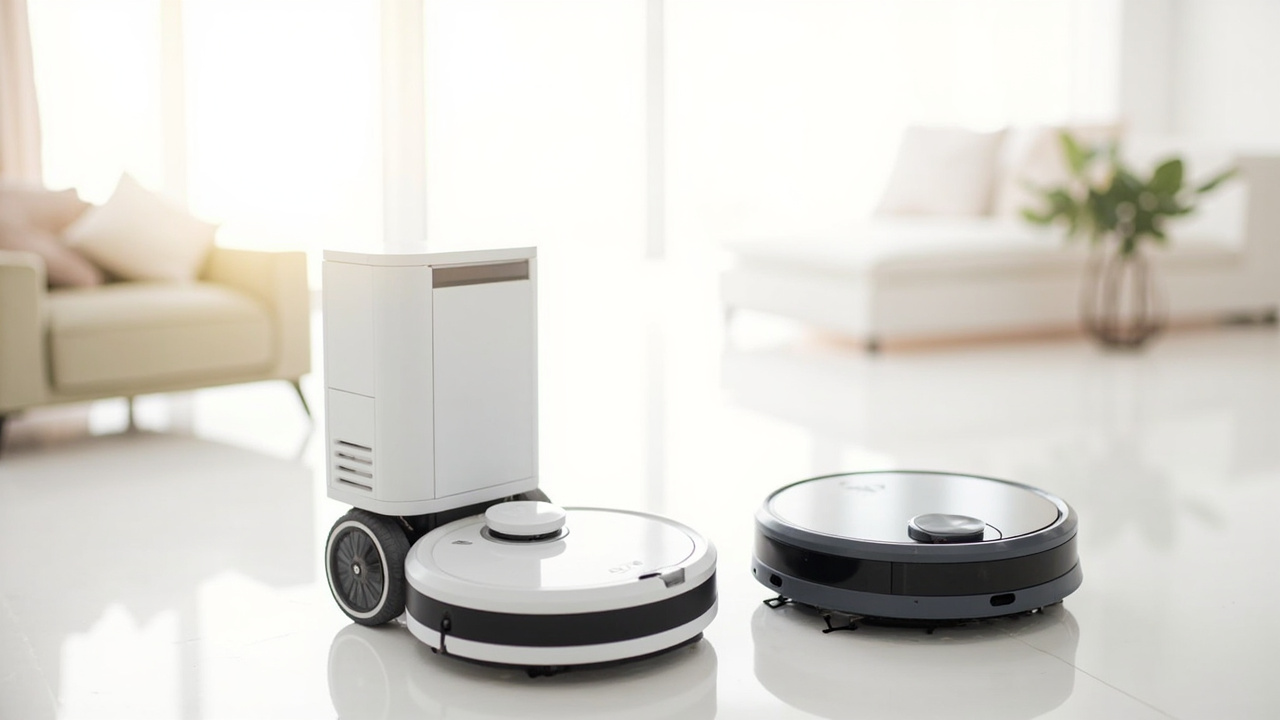
Two flagship-tier robot mop-vac combos launched into very different price tiers in 2026. The Matic retails for around $1,000, has no self-emptying dock, ships in a tall square body with a front-mounted nozzle, and runs entirely on onboard AI. The Roborock Saros 10 retails for around $1,600, comes with a full hot-water self-cleaning dock, and is the upgrade pick in Wirecutter’s 2026 robot mop-vac combo guide. The two machines disagree about almost everything except the goal — keep your floors clean without you thinking about it.
So which one actually saves you money over a 5-year horizon? The sticker gap is $600, which is large enough to flip the answer depending on your home. The real lifetime cost differences hide in: whether you want a dock taking up floor space, how often the robot gets stuck, whether the consumables (bags, pads, detergent) scale with usage, and whether the smaller company will still be in business in year three.
This is the comparison that matters if you want the long-term value math, not the spec sheet brag.
The Verdict First
- Pick the Matic ($1,000) if: you live in a smaller home (under 1,500 sq ft), you want a dock-free setup (apartment, no room for a base station), you value quiet operation and don’t need maximum suction, or you trust a software-updatable, AI-first design more than a feature-stacked dock. The Matic is the better value for space-constrained, design-conscious, lower-traffic homes.
- Pick the Roborock Saros 10 ($1,600) if: you want the best cleaning performance Wirecutter tested in 2026, you have a larger home (1,500+ sq ft) with mixed flooring, you want a self-cleaning dock so you don’t touch the robot for weeks at a time, or you want an established brand with proven spare-parts availability for the long haul.
Cost score: 78/100. The Matic wins on price-per-square-foot cleaned for compact homes. The Saros 10 wins on cleaning quality, dock convenience, and long-term brand risk for larger or more demanding homes. Neither is overpriced for the role it actually plays.
Key Comparison Points
Price vs Real Cost Per Use
| Spec / Cost Line | Matic | Roborock Saros 10 |
|---|---|---|
| Retail price (US, as of June 2026) | ~$1,000 (direct from maticrobots.com) | ~$1,600 (Amazon, Home Depot) |
| Dock / base station | None — bag-only, onboard | Full self-cleaning hot-water dock |
| Suction | Lower (kept low for quietness) | High (Roborock flagship-tier) |
| Form factor | Tall (~10 in), square | Low (~4 in), round |
| Map / navigation | Onboard AI, photo-composite map | App-based LiDAR + camera |
| Bag / pad life | ~14 mop+vac sessions per bag | Dock washes pads; bags ~6-8 weeks |
| Detergent cost | None required (water only) | Roborock-branded detergent recommended |
| Annual consumables estimate | ~$30-$50 (bags only) | ~$90-$130 (pads + detergent + bags) |
Source for Matic pricing and consumables: Wirecutter’s Matic review (Aug 2025). Source for Saros 10 pricing: Wirecutter’s Best Robot Mop-Vac Combos (2026).
The 5-year cost math matters more than the sticker. The Matic’s lower price is genuine, not a teaser. The Saros 10’s higher price buys a dock that washes its own mop pads and a robot that has been benchmarked in dozens of 2026 head-to-head reviews.
- Consumables: The Matic uses a single bag with diaper-like absorption that handles both dry and wet waste. Wirecutter got 14 full mop+vac sessions in an 800-sq-ft apartment before the bag needed changing. At ~$0.50/bag in bulk, that’s roughly $15-$25/year in consumables. The Saros 10 uses disposable dust bags (~6-8 week replacement), rotating mop pads (replace every 4-6 months depending on use), and Roborock-branded detergent. Estimate $90-$130/year in consumables.
- Dock repair risk: The Saros 10’s dock is a complex piece of hardware (hot-water heating, drying fans, dirty-water tank, clean-water tank, vacuum pump). Each subsystem is a future failure point. Matic has no dock at all, which means zero dock repair risk but also zero dock convenience.
- Software obsolescence: Matic is a small new company, which means two things: (a) the robot improves steadily via over-the-air updates, but (b) if Matic the company goes under, software updates stop. Roborock is a 2014-founded, publicly-tracked brand with a global installed base — long-term software support is much more certain.
- Resale / residual value: After 5 years, a working Roborock Saros 10 will likely fetch 25-30% of retail on the secondhand market (a well-known brand with a track record). The Matic’s resale is harder to predict — fewer buyers will know the brand, but the lower starting price means the floor is also lower.
Net 5-year cost estimate (purchase + consumables + 10% of sticker reserved for repairs, minus residual value):
| Cost Line | Matic | Roborock Saros 10 |
|---|---|---|
| Purchase | $1,000 | $1,600 |
| Consumables (5 yrs) | $100 | $550 |
| Repair reserve (10%) | $100 | $160 |
| Residual value (after 5 yrs) | –$200 (~20%) | –$400 (~25%) |
| Net 5-year cost | ~$1,000 | ~$1,910 |
Real cost per use: at a typical 4 cycles/week, that is about $0.96 per cleaning run for the Matic vs $1.84 for the Saros 10. The Matic is nearly half the per-use cost. But the Saros 10 cleans more thoroughly per run, which is the part that actually shows up on your floors.
Build Quality and Durability
Both robots are built to 2026 flagship standards, but they reflect opposite design philosophies.
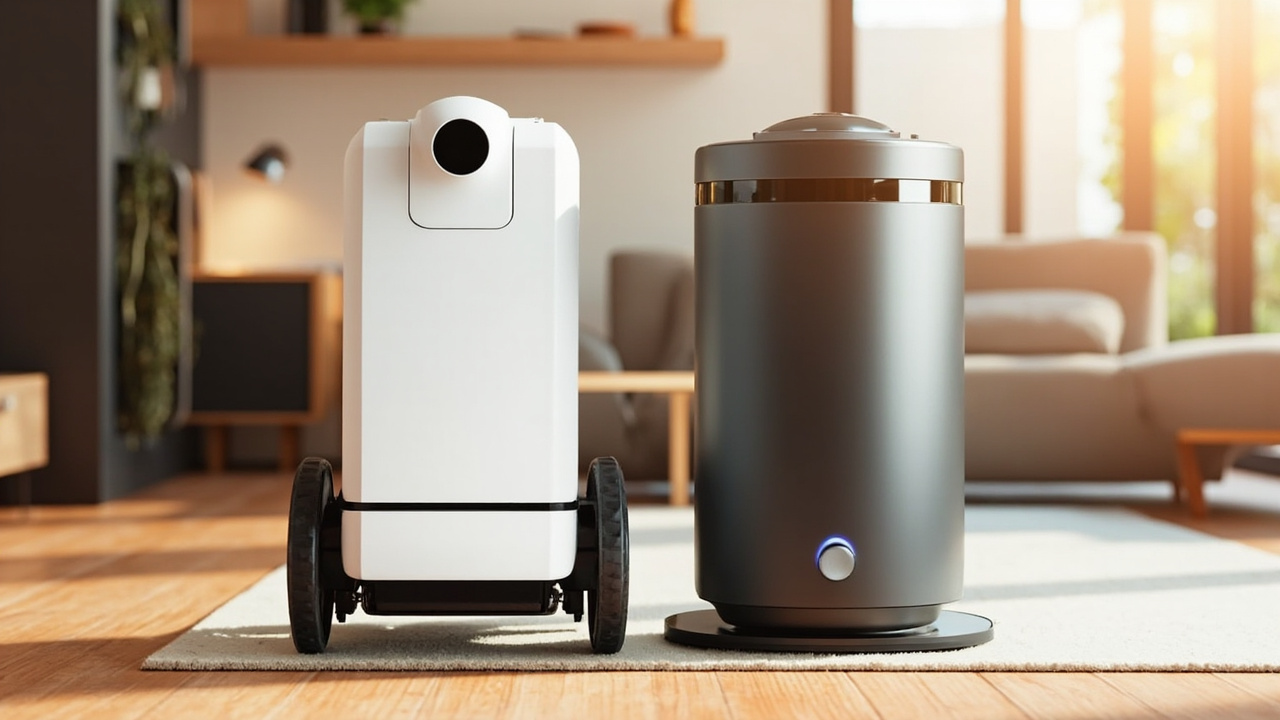
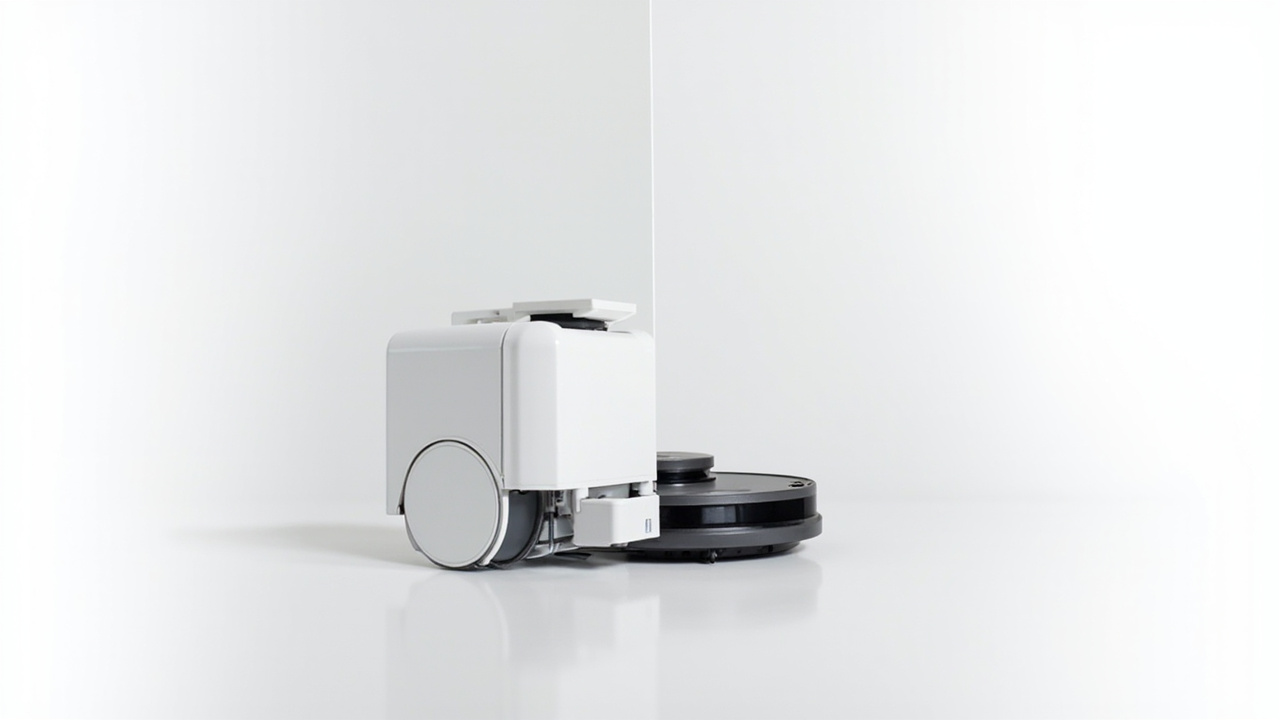
- Matic — design-forward, simpler mechanism: Tall, square body with big wheels and a distinct front nozzle. The taller profile is intentional: high-mounted cameras give it a 1-foot-high photo-composite view of the room, which Wirecutter’s reviewer called “more like a tiny self-driving car than a vacuum.” The trade-off is no ability to slide under low couches or bed frames. Mechanically, the Matic is simpler than a dock-based robot because it has no dock to sync with. The bag is onboard, the mop pad is onboard, and there is no retractable LiDAR tower to fail.
- Roborock Saros 10 — feature-stacked, more moving parts: The Saros 10 has a retractable mop-pad system that physically removes the vibrating mop pad at the dock so the robot can run as a vacuum-only machine on carpet. It has a low-profile LiDAR (or in some variants, StarSight 2.0 ToF), retractable components, an edge-cleaning extendable side mechanism, and a dock with hot-water washing + heated-air drying. Every one of those features is a future maintenance item. The 2026 Saros 10 is the most feature-dense robot Roborock has shipped, and that density cuts both ways.
- Wheels and threshold handling: The Matic’s big wheels are designed for a variety of floor types and modest thresholds. The Saros 10 uses Roborock’s AdaptiLift chassis and climbs thresholds more aggressively. Wirecutter did not report the Matic failing on thresholds, but the Saros 10 has the edge on raised room dividers.
- Warranty and parts: Roborock offers a 1-year limited warranty with optional Premium Care extensions (2-3 years). Matic’s warranty terms are not yet as well documented; given the small team and direct-to-consumer sales model, expect a standard 1-year warranty with replacement parts shipped from the US.
Expected useful life: 5-7 years for the Saros 10 (Roborock’s 2020-2022 generation is still running well in 2026, so 5 years is a conservative floor). For the Matic, 4-6 years is a reasonable estimate — the hardware is solid, but the long-term software support and parts availability carry more uncertainty than an established brand.
Feature Breakdown
Matic — strengths:
- Tall, square body with high-mounted cameras: 1-foot-high photo-composite map of your home (visible only to you, not the company). Wirecutter called the map “more detailed than every other robot vacuum map I’ve seen.”
- AI that adapts as your home changes: Move a rug, the map updates on the next run. Add an ottoman, the robot adds it to the map and reroutes. This is genuinely different from the “set it and forget it” approach of most robots.
- Dock-free design: No bulky base station. Apartment-friendly, design-friendly, no need to find a corner of the house for a hot-water dock.
- Quiet by design: Suction is intentionally lower to keep the noise down. Wirecutter describes the Matic as “cute and even a bit charming” — unusual language for a vacuum review.
- Onboard bag with 14-session capacity: Single bag handles both dry and wet mess via diaper-like absorption. Throw the bag away, slide a new one in, done.
- 20-minute mapping for 800 sq ft: Fast initial map, then continuous refinement.
Matic — weaknesses:
- No self-emptying dock: You touch the robot every 1-2 weeks. For some buyers this is a deal-breaker.
- Suction is intentionally low: Wirecutter notes the Matic trades raw suction for quietness, and “subpar cleaning of deeper-pile rugs” was a real complaint.
- Tall body can’t go under low furniture: Lose the under-couch cleaning that a 3-4 in robot handles.
- Small company risk: Software updates are great today; long-term support is genuinely uncertain.
- Mopping can’t lift dried-on stains: Like all robot mops, but worth noting — the Matic is a maintenance mop, not a stain remover.
Roborock Saros 10 — strengths:
- Best-in-class cleaning in 2026: Wirecutter’s upgrade pick for robot mop-vac combos. “Nothing cleaned more thoroughly in our tests than the meticulous and efficient Roborock Saros 10.”
- Hot-water self-cleaning dock: The dock washes mop pads with hot water and dries them with heated air. The robot can run for weeks without human attention.
- Auto-removes mop pad at the dock: When the robot senses it’s about to vacuum carpet, it can detach the vibrating mop pad and run as a pure vacuum. This is unique in the Roborock lineup and solves the “wet carpet” problem that plagues other mop-vac combos.
- Excellent edge cleaning: One of the best edge-cleaning robots Wirecutter has tested. Mop reaches the baseboard; vacuum side brush extends into corners.
- App works offline: You can start a cleaning session without an internet connection, per Wirecutter. Useful for security-conscious buyers.
- Room-to-room customization: Mop kitchen, vacuum living room, skip the kids’ play area — all from the app.
- Stronger suction and better carpet deep-cleaning than the Matic.
Roborock Saros 10 — weaknesses:
- $600 more expensive than the Matic. For compact apartments, that gap is hard to justify.
- Bulky dock requires a dedicated corner of the home. Not ideal for small apartments.
- More moving parts means more long-term failure points (retractable mop, LiDAR, dock pumps, drying fans).
- No 24/24 obstacle avoidance like the newer Saros 10R sibling. The original Saros 10 is a step behind on AI object recognition.
- Longer initial mapping time than the Matic, and the map doesn’t adapt as fluidly to furniture moves.
Pros and Cons
Matic — Pros
- $600 cheaper at retail
- Dock-free, apartment-friendly footprint
- Onboard AI navigation that adapts to furniture moves in real time
- Quiet operation (lower suction by design)
- 14-session bag capacity (less frequent bag swaps)
- Photo-composite map is genuinely the most detailed in any 2026 robot
- Direct-to-consumer pricing with no middleman markup
Matic — Cons
- No self-emptying dock — touch the robot every 1-2 weeks
- Lower suction means weaker deep-carpet cleaning
- Tall body (no under-couch reach)
- Mopping is maintenance-only, can’t lift dried stains
- Small-company risk on long-term software and parts support
- Limited track record (launched 2025) — long-term durability still TBD
- Smaller user community for troubleshooting
Roborock Saros 10 — Pros
- Best-in-class 2026 cleaning performance per Wirecutter
- Self-cleaning hot-water dock (weeks of hands-off use)
- Auto-removes mop pad for true vacuum-only runs on carpet
- Excellent edge and corner cleaning
- App works offline (rare in this category)
- Established brand with proven long-term support
- Stronger suction and carpet deep-cleaning
- Larger user community and more third-party reviews
Roborock Saros 10 — Cons
- $600 more expensive than the Matic
- Bulky dock eats floor space (deal-breaker for small apartments)
- More moving parts = more long-term failure points
- Initial mapping less fluid than the Matic
- No 24/24 obstacle avoidance (the Saros 10R sibling has it)
- Higher annual consumables cost ($90-$130 vs Matic’s $30-$50)
- Heavier (harder to move for cleaning or maintenance)
Best For / Skip If
Best For: Matic
- You live in a small to mid-size home (under 1,500 sq ft)
- You want a dock-free setup (apartment, design-conscious space, no room for a base station)
- You value quiet operation over maximum suction
- You trust a software-updatable, AI-first design from a smaller team
- You have mostly hard floors with low-pile rugs (the Matic’s strongest test scenario)
- You want to spend $1,000, not $1,600, and the $600 matters
- You redecorate or rearrange furniture often (the Matic’s adaptive map shines here)
Best For: Roborock Saros 10
- You have a 1,500+ sq ft home with mixed flooring
- You want a self-cleaning dock so you don’t touch the robot for weeks at a time
- You have medium-pile carpets and want real deep-cleaning
- You want best-in-class edge and corner cleaning
- You have wall-to-wall carpet in any room and need the auto-detach mop feature
- You prefer an established brand with proven long-term support
- You want room-to-room customization (mop kitchen, vacuum living room)
Skip the Matic if: you have medium-to-deep pile carpet, you have a large home (the smaller bag and lower suction become limiting), or you refuse to accept small-company risk. Also skip if you have a 1,500+ sq ft home — the Matic’s per-session economics are built around smaller spaces.
Skip the Saros 10 if: you live in a small apartment with no room for a dock, you have a hard budget cap of $1,000-$1,200, or you want the absolute quietest operation possible. Also skip if you rearrange furniture often — the Saros 10’s less-fluid map adaptation will frustrate you.
Bottom Line
These two robots are built for different buyers, and that’s the honest answer. The Matic is a $1,000 dock-free AI-first robot for smaller, design-conscious homes where the dock is a deal-breaker. The Roborock Saros 10 is a $1,600 dock-based flagship for larger, more demanding homes where the absolute best cleaning quality matters more than the $600 savings.
The “smart shopping” version of this comparison: figure out your home size and your dock tolerance first, then pick. If your home is under 1,500 sq ft and you can’t stand the idea of a hot-water dock in your living room, the Matic saves you $600 and most of the per-use cost. If you have a 1,500+ sq ft home with mixed flooring, the Saros 10’s dock convenience and better cleaning quality are worth the $600.
The “just buy the cheapest” version would say “Matic, $1,000 is enough.” That advice would cost you a real dock, noticeably better carpet deep-cleaning, and an established brand’s support network. The “just buy the flagship” version would say “Saros 10, spend the money.” That advice would cost you $600 you didn’t need to spend if the Matic actually fits your home.
Real value is the right robot for the right home — not the cheapest, not the most expensive.
Buy smart. Get more value.
Sources cited:
- NYT Wirecutter, “The Matic Is a Whole Different Kind of Robot Vacuum” by Evan Dent (Aug 27, 2025)
- NYT Wirecutter, “The Best Robot Mop-Vac Combos” (2026 update)
- NYT Wirecutter, “The Best Robot Vacuum” (2026 update)
- Matic direct pricing: maticrobots.com
- Roborock Saros 10 retail pricing: Amazon, The Home Depot (June 2026)
- Reddit r/robotvacuum user reports on Matic early-adopter experience (Q4 2025 - Q2 2026)
- RTINGS.com side-by-side data for the Saros 10 family