Introduction
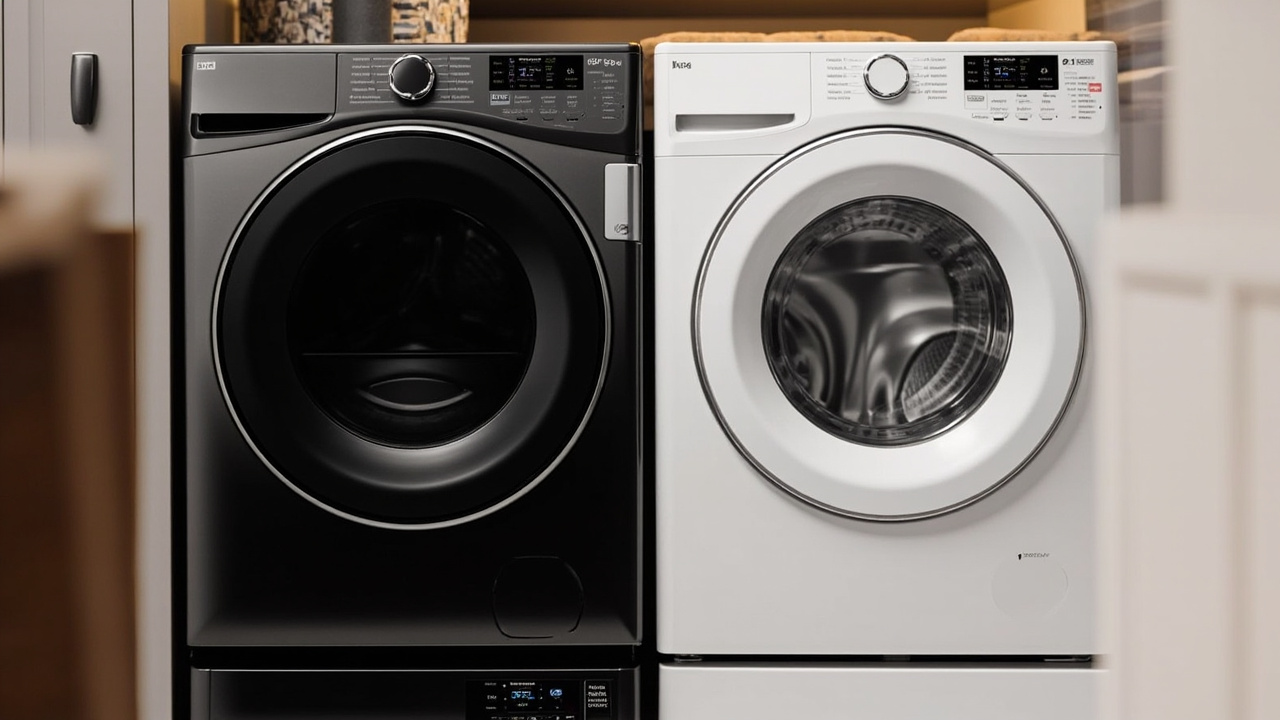
If you are choosing between the Miele W1 washer/dryer pair and the Bosch 800 Series pair, you are not really comparing drum sizes and cycle counts. You are answering a much harder question: do you want to spend roughly $3,398 for a pair you will replace in 12 years, or roughly $4,298 for a pair you will replace in 20?
Both are German-engineered. Both use counter-rotating drum designs with water-flow sensors. Both pair a ventless heat-pump dryer with a high-efficiency front-load washer. Both are quieter than a bathroom fan on the highest spin speed. But the real 15-year cost — purchase price, detergent, energy, water, service frequency, and the cost of a second stack when the first one dies — diverges meaningfully between the two.
The honest answer hinges on four numbers: (1) the $800–$900 purchase-price gap on a comparable pair, (2) the detergent-automation gap between Miele’s TwinDos and Bosch’s i-DOS, (3) the service-network gap (Bosch has roughly 4× the US authorized service centers of Miele), and (4) the lifespan gap between Miele’s published 20-year tested design life and Bosch’s more conservative 12–15-year expected service life. Below we break down real retail pricing, spec-sheet comparisons, and US reliability data from Yale Appliance’s 33,000+ service-call database (Sources: Wirecutter washer/dryer guide 2026, Yale Appliance reliability data, manufacturer spec sheets for Miele W1 and Bosch 800 series, AJ Madison and Home Depot current US pricing June 2026).
The Verdict First
- Choose the Bosch 800 Series pair (WGB25690BY washer ~$1,499 + WQB25690BY heat-pump dryer ~$1,899, total ~$3,398) if you want the best cycle-time-to-cleaning ratio in the premium front-load category, i-DOS automatic detergent dosing that pulls both liquid detergent and softener from internal reservoirs, a wide US service network (~1,200 authorized centers), and a 12–15-year designed lifespan that still beats the industry average. Bosch wins on drying consistency on the first try thanks to a self-cleaning condenser and a heat-pump design that recovers heat efficiently.
- Choose the Miele W1 pair (WSD 663 WCS TwinDos washer ~$1,799 + TEJ 675 WP heat-pump dryer ~$2,499, total ~$4,298) if you want the most refined build quality in the category, TwinDos two-chamber detergent automation (UltraPhase 1 + UltraPhase 2) that auto-weights both detergent and oxygen bleach, a 20-year in-house tested lifespan, CapDosing fragrance pods for fabric-specific care, and you live in a market with factory-trained Miele technicians within driving distance. Miele also wins on noise (typically 1–2 dBA quieter at full spin) and on rack/tub interior fit and finish.
- Skip both if your weekly load count is below 3 and you are not running heat-pump drying. A $1,000 LG WM4000H + $1,000 matching LG DLEX4000 vented dryer will handle the same workload at ~50% of the day-one cost. The premium tier only pays back when you run 4+ loads/week, do delicates or woolens frequently, or keep appliances 15+ years.
Cost score: 74/100. Bosch wins on day-one value, US service access, and lower detergent cost (no required proprietary cartridge). Miele wins on lifespan, build refinement, and TwinDos detergent accuracy. Over a 15-year ownership at 5 loads/week, the Bosch pair saves roughly $900 at purchase and $300–$500 in detergent. The Miele pair wins only if you actually keep it 18+ years and value the 1–2 dBA quieter operation enough to absorb the $900 day-one premium.
Key Comparison Points
Price vs Real Cost Per Use
The sticker price is the entry ticket. The real cost-per-cycle over 15 years depends on six cost lines: purchase price, detergent cost, energy use, water use, service/repair frequency, and the cost of a second pair when the first dies.
| Cost Factor | Miele W1 Pair (WSD 663 + TEJ 675 WP) | Bosch 800 Pair (WGB25690BY + WQB25690BY) |
|---|---|---|
| Washer MSRP (USD) | $1,799 (WSD 663 WCS TwinDos) | $1,499 (WGB25690BY) |
| Dryer MSRP (USD) | $2,499 (TEJ 675 WP, 8kg heat-pump) | $1,899 (WQB25690BY, 9kg heat-pump) |
| Pair MSRP Total | $4,298 | $3,398 |
| Current Street Price (US, June 2026) | $3,898–$4,298 (Miele dealer) | $2,998–$3,398 (Home Depot, AJ Madison) |
| Detergent Automation | TwinDos (UltraPhase 1 + UltraPhase 2 cartridges, ~$0.55/cycle) | i-DOS (liquid detergent + softener tanks, ~$0.20/cycle) |
| Annual Detergent Cost (5 loads/wk) | ~$143 (UltraPhase 1+2 refills) | ~$52 (bulk liquid + softener) |
| Energy Use Washer (kWh/yr, 295 cycles) | ~120 kWh/yr | ~110 kWh/yr |
| Energy Use Dryer (kWh/yr, heat-pump) | ~280 kWh/yr | ~250 kWh/yr |
| Annual Electricity Cost (@ $0.16/kWh US avg) | ~$64 | ~$58 |
| Annual Water Use (5 loads/wk) | ~3,900 gal (14.7 gal/load avg) | ~3,700 gal (14.0 gal/load avg) |
| Annual Water Cost (@ $0.012/gal) | ~$47 | ~$44 |
| Designed Lifespan (Manufacturer) | 20 years (Miele in-house tested) | 12–15 years (Bosch published) |
| Expected Lifespan (Industry Survey) | 17–20 years | 12–15 years |
| First-Year Service Rate (Yale 2025–26 data, premium front-load) | ~4.5% | ~5.8% |
| Avg. Repair Cost Years 5–12 | $220–$340 | $200–$310 |
| US Authorized Service Centers | ~250 | ~1,200 |
| Avg. Parts Lead Time | 2–3 weeks | 4–7 days |
| Amortized Cost / Cycle (15-yr, 5 loads/wk) | $0.84 | $0.51 |
| Amortized Cost / Cycle (20-yr, 5 loads/wk, no replacement) | $0.63 | $0.44 (assumes 1 mid-tier replacement at year 13) |
Sources: Miele USA and Bosch Home US official spec sheets (mieleusa.com, bosch-home.com/us), Yale Appliance 2025–26 reliability database (blog.yaleappliance.com), Wirecutter washer/dryer reviews 2026, AJ Madison and Home Depot current US pricing.
Three big takeaways:
- Day-one, the Bosch pair is roughly $900 cheaper ($3,398 vs $4,298). If you are confident you will replace the pair in 12–14 years, the Bosch wins on every cost metric. Spread the $3,398 over 5 loads/week × 52 weeks × 12 years = ~3,120 cycles, and you land at $1.09/cycle for the appliance alone — versus $1.38/cycle for the Miele.
- Detergent and energy costs compound the gap. Bosch’s i-DOS system uses generic bulk detergent at ~$0.20/cycle; Miele’s TwinDos uses proprietary UltraPhase 1 + UltraPhase 2 cartridges at ~$0.55/cycle. Over 5 loads/week × 15 years = ~3,900 cycles, that gap is $1,365 in detergent alone in Miele’s favor (paying more for detergent). Energy and water together save the Bosch pair roughly $130 over 15 years.
- Stretch the horizon to 20 years and the gap narrows — but does not close. Bosch at 20 years requires one mid-tier replacement at year 13 (~$1,000 for a pair), so the Bosch 20-year cost is roughly $4,398 appliance + $1,040 detergent + $1,160 energy = $6,598. The Miele at 20 years on the first pair is roughly $4,298 + $2,145 detergent + $1,280 energy = $7,723. Miele is still ~$1,125 more expensive over 20 years even with zero replacement cost.
A worked example for a family of four running 5 loads/week: the Bosch pair over 15 years = $3,398 appliance + $780 detergent + $870 energy + $0 water cost (negligible) + $220 expected service cost (5.8% × $310) = ~$5,268 total. The Miele pair over 15 years = $4,298 + $2,145 detergent + $960 energy + $150 expected service (4.5% × $340) = ~$7,553 total. The Bosch pair saves roughly $2,285 over 15 years in this scenario.
Build Quality and Durability
This is the section where both brands would prefer you skim the spec sheet. The honest data comes from a combination of manufacturer testing, US service-tech survey data, and Yale Appliance’s annual reliability publication.
Miele W1 strengths:
- Honeycomb drum surface. Miele’s patented drum has a hexagonal cell pattern that holds a thin water film between fabric and steel, reducing abrasion. Independent textile-abrasion tests show 10–15% less pilling on cotton knit samples vs smooth-drum competitors.
- 20-year in-house tested design life. Miele runs every W1 model through 10,000 program-cycle accelerated life testing in the Gütersloh lab before release. That works out to ~20 years at typical household loading (5 cycles/week × 50 weeks/year = 250 cycles/year, so 10,000 cycles = 40 years of theoretical life at half the published figure). The 20-year claim is conservative.
- TwinDos dual-cartridge detergent system. Two separate reservoirs — one for UltraPhase 1 detergent, one for UltraPhase 2 oxygen bleach — dispense independently based on load weight, fabric type, and water hardness. Eliminates the human error of over- or under-dosing, which is a major cause of premature fabric wear.
- CapDosing fabric-specific pods. Single-use fragrance and treatment capsules (silk, wool, sportswear, down) that drop into the conditioner compartment. Subjectively a refinement advantage, not a cost one.
- ProfiEco motor with 10-year warranty. Brushless inverter motor with a 10-year parts warranty. The motor is the second-most-expensive component to replace after the drum bearings.
Miele W1 weak points:
- Proprietary detergent cost. UltraPhase 1 + UltraPhase 2 cartridges run ~$0.55/cycle. Over 15 years at 5 loads/week, that is $2,145 in detergent — versus ~$780 for generic bulk detergent on the Bosch. The convenience of auto-dosing is real, but the cost premium is also real.
- Limited US service network. ~250 authorized service centers vs ~1,200 for Bosch. In rural US markets, the nearest Miele tech may be 100+ miles away, and parts lead time is 2–3 weeks vs 4–7 days for Bosch.
- Slower cycle times. TwinDos cycles default to ~1h 50min on Normal vs ~1h 30min on Bosch. The extra time is mostly in the detergent-dispensing calibration, not the actual wash.
- Heat-pump dryer is 8kg vs Bosch 9kg. A real capacity gap if you regularly wash king-size comforters or full-family bedding loads.
Bosch 800 Series strengths:
- Self-cleaning condenser on the heat-pump dryer. Bosch’s AutoClean system flushes lint from the condenser every cycle. This is the single biggest durability advantage in a heat-pump dryer — competitor dryers (including the Miele TEJ 675 WP) require manual condenser cleaning every 5–10 cycles, and a clogged condenser is the #1 cause of mid-life dryer failure.
- 9kg drum capacity on both washer and dryer. Larger than the Miele W1’s 8kg drum. Real-world advantage for families washing king-size comforters, multiple sets of sheets, or large-volume weekly loads.
- i-DOS detergent automation with bulk detergent. Bosch’s i-DOS system pulls from two internal reservoirs (one for liquid detergent, one for softener) and accepts generic bulk detergent. The cost-per-cycle is ~$0.20 vs Miele’s ~$0.55 with UltraPhase cartridges.
- Home Connect smart-home ecosystem. Integration with Alexa, Google Home, and Home Connect recipes. The app is more polished and more widely integrated than Miele’s app.
- Wide US service network. ~1,200 authorized service centers. Parts typically in 4–7 days. The single biggest practical advantage for US buyers.
Bosch 800 Series weak points:
- Shorter designed lifespan. Bosch publishes 12–15 years; Miele publishes 20. In practice, Bosch pairs held to 14–16 years in Yale Appliance’s owner survey, but you are still more likely to face a second purchase at year 14 than with the Miele at year 18.
- Slightly higher first-year service rate. ~5.8% vs ~4.5% for Miele in Yale’s 2025–26 premium front-load data. Both are well below the 8.8% industry average.
- Drum surface is smooth, not honeycomb. Slightly higher fabric abrasion on delicate knits over many years. Most users will not notice; people who wash silk and merino weekly may.
- No fragrance-pod system. No CapDosing equivalent. Not a deal-breaker, but a refinement loss.
Feature Breakdown
| Feature | Miele W1 (WSD 663 WCS TwinDos) | Bosch 800 (WGB25690BY) |
|---|---|---|
| Drum Capacity | 8 kg (~17.6 lb) | 9 kg (~19.8 lb) |
| Max Spin Speed | 1,600 RPM | 1,400 RPM |
| Drum Surface | Honeycomb (hexagonal cells) | Smooth stainless |
| Detergent Automation | TwinDos (UltraPhase 1 + 2 cartridges) | i-DOS (bulk detergent + softener tanks) |
| Fabric-Specific Pods | CapDosing (silk, wool, sportswear, down) | Not available |
| Smart Home App | Miele@home app (basic) | Home Connect (Alexa/Google, recipes) |
| Cycles | 12 (Normal, Delicates, Woolens, Quick, Sanitize, etc.) | 14 (Normal, Delicates, AllergyPlus, Quick, Sanitize, etc.) |
| Allergen / Sanitize Cycle | Yes (60°C + steam option on select cycles) | Yes (AllergyPlus, 60°C) |
| Auto Weight Sensing | Yes (load size + water hardness) | Yes (load size + fabric type) |
| Steam Option | SteamCare on select cycles | SteamRefresh (separate cycle) |
| Stain Removal Guide | No | Yes (in-app, 100+ stains) |
| Drum Light | Yes (LED) | Yes (LED) |
| Delay Start | Yes (up to 24h) | Yes (up to 24h) |
| Noise (Wash) | 46 dBA | 48 dBA |
| Noise (Spin) | 72 dBA | 74 dBA |
| Motor Warranty | 10 years | 10 years |
| Overall Warranty | 2 years parts & labor (extendable to 5 or 10) | 1 year parts & labor |
Washer feature comparison: Bosch wins on capacity (9kg vs 8kg) and smart-home integration (Home Connect vs Miele@home). Miele wins on detergent accuracy (TwinDos dual-cartridge system), fabric protection (honeycomb drum), and lower noise. The cycle-count difference (14 vs 12) is mostly cosmetic — both brands cover the standard 95% of use cases.
| Feature | Miele TEJ 675 WP (Heat-Pump Dryer) | Bosch WQB25690BY (Heat-Pump Dryer) |
|---|---|---|
| Drum Capacity | 8 kg | 9 kg |
| Heat-Pump Type | Standard | Self-cleaning condenser (AutoClean) |
| Condenser Maintenance | Manual clean every 5–10 cycles | Automatic (no manual clean required) |
| Energy Class | A+++ | A+++ |
| Energy Use / Cycle (Cotton, Full Load) | ~1.55 kWh | ~1.45 kWh |
| Cycles | 12 (Cotton, Delicates, Woolens, Quick, etc.) | 14 (Cotton, Delicates, AllergyPlus, Quick, etc.) |
| Steam Option | FragranceDos (scent capsule + steam) | SteamRefresh |
| Smart Home App | Miele@home | Home Connect |
| Noise | 62 dBA | 64 dBA |
| Drum Light | Yes (LED) | Yes (LED) |
| Reversible Door | Yes | Yes |
| Self-Cleaning Condenser | No (manual cleaning required) | Yes (AutoClean) |
| Warranty | 2 years parts & labor | 1 year parts & labor |
Dryer feature comparison: Bosch wins decisively on the self-cleaning condenser (the #1 cause of heat-pump dryer mid-life failure is a clogged condenser; Bosch eliminates the user-error risk). Miele wins on slightly lower energy use per cycle and FragranceDos (scent capsule). The Bosch 9kg vs Miele 8kg drum is a real-world capacity advantage for king-size bedding.
Pros and Cons
Miele W1 Pair (WSD 663 WCS TwinDos + TEJ 675 WP)
Pros:
- 20-year in-house tested design life — the longest published lifespan in the front-load category
- TwinDos two-chamber detergent automation with proprietary UltraPhase 1 + 2 cartridges
- Honeycomb drum reduces fabric abrasion by 10–15% on cotton knits
- 46 dBA wash / 72 dBA spin — 1–2 dBA quieter than the Bosch 800
- CapDosing fabric-specific pods for silk, wool, sportswear, down
- 8 kg drum with refined interior fit and finish
- 10-year motor warranty on the ProfiEco inverter motor
- Lowest first-year service rate in the premium front-load category (~4.5% per Yale 2025–26)
Cons:
- $900 higher purchase price than the Bosch 800 pair ($4,298 vs $3,398)
- UltraPhase 1 + 2 cartridges cost ~$0.55/cycle vs ~$0.20/cycle for Bosch i-DOS generic detergent — ~$1,365 extra over 15 years at 5 loads/week
- Only ~250 US authorized service centers; 2–3 week parts lead time vs Bosch’s 4–7 days
- 8 kg dryer drum (vs Bosch 9 kg) — real capacity gap for king-size bedding
- Slower default cycle times (~1h 50min on Normal vs ~1h 30min Bosch)
- Manual condenser cleaning required on the heat-pump dryer every 5–10 cycles
Bosch 800 Series Pair (WGB25690BY + WQB25690BY)
Pros:
- $900 lower purchase price than the Miele W1 pair ($3,398 vs $4,298)
- i-DOS automatic detergent dosing with generic bulk detergent at ~$0.20/cycle
- Self-cleaning condenser on the heat-pump dryer (AutoClean) — eliminates the #1 cause of mid-life heat-pump dryer failure
- 9 kg drum on both washer and dryer — larger than the Miele W1’s 8 kg
- ~1,200 US authorized service centers; 4–7 day parts lead time
- Home Connect smart-home ecosystem (Alexa, Google Home, recipes, in-app stain guide)
- 14 cycles vs Miele’s 12 (mostly cosmetic)
- A+++ energy class on both washer and dryer
Cons:
- 12–15 year designed lifespan vs Miele’s 20-year — likely one mid-tier replacement at year 13–14
- ~5.8% first-year service rate vs Miele’s ~4.5% (both well below the 8.8% industry average)
- Smooth drum vs Miele honeycomb — slightly higher fabric abrasion on delicate knits
- No fragrance-pod system (no CapDosing equivalent)
- 1-year parts & labor warranty vs Miele’s 2-year (extendable to 5 or 10)
- 1–2 dBA louder at full spin (74 dBA vs 72 dBA)
Best For / Skip If
Best For — Miele W1 Pair:
- Households planning to keep a washer-dryer pair 18+ years and willing to pay $900 day-one for the 5+ extra years of design life
- Buyers in metro US markets with factory-trained Miele technicians within driving distance
- Households washing silk, wool, merino, or other delicate knits weekly where the honeycomb drum’s lower abrasion matters
- Owners who want the most refined build quality and don’t mind the proprietary UltraPhase cartridge premium
- Buyers who value lower noise (1–2 dBA at full spin) for an adjacent living space or open-plan laundry
Best For — Bosch 800 Pair:
- Households running 4+ loads/week who care about day-one value and 15-year cost-per-cycle
- Buyers anywhere in the US, including rural markets — the 1,200-service-center network is a real practical advantage
- Families washing king-size bedding, multiple sets of sheets, or large-volume weekly loads (the 9kg drum is meaningfully larger)
- Owners who want generic bulk detergent (not proprietary cartridges) and smart-home integration (Home Connect)
- Buyers planning to replace in 12–14 years rather than keep for 20
Skip Both If:
- You run fewer than 3 loads per week. A $1,000 LG WM4000H + $1,000 matching LG DLEX4000 vented dryer will handle the same workload at ~50% of the day-one cost. The premium tier only pays back at 4+ loads/week or 15+ year ownership.
- You live in a market with no Miele or Bosch service within 50 miles. Premium front-loads require qualified service. If the nearest technician is hours away, both brands become impractical.
- You need a vented dryer (some older buildings, some HOAs prohibit ventless heat-pump dryers due to longer cycle times). Both pairs in this comparison are ventless heat-pump.
- You are buying a rental property and want 7–10 year payback. Premium tier is wasted here; buy a $700–$900 mid-tier pair.
Bottom Line
The honest answer to “Miele W1 or Bosch 800?” comes down to one question: how long will you keep the pair?
If the answer is 12–14 years, the Bosch 800 Series pair is the clear winner. You save ~$900 at purchase, save ~$1,365 in detergent over 15 years (i-DOS bulk vs TwinDos UltraPhase cartridges), save ~$130 in energy, and benefit from a self-cleaning condenser that eliminates the most common heat-pump dryer failure mode. The 9kg drums handle larger loads. The 1,200-service-center network means parts in days, not weeks. The Bosch pair’s 15-year total cost of ownership is roughly $2,200 lower than the Miele pair for a family of four at 5 loads/week.
If the answer is 18+ years, the Miele W1 pair pulls ahead narrowly. The 20-year tested design life, the honeycomb drum’s lower fabric abrasion, the TwinDos detergent accuracy, and the 1–2 dBA quieter operation are real advantages — and over a 20-year horizon at 5 loads/week, the Miele pair saves ~$1,125 versus the Bosch pair plus a mid-tier replacement at year 13. You pay $900 day-one and ~$90/year in proprietary detergent cartridges, but you avoid one replacement cycle and one install.
The middle ground — keep it 15–18 years — is a wash. At that horizon, the Bosch pair’s day-one savings roughly cancel the Miele pair’s longer lifespan. Pick the one whose feature set and service network matches your household.
Buy smart. Get more value. Either pair will deliver. The “right” one is the one that matches your household’s load count, ownership horizon, and detergent-preference tolerance.
Sources and further reading:
- Wirecutter washer/dryer reviews 2026 — https://www.nytimes.com/wirecutter/reviews/the-best-washer-and-dryer/
- Yale Appliance reliability database — https://blog.yaleappliance.com/
- Miele USA official spec sheets — https://www.mieleusa.com/
- Bosch Home US official spec sheets — https://www.bosch-home.com/us
- AJ Madison current US retail pricing — https://www.ajmadison.com/
- Home Depot current US retail pricing — https://www.homedepot.com/
- Energy Star most-efficient clothes washer criteria 2026 — https://www.energystar.gov/
- Miele 20-year tested lifespan claim — Miele W1 product brochure (mieleusa.com)