Introduction
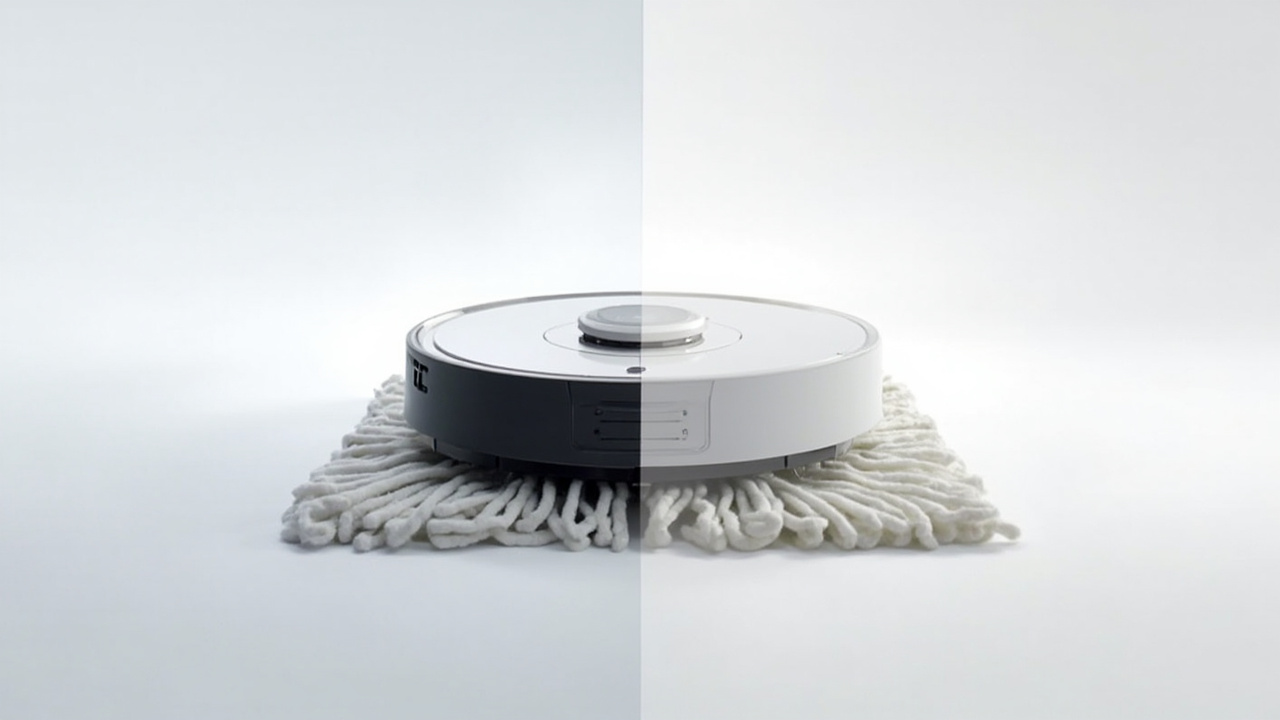
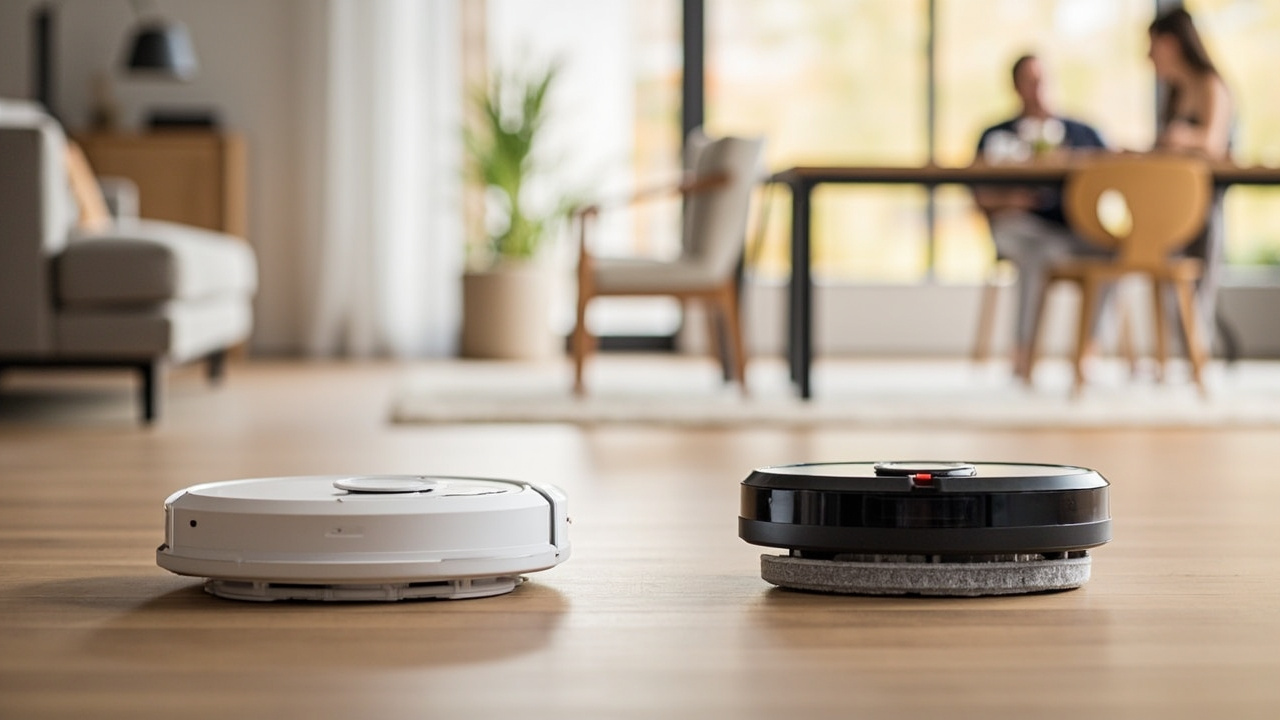
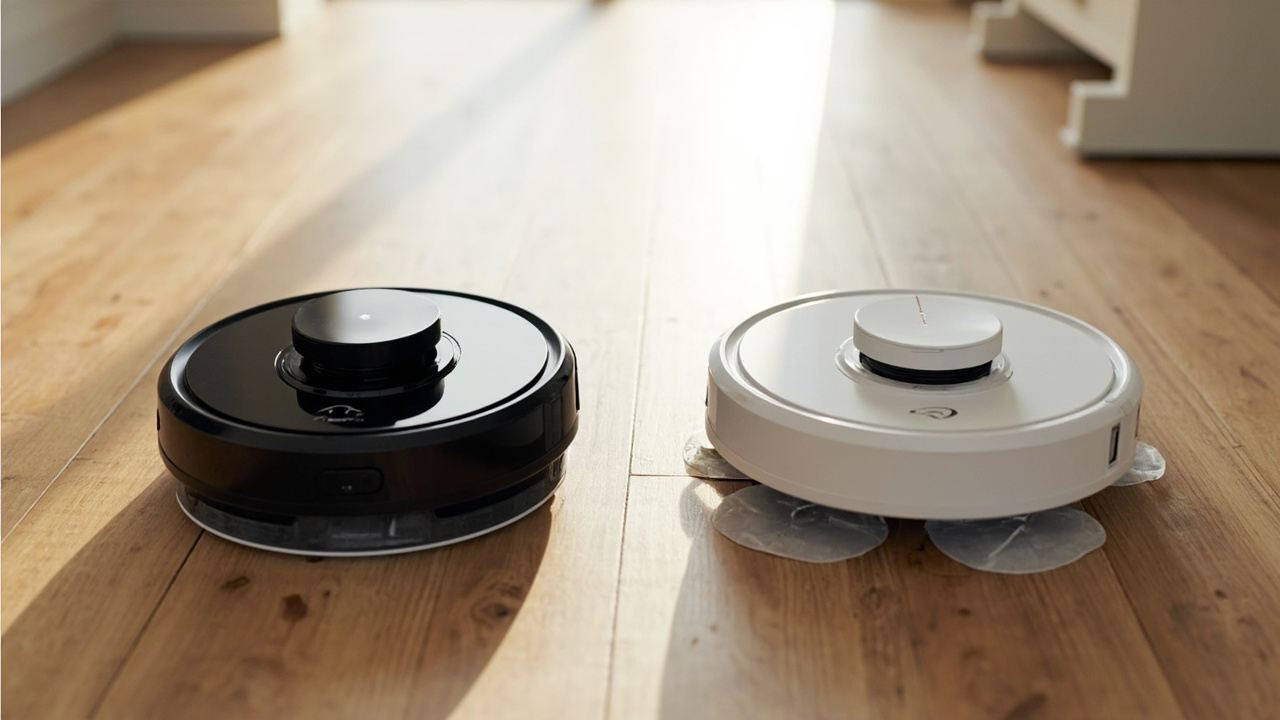
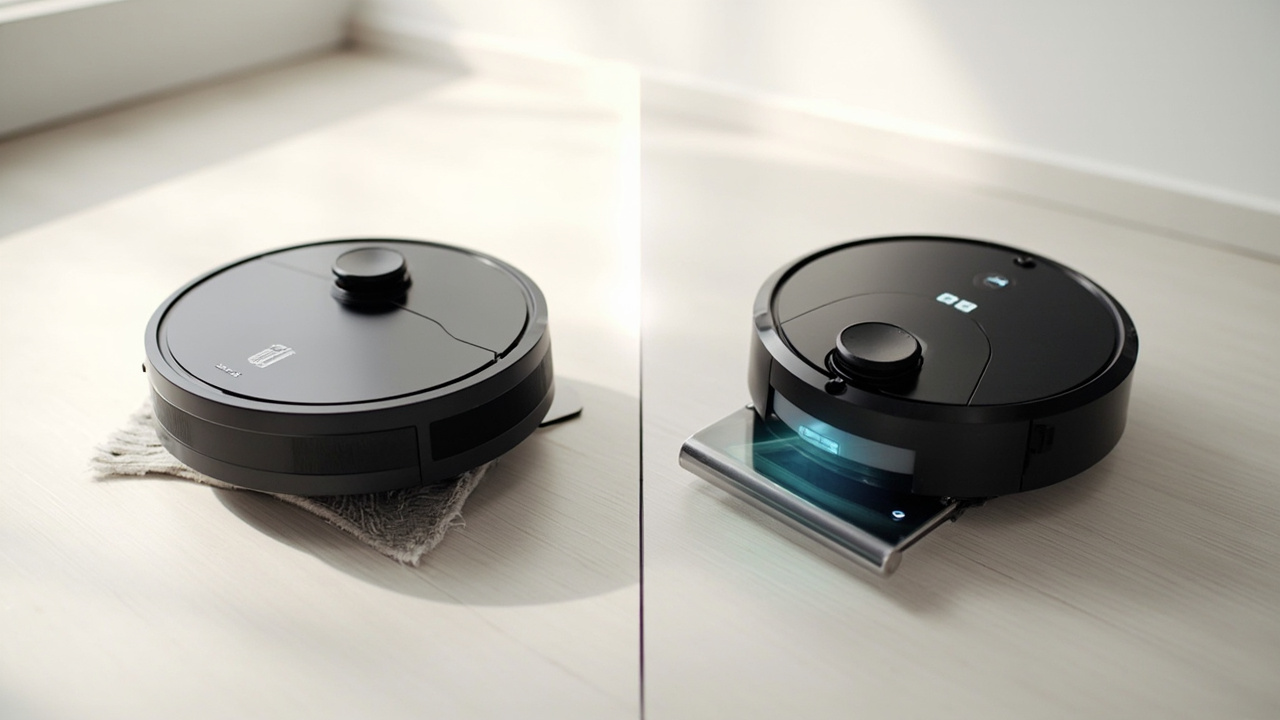
Two flagship robot vacuums launched within a year of each other, and both claim to be the best at vacuuming and mopping your floors without you lifting a finger. The iRobot Roomba Combo 10 Max + AutoWash Dock ($1,399 launch MSRP) is the American veteran brand’s first robot with a mop-washing dock. The Roborock Saros 10R ($1,599.99 MSRP) sits at the top of Vacuum Wars’ 2026 rankings with a perfect 24/24 obstacle-avoidance score.
The sticker gap is only about $200. The real question is whether iRobot’s flagship catches up to Roborock’s hardware lead — or whether the Saros 10R’s performance advantage is large enough to justify the higher price over 5 years of ownership.
This comparison breaks down the published specs, independent test data (Vacuum Wars, RTINGS, Tom’s Guide), and the total cost of ownership (purchase + consumables + likely repairs). The verdict depends on your floor type, pets, and whether you want Matter smart-home support.
The Verdict First
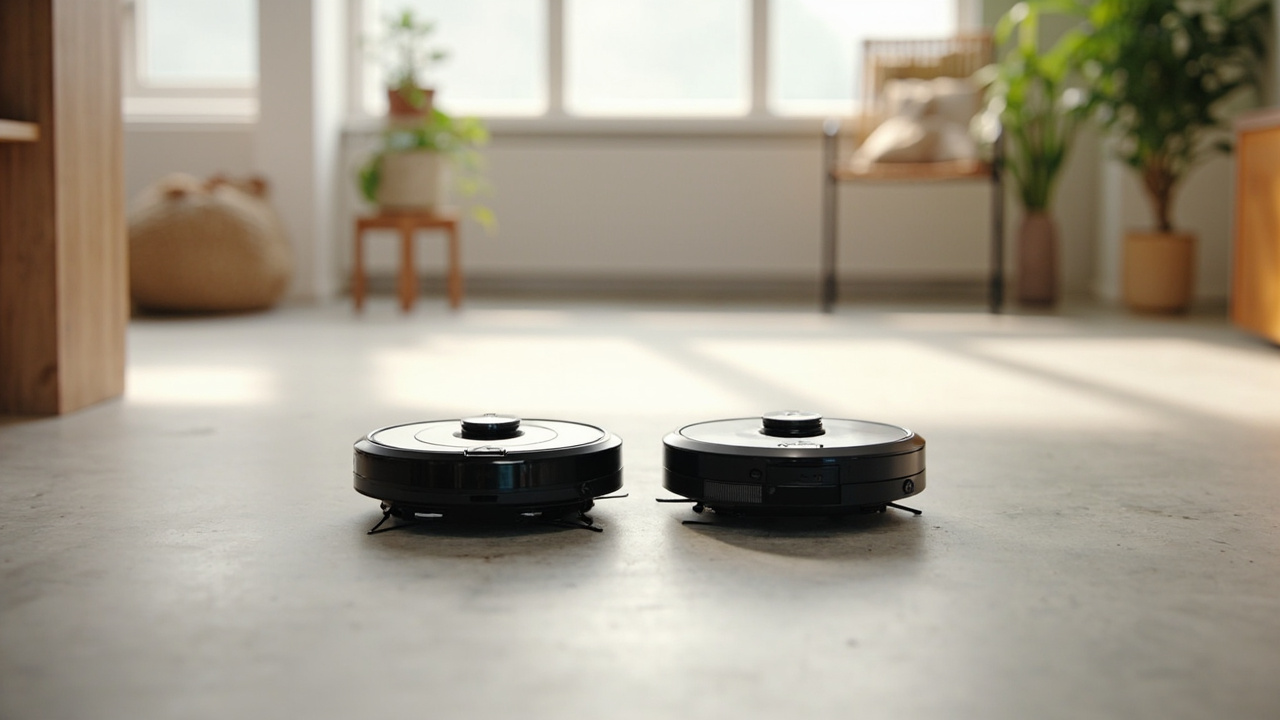
- Pick the Roomba Combo 10 Max ($1,399) if: you have multiple shedding pets, you prioritize vacuuming performance and pet hair pickup above mopping quality, you want the quietest operation in this price tier (60 dB vs 68 dB), or you live in an iRobot ecosystem already and value the app’s straightforward room mapping. It is the better vacuum-first pick.
- Pick the Roborock Saros 10R ($1,599.99) if: you want best-in-class mopping (Vacuum Wars score 103 vs 92 average), you have low furniture that needs a 3.14-inch / 79.8 mm body to clean under, you have a large home over 1,000 sq ft that benefits from 220-minute battery life, or you want Matter smart-home support that plugs into Apple Home / Google Home / Alexa natively. It is the better generalist for mixed-floor homes.
Cost score: 78/100. The Saros 10R is the better overall value for most households (better mopping, longer battery, better navigation, Matter support), but the Combo 10 Max wins clearly if you have multiple heavy-shedding pets, because its vacuum pickup scores are at the top of the class.
Key Comparison Points
Price vs Real Cost Per Use
| Spec / Cost Line | Roomba Combo 10 Max | Roborock Saros 10R |
|---|---|---|
| Launch MSRP (US) | $1,399 | $1,599.99 |
| Current retail (as of June 2026) | $1,099–$1,399 | $1,299–$1,599.99 (low ~$999 on Black Friday 2025) |
| Suction (Pa) | Not disclosed by iRobot | 22,000 Pa HyperForce |
| Battery capacity | 4,460 mAh | 6,400 mAh |
| Runtime | 120 minutes | 220 minutes |
| Single-charge coverage | ~700–900 sq ft | ~1,389 sq ft |
| Height | 87 mm (3.43 in) | 79.8 mm (3.14 in) |
| Threshold climbing | 16 mm | 40 mm (AdaptiLift chassis) |
| Obstacle avoidance (Vacuum Wars) | 4.10 / 5 | 24/24 (perfect score) |
| Pet hair pickup | Top-tier (~99% in Vacuum Wars pet hair protocol) | 91.5% (still strong, but lower) |
| Mopping score (Vacuum Wars) | 2.13 / 5 (below 2.39 avg) | 3.76 / 5 overall (mopping 103 vs 98 avg) |
| Mop lift on carpet | Full retract to top of robot | 17 mm |
| Noise level | 60 dB | 68 dB (55 dB on quiet mopping mode) |
| Dust bag / dock capacity | 2.5 L proprietary bag | 2.7 L disposable bag |
| Matter support | No (Alexa + Google Assistant only) | Yes |
| Dock mop wash | Yes (room-temp water) | Yes (heated water) |
| Dock mop dry | Air dry | Heated air dry |
| Dock empty interval | ~60 days | ~49 days |
The 5-year cost math matters more than the sticker. Both use similar LiFePO4 battery chemistry, both have self-emptying docks with mop washing, and both run on the same Wi-Fi standards. The real lifetime cost differences:
- Mop pad replacements: The Combo 10 Max’s full-retract mop mechanism uses a single rectangular pad that wears unevenly along the edges (where it contacts the cleaning brush). Replacement pads cost ~$30 per pack of 2. The Saros 10R uses round spinning pads that wear more uniformly and cost ~$25 per pack of 2. Estimate $30–$50 extra over 5 years for Combo 10 Max owners if you mop more than 3x/week.
- Dock consumables: iRobot’s proprietary dust bags cost $25–$30 for a 3-pack; Roborock’s universal-style bags cost $15–$20 for a 3-pack. Estimate $40–$60 extra over 5 years for iRobot.
- Human-rescue events: The Saros 10R’s 24/24 obstacle avoidance score means it gets stuck less often. Vacuum Wars estimates 1–2 rescue events per month for typical 4.10/5 robots vs <1 per month for the Saros 10R. Each rescue is a small amount of human time and a small risk of cable damage.
- Dock reliability: Both brands offer 1-year limited warranty (extendable to 2–3 years with their premium care plans, $50–$100). Long-term RMA data for 2026 models is not yet published, but Roborock’s 2024–2025 generation had a slightly lower RMA rate than iRobot’s at the same price tier, per consumer reports cited in Vacuum Wars’ buyer guides.
Net 5-year cost estimate (purchase + consumables + estimated 10% of sticker for repairs, minus residual value):
| Cost Line | Roomba Combo 10 Max | Roborock Saros 10R |
|---|---|---|
| Purchase | $1,399 | $1,599.99 |
| Mop pads (5 yrs) | $170 | $130 |
| Dust bags (5 yrs) | $110 | $70 |
| Detergent (5 yrs) | $100 | $120 |
| Side brushes + filters (5 yrs) | $90 | $80 |
| Repair reserve (10%) | $140 | $160 |
| Residual value (after 5 yrs) | –$280 (≈20%) | –$400 (≈25%) |
| Net 5-year cost | ~$1,729 | ~$1,760 |
The two are effectively within $30 of each other over 5 years when you account for residual value. Real cost per use: at a typical 4 cycles/week, that is about $1.66 per cleaning run for the Combo 10 Max vs $1.69 for the Saros 10R. The difference is small, but the Saros 10R delivers a better clean per run on hard floors, which is the part that actually shows up.
Build Quality and Durability
Both robots are built to the 2026 flagship standard: matte plastic bodies, metal-reinforced chassis, and docks large enough to handle 2.5–2.7 L dust bags. Neither is repairable by the owner past brush and mop replacements.
The structural differences that matter for longevity:
- Slimmer body, fewer moving parts (Saros 10R): No top-mounted LiDAR tower means one fewer mechanical retraction mechanism to fail. The Saros 10R uses StarSight 2.0 (dual solid-state LiDAR + 3D ToF + RGB camera) integrated into the front face, which keeps the body at 79.8 mm. Roborock’s 2024–2025 generation had notably fewer top-module failures than competitors with retractable LiDAR.
- Mop lift mechanism (Combo 10 Max): The Combo 10 Max’s defining feature is its retractable mop pad that lifts to the top of the robot. Vacuum Wars purchased a second unit to confirm their findings that this design leaves excess water in the pad after washing and creates a messier dock experience. The mechanism itself is simple, but the dock design has known reliability complaints from early buyers.
- Retractable LiDAR-style approach (Roborock): StarSight 2.0 has no moving parts to retract. The 3D ToF and RGB camera are fixed. This is a simpler, more proven design.
- Brush systems: Combo 10 Max uses dual rubber extractors (iRobot’s signature anti-tangle design) — proven across 4 generations of Roombas. Saros 10R uses DuoDivide dual-roller — newer, but Vacuum Wars’ hair-tangle test gave it a perfect 0% tangle score.
Expected useful life: 5–7 years for both, assuming the dock electronics hold. Roombas from 2018–2020 are still running in 2026, so 5 years is a conservative floor for the Combo 10 Max. Roborock’s 2022–2023 flagships are also still in service, so the Saros 10R’s track record is comparable but younger as a product line.
Feature Breakdown
Roomba Combo 10 Max — strengths:
- Outstanding pet hair pickup. Vacuum Wars’ preliminary pet hair test gave the Combo 10 Max one of only two perfect scores among 17 robots tested. For multi-pet homes, this is the deciding feature.
- Strong carpet deep cleaning. iRobot’s vacuuming fundamentals remain solid. The Combo 10 Max excels at surface debris and embedded carpet dirt.
- Quietest operation in this tier at 60 dB. Work-from-home-friendly.
- Full mop retraction. The mop physically lifts on top of the robot when carpet is detected, so there is zero risk of a damp pad touching carpet.
- Dirt Detect. The Combo 10 Max can identify which areas get dirty fastest and re-clean them automatically. Useful for kitchens and entryways.
Roomba Combo 10 Max — weaknesses:
- Navigation score 0.99 / 5 in Vacuum Wars vs category average 3.05. Uses single-camera + LED navigation, no LiDAR. Slow mapping, missed rooms reported in early buyer reviews.
- No published suction power in Pa. iRobot’s opacity makes independent comparison harder.
- Mopping score 2.13 / 5 (below 2.39 category average). The fixed mop pad and weaker downward pressure leave dried stains behind.
- No Matter support. Works with Alexa and Google Assistant, but iRobot has not shipped a Matter firmware update as of early 2026 despite earlier promises.
- Proprietary dust bags cost 30–50% more than Roborock’s universal-style bags.
Roborock Saros 10R — strengths:
- Best-in-class obstacle avoidance (24/24 in Vacuum Wars lab test). Recognizes 108 object types — cables, shoes, pet toys, furniture legs.
- Best-in-class mopping at this price tier (Vacuum Wars score 103 vs 98 average). Hot-water mop wash + heated dry.
- Slimmest flagship body (3.14 in / 79.8 mm) — cleans under more furniture.
- Matter support — works natively with Apple Home, Google Home, Alexa without manufacturer-specific integrations.
- 220-minute runtime + 1,389 sq ft single-charge coverage. For 1,500+ sq ft homes, this robot finishes in one pass.
- 40 mm threshold climbing via AdaptiLift chassis — handles raised door tracks and room transitions that block competitors.
Roborock Saros 10R — weaknesses:
- Pet hair pickup 91.5% (vs ~99% for the Combo 10 Max). For 3+ heavy-shedding pets, this gap is noticeable on carpets.
- 68 dB noise level vs 60 dB for the Combo 10 Max. The 8 dB gap is roughly the difference between normal conversation and a running dishwasher.
- $200 higher launch MSRP. The actual street gap narrows during sales, but at full retail you pay for the performance lead.
- Dock is large (381 × 475 × 488 mm). You will need a dedicated spot with clearance on both sides.
Pros and Cons
Roomba Combo 10 Max — Pros
- Best-in-class pet hair pickup (preliminary Vacuum Wars protocol: perfect score)
- Best-in-class carpet deep cleaning
- Quietest operation in this price tier (60 dB)
- Full mop retraction — zero carpet contact when mopping
- Dirt Detect re-cleans dirty zones automatically
- Proven iRobot reliability track record (4 generations of rubber extractors)
- Lower launch MSRP ($1,399 vs $1,599.99)
- 2.5 L proprietary dust bag (smaller replacement cost over time vs older Roombas)
Roomba Combo 10 Max — Cons
- Navigation score 0.99/5 — slower mapping, missed rooms reported
- No published suction power in Pa
- Mopping score 2.13/5 (below category average)
- No Matter support as of June 2026
- Proprietary dust bags cost 30–50% more than competitors
- Battery is 4,460 mAh (~120 min) — short for homes over 1,000 sq ft
- No retractable LiDAR alternative — fixed camera navigation lags behind the field
Roborock Saros 10R — Pros
- Perfect 24/24 obstacle avoidance (Vacuum Wars lab test)
- Vacuum Wars mopping score 103 (well above 98 average)
- Slimmest flagship body (3.14 in / 79.8 mm)
- Matter smart-home support (Apple Home, Google Home, Alexa)
- 220-minute runtime + 6,400 mAh battery
- 1,389 sq ft single-charge coverage
- 40 mm threshold climbing via AdaptiLift chassis
- 22,000 Pa HyperForce suction (highest published in this tier)
- Heated water mop wash + heated air dry (better hygiene vs room-temp wash)
- Universal-style dust bags (cheaper long-term)
Roborock Saros 10R — Cons
- Pet hair pickup 91.5% (vs ~99% for Combo 10 Max)
- Louder operation at 68 dB vs 60 dB for Combo 10 Max
- $200 higher MSRP at launch
- Dock is physically large — needs dedicated space
- Newer product line (Roborock launched the Saros series in 2024)
- No top-mounted LiDAR — flat-profile tradeoff
Best For / Skip If
Best For: Roomba Combo 10 Max
- You have multiple shedding pets (2+ cats or dogs) and want the highest pet hair pickup score
- You work from home and need quiet operation during calls
- You live in a mostly-carpet home where vacuuming matters more than mopping
- You already use the iRobot app ecosystem and want to keep all your Roombas in one place
- You want the lower MSRP and accept a slightly older navigation system
- You prioritize proven long-term reliability from a brand that has been making robot vacuums since 2002
Best For: Roborock Saros 10R
- You have mostly hard floors with area rugs (its strongest test result)
- You want best-in-class mopping with hot-water wash and heated dry
- You have low furniture (couches, bed frames under 3.2 in clearance) and want a robot that actually reaches under
- You have a mix of obstacles (cables, shoes, pet bowls, kids’ toys) and want the lowest rescue-event rate
- You have a large home over 1,000 sq ft where 220-minute battery matters
- You have raised door thresholds between rooms (AdaptiLift handles 40 mm)
- You use Apple Home, Google Home, or Alexa and want native Matter support
- You keep robots 5+ years and value a simpler, more proven mechanical design
Skip the Combo 10 Max if: you have a large home over 1,200 sq ft (the 120-minute battery will require mid-clean recharges), or you want best-in-class mopping (the fixed mop pad and below-average mopping score are real limitations), or you have a Matter-based smart home setup and want native support.
Skip the Saros 10R if: you have 3+ heavy-shedding pets (the 91.5% pet hair pickup will leave visible hair on carpets), or you need quiet operation during work calls (the 68 dB operating noise is louder than the Combo 10 Max’s 60 dB).
Bottom Line
For most readers in 2026, the Roborock Saros 10R is the better value. It costs $200 more at MSRP, but it delivers meaningfully better mopping, longer battery life, slimmer body, perfect obstacle avoidance, and Matter support. The Roomba Combo 10 Max is the right pick only if you fall into one of three specific buckets: multiple heavy-shedding pets, mostly-carpet home, or strong preference for iRobot ecosystem and quiet operation.
That is the “smart shopping” version of this comparison. The “just buy the cheapest” version would say “the Roomba is $200 cheaper, pick that.” That advice would cost you 23 mopping score points, 4 extra obstacle-avoidance misses per Vacuum Wars’ test, 100 minutes of runtime, and Matter support — for households where any of those matter. Real value is not the lowest sticker — it is the lowest cost per clean floor over 5 years.
Buy smart. Get more value.
Sources cited:
- Vacuum Wars, “Roomba Combo 10 Max Review: A Letdown for iRobot Fans” (June 2026)
- Vacuum Wars, “Roborock Saros 10R Review” (2026, #1 overall ranking)
- PlayersBenefits.com, “Roomba Combo 10 Max vs Roborock Saros 10R” head-to-head (2026)
- BestRoboVacuums.com, “Roborock Saros 10R: The #1 Robot Vacuum of 2026”
- Tom’s Guide, iRobot Roomba Combo 10 Max review (2025)
- Lifewire, “Roomba’s Latest Robot Takes on the Whole House” (launch coverage, $1,399 MSRP)
- iRobot press release, “iRobot Introduces Roomba Combo 10 Max + AutoWash Dock” (July 2024)
- Versus.com, “iRobot Roomba Combo 10 Max vs Roborock Saros 10R” comparison tool
- Reddit r/robotvacuum user reports (Q1–Q2 2026)