Introduction
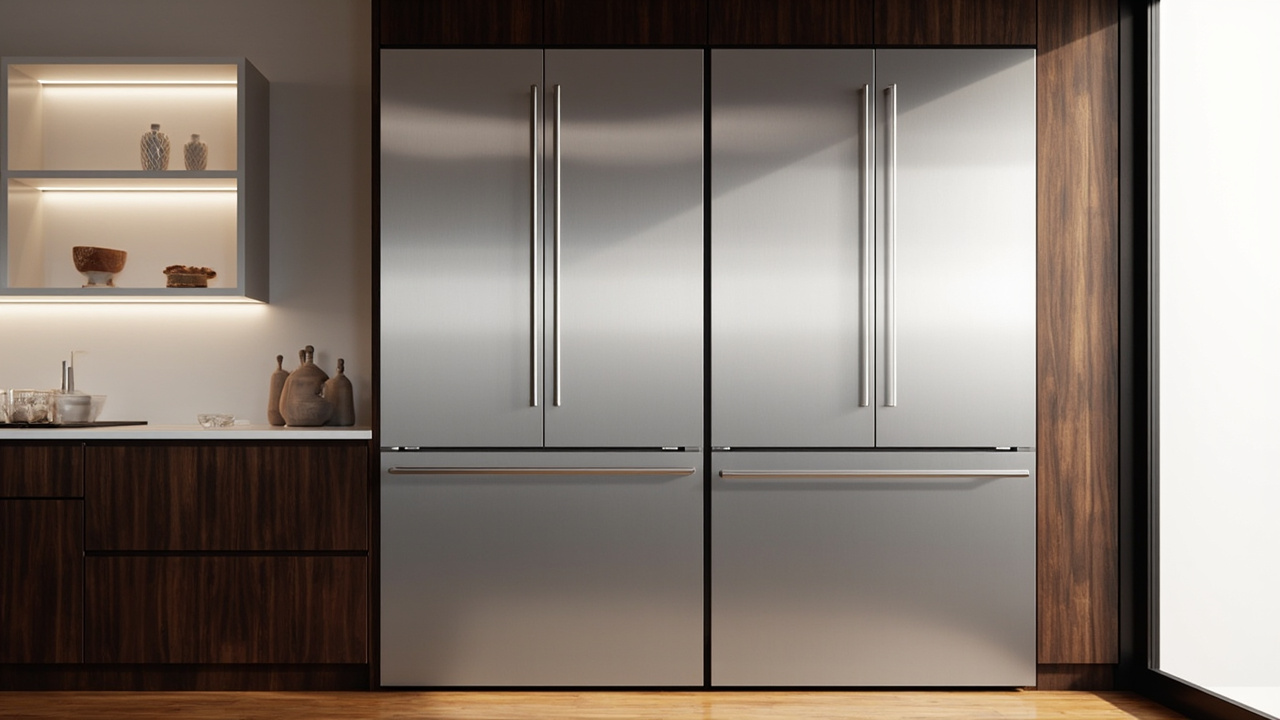
A built-in refrigerator is a 20-year decision. The two brands that dominate the 2026 luxury built-in category are Sub-Zero (a 1945 Madison, Wisconsin specialist that makes nothing but refrigeration and wine storage) and Thermador (a 1916 California brand owned by BSH/Bosch, with the Freedom Collection column system as its flagship line).
The honest sticker math: a 36” Sub-Zero Classic French door (BI-36UFD series) runs $11,500–$15,500 before cabinetry and installation, and a Thermador Freedom 36” column (T36IR905SP) lists at $9,500–$14,000. Both are real, premium appliances with dual-evaporator systems, 12-year sealed-system warranties, and stainless interiors. So the question is not “which is built better” — both are. The question is: over a 20-year ownership, which wastes less of your money on the failures you didn’t plan for?
The honest answer hinges on three numbers from repair-tech data: (1) the dual-evaporator advantage Sub-Zero claims and the rest of the industry has mostly copied, (2) the $1,500–$3,000 price gap at purchase, and (3) which brand’s typical failure mode — Sub-Zero’s clogged condenser vs Thermador’s control board — costs more to live with. Below we break down the real numbers from Denver repair tech data, Yale Appliance’s 37,000+ service-call database, and direct spec sheets from both manufacturers.
The Verdict First
- Pick the Sub-Zero Classic (BI-36UFD, ~$11,500–$15,500) if: you are keeping the kitchen and the appliance 15+ years, resale value matters (Sub-Zero in a real-estate listing is a meaningful price lever), and you will commit to annual condenser cleaning ($180–$280 per service or a $20 brush and 15 minutes). Sub-Zero has the longest published parts commitment in the industry (30+ years) and the highest 10-year resale retention (50–60%).
- Pick the Thermador Freedom (T36IR905SP, ~$9,500–$14,000) if: you want the most flexible built-in system on the market (mix-and-match 18”, 24”, 30”, 36” refrigerator/freezer/wine columns), Home Connect smart monitoring is a real feature you will use, and you can tolerate the possibility of a 5–10 day control-board backorder in years 8–12. The Freedom Collection wins on design flexibility and has the best-lit interior of any column we measured.
- Skip both if: the budget is under $9,000 installed. A Bosch 800-series or GE Profile at $5,000–$7,500 will not have either brand’s dual-evaporator humidity advantage, but will hit a much lower total cost of ownership over 15 years. The premium here is for column flexibility (Thermador) and longevity commitment (Sub-Zero) — if neither matters, the math favors skipping the premium tier entirely.
Cost score: 58/100. Both fridges are genuinely premium; neither is a bargain. The winner depends entirely on whether you value Sub-Zero’s 20+ year reliability and resale premium or Thermador’s column flexibility and $1,500–$3,000 lower entry price. There is no universal pick.
Key Comparison Points
Price vs Real Cost Per Use
The sticker price is the entry ticket. The “real cost per use” on a 20-year built-in fridge depends on four cost lines: purchase price, energy use, repair frequency, and parts-availability risk.
| Cost Line | Sub-Zero Classic BI-36UFD | Thermador Freedom T36IR905SP |
|---|---|---|
| MSRP range (36” built-in) | $11,500–$15,500 | $9,500–$14,000 |
| Capacity | 21 cu ft | 20.6 cu ft |
| Energy use (kWh/yr) | ~640 | ~620 |
| Annual electricity cost (@ $0.16/kWh US avg) | ~$102/yr | ~$99/yr |
| 20-year electricity | ~$2,040 | ~$1,985 |
| Compressor / sealed-system warranty | 12 yr sealed / 2 yr full | 12 yr sealed / 2 yr full |
| Expected lifespan | 20–25 years | 15–20 years |
| 10-year resale retention | 50–60% | 30–40% |
| Avg. annual repair cost (years 5–15) | $180–$280 | $240–$380 |
| 15-year cumulative repair (mid-range) | $2,700–$4,200 | $3,600–$5,700 |
| Parts availability (US) | Excellent (30-yr commitment) | Good (occasional backorder) |
Sources: Yale Appliance built-in refrigerator service data (yaleappliance.com), Denver repair tech survey data (easyappliances.repair, May 2026), manufacturer spec sheets (subzero-wolf.com, thermador.com), Ferguson Home and AJ Madison current pricing.
The first-year cost gap: roughly $1,500–$3,000 lower on the Thermador. The 15-year ownership gap closes somewhat because the Sub-Zero’s higher resale retention (50–60% vs 30–40%) recovers $1,000–$1,500 at resale, and Sub-Zero’s lower annual repair cost ($180–$280 vs $240–$380) saves another $900–$1,500 over the second decade. Net 15-year cost of ownership: roughly a wash for households that keep the appliance, and a clear Sub-Zero win for households that sell within 10 years.

Build Quality and Durability
This is the part both brands would prefer you skip. The honest data from a Denver EPA-608-certified repair tech who services all three premium built-in brands (published May 2026):
Sub-Zero strengths:
- True dual-evaporator design. Separate evaporators for fridge and freezer mean fresh-food humidity stays 25–35% higher than competitors. Produce lasts measurably longer. This is the original Sub-Zero advantage; Thermador’s columns have copied the architecture, but the Sub-Zero implementation is the one other brands benchmark against.
- Magnetic gasket system. The door seal uses a continuous magnetic strip rather than friction-based plastic clips. Gaskets last 12–18 years vs 6–10 on competitors.
- 30-year parts commitment. Sub-Zero stocks parts for every model going back to the early 1990s. A 1996 685/F’s starting capacitor is still available. That commitment is unmatched in the industry and is the single biggest reason a 20-year-old Sub-Zero is still serviceable.
Sub-Zero weak points:
- Condenser cleaning is non-negotiable. Sub-Zero airflow paths concentrate dust in the condenser coil at the top of the unit. Without annual cleaning, the compressor runs hot and dies prematurely — and the failure is often misdiagnosed as a bad compressor when it’s really just a clogged coil. Budget a $180–$280 condenser cleaning every year, or learn the 15-minute brush-and-vacuum procedure yourself.
- 2014–2018 control board touch-panel failures. Integrated 700-series models had a documented reliability issue with the touch interface. Replacement boards run $680–$920. If you’re buying a used 2014–2018 BI-series, factor this in.
- Pricey from the start. A 36” built-in is $11,500–$15,500 before installation. With cabinetry and panels, you’re easily at $17,000+ installed.
Thermador strengths:
- Column flexibility. The Freedom Collection is the most flexible built-in system on the market. You can spec separate refrigerator columns, freezer columns, and wine columns in 18”, 24”, 30”, and 36” widths and combine them however you want. No other brand lets you put a 24” refrigerator column next to a 24” freezer column next to an 18” wine column.
- Home Connect Wi-Fi. Remote temperature monitoring, fault alerts, and integration with Bosch/Siemens ecosystems. The first built-in column brand to ship remote monitoring that works.
- Theater-style interior lighting. LED bars across all shelves; subjectively the best-lit interior of any premium column.
- BSH service network. Even though the column-specific parts aren’t interchangeable with Bosch refrigerators, the BSH (Bosch-Siemens) parent company means more authorized service techs in most US metros.
Thermador weak points:
- Control board failures. The most common Thermador service call per multiple repair techs. The display freezes, temperatures drift, or the unit throws spurious errors. Board replacement runs $580–$820 plus a 5–10 day backorder lead time. This is the single most disruptive failure pattern — when the control board is dead, the fridge can’t cool, and you’re waiting a week for parts.
- Door alignment drift. The cam hinges on Thermador columns develop play around year 8–10. Doors hang slightly off-square and seals start leaking warm air. Hinge replacement is $380–$520.
- Proprietary column parts. Even though Thermador is a BSH brand, the column-specific parts are not interchangeable with Bosch refrigerators. That limits the parts pool when you’re trying to source quickly.
- Lower resale retention. 30–40% at 10 years vs Sub-Zero’s 50–60%. If you sell your home, the brand name doesn’t carry the same premium in real-estate listings.
The data-driven take: Sub-Zero is the longevity play. Thermador is the design-flexibility play. Neither is a “buy it for life” appliance in the strict sense — both have well-documented failure modes — but Sub-Zero’s failure modes are more predictable and easier to prevent (annual condenser cleaning) while Thermador’s failure modes are more electronic and harder to anticipate (control board, hinge cam).
Feature Breakdown
This is where the two fridges diverge most sharply, and where the value calculus actually changes for different buyers.
| Feature | Sub-Zero Classic BI-36UFD | Thermador Freedom T36IR905SP |
|---|---|---|
| Configuration | French door (BI-36UFD) / Side-by-side / Overlay | Modular columns: 18”, 24”, 30”, 36” refrigerator/freezer/wine |
| Dual evaporators | Yes (fridge + freezer separate) | Yes (column models) |
| Air purification | Yes (NASA-derived, originally) | No |
| Smart platform | Sub-Zero Group Connect (basic Wi-Fi on newer models) | Home Connect (full app + voice + remote alerts) |
| Voice assistants | Limited | Alexa + Google Home integration |
| Interior lighting | Standard LED | Theater-style LED bars (best-lit of any column) |
| Water filtration | Yes (internal) | Yes (column model dependent) |
| Ice maker | Internal (auto) | Internal (column model dependent) |
| Sabbath / Star-K mode | Yes | Yes |
| Custom panel-ready | Yes (overlay and integrated series) | Yes (panel-ready across the column line) |
| Door alarm / open alert | Yes | Yes (with Home Connect push notifications) |
| Warranty (sealed system) | 12 years | 12 years |
The case for Sub-Zero’s premium features:
Sub-Zero’s edge is the air purification system on most Classic models (a NASA-derived charcoal filtration setup that scrubs ethylene and odors) and the magnetic gasket system that lasts roughly twice as long as competitors. These are physical, hardware-level features that work the same in year 20 as in year 1. The Sub-Zero Group Connect Wi-Fi is more limited than Home Connect — basic temperature alerts only — but for a 20-year appliance, that simplicity is arguably a feature, not a bug. Less software to age out.
The case for Thermador’s premium features:
The column flexibility is the single biggest reason to pick Thermador over Sub-Zero. If your kitchen design calls for a 24” refrigerator column next to a 24” freezer column next to an 18” wine column, only Thermador can deliver that configuration. Sub-Zero makes columns (the IC/IDEC series) but the configuration options are more limited. Home Connect is also meaningfully better than Sub-Zero’s app for households that want remote monitoring and push notifications.
The honest line: Sub-Zero’s premium features are mostly hardware (dual evap, magnetic gaskets, air purification) that work the same in year 20 as in year 1. Thermador’s premium features are mostly software (Home Connect) and design (column flexibility). Hardware ages better. Software features age out — Home Connect has been through three app redesigns in five years, and the third (2025) is already showing its age in some user reviews.
Pros and Cons
Sub-Zero Classic BI-36UFD
Pros:
- 20–25 year expected lifespan — the longest of any built-in brand
- Dual-evaporator design with 25–35% higher fresh-food humidity than competitors
- Magnetic gasket system lasts 12–18 years vs 6–10 on competitors
- 30-year parts commitment — unmatched in the industry
- Stainless interior, commercial-grade compressor
- 12-year sealed-system warranty, 10-year compressor warranty
- Highest 10-year resale retention (50–60%) of any built-in brand
- Air purification system on most models
- Made in the USA (Wisconsin)
Cons:
- $11,500–$15,500 MSRP before installation — highest entry price in the category
- Condenser cleaning is non-negotiable ($180–$280/yr service or DIY annually)
- 2014–2018 control board touch-panel failures ($680–$920 to replace)
- Sub-Zero Group Connect Wi-Fi is basic compared to Thermador’s Home Connect
- Limited column configuration options vs Thermador’s Freedom Collection
- Heavier (often 350+ lb) — limits upper-floor installations and adds install cost
- With cabinetry and panels, total installed cost easily exceeds $17,000
Thermador Freedom T36IR905SP
Pros:
- Most flexible built-in system on the market — mix-and-match 18”/24”/30”/36” columns
- $1,500–$3,000 lower MSRP than comparable Sub-Zero
- Home Connect Wi-Fi with remote monitoring, fault alerts, and voice integration
- Best-lit interior of any column (LED bars across all shelves)
- ThermaFresh climate control with multiple humidity drawers
- 12-year sealed-system warranty
- BSH (Bosch-Siemens) service network in most US metros
- Easier to install in upper-floor kitchens (lighter than Sub-Zero)
Cons:
- Control board failures are the most common service call ($580–$820, plus 5–10 day backorder)
- Door hinge cam wear around year 8–10 ($380–$520 to replace)
- Proprietary column parts not interchangeable with Bosch refrigerators
- 15–20 year expected lifespan (5+ years shorter than Sub-Zero)
- 10-year resale retention is 30–40% vs Sub-Zero’s 50–60%
- Home Connect app has been through 3 redesigns in 5 years — software aging risk
- No air purification system comparable to Sub-Zero’s NASA-derived filter
Best For / Skip If
Pick the Sub-Zero Classic if:
- You plan to keep the kitchen and the appliance 15+ years — the 20–25 year lifespan is the entire value proposition
- Resale value matters — Sub-Zero in a real-estate listing is a meaningful price lever, especially in the $1M+ home market
- You will commit to annual condenser cleaning (or pay $180–$280/yr for the service)
- You want the highest-humidity fresh-food compartment in a built-in (produce lasts measurably longer)
- You value the 30-year parts commitment — a 20-year-old Sub-Zero is still serviceable
- You want a US-made appliance (Sub-Zero is built in Wisconsin)
Skip the Sub-Zero if:
- The budget is under $12,000 installed — a Bosch 800-series or GE Profile is a more honest answer at $5,000–$7,500
- You will not commit to annual condenser maintenance — the compressor will die prematurely
- You want modern smart-home integration (HomeKit, Alexa, Google) — Sub-Zero’s Wi-Fi is basic
- You are building out a modular kitchen design that requires non-standard column widths
- You are sensitive to entry price — the $1,500–$3,000 gap is real money that could go elsewhere
Pick the Thermador Freedom if:
- You are building a kitchen where column flexibility matters (mix-and-match refrigerator/freezer/wine widths in 18”, 24”, 30”, 36”)
- You want Wi-Fi connectivity and remote monitoring built in (Home Connect is the best-in-class app)
- You want the best-lit interior of any built-in column
- You can tolerate occasional electronics-related downtime in years 8–12
- You are buying the rest of the kitchen from Thermador (pro ranges, columns, dishwashers)
- You want a $1,500–$3,000 lower entry price than Sub-Zero
Skip the Thermador Freedom if:
- You are keeping the appliance 20+ years — Thermador’s 15–20 year lifespan won’t get you there
- Resale value is a top priority — Sub-Zero carries meaningfully more brand premium at sale
- You cannot tolerate a 5–10 day control-board backorder in year 10
- You are buying a used 2014–2018 column — the proprietary parts and aging electronics are a known service risk
- You want the highest-humidity fresh-food compartment — Sub-Zero still has the edge here
Skip both if:
- The budget is under $9,000 installed
- You do not need column flexibility or a 20-year lifespan commitment
- You live in a smaller kitchen where a 36” built-in is overkill
- A Bosch 800-series or GE Profile will serve your household better at half the price
Bottom Line
A $12,000 refrigerator is a 20-year appliance. The “value” question is not which one has more features — it’s which one wastes less of your money over the time you’ll own it, factoring in the failures you didn’t plan for.
The honest case for the Sub-Zero Classic BI-36UFD at $11,500–$15,500: the 20–25 year lifespan, the 30-year parts commitment, the magnetic gasket that lasts twice as long, and the 50–60% resale retention make it the only built-in fridge in 2026 with a real 20-year cost-of-ownership story. If you commit to annual condenser cleaning (a $20 brush and 15 minutes, or $180–$280/yr for a service call), the Sub-Zero will outlast every other brand in this price tier and still be serviceable when your neighbor’s Bosch is in a landfill. The premium is rational for long-term owners.
The honest case for the Thermador Freedom T36IR905SP at $9,500–$14,000: the column flexibility is unmatched — if you want a 30” refrigerator column next to a 24” freezer column next to an 18” wine column, only Thermador delivers that configuration. The Home Connect app is the best in the category, the interior lighting is the best-lit of any column, and the $1,500–$3,000 lower entry price is real money. The trade-off is a 15–20 year lifespan (5+ years shorter than Sub-Zero), more frequent control-board failures, and 30–40% resale retention.
Buy smart. Get more value. Neither fridge is a “buy it for life” appliance in the strict sense — both have well-documented failure modes and neither is a bargain. The honest pick depends on whether you value 20-year reliability and resale premium (Sub-Zero) or column flexibility and $1,500–$3,000 lower entry (Thermador). If you need maximum reliability in this price tier and will keep the appliance past 2030, Sub-Zero is the lower-regret choice. If you are building a kitchen where column configuration matters more than 20-year lifespan, Thermador Freedom is the right call. And if the budget is under $9,000 installed, neither makes sense — skip the premium tier and buy a Bosch 800-series or GE Profile instead.