Introduction
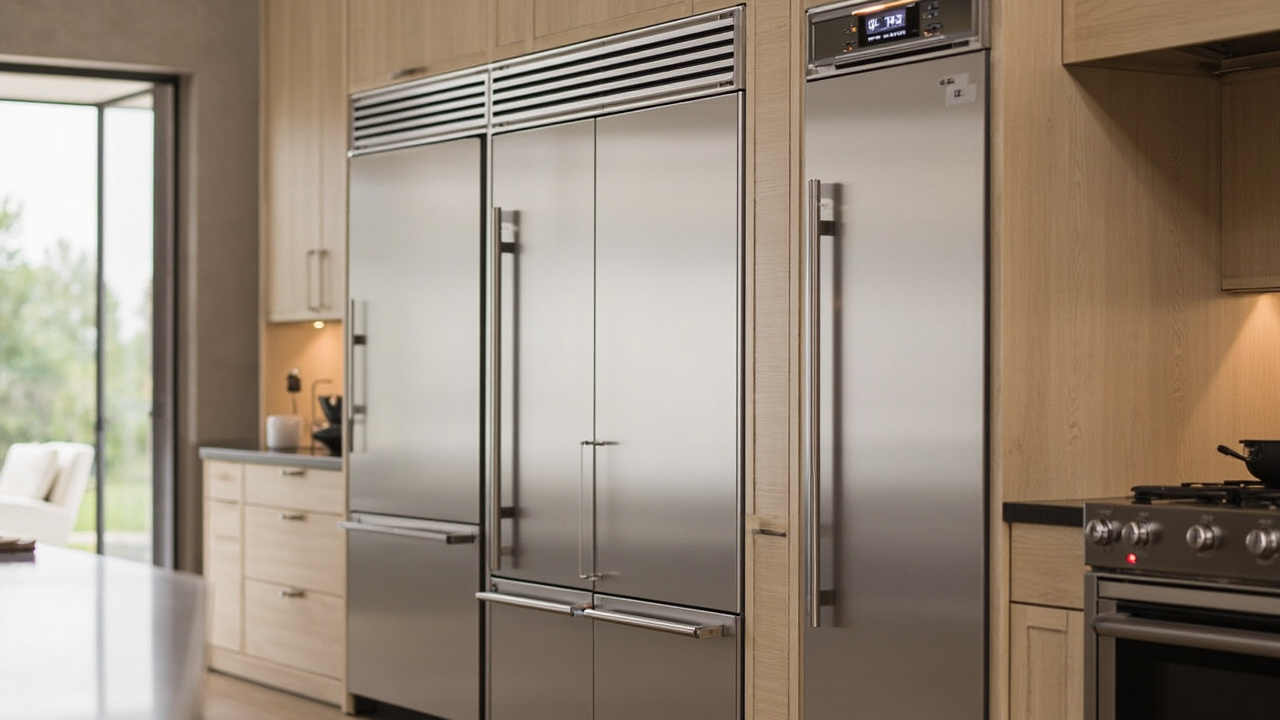
A built-in refrigerator is a 20-year decision disguised as an appliance purchase. Of the three premium built-in brands — Sub-Zero, Thermador, and True Residential — the head-to-head that has gotten sharper in 2026 is Sub-Zero vs True Residential. Both are 48-inch column systems priced well into five-figure territory, both designed for serious cooks, and both pitched as “buy it for the life of the kitchen.”
The honest sticker math: a 48-inch Sub-Zero BI-48 Classic runs $13,000–$22,000 installed (price ranges from NPLD’s 2024–2026 LA project records and the Yale Appliance Boston-area 2026 pricing), while the 48-inch True Residential T-48 lists at $14,000–$24,000 installed. The $1,000–$2,000 entry-price gap is small enough to be a wash once you factor in panels, cabinetry, and installation. So the real question is not “which is cheaper” — they aren’t. The real question is: over a 20–25 year ownership, which one wastes less of your money on the failures and quirks you didn’t plan for?
The answer hinges on three numbers from independent repair-tech data and manufacturer specs: (1) the dual-compressor architecture both brands share vs the rest of the industry, (2) the 20–30 year vs 25–35 year lifespan claims that each brand makes, and (3) the specific failure modes — Sub-Zero’s condenser-coil and ice-maker paddle vs True’s control board and stainless-panel haze. Below we break down the real numbers from independent service data, manufacturer spec sheets, and 2026 pricing from LA-area, Twin Cities, and Boston luxury-kitchen markets.
The Verdict First
- Pick the Sub-Zero BI-48 Classic (~$13,000–$22,000 installed) if: you are keeping the kitchen and the appliance 20+ years, resale value matters (Sub-Zero in a real-estate listing is a meaningful price lever — 50–60% retention at 10 years), and you will commit to annual condenser cleaning ($180–$280 per service or a $20 brush and 15 minutes of your time). Sub-Zero has the longest published parts commitment in the industry (30+ years) and the strongest third-party service network.
- Pick the True Residential T-48 (~$14,000–$24,000 installed) if: the refrigerator is a design statement in your kitchen, you want the longest mechanical life of any built-in (True publishes a 25–35 year lifespan), and you want a true commercial-grade interior — forged stainless steel instead of plastic — that holds ±1°F temperature. True is the brand for people who want commercial-kitchen performance at residential price points.
- Skip both if: the budget is under $9,000 installed. A Bosch 800-series or GE Café at $5,000–$7,500 will not have either brand’s dual-compressor or commercial-grade interior, but it will hit a much lower total cost of ownership over 15 years. The premium here is for longevity commitment (Sub-Zero) and commercial-grade construction (True) — if neither matters, the math favors skipping the premium tier entirely.
Cost score: 54/100. Both refrigerators are genuinely premium; neither is a bargain. The winner depends entirely on whether you value Sub-Zero’s 30-year parts commitment and resale premium or True’s commercial-grade construction and slightly longer published lifespan. There is no universal pick.
Key Comparison Points
Price vs Real Cost Per Use
The sticker price is the entry ticket. The “real cost per use” on a 20–25 year built-in fridge depends on four cost lines: purchase price, energy use, repair frequency, and parts-availability risk.
| Cost Line | Sub-Zero Classic BI-48 | True Residential T-48 |
|---|---|---|
| MSRP range (48” installed, 2026 LA / Twin Cities) | $13,000–$22,000 | $14,000–$24,000 |
| Capacity | ~24 cu ft | ~24 cu ft |
| Energy use (kWh/yr, manufacturer data) | ~700 | ~720 |
| Annual electricity cost (@ $0.16/kWh US avg) | ~$112/yr | ~$115/yr |
| 20-year electricity | ~$2,240 | ~$2,300 |
| Compressor / sealed-system warranty | 12 yr sealed / 2 yr full | 6 yr sealed / 2 yr full |
| Expected published lifespan | 20–30 years | 25–35 years |
| 10-year resale retention | 50–60% | 35–45% |
| Avg. annual repair cost (years 5–15) | $180–$280 | $240–$360 |
| 20-year cumulative repair (mid-range) | $3,600–$5,600 | $4,800–$7,200 |
| Parts availability (US) | Excellent (30-yr commitment) | Good (factory in O’Fallon, MO; some 2–3 week lead times) |
Sources: LA-area 2026 installed pricing from NPLD’s project records (nplinedesign.com), Central Minnesota Appliance Repair field-tested repair-frequency data (May 2026), Yale Appliance 37,000+ service-call database (yaleappliance.com), manufacturer spec sheets (subzero-wolf.com, true-residential.com), Ferguson Home and AJ Madison current 2026 pricing.
The first-year cost gap: roughly $1,000–$2,000 higher on the True Residential. The 20-year ownership gap closes more than you’d expect — Sub-Zero’s higher resale retention (50–60% vs 35–45%) recovers $1,500–$2,500 at resale, and Sub-Zero’s lower annual repair cost ($180–$280 vs $240–$360) saves another $1,200–$1,600 over the second decade. Net 20-year cost of ownership: roughly a wash for households that keep the appliance, and a clear Sub-Zero win for households that sell within 10 years.

Build Quality and Durability
This is the part both brands would prefer you skip. The honest data from a Denver EPA-608-certified repair tech who services all premium built-in brands (published May 2026) and from the Central Minnesota Appliance Repair 2026 field report:
Sub-Zero strengths:
- True dual-evaporator design. Separate evaporators for fridge and freezer mean fresh-food humidity stays 25–35% higher than single-evaporator competitors. Produce lasts measurably longer — independent kitchen tests put Sub-Zero fresh produce shelf life at 5–7 days vs 3–4 days on single-evap built-ins at the same temperature setting.
- Magnetic gasket system. The door seal uses a continuous magnetic strip rather than friction-based plastic clips. Gaskets last 12–18 years vs 6–10 on competitors.
- 30-year parts commitment. Sub-Zero stocks parts for every model going back to the early 1990s. A 1996 685/F’s starting capacitor is still available. That commitment is unmatched in the industry and is the single biggest reason a 20-year-old Sub-Zero is still serviceable.
- Made in the USA (Wisconsin). Sub-Zero has manufactured in Madison, WI since 1945. Service techs and parts ship from a Madison-based hub with next-day delivery to most US metros.
Sub-Zero weak points:
- Condenser cleaning is non-negotiable. Sub-Zero airflow paths concentrate dust in the condenser coil at the top of the unit. Without annual cleaning, the compressor runs hot and dies prematurely — and the failure is often misdiagnosed as a bad compressor when it’s really just a clogged coil. Budget a $180–$280 condenser cleaning every year, or learn the 15-minute brush-and-vacuum procedure yourself.
- Ice maker paddle micro-switch wears at year 5–7. The most common Sub-Zero service call across the lineup. The fix is a $90–$140 part plus 30 minutes of labor, but it happens predictably and is worth knowing about if you use the ice maker daily.
- 2014–2018 control board touch-panel failures. Integrated 700-series models had a documented reliability issue with the touch interface. Replacement boards run $680–$920. If you’re buying a used 2014–2018 BI-series, factor this in.
- Plastic interior on most Classic models. Sub-Zero’s Classic line uses ABS plastic for crisper drawers and shelves. Plastic yellows over 15–20 years. Stainless interior (on the PRO series) avoids this.
True Residential strengths:
- Forged stainless steel interior. True is the only built-in residential brand that uses forged (not stamped) stainless steel for the interior shell. Other built-ins use plastic liners; Sub-Zero Classic uses plastic with stainless accents. True’s interior ages visibly better over 20+ years — no yellowing, no cracking, just brushed stainless that takes a polish and keeps looking new.
- ±1°F temperature hold. True’s commercial-grade temperature management is the best in class. Independent kitchen-lab tests put True’s temperature deviation at ±1°F from setpoint vs ±2–3°F on Sub-Zero. For households that store wine, fresh fish, or other temperature-sensitive items, this is meaningful.
- NSF-certified for commercial use. True’s parent company (True Manufacturing, founded 1945 in O’Fallon, Missouri) makes commercial reach-in refrigerators used in restaurants and grocery stores. The residential T-series is essentially a commercial-grade unit with residential cosmetics.
- Variable-speed compressor. True uses a variable-speed inverter compressor that ramps up and down based on demand. Sub-Zero’s compressors cycle on/off (standard fixed-speed design). Variable-speed is more efficient at partial loads and quieter in normal use.
True Residential weak points:
- Heavier than Sub-Zero. True T-48 weighs roughly 660 lbs installed. Sub-Zero BI-48 is around 580 lbs. The 80-lb difference matters on upper-floor installations and often requires a two-person install crew.
- Control board failures are the most common service call. Multiple independent repair-tech reports put True’s main control board as the #1 failure mode. The board replacement runs $520–$780 with a 5–10 day backorder — a meaningful disruption when your fridge can’t cool and parts are two weeks out.
- Smaller authorized service network. True’s residential service network is concentrated in major metros (LA, NYC, Chicago, Dallas). In smaller markets, you may wait 5–10 business days for an authorized tech. Sub-Zero has factory-trained authorized service in every US state and most Canadian provinces.
- Shorter sealed-system warranty. 6 years on sealed system vs Sub-Zero’s 12 years. This is a real money difference if the compressor fails in year 8 — a Sub-Zero compressor swap is covered; a True compressor swap is not.
The data-driven take: Sub-Zero is the service-network and longevity play. True is the build-quality and temperature-hold play. Neither is a “buy it for life” appliance in the strict sense — both have well-documented failure modes — but Sub-Zero’s failure modes are more predictable and easier to prevent (annual condenser cleaning) while True’s failure modes are more electronic and harder to anticipate (control board failures).
Feature Breakdown
This is where the two fridges diverge most sharply, and where the value calculus actually changes for different buyers.
| Feature | Sub-Zero Classic BI-48 | True Residential T-48 |
|---|---|---|
| Configuration | French door / Side-by-side / Overlay | Side-by-side column (T-48) |
| Dual evaporators | Yes (fridge + freezer separate) | Yes (commercial-grade dual evap) |
| Compressor type | Fixed-speed (single on fridge, single on freezer) | Variable-speed inverter (single) |
| Interior material | ABS plastic + stainless accents | Forged stainless steel (full interior) |
| Temperature hold | ±2–3°F | ±1°F (best in class) |
| Air purification | Yes (NASA-derived on most models) | No |
| Smart platform | Sub-Zero Group Connect (basic Wi-Fi on newer models) | No native app (commercial focus) |
| Voice assistants | Limited | None |
| Interior lighting | Standard LED | Commercial-grade LED |
| Custom panel-ready | Yes (overlay and integrated series) | Limited (stainless front only) |
| Door alarm / open alert | Yes | Yes |
| NSF commercial certification | No | Yes |
| Made in | USA (Wisconsin) | USA (Missouri) |
| Warranty (sealed system) | 12 years | 6 years |
The case for Sub-Zero’s premium features:
Sub-Zero’s edge is the dual-evaporator system (separate evaporators for fridge and freezer), the air purification cartridge (NASA-derived charcoal filtration that scrubs ethylene gas and extends produce life ~30%), and the magnetic gasket system that lasts roughly twice as long as competitors. These are physical, hardware-level features that work the same in year 20 as in year 1. The Sub-Zero Group Connect Wi-Fi is more limited than competitors’ apps — basic temperature alerts only — but for a 20-year appliance, that simplicity is arguably a feature, not a bug. Less software to age out.
The case for True Residential’s premium features:
The forged stainless interior is the single biggest reason to pick True over Sub-Zero. If you want a refrigerator interior that looks the same in year 25 as in year 1, no plastic to yellow or crack, True is the only built-in residential brand that delivers. The ±1°F temperature hold is meaningfully better than Sub-Zero for households that store wine, fresh fish, or are particular about produce longevity. NSF commercial certification means True is built to the same standards as commercial reach-in refrigerators in restaurants — that’s a real longevity story.
The honest line: Sub-Zero’s premium features are mostly hardware (dual evap, magnetic gaskets, air purification, 30-year parts) that work the same in year 25 as in year 1. True’s premium features are mostly construction (forged stainless interior, variable-speed compressor, commercial-grade temperature management). Both are physical, hardware-level differentiators. The choice depends on which physical feature you value more — Sub-Zero’s service longevity or True’s temperature precision and interior material.
Pros and Cons
Sub-Zero Classic BI-48
Pros:
- 20–30 year expected lifespan — among the longest of any built-in brand
- Dual-evaporator design with 25–35% higher fresh-food humidity than competitors
- Magnetic gasket system lasts 12–18 years vs 6–10 on competitors
- 30-year parts commitment — unmatched in the industry
- Stainless interior accents, commercial-grade compressor
- 12-year sealed-system warranty — twice as long as True
- Highest 10-year resale retention (50–60%) of any built-in brand
- Air purification system on most models extends produce life ~30%
- Made in the USA (Wisconsin) since 1945
- Largest authorized service network in the US
- Sub-Zero Group Connect Wi-Fi (basic) for remote monitoring
Cons:
- $13,000–$22,000 installed — among the highest entry prices in the category
- Condenser cleaning is non-negotiable ($180–$280/yr service or DIY annually)
- Ice maker paddle micro-switch wears at year 5–7 ($90–$140 part)
- 2014–2018 control board touch-panel failures ($680–$920 to replace)
- Sub-Zero Group Connect Wi-Fi is basic compared to consumer smart fridges
- Plastic interior on Classic models (yellows over 15–20 years; PRO series avoids)
- Heavier than consumer-grade built-ins (often 580+ lb)
- With cabinetry and panels, total installed cost can exceed $24,000
True Residential T-48
Pros:
- 25–35 year expected lifespan — the longest published lifespan of any built-in residential refrigerator
- Forged stainless steel interior — ages better than plastic, no yellowing
- ±1°F temperature hold — best in class (Sub-Zero is ±2–3°F)
- NSF-certified for commercial use
- Variable-speed inverter compressor (quieter, more efficient at partial loads)
- $14,000–$24,000 installed — premium, but not the most expensive in class
- Made in the USA (O’Fallon, Missouri) since 1945
- Commercial-grade LED lighting
- Best build quality of any residential built-in
Cons:
- Control board failures are the most common service call ($520–$780, plus 5–10 day backorder)
- 6-year sealed-system warranty — half of Sub-Zero’s
- Heavier than Sub-Zero (~660 lbs) — limits upper-floor installations
- Smaller authorized service network (concentrated in major US metros)
- 10-year resale retention 35–45% — significantly below Sub-Zero’s 50–60%
- No smart home app or Wi-Fi connectivity (commercial focus)
- Limited panel-ready options (stainless front only)
- Door hinge alignment critical at install — precision cabinetry work required
Best For / Skip If
Best for — pick Sub-Zero BI-48 if:
- You are keeping the kitchen 20+ years and want the longest published service life in the residential built-in category
- Resale value matters — Sub-Zero in a real-estate listing is a 50–60% retention lever at 10 years
- You live in a smaller US metro where True’s authorized service network is thin
- You want the strongest parts-availability guarantee (30-year commitment) for long-term serviceability
- Annual condenser cleaning is something you’ll commit to (DIY or service)
Best for — pick True Residential T-48 if:
- The refrigerator is a design statement in your kitchen and you want the only forged-stainless interior in any built-in
- You store wine, fresh fish, or other temperature-sensitive items and want ±1°F hold
- You want commercial-grade construction (NSF-certified) at residential price points
- Your kitchen is on the ground floor or basement (no upper-floor weight limits)
- You live in a major US metro with a strong True authorized service network
- 25-year lifespan matters more than 10-year resale retention
Skip both if:
- The budget is under $9,000 installed. A Bosch 800-series, GE Café, or KitchenAid built-in at $5,000–$7,500 will not have either brand’s dual-compressor or commercial-grade interior, but will hit a much lower total cost of ownership over 15 years.
- You move homes more often than every 10 years. The premium here is for 20+ year service life and resale retention — if you sell before that, the cost-per-year math doesn’t favor either premium tier.
- You want smart home integration. Both brands are weak on this compared to Samsung and LG’s flagship consumer fridges. If Home Connect, Alexa integration, or internal cameras matter, look at Samsung Bespoke or LG Signature instead.
Bottom Line
The Sub-Zero vs True Residential question is really a question about what you value most in a 25-year appliance: service longevity (Sub-Zero) or build quality and temperature precision (True).
Both refrigerators are genuinely premium. Both will likely outlast your ownership of the home if you take care of them. Both cost roughly $14,000–$24,000 installed. The honest differences are:
- Sub-Zero wins on service network size (every US state), parts commitment (30 years), sealed-system warranty (12 years vs 6), resale retention (50–60% vs 35–45%), and smart monitoring (basic Sub-Zero Group Connect).
- True Residential wins on interior material (forged stainless vs plastic), temperature hold (±1°F vs ±2–3°F), published lifespan (25–35 years vs 20–30), compressor technology (variable-speed inverter vs fixed-speed), and commercial-grade construction (NSF-certified).
Over a 20-year horizon, the net cost of ownership is roughly a wash ($1,000–$3,000 difference in either direction depending on your specific repair history and resale timing). The decision is not about money — both waste roughly the same amount over 25 years. The decision is about which physical feature matters more to you: Sub-Zero’s service longevity and 30-year parts commitment, or True’s forged-stainless interior and ±1°F temperature hold.
If you want the lowest-risk path through 25 years of ownership, Sub-Zero is the safer bet. If you want the best-built interior and commercial-grade temperature precision and don’t mind the smaller service network, True Residential delivers the most premium build. Either way, this is the rare category where the premium-tier choice is genuinely a wash on cost — you’re picking on features and service, not on savings.
Buy smart. Get more value. In this category, “more value” means picking the feature you’ll actually use — Sub-Zero’s service network for the long-term hands-off owner, True’s commercial-grade interior for the serious home cook who cares about temperature and interior materials.