Introduction
If you’ve been looking at smart plugs recently, chances are you’ve run into two names: Tapo and Kasa. Both are TP-Link brands. Both offer energy monitoring. Both work with Alexa and Google Assistant. And at around $15 and $25 respectively, neither seems like a splurge.
So the question isn’t which one is expensive. It’s which one actually gives you more value for what you need.
The Tapo P110 runs about $14.99. The Kasa KP125M sits at around $24.99. That’s a $10 gap — but the differences go deeper than price. One has Matter support, one doesn’t. Their apps are built for different types of users. And if you’re thinking about your smart home a few years from now, the gap might matter more than it looks today.
This is a comparison for people who want to buy smart, not just buy cheap.
The Verdict First
Choose Tapo P110 if: You’re on a tight budget, want solid energy monitoring without overthinking it, and don’t plan to overhaul your smart home with Matter devices anytime soon. It’s the better “starter” plug.
Choose Kasa KP125M if: You want future-proofing through Matter support, a more refined app experience, and you’re building (or planning to build) a cross-platform smart home that includes Apple HomeKit or Google Home Matter integration.
Neither is the wrong choice. But if you buy the wrong one for your situation, you’ll either pay $10 more than you needed to, or end up replacing the plug when your ecosystem grows.
Key Comparison Points
Price and What You’re Paying For
| Feature | Tapo P110 | Kasa KP125M |
|---|---|---|
| Price (MSRP) | $14.99 | $24.99 |
| Energy Monitoring | Yes | Yes |
| Wi-Fi Band | 2.4GHz | 2.4GHz |
| Matter Support | No | Yes |
| Voice Assistants | Alexa, Google | Alexa, Google, HomeKit |
| App | Tapo | Kasa |
| Max Load | 15A | 15A |
| Compact Design | Moderate | Slimmer |
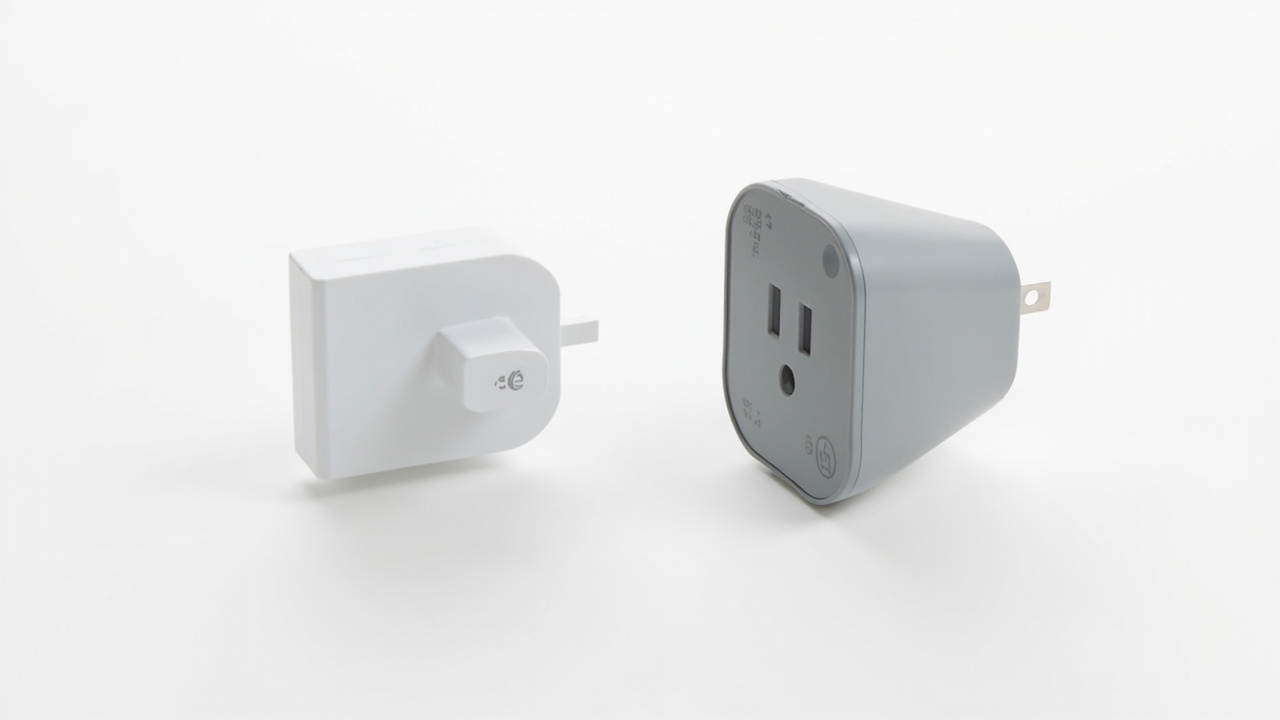
The $10 difference isn’t just a brand premium. You’re paying for the KP125M’s Matter certification, slimmer form factor, and the Kasa app’s more advanced features.
Energy Monitoring: Both Deliver
Here’s the good news: both plugs do energy monitoring well. You get real-time power draw, daily and monthly usage stats, and cost estimates based on your local electricity rate. This is genuinely useful if you’ve ever wondered which appliances are silently running up your bill.
The Kasa app gives slightly more detailed reporting — historical graphs, exportable data, and comparisons across devices. But for most users checking “is my space heater using too much?”, the Tapo app delivers enough.
If energy monitoring is your primary reason for buying, either plug does the job. Don’t pay $10 extra for Kasa unless you want the data in a prettier graph.

Matter Support: The $10 Future-Proofing
This is where the comparison gets real.
Matter is the new smart home standard backed by Apple, Google, Amazon, and Samsung. A Matter-certified device can work across all major ecosystems without separate integrations. If your smart home is already cross-platform, or if you plan to expand beyond a single ecosystem, Matter matters.
The Kasa KP125M has Matter. The Tapo P110 does not.
That doesn’t mean the P110 is useless tomorrow. It still works fine with Alexa and Google directly. But if you eventually adopt Apple HomeKit, or if your Google Home setup shifts to Matter-only devices, the KP125M will play along while the P110 might require workarounds or a separate hub.
For a $10 premium, you get a plug that won’t lock you into one ecosystem. That’s meaningful long-term value — especially if you’re buying several plugs for a whole-home setup.
App Experience: Tapo Simplicity vs Kasa Depth
The Tapo app is built for beginners. Setup takes under two minutes. The interface is clean, intuitive, and doesn’t overwhelm you with options. If you just want to schedule your lamp to turn off at midnight, Tapo gets out of your way.
The Kasa app is more powerful and shows it. More detailed energy reports, more automation options, more granular scheduling. But it has a steeper learning curve, and the interface can feel cluttered if you just want simple control.
If you’re tech-savvy and want control: Kasa wins. If you want it to just work: Tapo wins.
Form Factor: Kasa is Slimmer
The KP125M is notably slimmer than the P110. In practice, this matters if you’re plugging into a duplex outlet — the Kasa is less likely to block the second outlet. The P110’s bulkier body can crowd out a neighbor plug.
If outlet space is at a premium in your home, the KP125M’s slimmer design is a practical advantage.
Pros and Cons
Tapo P110
Pros:
- Significantly lower price ($14.99)
- Reliable energy monitoring with clear data
- Simple, beginner-friendly app
- Works with Alexa and Google Assistant
- Compact enough for most outlets
- TP-Link reliability
Cons:
- No Matter support — limits cross-platform flexibility
- App lacks advanced features and detailed reporting
- Bulkier than KP125M, may block adjacent outlet
- No Apple HomeKit support
- Slower firmware updates compared to Kasa
Kasa KP125M
Pros:
- Matter certified — works across all major smart home ecosystems
- Apple HomeKit compatible
- Slimmer form factor — fits duplex outlets better
- More detailed energy reporting
- More advanced scheduling and automation options
- Generally more refined app experience
Cons:
- Higher price ($24.99)
- More complex app interface for beginners
- Energy data may be more than casual users need
- Premium features come with a premium learning curve
Best For / Skip If
Buy Tapo P110 if:
- You’re buying your first smart plug and want something that just works
- Budget is a primary concern and $10 matters
- Your smart home is Alexa or Google-only
- You only need basic scheduling and energy monitoring
- You plan to buy only one or two plugs, not a whole-home system
Skip Tapo P110 if:
- You use or plan to use Apple HomeKit
- You want Matter for future-proofing your smart home
- You need the slimmer form factor for tight outlet spacing
- You want detailed energy reports and historical data
Buy Kasa KP125M if:
- You want Matter certification for cross-platform compatibility
- You use or plan to use Apple HomeKit
- You want detailed energy usage data
- You need a slim plug that won’t block adjacent outlets
- You’re buying multiple plugs for a whole-home energy monitoring setup
Skip Kasa KP125M if:
- You only have $15 to spend and can’t stretch to $25
- You just want basic plug-and-play functionality
- Your smart home is single-ecosystem (Alexa or Google only)
- You find advanced apps intimidating and prefer simplicity
Bottom Line
Buy smart. Get more value.
The Tapo P110 and Kasa KP125M are both good plugs — that’s the real takeaway. TP-Link makes reliable smart home hardware, and you’re not going to go wrong with either if you match it to your actual needs.
The P110 wins on price and simplicity. The KP125M wins on Matter support, HomeKit compatibility, and form factor.
If you’re building a future-proof smart home with cross-platform devices, the $10 difference in the KP125M is worth paying. But if you just want to monitor your space heater’s energy use without complexity, the P110 saves you money and does the job well.
Match the plug to your situation. Don’t pay for features you won’t use.
Frequently Asked Questions
Who should read this review?
Anyone weighing the practical differences between the products or topics covered here will find a concrete recommendation in the verdict section above. If you already know which one you are leaning toward, the FAQ below answers the most common follow-up questions readers ask before they commit.
What changed since the article was first published?
Prices and availability shift weekly. The verdict is based on the snapshot taken on the article date. We refresh reviews every 60-90 days when there is a major firmware, model refresh, or pricing change. The “Last updated” line at the top of the page tells you when this review was last revised.
How does BuyCospa pick which products to compare?
We pick products based on what readers search for in this category, what is actually shipping, and where we have a non-obvious take. We do not run sponsored reviews and we do not accept free units that come with coverage conditions. See our editorial policy for the full process.
Where can I check the most current price?
Prices in this review are US MSRP and typical street price on the date of publication. Check Amazon, Best Buy, and the manufacturer store for the current price — they often differ by 10-20% from the figure quoted here. We do not link to specific sellers because prices and stock move daily.