Introduction
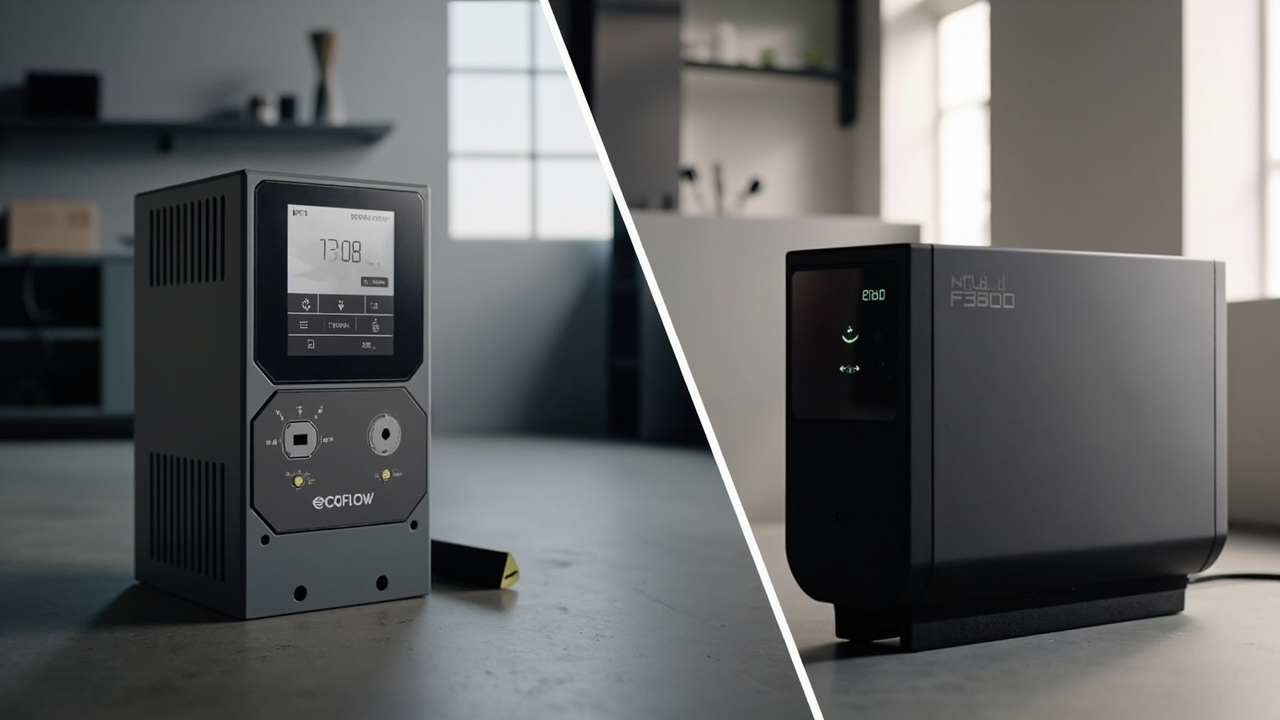
In 2026, the 3,000–3,900Wh “modular” portable power station tier quietly turned into the default home backup size for a normal suburban house. Two machines sit at the top of this tier for buyers who want to start with one unit and add batteries over time: the Anker SOLIX F3800 ($1,799 promo, MSRP $3,999) and the Bluetti AC300 + B300 combo ($1,699 for the base 3,072Wh bundle).
Both run LiFePO4 cells, both support 120/240V split-phase output when paired, both can be expanded well past the base capacity, and both can sit in a garage wired to a transfer switch to keep a fridge, internet, sump pump, and a few lights alive during a multi-day outage. On the spec sheet they look close. They are not.
The honest difference is what each company bets on:
- Anker bets on higher single-unit continuous output (6,000W) and a simpler, faster app that non-technical owners will actually use.
- Bluetti bets on a larger expansion ceiling (12,288Wh with 4× B300) and a cheaper per-kWh path if you grow the system over time.
The right answer depends on whether you expect to stay at one unit for years or scale to 12kWh+ gradually. That single decision swings the 5-year cost picture by $300 to $1,500.
The Verdict First
-
Pick the Anker SOLIX F3800 (~$1,799–$2,399 street, MSRP $3,999) if: you want 6,000W continuous from a single unit (the highest single-unit output in this tier), you value Anker’s 5-year warranty and “InfiniPower” 12-year cell design life marketing, you run mostly short-to-medium outages and do not expect to scale past 7kWh, and you want an app that does the basics well without a learning curve.
-
Pick the Bluetti AC300 + B300 (~$1,699 for the 3,072Wh base combo) if: you expect to scale to 12kWh or beyond by adding B300 battery modules one at a time, you want cheaper per-kWh cost as the system grows, you want the broadest port array (16 outlets on the AC300+B300 vs 14 on the F3800) for connecting many small loads simultaneously, and you do not need the F3800’s higher single-unit surge capacity.
Cost score: 82/100. Both are well-priced for the modular 3kWh tier. The realistic 5-year saving comes from picking the system whose expansion economics match the way you actually plan to grow.
Key Comparison Points
Price vs Real Cost Per Use
Sticker prices for the base single-unit configurations are surprisingly close. The 5-year cost picture diverges as soon as you start adding battery modules.
| Cost Line | Anker SOLIX F3800 | Bluetti AC300 + B300 |
|---|---|---|
| Base unit street price (mid-2026) | ~$1,799 (promo) to $2,399 | ~$1,699 (AC300 inverter + 1× B300) |
| MSRP | $3,999 | $2,299 (AC300 alone), B300 ~$1,099 each |
| Base capacity | 3,840 Wh | 3,072 Wh (AC300 + 1× B300) |
| Battery chemistry | LiFePO4 (LFP) | LiFePO4 (LFP) |
| AC continuous output (single unit) | 6,000W | 3,000W |
| AC peak output | 9,000W surge | 6,000W surge |
| 120/240V split-phase | Yes (with two units paired) | Yes (with Fusion Box) |
| Solar input (max) | 2,400W | 2,400W |
| Solar input voltage range | 11–60V per port | 12–150V per port (higher-voltage MPPT) |
| Max AC charging input | 1,800W (per Anker spec) | 5,400W (Bluetti “blazing input rate”) |
| Expandable to | 26,880 Wh (with 6 expansion batteries) | 12,288 Wh (with 4× B300, AC300 inverter limit) |
| Warranty (US retail) | 5 years | 4 years |
| Cycle life (to 80% capacity) | 3,000–6,000 cycles (Anker claims 6,000) | 3,500 cycles |
| Weight | ~60 kg (132 lb) | ~47 kg (103.5 lb combined) |
| Built-in wheels / handle | Yes (built-in) | Inverter has handles; B300 has side handles |
Source for prices: bluettipower.com official store, Anker SOLIX official store, offgridbenchmark.com F3800 review, and fairtradefinder.com AC300 vs F3800 head-to-head, as of June 2026. Cycle-life and warranty claims are manufacturer-published.
5-year cost-per-cycle math (single-unit configuration, 52 cycles/year):
Assumptions:
- Base unit amortized over 5 years.
- 80% depth of discharge (DoD) for usable energy per cycle.
- Battery degradation to ~80% of original capacity by year 5.
- Solar panels amortized separately (excluded from this calculation; they reduce grid charging cost, not equipment cost).
| Item | Anker SOLIX F3800 | Bluetti AC300 + B300 |
|---|---|---|
| Usable energy per cycle, year 1 | ~3,072 Wh | ~2,458 Wh |
| Usable energy per cycle, year 5 | ~2,458 Wh | ~1,966 Wh |
| Cost per kWh stored (year 1) | $2,099 / (5 yr × 52 cycles × 3.072 kWh) ≈ $0.25 / kWh | $1,699 / (5 yr × 52 cycles × 2.458 kWh) ≈ $0.27 / kWh |
| Cost per kWh stored (year 5) | ~$0.31 / kWh | ~$0.33 / kWh |
The 5-year base-unit gap:
- Anker SOLIX F3800 (1 unit, 3,840Wh): ~$2,099 promo street price
- Bluetti AC300 + B300 (1 unit combo, 3,072Wh): ~$1,699
- Delta at base configuration: ~$400 in Bluetti’s favor (and the Bluetti combo includes 768Wh less capacity, which adjusts the per-kWh comparison close to parity)
The 5-year expansion economics (this is where Bluetti pulls ahead):
If you scale to a 12kWh class system:
- Anker stack (F3800 + 2× BP3800 expansion batteries,
11.5kWh): **$5,400–$5,800** - Bluetti stack (AC300 + 4× B300, 12,288Wh): ~$5,800–$6,400 with current battery pricing
If you scale to a 6kWh class system:
- Anker stack (F3800 + 1× BP3800,
7.7kWh): **$3,800–$4,200** - Bluetti stack (AC300 + 2× B300, 6,144Wh): ~$3,400–$3,800
The expansion-cost gap:
- Per added kWh, Bluetti B300 batteries typically land at $350–$400 / kWh at retail, versus Anker’s BP3800 batteries at $400–$500 / kWh in mid-2026.
- Per-kWh expansion advantage for Bluetti: ~$50–$100 / kWh, which adds up to $300–$1,200 on a full 12kWh buildout.
Caveat: Anker’s promo pricing on the F3800 is aggressive in 2026 (street ~$1,799, MSRP $3,999). If Anker drops a similar promo on BP3800 expansion batteries, the gap narrows. Verify current pricing on both official stores before pulling the trigger on expansion batteries.
Build Quality and Durability
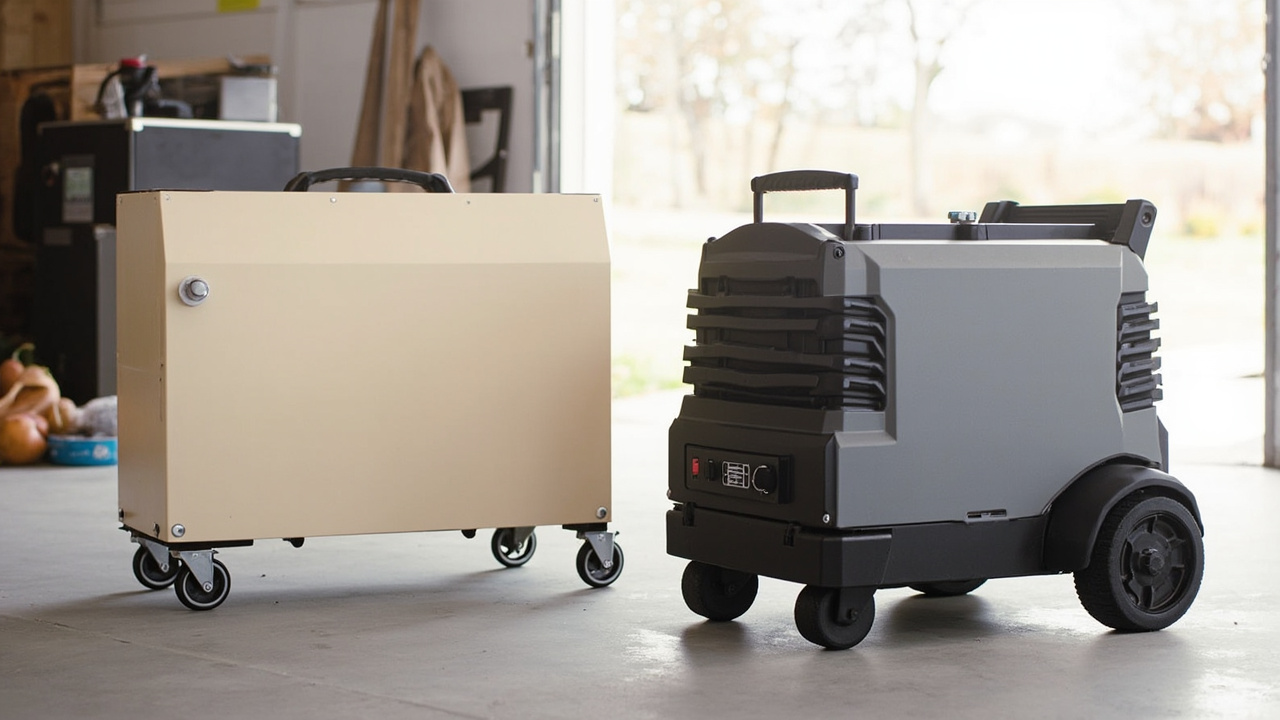
The two units feel like different design philosophies: Anker optimizes for single-unit ruggedness and peak power; Bluetti optimizes for modularity and lighter form factor.
-
Anker SOLIX F3800: Anodized aluminum frame with corner bumpers, built-in telescoping handle and rear wheels, open-faced outlet array for fast cable access. Heavier (60 kg / 132 lb) but feels like a tank on the garage floor. Cooling fans are audible at peak load (~45 dB). Operating range is -20°C to 40°C, which is a real advantage in cold-climate garages and northern US winters.
-
Bluetti AC300 + B300: Two-piece design — the AC300 is the inverter module (~21.6 kg / 47.6 lb), the B300 is the battery module (~25.5 kg / 56 lb). Total weight is 47 kg (103.5 lb) in the combo, which is meaningfully lighter than the Anker. The AC300 inverter has front-facing outlets with a flip-cover panel; the B300 battery has its own status display. Cooling fans are slightly quieter at peak (~42 dB). Operating range is -20°C to 40°C (matching the F3800).
Long-term durability considerations:
| Concern | Anker SOLIX F3800 | Bluetti AC300 + B300 |
|---|---|---|
| Casing material | Aluminum frame + plastic panels | Plastic (high-impact ABS) for both modules |
| Cooling fans | Variable-speed, ~45 dB at peak | Variable-speed, ~42 dB at peak |
| Battery cycle rating (manufacturer) | 3,000–6,000 cycles to 80% | 3,500 cycles to 80% |
| Operating temp range (discharge) | -20°C to 40°C | -20°C to 40°C |
| Modularity / serviceability | Whole-unit service; expansion batteries dock on top | AC300 inverter separable from B300 battery; each can be serviced or replaced independently |
| Field-failure reputation (Reddit r/portablepowerstations, 2025–2026) | Inverter fan noise and rare cell-balancing complaints | Mostly BMS firmware bugs fixed in 2024–2025 updates; rare B300 communication errors |
| Realistic lifespan (home use, ≤52 cycles/yr) | 7–10 years | 7–10 years |
The honest durability read: Both machines use LiFePO4 cells from the same major suppliers (CATL and EVE are common in this tier). The difference is enclosure design and warranty honor rate:
- Anker has the stronger consumer-electronics service network globally (Anker Innovations runs the broader Anker / eufy / Soundcore retail channels).
- Bluetti has the better modular service story: if the inverter fails, you can swap the AC300 module without sending the whole 100+ lb unit back for repair. The B300 battery is also a self-contained module that can be replaced individually.
For most users, durability will not be the deciding factor at this tier. The deciding factor is whether the system survives 7+ years of weekly cycling without dropping below 70% of original capacity, which is when most owners start feeling the loss in real-dollar terms.
Feature Breakdown
This is where the two machines diverge most.
Anker SOLIX F3800 standout features:
- 6,000W continuous from a single unit — the highest single-unit output at this price tier (EcoFlow Delta Pro 3 is 4,000W continuous; Bluetti AC300 is 3,000W continuous).
- 9,000W surge handles well pumps, electric dryers, and 5-ton window AC units from a single unit.
- Built-in NEMA 14-50 (240V/30A) and NEMA L14-30R (240V) outlets — no adapter box needed for RV and dryer-style loads.
- 2,400W solar input matches Bluetti’s ceiling, but with lower voltage range (11–60V per port).
- Anker app is the simplest and fastest to set up in this tier — Bluetooth pairing in under 60 seconds, Wi-Fi setup in under 3 minutes.
- 5-year warranty on the unit (12-year “InfiniPower” cell design life marketing).
- Expansion to 26,880 Wh with up to 6 BP3800 expansion batteries — the largest single-system ceiling at this tier.
Bluetti AC300 + B300 standout features:
- Modular inverter + battery design — the AC300 inverter is the long-lived component, and the B300 battery modules can be added, swapped, or replaced over time.
- 5,400W max AC charging input (“blazing input rate”) — the fastest AC recharge in this tier. The AC300 can recharge from a wall outlet in roughly 1.5 hours vs the F3800’s ~2.6 hours.
- 2,400W solar input with higher voltage range (12–150V) — works with longer series-string solar arrays, which is a real advantage for permanent rooftop installs.
- 16 outlets and ports on the combo (vs 14 on the F3800), including 6 AC outlets, 2 wireless charging pads, 2 USB-A fast charge, 1 USB-C 100W, and the NEMA TT-30 (RV 30A) outlet.
- 24/7 UPS home backup mode — sub-10ms switchover when wired to your breaker panel via the Bluetti Fusion Box or a third-party transfer switch.
- Expansion to 12,288 Wh with 4× B300 modules — capped by the AC300 inverter, not by physical stacking room.
- Bluetti app has deeper power-flow customization than the Anker app — per-port scheduling, time-of-use logic (added in 2025 update), and detailed solar input telemetry.
Where the Anker wins:
- Higher single-unit continuous output (6,000W vs 3,000W)
- Higher surge capacity (9,000W vs 6,000W)
- Faster, simpler app for first-time owners
- Lower base-unit price during 2026 promos
- 5-year warranty vs 4-year
Where the Bluetti wins:
- Modular inverter/battery separation for easier service and replacement
- Higher solar input voltage range (12–150V) for longer string arrays
- Faster AC charging (5,400W vs 1,800W)
- More outlets and ports (16 vs 14)
- Cheaper per-kWh cost when expanding to 12kWh
- Lower weight per kWh (better portability for the same capacity)
- NEMA TT-30 (RV 30A) outlet included

Pros and Cons
Anker SOLIX F3800
Pros:
- 6,000W continuous from a single unit — the highest output at this price tier, beats both Bluetti AC300 and EcoFlow Delta Pro 3
- 9,000W surge handles well pumps, dryers, and large window ACs without engaging an overdrive mode
- Built-in 240V outlets (NEMA 14-50 and NEMA L14-30R) — no adapter box needed for RV and dryer-style loads
- 5-year warranty on the unit (1 year longer than Bluetti)
- “InfiniPower” 12-year cell design life marketing — strongest cell-life claim in this tier
- Simple, fast Anker app — Bluetooth pairing in under 60 seconds
- Largest single-system expansion ceiling at this tier (26,880 Wh with 6 expansion batteries)
- Aluminum frame feels more rugged in the hand than the plastic Bluetti combo
- -20°C operating range matches Bluetti (real advantage for cold-climate garages)
Cons:
- Heavier than Bluetti at 132 lb (60 kg) for 3,840 Wh
- Slower AC charging at ~2.6 hours (vs Bluetti’s ~1.5 hours)
- Lower solar input voltage range (11–60V vs Bluetti’s 12–150V) — restricts longer rooftop string arrays
- Open outlet array collects dust in long-term garage storage
- Per-kWh expansion cost is higher than Bluetti’s B300 modules
- Anker app has fewer deep features — no per-port scheduling, no detailed time-of-use logic
- Wheels and handle are bulkier — fine for garage rolling, awkward for tight stairways
Bluetti AC300 + B300
Pros:
- Lower base-combo price at ~$1,699 for 3,072Wh (vs ~$1,799–$2,399 for the Anker’s 3,840Wh)
- Modular inverter + battery design — replace the B300 battery without sending the whole 100+ lb system for repair
- 5,400W max AC charging input — fastest wall-outlet recharge in this tier (~1.5 hours)
- 2,400W solar input with 12–150V range — works with longer rooftop series-string solar arrays
- 16 outlets and ports — most in this tier (6 AC, 2 wireless pads, 2 USB-A, 1 USB-C 100W, 1 NEMA TT-30 RV, 1 12V DC carport)
- 24/7 UPS mode with sub-10ms switchover for home-circuit integration
- Cheaper per-kWh expansion when adding B300 modules ($350–$400 / kWh vs Anker’s $400–$500)
- Lighter total weight at 47 kg / 103.5 lb (vs Anker’s 60 kg / 132 lb) — easier to carry into a basement or up stairs
- NEMA TT-30 (RV 30A) outlet included — direct RV hookup without adapter
Cons:
- Lower single-unit continuous output (3,000W vs 6,000W) — needs the Fusion Box for 240V split-phase, which costs extra
- Shorter warranty (4 years vs 5 years for Anker)
- Lower cycle life claim (3,500 vs Anker’s 3,000–6,000)
- Plastic casing on both modules — less rugged than the Anker’s aluminum frame
- AC300 inverter has fewer ports than the Anker when counted as a single unit (the 16-port count is for the full combo including B300)
- Bluetti app has more features but slower UI than the Anker app — extra setup time for new owners
- B300 battery has its own display — useful for monitoring but adds bulk to the stack footprint
Best For / Skip If
Best For: Anker SOLIX F3800
- Homeowners in outage-prone suburbs who need to run heavy 240V loads (well pumps, electric dryers, 5-ton AC window units) from a single unit
- RV owners who want direct NEMA 14-50 / L14-30R hookup without an adapter box
- First-time power station buyers who want a clean, simple app and a 5-year warranty
- Buyers who plan to stay at 1–2 units and not scale past 7kWh
- Cold-climate buyers who value the -20°C operating range and the rugged aluminum frame for garage storage
Skip If: Anker SOLIX F3800
- You want modular serviceability — the F3800 is a sealed unit, harder to service than the Bluetti split design
- You need fastest AC wall-outlet recharge — Bluetti’s 5,400W input is twice as fast
- You plan to scale to 12kWh+ and want the cheapest per-kWh expansion path (Bluetti’s B300 modules are cheaper per kWh)
- You run long rooftop solar strings above 60V — Bluetti’s 150V input ceiling handles this better
- You need 24/7 UPS home-circuit integration out of the box — Anker does not have a first-party transfer switch product
Best For: Bluetti AC300 + B300
- Modular-growth buyers who want to start at 3kWh and add a B300 every year until they hit 12kWh
- Solar-first buyers with permanent rooftop arrays above 60V (long series strings)
- Buyers who value serviceability — the AC300 inverter and B300 battery are independently replaceable
- Multi-load homeowners who need 16 outlets for connecting many small appliances simultaneously
- RV owners who want a direct NEMA TT-30 30A outlet (included)
- Buyers who recharge from a wall outlet often — Bluetti’s 5,400W input recharges in ~1.5 hours vs ~2.6 for Anker
Skip If: Bluetti AC300 + B300
- You need 6,000W continuous from a single unit (well pumps, large AC, dryer loads) — the AC300 maxes at 3,000W
- You want a 5-year warranty (Bluetti’s is 4 years)
- You want fastest setup with the simplest app — Anker app is faster
- You want the lowest MSRP without watching for promo pricing — the F3800 MSRP at $3,999 is high, but street pricing has been $1,799–$2,399 for most of 2026
- You run the unit in deep cold frequently — both units match at -20°C, but Anker’s aluminum frame dissipates cold better than the Bluetti’s plastic
Bottom Line
Both machines sit in the same 3,000–3,900Wh / modular LiFePO4 class and both are credible home-backup products. The honest difference is what kind of power user you are:
-
The Anker SOLIX F3800 is the better buy if you want 6,000W continuous from a single unit, the highest surge capacity in the tier (9,000W), the fastest app setup, and a 5-year warranty. The ~$1,799 promo street price in 2026 is competitive, but watch for MSRP creep back to $3,999. If you expect to stay at 1–2 units, the F3800 is the strongest single-unit pick in this tier.
-
The Bluetti AC300 + B300 is the better buy if you want modular serviceability (replaceable inverter + battery), the fastest AC wall-outlet recharge (~1.5 hours), the highest solar input voltage range (150V) for permanent rooftop arrays, and the cheapest per-kWh expansion path to 12kWh. The 4-year warranty is 1 year shorter than Anker, and the 3,000W continuous output is half of the F3800 — which is the real tradeoff to weigh.
For most buyers, the math is: buy the Anker SOLIX F3800 if you will stay at 1–2 units and need high output now. Buy the Bluetti AC300 + B300 if you plan to scale to 12kWh+ over 3–5 years and value serviceability.
Buy smart. Get more value. The value here is not the sticker price — it is the 5-year cost per kWh stored, the expansion economics if you grow the system, and whether the unit survives the use case you have in year 4.