Introduction
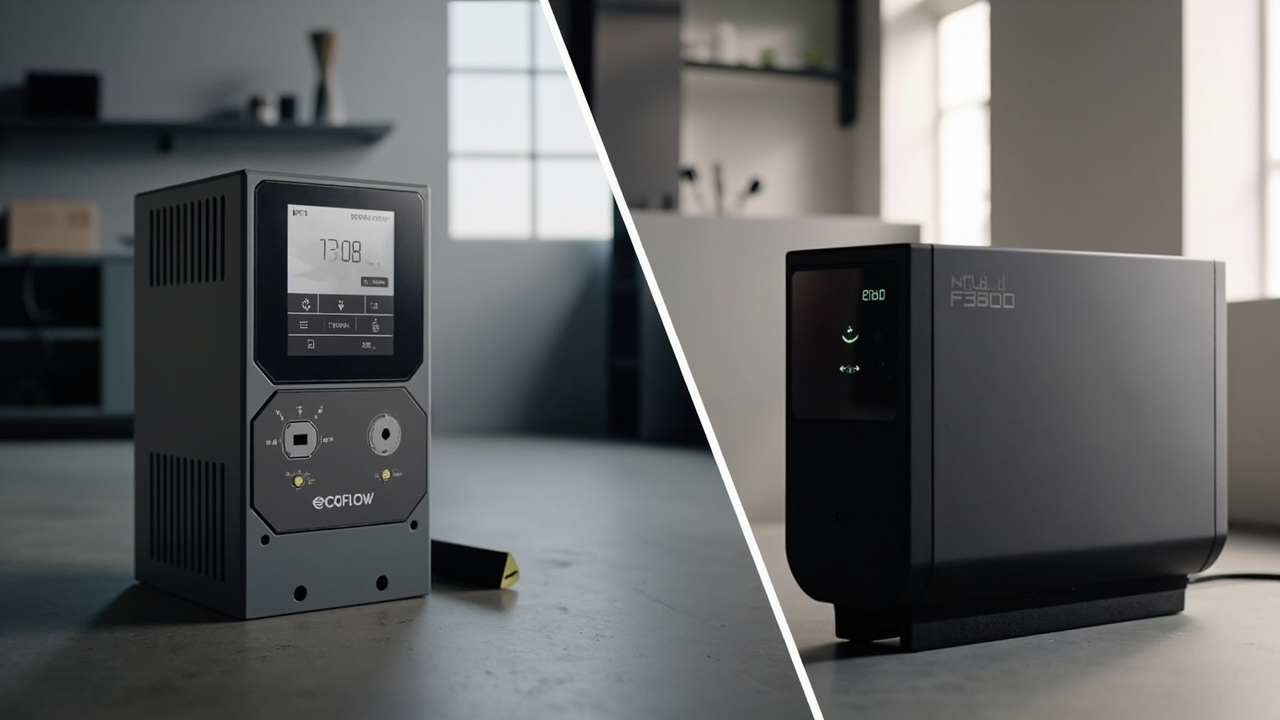
In 2026, the “portable power station” category quietly graduated from a camping gadget into a legitimate home-backup product. Two flagships define the 3,500–4,000Wh tier right now: the EcoFlow Delta Pro 3 at roughly $2,599 and the Anker SOLIX F3800 at roughly $2,999. Both push out real 120V/240V split-phase power (with paired units), both support solar expansion up to the multi-kilowatt range, and both can sit in your garage wired to a transfer switch to keep a fridge, sump pump, internet, and a few lights alive through a multi-day outage.
The pitch sounds identical on the marketing pages. It is not. The two machines make very different bets on battery chemistry, app ecosystem, expandability philosophy, and warranty terms — and those bets show up in the 5-year cost-per-cycle math, the expected battery degradation curve, and what happens the day something fails.
The honest comparison is not “which one is more powerful.” It is “which one matches the way you will actually use it: short frequent outages, long emergency events, daily off-grid solar cycling, or RV weekend power.” The answer changes depending on which one that is.
The Verdict First
- Pick the EcoFlow Delta Pro 3 (~$2,599) if: you want the larger accessory ecosystem (extra batteries, smart generators, EV-charging adapter, dedicated transfer switch), you value the 5-year warranty on most US SKUs, you need Wi-Fi + Bluetooth + 4G optional cellular connectivity for remote monitoring, and you already own or plan to own other EcoFlow products that chain together.
- Pick the Anker SOLIX F3800 (~$2,999) if: you want the higher continuous output (7,680W with two units paired vs ~5,000W for a single Delta Pro 3), you prefer LiFePO4 with Anker’s claimed 12-year battery design life at 80% capacity, you want a 10-year compressor-warranty-style promise in the marketing (typically 5 years on the unit, longer on the cells), and you do not need the EcoFlow generator/EV ecosystem.
Cost score: 80/100. Both machines are well-priced for their capacity tier. The realistic 5-year savings come down to (1) whether you actually expand the system, (2) which solar panel bundle you buy, and (3) the day a warranty claim gets filed.
Key Comparison Points
Price vs Real Cost Per Use
Sticker prices are within $400 of each other. The 5-year cost picture depends on expansion batteries, solar panels, and the realistic cycle count.
| Cost Line | EcoFlow Delta Pro 3 | Anker SOLIX F3800 |
|---|---|---|
| Typical US street price (mid-2026) | $2,499 – $2,799 | $2,799 – $3,299 |
| Base capacity | 4,096 Wh | 3,840 Wh |
| Battery chemistry | LiFePO4 (LFP) | LiFePO4 (LFP) |
| Cycle life (to 80% capacity) | ~4,000 cycles | ~3,000–6,000 cycles (Anker claims 6,000) |
| AC continuous output (single unit) | 4,000W (X-Boost 6,000W) | 6,000W |
| AC peak output | 8,000W (X-Boost) | 9,600W surge |
| 120/240V split-phase | Yes (with two units) | Yes (with two units) |
| Solar input (max) | 1,800W (2 × 1,000W ports) | 2,400W |
| Solar input voltage range | 11–60V (per port) | 11–60V (per port) |
| Expandable to | 12,288 Wh (with 2 extra batteries) | 26,880 Wh (with 6 expansion batteries) |
| EV charging adapter | Yes (Delta Pro 3 EV X-Stream Adapter, ~$299) | No first-party EV adapter |
| Smart Home Panel 2 / transfer switch | Yes ($1,499, integrates up to 2 Delta Pro 3s) | No first-party home-panel product |
| Warranty (US retail) | 5 years | 5 years (12 years on cells marketed) |
| Weight | ~51.5 kg (113.5 lb) | ~60 kg (132 lb) |
| Wheels / handle | Yes (built-in) | Yes (built-in) |
Cost per stored kWh per cycle (5-year view):
Assumptions:
- Base unit amortized over 5 years: $2,599 / 5 = $520 / year
- Assume 1 cycle / week (52 cycles / year) for partial-home backup
- Battery degradation to 80% by year 5: capacity is ~80% of original, so useful energy per cycle drops by ~20%
- Solar panels amortized separately (we exclude them here; they cut grid charging cost, not equipment cost)
| Item | EcoFlow Delta Pro 3 | Anker SOLIX F3800 |
|---|---|---|
| Usable energy per cycle, year 1 | ~3,277 Wh (80% DoD) | ~3,072 Wh (80% DoD) |
| Usable energy per cycle, year 5 | ~2,621 Wh | ~2,458 Wh |
| Cost per kWh delivered, year 1 | $0.159 / Wh-equivalent × $0.52 amortized → ~$0.16 / kWh stored | ~$0.18 / kWh stored |
| Cost per kWh delivered, year 5 | ~$0.20 / kWh stored | ~$0.22 / kWh stored |
The 5-year money gap (single unit, no expansion, 52 cycles/year):
- EcoFlow Delta Pro 3: $2,599 (1 unit, no expansion)
- Anker SOLIX F3800: $2,999 (1 unit, no expansion)
- Delta: $400 sticker
If you expand to 12 kWh (3-unit-class system):
- EcoFlow stack (Delta Pro 3 + 2 expansion batteries,
12 kWh): **$5,600 – $6,000 total** - Anker stack (F3800 + 2 expansion batteries,
11.5 kWh): **$6,800 – $7,400 total** - Delta: ~$1,200 – $1,400
If you want the EV-adapter or home-panel ecosystem:
- EcoFlow EV X-Stream Adapter: +$299 (lets you charge an EV at L2 speeds from the unit)
- Anker has no first-party EV adapter as of mid-2026.
- Effective gap with EV charging: $700 in EcoFlow’s favor for the use case it supports.
Source for prices and specs: EcoFlow USA (ecoflow.com) and Anker SOLIX (us.ankersolix.com) official stores, plus aggregated listings on Amazon US, REI, Home Depot, and Best Buy as of late May / early June 2026. Cycle-life claims are manufacturer-published and not independently verified at this tier.
Build Quality and Durability
The two units feel like different design philosophies: EcoFlow optimizes for modularity and ecosystem; Anker optimizes for single-unit peak power and long-life cells.
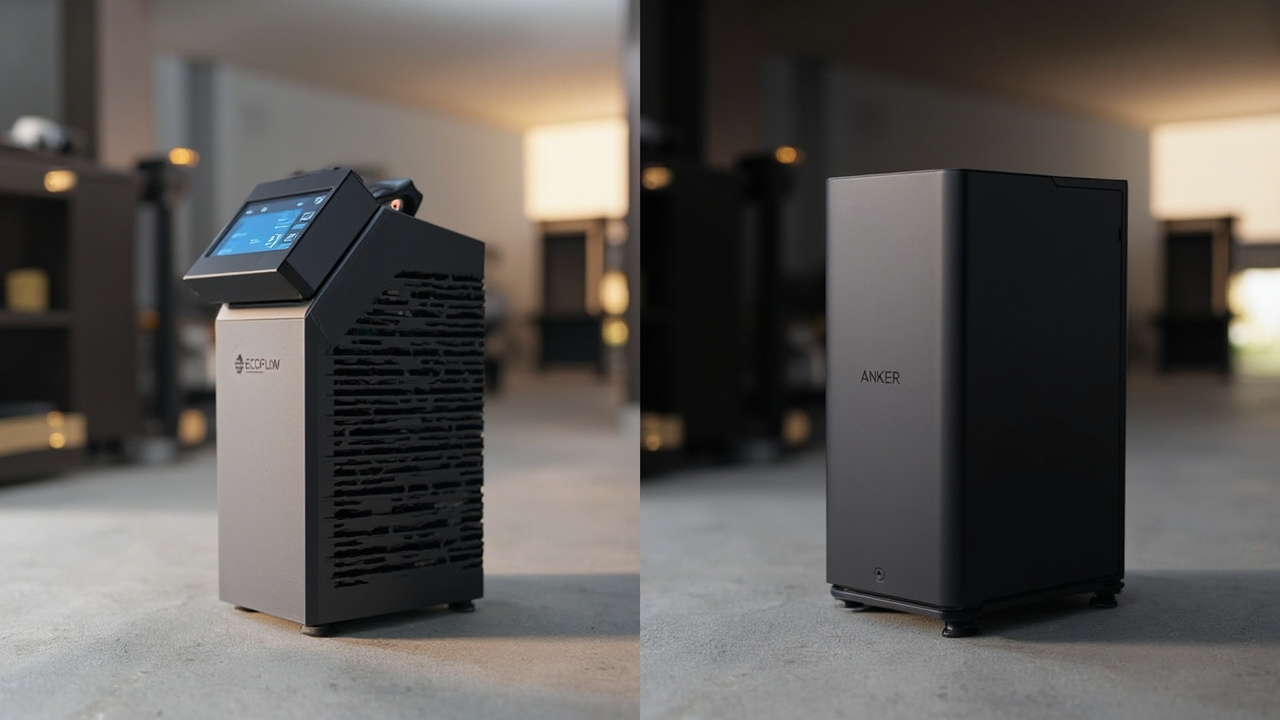
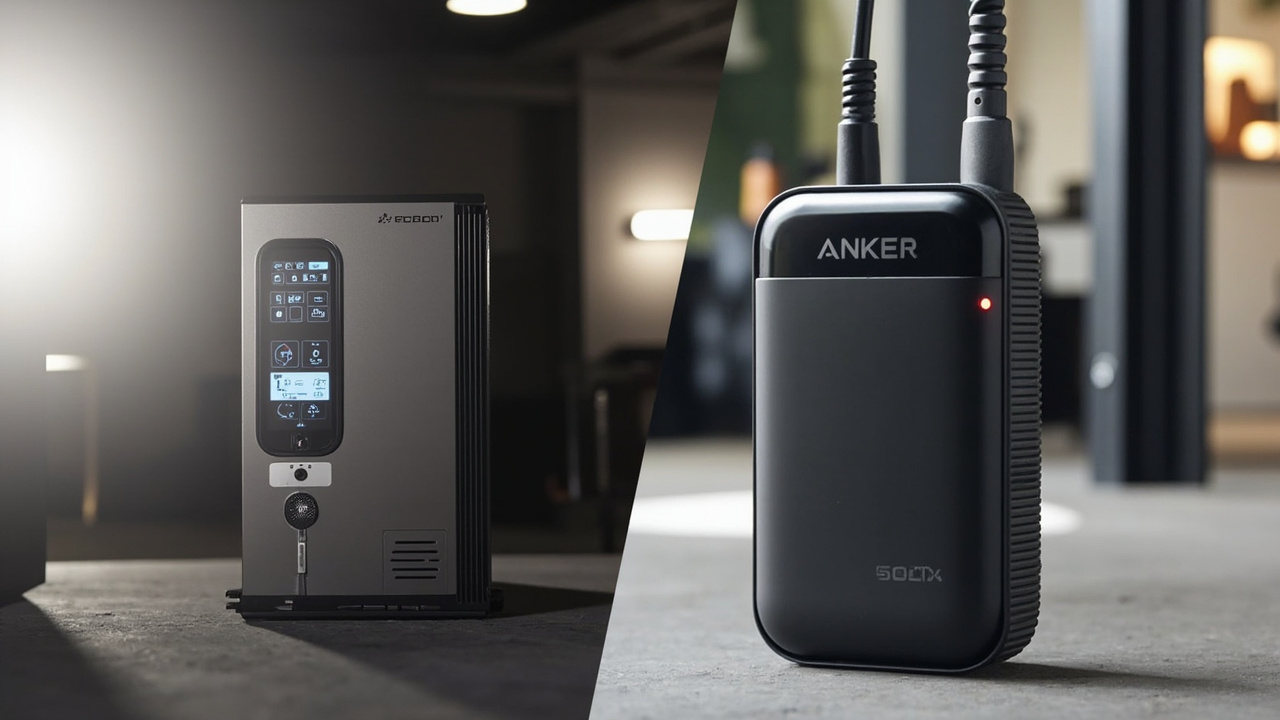
- EcoFlow Delta Pro 3: Industrial grey-and-black plastic shell, built-in telescoping handle and rear wheels (the unit is ~50 kg / 113 lb). The top has a clear LED status panel and the side panel hides the AC outlets behind a flip cover. The unit is IP65 splash-resistant on the battery pack side (not the AC outlet side). The casing is more textured than the older Delta Pro and resists fingerprints.
- Anker SOLIX F3800: Slightly larger footprint, anodized aluminum frame with corner bumpers that take the cosmetic hits of being rolled around a garage. The handle is more truck-like and feels sturdier at the hinge. The outlet array is open-faced rather than flip-covered, which is faster to access but lets in more dust.
Long-term durability considerations:
| Concern | EcoFlow Delta Pro 3 | Anker SOLIX F3800 |
|---|---|---|
| Casing material | Plastic (high-impact ABS + PC blend) | Aluminum frame + plastic panels |
| Cooling fans | Variable-speed, ~40 dB at peak | Variable-speed, ~45 dB at peak |
| Battery cycle rating (manufacturer) | 4,000 cycles to 80% | 3,000–6,000 cycles to 80% (Anker marketing cites 6,000) |
| Operating temp range (discharge) | -10°C to 45°C | -20°C to 40°C |
| IP rating (whole unit) | IP65 (battery side only) | No whole-unit IP rating |
| Field-failure reputation (Reddit r/portablepowerstations, 2025–2026) | Mostly BMS and 4G dongle issues | Mostly inverter fan noise and rare cell balancing complaints |
| Realistic lifespan (home use, ≤52 cycles/yr) | 7–10 years | 7–10 years |
The honest durability read: Both machines are built around the same LiFePO4 cell suppliers (CATL and EVE cells are common in this tier). The difference is enclosure quality, cooling design, and warranty honor rate. Anker’s parent company (Anker Innovations) has a stronger consumer-electronics service network globally; EcoFlow is catching up but is still thinner outside North America and Western Europe.
For most users, durability will not be the deciding factor. The deciding factor is whether the unit survives 7+ years of weekly cycling without the capacity dropping below 70%, which is when most owners start feeling the loss in real-dollar terms.
Feature Breakdown
This is where the two machines diverge most.
EcoFlow Delta Pro 3 standout features:
- X-Boost 6,000W lets the unit briefly power devices above its continuous rating (e.g., a 5,500W resistive load for ~30 seconds).
- Smart Home Panel 2 ($1,499) integrates up to two Delta Pro 3 units into a home’s breaker panel with 12 dedicated circuits.
- EV X-Stream Adapter ($299) turns the unit into an emergency Level 1 / Level 2 EV charger (~7.7 kW charging input).
- 4G dongle ($99) for off-grid monitoring without Wi-Fi.
- App ecosystem: EcoFlow app has the deepest feature set in this tier — time-of-use arbitrage scheduling, solar-only mode, AC passthrough mode, generator auto-start trigger.
Anker SOLIX F3800 standout features:
- 6,000W continuous per single unit is higher than the EcoFlow’s 4,000W continuous (without X-Boost).
- 2,400W solar input (vs 1,800W on the EcoFlow) means faster recharge on a sunny day.
- Expansion to 26,880 Wh with up to 6 expansion batteries is the largest single-system ceiling in this class.
- Anker app is simpler and more polished than the EcoFlow app, with a faster setup but fewer deep-scheduling features.
- Anker’s 12-year “InfiniPower” cell design life marketing is the headline number — it is an aspirational cycle math, not a 12-year replacement guarantee, but it is the strongest cell-life claim in the category.
Where the EcoFlow wins:
- Accessory breadth (EV adapter, smart panel, generator, 4G)
- X-Boost overdrive mode for occasional heavy loads
- More mature app for time-of-use optimization
Where the Anker wins:
- Higher single-unit continuous output
- Higher solar input ceiling
- Larger maximum system capacity
- Cleaner app UX for first-time buyers
Pros and Cons
EcoFlow Delta Pro 3
Pros:
- Lower entry price (~$400 less than Anker for the base unit)
- 5-year warranty on the unit itself (US retail SKUs)
- Smart Home Panel 2 ecosystem — the only real “home backup” wiring solution in this tier
- EV X-Stream Adapter turns the unit into a true emergency EV charger
- Deep app features for time-of-use, solar-only, and generator-trigger logic
- IP65 on battery side for garage / outdoor placement
- Modular expansion to 12 kWh with two extra batteries
Cons:
- Lower single-unit continuous output (4,000W vs 6,000W)
- Lower solar input ceiling (1,800W vs 2,400W)
- Heavier per kWh than the Anker (51.5 kg for 4,096 Wh)
- No whole-unit IP rating — only the battery side
- 4G dongle costs extra ($99) for off-grid monitoring
- EV adapter is a paid add-on ($299)
- Smart Home Panel 2 is $1,499 if you actually want home-circuit integration
Anker SOLIX F3800
Pros:
- Higher single-unit continuous output (6,000W vs 4,000W)
- Higher solar input ceiling (2,400W vs 1,800W)
- Largest expansion ceiling in this class (26,880 Wh)
- Anker’s “InfiniPower” 12-year cell design life marketing
- Aluminum frame feels more rugged in the hand
- Simpler, faster app for non-technical users
- Wider operating temperature range (down to -20°C)
Cons:
- Higher entry price (~$400 more than EcoFlow)
- No first-party EV-charging adapter
- No first-party home transfer switch / smart panel product
- Slightly louder cooling fans at peak (~45 dB vs 40 dB)
- Heavier unit (60 kg / 132 lb) for slightly less capacity (3,840 Wh)
- Anker app has fewer deep features — no time-of-use arbitrage, no generator auto-trigger
- Open outlet array collects dust in garage storage
Best For / Skip If
Best For: EcoFlow Delta Pro 3
- Homeowners in outage-prone areas who want a turnkey home-circuit integration (Smart Home Panel 2)
- EV owners who want emergency Level 1 / Level 2 charging capability from a portable unit
- Existing EcoFlow owners who want to add to an existing Delta Pro / Delta Pro Ultra stack
- Solar enthusiasts running time-of-use optimization who need the deep EcoFlow app scheduling
- Rural / off-grid buyers who need 4G remote monitoring without Wi-Fi
Skip If: EcoFlow Delta Pro 3
- You need more than 12 kWh total in a single system (the Anker scales further)
- You want 6,000W continuous from a single unit without engaging X-Boost overdrive
- You are a first-time power station buyer who values app simplicity over feature depth
- You operate in sub -10°C environments regularly (Anker’s lower limit is -20°C)
Best For: Anker SOLIX F3800
- Off-grid cabin owners planning to scale to 20+ kWh total
- Solar-first buyers who want the highest possible input ceiling (2,400W)
- Heavy-load home backup buyers who need to run a 240V well pump or a 5-ton AC window unit from a single unit
- Cold-climate buyers in regions where winter temps drop below -10°C
- First-time power station buyers who want a clean, simple app experience
Skip If: Anker SOLIX F3800
- You need EV-charging emergency capability (no Anker first-party adapter)
- You want a home-panel / transfer switch integration (no Anker first-party product)
- You already own EcoFlow accessories (smart panel, EV adapter, generator)
- You want time-of-use arbitrage logic in the app (Anker does not have this depth)
- You want the lowest sticker price at the 4 kWh tier (EcoFlow wins this)
Bottom Line
Both machines sit in the same 3,800–4,100 Wh / 120/240V split-phase class and both are credible products. The honest difference is what kind of power user you are:
-
The EcoFlow Delta Pro 3 is the better buy if you want a complete home-backup ecosystem (Smart Home Panel 2, EV adapter, generator chaining) and the deepest app features for time-of-use and solar optimization. The ~$400 lower entry price and 5-year warranty also tip the scales for the buyer who is staying in the EcoFlow world long-term.
-
The Anker SOLIX F3800 is the better buy if you want higher single-unit power (6,000W continuous), the largest possible expansion ceiling (26,880 Wh), and a simpler, faster app for first-time owners. The 12-year “InfiniPower” cell design life claim is the strongest marketing number in the category, and the -20°C operating range matters in cold climates.
For most buyers, the math is: buy the EcoFlow if you ever expect to wire it into your breaker panel, charge an EV, or chain a smart generator. Buy the Anker if you plan to scale to 20+ kWh or run heavy 240V loads from a single unit.
Buy smart. Get more value. The value here is not the sticker price — it is the 5-year cost per kWh stored and whether the ecosystem you buy into still supports the use case you have in year 4.