Introduction
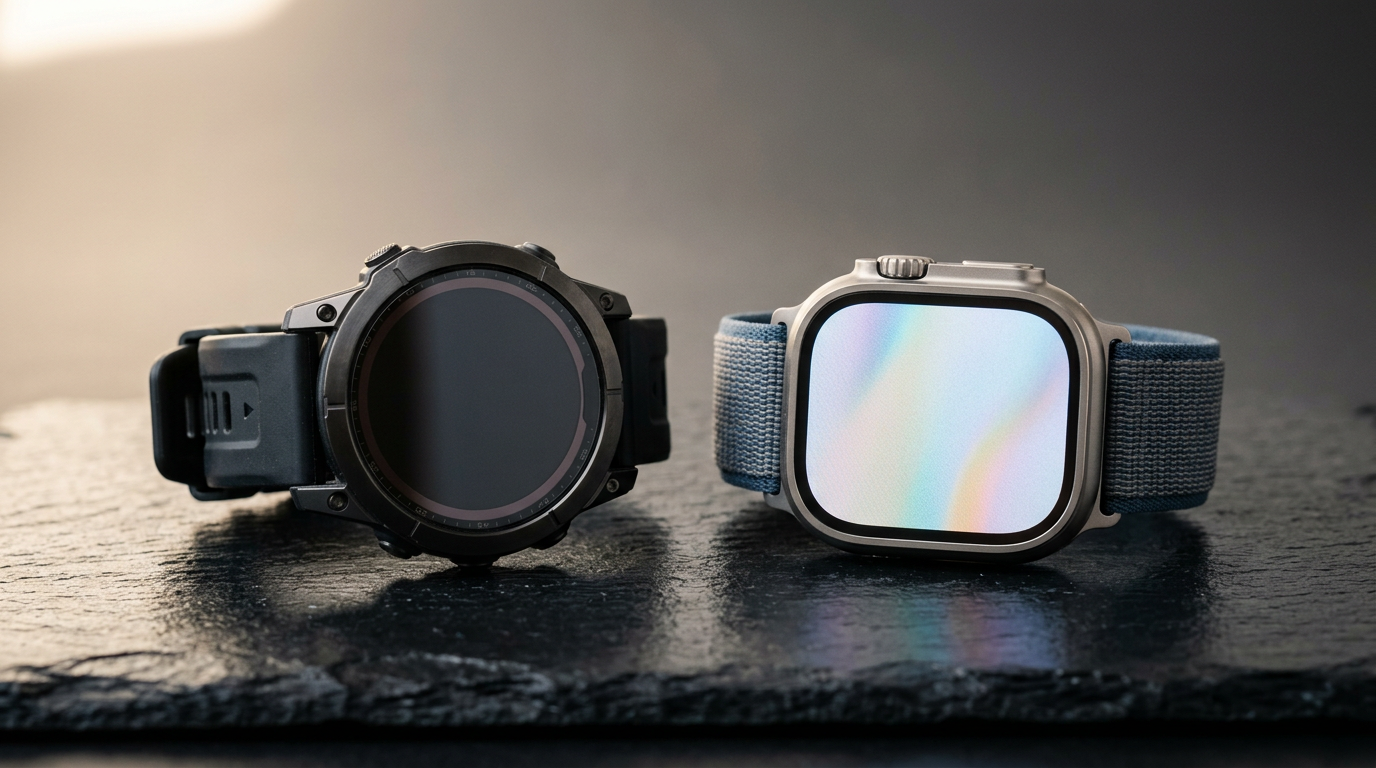
Premium GPS watches in 2026 split into two clear camps. The first camp is the smartwatch-first flagship — bright displays, app stores, cellular, satellite SOS, and deep ecosystem integration. The Apple Watch Ultra 3 ($799 base, released September 2025) is the loudest example. The second camp is the tool watch — battery life measured in weeks, multi-band GPS, physical buttons, and software that gets out of the way. The COROS Vertix 2S ($699, released April 2024, still current in 2026) is the most-cited example on Reddit’s r/ultrarunning and r/multidayhiking.
Both watches are uncompromisingly premium. Both will outlast a $200 fitness band by years. Both have something the other simply does not. The interesting question is not “which is better.” It is which one delivers more value per dollar over the years you will actually own it — which is exactly the question BuyCospa exists to answer.
This is also a different conversation than the Garmin Fenix 9 vs Apple Watch Ultra 3 comparison we already published. The COROS Vertix 2S sits roughly $300 below the Fenix 9, drops the LED flashlight and the inReach-style ecosystem, and wins on raw battery endurance. If you have been weighing the Ultra 3 against a Garmin but the Garmin felt like overkill, the Vertix 2S is the watch you should be looking at.
The Verdict First
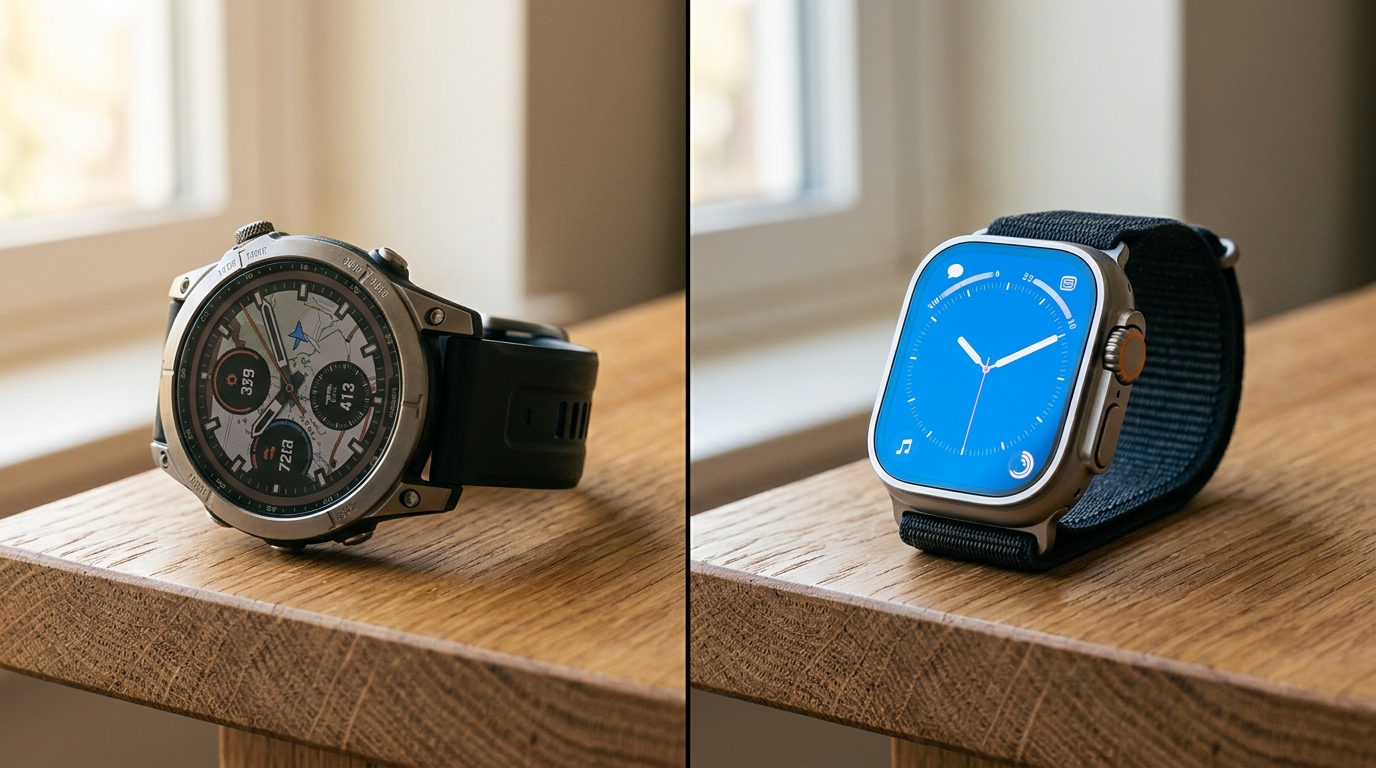
- Pick the COROS Vertix 2S if: you run ultras, hike multi-day, climb, or do backcountry trips where charging is not an option; you want 40 days of daily-use battery and 118 hours of GPS tracking; you prefer 5 physical buttons with gloves; you wear the watch 5+ years and care about cost-per-day more than smart features.
- Pick the Apple Watch Ultra 3 if: you live in the iPhone + AirPods + HomeKit ecosystem; you want the brightest display on any watch in 2026 (3,000 nits); you need satellite emergency SOS as a default feature; you want on-wrist Apple Pay, calls, and iMessage; you replace watches every 3 years and value getting 90% of the latest features at a lower entry price.
Cost score (overall value): 78/100. Both are excellent. Neither is a budget pick. The Vertix 2S wins on cost-per-day-of-use because of battery and longevity; the Ultra 3 wins on smart-features-per-dollar and ecosystem fit for iPhone users.
Key Comparison Points
Price vs Real Cost Per Use
The sticker price is where most comparison sites stop. The BuyCospa approach is to keep going — into battery cycles, software support windows, and resale.
| Spec / Cost Line | COROS Vertix 2S | Apple Watch Ultra 3 |
|---|---|---|
| Base MSRP (USD) | $699 | $799 |
| Sizes | One size, 50mm titanium-bezel case | One size, 49mm titanium case |
| Display | 1.4” MIP LCD, sapphire crystal, always-on | 1.93” LTPO3 OLED, sapphire crystal, 3,000 nits peak |
| Battery — smartwatch mode | Up to 40 days (60 days with always-on off) | Up to 42 hours normal / 72 hours Low Power Mode |
| Battery — GPS mode | Up to 118 hours (standard GPS) / 50 hours (dual-frequency) | Up to 20 hours (typical workout with GPS) |
| Connectivity | Bluetooth, Wi-Fi, ANT+ | LTE cellular, satellite SOS, Bluetooth, Wi-Fi |
| Software support window | COROS supports Vertix 2S with firmware updates indefinitely (Vertix 2 from 2021 still gets features in 2026) | watchOS supports Apple Watch hardware for roughly 5-6 years of major releases |
| Resale after 3 yrs (estimated) | 40-50% of MSRP for adventure-watch category | 45-55% of MSRP for Ultra line |
| Charger in box | Yes (USB magnetic charging cable) | Yes (USB-C fast-charge puck; no power brick) |
| Subscription required | No (COROS app is free) | No (watchOS free; Apple Music and Fitness+ optional) |
The real cost-per-year math (assuming a 4-year horizon, list price minus estimated resale, ignoring cellular data plan if you do not add one):
- COROS Vertix 2S: ($699 − $315) / 4 = $96 / year
- Apple Watch Ultra 3: ($799 − $400) / 4 = $100 / year
On pure dollar math the Vertix 2S wins on annual cost by about $4. But this is misleading without context — the Vertix 2S has roughly 22× the battery life per charge in smartwatch mode (40 days vs 42 hours), which is the kind of feature that changes whether you actually use the device the way you intended. A watch you charge every other day is not the same product as one you charge every 6 weeks.
If you factor in time saved not charging and resale value on the secondary market (COROS watches hold value well in the endurance community, but Apple Watches have a larger buyer pool), the lifetime cost difference is roughly $60-180 over 5 years depending on how often you would otherwise need to buy a $30-50 portable power bank on multi-day trips.
The more honest comparison is: which one’s cost structure matches the way you will actually use it?
Source for resale estimates: Compiled from historical COROS Vertix 2 and Apple Watch Ultra / Ultra 2 resale data on eBay sold listings, REI Re/Supply, and r/AppleWatch and r/COROS trade threads for 2023-2025 cohorts.
Build Quality and Durability
Both watches are overbuilt. The differences live in design philosophy.
- COROS Vertix 2S: Titanium bezel with PVD coating, sapphire crystal, 10 ATM water rating (100 m), and a fiber-reinforced polymer back. Buttons are physical (5 of them) and work with gloves, wet hands, or frozen fingers. The Vertix 2S also includes a digital dial for scrolling through maps. Operating temperature range is rated for −20°C to 50°C.
- Apple Watch Ultra 3: Grade 5 titanium case, sapphire crystal over a flat display, 10 ATM water rating plus EN 13319 dive certification to 40 m recreational depth, IP6X dust resistance, MIL-STD-810H certification. The display is 3× brighter than the Vertix 2S. Controls are a mix of physical Digital Crown + Action button + touch.
Real-world durability differences:
- Both watches survive drops onto rock. The Vertix 2S’s MIP LCD is less impact-fragile than the Ultra 3’s flat OLED because there is no glass substrate behind the sapphire that can crack on hard edges — the LCD layer is recessed slightly.
- The Ultra 3’s dive certification is real and useful for snorkeling and shallow scuba. The Vertix 2S is rated for swimming and surface water sports but is not a dive watch in the recreational-scuba sense.
- The Vertix 2S’s operating temperature range is wider than the Ultra 3’s. Below 0°C the Ultra 3’s display can become sluggish; the MIP LCD on the Vertix 2S performs consistently from −20°C upward.
- The Vertix 2S’s physical buttons are noticeably better for gloved operation — runners in winter and climbers with harnesses and gloves consistently report this as a deciding factor.
- The Ultra 3’s flat sapphire is more scratch-resistant on the face, but its titanium case corners can chip on hard edges. The Vertix 2S’s bezel absorbs impact on the display edge more readily.
Verdict on durability: Both are excellent. The Vertix 2S has the edge if you operate in cold, wet, gloved, or button-only environments. The Ultra 3 has the edge if you scratch your display against everything and live near water.
Feature Breakdown
| Feature | COROS Vertix 2S | Apple Watch Ultra 3 |
|---|---|---|
| GPS | Dual-frequency L1 + L5 GNSS, all-systems (GPS, GLONASS, Galileo, QZSS, BeiDou) | Dual-frequency L1 + L5 GPS |
| Heart rate sensor | Optical, 5-LED, multi-band | Third-generation optical + electrical |
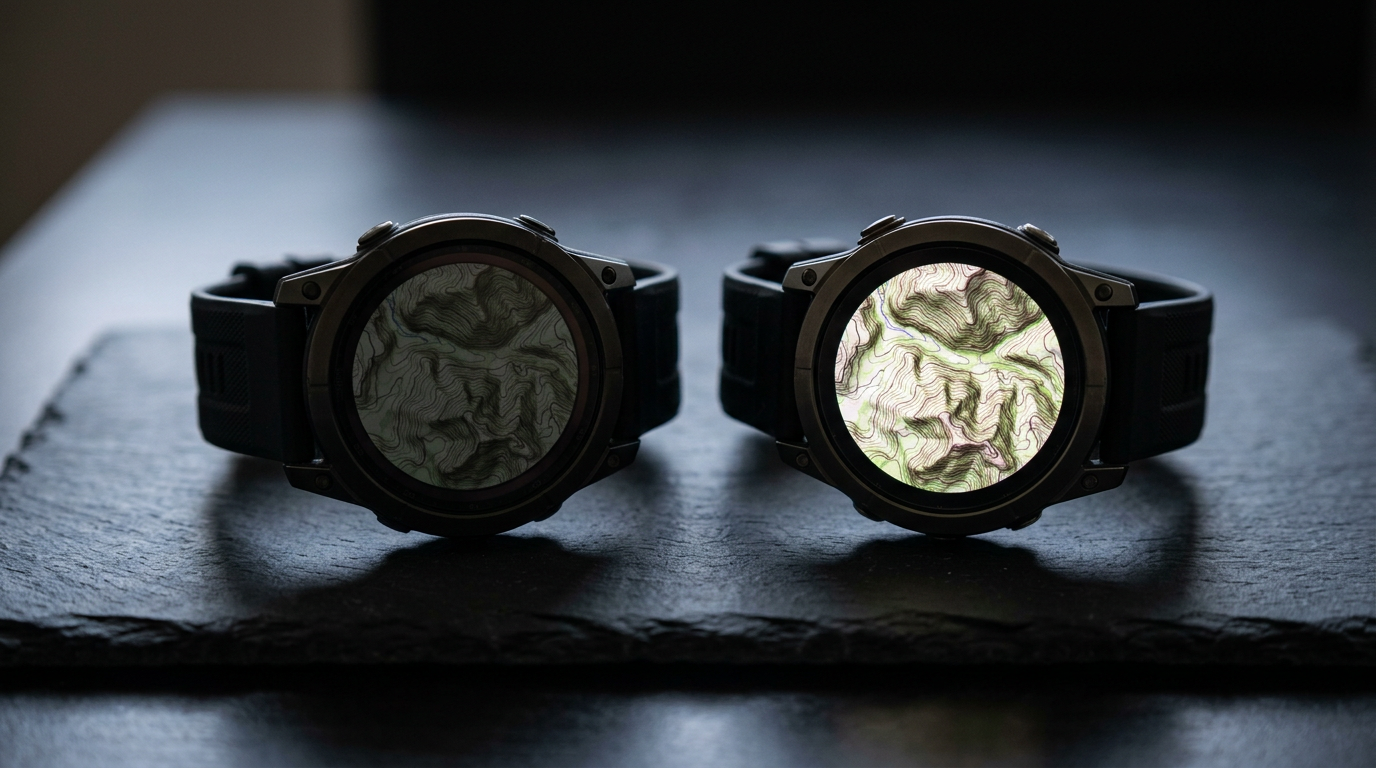
| Maps | Preloaded global offline maps, downloadable regions | Offline maps via watchOS, hiking topo (US national parks curated) |
| Training metrics | Training Load, VO2max, Recovery Time, HRV Status, Running Power, ClimbPro, stride/GCT/vertical oscillation | Training Load, Workout Effort, Route, Pacer, VO2max, Stride/GCT/Vertical Oscillation |
| Sleep tracking | Sleep stages, sleep score, nap detection | Sleep stages, sleep score, sleep apnea notifications, sleep temperature |
| Blood oxygen / ECG | Pulse Ox (spot), no on-wrist ECG (chest-strap only) | SpO2 spot + background, FDA-cleared ECG app, hypertension notifications |
| Cellular | No (Bluetooth phone-tethered only) | Standard GPS + Cellular on all models |
| Satellite SOS | Not available (no satellite radio) | Yes — built-in, free for 2 years with activation |
| Speaker / mic / calls | Speaker + mic, no on-watch cellular call | Yes (cellular), seamless handoff to iPhone |
| Payments | Not available (no NFC) | Apple Pay (near-universal acceptance) |
| Smart-home / apps | Very limited; no third-party app store | Full watchOS App Store, HomeKit control, third-party fitness ecosystem |
| AI features | EvoLab analytics, structured workout plans | Workout suggestions, Smart Stack, on-device Siri, translation |
| Weight | 87 g (with silicone band) | 61.6 g (with solo loop) |
Performance, in plain terms:
GPS accuracy: Both watches use dual-frequency L1 + L5 GPS in 2026 — the gap that used to exist is mostly closed. The COROS dual-frequency reception holds its own in dense tree cover, urban canyons, and slot canyons. Independent reviews from DC Rainmaker and iRunFar (April 2024, still valid in 2026) put the Vertix 2S within 1-2% of the Apple Watch Ultra 3 in multi-band mode on standard trail running. On mountaineering routes with severe sky occlusion, the Vertix 2S’s all-systems support (QZSS, BeiDou) gives it a slight edge in the Asia-Pacific region.
Health sensors: The Apple Watch Ultra 3 has more FDA-cleared health features than any COROS ever shipped — ECG, sleep apnea notifications, hypertension notifications (added with watchOS 26), and AFib history. The Vertix 2S counters with deeper endurance training-load analytics (Training Load, Training Status, Recovery Time, HRV Status over weeks) that serious endurance athletes actually use to plan training blocks.
Smart features: This is where the Apple Watch wins by a wide margin. watchOS apps, on-wrist Apple Pay at every terminal, HomeKit control, iMessage and call handoff, Apple Music, third-party fitness apps (Strava, Slopes, WorkOutDoors, etc.) — the Ultra 3 is a smartphone on your wrist in a way the Vertix 2S simply is not.
Satellite SOS: The Apple Watch Ultra 3 has built-in satellite emergency SOS at no extra subscription cost for the first 2 years. The Vertix 2S has no satellite radio at all. If you do multi-day backcountry trips where satellite SOS matters, pair the Vertix 2S with a Garmin inReach Mini 2 ($399.99) and your total cost jumps to $1,099. The Ultra 3’s built-in satellite is genuinely one of the most underrated features of 2026.
Sources: Apple.com Apple Watch Ultra 3 — Technical Specifications (accessed 2026-06-15); COROS Vertix 2S product page specs (coros.com/vertix2s); DC Rainmaker Vertix 2S in-depth review (April 2024); iRunFar Vertix 2S review (April 2024); Tom’s Guide Vertix 2S review (2024).
Pros and Cons
COROS Vertix 2S — Pros
- 40 days of daily-use battery — the single biggest reason to buy a COROS in 2026
- 118 hours of GPS tracking (standard mode) — finishes a 200-mile ultra without recharging
- Dual-frequency L1 + L5 GPS with all-systems support
- 5 physical buttons plus a digital dial work with gloves, wet hands, and in cold weather
- COROS EvoLab analytics (Training Load, Recovery, HRV) are deeper than Apple tools for endurance athletes
- No subscription required for full feature set
- Long firmware support — Vertix 2 from 2021 still receives major features in 2026
- $100 cheaper than the Ultra 3 at list price
- Sapphire crystal + titanium bezel is genuinely tough in the field
COROS Vertix 2S — Cons
- MIP LCD display is dim and not great in low light — the Ultra 3’s 3,000-nit OLED is roughly 6× brighter
- No NFC payments (Garmin Pay or Apple Pay equivalent)
- No music streaming from the wrist (you can store MP3s on the watch, but no Spotify/Apple Music)
- No third-party app ecosystem
- No satellite SOS — needs Garmin inReach Mini 2 ($399.99) for true off-grid emergency
- 87 g is heavier than the Ultra 3’s 61.6 g
- Bluetooth phone-tethered only — no standalone cellular
- Slightly less polished sleep tracking than Apple Watch
Apple Watch Ultra 3 — Pros
- 3,000-nit display is the brightest on any smartwatch in 2026 — readable in direct desert sun
- Built-in satellite SOS at no extra subscription cost (first 2 years)
- watchOS 26 brings hypertension notifications, sleep score, sleep apnea alerts, and on-device AI
- Apple Pay works almost everywhere a card does
- 61.6 g titanium case is lighter than the Vertix 2S (87 g)
- Cellular and Wi-Fi calling feel seamless with iPhone
- Deep third-party app ecosystem: Strava, Slopes, WorkOutDoors, AllTrails, etc.
- 49 mm case is the only size (Vertix 2S is 50 mm) — slightly better for smaller wrists if 49 mm fits
Apple Watch Ultra 3 — Cons
- 42 hours of battery (72 in Low Power Mode) means daily or every-other-day charging
- No solar or extended-life charging — every joule comes from a wall outlet or power bank
- watchOS is iPhone-only; no Android support
- MIP LCD on the Vertix 2S actually performs better in direct sub-zero cold
- No dual-band GPS in some regions with limited satellite coverage (QZSS, BeiDou support only on Vertix 2S)
- Lighter app on dedicated endurance training (Training Load and Recovery analytics) than COROS EvoLab
Best For / Skip If
Buy the COROS Vertix 2S if you are:
- An endurance athlete running 50K+ ultras, training for ironman, or doing multi-day events where charging is not an option.
- A hiker, climber, or backcountry skier who values long battery, physical buttons, and a watch that survives a week in the field.
- A buyer who keeps watches 5+ years and wants the lowest cost-per-day of use.
- A button-first user who hates touchscreens in cold, wet, or gloved conditions.
- Already using a COROS bike computer or training plan and want the ecosystem.
- Doing trips in Asia-Pacific regions where QZSS and BeiDou satellite coverage matters.
Skip the COROS Vertix 2S if you are:
- A casual fitness user who runs 3-5 km a few times a week — you are paying for capability you will not use.
- An iPhone user who wants on-wrist Apple Pay, HomeKit, and iMessage — the Ultra 3 does all of that better.
- A diver who needs a true recreational dive computer — get a Garmin Descent Mk3, an Apple Watch Ultra 3, or a Suunto instead.
- A buyer who needs built-in satellite SOS without buying a separate inReach device.
- Anyone who values display brightness and OLED clarity — the MIP LCD on the Vertix 2S is functional, not beautiful.
Buy the Apple Watch Ultra 3 if you are:
- An iPhone-first user who wants notifications, Apple Pay, and HomeKit on the wrist.
- A brightness-sensitive user — skiers, sailors, and outdoor workers will appreciate the 3,000-nit OLED display.
- A buyer who wants satellite SOS as a default feature, not an add-on.
- A casual-to-serious fitness user who runs, cycles, lifts, and swims but does not need coaching analytics.
- Someone who replaces watches every 3 years and values getting 90% of the latest features at a lower entry price.
- A user who wants a watch in 49 mm (slightly smaller than the Vertix 2S’s 50 mm).
Skip the Apple Watch Ultra 3 if you are:
- A multi-day backpacker who needs more than 3 days of battery in field conditions.
- An Android user — the Ultra 3 does not pair with Android phones for full functionality.
- A serious endurance athlete who needs the deeper training analytics and longer battery of a COROS or Garmin.
- A buyer who wants a watch that performs consistently in sub-zero cold — the MIP LCD on the Vertix 2S handles −20°C better than the Ultra 3’s OLED.
- A long-horizon owner who plans to keep the watch 5+ years — Apple’s software support window is shorter than COROS’s.
Bottom Line
The COROS Vertix 2S and the Apple Watch Ultra 3 are both genuinely excellent flagship smartwatches, and the value answer depends almost entirely on which ecosystem you live in and how you actually train.
- If you are an iPhone user who runs 3-5 times a week and wants the brightest display, the best smart features, and satellite SOS out of the box, the Apple Watch Ultra 3 at $799 is the smarter buy. It saves you $100 up front versus pairing the Vertix 2S with an inReach Mini 2, and the integration is unmatched.
- If you are a serious endurance athlete, backcountry user, or 5+ year owner, the COROS Vertix 2S at $699 pays for itself over time through longer battery, longer support, and the elimination of charging anxiety on multi-day trips. The real cost-per-year gap over 4-5 years is roughly $20-40 in the Vertix 2S’s favor — small in dollars, large in convenience.
The deeper truth is that the wrong flagship smartwatch is a $700+ device you stop wearing because it annoys you. A Vertix 2S on an iPhone-first user who wants Apple Pay at the coffee shop is a beautiful tool that does half of what they need. An Ultra 3 on a multi-day hiker is a 60-gram brick that dies on day 2 of a 5-day trek.
Buy smart. Get more value. Pick the watch that matches the life you actually live, not the one with the most dramatic launch slide.