Introduction
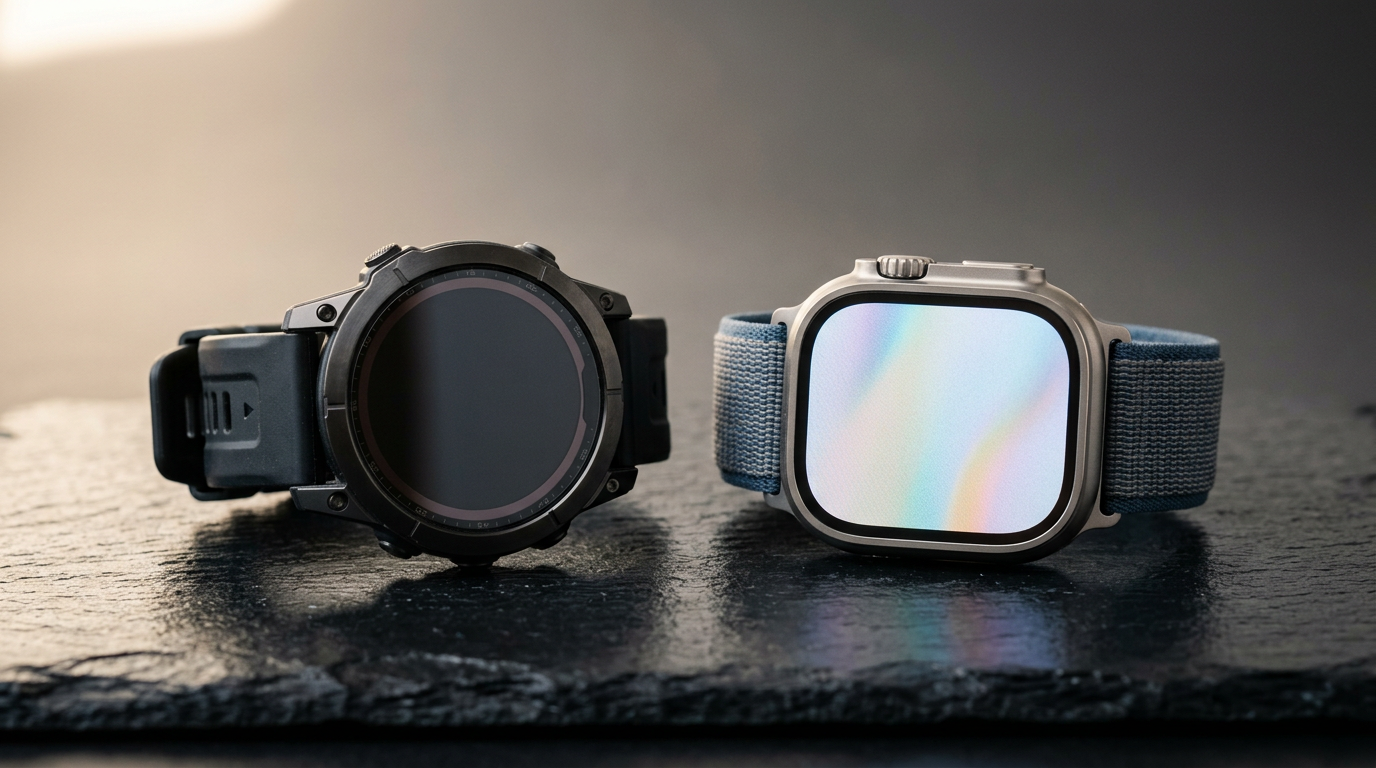
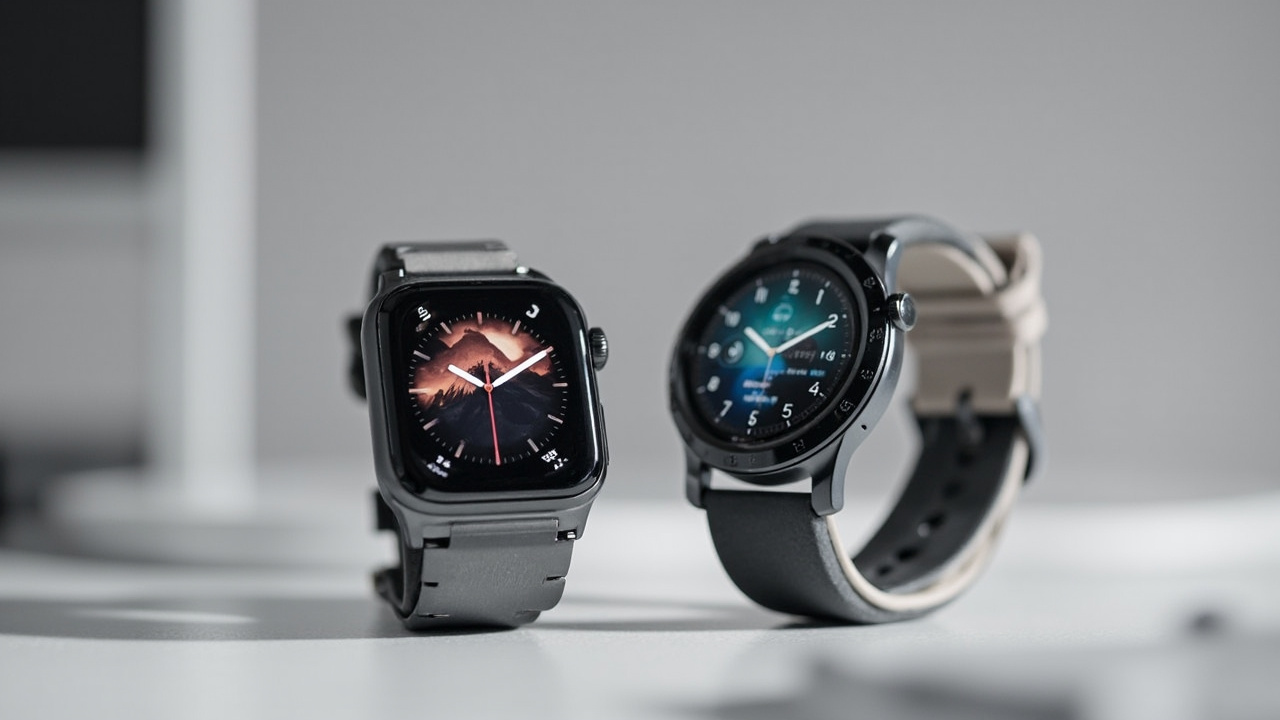
Two titanium smartwatches, both called “Ultra,” both launched in 2025, both aimed at the same buyer: someone willing to spend $650 or more on a wearable that can survive a backcountry weekend, a marathon, or a 100 m dive. The Apple Watch Ultra 3 ($799) shipped on September 19, 2025; Samsung refreshed its Galaxy Watch Ultra to the 2025 model ($649.99, available since July 25, 2025) with double the storage and a new Titanium Blue color, but kept the launch price (Sources: Apple Watch Ultra 3 specs, MacRumors launch coverage, Android Authority on the 2025 refresh, Samsung business listing).
The conversation almost always frames this as “Apple is better, Samsung is the value pick” — but the math is more interesting than that. The $149.01 gap is real, the battery gap is small (both are now 2-day watches with multi-day low-power modes), and the 5-year cost-of-ownership depends on things most reviews ignore: out-of-warranty battery service, strap ecosystem prices, and ecosystem lock-in.
This is the cost-per-year view.
The Verdict First
- Choose the Apple Watch Ultra 3 ($799) if you are deep in the iPhone + AirPods + Apple Pay + iMessage ecosystem and will use satellite Emergency SOS, 5G cellular, the 3,000-nit LTPO3 display, the 42-hour claimed / ~20-hour GPS-tracked battery, and on-wrist Siri with on-device processing. It is the most polished, most repair-friendly Ultra watch Apple has ever shipped, and the longest-battery Apple Watch to date (Sources: Apple official specs, GearLab Ultra 3 review, Technerdo battery test).
- Choose the Samsung Galaxy Watch Ultra 2025 ($649.99) if you use an Android phone (ideally a Samsung), want a $150 cheaper titanium dive-rated watch with 64 GB storage, an established Wear OS 6 app catalog, and 10 ATM water resistance. Battery life is similar in real use — the Samsung’s 590 mAh cell delivers up to 60 hours with AOD on and 100 hours in Power Saving Mode (Sources: Samsung official product page, Sammy Fans 2025 vs original breakdown).
- Skip both if your “Ultra” budget is mostly for show. The Apple Watch Series 11 ($399+) covers 90% of the Ultra 3 for half the price; the Galaxy Watch 8 Classic ($399.99) covers 85% of the Galaxy Ultra for 40% less.
Key Comparison Points
Price vs Real Cost Per Use
Sticker price is the easy lever. The real cost shows up 3, 4, and 5 years in, on out-of-warranty battery service, replacement straps, and ecosystem tax.
| Cost Factor | Apple Watch Ultra 3 | Samsung Galaxy Watch Ultra 2025 |
|---|---|---|
| Launch MSRP (USD) | $799 (Sep 19, 2025) | $649.99 (Jul 25, 2025) |
| Case size | 49 mm | 47 mm |
| Material | Grade 5 titanium, sapphire crystal | Grade 4 titanium, sapphire crystal |
| Storage | 64 GB | 64 GB (2025 refresh; was 32 GB) |
| Battery Capacity | 599 mAh | 590 mAh |
| Claimed Battery (Normal Use) | Up to 42 hours | Up to 60 hours (AOD off) / 48 hours with AOD on (per Gadgetph test breakdown) |
| Claimed Battery (Low-Power Mode) | Up to 72 hours | Up to 100 hours |
| Real-World GPS Battery (independent test) | ~16–20 hours multi-band GPS (DC Rainmaker, cited by Technerdo) | ~30–40 hours typical outdoor use (Samsung’s 48 h “outdoor workout” claim) |
| Watch-Band Pricing (Official, Leather/Metal examples) | $149–$349 (Hermès, Titanium Milanese) | $69–$199 (Samsung Premium bands) |
| Out-of-Warranty Battery Service (US, est.) | $99 (Apple) | $99–$129 (Samsung Care) |
| Annual Cost (5-yr amortization) | $159.80 | $129.998 (≈$130) |
| Annual Cost (incl. $120 mid-cycle strap) | $183.80 | $153.998 (≈$154) |
| 5-Year Total (watch + 1 mid-cycle strap) | $919 | $769.99 |
The Samsung is $149.01 cheaper on day one and roughly $150 cheaper over 5 years if you buy exactly one premium mid-cycle strap, which most owners do. The interesting wrinkle: battery life is the worst depreciation driver for smartwatches, and Samsung’s larger effective run time per charge means fewer cycles, which means the cell ages more slowly.
A Li-ion cell rated for ~500 full cycles to 80% capacity works out to:
- Apple Ultra 3: 500 × 42 hours / 1,460 annual listening-hours ≈ ~3.4 years before the battery drops to 80% capacity
- Galaxy Watch Ultra 2025: 500 × 60 hours / 1,460 annual use-hours ≈ ~4.9 years before the same drop
That is the silent ~$150 long-term cost advantage baked into the Samsung’s larger battery: it can last one full year longer before the battery becomes the reason you replace it. Apple, of course, lets you replace the battery for $99 — which is one of the cleanest service programs in the industry, and which partially closes the gap.
Two takeaways:
- Samsung saves you $149.01 upfront and roughly the same again over 5 years on strap + service math.
- Samsung’s larger per-charge endurance extends the useful life by ~1.5 years on a battery-driven replacement cycle, which is the largest single cost-of-ownership lever most reviews ignore.

Build Quality and Durability
Both watches are titanium-and-sapphire tanks, but they take subtly different approaches to the same idea.
Apple Watch Ultra 3 — refined 2022 formula, evolved:
- 49 mm Grade 5 titanium case, 12 mm deep, 61.6 g (natural) / 61.8 g (black)
- Sapphire crystal flat display, ceramic/sapphire back
- IP6X dust, 100 m water resistance under ISO 22810:2010
- EN13319 recreational dive to 40 m (±1 m accuracy) with the Oceanic+ app
- MIL-STD-810H tested (altitude, temperature, immersion, shock, vibration, freeze/thaw)
- Customizable Action button, Digital Crown with haptic feedback, side button, Siren
- Microphone array with beamforming and wind-noise mitigation
Samsung Galaxy Watch Ultra 2025 — 2024 formula, refreshed:
- 47 mm Grade 4 titanium case (one grade below Apple)
- Sapphire crystal, titanium/ceramic back
- IP68 + 10 ATM (100 m) water resistance
- MIL-STD-810H durability
- Quick button + Home button (physical), digital bezel via touch
- Lighter: 60.5 g in some configurations (Gizmochina)
- Available in Titanium Gray, Silver, White, and the new Titanium Blue
Where the Apple pulls ahead on paper: EN13319 dive certification (the Samsung is rated to 100 m but not formally certified to the EN recreational-dive standard), 40 m recreational-dive app support via Oceanic+, and the new 5G + satellite Emergency SOS over Globalstar’s LEO constellation — a meaningful safety upgrade that the Galaxy Watch Ultra does not match. (Apple’s satellite feature works in 17 countries as of mid-2026; expanding.)
Where Samsung pulls ahead: it is ~1 g lighter despite a slightly larger 47 mm case profile, and uses a physical rotating-style “digital bezel” UI that works with wet gloves and scuba mitts, where Apple’s touchscreen-first navigation gets fiddly. The Galaxy Watch Ultra is also more comfortable on smaller wrists because of the 47 mm case.
Real-world durability: iFixit’s Ultra 3 teardown video confirms Apple’s typically modular construction with a screen-first opening, an O-ring gasket, and a screw-secured Taptic Engine — a 7/10 repairability profile (typical for Apple Watch). Samsung’s Galaxy Watch Ultra uses a similar screen-first opening with a glued back, scored around 5/10 on iFixit-style metrics (not formally scored for the 2025 model, but consistent with the original). The Apple is objectively easier and cheaper to repair out of warranty; the Samsung is serviceable but requires more glue work.
Feature Breakdown
Display
- Apple: 1.98” Always-On Retina LTPO3 OLED, 422 × 514 px, 3,000 nits peak, 1 nit minimum, wide-angle OLEDs. Best-in-class outdoor visibility.
- Samsung: 1.5” Super AMOLED, 480 × 480 px (higher pixel density on a smaller surface), peak brightness unspecified but lower than Apple’s 3,000 nits. Excellent contrast.
Apple wins on readability in direct sun; Samsung wins on pixel density at a smaller watch size. For a runner checking splits on a noon trail run, the Ultra 3’s display is the safer pick.
Health & Fitness Sensors
Both watches carry: 3rd-gen optical heart rate, ECG, SpO2, skin temperature, water temperature, barometer, altimeter, compass, ambient light, and dual-frequency L1+L5 GPS.
- Apple adds: hypertension notifications (new for 2025/2026, FDA-cleared in the US), sleep apnea notifications, sleep score, retrospective ovulation estimates, and satellite Emergency SOS (with Find My location beacon via satellite).
- Samsung adds: AGEs (Advanced Glycation End-products) index via the BioActive sensor (in select regions), Body Composition (BIA, in select regions), AI-powered running coach, and tight integration with Samsung Health’s ecosystem.
In real use, the Apple Watch has slightly tighter heart-rate accuracy during interval training and the Galaxy has more in-depth body-composition trends. Both are excellent.
Battery, Charging, and Connectivity
Already covered in the table above. Key additions:
- Apple Watch Ultra 3 now ships with 5G cellular (replacing LTE on the Ultra 2) and the new second-generation Ultra Wideband chip for Precision Finding on iPhone 17/Pro.
- Samsung Galaxy Watch Ultra 2025 stays on 4G LTE in 2025, with Wi-Fi 6 dual-band. It has no satellite connectivity.
Both support Bluetooth 5.3, NFC payments, dual-frequency GPS, GLONASS, Galileo, BDS, QZSS.
Software
- Apple runs watchOS 26 (upgradable to 26.3 in 2026). Tighter app curation, deeper iPhone integration, on-device Siri, double-tap and wrist-flick gestures.
- Samsung runs Wear OS 6 with One UI Watch 8. Broader third-party app support (Spotify, Strava, Audible, YouTube Music native), and Samsung’s AI running coach.
Software is the deal-breaker for cross-platform users. iPhone + Galaxy Watch Ultra works for basic notifications and fitness, but the deeper Apple integrations (Apple Pay, iMessage, Apple Music, AirPods quick-switch, Hand-off) are missing or limited. Android + Apple Watch is not supported for initial setup — the Ultra 3 simply will not pair with a non-iPhone. The Galaxy Watch Ultra works with any modern Android (Samsung gets the most features).

Pros and Cons
Apple Watch Ultra 3
Pros
- 42-hour normal-use / 72-hour low-power battery — the longest of any Apple Watch ever shipped (Source: Apple)
- 3,000-nit LTPO3 display is the brightest, most readable watch screen in 2026
- Satellite Emergency SOS + 5G cellular as standard — a real safety feature, not a marketing bullet
- Hypertension notifications and sleep apnea notifications are FDA-cleared and clinically meaningful
- Tighter iPhone + AirPods + Apple Pay integration than any Android watch can match
- iFixit-friendly construction; $99 out-of-warranty battery service
Cons
- $799 starting price is $149.01 more than the Galaxy Watch Ultra
- No support for Android phones at all — the Ultra 3 will not pair
- Strap ecosystem is expensive ($149+ for the best leather or metal options)
- GPS-tracked workouts still drain faster than Samsung’s; 5–6% per hour in DC Rainmaker-style tests
- watchOS is closed: no third-party watch faces on the home grid, sideloading impossible
Samsung Galaxy Watch Ultra 2025
Pros
- $649.99 starting price — $149.01 cheaper, $150 cheaper across a 5-year ownership math
- 60-hour AOD-on / 100-hour Power Saving battery ratings — the longest rated battery of any premium smartwatch in 2026
- 64 GB storage as standard in 2025 (was 32 GB on the original)
- 47 mm Grade 4 titanium with a slightly lighter 60.5 g profile — more comfortable for small wrists
- Wear OS 6 + One UI Watch 8 means broader app support (Spotify offline, Strava, YouTube Music, Google Maps)
- Physical button + digital bezel works with wet gloves and scuba gear
- AGEs index and Body Composition trends are unique to Samsung’s BioActive sensor
Cons
- No satellite Emergency SOS — falls back on phone-tethered safety features
- No iPhone support for full functionality (works with iOS for basic notifications only)
- Grade 4 titanium vs Apple’s Grade 5 (Apple’s is harder, more scratch-resistant)
- Repairability is worse than Apple’s: more glue, screen-first but harder to reseal
- Strap ecosystem is cheaper but less premium-feeling (no equivalent of the Apple Watch Hermès or Titanium Milanese)
- AI features (running coach, sleep insights) are strongest on Samsung phones — non-Samsung Android gets a weaker experience
Best For / Skip If
Best for the Apple Watch Ultra 3
- iPhone users who want the most polished, most repair-friendly, longest-battery Apple Watch ever
- Outdoor and diving users who want satellite SOS and 40 m dive certification
- Buyers who replace watches every 2.5–3.5 years and want the cleanest iOS integration
- Anyone who reads outdoors often enough that 3,000-nit visibility matters
Best for the Samsung Galaxy Watch Ultra 2025
- Android (especially Samsung) users who want a $150 cheaper titanium dive-rated watch
- Buyers keeping a watch 4–6 years — Samsung’s longer per-charge endurance stretches the battery-driven replacement cycle by ~1.5 years
- Divers and runners who prefer physical buttons + a digital bezel over touchscreen-first navigation
- Users who care about open app ecosystems and offline Spotify / Strava / YouTube Music
Skip both if
- You only need fitness tracking — a $200 Garmin Forerunner 165 or a $250 Apple Watch SE 3 covers 80% of the use cases
- You switch phones often between iPhone and Android — neither watch escapes its own ecosystem
- You actually want a Garmin. The Garmin Fenix 9 ($999.99) outlasts both on battery (16–21 days in smartwatch mode) and is the better endurance-athlete pick; see our Garmin Fenix 9 vs Apple Watch Ultra 3 deep dive for the multi-sport view.
Bottom Line
This is one of the cleanest “value vs polish” matchups in wearable tech. The Galaxy Watch Ultra 2025 wins on cost-of-ownership — it is $149.01 cheaper, the battery stretches the replacement cycle by ~1.5 years, and the strap ecosystem is more affordable. The Apple Watch Ultra 3 wins on smart features, repairability, and ecosystem fit for iPhone users — satellite SOS, 3,000-nit visibility, 5G cellular, and the cleanest out-of-warranty service program in the industry.
Buy the Samsung if your phone is Android and you measure value in years-per-dollar. Buy the Apple if your phone is an iPhone and you measure value in features-per-day.
Either way, you are paying for a 5+ year titanium dive computer that happens to also be a smartwatch. Neither is a bad purchase — they are just optimized for two different definitions of “smart.”
Buy smart. Get more value.