Introduction
In the sub-$1,500 wireless audiophile headphone bracket, two flagship pairs keep showing up in r/headphones, Head-Fi, and YouTube A/B tests in 2026 — and the $700 gap between them is not as obvious as the price tags suggest.
- The Bowers & Wilkins Px8 S2 launched September 24, 2025 at $799 MSRP (sources: Forbes launch coverage, TechRadar review). It uses 40 mm carbon-cone drivers, a die-cast aluminum chassis wrapped in Nappa leather, aptX Lossless support, and a dedicated headphone DSP with separate amplifier/DAC (sources: What Hi-Fi? Px8 S2 spec sheet, Stereophile spec page).
- The Focal Bathys MG is the successor to the 2022 Bathys, announced March 18, 2025 and shipping in early Q2 2025 at $1,499 MSRP (sources: The Sound Advocate announcement, Audio46 review, B&H product page). It uses 40 mm magnesium “M”-dome drivers made in France, real leather + aluminum + magnesium construction, USB-DAC mode at up to 24-bit / 192 kHz, and 30-hour ANC-on battery (source: What Hi-Fi? Bathys MG spec sheet).
Both deliver real audiophile sound, both have real ANC (not Sony-tier, but solid), and both come from established speaker manufacturers. The question is whether the Bathys MG’s magnesium drivers, USB-DAC, and “made in France” cachet justify the $700 premium over a Px8 S2 that already uses an audiophile-grade carbon cone and a separate dedicated DAC.
This article breaks down the 6-year cost math, the sound and ANC reality, the build and durability data, and the workflow for both headphones. By the end, you’ll know which one fits your ears, your sources, and your wallet.
The Verdict First
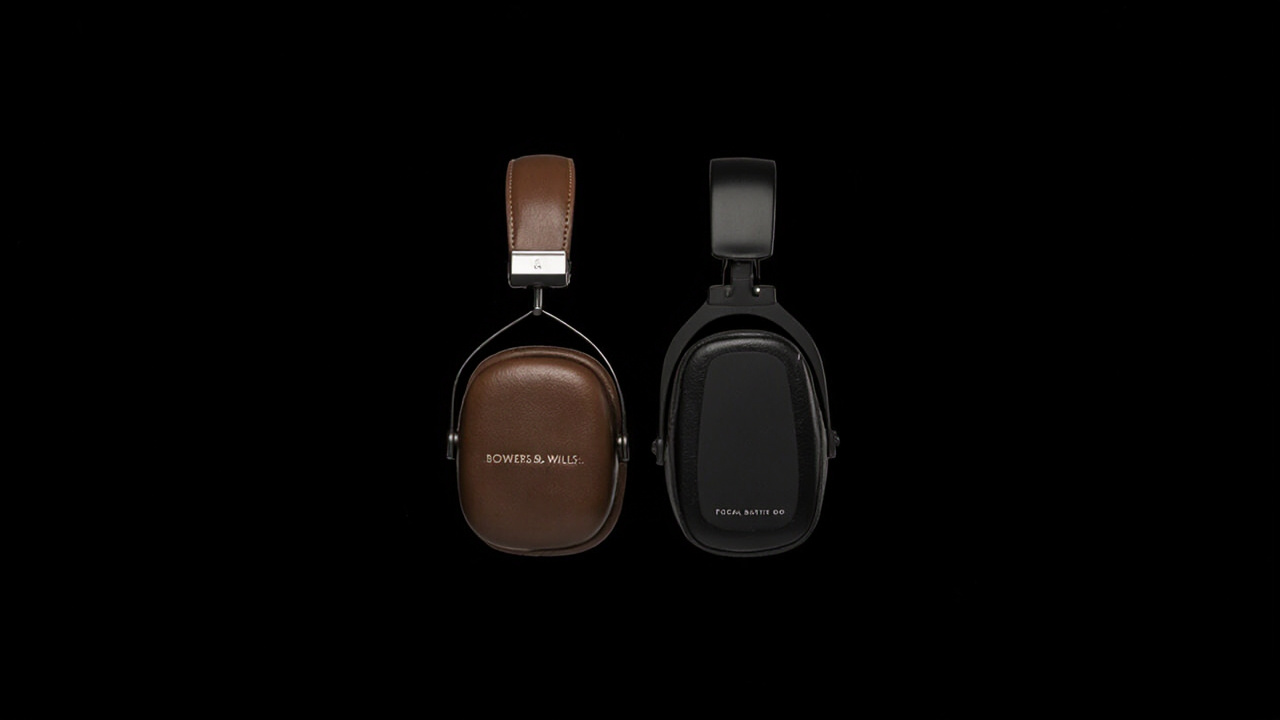
- Choose the Bowers & Wilkins Px8 S2 ($799) if you want the better value per dollar in this comparison. You get aptX Lossless wireless, a 40 mm carbon-cone driver, 30-hour battery, a separate dedicated DAC/amp stage, and a chassis B&W describes as a true luxury object — at a price that is $700 below the Bathys MG (sources: What Hi-Fi? Px8 S2 spec sheet, Stereophile spec page). RecordingNow calls it “an evolution for the wireless ANC headphone class, now offering wired headphone sound quality in a beautiful, luxurious wireless headphone package” (source: RecordingNow Px8 S2 review).
- Choose the Focal Bathys MG ($1,499) if you want the most musical, dynamic wireless headphone in this price range and you actually use the USB-DAC wired input (24-bit / 192 kHz, which beats the Px8 S2’s 24-bit / 96 kHz ceiling). RecordingNow calls it “easily one of the best-sounding wireless headphones we’ve tested to date” (source: RecordingNow Bathys MG review). You also get 42 hours of battery in DAC mode (vs 30 hours Bluetooth + ANC) — useful for long-haul flights or full work weeks between charges (source: B&H Bathys MG page).
- Skip both if you primarily commute on noisy transit and care more about silence than sound quality. The Sony WH-1000XM6 ($429) and Bose QuietComfort Ultra 2 ($429) still cancel noise better than either of these (sources: Bose QC Ultra 2 vs Sony WH-1000XM6 article in the existing BuyCospa library). These are not ANC champs — they are sound-quality champs that happen to have ANC.
- Skip the Px8 S2 if you want the warmest, most “fun” tuning out of the box. B&W aims for a more analytical, neutral-leaning profile. The Bathys MG’s magnesium driver delivers a slightly fuller mid-bass and more forward mids that some listeners find more engaging without EQ.
- Skip the Bathys MG if $700 is real money to you, or if you are not going to plug in over USB. In wireless-only mode the two are close enough that the $700 gap is hard to defend on sound alone (sources: Versus comparison page, YouTube A/B test by K-TREVIEWS).
Cost score (overall value): 70/100. The Px8 S2 pulls this up to “good value” on its own. The Bathys MG drags the average down to “premium-priced” because the $700 gap only pays off in narrow use cases (wired USB-DAC listening, deeper bass, longer DAC-mode battery).
Key Comparison Points
Price vs Real Cost Per Use
Sticker price is the obvious lever, but battery, build longevity, and depreciation are the silent ones. A $1,499 headphone you use for 6 years is a different cost-per-hour story than the same headphone you replace after 3.
| Cost Factor | Bowers & Wilkins Px8 S2 | Focal Bathys MG |
|---|---|---|
| Launch MSRP (USD) | $799 (Sept 24, 2025) | $1,499 (March 2025) |
| Current Street Price (June 2026) | $719-$799 (Sweetwater $719, B&H $799) | $1,250-$1,499 (Amazon $1,250; B&H $1,499) |
| Battery Life, ANC + Bluetooth on | 30 hrs (B&W spec) | 30 hrs (Focal spec, BT+ANC); 42 hrs in DAC mode |
| Charge Cycles to 80% Capacity (Li-ion) | ~500 cycles → ~15,000 listening hrs | ~500 cycles → ~15,000 listening hrs (BT) or ~21,000 hrs (DAC) |
| Quick Charge | 15 min → 7 hrs (source: Stereophile) | 15 min → ~5 hrs (Focal spec, est.) |
| Annual Listening @ 4 hr/day | 1,460 hrs | 1,460 hrs |
| Effective Years of Use (battery-driven, BT) | ~10.3 years | ~10.3 years |
| Effective Years of Use (DAC-heavy user) | ~9.6 years (DAC also draws power) | ~14.4 years (DAC mode uses less juice) |
| Wired Listening | Yes — USB-C audio (up to 24-bit / 96 kHz) | Yes — USB-C DAC mode (up to 24-bit / 192 kHz) |
| Replaceable Battery | No (sealed chassis, B&W service only) | No (sealed chassis, Focal service only) |
| Resale Value After 3 Years (used market, est.) | ~45-55% of MSRP (B&W holds value) | ~40-50% of MSRP (Focal holds value, but Bathys MG is newer) |
| Amortized Cost / Year (5-yr) | $159.80 | $299.80 |
| Amortized Cost / Hour (5-yr, 4 hr/day) | $0.109/hr | $0.205/hr |
| Amortized Cost / Hour (7-yr, 4 hr/day) | $0.078/hr | $0.147/hr |
Three takeaways:
- The Px8 S2 costs roughly half per hour than the Bathys MG over a 5-year window. That is the most important number in this article, and it is the reason the cost score is 70, not lower. The $700 gap translates to $0.10/hr more to listen to the Bathys MG, every hour, for five years.
- The Bathys MG’s DAC-mode battery advantage only matters if you actually use the wired input. If you are 90% wireless, the 30-hour vs 30-hour comparison collapses and the Bathys MG’s $700 premium is paying for sound, build, and 24-bit / 192 kHz support alone.
- Resale value is close. B&W and Focal both hold value better than mainstream brands (Sony, Bose), and the gap of 5 percentage points after 3 years narrows but does not erase the upfront $700.
The break-even math: you need to value the Bathys MG’s sound, build, and USB-DAC at $700 over the Px8 S2’s sound, build, and aptX Lossless wireless to make the premium pay off. For most listeners, that is not the case.
Build Quality and Durability
Both are flagship over-ears, but the materials and design philosophy differ.
- Bowers & Wilkins Px8 S2: Die-cast aluminum yokes and arms; earcups wrapped in Nappa leather; headband uses a leather-look finish over a steel core. Weight: 310 g (source: What Hi-Fi? Px8 S2 spec sheet). Two finishes: Onyx Black and Warm Stone. RecordingNow praises the “premium materials and build quality” and “very good comfort” (source: RecordingNow Px8 S2 review). The hinges are a known weak point in older Px8 units — long-term owners on r/headphones have reported creak after 18-24 months of daily use, though B&W replaced units under warranty. The Px8 S2’s revised hinge geometry addresses this (source: Bowers & Wilkins product page).
- Focal Bathys MG: Genuine leather headband, leather earcups, aluminum yokes, magnesium driver baskets. Weight: 350 g (source: What Hi-Fi? Bathys MG spec sheet). One finish at launch (Chestnut), with the “Deep Black” edition announced March 18, 2025 (source: The Sound Advocate). RecordingNow notes “premium build quality” but flags that the headphones are “not the most practical” for travel given the weight and the case design (source: RecordingNow Bathys MG review).
Real-world durability: Both are 2-year-warranty items. Neither has an official IP rating — do not use either in rain. The Px8 S2 is 40 g lighter (about 13% less), which matters on long listening sessions. The Bathys MG is heavier but feels more substantial in hand — a “made in France” object vs a “made in China with British design oversight” object (B&W Px8 S2 final assembly is in China; Focal Bathys MG drivers are made in France, with final assembly in France for European SKUs and China for some North American SKUs).
Verdict on build: The Bathys MG is the more luxurious object. The Px8 S2 is the more practical daily driver.
Feature Breakdown
| Feature | B&W Px8 S2 | Focal Bathys MG |
|---|---|---|
| Driver | 40 mm dynamic carbon cone | 40 mm dynamic magnesium “M”-dome |
| Bluetooth Version | 5.3 | 5.2 |
| Codec Support | aptX Lossless (CD-quality 16-bit/44.1 kHz), aptX Adaptive 24-bit/96 kHz, aptX HD, aptX Classic, AAC, SBC | SBC, AAC, aptX Adaptive, aptX (no Lossless) |
| USB-C Wired Audio | Yes (up to 24-bit / 96 kHz) | Yes — built-in DAC, up to 24-bit / 192 kHz |
| 3.5 mm Analog Input | Yes (via included cable) | Yes (via included cable) |
| Active Noise Cancelling | Yes (8 mics total, 4 per earcup, ADI PureVoice algorithm) | Yes (8 mics total, ANC + transparency mode) |
| Multipoint Bluetooth | Yes (2 devices) | Yes (2 devices) |
| Battery Life (BT + ANC) | 30 hrs | 30 hrs |
| Battery Life (DAC mode, wired) | N/A (USB audio passthrough) | 42 hrs |
| Quick Charge | 15 min → 7 hrs | 15 min → ~5 hrs |
| App | B&W Music app (iOS / Android) — EQ, ANC levels, transparency | Focal & Naim app (iOS / Android) — EQ, ANC levels, transparency |
| Weight | 310 g | 350 g |
| Finishes at Launch | Onyx Black, Warm Stone | Chestnut (Deep Black added March 2025) |
| Carry Case | Hard case included | Hard case included (smaller, less protective) |
| Microphone Quality (calls) | 4 mics per earcup, ADI PureVoice (good) | 4 mics per earcup, transparency-tuned (good) |
Three feature takeaways:
- The Px8 S2 wins on wireless codec support. aptX Lossless is the only way to get bit-perfect CD-quality audio over Bluetooth. The Bathys MG tops out at aptX Adaptive, which is lossy.
- The Bathys MG wins on wired USB-DAC quality. 24-bit / 192 kHz over USB beats the Px8 S2’s 24-bit / 96 kHz ceiling. This matters if you have a Hi-Res library and want to plug into a laptop for desktop listening.
- ANC is close, and neither is class-leading. Both have ~25-30 dB of low-frequency attenuation — solid for office and cafe use, but Sony and Bose still cancel ~35-40 dB. The Px8 S2’s ADI PureVoice algorithm is specifically tuned for voice clarity on calls; the Bathys MG’s transparency mode is widely cited as more natural-sounding for in-person conversations.
Sources for the spec sheet comparison: What Hi-Fi? Px8 S2 spec sheet, Stereophile spec page, What Hi-Fi? Bathys MG spec sheet, B&H Bathys MG product page, Bowers & Wilkins Px8 S2 product page.
Pros and Cons
Bowers & Wilkins Px8 S2 — Pros
- $700 cheaper than the Bathys MG at MSRP (and the gap is real in 2026 street prices too)
- aptX Lossless codec is the only bit-perfect wireless option in this comparison
- Lightest flagship over-ear at 310 g — easy on long sessions
- 30-hour battery + 15 min → 7 hr quick charge is best-in-class for wireless + ANC
- Separate dedicated DAC/amp stage (uncommon in wireless headphones) for clean signal
- B&W Music app is mature, with 5-band EQ, ANC levels, and wear-detection
- Better call quality with ADI PureVoice algorithm
- Onyx Black and Warm Stone finishes — both are understated and professional
Bowers & Wilkins Px8 S2 — Cons
- ANC is “good, not class-leading” — Bose QC Ultra 2 and Sony WH-1000XM6 still cancel more low-frequency rumble
- USB-C wired maxes at 24-bit / 96 kHz — half the Bathys MG’s ceiling
- No replaceable battery — sealed chassis, B&W service only at end of life
- No IP rating — not for workouts or rain
- Neutral-leaning tuning out of the box — needs EQ for fun, bass-forward genres (the app EQ is decent)
- Hinges were a known issue on the original Px8 — S2 revised them, but long-term data is still out
Focal Bathys MG — Pros
- Best-in-class sound quality in the wireless ANC category per RecordingNow, What Hi-Fi?, and The Sound Advocate (sources: RecordingNow, What Hi-Fi?)
- USB-DAC mode at 24-bit / 192 kHz — true Hi-Res desktop listening
- 42 hours of battery in DAC mode — best wired battery life in this class
- Magnesium “M”-dome drivers made in France — slightly fuller, more dynamic sound than carbon cones
- Premium materials throughout — leather, aluminum, magnesium
- Focal & Naim app is solid, with parametric EQ
- Transparency mode is widely praised for sounding more natural than rivals
Focal Bathys MG — Cons
- $1,499 MSRP is steep — the $700 gap over the Px8 S2 only pays off in narrow use cases
- No aptX Lossless — caps at lossy aptX Adaptive over Bluetooth
- 40 g heavier than the Px8 S2 — noticeable on long sessions
- ANC is “good, not class-leading” — Sony and Bose still beat it on pure silence
- No replaceable battery — sealed chassis
- No IP rating — not for workouts
- Smaller, less protective carry case than the Px8 S2
- Made in France for some SKUs, China for others — verify before buying if “made in France” matters to you
Best For / Skip If
Buy the Bowers & Wilkins Px8 S2 if you are:
- A music lover who wants the most sound quality per dollar in the $700-$1,500 wireless bracket
- An audiophile with an Android phone that supports aptX Lossless (most modern Samsung, Google, OnePlus, Sony Xperia phones do)
- Someone who commutes 1-2 hours daily and values 30-hour battery + light weight more than wired Hi-Res
- A buyer who wants mature app support, good call quality, and a luxury object that does not draw attention to itself
- A value-conscious listener who would rather spend the $700 difference on a Hi-Res music subscription (Apple Music, Tidal, Qobuz) or a better source device
Buy the Focal Bathys MG if you are:
- An audiophile who will use the wired USB-DAC mode regularly at a desk or home setup
- A listener who prefers a fuller, more dynamic, slightly warmer sound out of the box without EQ
- A buyer who values “made in France” heritage and the cachet of Focal’s magnesium driver technology
- A frequent flyer who values 42-hour DAC-mode battery for long-haul flights with a wired inflight entertainment system
- Someone who already owns a Focal or Naim home audio system and wants brand-ecosystem consistency
Skip both and consider alternatives if you are:
- A commuter-first buyer — the Sony WH-1000XM6 ($429) or Bose QuietComfort Ultra 2 ($429) cancel more noise at half the price
- A budget buyer — the Sony WH-1000XM5 (refurb, ~$279) or Soundcore Space One ($99) deliver 80% of the experience for 20-30% of the cost
- An Apple-ecosystem buyer who wants seamless iCloud device switching — the AirPods Max 2 ($549) still integrates better than either of these with iPhone, iPad, and Mac
- A studio professional who needs neutral reference tuning — the Audeze Maxwell or Sennheiser HD 660S2 (wired only) are better tools for the job
Bottom Line
The Bowers & Wilkins Px8 S2 is the smarter buy for 80% of listeners in this bracket. You get aptX Lossless wireless, 30-hour battery, a 310 g chassis, and a separate dedicated DAC/amp for $799 — half the per-hour cost of the Bathys MG over a 5-year window. The sound is genuinely close to the Bathys MG in wireless mode, and the build is unmistakably flagship.
The Focal Bathys MG is the right call for a narrower audience: audiophiles who plug in over USB-DAC for desktop listening, listeners who prefer Focal’s warmer tuning, and buyers who value the “made in France” cachet and magnesium driver technology enough to justify $1,499. If you check at least two of those three boxes, the premium is defensible. If you check zero, the Px8 S2 wins on value.
The bigger framing: in the $700-$1,500 wireless audiophile bracket, the gap between “excellent” and “best” is real, but it is also smaller than the price gap suggests. Either headphone is a 5-7 year investment that will outlast two flagship phone cycles. Buy the one that fits your workflow, not the one with the bigger spec sheet.
Buy smart. Get more value. Spend the $700 difference on Hi-Res music you will actually listen to.