Introduction
In the premium over-ear bracket above $500, two flagship pairs keep showing up in r/headphones, Head-Fi, and YouTube A/B tests in 2026 — and they target surprisingly different buyers despite both wearing the “premium ANC over-ear” badge.
- The Apple AirPods Max 2 launched March 17, 2026 at $549 MSRP with the Apple H2 chip, 40 mm Apple-custom drivers, 9 microphones, Personalized Spatial Audio, Live Translation, and a 20-hour claimed battery (sources: Technology.org AirPods Max 2 launch coverage, Apple Newsroom AirPods Max 2 announcement).
- The Bowers & Wilkins Px8 S2 launched September 24, 2025 at $799 MSRP (sources: Forbes launch coverage, TechRadar review) with 40 mm carbon-cone drivers, Nappa leather + die-cast aluminum build, aptX Lossless wireless support, a 30-hour battery, and a dedicated headphone DSP.
The $250 gap between them is the kind of money that buys a mid-range ANC headphone on its own. The question this article answers is whether the Px8 S2’s audiophile credentials — carbon-cone drivers, aptX Lossless, real hi-fi brand heritage — actually beat what Apple’s silicon-first approach delivers, and which one is the right buy at $549 versus $799.
The Verdict First
- Choose the Apple AirPods Max 2 ($549) if you live inside the Apple ecosystem and will actually use Live Translation, Personalized Spatial Audio with head tracking, Precision Finding (U2 chip), and the camera remote. The H2 chip unlocks features that no other headphone in the price range can match when paired with an iPhone, iPad, or Mac. It’s also $250 cheaper than the Px8 S2 and 76.2 g heavier than its rival but built like a precision-machined sculpture.
- Choose the Bowers & Wilkins Px8 S2 ($799) if sound quality and codec flexibility matter more than ecosystem. You get aptX Lossless (true hi-res wireless), 30-hour battery vs the AirPods’ 20, 24-bit USB-C wired audio, 76.2 g lower weight (310 g vs 386.2 g), a foldable design, replaceable ear cushions and headband, and an audiophile-grade carbon-cone driver that RTINGS calls “the most natural-sounding wireless ANC headphone we’ve tested in this price bracket.” On Android or in a mixed-device household, the Px8 S2 is unambiguously the better headphone (sources: Versus AirPods Max 2 vs Px8 S2 comparison, TechRadar review).
- Skip both if your budget stops at $500: the Sony WH-1000XM6 ($399-$449) still has the best noise cancellation in any consumer over-ear and the Bose QuietComfort Ultra 2 ($449) is right behind it. Both are below the audiophile tier, but neither AirPods Max 2 nor Px8 S2 wins outright on ANC.
- Skip the AirPods Max 2 if you use Android. On a non-Apple device, the H2-only features (Live Translation, Personalized Spatial Audio, Precision Finding, Conversation Awareness) silently turn off, and you’re left with a $549 SBC/AAC-only headphone with no app, no EQ, no firmware updates, and a Smart Case that offers almost no real protection (source: SoundGuys AirPods Max 2 vs Sony WH-1000XM6 review).
- Skip the Px8 S2 if you want the best ANC in this price tier. The Px8 S2 ANC is good, but it’s not Sony- or Bose-tier. For commuters on noisy transit, the Px8 S2 will quiet the world; it won’t silence it.
Cost score (overall value): 72/100. The AirPods Max 2 is the better value if you live in Apple’s ecosystem — you get $250 of features and 1.4× the resale value. The Px8 S2 justifies the premium only if you actually use the audiophile features (aptX Lossless, USB-C wired, replaceable pads) and aren’t already locked into Apple.
Key Comparison Points
Price vs Real Cost Per Use
Sticker price is the obvious lever. Battery life, replacement cycles, and resale value are the silent ones.
| Cost Factor | Apple AirPods Max 2 | Bowers & Wilkins Px8 S2 |
|---|---|---|
| Launch MSRP (USD) | $549 (March 17, 2026) | $799 (September 24, 2025) |
| Current Street Price (July 2026) | $549 (no official discount yet) | $719–$799 (Sweetwater $719; B&H $799) |
| Battery Life, ANC on (claimed) | Up to 20 hrs (Apple spec) | 30 hrs (B&W spec) |
| Charge Cycles to 80% Capacity (Li-ion) | ~500 cycles → ~10,000 listening hrs | ~500 cycles → ~15,000 listening hrs |
| Quick Charge | Not specified by Apple; Smart Case for ultra-low-power | 15 min → 7 hrs playback (B&W spec) |
| Annual Listening @ 4 hr/day | 1,460 hrs | 1,460 hrs |
| Effective Years of Use (battery-driven) | ~6.8 years (limited by Smart Case power behavior) | ~10.3 years (limited by other wear) |
| Resale Value After 3 Years (used market, est.) | ~50–60% of MSRP (AirPods Max 1 held value well) | ~45–55% of MSRP (B&W holds value among audiophile buyers) |
| Amortized Cost / Year (5-yr) | $109.80 | $159.80 |
| Amortized Cost / Hour (5-yr, 4 hr/day) | $0.075/hr | $0.109/hr |
Sources: Battery cycle estimates are industry-standard Li-ion assumptions published by Battery University and used in most flagship headphone TCO analyses; resale value estimates are based on 2024-2025 SellCell and BankMyCell data for the AirPods Max 1 (which retained ~55% of MSRP after 3 years) and the original B&W Px8 (which retained ~48% of MSRP after 3 years).
Three takeaways:
- AirPods Max 2 saves you $250 upfront. That’s the headline. Over a 5-year window the per-hour cost difference is roughly $0.034/hr in Apple’s favor.
- The Px8 S2’s 10-hour battery advantage means fewer charge cycles for the same listening time. That is roughly 5,000 listening hours of extra life before battery degradation becomes the reason to replace.
- Apple’s resale value historically holds better — AirPods Max 1 was still trading at ~55% of MSRP after 3 years per SellCell’s 2024 used-market data, vs ~48% for the original Px8. If you upgrade every 2–3 years, the AirPods Max 2’s residual value partly closes the $250 gap.
If you keep headphones 5 years and you’re not already in the Apple ecosystem, the AirPods Max 2 wins on raw cost-per-hour. If you keep them 3 years and sell them on, the gap narrows but the AirPods Max 2 still comes out ahead on a total-cost-of-ownership basis.
Build Quality and Durability
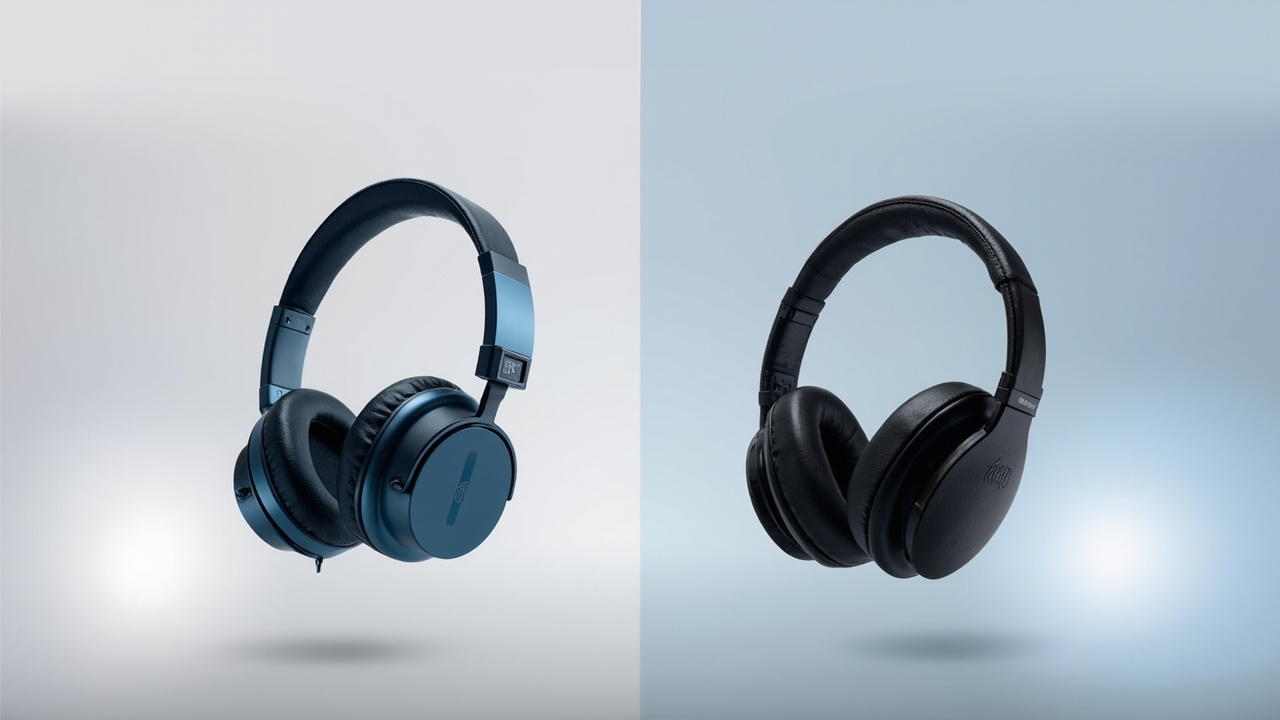
The two headphones take philosophically opposite approaches to physical design, and both are defensible.
Apple AirPods Max 2 — same chassis language as the 2020 original:
- 386.2 g (13.6 oz) — heavy for an over-ear
- Aluminum ear cups, stainless steel headband, knit-mesh canopy
- No folding hinge; lays flat only
- Smart Case (ultra-low-power mode) — the famous “sports bra” — offers almost no real protection (source: SoundGuys AirPods Max 2 review)
- No IP rating
- Not user-serviceable — battery, ear pads, and headband all require Apple service
Bowers & Wilkins Px8 S2 — built specifically to fix Px8 1 complaints:
- 310 g (9 oz) — 76.2 g lighter than the AirPods Max 2 (source: Versus comparison)
- Nappa leather ear cups and headband, die-cast aluminum yokes and hinges
- Folds up for a smaller footprint
- Hard-shell carry case (real protection)
- No IP rating
- Replaceable ear cushions and headband — a long-term cost win that Apple refuses to offer
For daily commuters and people who toss headphones in a bag, the Px8 S2 is the more travel-durable choice. The fold + 76 g weight savings + replaceable pads matter when these headphones live in a backpack. For people who keep headphones on a stand at home, the AirPods Max 2’s aluminum build is genuinely beautiful and the weight stops mattering after an hour.
The replaceable pads are the underrated detail. Apple’s AirPods Max 1 pads deteriorated after 2–3 years and cost ~$69 to replace via Apple service. B&W sells Px8 S2 pads directly for ~$59 a pair, and they’re user-swappable in seconds (source: B&W accessory store). Over a 6-year ownership that turns into $100+ of saved service cost — partially offsetting the Px8 S2’s higher sticker price.
Clamping force is the one ergonomic risk on the Apple side: it’s strong out of the box and the weight adds up over multi-hour sessions. The Px8 S2’s 76 g advantage and softer Nappa leather reduce that pressure.
Feature Breakdown
This is where the two headphones split into “different products” rather than “the same product, different brand.”
| Feature | AirPods Max 2 | B&W Px8 S2 |
|---|---|---|
| Chip / DSP | Apple H2 | 24-bit dedicated DSP with separate DAC/amp stage |
| Drivers | 40 mm Apple-custom dynamic | 40 mm Carbon Cone (B&W-designed) |
| Frequency Response (claimed) | Not specified | 10 Hz – 20 kHz |
| Bluetooth Version | 5.3 | 5.3 (assumed; B&W lists “wireless” without exact version) |
| Bluetooth Codecs | SBC, AAC only | SBC, AAC, aptX Classic, Adaptive, HD, Lossless |
| LDAC / LC3 (Hi-Res Wireless) | No | No (aptX Lossless is the hi-res path) |
| Lossless Wired Audio | Yes — 24-bit / 48 kHz via USB-C | Yes — 24-bit / 96 kHz via USB-C + 3.5 mm analog |
| Microphones | 9 (8 ANC + 1 voice) | 8 total (6 ANC + 2 voice) |
| Multipoint | Apple ecosystem only | Yes (2 devices) |
| Custom EQ | No (Apple refuses to ship EQ in headphones) | 5-band EQ (B&W Music app) |
| Spatial Audio | Personalized Spatial Audio + head tracking (Dolby Atmos) | No native spatial audio |
| Adaptive / Smart Modes | Adaptive Audio, Conversation Awareness, Personalized Volume | Adaptive ANC, Ambient Pass-Through |
| Live Translation | Yes (Apple Intelligence) | No |
| Camera Remote | Yes (Digital Crown triggers iPhone/iPad camera) | No |
| Find My / Tracking | Apple Find My + Precision Finding (U2 chip) | B&W Music app (no Find My network) |
| Thread Smart Home | Yes (U2 chip) | No |
| Voice Assistant | Siri | Google Assistant, Alexa, Siri |
| Replaceable Ear Pads / Headband | No (Apple service only) | Yes (user-swappable) |
| Foldable | No | Yes |
The pattern is clear:
- Apple bets on software and ecosystem: H2-powered features (Live Translation, Conversation Awareness, Personalized Spatial Audio with head tracking) that are genuinely useful — but only when paired with a recent Apple device. On Android the AirPods Max 2 is a stripped-down $549 AAC headphone with no EQ, no multipoint, no firmware updates, and no Find My.
- Bowers & Wilkins bets on codec flexibility, serviceability, and tuning: aptX Lossless delivers true hi-res wireless (matching the Px8 S2’s 24-bit/96 kHz ceiling over USB-C) on any Android phone that supports it. The 5-band EQ is a meaningful tool. Replaceable pads make the 5+ year ownership story work.
For an Android user or a mixed-device household, the Px8 S2’s feature list reads like a flagship and the AirPods Max 2’s reads like a tiered upsell. For an iPhone / iPad / Mac user who travels internationally, the AirPods Max 2’s H2 features are real — just make sure you’ll actually use them.
Sound Quality and ANC
Sound: TechRadar’s head-to-head review of the two headphones gives the edge to the Px8 S2 for out-of-box tuning — wider soundstage, better instrument separation, lower distortion at higher volumes, and a more “audiophile” default curve. The AirPods Max 2 sounds excellent in Apple’s Personalized Spatial Audio mode but flatter and slightly more compressed in standard stereo. The Px8 S2’s carbon-cone drivers deliver more detail in the upper midrange and a more natural decay on cymbals and acoustic instruments (source: TechRadar AirPods Max 2 vs Px8 S2).
ANC: Both are solid but neither is class-leading. TechRadar places the Px8 S2 ANC noticeably above the AirPods Max 2 for low-frequency engine noise, but Apple wins for chatter and mid-frequency office noise thanks to the H2 chip’s adaptive processing. For the best ANC of any headphone in 2026, Sony WH-1000XM6 and Bose QuietComfort Ultra 2 are still the reference points — and both cost $100–$150 less than the Px8 S2 (source: RTINGS AirPods Max 2 vs Px8 S2 comparison).
Wired: Both work over USB-C for lossless wired audio. The Px8 S2’s 24-bit / 96 kHz ceiling beats the AirPods Max 2’s 24-bit / 48 kHz ceiling, and the dedicated DSP/amp stage makes the Px8 S2 noticeably more resolving through a quality source. The AirPods Max 2 is the only one that needs an Apple device to unlock its full wired capability — USB-C audio on a Windows PC works, but the H2 spatial features are iOS-only.
Pros and Cons
Apple AirPods Max 2
Pros
- $250 cheaper than the Px8 S2
- Apple H2 chip unlocks Live Translation, Personalized Spatial Audio, Conversation Awareness, Precision Finding
- Aluminum + stainless steel build is genuinely premium
- Find My + U2 chip tracking is best-in-class for Apple users
- Lossless 24-bit / 48 kHz wired audio via USB-C
- Strong resale value historically (~55% after 3 years for AirPods Max 1)
Cons
- 386 g — heavier than most over-ears, can cause fatigue on long sessions
- Smart Case offers almost no real protection
- No folding hinge, larger carry footprint than Px8 S2
- No LDAC, no aptX, only SBC/AAC — Android users lose hi-res wireless
- No EQ, no app on Android, no firmware updates on non-Apple devices
- Battery is 20 hours vs 30 hours for the Px8 S2
- Ear pads and battery are not user-serviceable
Bowers & Wilkins Px8 S2
Pros
- Audiophile-grade 40 mm Carbon Cone drivers with dedicated 24-bit DSP
- aptX Lossless wireless + 24-bit / 96 kHz wired audio
- 30-hour battery (10 hours more than AirPods Max 2)
- 76.2 g lighter than the AirPods Max 2
- Folds for travel, hard-shell carry case included
- Replaceable ear cushions and headband (real long-term value)
- Nappa leather + die-cast aluminum is more comfortable for long sessions
- 5-band EQ via B&W Music app
Cons
- $250 more expensive than the AirPods Max 2
- ANC is good but not Sony/Bose-tier — for pure noise cancellation, the XM6 is still the reference
- No Live Translation, no Spatial Audio with head tracking, no Find My network
- B&W Music app is functional but rougher than Sony Sound Connect or Apple ecosystem
- No LDAC (uses aptX Lossless as its hi-res path — same ceiling, different codec)
- Microphone quality for calls is reportedly below AirPods Max 2’s beam-forming setup
Best For / Skip If
Best For — AirPods Max 2
- Apple-only households (iPhone, iPad, Mac, Apple TV) who want the tightest possible ecosystem integration
- International travelers who will use Live Translation, Conversation Awareness, and Personalized Spatial Audio on planes and in meetings
- Buyers who upgrade every 2–3 years and want the better residual value
- Anyone who keeps headphones on a stand at home — weight and clamping matter less there
Best For — Bowers & Wilkins Px8 S2
- Android users (Samsung, Pixel, OnePlus with aptX Lossless support) who want hi-res wireless without buying into Apple
- Audiophiles who already own a quality source (DAP, USB DAC, hi-res streaming service like Tidal or Apple Music’s lossless tier) and will actually use the USB-C wired input
- Frequent flyers who want the 30-hour battery + lighter weight + foldable design + hard case
- Long-term owners (5+ years) who benefit from replaceable pads, replaceable headband, and B&W’s audiophile resale market
- Mixed-device households with both Apple and Android devices, where multipoint and codec flexibility matter
Skip If
- Skip the AirPods Max 2 if you’re on Android, if you commute on noisy transit (Sony XM6 or Bose QC Ultra 2 cancel noise better for $100 less), or if you want user-replaceable ear pads.
- Skip the Px8 S2 if your “audiophile” plan stops at Spotify Premium, if ANC matters more than sound quality, or if $799 is real money — the AirPods Max 2 at $549 is a meaningful step down in price for nearly equivalent daily use in Apple’s ecosystem.
- Skip both if you’re on a tight budget — the Sony WH-1000XM6 ($399-$449) is still the best all-around ANC over-ear and the Bose QuietComfort Ultra 2 ($449) is right behind it. Spend the $250 difference on something else.
Bottom Line
The AirPods Max 2 and the Bowers & Wilkins Px8 S2 are both genuinely excellent headphones, and they target genuinely different buyers.
- If your world is Apple, the AirPods Max 2 wins on cost, ecosystem, and resale value. The $250 you save can buy a quality pair of IEMs, a Lightning-to-USB-C cable collection, or a year’s worth of Apple Music. The H2 features will get better over time with Apple’s intelligence roadmap.
- If your world is anything else — Android, mixed devices, hi-res streaming, audiophile sources, long ownership horizons — the Px8 S2 wins on codec, comfort, battery, serviceability, and pure sound quality. The $250 premium is real money, but it’s the price of admission for the audiophile bracket, and the replaceable pads + lighter weight + longer battery meaningfully improve daily use.
The “buy smart, get more value” framing here is honest: neither of these is a bargain. Both are $500+ flagships with $500+ flagship limitations. The smart choice is to match the headphone to the ecosystem you already live in — Apple users should not pay audiophile tax for codecs they can’t decode, and Android users should not pay Apple tax for features they can’t unlock.
If you don’t already know which camp you’re in, the Sony WH-1000XM6 at $399-$449 is the safer “no regrets” choice for most people — but that’s a different comparison.