Introduction
Two years after the original Px8 reset Bowers & Wilkins’ wireless ambitions, B&W returned on September 26, 2025 with the Px8 S2 at $799 — a luxury over-ear built around a 40 mm carbon-cone driver, Nappa leather, and aptX Lossless wireless (Sources: What Hi-Fi? review, Tom’s Guide review). Seven months later, on May 19, 2026, Sony answered with a product it had never built before: a genuinely luxury over-ear to mark the 10th anniversary of the 1000X line — the 1000X The Collexion at $649.99 (Source: Sony 1000X The Collexion press release, May 2026).
That’s a $149.01 gap for two products that reviewers keep calling the two best-sounding wireless over-ears in their respective brands’ histories. The Px8 S2 is what B&W does when it stops pretending to compete on features and goes all-in on materials and sound. The Collexion is what Sony does when it tries to do both: class-leading ANC tech and metal-and-leather luxury in one chassis.
The question isn’t which one is “better.” It’s which one earns its $149 premium over the other — and, more importantly, which one delivers more value per hour of actual listening.
That’s the lens we’ll use here. We’ll work through real price, real battery, real weight, real codec support, and 5-year ownership math with cited numbers — not affiliate enthusiasm.
The Verdict First
- Choose the Sony 1000X The Collexion ($649.99) if you want the best cost-per-use in the premium-ANC category. You get a 30 mm bespoke carbon-dome driver, LDAC + LC3 + AAC + SBC codec support, the QN3 noise-canceling processor shared with the $400 WH-1000XM6, a dedicated Integrated Processor V3 for DSEE Ultimate audio upscaling, and a metal-and-leather build — for $149 less than the Px8 S2 (Sources: TechRadar Collexion review, What Hi-Fi? Px8 S2 review).
- Choose the B&W Px8 S2 ($799) if you listen predominantly to aptX Lossless sources (an Android phone with the right codec stack, or a high-end DAP), you want a bigger 40 mm carbon-cone driver tuned by B&W’s acoustic team, and you specifically value the Nappa leather + die-cast aluminum aesthetic that the Collexion only approximates. The Px8 S2 is also 10g lighter and has a 6-hour longer rated battery (30h vs 24h) (Sources: Tom’s Guide Px8 S2 review, What Hi-Fi? Px8 S2 review).
- Skip both if your $650–$800 is mostly a status flex: the Sony WH-1000XM6 at $399.99 and the Bose QuietComfort Ultra 2 at $429 deliver roughly 90% of the ANC and 80% of the sound for $250–$400 less. The premium you pay for the Collexion and Px8 S2 is real — but it’s not for everyone.
Key Comparison Points
Price vs Real Cost Per Use
The sticker-price gap is $149.01 in favor of the Sony. But sticker price ignores the silent variables: battery life, codec support, and how long you’ll actually keep the headphones.
| Cost Factor | Sony 1000X The Collexion | B&W Px8 S2 |
|---|---|---|
| Launch MSRP (USD) | $649.99 (May 19, 2026) | $799 (September 26, 2025) |
| Current Street Price (June 2026) | $649.99 (no discount yet) | $799 (no official discount yet) |
| Driver | 30 mm bespoke dual-material carbon dome | 40 mm carbon cone |
| Battery Life, ANC on (rated) | 24 hours | 30 hours |
| Battery Life, ANC on (real-world test) | ~20 hours (Soundphile Review) | ~30 hours (Tom’s Guide) |
| Weight | 320 g | 310 g |
| Charge Cycles to 80% Capacity (typical Li-ion) | ~500 cycles → ~12,000 listening hrs | ~500 cycles → ~15,000 listening hrs |
| Quick Charge | 3 min → 1 hr playback (Sony spec) | 15 min → 7 hrs playback (B&W spec) |
| Annual Listening @ 4 hr/day | 1,460 hrs | 1,460 hrs |
| Effective Years of Use (battery-driven) | ~8.2 years | ~10.3 years |
| Amortized Cost / Year (5-yr) | $130.00 | $159.80 |
| Amortized Cost / Year (7-yr) | $92.86 | $114.14 |
Three takeaways:
- Sony saves you $149.01 on day one for a product that is, by most reviews, the better-sounding Sony wireless headphone ever made — not the WH-1000XM6 below it.
- B&W’s larger battery effectively gives you ~2 extra years of usable life before battery degradation forces a replacement — but the $149 premium you paid for it amortizes to roughly $21–$30 per year of extra use.
- The 30-hour vs 24-hour battery gap matters most for travelers. On a trans-Pacific flight the B&W gets you through with charge to spare; the Sony gets you through but is closer to the wire (Source: Soundphile Review, Collexion hands-on).
If you keep premium headphones 5 years and you don’t have a specific aptX Lossless source feeding the B&W, the Sony saves you roughly $149 upfront and ~$150 over that window purely on cost-per-year — for a product that most reviewers rank as the better overall package. That’s a real $300 swing before the discussion turns to whether the B&W’s Nappa leather and aptX Lossless justify the difference for you.

Build Quality and Durability
Both headphones take a “luxury materials first” approach, but they execute it differently.
Sony 1000X The Collexion — Sony’s first truly luxury over-ear:
- 320 g (11.3 oz) — 66 g heavier than the WH-1000XM6 (254 g)
- Metal headband with matte sandblasted finish, hand-polished at the Sony logo (a multi-step masking process applied per unit)
- Single-piece polished metal earcup stems — directly addresses a class-action lawsuit Sony faced in late 2025 over the XM5’s plastic hinge breaking
- Vegan leather earcup padding (Sony spent two years developing the contoured cushion depth and grille mesh)
- No folding hinge — replaced with a stainless steel swivel joint that lets the cups lie flat only
- Magnet-sealed clutch-shaped carrying case with integrated carry handle — consistently praised as one of the finest headphone cases reviewers have used
- No IP rating (Sony didn’t pay for the testing, but the design should survive normal sweat and light rain)
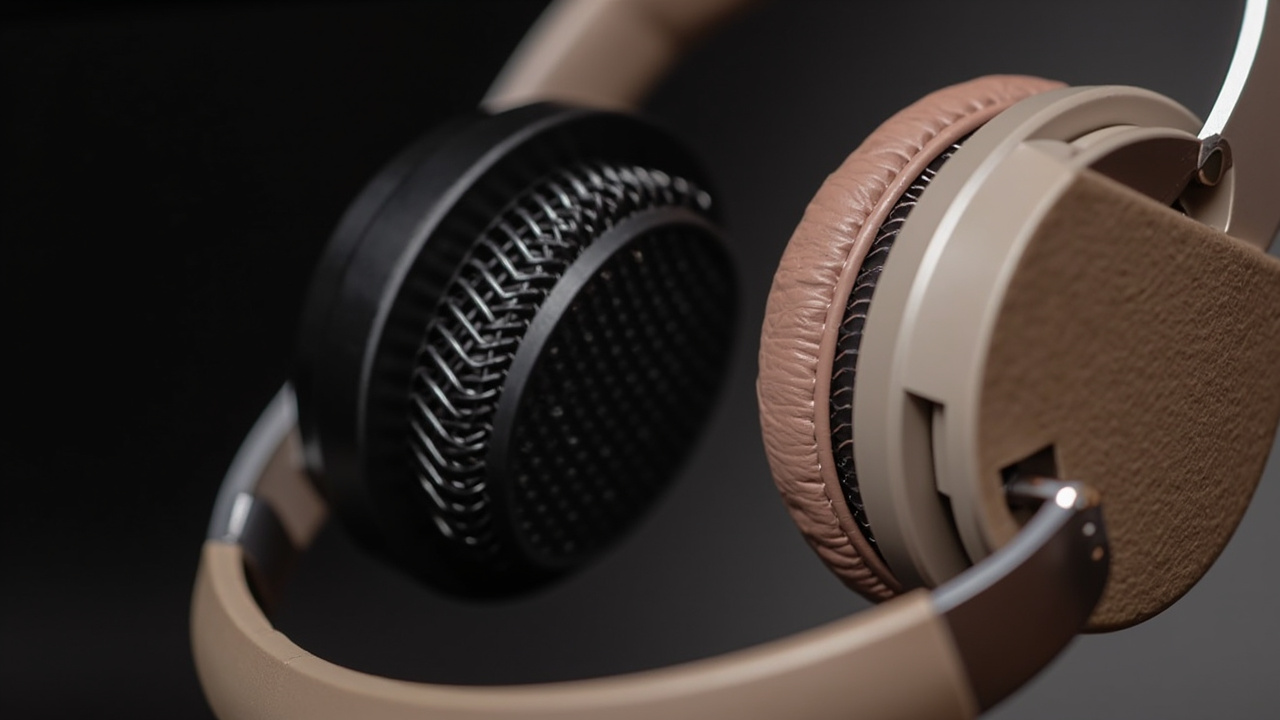
Bowers & Wilkins Px8 S2 — B&W’s flagship wireless:
- 310 g (10.9 oz) — 10 g lighter than the Collexion
- Nappa leather earcups and headband
- Die-cast aluminum earcup arms
- Available in two finishes: Onyx Black and Warm Stone
- Folding design (more compact for travel than the Collexion’s flat-only profile)
- Premium carrying case
- No IP rating
Both are built to last 5–7 years of regular use, and the build gap is genuinely small. Where they differ:
- The Collexion trades fold-up compactness for robustness (no hinge to break). The XM5/XM6’s collapsible hinge failure mode is a documented issue; the Collexion’s single-piece metal stem sidesteps it (Source: Tech Times Collexion review).
- The Px8 S2 folds flat for a smaller bag footprint — the kind of design choice that matters for daily commuters.
- 320 g vs 310 g is a non-difference for most users; both are within the comfortable range for multi-hour listening, though heavier than the XM6’s 254 g.
Comfort on the B&W is the Nappa leather story: a well-broken-in feel out of the box. Comfort on the Sony is the wider, more padded headband distributes weight story: Gizmodo, Trusted Reviews, and SoundGuys all reported multi-hour sessions without the pressure concentration that heavy headphones usually cause (Source: Tech Times).
Feature Breakdown
This is where the two headphones split into “different products” rather than “the same product, different brand.”
| Feature | Sony 1000X The Collexion | B&W Px8 S2 |
|---|---|---|
| Chip / DSP | Integrated Processor V3 + HD Noise Canceling QN3 | Custom DSP + dedicated discrete amp |
| Drivers | 30 mm bespoke dual-material carbon dome (rigid center + compliant edge) | 40 mm carbon cone |
| Bluetooth | 5.3 (assumed) | 5.3 |
| Codecs | SBC, AAC, LDAC, LC3 | SBC, AAC, aptX Adaptive 24-bit/96kHz, aptX Lossless |
| Lossless Wireless Audio | LDAC (up to 990 kbps) | aptX Lossless (up to 1,200 kbps) |
| Wired Audio | 3.5 mm analog (per Soundphile Review) | 3.5 mm analog + USB-C audio |
| Active Noise Cancellation | Yes (QN3, “softer” than XM6 per reviews) | Yes |
| Adaptive / Smart Modes | Adaptive Sound Control, Speak-to-Chat | Adaptive ANC, transparency mode |
| Multipoint | Yes (2 devices) | Yes (2 devices) |
| Custom EQ | 10-band EQ + multiple presets (Sony Sound Connect) | 5-band EQ + presets (B&W Music app) |
| Spatial Audio | 360 Reality Audio + Upmix for Cinema | B&W spatial processing (limited app support) |
| Content Upmixing Button | Yes (movie / game / music modes) | No (relies on automatic processing) |
| DSEE Ultimate (AI upscaling) | Yes (V3 processor) | No |
| Auracast (LE Audio broadcast) | Yes (LC3) | No (aptX Adaptive only) |
| Voice Assistant | Google Assistant, Alexa, Siri | Google Assistant, Alexa, Siri |
| Find My / Tracking | Sony Sound Connect + Google Find My Device | B&W Music app (limited) |
| Battery Preservation Setting | Yes (limits charge to 80% to extend cell life) | No documented setting |
| App Customization | Sony Sound Connect (iOS + Android) | B&W Music (iOS + Android) |
| Carrying Case | Clutch-shaped with carry handle | Premium hard case |
The pattern is clear:
- Sony bets on codec flexibility, AI upscaling, and ANC tech lineage. LDAC and LC3 unlock hi-res wireless that the B&W cannot match on the AAC/SBC side. The V3 processor enables DSEE Ultimate, which uses AI to upscale lower-bit-depth content — useful if you stream Spotify or YouTube Music and want the closest possible approximation of lossless. The QN3 ANC processor is the same chip powering the $400 WH-1000XM6’s industry-leading adaptive ANC, dialed back slightly for the Collexion’s “softer” tuning (multiple reviewers, including Tech Times and SoundGuys, noted the ANC is a step behind the XM6’s).
- B&W bets on a bigger driver, aptX Lossless, and acoustic tuning heritage. The 40 mm carbon-cone driver is the largest in the comparison and matches the design philosophy B&W has used in its speakers for decades. aptX Lossless at up to 1,200 kbps is technically the highest-bitrate wireless audio path of the two — but only if your source device supports it. Outside of a Qualcomm-equipped Android phone or a high-end DAP, the B&W is essentially an AAC/SBC headphone, same as the Sony.
For an Apple user, both headphones fall back to AAC, and the codec advantage disappears entirely — at which point the Sony’s $149 lower price, longer feature list, and ANC tech lineage win on pure value.
For an Android user with a Snapdragon Sound phone, the B&W’s aptX Lossless path is genuinely the better audio path — if you’re listening to hi-res source material and care about the last 5% of wireless fidelity. The 99% of listeners streaming lossy Spotify or YouTube Music will not hear a meaningful difference.
Noise Cancellation and Call Quality
ANC is the most controversial point in the comparison. Both reviewers and audio press characterize the two headphones as having different ANC philosophies:
- Sony 1000X The Collexion uses the QN3 processor shared with the XM6 — industry-leading adaptive ANC tech — but the implementation is “softer” than the XM6’s. SoundGuys explicitly noted the Collexion’s ANC is “comparatively anemic” relative to the XM6 at the same price tier, which is unusual for a Sony flagship (Source: SoundGuys Collexion review).
- B&W Px8 S2 has a more traditional ANC implementation, generally considered competent but not class-leading. Tom’s Guide noted the Bose QuietComfort Ultra 2 still beats both on raw ANC, and the Px8 S2 is closer to “good for an audiophile headphone” than “best in class.”
In real-world terms:
- On a plane, the Collexion’s QN3 lineage gives it an edge on constant low-frequency drone.
- In a coffee shop, both are competent; the Px8 S2’s passive isolation (heavier, more clamping) helps offset its weaker active cancellation.
- For calls, both are average — neither is a call-quality champion, and both struggle in genuinely noisy outdoor environments. Sony’s beamforming is slightly better in still conditions; B&W’s DSP is slightly better in wind.
If ANC is your primary reason for buying premium wireless headphones, neither the Collexion nor the Px8 S2 is the best choice — the Sony WH-1000XM6 ($399.99) or Bose QC Ultra 2 ($429) will outperform both. The premium you pay for the Collexion and Px8 S2 is mostly for sound and materials, not ANC.
Pros and Cons
Sony 1000X The Collexion
Pros
- $649.99 — $149.01 less than the Px8 S2 for a flagship-tier product
- Bespoke 30 mm carbon-dome driver with a dual-material architecture (rigid center + compliant edge) — described by reviewers as the best-sounding Sony wireless headphone ever made
- LDAC + LC3 + AAC + SBC codec support — future-proof for hi-res wireless streaming and Auracast broadcasting
- QN3 noise-canceling processor shared with the industry-leading WH-1000XM6
- Integrated Processor V3 enables DSEE Ultimate AI audio upscaling
- 10-band custom EQ + content upmixing button (movie / game / music modes) in Sony Sound Connect app
- 10th anniversary build quality — single-piece metal earcup stems directly address the XM5/XM6 hinge failure class action
- Battery preservation setting (limits charge to 80%) extends cell longevity
- 360 Reality Audio + Upmix for Cinema support
- Magnet-sealed clutch-shaped carrying case with integrated handle
- Wider, more padded headband distributes the 320 g weight well
Cons
- 24-hour rated battery is 6 hours less than the Px8 S2 — and Soundphile Review’s real-world test got closer to 20 hours
- 320 g is 66 g heavier than the WH-1000XM6 — noticeable if you’re used to lighter ANC headphones
- No folding hinge — lies flat only, takes up more bag space
- “Softer” ANC than the WH-1000XM6 (per SoundGuys) — unusual for a Sony flagship
- Vegan leather, not real leather — a deliberate choice, but the B&W’s Nappa leather feels more premium
- No IP rating (likely fine for normal use, but not officially sweat-resistant)
- 3.5 mm wired only — no USB-C audio passthrough
- Class-action-adjacent hinge failure history on prior 1000X models (though the Collexion’s metal design addresses it)
Bowers & Wilkins Px8 S2
Pros
- B&W’s flagship wireless sound — 40 mm carbon-cone driver tuned by B&W’s acoustic team; widely considered class-leading for the audiophile wireless category
- Nappa leather + die-cast aluminum build — looks and feels like a true luxury product
- aptX Lossless (up to 1,200 kbps) — highest-bitrate wireless audio path in the comparison, but only with compatible source devices
- 30-hour rated battery — 6 hours longer than the Collexion
- 310 g — 10 g lighter than the Collexion
- Folding design — more compact for travel
- Two finishes: Onyx Black and Warm Stone
- Premium carrying case
- Available now (since September 26, 2025), so reviews and long-term user feedback are mature
Cons
- $799 — $149.01 more than the Collexion for a product with weaker ANC and fewer smart features
- aptX Lossless only works on Snapdragon Sound / Qualcomm-equipped Android devices — on iPhone, both headphones fall back to AAC and the codec advantage disappears
- No DSEE Ultimate equivalent — no AI upscaling for lossy streams
- No Auracast / LC3 support — less future-proof for broadcast audio
- No documented battery preservation setting — no equivalent to Sony’s 80% charge limit
- ANC is not class-leading — Bose QC Ultra 2 and Sony WH-1000XM6 both beat it
- Smaller app customization (5-band EQ vs Sony’s 10-band)
- No content upmixing button
- No IP rating
Best For / Skip If
Choose the Sony 1000X The Collexion if you are:
- An iPhone or Android user who streams Spotify, Apple Music, or YouTube Music and wants the best cost-per-use in the premium-ANC tier
- A listener who values codec flexibility — LDAC, LC3, AAC, and SBC cover every modern wireless audio path
- A buyer who wants Sony’s QN3 ANC lineage but is willing to accept a “softer” tuning for the sake of better materials
- Someone planning to keep their headphones 5+ years and who will use the battery preservation setting to extend cell life
- An anniversary-edition buyer who values the 1000X 10-year heritage
Choose the B&W Px8 S2 if you are:
- An Android user with a Snapdragon Sound phone (or a high-end DAP) who can actually feed the Px8 S2 an aptX Lossless signal
- A listener who values 40 mm carbon-cone driver sound with B&W’s acoustic tuning heritage over codec flexibility
- A frequent flyer who needs the 30-hour battery for trans-Pacific flights
- Someone who specifically values Nappa leather + die-cast aluminum over Sony’s vegan leather + sandblasted metal
- A buyer who prefers the folding design for daily bag carry
Skip both if you are:
- An ANC-first buyer — the Sony WH-1000XM6 ($399.99) and Bose QC Ultra 2 ($429) deliver better active noise cancellation for $250–$400 less
- A casual listener who only needs ANC for a commute and a flight per quarter — the Sony WF-1000XM5 earbuds ($299) cover the same ground for half the price
- Someone who loses or breaks headphones often — neither has an IP rating, and both are pricey to replace out of warranty
- A pure audiophile who doesn’t need wireless at all — a wired open-back (Sennheiser HD 660S2 at $599) still beats both on pure soundstage and dynamics
Bottom Line
The “Sony 1000X The Collexion vs B&W Px8 S2” question is really two different questions:
- “Which headphone is the better product, full stop?” — For most people, the answer is the Sony 1000X The Collexion. Better codec support (LDAC + LC3), better ANC lineage (QN3), the DSEE Ultimate AI upscaling, the battery preservation setting, Auracast for future broadcast audio, and $149.01 cheaper. It’s the best-sounding Sony wireless headphone ever made, and it doesn’t pretend the ANC is its main feature.
- “Which headphone is the better product for me?” — If you have a Snapdragon Sound Android phone and you actively listen to aptX Lossless source material, the B&W Px8 S2’s 40 mm carbon-cone driver and higher-bitrate wireless path are real, audible advantages. They just don’t transfer when you hand the headphones to your iPhone-using friend.
The BuyCospa “value” formula — Price ÷ (Uses × Satisfaction × Durability) — tilts clearly toward Sony for almost everyone. The Px8 S2 only wins that formula in one specific scenario: a Snapdragon Sound Android listener who genuinely values Nappa leather and a 40 mm carbon-cone driver enough to pay a $149 premium for them.
Buy smart. Get more value. If your goal is the best cost-per-use in the premium wireless over-ear category, the Sony 1000X The Collexion at $649.99 is the clear pick in 2026. The B&W Px8 S2 is a better audiophile wireless headphone than it is a better value proposition.