Introduction
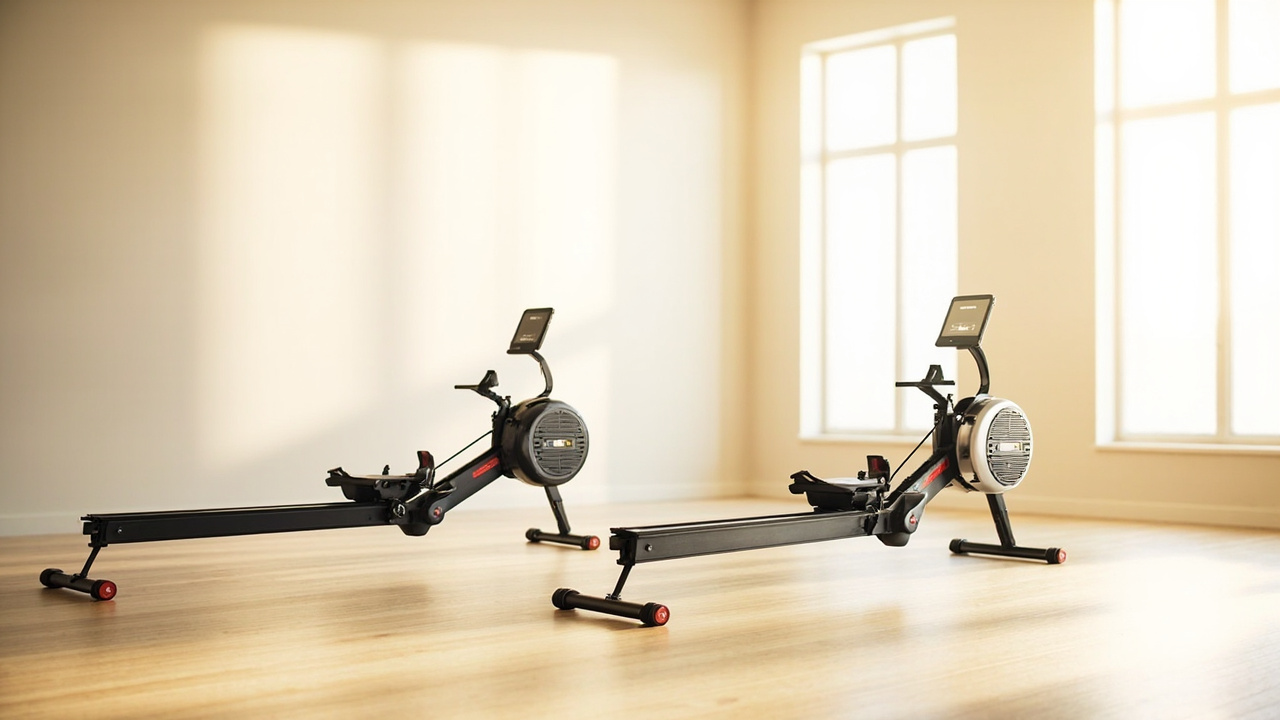
A rowing machine is the single best cardio + full-body strength tool per square foot in your house. In 2026, two names dominate the over-$1,000 category: the Concept2 RowErg at $990 and the Hydrow Wave at $1,995.
They look nothing alike. They feel nothing alike. And the math behind them is wildly different once you add up a 3-year or 5-year window.
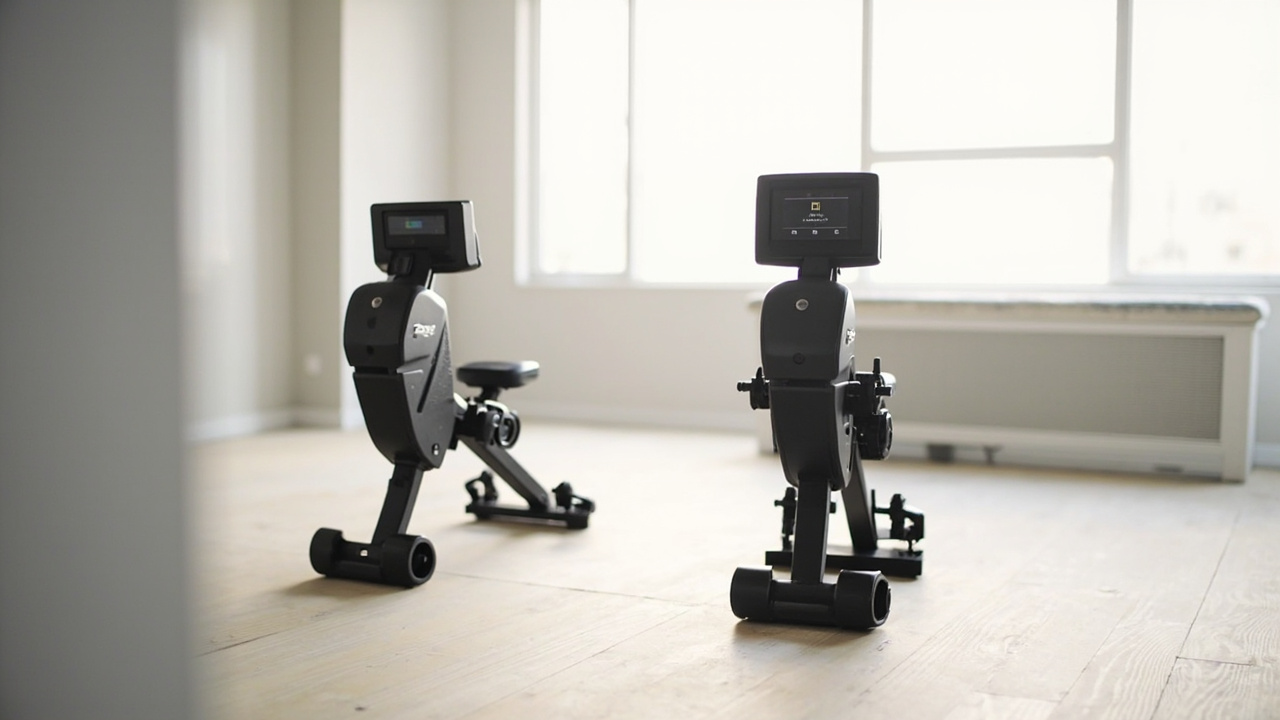
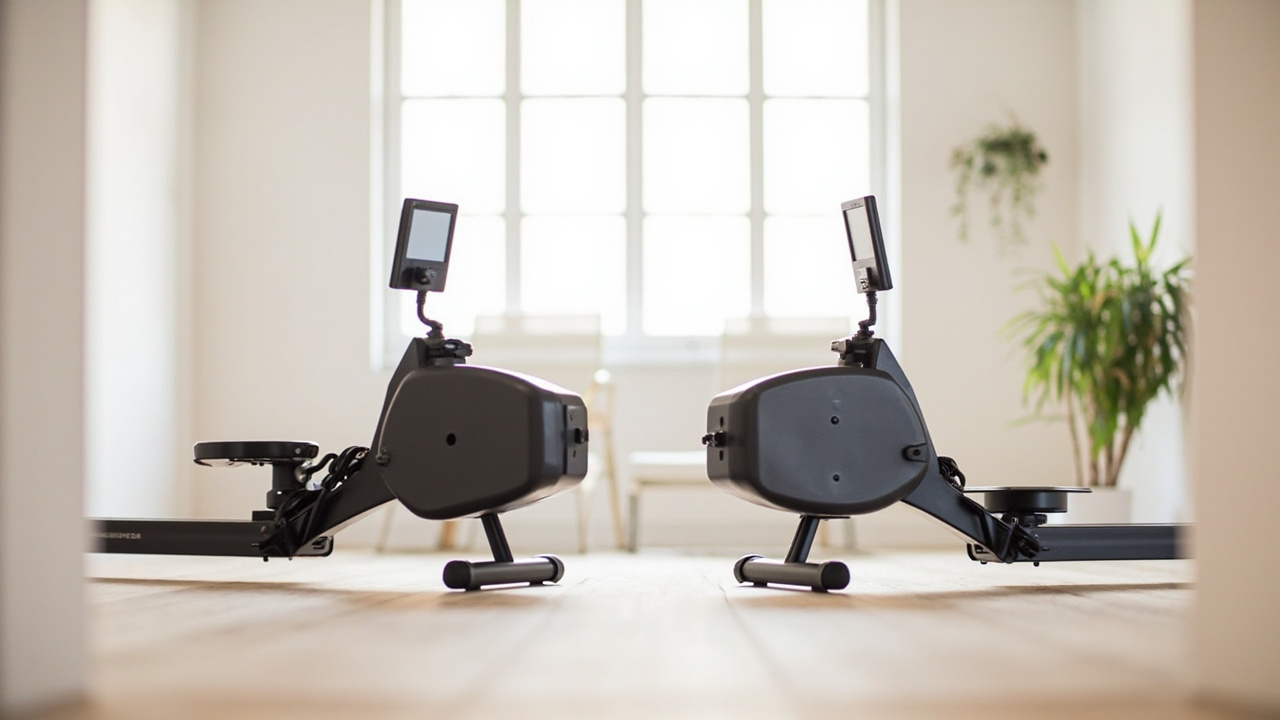
- Concept2 RowErg (formerly Model D): the same machine used at the World Indoor Rowing Championships, the CrossFit Games, and HYROX. Air-resistance flywheel, PM5 LCD monitor, no subscription required, breaks into two pieces, 57 lbs.
- Hydrow Wave: a 102-lb electromagnetic rower with a 16” HD touchscreen, 5,000+ on-demand classes, and a $50/month membership that unlocks almost everything the machine can do.
The question isn’t which is the “best” — it’s which one will still be earning its keep in 2029. The answer depends on what gets you off the couch, how much you value data, and whether you can stomach a subscription that quietly adds up to $1,800 over three years.
This comparison is built around real long-term cost, durability, and the subscription math that most reviews skip.
The Verdict First
-
Choose the Concept2 RowErg ($990) if you train for performance, want the most accurate data in the category, plan to use it for 5+ years without a subscription, or already do CrossFit / HYROX / on-the-water rowing. No other rower on the market is as widely trusted or as easily repaired. It is the default answer for most serious buyers.
-
Choose the Hydrow Wave ($1,995) if you have a short attention span, you know you won’t row without an instructor or scenic video pushing you, you live in an apartment and need the quietest rower available, and you’ve budgeted for the $50/month membership as a gym-replacement cost.
-
Skip both if you want a $400-600 rower. The Concept2 Model D is in the $900s for a reason (it’s a commercial-grade machine); the Hydrow at $1,995+ only makes sense as a class-driven fitness commitment. Mid-range rowers like the Sunny Health SF-RW5515 or the WaterRower Club exist for a reason.
Cost-per-use over 3 years (assuming 4 workouts/week):
| Cost Factor | Concept2 RowErg | Hydrow Wave |
|---|---|---|
| Hardware | $990 | $1,995 |
| Subscription (3 yrs) | $0 (ErgData free; Concept2 Logbook free) | $1,800 ($50 × 36) |
| Optional add-ons | None required | Vertical storage kit (~$80) |
| 3-year total | $990 | $3,795 |
| Total workouts | ~624 | ~624 |
| Cost per workout | $1.59 | $6.08 |
That’s a $2,805 gap over three years — and it widens to ~$4,675 over five years. Concept2 wins the cost-per-use math decisively. The Hydrow only wins if its on-demand classes are the reason you actually row instead of skipping the workout — and if the alternative is a $50-80/month gym membership.
Key Comparison Points
Price vs Real Cost Per Use
The sticker price difference is $1,005. The real-world cost difference over three years is closer to $2,800 once the Hydrow subscription is included.
| Cost Factor | Concept2 RowErg | Hydrow Wave |
|---|---|---|
| MSRP (2026) | $990 (concept2.com) | $1,995 (hydrow.com) |
| Typical sale price | $890-990 (rarely discounted) | $1,795-1,995 (often bundled with free shipping) |
| Warranty | 2 yrs on moving parts + monitor; 5 yrs on frame | 5-year limited warranty (parts and labor, full coverage) |
| Subscription required | No | No (basic “Just Row” mode works without) |
| Subscription to unlock full experience | $0 — ErgData (free) and Concept2 Logbook (free) are excellent | $50/month All-Access; $19.99/month Basic (app only, no rower integration) |
| Annual membership cost | $0 | $600 ($528 if you pay $44/mo annual promo rate) |
| Replaceable parts (10-yr horizon) | $20-50 chain, $40 strap, $50-80 monitor upgrade | $0 — proprietary parts, must ship to Hydrow for service |
| Annual electricity cost | ~$1.50 (PM5 runs on 2 AA batteries) | ~$5-10 (touchscreen + electromagnetic resistance draw more) |
| Cost-per-use (3 yrs, 4 sessions/wk) | $1.59 | $6.08 |
| Cost-per-use (5 yrs, 4 sessions/wk) | $1.05 (amortized further) | $3.99 |
The Hydrow’s $50/month All-Access membership is the single biggest cost driver. It is the difference between a $1,995 rower and a $3,595 rower over three years. Concept2 has deliberately stayed away from mandatory subscriptions: its PM5 monitor and the free ErgData app cover 90% of what most rowers need. The free Concept2 Online Logbook also hosts global challenges and lifetime meters — a community feature the Hydrow subscription replicates but does not exceed.
A real hidden cost: if you cancel the Hydrow membership, the machine still works in “Just Row” mode (manual strokes, no classes, no leaderboards, no progress history). It’s the equivalent of buying a Peloton Bike and using it as a regular spin bike. The value evaporates fast. Concept2’s machine retains ~95% of its functionality with no subscription at all.
The Hydrow’s 5-year warranty is actually stronger than Concept2’s split 2+5 warranty — full coverage on all parts for five years versus Concept2’s “5 years on frame, 2 years on moving parts.” If you want the most warranty protection and you’re willing to pay for it, Hydrow’s terms are objectively better.
Source: Concept2 official store concept2.com; Hydrow official site hydrow.com; RowingRelated March 2026 pricing survey rowingrelated.com/p/hydrow-vs-concept2.html.
Build Quality and Durability
Concept2 is famous for one reason: the same machine has been the standard at the World Indoor Rowing Championships, CrossFit Games, and HYROX competitions for over 40 years. The 2026 RowErg is the same basic air-flywheel design refined over four decades.
| Build Factor | Concept2 RowErg | Hydrow Wave |
|---|---|---|
| Weight | 57 lbs | 102 lbs |
| Dimensions (L×W×H) | 96” × 24” × 14” | 80” × 19” × 43” |
| Resistance type | Air flywheel with spiral damper (1-10 settings) | Electromagnetic (50-300 levels, computer-controlled) |
| Noise level (peak stroke) | 70-80 dB (comparable to a hair dryer at full damper) | 50-60 dB (quieter than a normal conversation) |
| Max user weight | 500 lbs (commercial-grade) | 375 lbs |
| Frame material | Steel and aluminum, no plastic structural parts | Steel frame + aluminum + polymer housing |
| Vertical storage | Built-in (no kit needed) | Built-in (no kit needed) |
| Breaks for transport | Yes, 2 pieces, quick-release framelock | No — 102 lbs is a two-person move |
| Seat rail system | Single monorail, smooth ball-bearing rollers | 2-roller + 2-idler, slightly less refined than Origin’s 10-roller |
| Field failure rate (Reddit r/Rowing, 2024-2026) | Very low; chain/strap are consumable but cheap to replace | Low; some reports of touchscreen firmware glitches (Hydrow has fixed most via OTA updates) |
| Reported lifespan (owners) | 10-20+ years with chain/strap replacement every 3-5 years | 5-8 years expected; electromagnetic system has not been in market long enough for 10-year data |
| Warranty | 2 yrs moving parts / monitor; 5 yrs frame | 5 yrs full coverage |
The Concept2’s steel and aluminum frame + simple air flywheel is built to be repaired, not replaced. The chain ($30), the sling/strap ($40), and the PM5 monitor (~$200) are all user-replaceable parts available directly from Concept2. There is a thriving aftermarket and a 40-year service infrastructure. A 2005 Model D still in active use is not unusual.
The Hydrow’s electromagnetic resistance system is quieter and more refined for casual rowing, but it is a sealed proprietary unit. If the electromagnetic motor fails after the 5-year warranty expires, repair is a ship-to-Hydrow operation (~$200-400 round-trip plus parts). There is no user-serviceable path.
The Concept2’s 500 lb max user weight also exceeds the Hydrow’s 375 lb. Heavier users (or households with multiple weight classes sharing the machine) are better served by the Concept2’s commercial-grade frame.
The Hydrow’s lifetime value depends on Hydrow the company staying solvent. Connected-fitness brands have had a rough 2022-2024 (Peloton layoffs, Mirror shut down by LVMH in 2024, Tonal’s 35% staff cut, Hydrow’s own ownership change in 2023). Concept2 is a privately held Vermont manufacturer that has been profitable for decades and is not subscription-dependent. For a $1,000-2,000 purchase, that stability matters.
Feature Breakdown
The two machines serve fundamentally different mental models of “rowing.”
| Feature | Concept2 RowErg | Hydrow Wave |
|---|---|---|
| Resistance feel | Air flywheel, infinite adjustment via damper (1-10), scales with effort | Electromagnetic, computer-controlled (50-300), 104 mimics on-water feel |
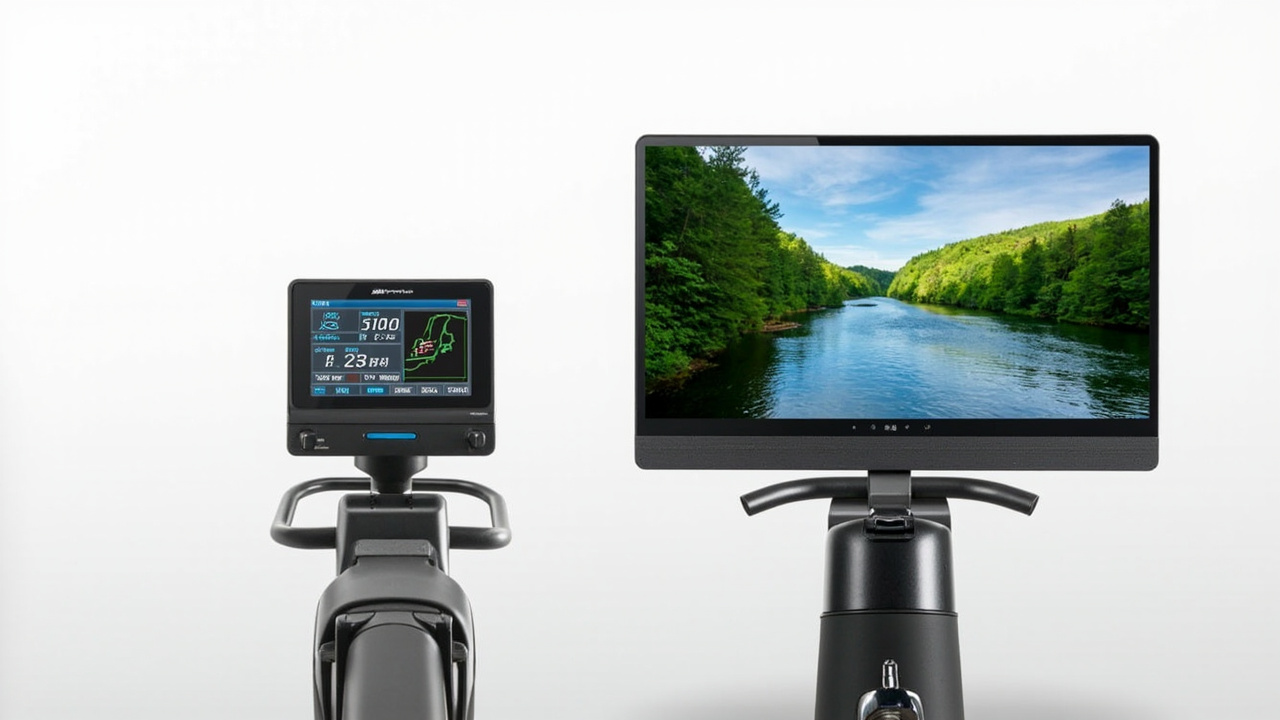
| Performance monitor | PM5 LCD: pace, watts, stroke rate, distance, calories, heart rate (with strap) | 16” HD touchscreen + secondary performance metrics (split, SPM, watts) |
| Subscription content | None required; optional third-party apps (ErgData free, Hydrow App $19.99/mo works as visual-only, Asensei form coaching) | 5,000+ on-demand classes, live workouts, scenic rows, strength + yoga + Pilates; All-Access $50/mo |
| Form tracking | No AI; relies on feel and external coaching | 3D motion sensor tracks stroke shape; no real-time form AI |
| Live classes / leaderboards | Via Concept2 Logbook (free, distance-based challenges) | Yes, daily live classes and global leaderboards |
| App compatibility (third party) | Zwift (rowing beta), EXR, Holofit, Asensei, Hydrow App (visual) | None — closed ecosystem |
| Connectivity | ANT+ and Bluetooth (PM5), USB charging port | WiFi + Bluetooth; over-the-air firmware updates |
| Power measurement accuracy | ±0.5% (industry standard for ergometers) | Not published; subjective “watts” reading |
| Data export | USB stick → CSV; full Concept2 Logbook API | Limited; requires Hydrow subscription and mobile app |
| Setup time out of box | ~30 minutes (some assembly required) | ~15 minutes (mostly assembled) |
| Footprint in use | 8’ × 2’ (longer due to monorail) | 6.7’ × 1.6’ (more compact) |
The Concept2’s PM5 monitor is the gold standard for performance data. If you ever join a rowing club, train with a coach, or want to compare your 2,000m time to a global ranking, the PM5’s data is universally accepted. The Concept2 Logbook hosts millions of verified times. The Hydrow’s metrics are mostly for personal comparison — they don’t integrate with the broader rowing world.
The Hydrow’s 16” HD touchscreen and 5,000+ on-demand classes are the real differentiator. If you have ever abandoned a piece of fitness equipment because “rowing alone is boring,” the Hydrow solves that problem with scenic rows filmed at 30+ locations worldwide, instruction from Olympians, and a Netflix-style content library. For users who need external motivation, this is the entire value proposition.
The Concept2’s damper system is misunderstood by non-rowers. The damper (1-10) is not a difficulty knob. The standard rowing damper range is 3-5. Setting it to 10 makes the flywheel heavier but does not give a “better” workout — competitive rowers use a moderate setting and rely on stroke rate and power output. The Hydrow’s electromagnetic system removes this confusion entirely: it’s just 50-300 levels, no rowing jargon required.
The Concept2’s open ecosystem is the other big advantage. ErgData (free, by Concept2) logs every workout. The Hydrow App ($19.99/mo) works on Concept2 if you mount a phone or tablet. Asensei provides AI form coaching. EXR, Holofit, and Zwift (rowing beta) all support the PM5 monitor via Bluetooth. Concept2 doesn’t lock you in. Hydrow does.
Pros and Cons
Concept2 RowErg ($990)
Pros
- $1,000 cheaper at MSRP — meaningful upfront savings, even more if you skip the subscription
- No subscription required — retains ~95% of functionality forever
- ±0.5% power accuracy, PM5 monitor is the global standard for indoor rowing
- Commercial-grade frame, 500 lb max user weight, used in elite competitions
- Quiet enough for most homes (peak ~75 dB), no WiFi or screen to glitch
- Fully user-serviceable: chain, strap, monitor all replaceable in 15 minutes with basic tools
- 40-year track record — a 2005 Model D is still in active use in many gyms
- Concept2 is a stable, profitable, privately held Vermont manufacturer
- Open app ecosystem: ErgData (free), Concept2 Logbook (free), Asensei, EXR, Holofit, Hydrow App
- Breaks into two pieces, 57 lbs total — easy to move and store vertically
- Active resale market: used Model D RowErgs sell for $600-800 on eBay
Cons
- No HD touchscreen, no on-demand classes, no scenic rows
- “Just row” mode with no content can be mentally tough for users who need external motivation
- 96” length is longer than the Hydrow’s 80” footprint — small apartments may struggle
- Noise level (70-80 dB at high damper settings) is loud enough to bother downstairs neighbors in apartments
- 30-minute assembly required out of the box (most users do it once and forget)
- Monorail seat can feel less smooth than the Hydrow’s 10-roller system
- The PM5 LCD is utilitarian — not a selling point for users who want a polished UI
- No native form-tracking AI (relies on third-party apps like Asensei or external coaching)
Hydrow Wave ($1,995)
Pros
- 5-year full warranty on all parts and labor — better coverage than Concept2’s split warranty
- Quietest electromagnetic rower in this price range (50-60 dB) — apartment-friendly
- 16” HD touchscreen with scenic rows and 5,000+ on-demand classes
- 102 lbs weight and 80” footprint is more compact than the Concept2
- Live daily classes, leaderboards, and global community features
- No assembly required — out-of-box setup is ~15 minutes
- 102 lbs weight feels planted and stable (some users prefer it to the lighter Concept2)
- Beautiful industrial design — fits in a living room without screaming “gym equipment”
- Electromagnetic resistance is precise and consistent across the full 50-300 range
Cons
- $1,000+ more expensive at MSRP, plus $50/month subscription to unlock the full experience
- Subscription-locked — without $50/month, the machine loses most of its value
- 3-year total cost is ~$2,800 more than Concept2 at typical usage
- Closed ecosystem: no third-party app support (no Zwift, no ErgData, no Asensei)
- 375 lb max user weight — lower than Concept2’s 500 lb
- 102 lbs weight + no quick-release = two-person move, not portable
- Performance data accuracy is not independently verified to Concept2’s standard
- Hydrow is a smaller company with less financial stability than Concept2
- Electromagnetic motor is a sealed proprietary unit; no user-serviceable parts
- Repair outside warranty requires shipping to Hydrow (~$200-400 round-trip)
- 5-8 year expected lifespan versus Concept2’s 10-20+ years (no long-term data yet)
Best For / Skip If
Best For
- Buy the Concept2 RowErg if you train for performance (CrossFit, HYROX, rowing club), you want the most accurate data in the category, you don’t want a subscription hanging over your head, you want a machine you can pass down or resell, you have a heavy user (over 375 lbs) in your household, you live in a house (not an apartment) where noise is less of an issue, or you want the most reliable long-term investment at this price point.
- Buy the Hydrow Wave if you know you won’t row without a coach or video pushing you, you live in an apartment and need the quietest possible rower, you want a beautiful piece of equipment in your living room, you’ve already budgeted $50/month as a gym-replacement cost, or you want a more compact footprint (80” vs 96”).
Skip If
- You have a $400-600 budget. Both of these are premium machines; a mid-range rower (Sunny Health SF-RW5515 at $399, WaterRower Club at $795) will deliver 70-80% of the experience at a third of the price.
- You’re not sure if you’ll actually use it. Concept2 has a thriving resale market — a used Model D sells in a week for $600-800. A used Hydrow sits for months, especially without the subscription.
- You want a rower for rehab or low-impact cardio only. The Concept2’s air resistance can be calibrated so low it’s nearly effortless (damper 1-2 at low stroke rate). The Hydrow’s electromagnetic system has a higher minimum drag.
- You already own a Concept2 Model A, B, C, or D from before 2020. Concept2 still supports all of them. The 2026 RowErg is an evolution, not a revolution — the PM5 monitor is the meaningful upgrade (~$200), not the frame.
- You live in a building with strict noise rules and need a sub-50 dB rower. The Hydrow is quiet, but not silent. For true silence, look at water rowers (WaterRower) which are nearly inaudible at low stroke rates.
Bottom Line
The Concept2 RowErg ($990) is the smarter buy for most home gym users. Over three years, it costs $1.59 per session versus the Hydrow Wave’s $6.08 per session — a $2,805 gap that widens with every year you keep it. The PM5 monitor is the global standard, the frame is built to last 10-20+ years, the parts are user-replaceable, and the company has been profitable for 40+ years. No other rower on the market matches that combination of value, data, and longevity.
The Hydrow Wave ($1,995) earns its premium only if you specifically need the on-demand classes and quiet electromagnetic resistance to actually row consistently. If a $50/month subscription feels like a reasonable gym-replacement cost and you’ve abandoned equipment in the past because “rowing alone is boring,” the Wave solves that problem in a way Concept2 does not. The 5-year full warranty is also objectively better than Concept2’s split coverage.
The real math: at 4 indoor sessions per week, the Concept2 costs you $1.59 per session over 3 years versus $6.08 for the Hydrow. The Hydrow’s value depends entirely on whether the classes are the reason you’ll still be rowing in 2029 — and on whether you’re willing to bet on Hydrow the company still being around to maintain the ecosystem. Concept2 is the data-driven, repair-friendly, subscription-free default. Buy smart, get more value.