Introduction
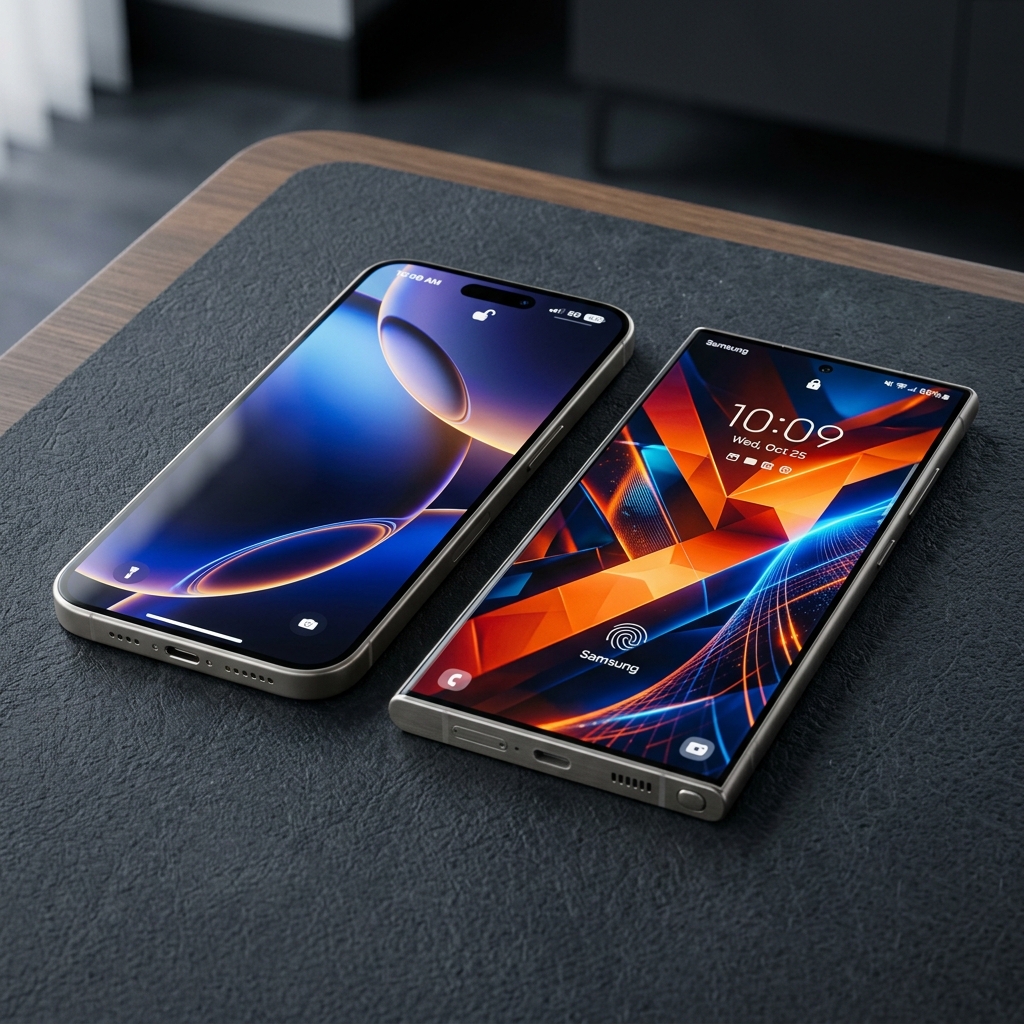
If you are about to spend north of $1,199 on a phone in 2026, you are picking between two very different ideas of what a “flagship” should be.
The Apple iPhone 17 Pro Max launched on September 19, 2025 starting at $1,199 for 256 GB (Apple.com / The Verge). It runs the A19 Pro chip on a 3 nm process, packs 12 GB of RAM, and ships with a 4,823 mAh battery that, in Tom’s Guide’s web-surfing battery test, ran longer than every other 2025/2026 flagship on the market.
The Samsung Galaxy S26 Ultra launched on March 11, 2026 starting at $1,299 (Tom’s Guide). It runs the Snapdragon 8 Elite Gen 5 “for Galaxy” chip, 12 GB or 16 GB of RAM, a 5,000 mAh battery, and a built-in S Pen that the iPhone still has no answer for.
Both are excellent. Both are pricey. But the long-term cost of ownership is where they diverge.
The Verdict First
- Pick the iPhone 17 Pro Max ($1,199) if you want the best long-term ownership math: higher resale (typically 50-60% of MSRP after 3 years vs Samsung’s 35-45% per SellCell depreciation data), the longest battery life of any 2026 flagship, and you live in Apple’s ecosystem. The catch: 256 GB base storage only, no S Pen, and a more closed platform.
- Pick the Galaxy S26 Ultra ($1,299) if you want more screen real estate, the S Pen, a 5x periscope telephoto with a faster f/1.4 main lens, 512 GB or 1 TB storage options, and the freedom to sideload, use a file manager, and customize. The catch: lower resale, marginally worse sustained battery, and $100 more expensive to start.
Cost score (overall value): 78/100. Neither is cheap. Both are “true value” in the sense that they last 4-5 years without forced upgrades. The iPhone wins on resale and battery; the S26 Ultra wins on hardware flexibility and storage headroom.
Key Comparison Points
Price vs Real Cost Per Use
Sticker prices are the least interesting part of this comparison. What matters is what each phone costs you per year of useful life.
| Item | iPhone 17 Pro Max | Galaxy S26 Ultra |
|---|---|---|
| Base price (256 GB) | $1,199 (Apple.com) | $1,299 (Tom’s Guide) |
| 512 GB upgrade | +$200 (~$1,399) | +$120 (~$1,419) |
| 1 TB option | $1,599 (2 TB also offered at $1,999) | $1,659 (S26 Ultra) |
| Typical trade-in after 3 yrs | $600-$720 (~55% retention per SellCell) | $455-$585 (~40% retention per SellCell) |
| Net 3-year cost (256 GB base) | ~$480-$600 | ~$715-$845 |
| Cost per year (4-yr ownership) | ~$150-$200 | ~$215-$260 |
The S26 Ultra costs more up front and loses more value on the back end, so even though both look similar on the shelf, the iPhone’s 3-year net cost is roughly $150-$200 lower at the 256 GB tier.
If you only keep phones 2 years, the gap narrows to about $80-$120, since Android resale curves are steeper in year 1-2 and the iPhone’s curve flattens out in year 3-4. BuyCospa’s view: a 4-year horizon is the honest “value” test for any device above $1,000.
Build Quality and Durability
Both are glass-and-metal flagships with IP68 water resistance. There are some real differences worth knowing.
| Spec | iPhone 17 Pro Max | Galaxy S26 Ultra |
|---|---|---|
| Frame | Grade 5 titanium | Armor Aluminum (2nd gen) |
| Front glass | Ceramic Shield 2 | Gorilla Armor 2 |
| Weight | 233 g | 218 g |
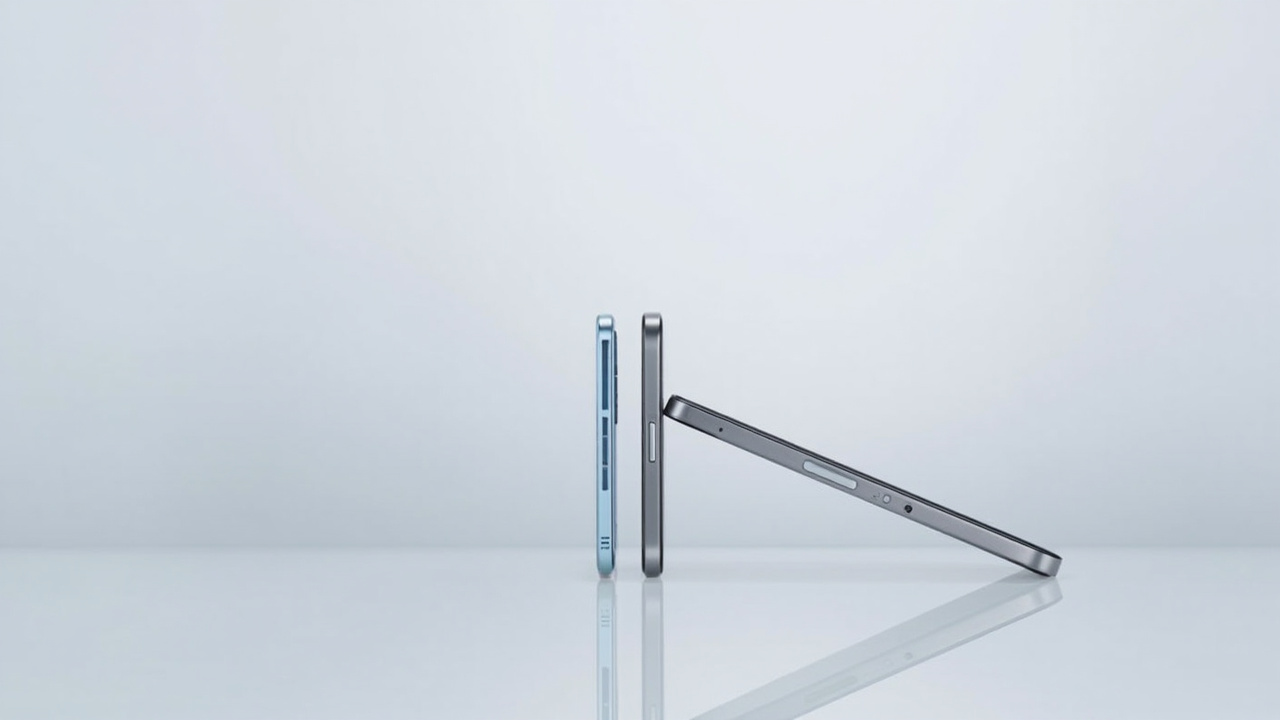
| Thickness | 8.3 mm | 8.2 mm |
| Display | 6.9” OLED, 2,868 x 1,320, 460 ppi | 6.9” AMOLED, 3,120 x 1,440, 505 ppi |
| Peak brightness | 3,000 nits (outdoor) | 2,800 nits (outdoor) |
| Stylus | None | S Pen (built-in, 4,096 levels) |
The S26 Ultra is 15 g lighter and slightly thinner, which is noticeable if you carry the phone in a pocket all day. The S Pen is the single biggest productivity difference: signing PDFs, marking up screenshots, and using it as a remote shutter are real workflows, not gimmicks.
The iPhone counters with vapor-chamber cooling (new for 2025) that, in Tom’s Guide benchmarks, sustains peak performance longer than the S26 Ultra under 20-minute 4K export loads. For a buyer who plans to keep the phone 4-5 years, that thermal headroom matters when the silicon ages.
Feature Breakdown
Cameras
- iPhone 17 Pro Max: 48 MP main (24 mm equiv.), 48 MP ultra-wide, 48 MP 5x tetraprism telephoto, 18 MP front. Photonic Engine, ProRes RAW, Log 2, 4K Dolby Vision 120 fps.
- Galaxy S26 Ultra: 200 MP main (f/1.4, 23 mm), 50 MP ultra-wide, 10 MP 3x telephoto, 50 MP 5x periscope (f/3.4), 12 MP front. ProVisual Engine, Expert RAW, 8K 30 fps, 4K 120 fps.
In real-world testing (Tom’s Guide, GSMArena, Digital Camera World), the S26 Ultra’s larger main sensor pulls ahead in low light and night photography. The 200 MP mode also wins for cropping and large prints. The iPhone wins on video — 4K ProRes with Log 2 is still a clear step ahead, and Cinematic Mode / Action Mode are more refined. If you shoot mostly photos, the Samsung wins. If you shoot mostly video, the iPhone wins.
Battery and Charging
- iPhone 17 Pro Max: 4,823 mAh, 30 W wired, 25 W MagSafe/Qi2, 15 W reverse. Tom’s Guide web-surfing battery test: ~19 hours, the longest of any 2026 flagship tested.
- Galaxy S26 Ultra: 5,000 mAh, 45 W wired, 15 W Qi2-ready wireless, 4.5 W reverse. Tom’s Guide web-surfing test: ~17 hours 30 min.
SammyFans’ March 2026 standardized battery loop test actually had the S26 Ultra beating the iPhone 17 Pro Max under sustained video playback, so the gap depends heavily on workload. The iPhone’s lead is real for mixed-use days; the Samsung’s lead appears under continuous screen-on gaming or video.
If you charge once a day, both will get you through. If you regularly need 1.5 days between charges, the iPhone has the edge.
Software Support
- iPhone 17 Pro Max: 6 years of iOS updates confirmed (Apple’s stated policy since iPhone XS). Expect security patches into 2031.
- Galaxy S26 Ultra: 7 years of One UI and security updates (Samsung’s policy since the S22 era). Expect security patches into 2033.
Samsung now wins on raw support length by one year, and the new Privacy Display feature (PCMag’s review) is genuinely useful. The iPhone’s long-term software polish and tighter hardware/software integration still beat Android for sustained smoothness, but the gap is narrower than it was 3 years ago.
Pros and Cons
iPhone 17 Pro Max
Pros
- Best-in-class battery life (~19 hours, Tom’s Guide)
- Stronger resale value (~$150-$200 more after 3 years)
- Best video pipeline in any phone (ProRes RAW, Log 2, 4K 120 fps)
- Tighter hardware/software integration, longer sustained peak performance
- Ceramic Shield 2 holds up well in drop tests
Cons
- $1,199 only gets you 256 GB — most buyers need 512 GB at $1,399
- No S Pen, no periscope-style 10x optical zoom
- Heavier than the Samsung (233 g vs 218 g)
- Still a closed ecosystem (sideloading, file management, default apps are limited)
- Slower 30 W wired charging versus Samsung’s 45 W
Galaxy S26 Ultra
Pros
- Built-in S Pen with 4,096 pressure levels
- 200 MP main camera with faster f/1.4 lens excels in low light
- More storage headroom: 512 GB is a $120 upgrade, not $200
- Lighter and slightly thinner despite the same 6.9” screen size
- 45 W wired charging is meaningfully faster
- 7 years of updates, one year longer than iPhone
Cons
- $1,299 starting price is $100 more than the iPhone
- Weaker resale: ~$150-$200 less after 3 years per SellCell
- Sustained peak performance trails iPhone under thermal load
- Camera is great for stills, but ProRes/Log video workflows are still better on iPhone
Best For / Skip If
Best For
- iPhone 17 Pro Max: People already in Apple’s ecosystem (iPhone, Mac, AirPods, Apple Watch), mobile videographers, buyers who keep phones 4-5 years and want the best long-term net cost.
- Galaxy S26 Ultra: Power users who want the S Pen, Android tinkerers, mobile photographers who shoot mostly stills, buyers who want 512 GB or 1 TB without paying Apple’s $200 step-up.
Skip If
- You already own an iPhone 15 Pro Max or 16 Pro Max — the upgrade is incremental, not transformational. Wait for the iPhone 18 line.
- You only use your phone for calls, social media, and web browsing. A $400 mid-range phone covers 90% of those workflows and will save you $800+.
- You replace phones every year. The resale math only helps you at the 3-5 year mark.
- You need a phone that fits in small pockets. At 218-233 g and 6.9”, neither is small. The S26 Ultra is the lighter of the two.
Bottom Line
The iPhone 17 Pro Max and Galaxy S26 Ultra are both honest “buy once, keep for 5 years” flagships. Neither is cheap, but neither is wasteful either.
If your goal is the lowest total cost over a 4-year ownership cycle, the iPhone 17 Pro Max wins by $150-$200 net thanks to better resale. If your goal is the most hardware and software flexibility per dollar, the Galaxy S26 Ultra earns the $100 premium through the S Pen, faster charging, and more storage headroom.
The right answer is whichever one matches the ecosystem you already use. Switching ecosystems to “save” $150 over 4 years is not real savings — it’s a productivity tax you’ll pay daily. Buy the one that fits your life.
Buy smart. Get more value.