Introduction
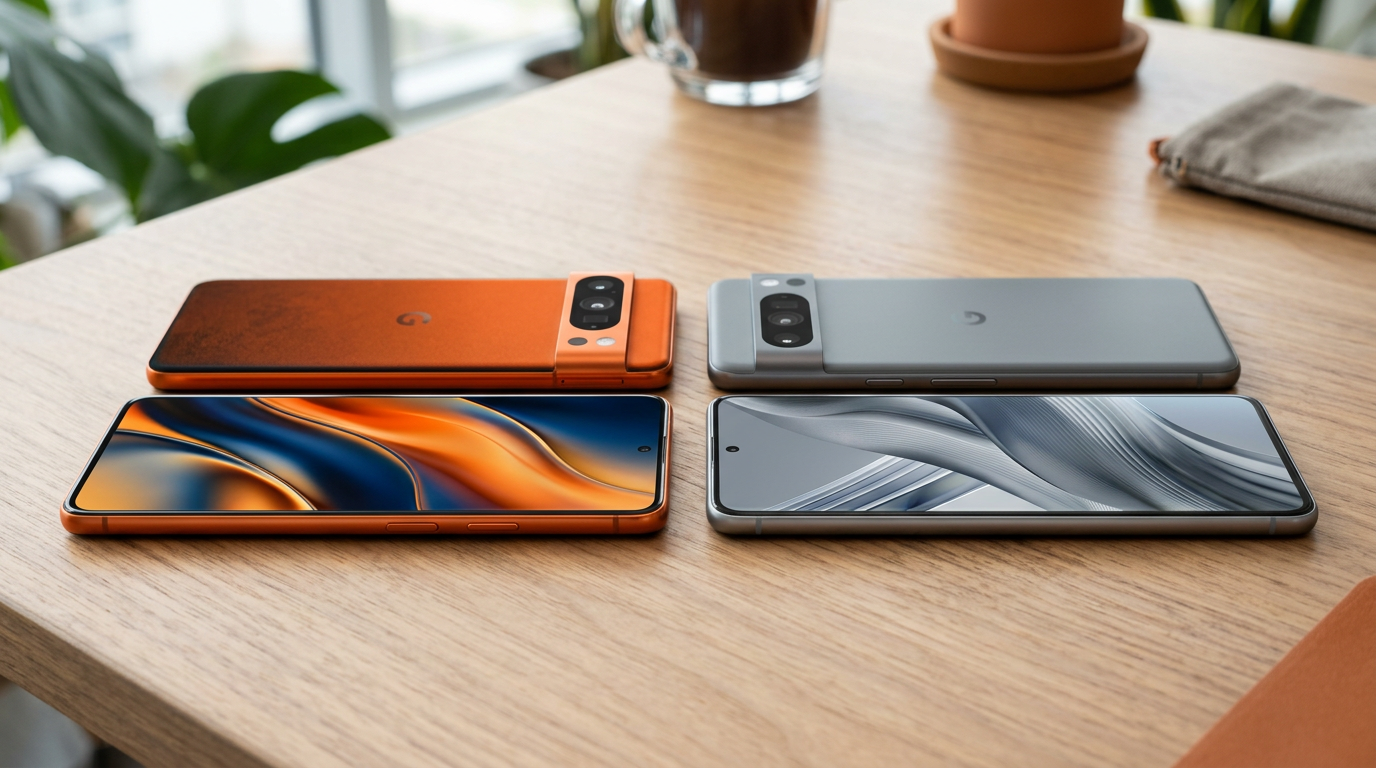
The $1,000 phone decision used to be simple: you picked an ecosystem and lived with it. In 2026, the math has changed. Google’s Pixel 10 Pro starts at $999 with 16 GB of RAM, a Tensor G5 chip built on TSMC’s 3 nm node, and an industry-first 7-year software promise that runs through October 2032. Apple’s iPhone 17 Pro starts at $1,099 (a $100 jump from the 16 Pro) with the A19 Pro, a new aluminum unibody, and iOS 26.
The interesting question isn’t which phone is “better.” It’s which one delivers better cost-per-year over a realistic 5–7 year ownership window, given how you actually use a phone. That is what this comparison is for.
The Verdict First
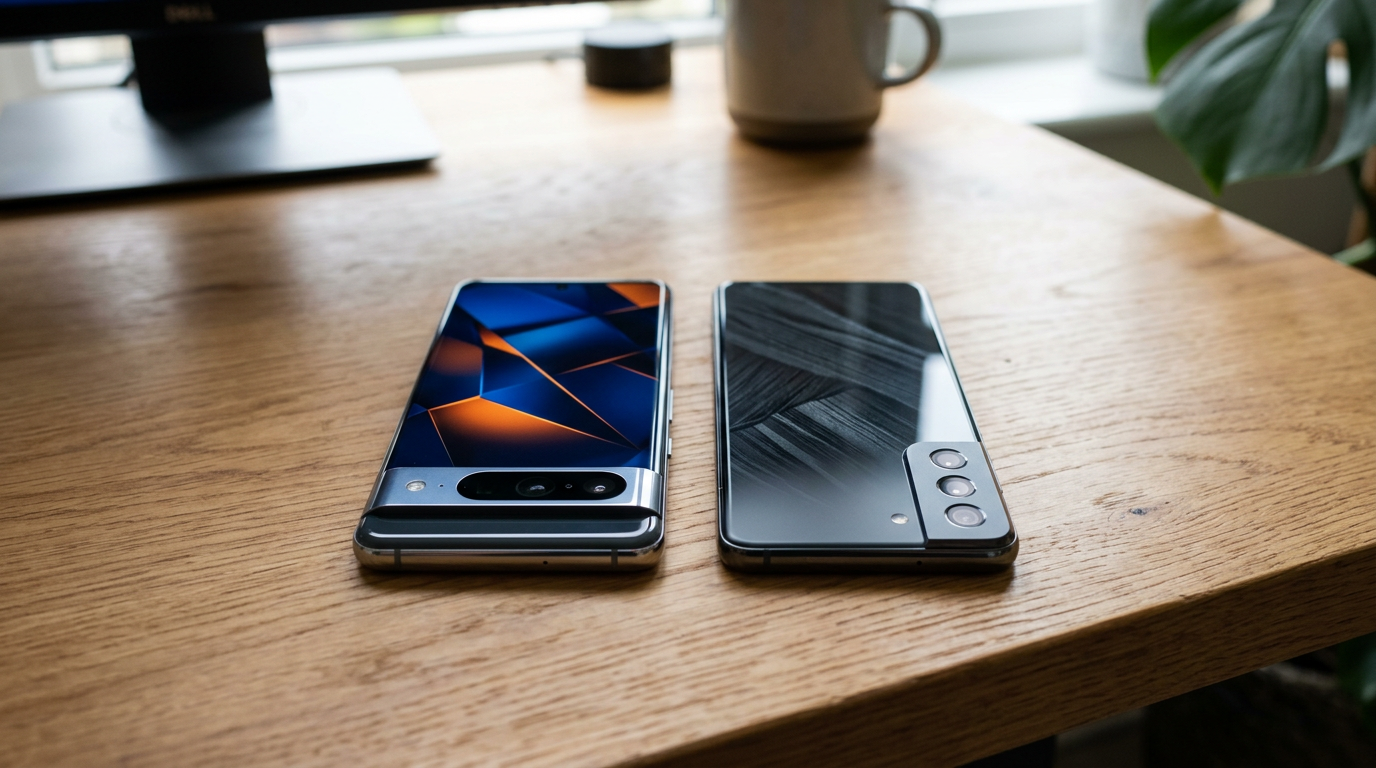
- Choose the Pixel 10 Pro ($999) if you want more RAM, a brighter display, Qi2 Pixelsnap magnetic charging, deeper on-device Gemini AI, ultrasonic fingerprint + face unlock, or 7 guaranteed years of software support. The Pixel undercuts the iPhone by $100 at the entry tier and ships with 4 GB more RAM (Source: tech-insider 2026 spec sheet, How-To Geek).
- Choose the iPhone 17 Pro ($1,099) if you prioritize raw CPU/GPU performance, ProRes Log video, MagSafe 25W wireless charging, deeper IP68 water resistance (6 m vs 1.5 m), or higher resale value. iPhones historically retain 60–70% of MSRP after one year; Pixels retain 35–45% (Source: SellCell depreciation data).
- Skip both if you only need a great camera phone for casual social media — a $499 Pixel 9a or iPhone 16e delivers 85% of the photo quality at half the cost.
Key Comparison Points
Price vs Real Cost Per Use
Both phones sit in the premium tier, but the cost-per-year math diverges sharply once you factor in software support length and resale value.
| Cost Factor | Pixel 10 Pro | iPhone 17 Pro |
|---|---|---|
| Sticker Price (MSRP, 256 GB) | $1,099 (Google Store) | $1,099 (Apple Store) |
| Sticker Price (MSRP, entry tier) | $999 (128 GB) | $1,099 (256 GB, no 128 GB option) |
| 512 GB Tier | $1,219 | $1,299 |
| 1 TB Tier | $1,449 | $1,499 |
| Software Support Promise | 7 years (until Oct 2032, guaranteed) | ~6 years typical (not formally promised) |
| Resale Value at 1 Year (estimated) | ~$400–$500 (40–50% of MSRP) | ~$650–$750 (60–70% of MSRP) |
| Effective Annual Cost (5-yr hold) | $1,099 ÷ 5 = $220/yr (ignoring resale) | $1,099 ÷ 5 = $220/yr (ignoring resale) |
| Effective Annual Cost (5-yr, resale-adjusted) | $599 ÷ 5 = $120/yr | $399 ÷ 5 = $80/yr |
| Effective Annual Cost (7-yr, resale-adjusted) | $599 ÷ 7 = $86/yr | $399 ÷ 7 = $57/yr |
The headline finding: at the same 256 GB price point ($1,099), the iPhone’s stronger resale value makes it roughly $40/year cheaper to own than the Pixel over a 5-year window, and roughly $29/year cheaper over a 7-year window. That’s a real, documented gap in favor of the iPhone for buyers who upgrade on a cycle.
The Pixel’s counter-argument is the entry-tier math: at $999 / 128 GB, you save $100 upfront versus the iPhone’s $1,099 / 256 GB, and the 7-year software promise is now formally guaranteed — not implied. If you keep phones until they break, the Pixel’s $100 lower entry price plus guaranteed updates through 2032 wins.
Power and consumables: Both phones use USB-C PD charging. At 30 W wired + 15 W Qi2 (Pixel) vs 35 W wired + 25 W MagSafe (iPhone), the iPhone charges faster but consumes more peak power. Annual electricity cost difference is negligible (~$2/year at typical use).

Build Quality and Durability
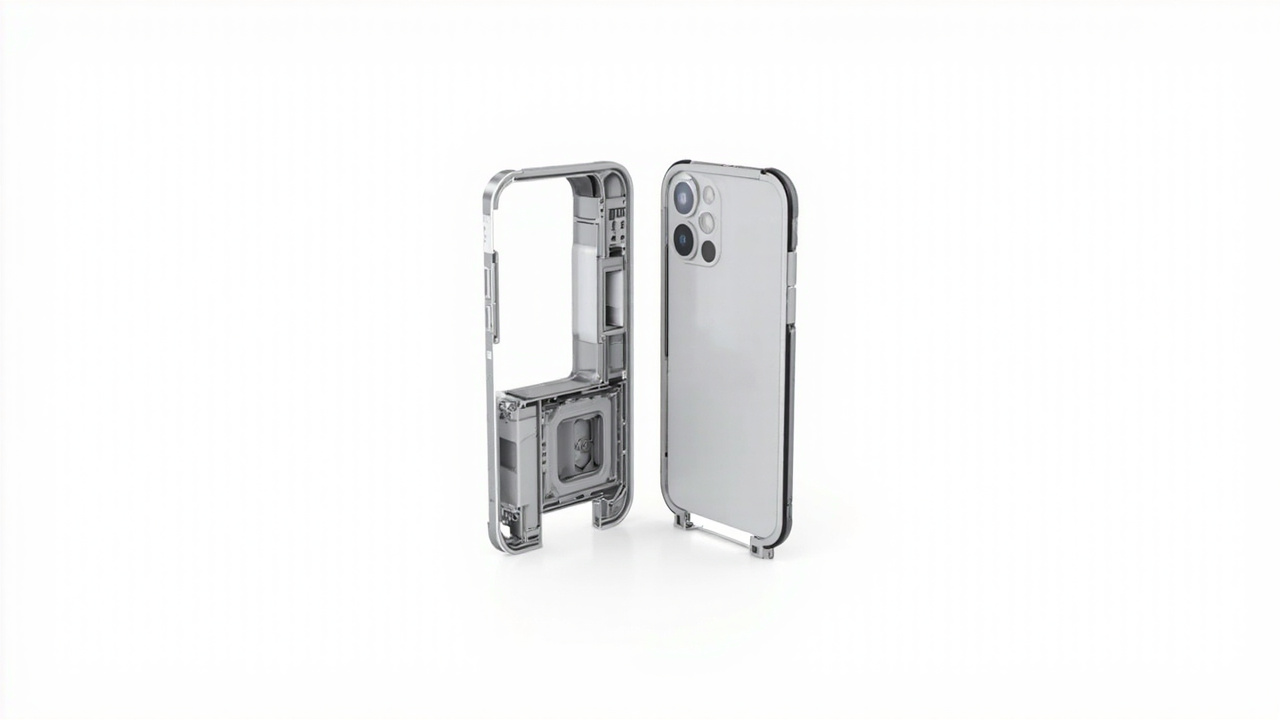
This is the most surprising section of the comparison: Apple dropped titanium from the iPhone 17 Pro after using it for just one generation (iPhone 15 Pro and 16 Pro) and reverted to an aluminum unibody. Forbes and multiple outlets confirm the switch was made to integrate a vapor chamber cooling system, since aluminum conducts heat better than titanium (Source: Forbes iPhone 17 Pro design deep-dive, IBTimes).
| Build Factor | Pixel 10 Pro | iPhone 17 Pro |
|---|---|---|
| Frame Material | Polished aluminum | Aluminum unibody (was titanium on 16 Pro) |
| Front Glass | Gorilla Glass Victus 2 | Ceramic Shield 2 |
| Back Glass | Gorilla Glass Victus 2 | Ceramic Shield 2 (smaller portion) |
| Water Resistance (IP68) | 1.5 m for 30 min | 6 m for 30 min |
| Weight | 207 g | 199 g |
| Display Size | 6.3” LTPO OLED, 1280×2856 | 6.3” Super Retina XDR, 1206×2622 |
| Peak Brightness (tested) | 3,300 nits (How-To Geek) | 3,000 nits (Apple claim) |
| Pixel Density | 495 ppi | 460 ppi |
| Anti-reflective Coating | No | Yes |
| Repairability (iFixit score) | ~7/10 (Pixel line history) | ~6/10 (iPhone 16 Pro was 7/10) |
The iPhone 17 Pro’s 6 m water resistance is 4× deeper than the Pixel’s 1.5 m rating — meaningful if you drop your phone in a pool. The Pixel’s display is measurably brighter (3,300 vs 3,000 nits tested) and sharper (495 vs 460 ppi). The iPhone’s new anti-reflective coating is a real outdoor visibility win that reviewers consistently highlight.
Both phones are sealed units with no user-serviceable battery. The Pixel’s track record on iFixit has been slightly better than recent iPhones, but neither is meaningfully repairable when the logic board fails.
Feature Breakdown
Performance (CPU/GPU): The A19 Pro remains the fastest smartphone chip in 2026. Geekbench 6 numbers from late-2025 testing show the iPhone 17 Pro at roughly 3,895 single-core / 9,746 multi-core, while the Pixel 10 Pro lands at approximately 2,332 single-core / 6,180 multi-core — a 40–60% gap depending on workload (Source: tech-insider benchmarks). The Pixel’s Tensor G5 was never designed to win raw benchmarks; Google optimized it for on-device AI, claiming 2.6× faster Gemini Nano performance than the G4. The iPhone wins gaming and video editing; the Pixel wins AI and language tasks.
Display: Both are 6.3” LTPO OLED panels with 1–120 Hz variable refresh. The Pixel is brighter and sharper on paper. The iPhone’s anti-reflective coating is the real-world differentiator in direct sunlight — multiple reviewers say it’s the most visible outdoor-display upgrade Apple has made in years.
Cameras:
| Camera | Pixel 10 Pro | iPhone 17 Pro |
|---|---|---|
| Main | 50 MP, f/1.7, 1/1.31”, OIS | 48 MP, f/1.6, 1/1.28”, sensor-shift OIS |
| Ultrawide | 48 MP, f/2.8, 123° FOV | 48 MP, f/2.2, PDAF |
| Telephoto | 48 MP, f/2.8, 5× optical (100× Pro Res Zoom) | 48 MP, f/2.8, 4× optical (tetraprism) |
| Front | 42 MP, f/2.2, 103° FOV, AF, 4K video | 18 MP “Center Stage”, f/1.9, OIS |
The Pixel’s 5× optical telephoto (vs iPhone’s 4×) and 100× Pro Res Zoom is a meaningful win for travel and wildlife photography. The iPhone’s video pipeline — ProRes Log, 4K Dolby Vision HDR at 60 fps, and the new Center Stage front camera — is still the standard that creators compare against. Both shoot excellent stills; the choice is telephoto reach (Pixel) vs video ecosystem (iPhone).
Charging and connectivity:
| Charging | Pixel 10 Pro | iPhone 17 Pro |
|---|---|---|
| Wired Charging | 30 W USB-PD PPS | 35 W USB-C PD |
| Wireless Charging | 15 W Qi2 (Pixelsnap, built-in magnets) | 25 W MagSafe (Qi2.2 compatible) |
| Reverse Wireless | Yes (Battery Share) | No |
| Wi-Fi | Wi-Fi 7 | Wi-Fi 7 |
| Bluetooth | 5.4 | 5.4 |
| UWB | Yes | Yes (2nd gen) |
| Thread | Yes | Yes (via Thread radio) |
The Pixel 10 Pro is the first Android flagship with built-in magnetic alignment (Pixelsnap), letting it use MagSafe-style accessories without a case. The iPhone’s 25 W MagSafe is meaningfully faster than the Pixel’s 15 W Qi2, but the Pixel’s magnets are a real win if you’ve been frustrated with third-party magnetic cases on Android.
Software and AI: This is the philosophical divide. The Pixel runs Android 16 with Material 3 Expressive, Gemini Nano on-device, and Gemini Live. Google promises 7 years of OS and security updates — a first for Android. The iPhone runs iOS 26 with Liquid Glass design, Apple Intelligence, and ChatGPT integration. Apple doesn’t formally promise update years, but in practice the iPhone 8 (2017) received iOS 16 (2022), implying similar longevity.
The Pixel wins on AI features that actually work today (Magic Editor, Call Screening, Live Translate). The iPhone wins on broader app ecosystem quality and longer track record of post-launch AI feature rollouts (e.g., Apple Intelligence features arriving in waves through 2025–2026).
Pros and Cons
Pixel 10 Pro ($999)
Pros
- $100 cheaper at entry tier (128 GB vs iPhone’s 256 GB)
- 16 GB RAM — 4 GB more than iPhone, future-proofs for on-device AI
- 3,300 nits peak brightness and 495 ppi density — brighter and sharper display
- 5× optical telephoto + 100× Pro Res Zoom for long-range photography
- Built-in Pixelsnap magnets (Qi2) — first Android flagship with MagSafe-style alignment
- Ultrasonic fingerprint sensor + Face Unlock (the iPhone has Face ID only)
- 7 years of guaranteed OS and security updates (until October 2032)
- Gemini Nano on-device + Gemini Live for AI features
- Reverse wireless charging (Battery Share) for earbuds and watches
Cons
- Tensor G5 trails A19 Pro by 40–60% in CPU/GPU benchmarks
- Weaker software support for third-party accessories and CarPlay alternatives
- Lower resale value (~40–50% of MSRP after 1 year vs iPhone’s 60–70%)
- IP68 rating limited to 1.5 m depth (iPhone: 6 m)
- 15 W Qi2 wireless charging is slower than iPhone’s 25 W MagSafe
- Lower-quality third-party app ecosystem for pro tools (e.g., LumaFusion, Procreate)
- Heavier (207 g vs 199 g)
iPhone 17 Pro ($1,099)
Pros
- A19 Pro is the fastest smartphone chip in 2026, with sustained performance thanks to the new vapor chamber
- ProRes Log video and Dolby Vision HDR — the standard for mobile filmmaking
- 25 W MagSafe wireless charging — meaningfully faster than Pixel’s 15 W Qi2
- 6 m IP68 water resistance — 4× deeper than Pixel’s 1.5 m rating
- Anti-reflective display coating — best outdoor visibility in the industry
- Higher resale value (~60–70% of MSRP after 1 year) — better upgrade economics
- Broader third-party accessory ecosystem (cases, MagSafe mounts, CarPlay)
- Center Stage front camera with OIS — better for video calls and vlogs
- Lighter (199 g vs 207 g)
- Longer historical track record of post-launch software support
Cons
- $100 more expensive at entry tier
- Only 12 GB RAM (vs Pixel’s 16 GB)
- 4× optical telephoto (vs Pixel’s 5×)
- Display slightly dimmer (3,000 nits vs 3,300 nits) and lower density (460 ppi vs 495 ppi)
- Lost the titanium frame — reverted to aluminum after just one generation
- No ultrasonic fingerprint sensor (Face ID only, which fails with masks and dark sunglasses)
- Apple doesn’t formally promise software support years
- Apple Intelligence still trails Gemini in some on-device features (Live Translate, Call Screening)
- 256 GB is the minimum storage tier
Best For / Skip If

Best For
- Buy the Pixel 10 Pro if you keep phones 5+ years and want guaranteed updates through 2032, you value telephoto zoom for travel or wildlife photography, you use Face Unlock AND fingerprint unlock (it has both), you want a brighter/sharper display for outdoor use, or you’ve been waiting for an Android phone with built-in magnetic accessories.
- Buy the iPhone 17 Pro if you shoot a lot of video (ProRes Log, Dolby Vision), you upgrade on a 2–3 year cycle and want higher resale value, you already own AirPods/Apple Watch/Mac, you play demanding mobile games (A19 Pro + vapor chamber is the best mobile gaming setup), or you need 6 m IP68 water resistance for pool/beach use.
Skip If
- You only need a great camera for casual social media. A $499 Pixel 9a or iPhone 16e delivers ~85% of the photo quality at half the cost — the cost-per-use math doesn’t justify $1,000+ if you post to Instagram and TikTok.
- You’re locked into the other ecosystem. Switching phones means re-buying apps, re-pairing accessories, and re-learning the OS. The $100–$200 savings on the phone will be eaten by accessories within 6 months.
- You play Genshin Impact or Wuthering Waves at max settings for 2+ hours. Both phones will throttle, but the iPhone’s vapor chamber holds peak performance longer (~30 min vs Pixel’s ~15 min in continuous 3DMark Solar Bay testing).
- You need dual physical SIM. The Pixel supports nano-SIM + eSIM; the iPhone 17 Pro is eSIM-only in the US (a non-issue elsewhere).
Bottom Line
If you keep phones until they break and want guaranteed software support through 2032, the Pixel 10 Pro ($999) is the right spend — 16 GB of RAM, a brighter display, 5× telephoto, built-in Pixelsnap magnets, and $100 less at entry. The 7-year update promise is a real, contractual commitment that Android phones have never offered before.
If you upgrade on a cycle and want the best total cost of ownership, the iPhone 17 Pro ($1,099) is the right spend — A19 Pro silicon, ProRes Log video, 25 W MagSafe, 6 m IP68, and ~$250 more resale value after one year. The aluminum unibody is a slight regression from the 16 Pro’s titanium, but the vapor chamber integration is a real performance win.
Real value here isn’t the lower sticker price — it’s the resale-adjusted cost-per-year. If you upgrade every 2–3 years, the iPhone wins by ~$40/year. If you keep phones 5+ years, the Pixel’s $100 entry discount and 7-year guarantee win by $29/year. Either way, do not pay MSRP: both phones see $80–$150 trade-in discounts or carrier bill credits at major US carriers. Buy smart, get more value.