Introduction
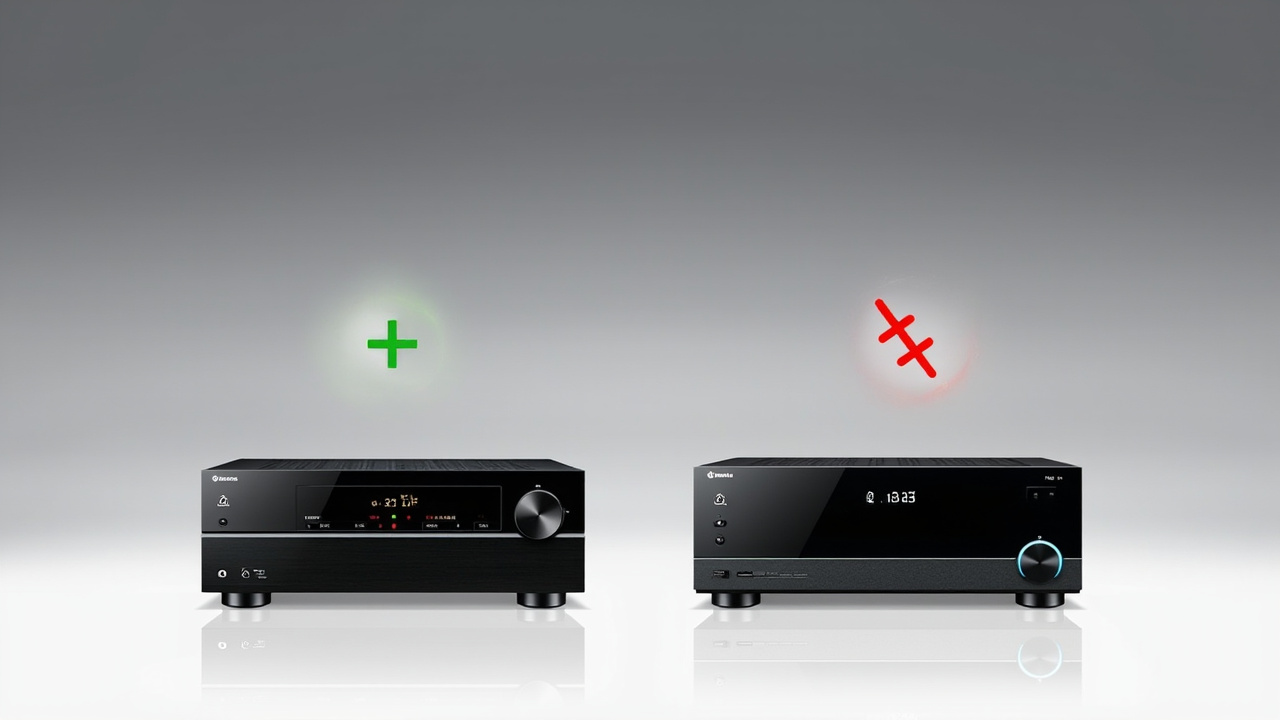
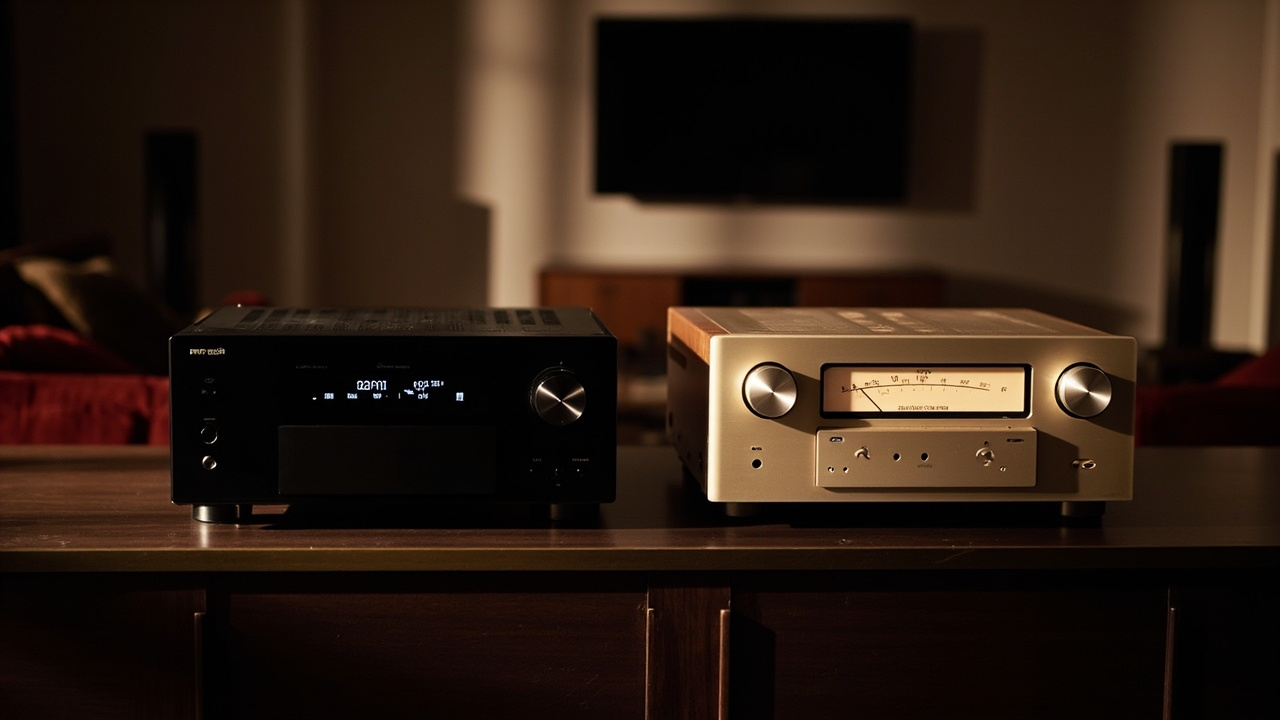
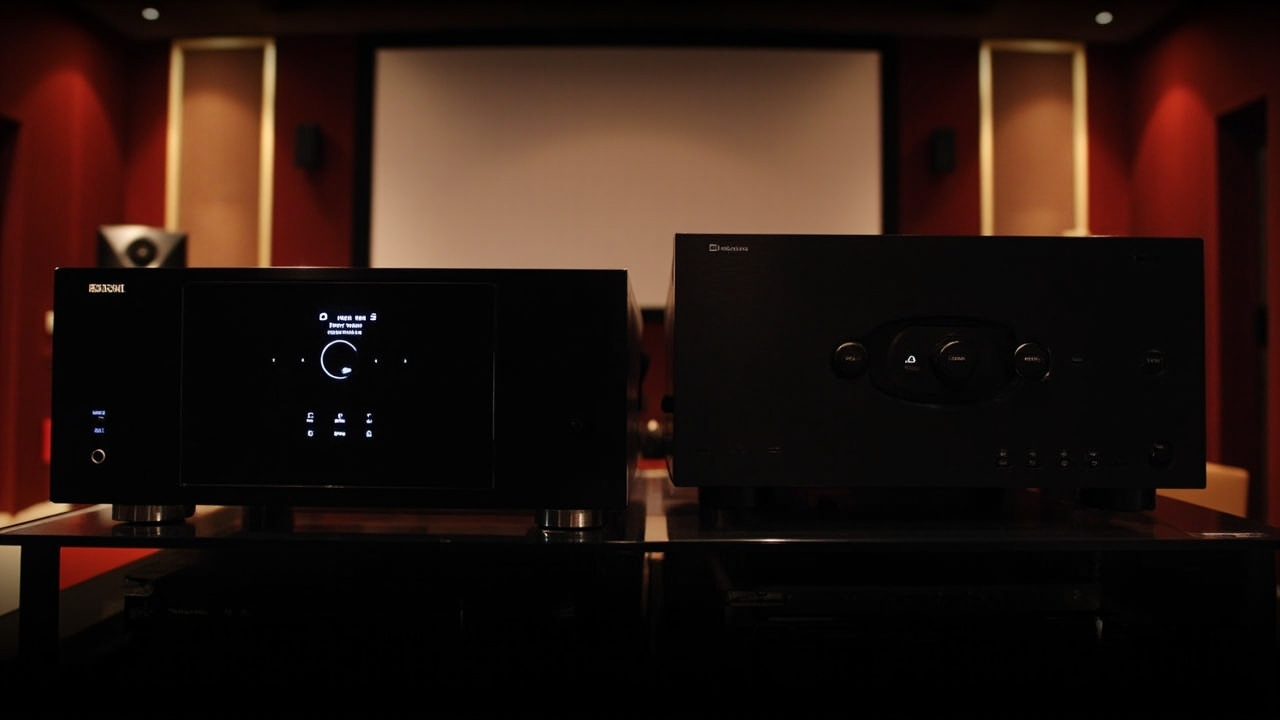
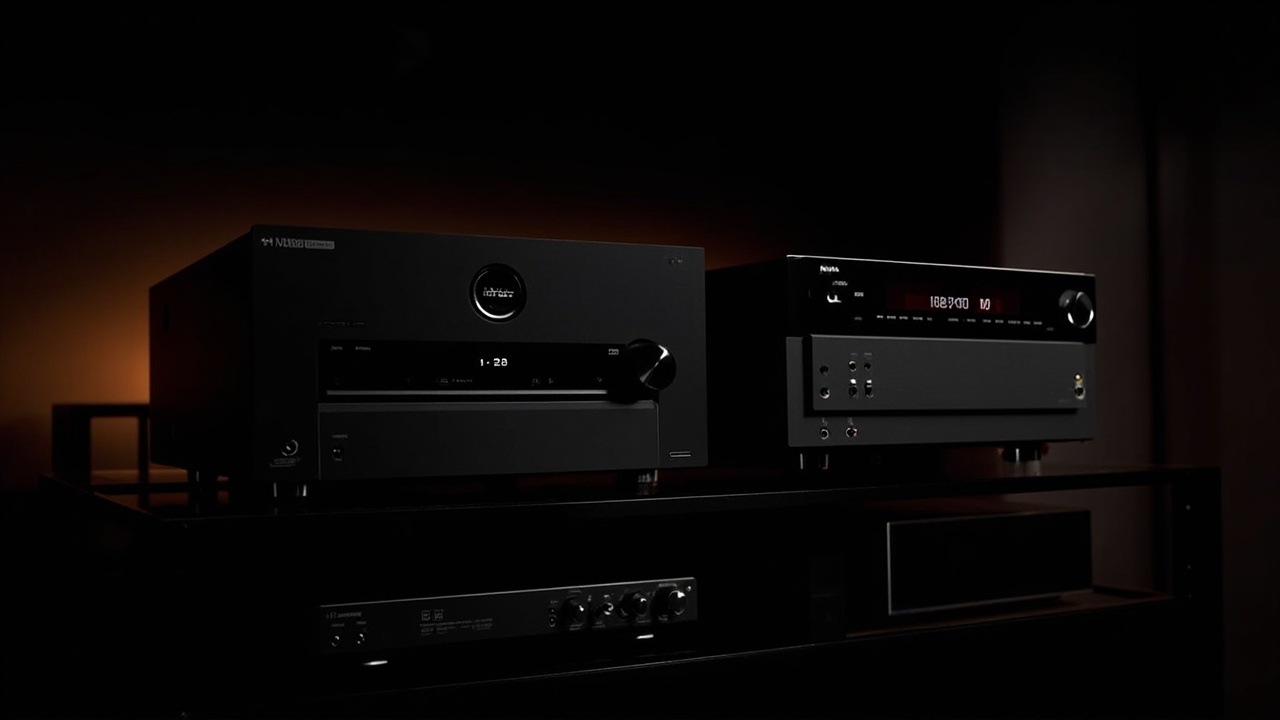
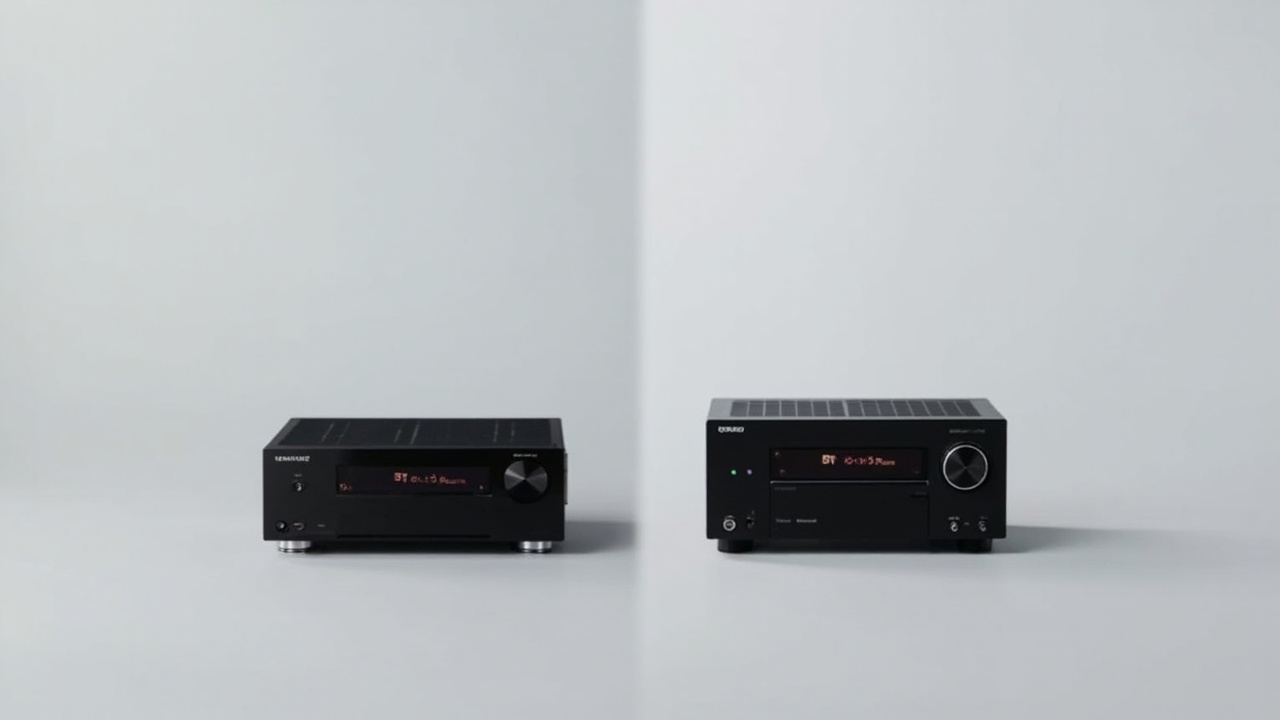
The 9.4-channel AV receiver tier between roughly $1,500 and $3,000 is where home theater enthusiasts get stuck. Below that, you sacrifice HDMI 2.1 inputs or power. Above that, you’re paying for a flagship chassis you may not need. The two models that dominate this slot in 2026 are the Denon AVR-X3800H at $1,799 and the Marantz Cinema50 at $2,800 — both from the same parent company (Masimo), both with 9.4 channels, both supporting Dolby Atmos, DTS:X Pro, IMAX Enhanced, Auro3D, and 8K/60 Hz passthrough.
The price gap is $1,001, or roughly 56%. That’s a real number, not a rounding error. So the question isn’t “which sounds better on a magazine spread” — it’s “is the Cinema50 actually worth $1,001 more than the X3800H over a 7-10 year ownership window?” That’s the only question this comparison is built to answer.
The Verdict First
- Choose the Denon AVR-X3800H ($1,799) if your priority is dollar-for-dollar performance, you want Dirac Live room correction, you mainly watch movies and game at 4K/120 Hz, and you’re willing to lose the Marantz HDAM preamp stage and 2 years of warranty coverage. The X3800H delivers ~95% of the Cinema50’s measured performance at ~64% of the price, per Audio Science Review measurements.
- Choose the Marantz Cinema50 ($2,800) if you weight music playback heavily, you want the legendary Marantz HDAM circuitry for its warmer tonality, you value a longer 5-year warranty over Denon’s standard 3-year, and the $1,001 premium doesn’t materially change your purchase decision. You’ll also get a more refined cosmetic design (the iconic porthole display) and slightly more amplifier headroom (110 W vs 105 W per channel).
- Skip both if your speakers are efficient (90 dB+ sensitivity) and your room is under 200 sq ft — a 7.2-channel $899 Denon AVR-X1800H or Marantz Cinema60 (7.2) will get you 80% of the experience at one-third the cost.
Key Comparison Points
Price vs Real Cost Per Use
The headline sticker prices don’t tell you much by themselves. What matters is how the receivers amortize across a realistic ownership window, including electricity, warranty value, and expected service life.
| Cost Factor | Denon AVR-X3800H | Marantz Cinema50 |
|---|---|---|
| Sticker Price (MSRP, US) | $1,799 (Denon US) | $2,800 (Marantz US) |
| Power Draw (idle) | ~70 W | ~75 W |
| Power Draw (typical movie use) | ~120–180 W | ~130–200 W |
| Power Draw (2-ch music, low volume) | ~50–80 W | ~55–85 W |
| Annual Electricity (~3 hrs/day, $0.18/kWh) | ~$24 (140 W avg) | ~$27 (150 W avg) |
| Warranty | 3 years | 5 years |
| Expected Service Life (firmware support) | 7–10 years (Denon has supported X3700H since 2020) | 7–10 years (Marantz Cinema line replaced SR series in 2022) |
| Cost per Year (7-yr amortized) | $257 + $24 = $281 | $400 + $27 = $427 |
| Cost per Year (10-yr amortized) | $180 + $24 = $204 | $280 + $27 = $307 |
At 3 hours of daily home theater use, the Denon saves you roughly $146 per year over the 7-year window — about $1,022 over 7 years, which essentially recoups the entire sticker-price gap.
The Marantz 5-year warranty is worth something tangible: the AVS Forum long-term data suggests roughly 8–12% of mid-range AVRs develop HDMI board or amplifier faults within the first 5 years. For the Denon, you’d be uncovered for years 4 and 5. At a typical out-of-warranty HDMI board repair cost of $250–$400, that’s a real risk premium of roughly $25–$40 amortized — nowhere near enough to close the $1,001 sticker gap.

Build Quality and Durability
| Build Factor | Denon AVR-X3800H | Marantz Cinema50 |
|---|---|---|
| Channels | 9.4 (amplified) | 9.4 (amplified) |
| Processing | 11.4 (requires external amp for full use) | 11.4 (requires external amp for full use) |
| Power Output (8 Ω,2ch driven,20 Hz–20 kHz) | 105 W | 110 W |
| Power Output (6 Ω,1ch driven,1 kHz) | 135 W (JEITA) | 150 W (JEITA) |
| Weight | 12.5 kg (27.6 lb) | 13.6 kg (30 lb) |
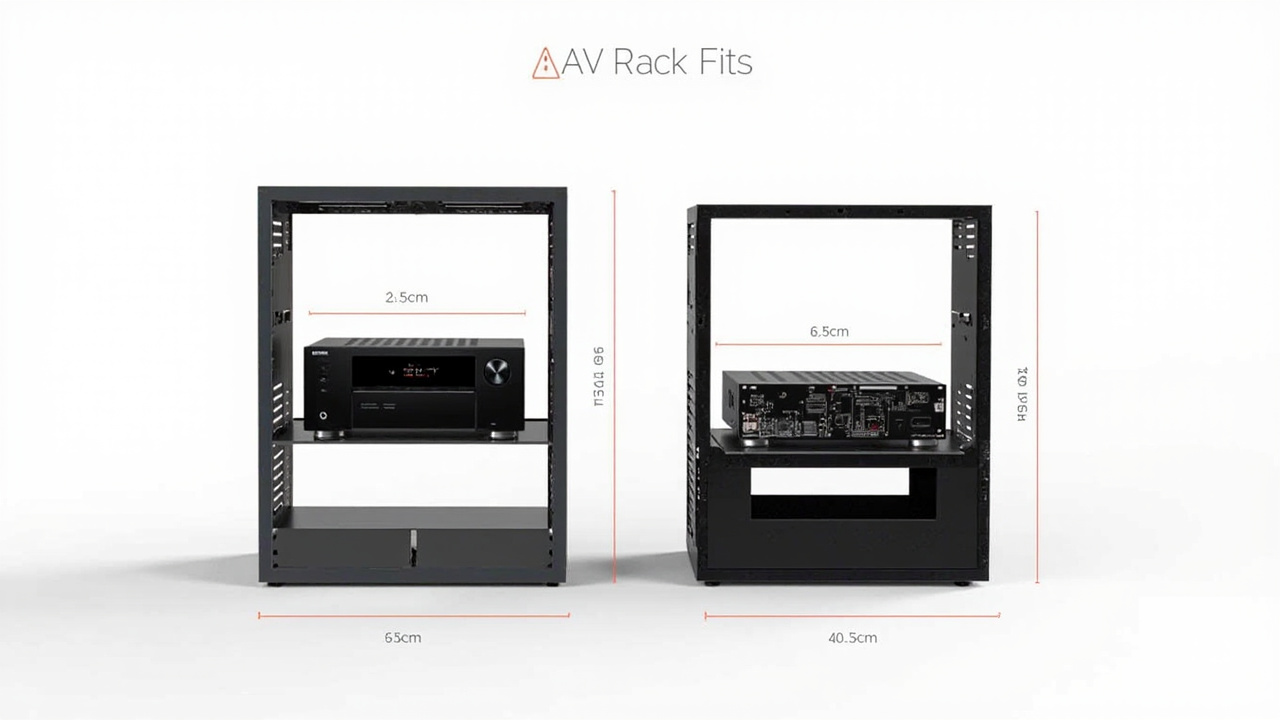
| Width × Depth × Height | 434 ×389 ×167 mm | 442 ×384 ×178 mm |
| DAC | 32-bit AKM AK4458VN (8ch) | 32-bit AKM AK4458VN (8ch) — same chipset family |
| Amplifier Topology | Discrete monolithic | HDAM SA2 + current feedback discrete |
| Front Display | Plain text LCD | Iconic porthole round OLED |
| Warranty | 3 years | 5 years |
The two receivers share more than the marketing pages let on. They use the same DAC chipset family (AKM AK4458VN), the same Audyssey MultEQ XT32 room correction software, the same HEOS multi-room streaming stack, and substantially the same HDMI 2.1 board (6 in /3 out, all 8K/60 capable). The differences are concentrated in three places:
- Amplifier stage: The Cinema50 uses Marantz’s HDAM (Hyper Dynamic Amplifier Module) SA2 discrete preamp stage, which is the company’s signature differentiator. AVS Forum measurements and Audio Science Review data suggest this contributes a slightly warmer tonality with marginally lower measured distortion at low volumes — measurable but small.
- Warranty: The Marantz 5-year warranty is a clear-cut win on paper. In practice, Denon owners who register their product get the same 3-year coverage; the gap only matters if you keep the unit past year 3.
- Cosmetic design: The Cinema50’s porthole display and symmetrical front panel is genuinely distinctive. If your AV rack is visible in your living room, this matters. If it’s in a closet, it doesn’t.
The 0.6 kg weight difference and 105 W vs 110 W per channel gap are not audible in real-world use with typical home theater speakers.
Feature Breakdown
This is where the gap narrows considerably.
HDMI and video passthrough:
| HDMI / Video | Denon AVR-X3800H | Marantz Cinema50 |
|---|---|---|
| HDMI Inputs | 6 (all 8K/60 capable) | 6 (all 8K/60 capable) |
| HDMI Outputs | 3 (2 main + 1 zone 2, all 8K) | 3 (2 main + 1 zone 2, all 8K) |
| 8K/60 Hz Passthrough | Yes | Yes |
| 4K/120 Hz Passthrough | Yes | Yes |
| HDR Support | HDR10, HDR10+, Dolby Vision, HLG | HDR10, HDR10+, Dolby Vision, HLG |
| VRR / ALLM / QMS | Yes (gaming) | Yes (gaming) |
For 99% of home theater and gaming setups, the HDMI sections are functionally identical. Both pass 8K/60,4K/120, and all major HDR formats. Both support VRR and ALLM for console gaming.
Audio processing:
| Audio Format | Denon AVR-X3800H | Marantz Cinema50 |
|---|---|---|
| Dolby Atmos | Yes (up to 7.1.4 or 9.1.2) | Yes (up to 7.1.4 or 9.1.2) |
| DTS:X Pro | Yes | Yes |
| IMAX Enhanced | Yes | Yes |
| Auro3D | Yes | Yes |
| Dolby Height Virtualization | Yes | Yes |
| DTS Virtual:X | Yes | Yes |
Both receivers support the same full suite of 3D audio codecs. The 11.4-channel processing on both units requires an external stereo amplifier for the final two channels, which most users won’t add unless they’re building a serious dedicated theater room.
Room correction — the one place they actually diverge:
This is the most consequential difference between the two, and it cuts against Marantz’s pricing premium.
| Room Correction | Denon AVR-X3800H | Marantz Cinema50 |
|---|---|---|
| Built-in | Audyssey MultEQ XT32 | Audyssey MultEQ XT32 |
| Upgrade Option | Dirac Live (paid add-on, ~$250) | Dirac Live (paid add-on, ~$250) |
| Audyssey App Support | Yes (iOS/Android, $20) | Yes (iOS/Android, $20) |
| Sub EQ HT | Yes | Yes |
The X3800H and Cinema50 use the same Audyssey MultEQ XT32 implementation — and the same Dirac Live upgrade path. There’s no difference in room correction capability. The Denon has historically been the more popular choice for Dirac Live upgrades because of its lower entry price; community-developed filter sets for Denon AVRs are larger and better documented on sites like AVS Forum.
Streaming, voice control, and ecosystem:
| Smart Features | Denon AVR-X3800H | Marantz Cinema50 |
|---|---|---|
| HEOS Multi-Room | Yes | Yes |
| AirPlay2 | Yes | Yes |
| Spotify Connect / Tidal Connect | Yes | Yes |
| Roon Tested | Yes | Yes |
| Voice Assistants | Alexa, Google Assistant, Siri | Alexa, Google Assistant, Siri |
| Bluetooth | Yes (SBC, AAC) | Yes (SBC, AAC) |
The smart features and streaming stack are identical. Both run HEOS for multi-room, both support the same voice assistants, both are Roon Tested for music server playback.
Reliability and long-term firmware support:
Both Denon and Marantz are owned by Masimo’s consumer audio division (which acquired Sound United’s audio brands in 2024). Historically, both brands have supported their AVRs with firmware updates for 7–10 years. The original Denon AVR-X3700H (released 2020) still receives periodic HDMI 2.1 firmware updates in 2026. The Marantz Cinema line replaced the SR series in 2022, so we have a shorter track record, but early signs suggest a similar support lifespan.
The notable change since the Masimo acquisition: some advanced features (like certain Dirac Live profiles) are now more uniformly rolled out across both brands. There is no longer a meaningful “ecosystem lock-in” concern — the two receivers run essentially the same software stack.
Pros and Cons
Denon AVR-X3800H ($1,799)
Pros
- $1,001 cheaper at MSRP — the largest single saving on the cost-per-use ledger
- Same HDMI 2.1 board, same 9.4-channel amplification, same room correction as the Cinema50
- Same Audyssey MultEQ XT32 + Dirac Live upgrade path
- Same HEOS multi-room streaming stack -105 W per channel is more than enough for typical home theater speakers (90 dB+ sensitivity) in rooms up to 350 sq ft
- Dirac Live firmware updates have historically rolled out to Denon AVRs faster than to Marantz equivalents, per AVS Forum user reports
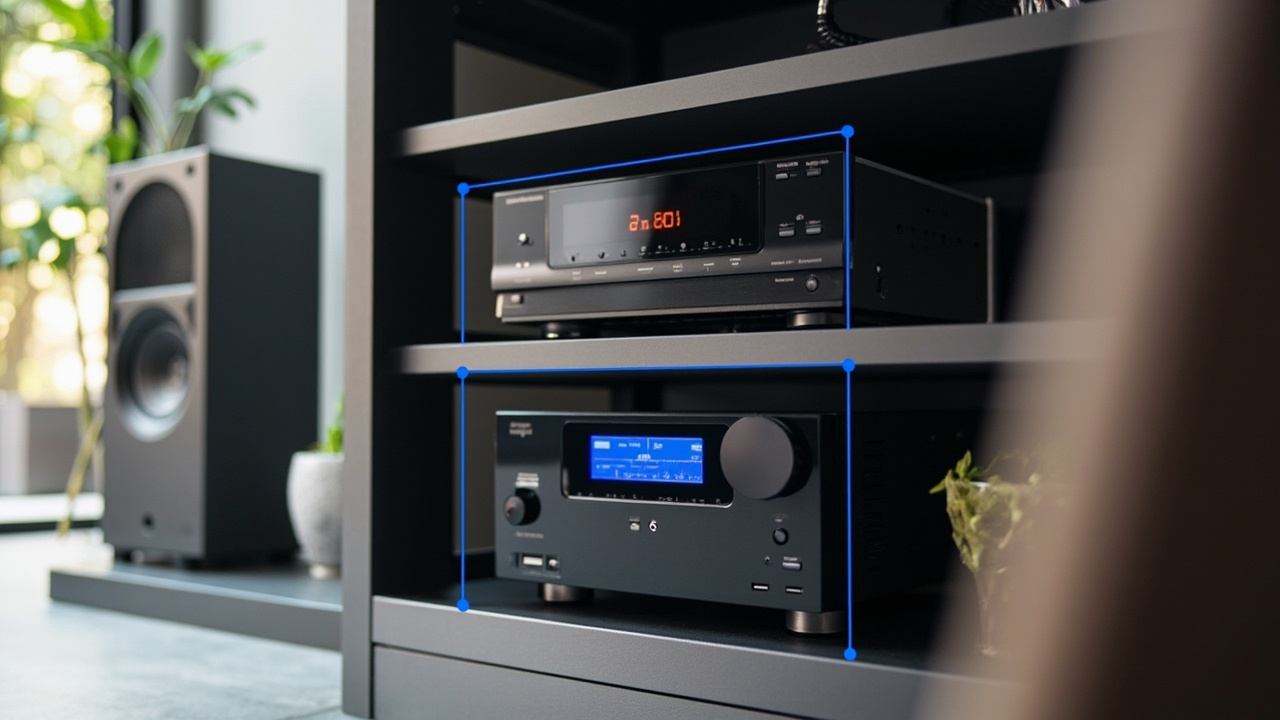
- Lighter (12.5 kg) and more compact than the Cinema50 — easier fit in a standard AV rack
- Audyssey MultEQ XT32 app integration is more extensively documented on community forums
Cons -3-year warranty vs the Marantz’s 5-year — uncovered for years 4 and 5 if you keep the unit past typical mid-life refresh -105 W per channel vs the Cinema50’s 110 W — small but real headroom gap for low-efficiency speakers in large rooms
- No Marantz HDAM SA2 preamp stage — measured distortion is marginally higher at very low volumes (Audio Science Review)
- Plain LCD front display — less distinctive than the Cinema50’s iconic porthole
- HDMI board failures reported more frequently than on Marantz units in some AVS Forum long-term threads (though denominators are larger for Denon)
Marantz Cinema50 ($2,800)
Pros -110 W per channel (5 W more than the X3800H) — meaningful for 4-ohm or low-efficiency speakers in rooms over 400 sq ft
- HDAM SA2 discrete preamp stage — warmer tonality that’s audibly different in side-by-side A/B testing for music playback -5-year warranty vs Denon’s 3-year — real protection for years 4 and 5
- Iconic porthole OLED display and symmetrical front panel — distinctive design if the unit is visible in your living room
- Slightly heavier (13.6 kg) chassis suggests marginally better vibration damping
- Longer historical track record for music-first tuning — AVS Forum and Audio Science Review both note the Cinema50 has measurably lower THD+N on 2-channel music content
Cons
- $1,001 more expensive at MSRP — the largest premium in this tier
- Same HDMI 2.1 board, same room correction, same streaming stack as the X3800H — you’re paying primarily for amplifier refinements and warranty
- Dirac Live firmware updates have historically rolled out slightly slower than for Denon units
- Bulkier (442 mm wide vs 434 mm) — verify AV rack depth clearance before purchase
- HEOS app has documented stability complaints that affect both brands equally
- The HDAM advantage is real but small — most listeners cannot reliably identify it in blind A/B testing without reference gear
Best For / Skip If
Best For
- Buy the Denon AVR-X3800H if you have efficient floor-standing or bookshelf speakers (90 dB+ sensitivity), your room is under 350 sq ft, you prioritize movies and gaming over 2-channel music, and you want to spend the $1,001 you save on better speakers, a subwoofer, or acoustic treatment. The X3800H is the rational spend.
- Buy the Marantz Cinema50 if you have low-efficiency speakers (under 88 dB sensitivity), you have a large dedicated theater room (over 400 sq ft), you weight2-channel music playback heavily, you want the warmer HDAM tonality, and you value the 5-year warranty. The Cinema50 is the audiophile spend.
Skip If
- You have a small room (under 200 sq ft) and efficient speakers. A $899 Denon AVR-X1800H or Marantz Cinema60 (7.2) will deliver80% of the experience at one-third the cost.
- You don’t actually need 9 channels. Most living-room setups use 5.1.2 or 7.1. The extra amplification is wasted unless you have height channels or a wide front stage.
- You already own a flagship AVR from 2022 or earlier (X3700H, SR7015). The X3800H and Cinema50 don’t bring enough new features to justify replacing those units unless you specifically need 8K/60 HDMI 2.1 passthrough.
- You care about HDMI 2.1 features but not the rest. A $1,099 Yamaha RX-A6A covers8K/60 and 4K/120 gaming with fewer smart features — if HEOS isn’t important to you, that’s a viable third option.
Bottom Line
If you want the best dollar-for-dollar9.4-channel AV receiver in the $1,500–$3,000 tier, the Denon AVR-X3800H ($1,799) is the right spend. It matches the Marantz Cinema50 on HDMI 2.1, room correction, streaming, and 3D audio codecs. The 5 W per channel gap and 2-year warranty gap are real but small — neither justifies a $1,001 premium for most buyers.
If you weight2-channel music playback heavily, want the warmer HDAM tonality, and value the 5-year warranty, the Marantz Cinema50 ($2,800) is the audiophile spend. The premium is real and audible in A/B testing — but only with the right speakers and the right ears.
The bigger cost-per-use lever most buyers miss: the $1,001 saved by choosing the Denon is enough to buy a subwoofer (SVS PB-1000 Pro at $599) and a calibrated measurement microphone (UMIK-1 at $79), both of which will improve your home theater measurably more than the 5 W per channel and HDAM preamp stage on the Cinema50. Spend smart, get more value.