Introduction
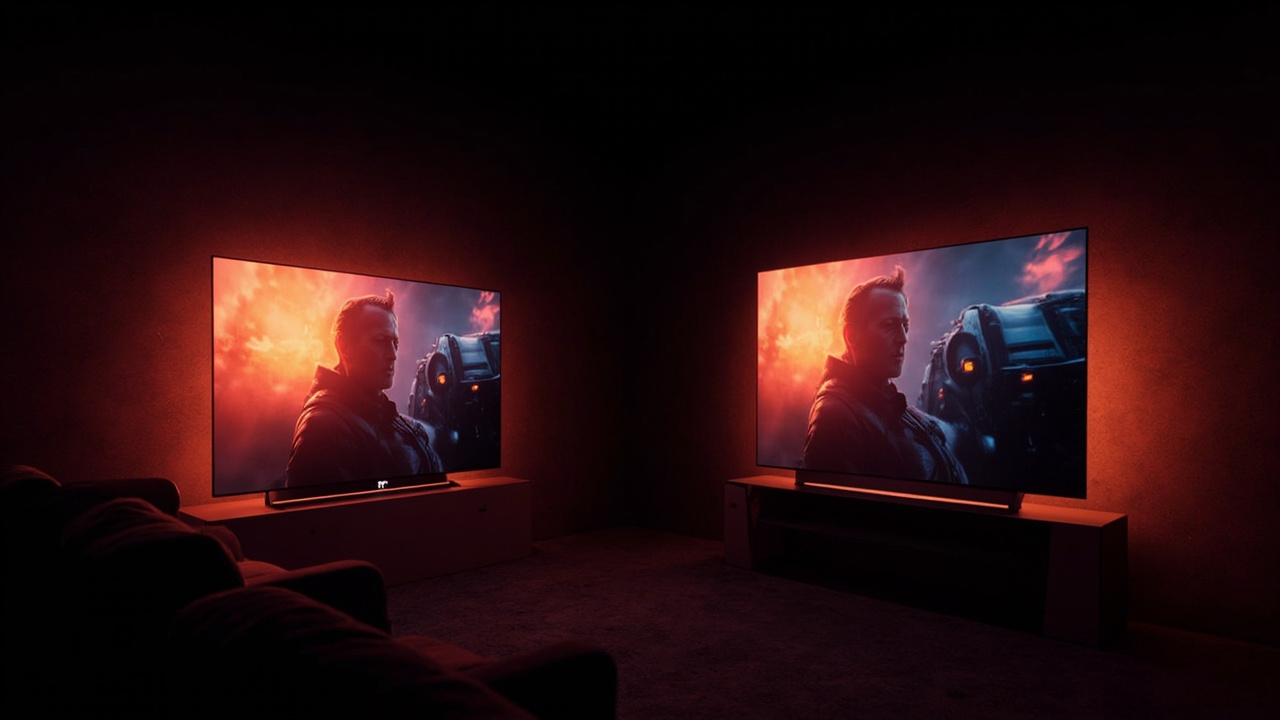
If you are about to spend $2,500 to $3,500 on a 65-inch flagship TV in 2026, you are picking between two very different ideas of what “the best picture” means.
The LG G5 OLED launched in early 2025 starting at $3,399 for the 65-inch (LG.com). It uses LG Display’s 4th-generation Primary RGB Tandem panel — a four-stack OLED structure that pushed peak brightness to a measured ~2,400-2,500 nits in real-world HDR scenes (RTINGS, Tom’s Guide). With the LG G6 launching in March 2026 at the same $2,499 starting price, the G5 has dropped to a clearance range of $1,996-$2,499 at major US retailers (The Verge, PCGuide, CNET).
The Sony Bravia 9 (K-65XR90) launched in 2024 as Sony’s first non-OLED flagship since 2020. It uses thousands of Mini-LEDs controlled by Sony’s XR Backlight Master Drive, hitting ~2,800 nits peak brightness in the most accurate picture mode (AVForums). MSRP holds at $3,299.99 at Best Buy, with refurbished and open-box deals dipping to ~$1,247-$2,000 (Slickdeals, Best Buy).
Both are excellent. Both are pricey. But the long-term cost of ownership is where they really diverge — and 2026 is a uniquely good moment to buy either one.
The Verdict First
- Pick the LG G5 OLED 65” (now ~$2,499) if you do most of your viewing at night, in a dark or light-controlled room, and you want perfect blacks, the widest viewing angle, and best-in-class gaming features (4K @ 165 Hz, ~4 ms input lag, G-Sync / FreeSync Premium). The catch: marginal burn-in risk over a 7-10 year horizon if you leave static HUDs on for thousands of hours, and the clearance price won’t last long.
- Pick the Sony Bravia 9 65” (~$3,199) if you watch a lot of daytime TV in a bright room, you want absolute peak brightness for HDR movies, and you want zero burn-in anxiety. The catch: ~$700 more at MSRP, and the Mini-LED local dimming still can’t match OLED’s per-pixel black level in a dark room.
Cost score (overall value): 82/100. Neither is cheap. The G5 is the better pure-picture play for dark-room movies and gaming; the Bravia 9 is the better bright-room, worry-free play. At clearance pricing, the G5 wins on cost-per-year by roughly $90-$190 over an 8-year ownership cycle.
Key Comparison Points
Price vs Real Cost Per Use
Sticker prices are the least interesting part of this comparison. What matters is what each TV costs you per year of useful life.
| Item | LG G5 OLED 65” | Sony Bravia 9 65” |
|---|---|---|
| Original MSRP | $3,399 (LG.com) | $3,299.99 (Best Buy) |
| Current street price (June 2026) | $1,996-$2,499 (Verge, PCGuide, CNET) | $2,799-$3,199 (Best Buy, Amazon) |
| Effective discount | 25-41% off MSRP | 0-15% off MSRP |
| Typical lifespan | 7-10 years (LG panel warranty 5 yrs) | 7-10 years (TechPenny) |
| Net 8-year cost (at current price) | $250-$312 / year | $350-$400 / year |
| Gaming input lag (4K @ 60 Hz) | ~4.1 ms (RTINGS) | ~17-19 ms (RTINGS, AVForums) |
| Burn-in risk over 8 yrs | Low-to-moderate (depends on usage) | None |
The G5’s clearance pricing is the single biggest reason to buy it in 2026. Even if you take the higher $2,499 number (LG.com’s G6 launch price, with G5 deals scattered around it), the 8-year cost per year is $40-$90 lower than the Bravia 9. At the low end ($1,996 from The Verge’s recent deal), the gap widens to $100-$190 per year saved.
If you are platform-agnostic on display tech, the G5 is the better value. The Bravia 9 only wins on cost if you can find a deep open-box or refurb deal under $1,800.
Build Quality and Durability
Both are well-built flagship TVs. There are real differences worth knowing.
| Spec | LG G5 OLED 65” | Sony Bravia 9 65” |
|---|---|---|
| Panel tech | 4-stack Primary RGB Tandem OLED | Mini-LED with XR Backlight Master Drive |
| Dimming zones | Per-pixel (8.3 million) | ~1,500-2,000 zones (estimated) |
| Peak brightness (HDR, real scene) | ~2,400 nits | ~2,800 nits |
| Full-screen brightness (SDR) | ~300-400 nits | ~700-900 nits |
| Panel warranty | 5 years (LG US) | 1 year (Sony US) |
| Refresh rate | 4K @ 165 Hz native | 4K @ 120 Hz |
| Weight (with stand) | ~53 lb | ~75 lb |
| Anti-glare | Very good (new film) | Excellent (X-Anti Reflection) |
| Viewing angle | Wide (OLED) | Moderate (VA-LCD based) |
The G5 is lighter and slimmer (gallery-design, wall-mount-first), and the OLED panel means zero bloom even with bright subtitles on a black background. The Bravia 9 is heavier and bulkier, but its Mini-LED array delivers more sustained full-screen brightness — important for sports and daytime news in a sunlit room.
The 5-year LG panel warranty vs 1-year Sony warranty is a real ownership difference. If you keep the TV 7-10 years, the extended panel warranty is worth roughly $150-$250 in peace of mind (panel replacements typically cost $800-$1,800 out of warranty for OLED, similar for Mini-LED backlight failures).
Feature Breakdown
Picture Quality
- LG G5 OLED: Per-pixel dimming gives perfect blacks. New 4-stack panel closes the brightness gap to Mini-LED. Wide viewing angle means the picture holds up across a sectional couch. RTINGS notes the G5 “matches or tops Sony’s HDR highlight brightness in real scenes” and has “perfect blacks with no blooming.”
- Sony Bravia 9: Higher full-screen brightness, near-OLED black levels in most scenes, and Sony’s class-leading image processing (XR Clear Image, motion handling). The catch: fine bloom around bright subtitles and small highlight objects in dark scenes is still visible, even with thousands of dimming zones.
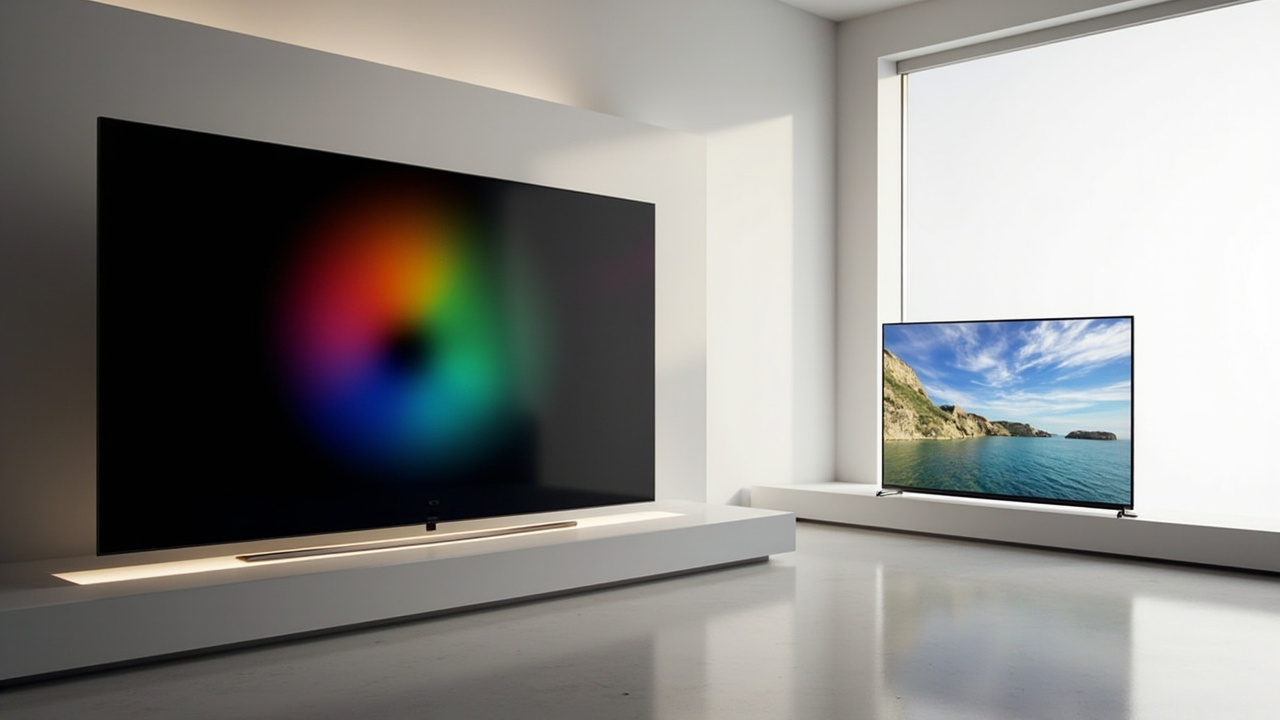
In a dark room, OLED wins cleanly. In a bright room with a lot of daytime TV, Mini-LED’s higher full-screen brightness and better anti-glare coating can actually look more vivid. RTINGS’ head-to-head: “Sony is a bit brighter in SDR on full-screen images, so it resists glare better for daytime TV” — but LG “matches or tops Sony in HDR” and has “no blooming.”
Gaming
- LG G5 OLED: 4K @ 165 Hz, ~4.1 ms input lag at 60 Hz, G-Sync, FreeSync Premium Pro, Dolby Vision Gaming at 4K @ 120 Hz. Four HDMI 2.1 ports. Tom’s Guide and RTINGS both call it the best gaming TV of 2025-2026.
- Sony Bravia 9: 4K @ 120 Hz, ~17-19 ms input lag at 60 Hz (RTINGS), Dolby Vision Gaming at 4K @ 120 Hz, two HDMI 2.1 ports. PS5-specific optimizations (Auto HDR Tone Mapping, Auto Genre Picture Mode) are real but don’t close the input-lag gap.
For PS5 / Xbox Series X / PC gamers, the G5 is the clear winner — lower input lag and 165 Hz support are tangible advantages in competitive and simulation genres. For PS5-only cinematic gaming, the Bravia 9’s HDR tone-mapping tricks are a small win.
Smart TV OS and Software
- LG G5 OLED: webOS 25, 5 years of OS updates promised. Magic Remote included.
- Sony Bravia 9: Google TV, 3-4 years of OS updates historically. Remote is solid but no pointer.
Both OSes are mature. Google TV has a slightly better app ecosystem (especially for niche streaming services); webOS is faster to navigate and supports more picture-by-picture workflows. Neither is a deciding factor.
Burn-in Risk
- LG G5 OLED: Low-to-moderate risk over 7-10 years, depending on usage. LG’s 5-year panel warranty explicitly covers burn-in for residential use, which is a real vote of confidence.
- Sony Bravia 9: Effectively zero burn-in risk — Mini-LED is immune.
If you watch 4+ hours/day of content with static HUDs (news channels with persistent tickers, ESPN scoreboards, MMOs, FIFA with constant overlays), the OLED burn-in concern is real. RTINGS’ 2024 long-term test showed modern OLEDs hold up to 5+ years of varied content with no visible burn-in, but heavy static-content use is the edge case.
Pros and Cons
LG G5 OLED 65”
Pros
- Currently $700-$1,400 below MSRP — strongest value in flagship OLEDs right now
- Perfect blacks and per-pixel dimming with zero bloom
- 4K @ 165 Hz, ~4.1 ms input lag, four HDMI 2.1 — best-in-class gaming
- 5-year panel warranty (covers burn-in for residential use)
- Wide viewing angle for sectional-couch households
- Slim gallery design, easier wall mounting
Cons
- Risk of panel clearance disappearing once G6 stock stabilizes
- Lower full-screen brightness than Mini-LED — daytime news in a sunlit room looks dimmer
- Burn-in risk for heavy static-content users (news, sports, gaming HUDs)
- 5-year panel warranty only applies in select regions (US included)
- Heavier and more power-hungry than older OLEDs despite the efficiency gains
Sony Bravia 9 65”
Pros
- Higher full-screen brightness (~700-900 nits) — better for bright rooms
- Zero burn-in anxiety — Mini-LED is immune
- ~2,800 nits peak HDR brightness for specular highlights
- Class-leading Sony image processing and motion handling
- Excellent X-Anti Reflection coating — best-in-class glare handling
- PS5-specific optimizations (Auto HDR Tone Mapping) genuinely help
Cons
- $700-$1,400 more than the G5 at current pricing
- Only 1-year warranty (extended warranties are extra $150-$300)
- ~17-19 ms input lag — noticeably worse for competitive gaming
- Fine bloom visible around small bright objects in dark scenes
- Heavier (75 lb vs 53 lb) and bulkier
- Only 2 HDMI 2.1 ports vs 4 on the G5
Best For / Skip If
Best For
- LG G5 OLED: Dark-room movie watchers, PS5 / Xbox / PC gamers, buyers who can use the clearance pricing in the next 1-3 months, mixed-use households where movies and gaming are the priority.
- Sony Bravia 9: Bright-room households with daytime TV, buyers who keep TVs 8-10 years and want zero burn-in worry, sports fans who want the brightest, most vivid image in a sunlit room, buyers who prefer Sony’s image processing for cinematic content.
Skip If
- You don’t watch much HDR content. A $1,200-$1,500 mid-range TV (Sony X90L, Hisense U7N) covers 80% of SDR viewing and will save you $1,000-$2,000.
- You are replacing a 2022+ OLED or Mini-LED. The upgrade is incremental, not transformational.
- You need a TV under 55 inches. Both of these flagships only really pay off at 65”+ sizes; below that, the C5/Bravia 7 tier is the smarter spend.
- You watch 6+ hours/day of static-HUD content and refuse any burn-in risk. The Bravia 9 is your floor.
Bottom Line
The LG G5 OLED and Sony Bravia 9 are both honest “buy once, keep for 8-10 years” flagship TVs. Neither is cheap, but neither is wasteful either.
If your goal is the lowest cost per year of ownership at the 65” flagship tier in 2026, the LG G5 wins by $90-$190 per year on clearance pricing, with the added bonus of perfect blacks, 4K @ 165 Hz gaming, and a 5-year panel warranty. If your goal is zero burn-in risk and the brightest possible image in a sunny room, the Sony Bravia 9 earns its $700-$1,400 premium through sustained full-screen brightness, best-in-class glare handling, and worry-free longevity.
The right answer is the one that matches your room and your content. Buying OLED for a sunlit living room is paying for pixels you’ll never see. Buying Mini-LED for a basement theater is leaving perfect blacks on the table. Buy the one that fits your space.
Buy smart. Get more value.