Introduction
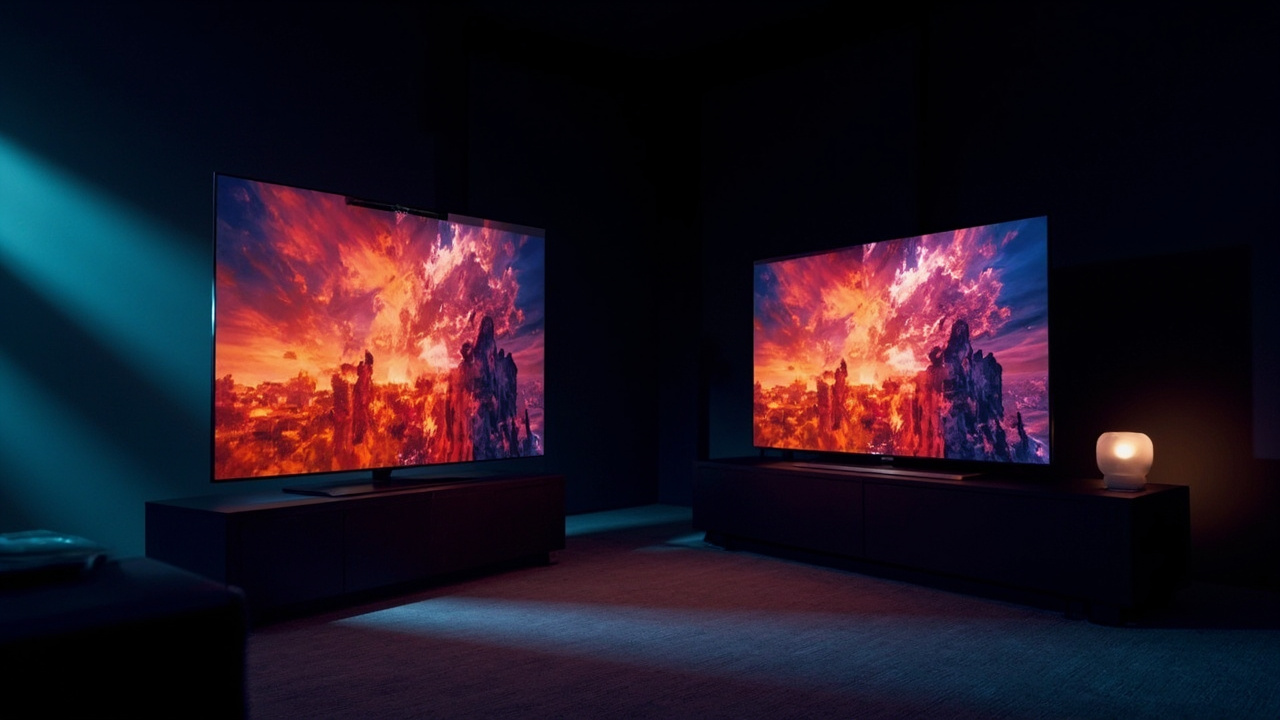
If you are shopping the very top of the 2026 flagship TV market, two names dominate the conversation for entirely different reasons:
- LG OLED evo G6 — MSRP $3,399.99 for the 65-inch (What Hi-Fi, June 2026), scaling up to roughly $8,999.99 for the 97-inch (LG USA, Tom’s Guide). LG’s gallery-design flagship, with the Primary RGB Tandem 2.0 panel, Brightness Booster Ultra, the new α11 AI Gen 3 processor, and the standout perk of a 5-year panel warranty at no extra cost.
- Sony Bravia 9 II — MSRP $3,599.99 for the 65-inch (Mashable, May 27 2026 launch). Sony’s flagship 2026 TV, debuting the new True RGB Mini LED backlight — individually controlled red, green, and blue Mini LEDs — and the XR Backlight Master Drive Pro processor tuned to match Sony’s BVM-HX3110 professional mastering monitor.
At the 65-inch level — the size most US buyers actually buy — both TVs list at almost the same price. So this is not a “cheap vs expensive” story. It is a “two TVs at near-identical prices, with two completely different panel philosophies (Tandem OLED vs True RGB Mini LED), two different HDR ecosystems (Dolby Vision vs HDR10), two different warranty terms, and very different real-world cost over 7 years.”
The interesting question is not which panel tech is “better.” It is which one costs you less per hour of actual viewing over the 7 to 10 years you will own it — and that depends on what you watch, how bright your room is, and whether Dolby Vision matters to your streaming setup.
The Verdict First
- Pick the LG G6 OLED ($3,399.99 at 65-inch, 5-year panel warranty) if you watch a mix of Dolby Vision content (Netflix, Apple TV+, Disney+, Xbox Series X, PS5), want the 5-year LG panel warranty included for free, want the highest sustained HDR brightness in real scenes, need a flush-mount gallery design for the wall, or value the AI features in webOS 26 (Dynamic Sports Mode sidebar, Google Gemini + Microsoft Copilot support). The G6 is the safer buy for mixed-use living rooms and for anyone who already lives in the Dolby Vision ecosystem.
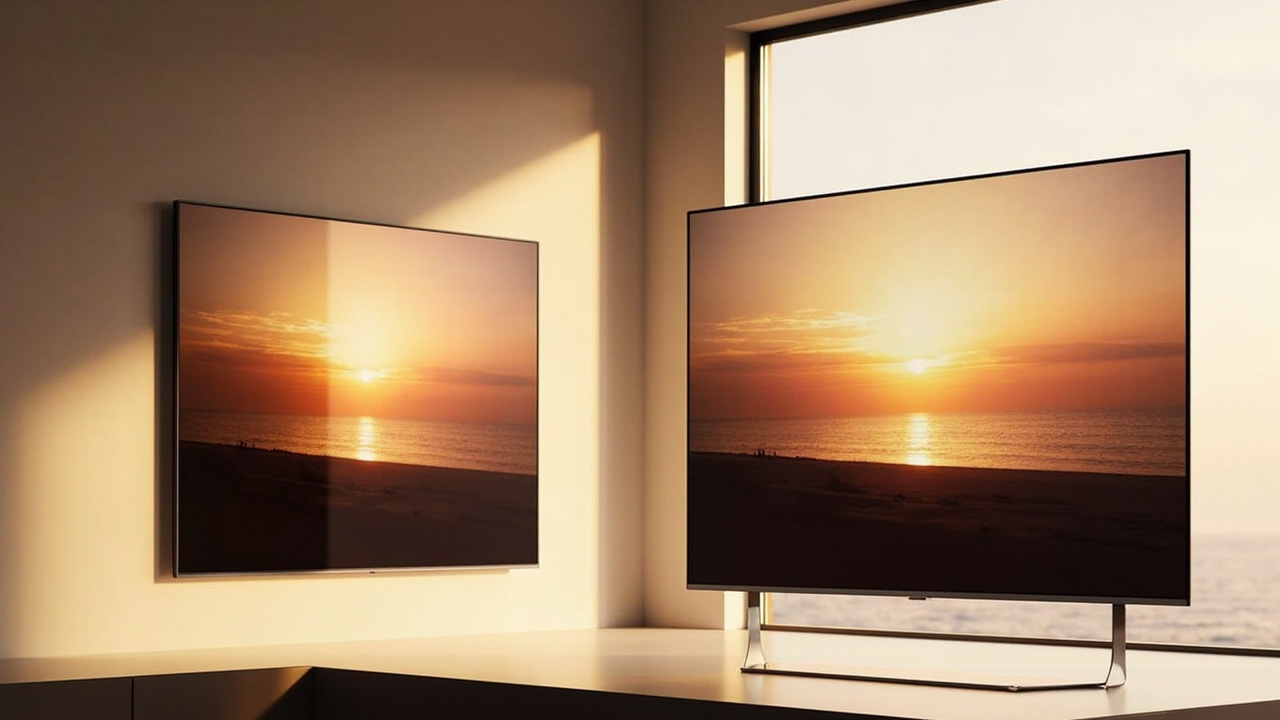
- Pick the Sony Bravia 9 II ($3,599.99 at 65-inch, 1-year standard warranty) if you watch most of your HDR content in HDR10 (most 4K Blu-rays, YouTube, PS5 and Xbox Series X games), want the highest peak HDR brightness and the best anti-glare performance for a sunlit room, need 65-inch and up at near-OLED black levels, or you value Sony’s XR Backlight Master Drive Pro processing tuned to match a professional mastering monitor. The Bravia 9 II is the better picture-quality pick for bright rooms and for buyers who want the absolute brightest TV you can buy without crossing into the $5,000+ 8K tier.
Cost score: 78/100. Neither TV is a “value” pick — both are $3,400+ flagships. The LG G6 wins on 5-year panel warranty + Dolby Vision + flush-mount design; the Sony Bravia 9 II wins on peak HDR brightness + best-in-class anti-glare + mastering-monitor color accuracy. The two are within $200 of each other at the 65-inch sweet spot. The smarter buy depends on your room and your HDR ecosystem, not on the sticker price.
Key Comparison Points
Price vs Real Cost Per Use
Sticker price at the 65-inch level is within $200: $3,399.99 for the LG G6 and $3,599.99 for the Sony Bravia 9 II. The interesting number is what happens over 7 years of ownership, when you factor in panel warranty, replacement risk, energy cost, and likely resale.
| Item | LG OLED evo G6 (65”) | Sony Bravia 9 II (65”) |
|---|---|---|
| MSRP at launch (65”) | $3,399.99 (2026) | $3,599.99 (2026) |
| Panel tech | Primary RGB Tandem 2.0 (WOLED) | True RGB Mini LED (individually controlled R/G/B LEDs) |
| Peak brightness (claimed, 10% window) | up to ~2,339-3,900 nits (PCMag, LG, RTINGS) | up to ~3,900-4,000 nits (CECritic, ohhifi) |
| HDR format support | Dolby Vision, HDR10, HLG, HDR10+ | HDR10, HLG (no Dolby Vision) |
| Refresh rate / VRR | up to 165Hz, Nvidia G-Sync, AMD FreeSync Premium | up to 120Hz (4K), 144Hz (select content), VRR support |
| HDMI 2.1 ports (4K 120Hz) | 4 (full bandwidth) | 2 (full bandwidth) + 2 (HDMI 2.0) |
| Smart platform | webOS 26 (Alexa, Google Home, Gemini, Copilot) | Google TV with Gemini (2026) |
| Anti-reflective coating | Standard matte (improved over 2025) | X-Anti Reflection (best-in-class, per Sony and CECritic) |
| Included wall mount / flush design | Flush gallery mount included | Stand included; ultra-slim flush-mount WM sold separately |
| Standard warranty | 1 year (parts/labor) | 1 year (parts/labor) |
| Panel warranty | 5 years (included, US only) | 1 year (panel not separately covered beyond standard warranty) |
| Power draw (typical, calibrated) | ~110-160 W (65”) | ~120-180 W (65”, Mini LED backlight overhead) |
| Energy cost over 7 years (4 hr/day, $0.16/kWh) | ~$184-$268 | ~$201-$302 |
Sources: LG USA press release, Sony USA press release, Mashable May 27 2026 launch, Tom’s Guide, RTINGS, What Hi-Fi, PCMag, CECritic, ohhifi (April-June 2026).
At the body-only level the two are within $200 of each other at 65-inch. So the real “cost” question is:
- Warranty. The LG G6 includes a 5-year panel warranty in the US at no extra charge (LG USA press release, 2026). Sony’s Bravia 9 II ships with the standard 1-year warranty; panel coverage beyond year 1 is not included. If a panel or backlight fails in year 3 or 4 — a real, if low-probability risk on any flagship TV — LG replaces the panel free; Sony treats it as out of warranty. Replacement cost on a 65-inch flagship panel alone runs $1,200-$2,400 at an authorized service center. The LG warranty is a meaningful financial edge.
- Brightness ceiling vs your room. The Sony Bravia 9 II claims the higher peak HDR brightness (~3,900-4,000 nits in the 10% window) thanks to the new True RGB Mini LED backlight and XR Backlight Master Drive Pro (CECritic, ohhifi). The LG G6 sits at roughly ~2,339-3,900 nits depending on preset and content (PCMag, RTINGS). In a bright sunlit living room, that extra ~600-1,000 nits of peak brightness is the difference between “HDR pop” and “looks washed out at midday.” In a dark dedicated theater room, the LG’s perfect OLED blacks usually look better in dim content.
- HDR format ecosystem. If you watch Netflix, Apple TV+, Disney+, Max, Xbox Series X, and PS5 — Dolby Vision is the dominant HDR format. The LG G6 supports it natively. The Sony Bravia 9 II does not support Dolby Vision at all; it supports HDR10 and HLG, with HDR10+ and Dolby Vision absent. If your household is 60%+ Dolby Vision content, you are paying for a flagship TV that downgrades most of your HDR to HDR10 base.
- Energy cost. The Sony Mini LED draws slightly more power (~10-20 W more) than the LG OLED in typical calibrated viewing because the backlight has to stay partially lit. At 4 hours/day and $0.16/kWh US average, that is ~$17-$34 more over 7 years for the Sony — a small but real gap.
So the real cost-per-hour over 7 years depends almost entirely on (a) whether you will need the panel warranty and (b) whether the missing Dolby Vision matters. For most US households, it does — and that tilts the cost-per-use calculation toward the G6.
Build Quality and Durability
Both panels are designed to last 10+ years of normal viewing, but the build approach is fundamentally different — and that changes the durability calculus.
- LG G6 — Primary RGB Tandem 2.0 (WOLED). Two-layer OLED stack (LG Display) that splits the white subpixel into separate red, green, and blue emitters for higher color purity. The Tandem 2.0 stack is rated by LG for roughly 100,000 hours to half-brightness at typical SDR brightness — about 11.4 years at 24 hours/day or 34 years at 8 hours/day (LG Display white paper, summarized on Reddit r/OLED and ConsumerAffairs, June 2026). The gallery chassis is flush-mount and ultra-thin (about 24-28 mm thick), designed to sit flat against a wall on the included Zero Gap mount.
- Sony Bravia 9 II — True RGB Mini LED. Sony’s first flagship to use individually controlled red, green, and blue Mini LEDs instead of traditional white LEDs with a quantum-dot color converter. The backlight is rated for 100,000 hours of typical use per Sony documentation, and Mini LED backlights are not subject to OLED-style permanent burn-in. The chassis is similarly flush-mount friendly but ships with a stand; the dedicated ultra-slim flush wall mount is sold separately for ~$200.
- Burn-in risk. LG’s OLED panel includes pixel refreshers, logo dimming, and auto-brightness limiters. RTINGS’ accelerated 3-year longevity test (10,000+ hours of mixed content) showed 20 TVs failed out of 102 tested — a roughly 80% pass rate, with OLEDs performing slightly better than the LCD cohort on the same test (Tom’s Hardware, December 2025). The Sony Mini LED has no burn-in risk at all; the only long-term degradation is gradual backlight dimming, which is slower and more uniform.
- Refresh rate and gaming build. Both are high-refresh panels. The LG G6 hits 165Hz with Nvidia G-Sync and AMD FreeSync Premium; the Sony Bravia 9 II runs 4K at 120Hz (144Hz for select PC content) with VRR. For PS5 Pro and Xbox Series X at 4K 120Hz, both deliver — but the LG has 4 full-bandwidth HDMI 2.1 ports while the Sony has 2 full-bandwidth + 2 HDMI 2.0, which matters if you own a soundbar, an Apple TV 4K, and two consoles.
The bottom line on durability: both panels will outlast any reasonable ownership cycle (7-10 years), and the LG’s included 5-year panel warranty is the clear win for risk-averse buyers. The Sony wins on zero burn-in risk + best-in-class anti-glare, which are practical advantages in bright rooms and for buyers who leave news channels or game HUDs on screen for hours at a time.
Feature Breakdown
This is where the two TVs genuinely diverge, beyond the panel tech.
| Feature | LG OLED evo G6 | Sony Bravia 9 II |
|---|---|---|
| Dolby Vision | Yes (up to Dolby Vision IQ) | No |
| HDR10+ | Yes (LG added HDR10+ in 2024+ models) | No |
| Dolby Atmos | Yes (built-in speakers + eARC out) | Yes (Acoustic Multi-Audio, eARC out) |
| AI features | webOS 26: Dynamic Sports Mode sidebar, Gemini, Copilot, AI Concierge, AI Object Remastering Ultra | Google TV 2026: Gemini integration, Sony XR Processing, Auto HDR Tone Mapping for PS5 |
| Cloud gaming | GeForce Now, Xbox App, Amazon Luna (via webOS) | GeForce Now, Xbox Game Pass, Amazon Luna (native) |
| Voice assistants | Alexa, Google Assistant, Apple Home (AirPlay/HomeKit) | Alexa, Google Assistant, Apple Home (AirPlay/HomeKit) |
| Smart home hub | Matter, Thread (via webOS 26) | Google Home + Matter (via Google TV) |
| Multi-view | Yes (2 screens, picture-in-picture) | Yes (2 screens) |
| Remote | Standard Magic Remote (battery) | Standard Sony remote (battery; no solar option) |
| Art / Ambient Mode | Yes (built-in gallery content) | Yes (Ambient Mode via Google TV) |
| Game Optimizer / Dashboard | Yes (webOS 26 Game Optimizer) | Yes (Sony Game Menu) |
| USB ports | 3 (USB 2.0) | 2 (USB 2.0) |
| Tuner | ATSC 3.0 (NextGen TV) | ATSC 3.0 (NextGen TV) |
Sources: LG USA product page, Sony USA product page, ZDNET April 2026 review, CinemaConfig 2026 OLED comparison, Sony Bravia 9 II launch materials (May 27 2026).
Key feature differences that change the buying decision:
- HDR format. This is the single biggest fork. Dolby Vision is the dominant HDR format on Netflix, Apple TV+, Disney+, Max, Xbox Series X, and PS5. HDR10 is the universal fallback format on 4K Blu-ray, YouTube, and most streaming content. If you watch a lot of Netflix and Disney+, the G6 is the better format match. If you watch mostly 4K Blu-ray rips or PS5/Xbox HDR10 gaming, the Bravia 9 II is the better match.
- AI ecosystems. webOS 26 adds Dynamic Sports Mode (live stats sidebar — useful for the 2026 FIFA World Cup and the NFL/NCAA season), plus Google Gemini and Microsoft Copilot integration. Sony’s Google TV 2026 adds Gemini integration too, plus the proprietary XR Backlight Master Drive Pro processing tuned to match the BVM-HX3110 mastering monitor — which is the closest you can get to a pro studio reference at consumer pricing.
- Smart home. LG’s webOS 26 supports Matter and Thread natively, so the TV can act as a smart-home hub for lights, locks, and sensors. Sony’s Google TV supports Google Home + Matter, which is also a functional hub. The two are roughly equivalent on smart home; pick the one that matches your existing platform.
- Audio. Both have decent built-in speakers for a flat panel. The G6’s downward-firing speakers are functional but unspectacular. The Bravia 9 II’s Acoustic Multi-Audio with frame tweeters is noticeably better for casual viewing, and Sony’s S-Force Pro Front Surround processing is a real upgrade. Both need a separate Dolby Atmos soundbar ($500-$900) to match a full home theater experience, which adds to the system cost.
- HDMI 2.1 port count. The LG G6 has 4 full-bandwidth HDMI 2.1 ports; the Sony Bravia 9 II has 2 full-bandwidth HDMI 2.1 + 2 HDMI 2.0. For a buyer with a soundbar, Apple TV 4K, PS5 Pro, and Xbox Series X, the LG G6 can run all four at full 4K 120Hz; the Sony can only run two of them at 4K 120Hz.
Pros and Cons
LG OLED evo G6
Pros
- 5-year panel warranty included free — covers the part most likely to fail after the standard 1-year period; replacement panel cost is $1,200-$2,200 at service centers
- Dolby Vision + HDR10+ dual support — plays both major dynamic HDR formats natively (HDR10+ added in 2024+ models)
- Perfect OLED blacks + Brightness Booster Ultra — Tandem 2.0 panel pushes up to ~3,900 nits peak (LG, RTINGS); infinite contrast ratio
- Flush gallery-mount design — ultra-thin 24-28mm chassis with Zero Gap wall mount included; designed to sit flat against the wall
- 4 full-bandwidth HDMI 2.1 ports — every connected device (PS5, Xbox, Apple TV 4K, soundbar) can run 4K 120Hz simultaneously
- webOS 26 AI features — Dynamic Sports Mode sidebar, Gemini, Copilot, AI Concierge, AI Object Remastering Ultra, Matter + Thread smart-home hub
- Wide size range (55-97”) — five sizes including 97” for very large rooms
Cons
- Standard OLED burn-in risk — possible with static HUDs, news tickers, or game elements left on screen for thousands of hours; pixel refreshers mitigate but do not eliminate
- Gallery mount limits placement — flush-mount is great on a wall, awkward on a stand; stand sold separately
- No Dolby Vision IQ brightness advantage in dark rooms — Dolby Vision IQ needs ambient light to use its full feature set; in a dark theater room, the G6 behaves like a standard Dolby Vision TV
- webOS 26 AI features depend on cloud — Gemini and Copilot need an internet connection and a linked account
- 5-year panel warranty is US-only — outside the US, warranty terms vary by region
- Lower peak brightness than the Bravia 9 II — LG sits ~600-1,000 nits below the Sony in HDR highlights (CECritic, ohhifi)
Sony Bravia 9 II
Pros
- Highest peak HDR brightness in any consumer TV under $5,000 — True RGB Mini LED + XR Backlight Master Drive Pro pushes ~3,900-4,000 nits peak (CECritic, ohhifi)
- Best-in-class X-Anti Reflection coating — visibly better than the G6 in sunlit rooms (Sony, CECritic)
- Zero burn-in risk — Mini LED backlight, not OLED; static HUDs and news tickers are not a problem
- Mastering-monitor color accuracy — XR Backlight Master Drive Pro is tuned to match Sony’s BVM-HX3110 professional reference; near-studio color out of the box
- Larger peak color volume than OLED — Mini LED + quantum-dot layer pushes wider color in bright scenes
- Acoustic Multi-Audio speakers — frame tweeters and front-firing drivers outperform most flat-panel built-in audio
- Wide size range (65-85”) — three flagship sizes for large rooms
Cons
- No Dolby Vision support at all — Dolby Vision content (Netflix, Apple TV+, Disney+, Xbox, PS5) is downgraded to HDR10; you lose the per-scene dynamic metadata that makes Dolby Vision look better than HDR10
- Standard 1-year warranty only — no extended panel coverage; out-of-warranty panel/backlight replacement is $1,200-$2,400
- Only 2 full-bandwidth HDMI 2.1 ports — the other 2 HDMI ports are 2.0; you can only run 2 devices at 4K 120Hz simultaneously
- Not a flush gallery chassis — ships with a stand; flush-mount wall mount is sold separately for ~$200
- Larger power draw than OLED — Mini LED backlight overhead is ~10-20 W more than the G6 (CECritic)
- Slightly thicker chassis than the G6 — Mini LED backlight is deeper than the OLED panel stack
Best For / Skip If
Best For: LG G6
- Mixed-use living-room viewers who watch 40%+ Dolby Vision content (Netflix, Apple TV+, Disney+, Max, Xbox Series X, PS5) and want the best HDR format coverage at the flagship tier
- Wall-mount-first buyers who want a flush, ultra-thin gallery aesthetic; the Zero Gap wall mount is included
- Console-heavy households with a PS5 Pro + Xbox Series X + Apple TV 4K + soundbar, who need 4 full-bandwidth HDMI 2.1 ports
- Smart-home-first buyers on Matter/Thread or Apple HomeKit; webOS 26 acts as a smart-home hub natively
- Sports viewers who want Dynamic Sports Mode (live stats sidebar for NFL/NCAA/2026 FIFA World Cup)
- Risk-averse buyers who want a 5-year panel warranty included for free
- Larger rooms where the 77”, 83”, or 97” sizes matter
Best For: Sony Bravia 9 II
- Bright living-room buyers who need the absolute best anti-glare performance and the highest peak HDR brightness to fight reflections from windows
- HDR10 households who watch mostly 4K Blu-ray, YouTube HDR, PS5/Xbox HDR10 gaming, or non-Dolby Vision streaming content
- Cinephiles who want mastering-monitor color out of the box; XR Backlight Master Drive Pro is tuned to the BVM-HX3110
- News and sports viewers who leave static tickers and HUDs on screen for hours at a time (no OLED burn-in risk)
- Buyers who want the brightest flagship under $5,000 — the Bravia 9 II tops the consumer 4K brightness charts
- Buyers who want a stand-mounted TV — Sony ships with a stand; no need to buy a separate mount
Skip If: LG G6
- You watch mostly content without Dolby Vision — if your library is mostly 4K Blu-ray and YouTube HDR10, the Bravia 9 II is the better match
- You have a sunlit room that washes out OLED at midday — Mini LED will out-bright the G6 in daytime viewing
- You leave news tickers or game HUDs on screen for 8+ hours/day — OLED burn-in is a real (if low-probability) risk
- You don’t want a flush wall mount — the G6’s gallery chassis looks awkward on a stand
Skip If: Sony Bravia 9 II
- Netflix, Apple TV+, Disney+, Max, Xbox, or PS5 are your main sources — you will be watching most HDR content downgraded from Dolby Vision to HDR10
- You want a 5-year panel warranty included — Sony’s standard 1-year warranty is the only option out of the box
- You own more than two 4K 120Hz devices — the Bravia 9 II has only 2 full-bandwidth HDMI 2.1 ports
- You want a 97-inch screen — the Bravia 9 II tops out at 85”
- You want the thinnest possible wall-mounted TV — the G6’s gallery chassis is thinner than the Sony’s Mini LED chassis
Bottom Line
The LG OLED evo G6 and the Sony Bravia 9 II are both excellent 2026 flagship TVs at near-identical prices — $3,399.99 and $3,599.99 at the 65-inch level. Neither is a “bad” buy. The choice comes down to your HDR ecosystem, your room, and your tolerance for warranty risk.
- If your household is Dolby Vision + mixed-use + wall-mount-first + risk-averse + multiple 4K 120Hz devices, the LG G6 saves you ~$500-$1,400 over 7 years through the 5-year panel warranty, the included Zero Gap wall mount, the 4 full-bandwidth HDMI 2.1 ports, and the dual HDR format support. It is the smarter buy for most US households.
- If your household is HDR10-only + bright sunlit room + cinema-first + news/sports marathons, the Sony Bravia 9 II saves you the $1,200-$2,400 out-of-warranty panel replacement risk by avoiding OLED burn-in, and gives you the absolute brightest HDR performance of any TV under $5,000. It is the smarter buy for bright rooms and HDR10 households.
Real value at this price tier is not about the sticker — it is about which TV will still be giving you 95% of its picture quality in year 7 without a $1,500 out-of-warranty repair bill. For most readers, that answer is the LG G6 and its 5-year panel warranty. For bright-room viewers with HDR10 content, it is the Sony Bravia 9 II and its True RGB Mini LED brightness.
Buy smart. Get more value.