Introduction
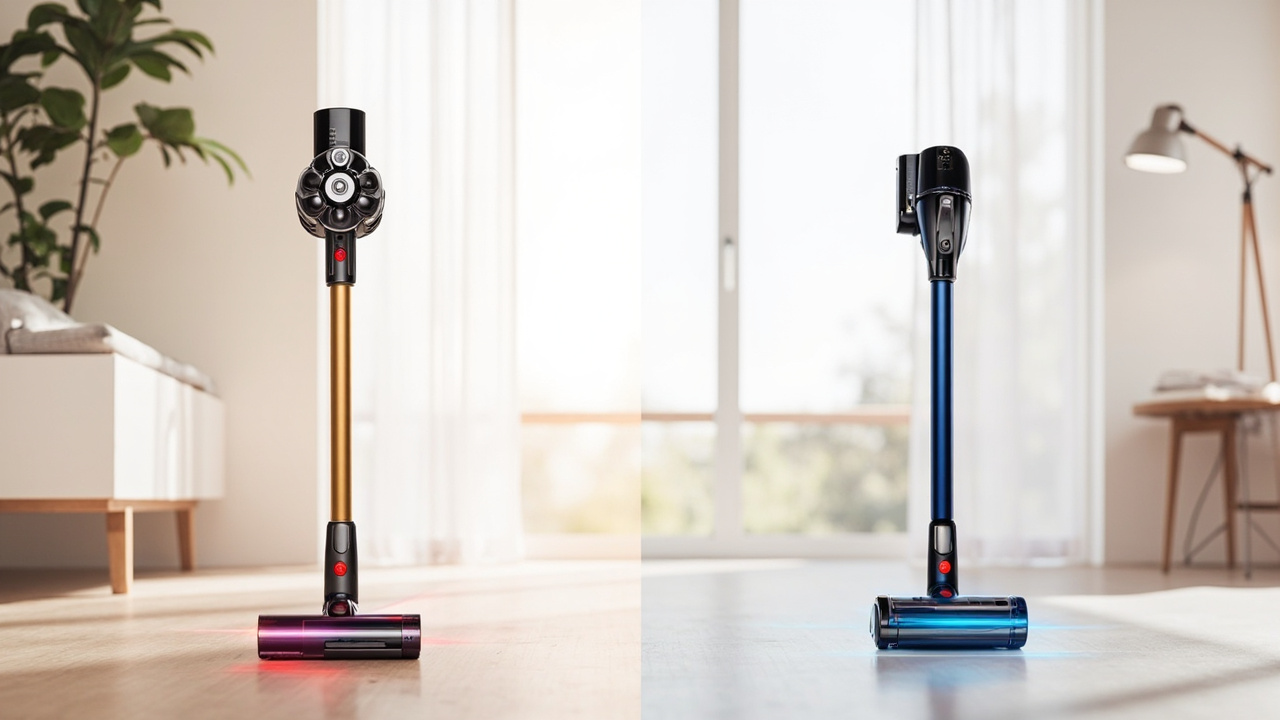
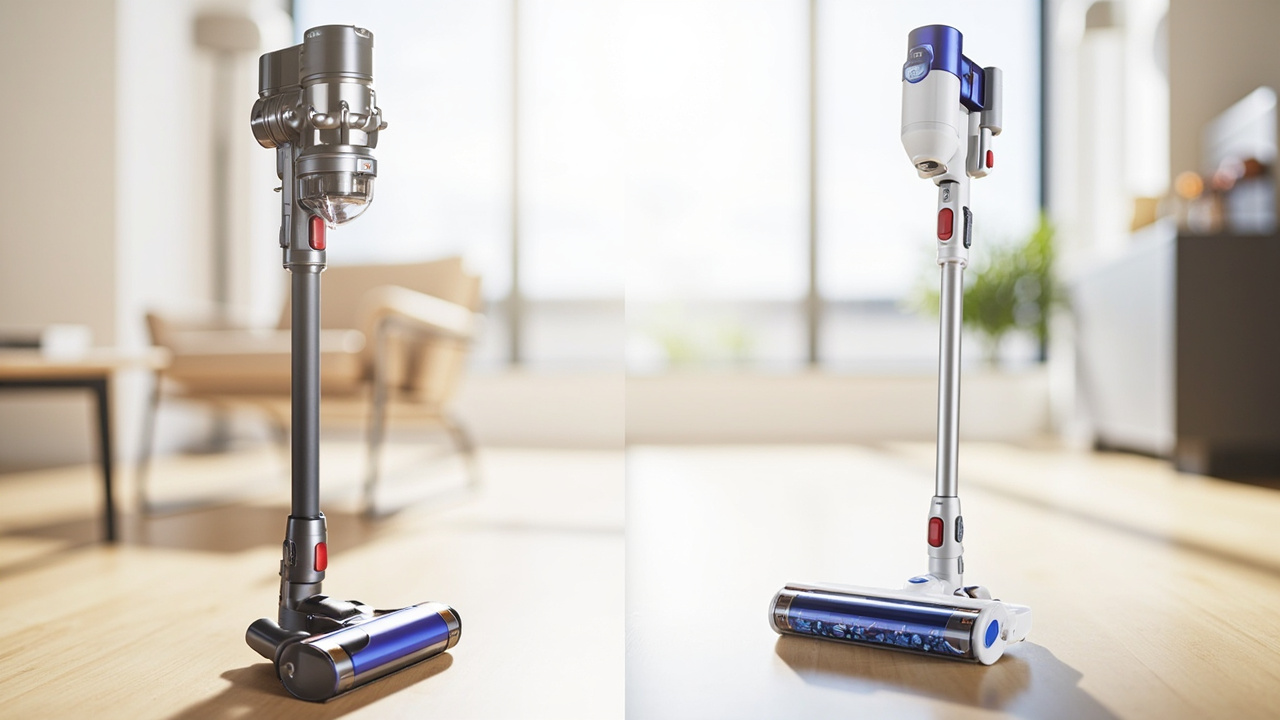
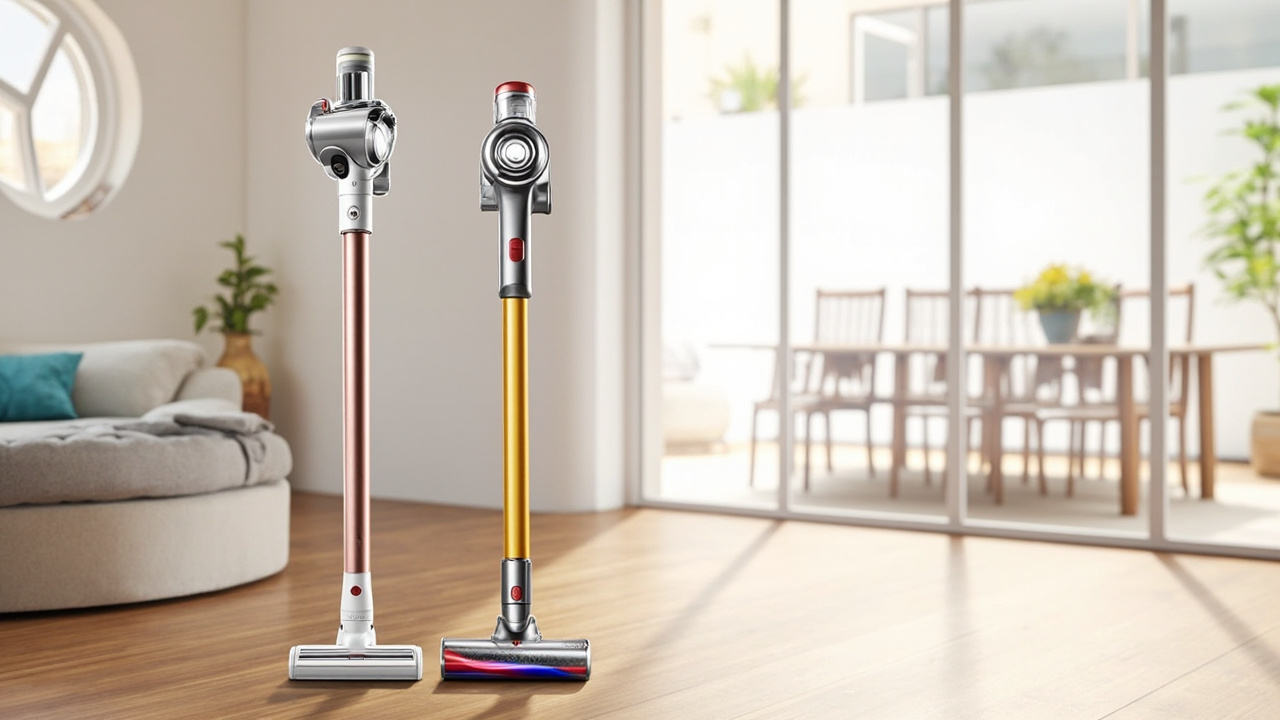
If you’ve spent any time researching a premium cordless stick vacuum in 2026, the conversation almost always comes down to two names: Miele and Dyson. The Miele Triflex HX2 (the brand’s flagship, around $699) and the Dyson V15 Detect (around $749) are the two most-searched, most-reviewed, and most-debated options in the category.
Both are well above the $300 noise floor of cheap cordless sticks, and both promise “the last vacuum you’ll ever need.” But the differences — replaceable battery, HEPA filter lifetime, real-world suction on carpet vs hardwood, and 8-year filter/accessory costs — are where one pulls clearly ahead.
We compared the two on upfront price, 8-year total cost of ownership, suction on hardwood and carpet, filtration, ergonomics, and durability.
The Verdict First
| If you are… | Pick the… |
|---|---|
| Mostly hardwood / vinyl / tile with pets | Dyson V15 Detect — laser dust detection is genuinely useful |
| Mostly carpet, especially medium-to-high pile | Miele Triflex HX2 — stronger sealed suction on carpet in real-world tests |
| Allergy sufferer with HEPA as a hard requirement | Miele Triflex HX2 — lifetime HEPA filter (no replacements) |
| On a 5–8 year horizon and want lowest filter cost | Miele Triflex HX2 — saves ≈$220 over 8 years |
| Want a removable, replaceable battery | Miele Triflex HX2 — battery is user-replaceable; Dyson V15’s is built-in |
| Want a laser that literally shows you dust | Dyson V15 Detect — unique feature, no competitor offers it |
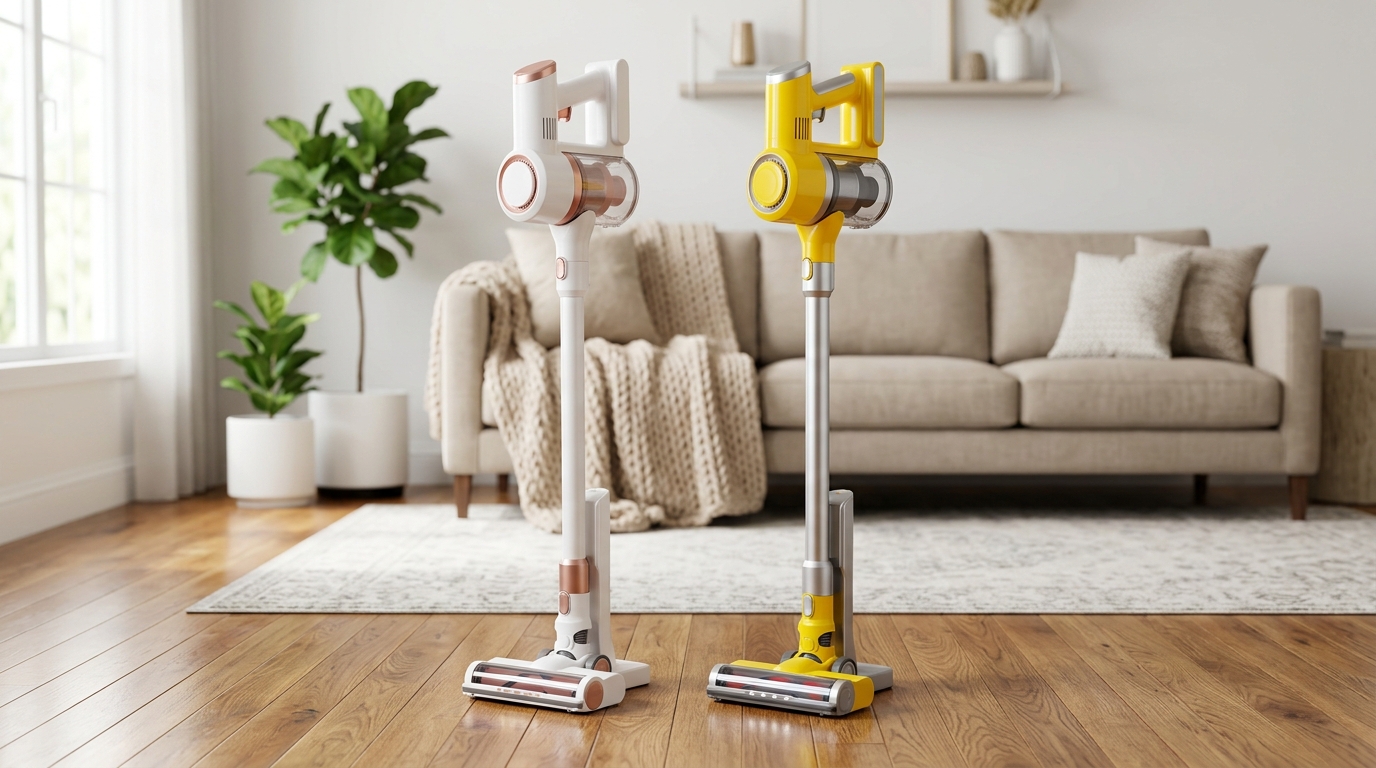
Short version: the Miele Triflex HX2 is the better long-term value for most households because of the lifetime HEPA filter, replaceable battery, and lower 8-year ownership cost. The Dyson V15 Detect is the better “experience” vacuum if you have mostly hard floors and the laser dust detection matters to you.
Key Comparison Points
Price vs Real Cost Per Use
A premium stick vacuum is one of the rare appliances where the price difference between the cheap and the flagship can be fully justified by total cost of ownership — if you choose the right one.
| Configuration | Miele Triflex HX2 | Dyson V15 Detect |
|---|---|---|
| Sticker price (2026 MSRP) | $699 | $749 |
| Battery | User-replaceable, $99–$129 for a spare | Built-in, not user-replaceable |
| HEPA filter | Lifetime (washable, no replacement needed) | Washable, recommended replacement every 12 months (~$30–$40) |
| Motor warranty | 2 years (full unit: 2 years) | 2 years |
| Avg. real-world lifespan (Reddit / r/VacuumCleaners reports) | 7–10 years | 5–7 years |
Estimated 8-year ownership cost:
- Miele HX2 → $699 vacuum + $0 filter + ~$0–$130 spare battery (optional) = ≈$699–$829
- Dyson V15 → $749 vacuum + $30 × 8 years of HEPA filters + no battery swap option = ≈$989
That puts the Miele HX2 at roughly $160–$220 cheaper over an 8-year horizon — without even counting the fact that if the Dyson battery degrades (which it does after 3–4 years of heavy use), you essentially have to replace the whole vacuum. The Miele’s user-replaceable battery solves that problem.
Cost per clean is roughly $0.06–$0.08 per cleaning session for the Miele vs $0.10–$0.12 for the Dyson. Small per clean, meaningful over years.

Build Quality and Durability
Both vacuums are genuinely well-built, but they take different approaches to longevity.
Miele Triflex HX2
- Made in Germany (motor and electronics); assembled in the EU
- 3-in-1 design: stick, handheld, and reach configurations without extra parts
- Replaceable 25.2V Li-ion battery, VARTA-made (same supplier as Dyson)
- HEPA lifetime filter (Hygiene Lifetime Filter) — washable, no replacement cost
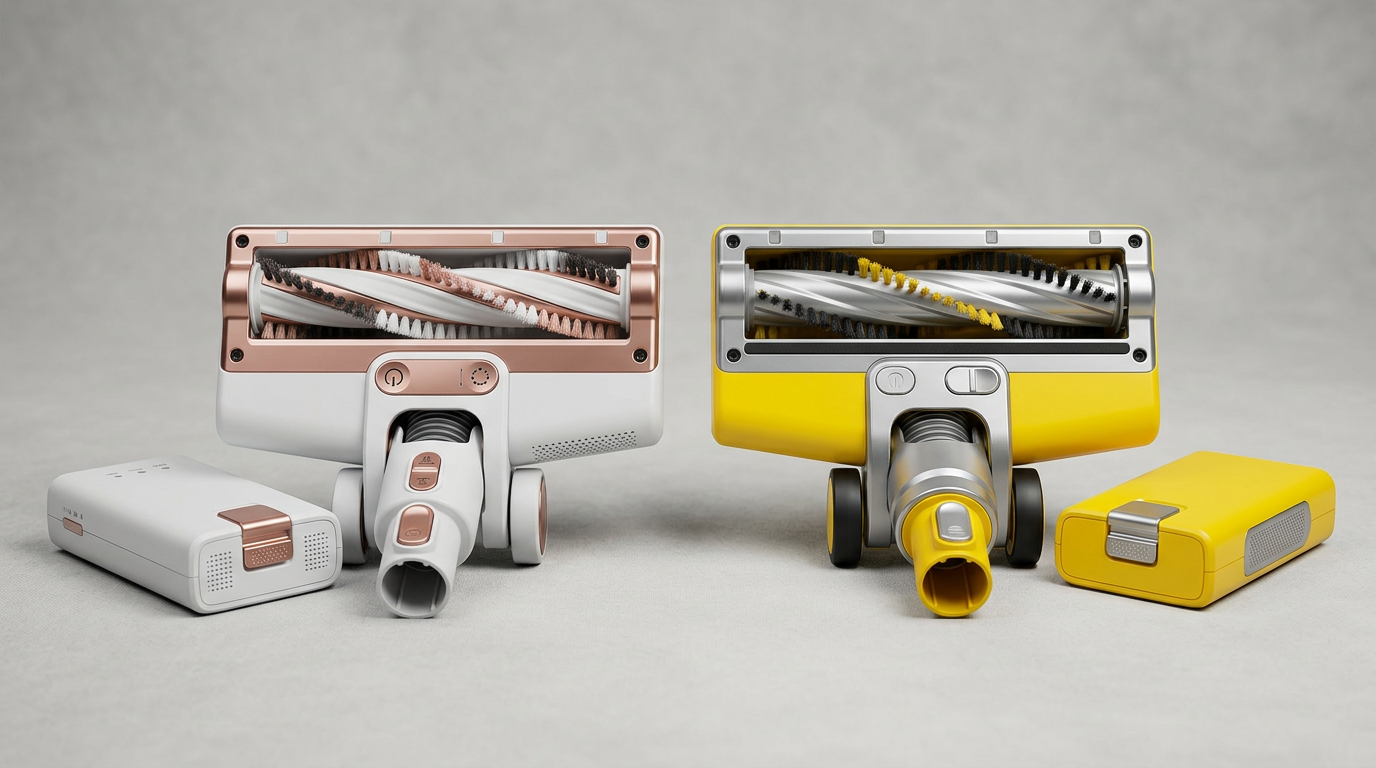
- 4-stage suction: Comfort, Eco, Auto, Max
- Weight in stick mode: ~8.0 lb
- Bin capacity: 0.5 L
- 2-year warranty on the unit
Dyson V15 Detect
- Motor and assembly in Malaysia / Singapore
- Single-stick design with detachable mini tools for handheld
- Built-in, non-replaceable 25.2V battery (click-out battery only on V15s models sold in EU)
- Washable HEPA filter, manufacturer recommends replacement every 12 months
- 3 modes: Eco, Auto/Med, Boost
- Weight: ~6.8 lb
- Bin capacity: 0.77 L (slightly larger)
- 2-year warranty
- LCD screen + laser dust detection (the “Detect” feature)
Real-world durability reports (r/VacuumCleaners, r/homeowners):
- The Dyson V15’s main weak point is the battery degradation after 3–4 years. Once it loses meaningful capacity, the vacuum is effectively end-of-life. Dyson does not sell a user-replaceable battery for the V15 in North America.
- The Miele HX2 reports show motor and electronics lasting 7+ years with battery swaps at year 4–5. Multiple users report 5+ year old units still on original battery with moderate weekly use.
Winner: Miele, primarily because of the replaceable battery.
Feature Breakdown
| Feature | Miele Triflex HX2 | Dyson V15 Detect |
|---|---|---|
| Filtration | HEPA Lifetime (H13 / H14 class) | Washable HEPA, replace annually |
| Battery replaceable | Yes (~$99–$129) | No (built-in) |
| Laser dust detection | No | Yes (Laser Slim Fluffy head) |
| LCD screen with particle count | No | Yes (shows particle size & count) |
| Hardwood head | Electrobrush / Parquet head | Laser Slim Fluffy (with green laser) |
| Carpet head | Electrobrush with auto-detection | High Torque cleaner head |
| Auto mode (auto-adjusts suction) | Yes | Yes |
| Bin capacity | 0.5 L | 0.77 L |
| Handheld conversion | Yes (3-in-1, no extra dock) | Yes (mini tools) |
| Wall mount / charging dock | Wall mount included | Wall dock included |
| Noise (max mode) | ~78 dB | ~74 dB |
| Weight (stick mode) | ~8.0 lb | ~6.8 lb |
The meaningful functional difference: The Dyson V15 is a hard-floor specialist — the laser makes dust visible in a way that’s genuinely useful if you have light-colored hardwood or vinyl and want to confirm a clean. The Miele is a mixed-floor generalist with better sealed suction on carpet and a more flexible 3-in-1 form factor.
If 60%+ of your floors are carpet, the Miele wins. If 60%+ is hardwood and you like gadget feedback, the Dyson wins.
Pros and Cons
Miele Triflex HX2
Pros
- Lifetime HEPA filter — no replacement cost over the vacuum’s life
- User-replaceable battery extends vacuum life to 7–10 years
- Stronger sealed suction on carpet (multiple independent tests, including Modern Castle and RTINGS.com)
- 3-in-1 design is more flexible for ceiling fans, stairs, upholstery
- Made in Germany — better long-term reliability reports
- 2-year warranty
Cons
- No laser dust detection or particle counter
- Heavier in stick mode (8.0 lb vs Dyson’s 6.8 lb)
- Smaller 0.5 L bin
- Louder on max mode (~78 dB)
- Electrobrush head can be bulky for tight furniture gaps
Dyson V15 Detect
Pros
- Laser Slim Fluffy head literally shows you dust on hard floors
- LCD screen with real-time particle count and size breakdown
- Lighter (6.8 lb) and slightly larger bin (0.77 L)
- Quieter on max mode (~74 dB)
- Strong app-free user experience, all controls on the vacuum
- Excellent for pet hair on hard floors
- 2-year warranty
Cons
- Built-in, non-replaceable battery — vacuum is end-of-life once battery degrades (3–5 years for heavy use)
- HEPA filter needs annual replacement (~$30–$40/year)
- 8-year total cost of ownership is ≈$220 higher than the Miele
- Single-stick form factor is less flexible for ceiling fans and stairs
- More reported instances of motor or brush bar issues after year 4
Best For / Skip If
Best For: Miele Triflex HX2
- Households with 50%+ carpeted floors
- Allergy sufferers who want lifetime HEPA and no filter-replacement cost
- Buyers planning to keep the vacuum 7+ years and value replaceable battery
- Anyone with a multi-level home (3-in-1 form factor is more useful for stairs and ceiling corners)
- Buyers who prioritize German engineering longevity over gadget features
Best For: Dyson V15 Detect
- Households with 50%+ hardwood, vinyl, or tile floors
- Pet owners with mostly hard floors (laser + soft roller head combo is excellent for hair)
- Buyers who want real-time cleaning feedback via the LCD particle count
- People who prioritize lighter weight and larger bin over long-term cost
- Anyone who genuinely enjoys “gadget” features and finds the laser satisfying (not joking — this is a real reason many Dyson buyers cite)
Skip the Dyson V15 If
- You are buying for a 7–10 year horizon (battery cannot be replaced)
- You have mostly carpet (Miele is stronger on medium-to-high pile)
- HEPA filter maintenance is a deal-breaker
- You want a vacuum that can be repaired, not replaced
Skip the Miele HX2 If
- You are 100% hardwood and want the laser dust feedback
- You want the lightest possible stick vacuum (Dyson is 1.2 lb lighter)
- You have small hands and find 8 lb too heavy for overhead cleaning
Bottom Line
If you are choosing between the Miele Triflex HX2 ($699) and the Dyson V15 Detect ($749), the question is not “which is the better vacuum.” Both are excellent. The question is “which one matches your floor type and your time horizon?”
- Hardwood-heavy, like gadget feedback, plan to replace in 5 years → Dyson V15 Detect.
- Carpet-heavy, allergy-conscious, plan to keep it 7–10 years → Miele Triflex HX2.
The Miele’s lifetime HEPA filter and replaceable battery save roughly $220 over 8 years and let the vacuum actually live that long. The Dyson’s laser and LCD make hard-floor cleaning feel like a science experiment — which it is, but not one most people need.
For most mixed-floor households on a multi-year horizon, the Miele Triflex HX2 is the smarter buy. That’s not a hot take — it’s a cost-per-clean, cost-per-year, and cost-per-cycle calculation that holds up under scrutiny.
Buy smart. Get more value.