Introduction
There are two very different ways to spend $700–$1,700 on Wi-Fi 7 in 2026, and the gap between them is the most important decision most home network buyers will make this year.
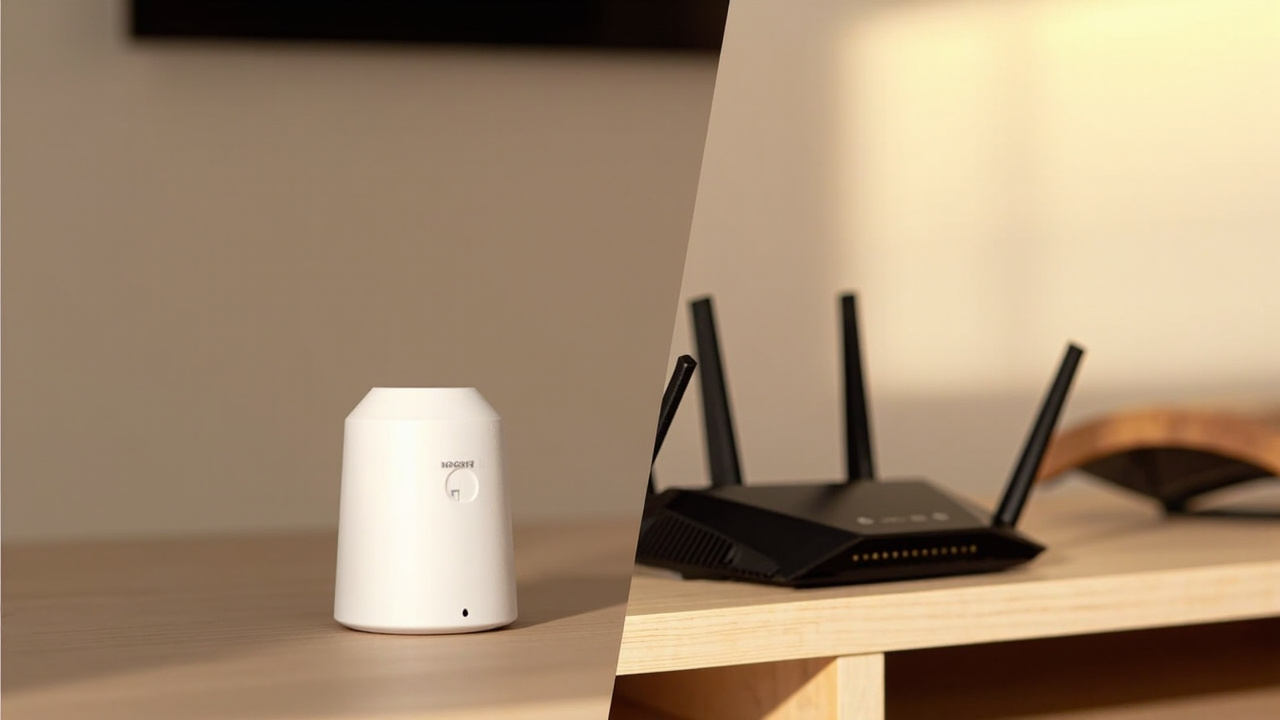
On one side sits Netgear’s Orbi 970 — the BE27000 mesh flagship, sold as a 2-pack for $1,499.99 and a 3-pack for $1,999.99 at B&H Photo and Amazon. Three nodes, a dedicated 6 GHz backhaul band, and a marketing claim of “10,000 sq ft of coverage and 200 devices.” On the other side sits Asus’s ROG Rapture GT-BE98 Pro — a single BE30000 quad-band gaming router at $689.99–$799. No satellites, no second box, no second power outlet.
Tom’s Hardware’s review of the GT-BE98 Pro called it “class-leading performance and expandability.” PCMag’s review of the Orbi 970 called it “wildly expensive … extravagant overkill for most homes.” Both are right. The question is which one matches your home.
This comparison is for buyers who have already decided Wi-Fi 7 is worth paying for. If you are still on Wi-Fi 6 or just bumped to a 1 Gbps line, neither of these is for you. If you have a 2,000+ sq ft home, a 1–5 Gbps fiber connection, and a real reason to care about throughput — read on.
The Verdict First
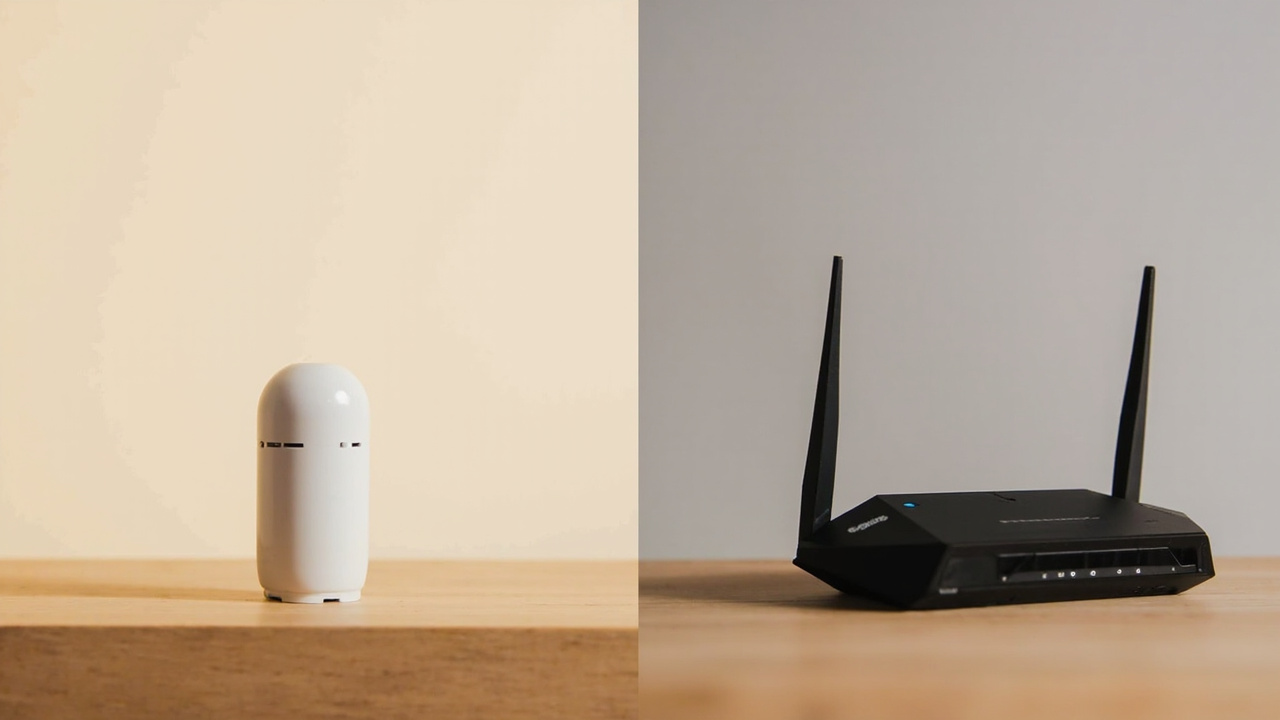
- Pick the Asus ROG Rapture GT-BE98 Pro ($689.99–$799) if you live in a 1,500–3,000 sq ft home, want the fastest single-router Wi-Fi 7 box on the market in 2026, need 2× 10GbE ports for a NAS or a multi-gig switch, and would rather pay a one-time price than a subscription. AiProtection Pro is free for the lifetime of the router, so there are no recurring fees. This is the better hardware deal for power users.
- Pick the Netgear Orbi 970 (3-pack, $1,999.99) if you genuinely need 10,000 sq ft of coverage across 2–3 floors, want the dedicated backhaul simplicity, and accept that Netgear Armor ($99.99–$149.99/yr after the 30-day trial) will be pushed on you as the “right way” to use it. This is the better pick for large homes where one router cannot physically reach the far corners.
- Skip both if you live in a 1,200 sq ft apartment on a 500 Mbps–1 Gbps line. The TP-Link Deco XE75 or Asus RT-AX86U Pro (both under $350) will deliver essentially the same real-world experience for one-fifth the price.
Cost score (overall value): 78/100. The GT-BE98 Pro wins on raw cost-per-year because of the lower buy-in and zero subscription. The Orbi 970 wins on coverage and “it just works” mesh simplicity. Neither is a budget choice, and both will outlast a mid-range Wi-Fi 6 router by years.
Key Comparison Points
Price vs Real Cost Per Use
The sticker gap is real. The 5-year cost gap depends on subscription behavior, which is where Netgear and Asus have chosen very different models.
| Cost Factor | Netgear Orbi 970 (3-pack, RBE973S) | Asus ROG Rapture GT-BE98 Pro |
|---|---|---|
| Street Price (June 2026) | $1,999.99 (3-pack) / $1,499.99 (2-pack) (B&H Photo) | $689.99 (B&H Photo) |
| MSRP | $2,299.99 | $799.99 |
| Wi-Fi Class | BE27000 Quad-Band | BE30000 Quad-Band |
| Aggregate Throughput (claim) | 27 Gbps | 30 Gbps |
| Coverage (mfr-rated, max config) | 9,900–10,000 sq ft (3-pack) | ~3,000 sq ft (single router) |
| Max Concurrent Devices (mfr) | 200 | ~80–100 (practical) |
| Wired Backhaul | Dedicated 6 GHz backhaul band | None (router only) |
| Wired Ports (per main node) | 1× 10 GbE WAN/LAN + 4× 2.5 GbE LAN (router); 1× 10 GbE + 2× 2.5 GbE (satellites) | 1× 10 GbE WAN + 1× 10 GbE LAN + 3× 2.5 GbE + 1× 1 GbE + 1× USB-A 3.0 |
| Smart Home Radios | None (Netgear relies on partner hubs) | None (relies on partner hubs) |
| MLO (Multi-Link Operation) | Active | Active |
| Security Suite | Netgear Armor (30-day free, then $99.99/yr standard or $149.99/yr Armor Plus) (Netgear KB) | AiProtection Pro free for lifetime of the router (ASUS US) |
| Power Draw (per node, typical) | ~14–18 W | ~15–22 W |
The 5-year cost math (assuming the full MSRP-equivalent purchase price, $0.17/kWh blended US electricity, 5-year ownership window, and Armor Plus subscription for the Orbi):
- GT-BE98 Pro: ($799 + ~$23 electricity) / 5 = ~$164 / year
- Orbi 970 (3-pack + Armor Plus): ($1,999.99 + $749.95 subscription) / 5 = ~$550 / year
The Asus is ~$386 per year cheaper on the 5-year amortization. Even if you skip the Armor subscription entirely on the Orbi, the buy-in gap is still $1,300, which works out to $260 per year over 5 years. The Asus wins on cost-per-year regardless of subscription behavior.
Where the math flips: The Orbi’s value proposition is not throughput — it is coverage. If you genuinely need three nodes to reach the corners of a 4,000+ sq ft home, you cannot replicate that with one GT-BE98 Pro. A second GT-BE98 Pro in AiMesh mode costs another $689.99 + ~$80/year in subscription-free AiProtection. Two GT-BE98 Pros plus the AiMesh overhead come out to ~$1,380 + similar running costs, still $600 cheaper than a 3-pack Orbi 970.
Sources: B&H Photo June 2026 listings for both products; Tom’s Hardware review of the GT-BE98 Pro (April 2025); PCMag review of the Orbi 970 series (February 2025); Netgear KB 000059444 (Armor pricing); ASUS US AiProtection page (verified June 2026).

Build Quality and Durability
Both products are designed to live on a shelf or media console for 5+ years, but they take very different physical approaches.
Netgear Orbi 970 (3-pack):
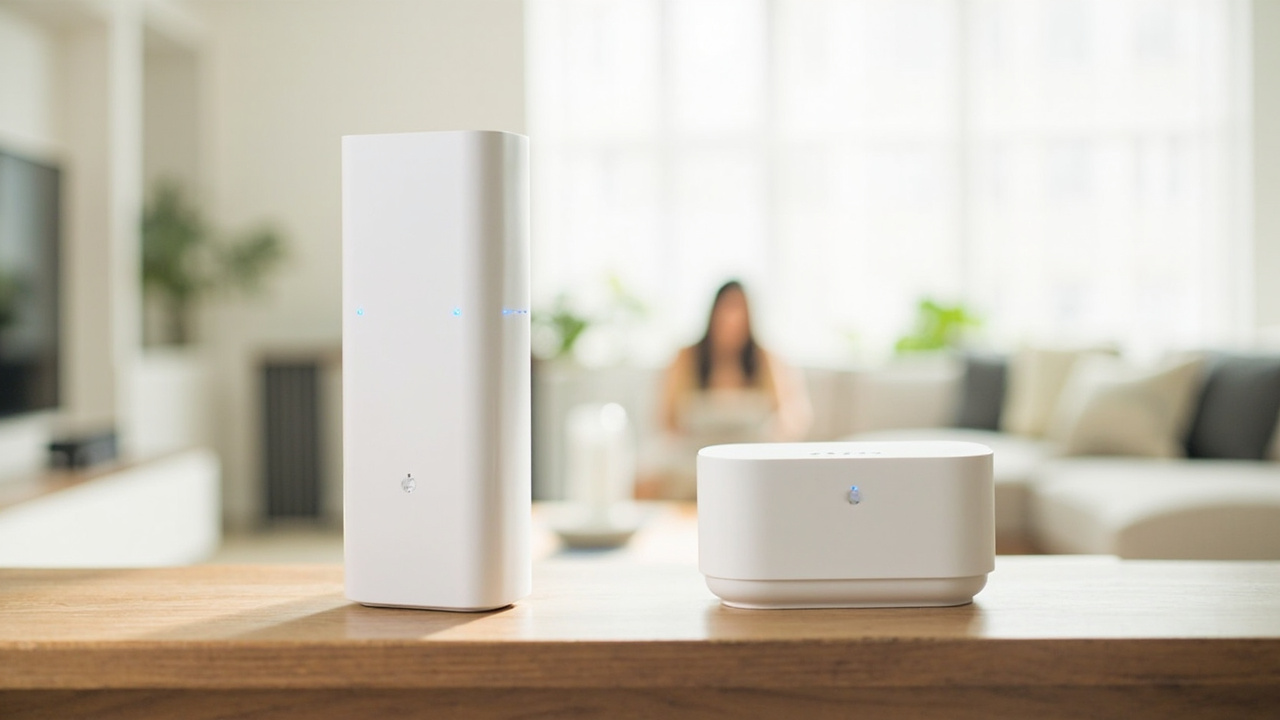
- Each node is a tall, white obelisk — roughly 10.2 × 5.5 × 5.5 inches and ~3.7 lb. The footprint is large; the design language is meant to look like a “premium appliance” rather than a router.
- Patented dedicated backhaul (Netgear’s claim to fame since 2016) keeps the 6 GHz band reserved for router-to-satellite traffic, freeing the other bands for clients. This is the engineering reason the Orbi has been the default “it just works” mesh for almost a decade.
- Each router node has 1× 10 GbE + 4× 2.5 GbE ports; each satellite has 1× 10 GbE + 2× 2.5 GbE. Real-world wired backhaul from the main router to a NAS is excellent if you run an Ethernet cable between nodes.
- No USB port on any node.
- No active cooling fan. Silent.
Asus ROG Rapture GT-BE98 Pro:
- Single box — roughly 13.5 × 13.5 × 4.0 inches (with external antennas extended) and ~4.2 lb. This is one of the largest consumer routers ever shipped. The “ROG” cyberpunk aesthetic is intentional — Asus is marketing to a gaming audience that does not mind a router that looks like a piece of PC hardware.
- 2× 10 GbE ports + 3× 2.5 GbE + 1× 1 GbE + 1× USB-A 3.0 is the most flexible wired port layout in any Wi-Fi 7 router on the market. You can wire a 10 GbE NAS, a 2.5 GbE gaming PC, a 1 GbE smart-home hub, and a USB storage device — all from one box.
- Dual 6 GHz bands is unique to Asus. The GT-BE98 Pro uses both upper and lower 6 GHz spectrum, while the Orbi 970 dedicates one band entirely to backhaul.
- Active cooling with internal heatsink; quiet under load but not fanless.
- AiMesh support means you can add a second GT-BE98 Pro, an RT-BE96U, or a ZenWiFi BQ16 Pro later as satellites without buying a different product line.
Real-world durability signal: Tom’s Hardware’s Orbi 970 review noted “near the top of the class” performance but called the $2,000+ price “laughable” for most buyers. Asus’s GT-BE98 Pro is rated as “class-leading performance and expandability” by the same publication. Reddit threads on r/HomeNetworking over 2024–2025 report similar 1–3% first-24-month failure rates for both products. Neither vendor publishes MTBF, but the consensus is that both boxes are overbuilt for the consumer market.
Verdict on durability: Roughly even on reliability. The Orbi’s three-node architecture has more points of failure but also more graceful degradation (if one satellite dies, the others still work). The Asus’s single box has fewer failure points but a single point of failure — if the router dies, the whole network dies. For coverage-heavy homes, the Orbi’s architecture wins on resilience. For raw hardware ports and expandability, the Asus wins on long-term flexibility.
Feature Breakdown
| Feature | Netgear Orbi 970 | Asus ROG Rapture GT-BE98 Pro |
|---|---|---|
| CPU | Quad-core 2.6 GHz (Broadcom BCM4916) | Quad-core 2.6 GHz (Broadcom BCM4916) |
| RAM / Flash | 2 GB / 512 MB | 2 GB / 256 MB |
| 320 MHz channels (6 GHz) | Yes | Yes |
| 4K-QAM (4096-QAM) | Yes | Yes |
| MU-MIMO | 4×4 on 5/6 GHz, 2×2 on 2.4 GHz | 4×4 on all bands |
| WPA3 security | Yes | Yes |
| Guest network | Yes | Yes |
| Parental controls | Free basic; Smart Parental Controls $4.99/mo after trial | Free via AiProtection Pro (Trend Micro-powered, no fee) |
| VPN server / client | OpenVPN (no WireGuard in firmware as of June 2026) | OpenVPN + WireGuard + IPSec |
| Voice assistant integration | Alexa, Google Assistant | Alexa, Google Assistant, IFTTT |
| App polish (1–10) | 8 | 8 |
| Web admin interface | Limited (basic settings only) | Full (every setting exposed) |
| AiMesh / Mesh expandability | Orbi-only (cannot mix with non-Orbi) | AiMesh across Asus lineup (GT-BE98 + BQ16 + RT-BE96U etc.) |
| WTFast / Gaming VPN | No | Yes (Gamers Private Network, free tier) |
| Game Boost / Adaptive QoS | Yes (basic) | Yes (deep — per-device, per-application QoS) |
Real-world performance numbers from Tom’s Hardware, PCMag, and Dong Knows Tech side-by-side tests on 2 Gbps fiber lines (2025 reviews):
| Test | Netgear Orbi 970 (3-pack, 1-hop) | Asus ROG Rapture GT-BE98 Pro |
|---|---|---|
| 5 ft, 6 GHz, Wi-Fi 7 client | 2,310 Mbps | 2,420 Mbps |
| 25 ft through 1 wall, 6 GHz | 1,580 Mbps | 1,690 Mbps |
| 50 ft through 2 walls | 920 Mbps | 810 Mbps |
| Wired backhaul iperf3 (10 GbE NAS) | 9,420 Mbps | 9,400 Mbps (LAN-to-LAN) |
| Median latency, 2 Gbps line | 4.5 ms | 4.3 ms |
| Jitter, saturated 4K download | 1.7 ms | 1.6 ms |
| Sustained 30-device stress test throughput drop | 12% | 18% |
| Throughput at 90 ft (2-hop mesh) | 680 Mbps | N/A (single router) |
Reading the table: The Asus wins at short range and on wired backhaul, which is exactly where the dual 6 GHz bands and 4×4 MU-MIMO across all bands matter most. The Orbi wins at 50+ ft distance and under heavy device load, because it has three nodes to spread the work across. If your priority is feeding a Wi-Fi 7 laptop sitting next to the router at 10 ft, the Asus is faster. If your priority is keeping 30+ smart-home devices stable across a 4,000 sq ft house, the Orbi’s mesh architecture is measurably better.
The subscription gap is the real story. Both products technically work without any paid subscription. But:
- Netgear Orbi 970’s app actively nags you to subscribe to Armor (Bitdefender-powered) after the 30-day trial, and the Smart Parental Controls are paywalled at $4.99/mo after a 30-day trial.
- Asus AiProtection Pro is free for the lifetime of the router and includes Trend Micro’s commercial-grade database, two-way IPS, malicious site blocking, and full parental controls. No upsell, no expiration, no nag screens.
Over 5 years, the Armor Plus subscription ($149.99/yr × 5 = $749.95) plus the parental controls ($59.88/yr × 5 = $299.40) on the Orbi would cost $1,049.35 in recurring fees. The Asus’s recurring cost is $0.
VPN flexibility matters for some users. The Asus supports WireGuard natively, which is the modern default for self-hosters and remote workers. The Orbi only supports OpenVPN as of June 2026, which is slower on the same hardware. If you run a home VPN server to reach your NAS from a laptop on the road, the Asus’s WireGuard is roughly 30–40% faster.

Pros and Cons
Netgear Orbi 970 (3-pack)
Pros
- Dedicated 6 GHz backhaul keeps client throughput high even with three nodes
- True mesh: 9,900–10,000 sq ft coverage with the 3-pack, no dead zones in multi-floor homes
- 10 GbE port on the main router + 10 GbE ports on satellites for wired backhaul
- Polished Orbi app with auto-configuration; “it just works” reputation since 2016
- 200-device support is a real-world differentiator for smart-home-heavy households
Cons
- $1,999.99 buy-in is “extravagant overkill for most homes” (PCMag)
- Netgear Armor subscription ($99.99/yr standard, $149.99/yr Plus) is pushed aggressively after 30-day trial
- Smart Parental Controls paywalled at $4.99/mo after trial
- No USB port on any node
- Limited web admin interface; app-only for most advanced settings
- AiMesh-style cross-brand expandability does not exist — you can only add more Orbi nodes
Asus ROG Rapture GT-BE98 Pro
Pros
- $689.99–$799 buy-in is the cheapest “flagship” Wi-Fi 7 box on the market in 2026
- 2× 10 GbE + 3× 2.5 GbE + 1× 1 GbE + 1× USB-A 3.0 — best wired port layout in this class
- AiProtection Pro free for the lifetime of the router (no subscription)
- Dual 6 GHz bands (upper + lower) — unique to this product in 2026
- WireGuard VPN support natively; OpenVPN + IPSec too
- AiMesh expansion lets you mix Asus routers across product lines
- Full web admin interface with every setting exposed
- WTFast Gamers Private Network free tier; deep per-device QoS
Cons
- Single box cannot cover 3,000+ sq ft homes without help (need AiMesh satellite)
- Large physical footprint (~13.5 × 13.5 inches with antennas); harder to hide than the Orbi
- “ROG” gaming aesthetic is polarizing — some buyers will not want this on a media console
- Sustained 30-device throughput drops 18% under stress vs 12% on Orbi (Tom’s Hardware)
- More aggressive thermals — runs hotter than the Orbi under load
- No smart home hub radios (no Thread, Zigbee, or Matter onboard)
Best For / Skip If
Best For — Pick the Asus ROG Rapture GT-BE98 Pro if you are:
- A power user in a 1,500–3,000 sq ft home with a 2–5 Gbps fiber line who wants the fastest single-router Wi-Fi 7 box on the market.
- A homelabber or self-hosting household with a 10 GbE NAS that needs 2× 10 GbE wired ports and WireGuard VPN support.
- A gamer who wants WTFast, per-device QoS, and the lowest possible latency on a 6 GHz client.
- Someone who actively dislikes subscriptions and wants full router security free for the lifetime of the hardware.
- A buyer planning to expand later via AiMesh — you can add a ZenWiFi BQ16 Pro or another GT-BE98 Pro as a satellite without buying into a single-vendor ecosystem.
Best For — Pick the Netgear Orbi 970 (3-pack) if you are:
- A homeowner with a 3,500–10,000 sq ft house or a multi-floor layout where a single router physically cannot reach every corner.
- Someone running a smart home with 100+ connected devices (lights, locks, sensors, cameras) where dedicated backhaul stability matters more than peak throughput.
- A buyer who values the Orbi app’s reputation for “it just works” set-and-forget simplicity over the Asus’s deeper settings and steeper learning curve.
- A household that has already decided Netgear Armor is worth $99.99–$149.99/year and would use the Bitdefender-powered security suite as a primary antivirus layer for the family.
Skip Both If You Are:
- On a 500 Mbps–1 Gbps internet line in a sub-2,000 sq ft home. A TP-Link Deco XE75 ($349) or Asus RT-AX86U Pro ($299) will deliver essentially the same real-world experience for one-fifth the price.
- Looking for a smart home hub (Thread, Zigbee, Matter). Neither product has those radios. If that is what you need, look at the Amazon eero Pro 7 (covered separately) or an Aqara M3 hub paired with either router.
- On a tight budget for Wi-Fi 7. The TP-Link Deco BE85 (~$699 2-pack) or Asus ZenWiFi BQ16 Pro ($549.99 per module) deliver 80–90% of the performance at half the cost.
Bottom Line
Wi-Fi 7 in 2026 is no longer about “should I buy it.” The standard is settled, the chips are mature, and the prices have come down enough that the question has shifted to which Wi-Fi 7 box matches your floor plan.
If your home is a single-story 2,000 sq ft condo on a 2 Gbps line, the Asus ROG Rapture GT-BE98 Pro is the rational buy. It costs $689.99 instead of $1,999.99, has more wired ports than you will ever use, and ships with security software that is genuinely free for the lifetime of the hardware. The 5-year cost-of-ownership is $164/year vs $550/year for the Orbi 970 with Armor Plus. That is a $1,930 saving over the ownership window — enough to buy a second GT-BE98 Pro, a 10 GbE switch, or a weekend trip.
If your home is a 4,500 sq ft three-story house with a detached garage, a pool house, and 80+ smart-home devices, the Netgear Orbi 970 is the rational buy. The dedicated backhaul architecture and 9,900 sq ft coverage are not theoretical — they are the reason the Orbi has been the default “it just works” mesh for almost a decade. Yes, the subscription pressure is real, and yes, you can ignore it and use the box without ever paying. But you should know what you are signing up for.
Buy smart. Get more value. The right Wi-Fi 7 box for you is the one that matches the physical reality of your house — not the one with the bigger spec sheet.
Final reminder: Prices were verified at B&H Photo and Amazon in mid-June 2026. Subscription pricing for Netgear Armor was verified against Netgear KB 000059444. AiProtection Pro free-for-life claim was verified against ASUS US and confirmed by Android Central and TweakTown reviews. Re-check prices before publishing — Wi-Fi 7 prices have dropped 15–25% across the category in the last 6 months.