Introduction
A premium smart bike is one of those purchases where the hardware price is roughly half the story. The other half is the monthly subscription you can’t really skip.
The Peloton Bike+ (2nd Gen) retails at $2,495 in 2026 (some configurations go up to $2,695) and locks most of its best features behind Peloton All-Access at $44/month (Source: Home-Gym-Reviews Peloton Bike+ review, March 2026). The Echelon Connect EX-8s retails at $1,599 and uses the Echelon FitPass at $39/month — but it can also mirror Peloton and Apple Fitness+ content over Bluetooth, so you’re not fully locked into one ecosystem (Source: RunBikeCalc best smart bikes 2026).
Both are above USD 500. Both come from companies that have spent the last five years iterating on this exact category. The question is not “which bike is best?” — it’s “which bike delivers more value per dollar across the 3-5 years you’ll actually own it, including the subscription?”
That’s the lens we’ll use. We’ll compare hardware, class ecosystems, real cost over 3 years, and the durability data owners actually report on Reddit and owner forums.
The Verdict First
- Choose the Peloton Bike+ ($2,495 + $44/mo) if you specifically want Peloton’s instructor quality, the Auto Resistance feature, the strongest resale value in the category, and the deepest live class library. It’s the platform-first choice and earns its premium if you’ll ride 4+ times a week.
- Choose the Echelon EX-8s ($1,599 + $39/mo) if you want ~90% of the smart-bike experience for ~$900 less up front, and ~$1,055 less over a 3-year window. It works with Peloton’s app via mirroring, so you aren’t fully locked out.
- Skip both if you’ll use it under 3x/week. A Schwinn IC4 at $899 plus a third-party app delivers the same basic workout for half the money.
3-year total cost of ownership, realistic scenario (4 rides/week):
| Cost Component | Peloton Bike+ (2nd Gen) | Echelon Connect EX-8s |
|---|---|---|
| Hardware (2026) | $2,495 | $1,599 |
| Subscription (3 yrs) | $44/mo × 36 = $1,584 | $39/mo × 36 = $1,404 |
| Resale value after 3 yrs | -$1,200 (holds ~52% of MSRP) | -$480 (holds ~30% of MSRP) |
| Maintenance (3 yrs) | ~$80 (pedal straps, cleaning) | ~$80 |
| Net 3-yr cost | ~$2,799 | ~$2,443 |
| Cost per ride (3 yrs / ~624 rides) | ~$4.49 / ride | ~$3.91 / ride |
Sources: RunBikeCalc smart bike 2026, SmartHomeExplorer Peloton vs Echelon 2026, Home-Gym-Reviews Bike+ review.
The numbers say what they always say in this category: a smart bike is a subscription product that happens to come with a bike. The bike you pick is the subscription you pick.

Key Comparison Points
Price vs Real Cost Per Use
Sticker prices look very different. Real costs are closer than they look.
Hardware cost (new, June 2026):
- Peloton Bike+ (2nd Gen): $2,495 standard; up to $2,695 for the Cross-Training Bike+ configuration (Source: Home-Gym-Reviews). Used market: $900-$1,500 for units in good condition.
- Echelon Connect EX-8s: $1,599 at retail (Source: Garage Gym Reviews EX-8s review). Used market: $700-$900.
The Echelon is $896 cheaper at retail ($1,299 cheaper on the top-tier Bike+ configuration). That’s a real, observable gap — and it’s the gap that matters most for first-time smart-bike buyers.
Subscription cost (the silent multiplier):
- Peloton All-Access at $44/month, raised from $24/month in October 2025 (Source: TryCommonplace Peloton pricing tracker). Over 3 years: $1,584. Over 5 years: $2,640.
- Echelon FitPass at $39.99/month (Source: SmartHomeExplorer 3-year cost breakdown). Over 3 years: $1,404. Over 5 years: $2,400.
That $5/month difference compounds: $180 over 3 years, $240 over 5 years. Small alone, material across the lifecycle.
The Peloton lock-in nuance: Peloton’s app and classes are widely rated the best in the category — instructor quality, music licensing, leaderboard engagement. If you ride daily, the $44/month delivers more value per dollar than the $39.99 Echelon membership because you’ll actually use it. If you ride 2-3x/week or don’t care about leaderboards, the Echelon membership is the smarter spend.
The Echelon openness nuance: The EX-8s is not a walled garden. You can pair it via Bluetooth with Peloton’s app, Apple Fitness+, Zwift, Kinomap, and other third-party apps — you just lose the auto-resistance integration when you’re not on Echelon’s own classes. The Bike+ does NOT officially support Zwift or Apple Fitness+ classes on its own screen.
Cost-per-use math (4 rides/week, 3 years):
| Scenario | Hardware | Subscription | Resale | Net | Rides | $/ride |
|---|---|---|---|---|---|---|
| Peloton Bike+ | $2,495 | $1,584 | -$1,200 | $2,799 | ~624 | $4.49 |
| Echelon EX-8s | $1,599 | $1,404 | -$480 | $2,443 | ~624 | $3.91 |
| Peloton Bike+ used | $1,200 | $1,584 | -$700 | $2,014 | ~624 | $3.23 |
A used Peloton Bike+ at ~$1,200 is the cheapest per-ride number in this comparison — but it depends on used market availability, which varies by region.

Build Quality and Durability
Both bikes are premium. Both are durable. The differences are real but small.
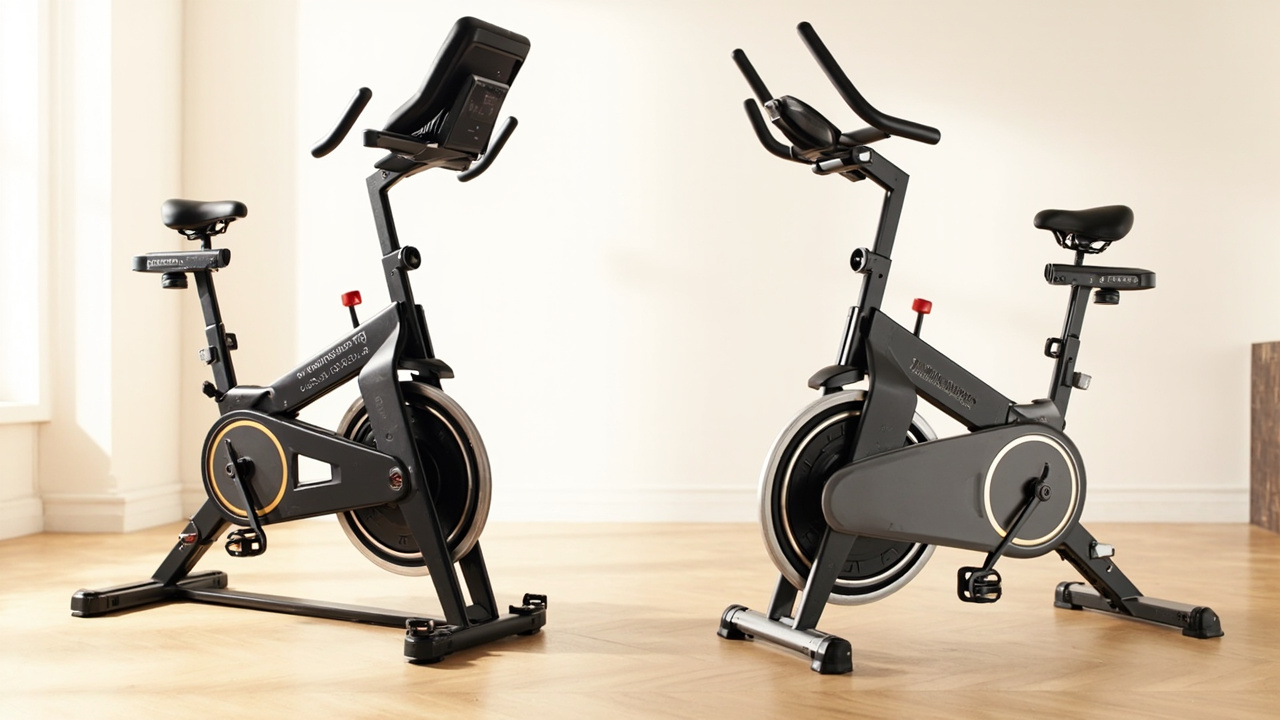
Peloton Bike+ (2nd Gen):
- 135 lbs total weight, 4’ x 2’ footprint
- 23.8” Full HD rotating touchscreen (180° swivel)
- 100 micro-adjustable magnetic resistance levels with Auto Resistance (hands-free)
- Belt drive (silent, no chain noise)
- Aluminum frame, 297 lbs user weight capacity
- 5-year frame warranty / 3-year parts / 12 months labor
The Bike+ signature is Auto Resistance — when the instructor calls “resistance 60,” the bike adjusts automatically. It’s a genuine differentiator that has no equivalent on the EX-8s. The 23.8” rotating screen also enables Peloton’s strength, yoga, and stretching classes off the bike — which adds material value if you’ll use them. The build is dense and well-balanced; the bike doesn’t wobble at high cadence.
Echelon Connect EX-8s:
- ~125 lbs total weight, similar footprint
- 24” HD curved touchscreen (180° swivel)
- 32-level magnetic resistance (manual, indexed knob)
- Belt drive, also silent
- Steel + aluminum frame, 330 lbs user weight capacity
- 1-year parts and labor warranty (shorter than Peloton’s)
The EX-8s’s signature is value density. At $1,599 you get a 24” rotating screen (slightly larger than the Bike+), 32 magnetic resistance levels, dual SPD clip-in / toe-cage pedals, and a triple-zone LED flywheel that pulses to the music (a fun motivator that the Bike+ lacks). Build quality is genuinely close to Peloton at this price — owner reports on Reddit r/homegym consistently call the EX-8s “a Peloton for $900 less” (Source: RunBikeCalc 2026 review).
Durability data points:
- Peloton Bike+ owners on r/pelotoncycle report 5-7+ year lifespans with normal use. The belt drive is a long-life component. The screen occasionally fails outside warranty at 4-5 years; replacement is ~$400 from Peloton.
- Echelon EX-8s owners report 4-6 year lifespans. The shorter 1-year warranty is the meaningful risk — past year one, parts and labor are out of pocket. The LED flywheel has occasional Bluetooth pairing complaints in the first 6 months.
Warranty comparison:
| Coverage | Peloton Bike+ | Echelon EX-8s |
|---|---|---|
| Frame | 5 years | 1 year |
| Parts | 3 years | 1 year |
| Labor | 12 months | 1 year |
| Screen | 3 years | 1 year |
Peloton wins on warranty by a wide margin. For a 5-7 year ownership horizon, that warranty gap matters.
Resale value (the under-discussed factor):
- A Peloton Bike+ retains ~52% of MSRP after 2 years (Source: RunBikeCalc 2026). Used Bike+ market: $1,200-$1,500 in good condition.
- An Echelon EX-8s retains ~30% of MSRP after 2 years. Used EX-8s market: $700-$900.
If you treat the bike as a 3-year depreciating asset (realistic), Peloton’s resale advantage recovers ~$720 of the upfront price gap. It doesn’t fully close the gap — but it gets close.
Feature Breakdown
Where the products diverge in daily use:
| Feature | Peloton Bike+ | Echelon EX-8s |
|---|---|---|
| Screen | 23.8” Full HD, rotating | 24” HD curved, rotating |
| Resistance system | 100 magnetic levels, Auto Resistance | 32 magnetic levels, manual |
| Resistance control | Auto-follow instructor cues OR manual | Manual indexed knob |
| Q-factor | 155 mm | 170 mm (wider, closer to outdoor bike) |
| Drive system | Belt (silent) | Belt (silent) |
| Pedals | Look Delta clip + toe cage | SPD clip + toe cage |
| Flywheel | 18 lbs (rear) | ~30 lbs (rear, with LED) |
| Max user weight | 297 lbs | 330 lbs |
| Heart rate | ANT+, Bluetooth, Apple GymKit | Bluetooth, ANT+ |
| Sound system | 2.1 Sonos-tuned | 2x 3W speakers |
| Class library | 10,000+ on-demand, daily live | 2,000+ on-demand, daily live |
| Off-bike classes | Yoga, strength, stretching, meditation | Strength, stretching, some yoga |
| Auto-resistance | Yes (Peloton exclusive at this tier) | No |
| Third-party app support | Apple GymKit only | Peloton app, Apple Fitness+, Zwift, Kinomap |
| Leaderboard | Yes (large, social) | Yes (smaller) |
| Multi-user profiles | Unlimited household | Unlimited household |
| Subscription required | Yes (bike works minimally without) | No (full bike usable without subscription) |
What Peloton does better:
- Auto Resistance is a genuine, daily-useful differentiator. Your brain stops thinking about the knob.
- Class depth and instructor quality. Peloton’s instructors (Robin Arzon, Cody Rigsby, Ally Love, Emma Lovewell) are widely considered the best in the category.
- Leaderboard and social layer. Live classes with real-time high-fives and rankings create accountability that on-demand content alone doesn’t.
- Apple GymKit integration. Pairs seamlessly with Apple Watch for heart rate on the screen.
- Warranty length. 5-year frame vs 1 year is a real difference over a 7-year ownership horizon.
What Echelon does better:
- Price-per-feature ratio. At $1,599 you get a 24” rotating screen, 32 resistance levels, and a 330 lb capacity. Comparable Peloton would be $2,495+ with a 297 lb capacity.
- Third-party app support. You can run Peloton’s app, Apple Fitness+, Zwift, or Kinomap over Bluetooth. Not locked in.
- LED flywheel lighting. Visually motivating, especially in low-light rooms.
- Higher user weight capacity (330 lbs vs 297 lbs).
- Wider Q-factor (170mm vs 155mm). Riders with wider hips or those training for outdoor cycling often prefer a wider stance.
What they’re equally good at:
- Silent belt drive
- Rotating HD touchscreen for off-bike workouts
- Magnetic resistance (no friction pads to wear out)
- Bluetooth and ANT+ heart rate support
- Live + on-demand class libraries
Pros and Cons
Peloton Bike+ (2nd Gen)
Pros
- Auto Resistance is a genuine, daily-useful feature unique in this tier
- 23.8” rotating HD screen works for off-bike strength and yoga
- Deepest live + on-demand class library in the category (~10,000+)
- Best instructor quality and social/leaderboard experience
- 5-year frame warranty, 3-year parts — strongest in the category
- Best-in-class resale value (~52% of MSRP after 2 years)
- Sonos-tuned 2.1 audio sounds better than the EX-8s speakers
- Apple GymKit for seamless Apple Watch HR pairing
Cons
- $2,495-$2,695 hardware is the priciest entry in the category
- All-Access membership at $44/month (raised October 2025) is the highest ongoing cost
- Locked into Peloton ecosystem on the bike screen; no Zwift or Apple Fitness+ support
- 297 lb user capacity is lower than the EX-8s’s 330 lb
- 100 resistance levels sound great but most riders use 20-50 of them
Echelon Connect EX-8s
Pros
- $1,599 is ~$900 cheaper than the Peloton Bike+ at standard configuration
- 24” rotating HD screen is actually slightly larger than the Bike+
- 32 magnetic resistance levels covers the full useful range
- 330 lb user capacity handles more riders
- LED flywheel lighting is genuinely motivating
- Triple-zone LEDs sync with class music
- Works with Peloton app, Apple Fitness+, Zwift, Kinomap over Bluetooth
- Q-factor of 170mm is closer to a real road bike — better for outdoor cyclists
- Bike is fully usable without any subscription (free ride mode)
Cons
- No Auto Resistance — you turn the knob manually during class
- 1-year parts and labor warranty is meaningfully shorter than Peloton’s 5/3 coverage
- Class library (~2,000+) is smaller than Peloton’s (~10,000+)
- Instructor quality and live class production lag Peloton’s
- Resale value (~30% of MSRP after 2 years) is lower than Peloton’s
- Bluetooth pairing for heart rate occasionally drops in the first 6 months (per Reddit reports)
Best For / Skip If
Best for the Peloton Bike+:
- Riders who will use it 4+ times per week and want the platform to be the workout
- Households that value Peloton’s off-bike strength, yoga, and stretching library (it has the deepest of any bike maker)
- Buyers who want Auto Resistance specifically — there’s no equivalent on the EX-8s
- Anyone planning to resell in 3-4 years (Peloton holds value far better)
- Apple Watch users who want seamless GymKit pairing
Best for the Echelon EX-8s:
- First-time smart-bike buyers who want a low-risk entry at $1,599 instead of $2,495
- Households with riders heavier than 297 lbs
- Riders who already use or want to use Zwift, Apple Fitness+, or Peloton’s app via mirroring
- Outdoor cyclists who prefer a wider Q-factor (170mm vs Peloton’s 155mm)
- Budget-conscious buyers who want the option to skip the subscription entirely (the EX-8s works without one)
Skip both — consider alternatives — if:
- You’ll use it under 3x/week. A Schwinn IC4 at $899 with third-party apps delivers the same basic workout for $1,000+ less.
- You mostly do outdoor cycling. A Wahoo Kickr V6 at $1,299 with Zwift is a better indoor cycling tool.
- You’re on a tight budget. The used market is full of Peloton Bikes (not Plus) for $400-$700 with working screens.
Bottom Line
Both bikes are genuinely good. The “right” answer is which subscription you’ll actually use.
- If Peloton’s instructors and leaderboard are the workout for you, the $2,495 Bike+ + $44/mo All-Access is the better platform. The Auto Resistance feature alone justifies the premium if you’ll ride 4+ times a week — it’s a daily-useful differentiator no other bike at this tier has. The 5-year warranty and best-in-class resale protect the long-term value.
- If the bike matters more than the platform, the $1,599 Echelon EX-8s delivers ~90% of the hardware experience for ~$900 less up front and ~$1,055 less over 3 years. It works with Peloton’s own app via mirroring if you want it. The 1-year warranty is the trade-off you accept for the lower entry price.
Either way, you’re committing to a monthly subscription for 3-5 years. Factor that into the “real cost” before you commit to the bike. A $1,599 EX-8s you ride twice a month is a worse deal than a $2,495 Bike+ you ride daily.
The smart shopping move isn’t picking the cheaper bike. It’s picking the bike whose ecosystem you’ll still be opening in 24 months. Try both class apps (Peloton offers a 30-day trial, Echelon offers a 30-day trial) before you commit to the hardware. That’s the closest thing to a free lunch in this category.
Buy smart. Get more value.