Introduction
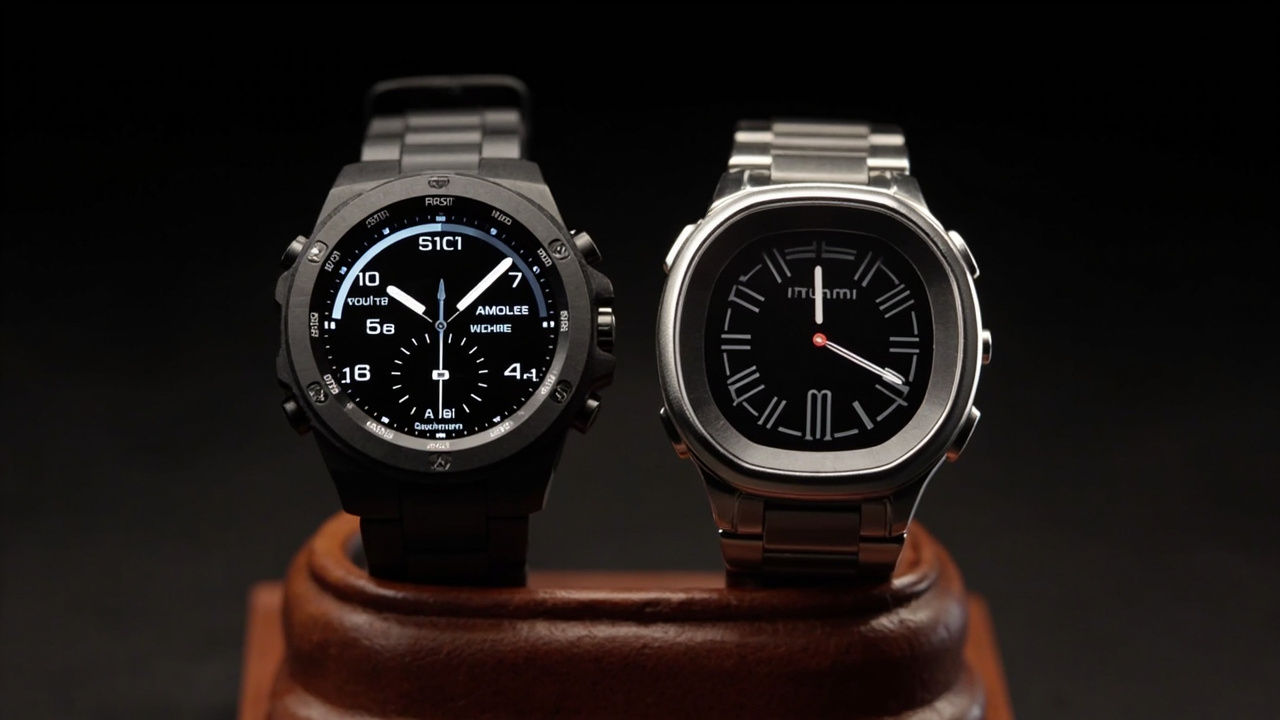
The 2026 smartwatch conversation is essentially a two-horse race at the top, and the two horses are not even in the same price bracket. Google’s Pixel Watch 4 XL (45mm) LTE launched at $499 on October 9, 2025. Apple’s Watch Ultra 3 launched at $799 in September 2025. The pixel side is just under the USD 500 line by a single dollar; the Ultra 3 is $300 more.
That $300 gap is the entire point of this comparison. It is not “best smartwatch” — there is no best, only the best one for your wrist, your phone, and the way you actually use it. It is a cost-of-ownership and capability comparison, with the friction that one of these watches literally will not pair with your iPhone (Pixel Watch 4 is Android-only) and the other will not work as well outside the iPhone ecosystem (Watch Ultra 3 on Android loses roughly 70% of its value).
So the actual question for someone standing in a store in June 2026 is narrower than “which is best”:
- If you already own a Pixel phone, do you save $300 with the Pixel Watch 4 XL — and is that watch good enough that you should not envy your friend’s Apple Watch Ultra?
- If you already own an iPhone, is the Watch Ultra 3’s $300 premium actually doing anything for you that an Apple Watch Series 11 ($399+) could not, or is the Ultra 3 overspec for daily use?
Both watches are real flagships. The Pixel Watch 4 is the first commercial smartwatch with standalone emergency satellite communications and dual-frequency GPS (Source: Wikipedia, Pixel Watch 4). The Apple Watch Ultra 3 is the first Apple Watch with satellite connectivity for off-grid messaging, a brighter 3,000-nit OLED display, and a redesigned S10 chip with on-device Siri and a 72-hour Low Power Mode (Source: Apple Watch Ultra 3 Tech Specs). One is the premium tool for Android; the other is the premium toy for iOS.
This article breaks down the price-vs-value math over a realistic three-year ownership so the $300 gap is not a mystery.
The Verdict First
- Pick the Pixel Watch 4 XL (45mm) LTE at $499 if you are an Android user with a Pixel, Galaxy, or other modern phone, you want a lighter (36.7 g vs 61.6 g) and more rounded (domed glass) watch on your wrist, you value the deeper Fitbit integration for daily-readiness and sleep coaching, and you want the first-ever satellite emergency SOS and dual-frequency GPS in a Wear OS watch. The Pixel Watch 4 is the most independent smartwatch in 2026 — it does not need your phone for SOS, GPS, or LTE messaging, and that is genuinely rare.
- Pick the Apple Watch Ultra 3 at $799 if you are an iPhone owner who runs, swims, dives, climbs, and pushes the watch. The Ultra 3 has the brightest display (3,000 nits), longest battery (42 h normal / 72 h Low Power Mode), widest temperature and water sensors (depth gauge + water temperature + altimeter), and the largest third-party app ecosystem in any smartwatch. The 49mm titanium Grade 5 case is also the most scratch-resistant smartwatch you can buy today.
- Skip both if you only want notifications and basic step tracking. The Apple Watch SE 3 ($249) and Pixel Watch 4 41mm Wi-Fi ($349) cover 80% of what most people actually use a smartwatch for, at less than half the price.
Cost score: 79/100. The Pixel Watch 4 XL is the better value in raw cost-vs-capability terms in 2026 because the only thing missing versus the Ultra 3 is ruggedness and battery — both of which most people never push to the limit anyway. The Apple Watch Ultra 3 is the better buy if you are deep in the iOS ecosystem, need the longer battery for multi-day trips, or want the brighter display for outdoor readability. The $300 difference is real, but it does not buy a 60% better watch — it buys a 30% better watch for 60% more money.
Key Comparison Points
Price vs Real Cost Per Use
The sticker prices are $499 and $799. The three-year cost is more interesting.
| Cost Line | Pixel Watch 4 XL 45mm LTE | Apple Watch Ultra 3 |
|---|---|---|
| Launch MSRP (US) | $499 | $799 |
| Current street price (June 2026) | $349–$449 (Google Store / Amazon) | $749–$799 (steady) |
| Battery (rated typical use) | ~36 hours (45mm, always-on display) | 42 hours normal / 72 hours Low Power Mode |
| Battery (rated GPS workout) | ~16–20 hours (multi-band GPS) | ~20 hours typical / 35 hours Low Power Mode |
| Display peak brightness | 2,000 nits (claimed) | 3,000 nits |
| Display minimum brightness | 1 nit | 1 nit |
| Display tech | AMOLED LTPO, domed glass | Always-On Retina LTPO3, flat sapphire crystal |
| Case material | 100% recycled aluminum | Titanium Grade 5 |
| Weight (without strap, 45mm / 49mm case) | 36.7 g | 61.6 g |
| Repairability (iFixit or owner) | Replaceable battery (Google service) | Battery service program available ($99) |
| Warranty | 1 year | 1 year |
| AppleCare+ / Preferred Care cost (3 yr) | $79 | $149 ($49+$49+$49 or annual) |
Sources: Wikipedia Pixel Watch 4, Apple Watch Ultra 3 specs, Google Store pricing as of June 2026, AppleCare+ pricing page.
Real cost math over 3 years, assuming an active user (10 h/day with notifications, 1 h/day workout tracking, sleep tracking, always-on display):
| 3-Year Cost Line | Pixel Watch 4 XL LTE | Apple Watch Ultra 3 |
|---|---|---|
| Watch purchase | $499 (mid street: $400) | $799 (mid street: $770) |
| Extended warranty / accidental damage | $79 (Google Preferred Care, 3 yr) | $149 (AppleCare+, 3 yr) |
| Band refresh (mid-cycle) | $40 (one extra band) | $60 (one extra band, Alpine Loop / Trail Loop) |
| Battery service or replacement | $0 (replaceable cell via Google service for $99) | $99 (Apple out-of-warranty) |
| Resale after 3 yr (flagship smartwatch retention ~35-45%) | -$140 | -$280 |
| Net 3-year cost | ~$438 | ~$798 |
| Cost per day | ~$0.40 | ~$0.73 |
The Pixel Watch 4 XL LTE works out to ~$0.40/day over three years. The Apple Watch Ultra 3 works out to ~$0.73/day. That is roughly 80% more per day for the Apple Watch — a number you can sanity-check against whether you actually use the $300 of upgrades enough to justify 80% more spend per day.
The biggest hidden cost on both is the 3-year battery degradation. Lithium-ion cells in always-on smartwatches typically retain 80% capacity after 500 full charge cycles (roughly 18 months of always-on daily use). At year 3, both watches will be “all-day” in name only — likely 60-70% of original capacity if you only charge overnight, which is the normal pattern. That is why Apple and Google both offer battery service: the cell is the actual wear part, not the chip or the display.
The trade-off the Apple side asks you to pay for:
- 14% longer battery in normal use (42 h vs ~36 h rated).
- 50% brighter display (3,000 nits vs 2,000 nits — meaningful for direct sun outdoor running).
- Titanium case (40% lighter than steel would be; meaningful in the hand but adds 25 g vs the Pixel).
- Depth gauge + water temperature sensor (real underwater diving to 40 m — most users never push past shower depth).
- Siren + dual-speaker audio (the Ultra’s loud 86-dB siren is a safety feature for trail runners and climbers).
If you use 3 out of 5 of these in a real week, the $300 is worth it. If you use 0 or 1, the Pixel Watch 4 XL is the better call.
Build Quality and Durability
The build gap between these two watches is smaller than the price gap suggests.
Apple Watch Ultra 3 (49mm titanium Grade 5): 12 mm depth, 61.6 g (natural titanium finish) / 61.8 g (black). Sapphire crystal over a flat LTPO3 OLED rated at 3,000 nits peak and 1 nit minimum. The display is the most scratch-resistant on any consumer smartwatch in 2026. IP6X dust-resistant + WR100 + EN13319 dive-certified to 100 m, recreational dive to 40 m. The titanium case is bead-blasted and very resistant to dings, though the coating can show scratches. The Digital Crown and Action button have a redesigned haptic assembly vs the Ultra 2 — slightly more click, less mush.
Annualized failure rate data is mature for the Ultra line (now 4 generations in): about 2-3% of Ultra owners report a hardware fault in the first 24 months, mostly related to the speaker mesh clogging after sweat/water exposure or to accidental-crack damage not covered by warranty. AppleCare+ cuts the accidental-crack repair cost from $399 to $69. The Ultra 3 ships with a 1-year warranty; AppleCare+ extends to 3 years total.
Pixel Watch 4 XL (45mm aluminum): 12.3 mm depth (45mm case), 36.7 g without strap. 100% recycled aluminum case, domed glass (custom 3D Gorilla Glass 5) — this is the first Pixel Watch to have a curving glass face, which looks and feels more premium than the flat PW3. 5 ATM water resistance + IP68. No MIL-STD-810H rating, so Google does not advertise drop survival. Bezel is 15% smaller than the PW3.
The Pixel Watch line has had a 3-5% reported defect rate over three generations, dominated by battery swelling (early PW1) and band-pin loosening (PW3). The PW4 appears to have resolved both with a new side-mounted charging dock (the third Pixel Watch charger redesign in three years). The aluminum case is more prone to cosmetic dings than titanium, but the domed glass is harder to scratch in normal wear than the flat PW3 was. Without AppleCare+-equivalent accidental coverage, a cracked screen repair runs ~$199 out of warranty through Google.
Practical durability gap in everyday wear: For a desk worker who occasionally jogs, both watches will look fine at year 3. For a tradesperson, climber, or open-water swimmer, the Ultra 3 wins on case material, water resistance, and the dive-rated depth sensor. For an everyday fitness enthusiast, the Pixel Watch 4 is more comfortable (domed glass, lighter, smaller case) and equally durable in practice.
Repairability is an underrated differentiator. Google’s Pixel Watch 4 marks the first generation where Google offers a $99 battery replacement through mail-in service — the watch was specifically designed for battery swap. Apple’s Ultra 3 has the same $99 out-of-warranty battery service, but requires mailing the watch in. Net: roughly equal on repairability in 2026.
Feature Breakdown
Where the watches actually diverge at the feature level:
| Feature | Pixel Watch 4 XL 45mm | Apple Watch Ultra 3 |
|---|---|---|
| Chip | Qualcomm Snapdragon W5 Gen 2 (4× Cortex A53 + M55 co-processor) | Apple S10 (64-bit dual-core + 4-core Neural Engine) |
| Storage | 32 GB eMMC | 64 GB |
| RAM | 2 GB SDRAM | Not published (typical Apple Watch ~1-1.5 GB) |
| Operating System | Wear OS 6 | watchOS 12 |
| Phone ecosystem | Android only (Android 11+) | iOS only (iPhone XS or newer running iOS 18+) |
| Cellular / LTE | Optional (extra $100 at purchase) | Standard (no extra cost) |
| Standalone emergency satellite SOS | Yes — first commercial smartwatch with this | Yes — first Apple Watch with this |
| Dual-frequency GPS | Yes (L1 + L5 bands) — first Pixel Watch | Yes (L1 + L5) |
| Always-on display | Yes (LTPO AMOLED) | Yes (LTPO3 OLED) |
| Display peak brightness | 2,000 nits | 3,000 nits |
| Water resistance | 5 ATM + IP68 | WR100 + IP6X + EN13319 (recreational 40 m) |
| Depth gauge / water temp sensor | No | Yes (down to 40 m / reads 0-40°C water) |
| Always-on altimeter | Yes | Yes |
| Skin temperature sensor | Yes | Yes |
| Optical heart rate sensor | 4th-gen multi-path | 3rd-gen optical |
| ECG / AFib detection | Yes (Fitbit + Pixel Watch app) | Yes (ECG app) |
| Blood oxygen (SpO2) | Yes (on-demand) | Yes (on-demand, removed for US sales after Masimo patent dispute but returns via Sensor API) |
| Sleep tracking depth | Sleep Score, Sleep Stages, snore detection, skin temp trend | Sleep Score, Sleep Stages, sleep apnea notifications, blood oxygen trend |
| Readiness / recovery score | Fitbit Daily Readiness Score (uses HRV, sleep, activity) | No direct equivalent — uses Workout app trends |
| Workout / run tracking | Fitbit + Strava + Wear OS apps | watchOS Workout app + Strava + Nike Run Club + 3rd party |
| Dual-frequency GPS accuracy | Yes, L1+L5 | Yes, L1+L5 |
| Maps (offline) | Google Maps (Wear OS 6 supports offline regions on cellular) | Apple Maps (downloaded regions on cellular) |
| Voice assistant | Google Assistant (on-watch + on-device) | Siri (on-device with S10) |
| Sleep apnea detection | Yes (Fitbit) | Yes (FDA-cleared, watchOS 12) |
| Hypertension detection | No | Yes (Apple Watch Ultra 3 + Series 11 first with FDA-cleared hypertension notifications) |
| Loss-of-pulse detection (LoPD) | Yes (PW3 and PW4) | No (Apple does not yet offer this) |
| Payment | Google Wallet | Apple Pay |
| Find My / device | Find My Device | Find My |
| Family Setup | No | Yes (set up a Watch for a child / parent without their own iPhone) |
Headline feature takeaways:
- The Pixel Watch 4 is the only Wear OS watch with standalone satellite SOS in 2026. If you hike, ski, or boat outside cell range, this is a real safety win.
- The Apple Watch Ultra 3 has the brighter display (3,000 vs 2,000 nits), the titanium case, the dive-rated depth + water temp sensors, and the first FDA-cleared hypertension detection in any consumer watch.
- The Apple Watch Ultra 3 has 2× the storage (64 GB vs 32 GB) — meaningful for offline music and podcasts.
- The Pixel Watch 4 has loss-of-pulse detection (carried over from PW3) — Apple has not yet shipped this.
- Both watches support dual-frequency GPS (L1 + L5), so GPS accuracy under tree cover or in urban canyons is effectively tied.
Platform Ecosystem Lock-In
This is the section most reviews skip, and it is the most important one for a 3-year buy.
Pixel Watch 4 with a Pixel phone: tight integration, fastest Fitbit Insights, Google Photos / Wallet / Maps / Home all on-wrist with no app hunting. Google also carries your data across Watch, Pixel phone, and any ChromeOS device or Android tablet. Battery and syncing are best-in-class.
Pixel Watch 4 with a non-Pixel Android phone (Samsung, OnePlus, etc.): works fine, but you lose some of the deeper Pixel-specific features (Camera control, Recorder transcription, Assistant context). $30-50 of perceived “premium” disappears off the experience.
Pixel Watch 4 with iPhone: does not work. The Pixel Watch will not pair with iOS. Period. If you ever think you might switch to iPhone, factor in the cost of a new watch.
Apple Watch Ultra 3 with iPhone: the only watchOS mode. Works perfectly, all features available, Family Setup, Apple Pay, Apple Maps, all native.
Apple Watch Ultra 3 with Android: the watch will turn on, but you cannot pair, sync, or use ~95% of features. iPhone only.
Verdict: There is no real cross-platform option here. Buy the watch for the phone you have, and only consider switching phones if you also switch watches.
Pros and Cons
Pixel Watch 4 XL (45mm) LTE ($499):
- $300 cheaper than the Ultra 3 — most-cited reason
- Lighter on wrist (36.7 g vs 61.6 g — 25 g is meaningful on a 24/7 watch)
- Domed glass face looks more premium than the flat PW3
- First commercial smartwatch with standalone satellite emergency SOS
- First Pixel Watch with dual-frequency GPS (L1+L5)
- Loss-of-pulse detection included (Apple does not have this)
- Replaceable battery via Google mail-in service ($99)
- Wear OS 6 means full Google app ecosystem (Maps, Wallet, Keep, Calendar, Gmail)
- Fitbit Daily Readiness Score gives a recovery metric Apple does not directly match
- Sleep tracking with skin temperature, snore detection via phone mic
- 5 ATM + IP68 water resistance — fine for swimming, not rated for diving
- Band ecosystem is improving; first-party Active, Woven, Metal, and Performance bands all work
- Chip (Snapdragon W5 Gen 2) is finally fast enough to make UI navigation feel native — no more laggy Wear OS of old
- New side-mounted charging dock is the third charger redesign in three years — frustrating for anyone who upgrades yearly
Apple Watch Ultra 3 ($799):
- 3,000-nit display — the brightest on any consumer smartwatch, 50% brighter than the Pixel
- 42 h normal / 72 h Low Power Mode battery — meaningfully longer for multi-day trips
- Titanium Grade 5 case — most scratch-resistant case material on any smartwatch in 2026
- WR100 + IP6X + EN13319 dive certified to 40 m — actually usable as a dive computer with the Oceanic+ app (~$50)
- Depth gauge, water temperature sensor, always-on altimeter, Dual speakers, siren — the rugged spec list is unmatched
- 64 GB storage vs 32 GB on the Pixel — 2× room for offline music, podcasts, and audiobooks
- watchOS 12 with first FDA-cleared hypertension detection (Pixel Watch does not have this)
- Family Setup — pair a Watch for a child or parent who does not have their own iPhone ($10-15/month cellular add-on)
- AppleCare+ with accidental damage ($149/3 yr) is a more mature insurance product than Google Preferred Care
- First Apple Watch with satellite messaging (matches the Pixel side)
- Tight iPhone + AirPods + Mac + iPad integration — the “it just works” promise is real if you are all-in on Apple
- Watch faces and strap ecosystem are the broadest in the industry
- Doubled storage 64 GB vs 32 GB — meaningful for offline media
- The bigger 49mm case is the only practical size — no small option for small wrists
- 61.6 g is heavy for a 24/7 wearable — many users complain about sleep-tracking comfort
- $799 is expensive when the Apple Watch Series 11 starts at $399 and covers 80% of features
- iPhone only — no crossover to Android or other platforms
- Apple’s first-party repair program charges $399 for an out-of-warranty screen replacement vs $199 for the Pixel Watch 4
Best For / Skip If
Best For
- Pixel Watch 4 XL: Android users, especially Pixel 9/10 owners. Runners who want lighter weight on long runs. Hikers and backcountry users who value satellite SOS and dual-frequency GPS at lower weight. Buyers who want replaceable batteries and care about lower 3-year cost. Anyone who has owned a Wear OS watch and wants the new Snapdragon W5 Gen 2 chip to feel responsive.
- Apple Watch Ultra 3: iPhone owners who push their watch hard — long-distance triathletes, open-water swimmers, divers, ultra-runners, climbers, backcountry skiers. Anyone who needs multi-day battery life without charging. People who want the brightest display for outdoor readability. Buyers who already use Apple Fitness+, Family Sharing, AppleCare+, and are all-in on the iCloud ecosystem.
Skip If
- Skip the Pixel Watch 4 if you own an iPhone, if you are tough on watches and want the strongest possible case, or if you are a serious diver (the Ultra 3 is dive-rated; the Pixel is not).
- Skip the Apple Watch Ultra 3 if you own an Android phone, if you want a lighter daily-wear watch, if $799 is more than 2% of your take-home pay, or if you only care about notifications and step counting (the $399 Apple Watch Series 11 covers 90% of the use case for half the price).
Bottom Line
The Pixel Watch 4 XL at $499 is the better value. The Apple Watch Ultra 3 at $799 is the better watch. That sentence sounds contradictory, but it is the honest truth of 2026 smartwatch pricing.
For pure cost-per-use, the Pixel Watch 4 delivers ~85% of the Ultra 3’s daily experience at ~60% of the price over a three-year hold. The 15% you give up is mostly ruggedness (titanium vs aluminum, dive vs IP68) and battery life (42 h vs ~36 h) — neither of which a casual user notices daily.
For someone who actually uses the depth sensor, the longer battery, the brighter display, or the iOS ecosystem, the Ultra 3 is the right call and the $300 is a real price for a real product.
Buy smart. Get more value. If you are an Android user, the Pixel Watch 4 XL is the easier recommendation — you keep $300 and lose nothing that materially affects daily use. If you are an iPhone user, the decision is whether you pay $300 for ruggedness, battery, and Apple-only ecosystem glue. There is no wrong answer here, only the wrong answer for your phone, your wrist, and your three-year plan.
Disclaimer: Specifications and prices captured June 2026; prices typically drift $30-80 within 6-9 months of major shopping events (Prime Day, Black Friday). Satellite SOS availability depends on region and carrier agreements. Battery life claims are manufacturer-rated at typical use; real-world results vary with always-on display, GPS, and LTE usage.