Introduction
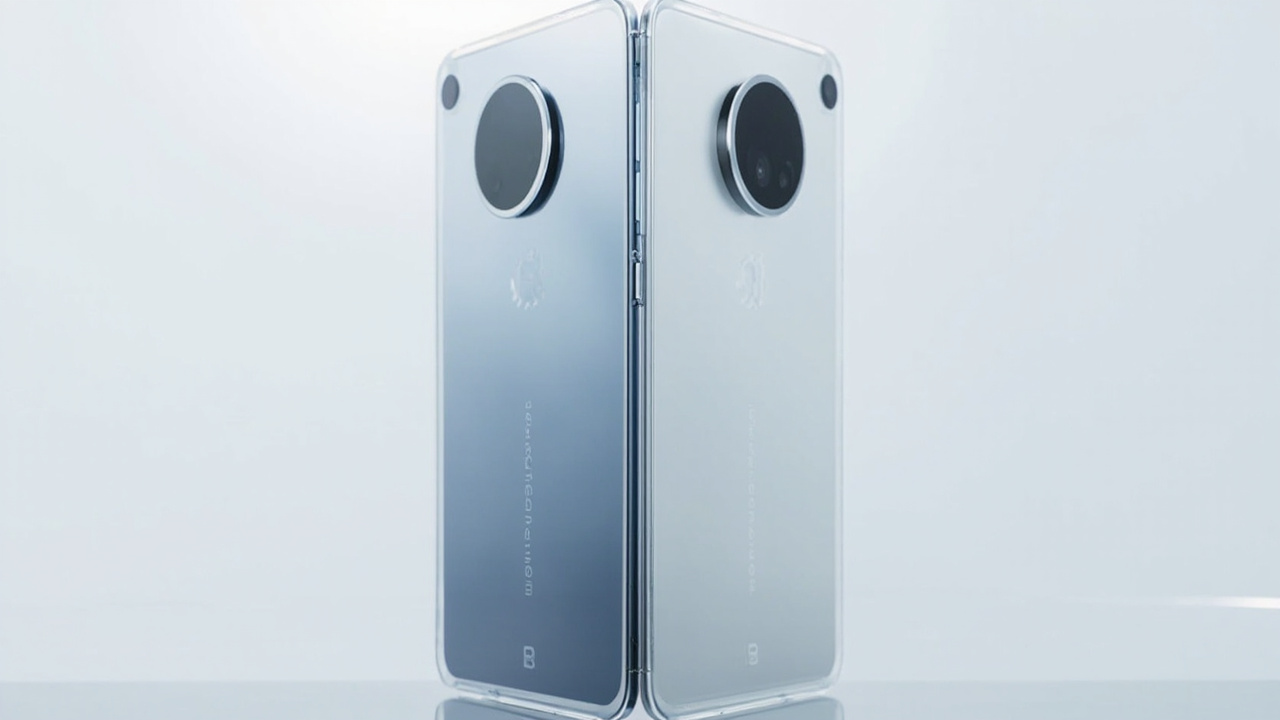
If you are about to drop $1,100 or more on a phone in 2026, the choice is no longer just “iPhone or Samsung.” Xiaomi’s 17 Ultra is the most credible Leica-tuned challenger Apple has faced in years.
The Apple iPhone 17 Pro Max launched September 19, 2025 starting at $1,199 for 256 GB (Apple.com). It runs the A19 Pro on a 3 nm process, ships with 12 GB of RAM, and uses Apple’s “Pro Fusion” triple-48 MP camera array with an 8x optical-quality telephoto at 200 mm equivalent.
The Xiaomi 17 Ultra launched globally in early 2026, starting around $1,099 for the base configuration (mi.com global; pricing varies by region and import). It runs the Snapdragon 8 Elite Gen 5, packs a 1-inch 50 MP main sensor co-engineered with Leica, a 200 MP periscope with a true 75–100 mm mechanical zoom, and a 6,000 mAh battery.
Both are excellent. Both are pricey. The 4-year cost-of-ownership math is where the gap actually shows up.
The Verdict First
- Pick the Xiaomi 17 Ultra (~$1,099) if you shoot mostly still photography, want the largest main sensor (1-inch) and the longest true optical zoom in any mainstream phone (75–100 mm mechanical), need multi-day battery life (6,000 mAh vs 4,823 mAh), and you live outside — or want to step outside — Apple’s ecosystem. The catch: IP54 splash resistance (not IP68), shorter typical software support window outside China, weaker long-term resale in Western markets.
- Pick the iPhone 17 Pro Max ($1,199) if you shoot a lot of video, want the best sustained app ecosystem (ProRes RAW, Log 2, 4K 120 fps Dolby Vision), need the strongest long-term resale (typically 50-60% retention after 3 years per SellCell data), and you already live inside Apple’s ecosystem. The catch: smaller main sensor, fewer zoom levels, slower wired charging.
Cost score (overall value): 80/100. Both are honest “buy once, use 4 years” flagships. The Xiaomi wins on hardware-per-dollar and pure photographic versatility. The iPhone wins on ecosystem stickiness, video pipeline, and resale. Your photography style and ecosystem lock-in decide which one is actually cheaper.
Key Comparison Points
Price vs Real Cost Per Use
Sticker prices look similar. What matters is what each phone costs per year of useful life.
| Item | Xiaomi 17 Ultra | iPhone 17 Pro Max |
|---|---|---|
| Base price | ~$1,099 (12/256 GB, mi.com global) | $1,199 (256 GB, Apple.com) |
| 512 GB upgrade | ~$1,199-$1,249 (region dependent) | +$200 → ~$1,399 |
| 1 TB option | ~$1,399 (region dependent) | $1,599 (2 TB at $1,999) |
| Typical trade-in after 3 yrs | 25-40% retention (Western markets, weaker resale) | 50-60% retention (SellCell 2025 data) |
| Net 3-year cost (256 GB base) | ~$660-$825 | ~$480-$600 |
| Cost per year (4-yr ownership) | ~$165-$210 | ~$150-$200 |
If you trade in every 3 years and live in a market with mature Apple resale channels, the iPhone is roughly $60-$200 cheaper to own long term. If you keep phones 4+ years, skip trade-in entirely, or live in a market where Xiaomi resale is poor, the Xiaomi’s lower entry price pulls ahead — but only if you actually use the camera hardware to its potential. A $1,099 phone you underuse is more expensive per shot than a $1,199 phone you use daily.
BuyCospa’s view: a 4-year horizon is the honest test for any device above $1,000. The Xiaomi needs a long hold period to win on cost; the iPhone wins even on a 3-year trade-in cycle.
Build Quality and Durability
Both are glass-and-metal flagships, but the durability ratings are not equal.
| Spec | Xiaomi 17 Ultra | iPhone 17 Pro Max |
|---|---|---|
| Frame | High-strength aluminum alloy | Grade 5 titanium |
| Front glass | Xiaomi Shield Glass 3.0 (+30% drop resistance, mi.com claim) | Ceramic Shield 2 |
| Back | Composite fiberglass | Ceramic Shield 2 back |
| Camera cover glass | Corning Gorilla Glass 7i | Sapphire crystal (per Apple spec page) |
| Water/dust resistance | IP54 (splash only) | IP68 (6 m for 30 min) |
| Weight | ~219 g | 233 g |
| Thickness | 8.29 mm (thinnest Xiaomi Ultra ever, mi.com) | 8.3 mm |
This is the single biggest durability gap in the comparison. IP54 vs IP68 is not a small difference — it means the iPhone can survive accidental drops in pools and brief dunks. The Xiaomi 17 Ultra is rated against splashes and light rain, not submersion. If you hike, boat, or work around water, the iPhone has a real engineering advantage here.
The Xiaomi Shield Glass 3.0 claims +30% drop resistance over the previous generation (mi.com). Real-world drop-test data from third-party reviewers is still coming in, so treat that number as a manufacturer claim until independent tests confirm it.
Feature Breakdown
Cameras — still photography
This is where the two phones make fundamentally different bets.
- Xiaomi 17 Ultra: 50 MP 1-inch main (23 mm, f/1.67, LOFIC HDR), 50 MP ultra-wide (14 mm, f/2.2), 200 MP periscope telephoto with 75–100 mm mechanical optical zoom (1/1.4” sensor, f/2.39–2.96, OIS, up to ~17.2x optical-quality zoom, 30 cm macro). Front: 50 MP (f/2.2, AF).
- iPhone 17 Pro Max: 48 MP Fusion main (24 mm, f/1.78), 48 MP Fusion ultra-wide (13 mm, f/2.2), 48 MP Fusion tetraprism telephoto (100/200 mm equiv., f/2.8, 8x optical-quality). Front: 18 MP Center Stage.
In still photography, the Xiaomi’s 1-inch main sensor is meaningfully larger than the iPhone’s 1/1.28-inch class main (per GSMArena’s sensor-size database for recent flagships). That translates to noticeably better low-light detail, more natural depth separation, and cleaner shadow recovery in challenging light — a real advantage if you shoot sunsets, indoor events, or night street photography.
The 200 MP periscope with mechanical optical zoom is the single biggest hardware lead the Xiaomi has. A true 75–100 mm zoom (portrait to short-tele range) is the focal length most pro portrait shooters use on dedicated cameras. The iPhone’s tetraprism reaches 200 mm equivalent but only at f/2.8 with a smaller sensor, and there is no true native 85 mm step. If you shoot people, the Xiaomi is in a different class.
Cameras — video
The iPhone retakes the lead here.
- iPhone 17 Pro Max: ProRes RAW, Log 2, 4K Dolby Vision 120 fps, dual-capture (front + rear simultaneously), Cinematic Mode, Action Mode. Apple has a 5-year head start on pro video pipelines.
- Xiaomi 17 Ultra: 4K 120 fps Log, Dolby Vision recording, AI Audio Mixer. Solid, but third-party testing (coming in 2026 reviews) suggests the iPhone’s color science, autofocus tracking, and stabilization in motion are still a step ahead for serious video work.
If your output is Reels, TikTok, YouTube Shorts, or client video deliverables, the iPhone 17 Pro Max is the safer tool. If your output is family photos, travel, and still-life prints, the Xiaomi is the more versatile instrument.
Battery and Charging
- Xiaomi 17 Ultra: 6,000 mAh, 90 W wired HyperCharge, 50 W wireless, reverse charging. Xiaomi claims “all-day” with heavy use; independent 2026 reviews will quantify this in mid-2026.
- iPhone 17 Pro Max: 4,823 mAh, ~30 W wired (per 9to5Mac / Apple spec page), 25 W MagSafe/Qi2, 15 W reverse. Tom’s Guide web-surfing battery test: ~19 hours, the longest of any 2025/2026 flagship tested.
The Xiaomi has ~24% more raw battery capacity. Even with a less efficient modem and a more power-hungry 1-inch sensor, the 6,000 mAh cell should comfortably beat the iPhone on screen-on time for most workloads. The 90 W wired charging is a meaningful real-world advantage — 0 to 100% in roughly 35-40 minutes vs the iPhone’s ~70-90 minutes depending on adapter.
The iPhone’s lead is in battery longevity per charge under sustained heavy load (gaming, video export), where Apple’s silicon efficiency and ProMotion tuning still win.
Software Support
- Xiaomi 17 Ultra: 4 years of Android updates + 5 years of security patches (Xiaomi’s stated policy since the 14 series). For the 17 Ultra global, expect security patches into ~2031.
- iPhone 17 Pro Max: 6 years of iOS updates confirmed. Expect security patches into ~2031.
Roughly the same end date for security support, but the iPhone typically gets one to two more major OS upgrades. The Xiaomi’s HyperOS has improved a lot since the MIUI era, but iOS still wins on third-party accessory compatibility, long-term app optimization, and the “still gets updates after 4 years” smoothness that Samsung and Xiaomi still struggle to match.
Ecosystem Lock-in
This is invisible until you try to leave.
- iPhone 17 Pro Max: AirPods, Apple Watch, AirDrop, Universal Clipboard, iMessage, FaceTime, Find My, Apple Pay, iCloud Photos, iPad/Mac handoff. The stickiness is real and worth real money if you already own Apple gear.
- Xiaomi 17 Ultra: Mi Share, Xiaomi Smart Home, Xiaomi Buds, Mi Watch. Solid if you live in Xiaomi’s smart-home ecosystem, much weaker if you don’t.
If you already own an Apple Watch, AirPods, and a MacBook, the iPhone 17 Pro Max’s effective “switching cost” includes replacing those. If you have no ecosystem yet, the field is more level.
Pros and Cons
Xiaomi 17 Ultra
Pros
- Largest main sensor in any 2026 flagship (1-inch, 50 MP) for noticeably better low-light photos
- 200 MP 75-100 mm mechanical optical zoom — true portrait-grade telephoto
- 6,000 mAh battery, 90 W wired charging (best battery-and-charge combo in 2026 flagships)
- Lower entry price (~$100 less) for comparable storage
- 8.29 mm thin — the slimmest Xiaomi Ultra ever
Cons
- IP54 only — not submersible, weaker than every other 2026 flagship
- Western resale value typically 25-40% retention after 3 years vs iPhone’s 50-60%
- Software support window shorter and less consistent across regions
- Xiaomi’s long-term app optimization still lags iOS for older devices
- HyperOS still has occasional bugs that iOS users will notice
iPhone 17 Pro Max
Pros
- Best video pipeline in any phone (ProRes RAW, Log 2, 4K 120 fps Dolby Vision)
- Strongest resale value (~$60-$200 lower net 3-year cost on most trade-in scenarios)
- IP68 water resistance, Ceramic Shield 2, titanium frame
- 6 years of iOS updates vs Xiaomi’s 4 years of Android
- Tighter ecosystem integration (Apple Watch, AirPods, Mac, iPad)
Cons
- Smaller main sensor (1/1.28” class) vs Xiaomi’s 1-inch
- Only 8x optical-quality zoom at 200 mm; no native 85 mm portrait step
- 4,823 mAh battery is the smallest in the 2026 ultra-flagship class
- ~30 W wired charging is slow vs 90 W Xiaomi
- $100 more expensive at the 256 GB tier
Best For / Skip If
Best for the Xiaomi 17 Ultra:
- You shoot portraits, street photography, or travel photography and want the most versatile optics in any phone
- You live outside the Apple ecosystem (or want to leave it) and prioritize hardware-per-dollar
- You regularly need 1.5-2 days of battery or use your phone as a hotspot
- You live in a market with strong Xiaomi service and warranty support (China, India, parts of EU, Southeast Asia)
Skip the Xiaomi 17 Ultra if:
- You shoot a lot of video (vlogs, client work, social content)
- You regularly swim, boat, or work around water (IP54 is a real limitation)
- You live in a market with weak Xiaomi resale or service (US, Canada, Australia)
- You already own an Apple Watch, AirPods, and a Mac
Best for the iPhone 17 Pro Max:
- You shoot video first, photos second (the ProRes pipeline is a real competitive moat)
- You plan to trade in every 3 years (the resale math dominates the upfront price)
- You live in or around water (IP68 is not optional for some users)
- You are already inside Apple’s ecosystem and don’t want to replace your watch and earbuds
Skip the iPhone 17 Pro Max if:
- Photography (still) is your primary reason for upgrading
- You need multi-day battery or 90 W charging
- You are willing to leave Apple’s ecosystem for the first time and want the best camera hardware available
- You want the most storage for the least money (1 TB options are $100-$200 cheaper on Xiaomi)
Bottom Line
Both phones are honest “buy once, use 4 years” devices. The smart pick depends on what you shoot and what ecosystem you already own.
If photography (still) is your primary use, the Xiaomi 17 Ultra is the better hardware for the money: a 1-inch main sensor, a true 75-100 mm mechanical zoom, and a 6,000 mAh battery that the iPhone cannot match. Budget for a case, treat the IP54 rating seriously, and accept that the resale will be weaker if you are in a Western market.
If video, ecosystem, and resale dominate your decision, the iPhone 17 Pro Max is the safer $1,199. The ProRes pipeline, IP68 rating, Ceramic Shield 2, and 50-60% resale retention are real, durable advantages — they are not “Apple tax,” they are engineering and ecosystem value that compounds over a 4-year hold.
Buy smart. Get more value. Either phone will last 4-5 years if you treat it well. The wrong one for your use case is the more expensive one — even if the sticker is lower.