Introduction
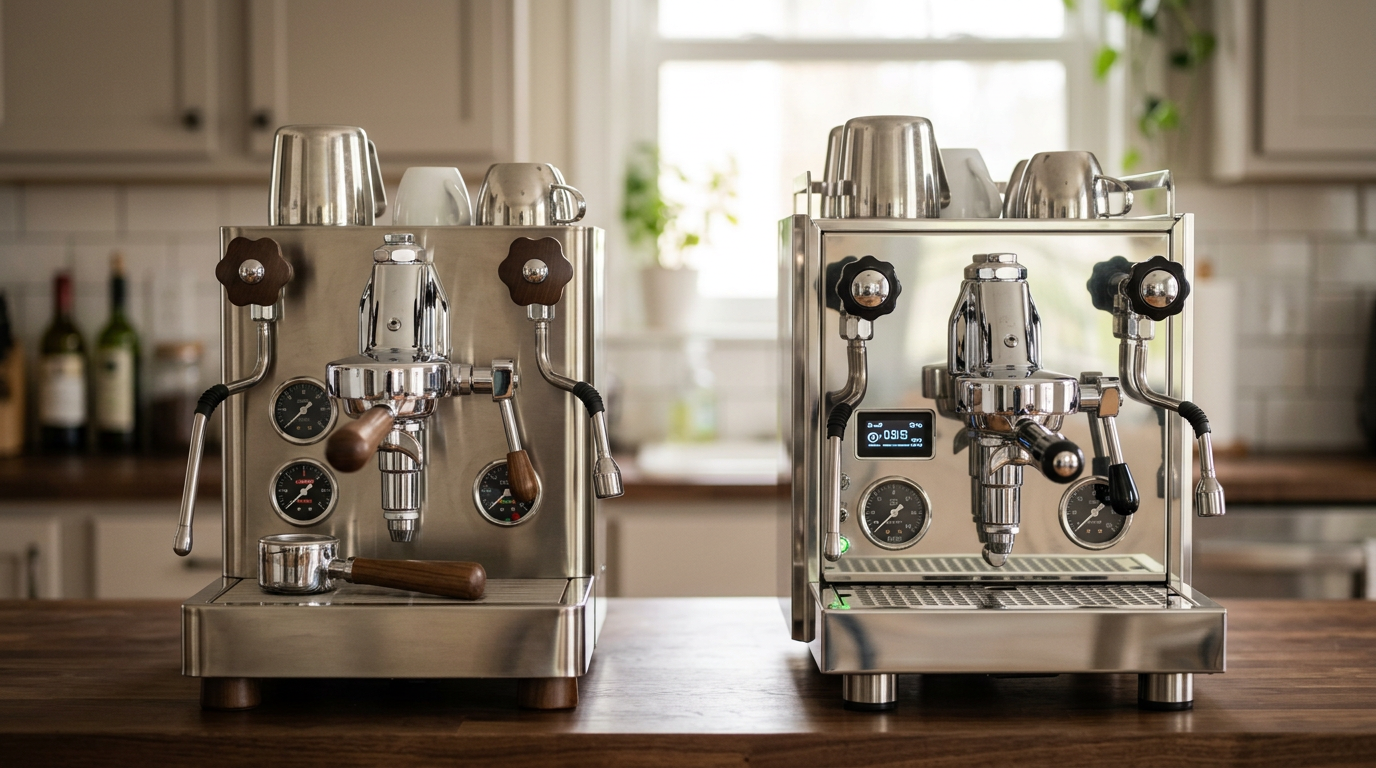
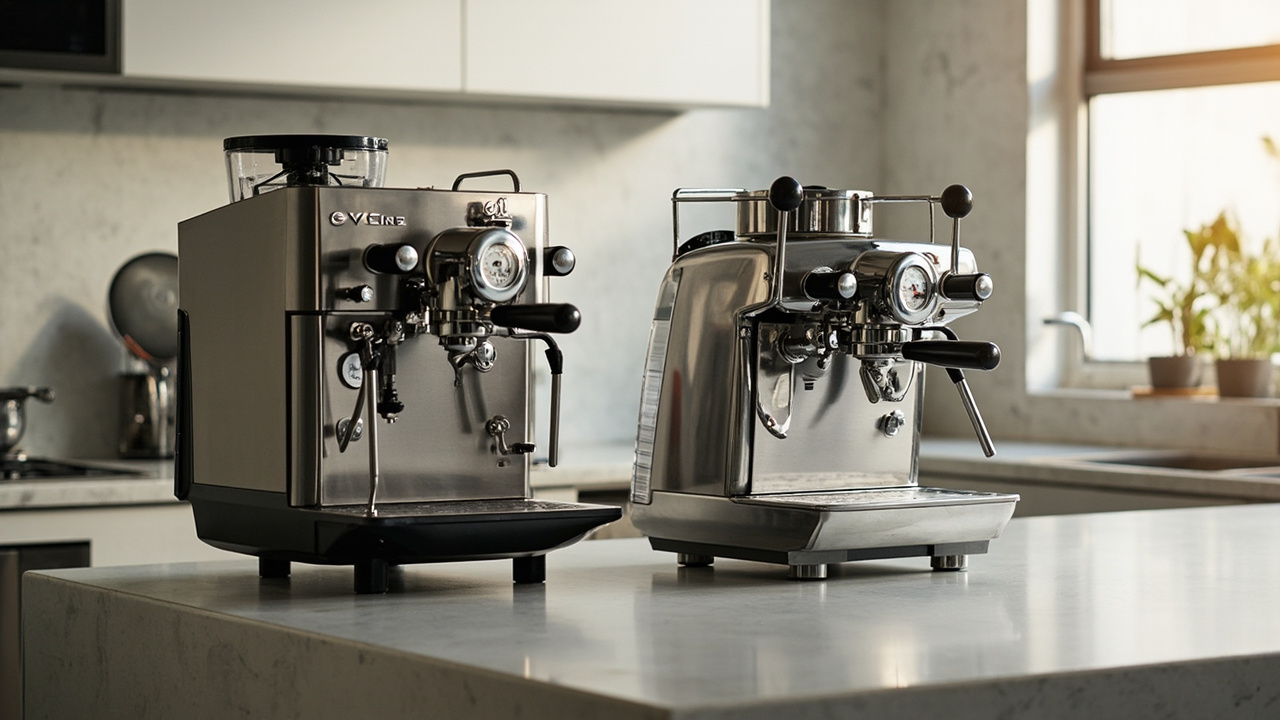
If you have ever stood in a kitchen showroom (or just a Reddit thread) trying to decide between the Profitec Pro 600 and the ECM Synchronika, you already know the trap. Both are German-built dual-boiler E61 machines, both have PID temperature control, both pull genuinely café-quality shots, and the Pro 600 costs about $1,200 less than the Synchronika. On paper, the Synchronika looks like the better machine. In practice, the question is whether the difference is worth an entire grinder.
These two machines define the entry-prosumer and mid-prosumer ends of the home dual-boiler market in 2026. The Profitec Pro 600 sits around $2,399–$2,695 depending on trim (Source: CoffeeDant Pro 600 review, May 2026), while the ECM Synchronika retails for roughly $3,250–$3,599 (Source: EspressoVS Synchronika specs, Pro Coffee Gear listing). Both ship with stainless-steel dual boilers, independent PID control, commercial-grade steam wands, and a 58 mm E61 group. They differ in pump type, plumbing flexibility, boiler size, and the option of flow control.
The interesting question is not “which one is the better dual boiler.” It is which one delivers a lower cost per shot over a realistic 8–12 year ownership window, given how you actually pull espresso at home. That is what this comparison is for.
The Verdict First
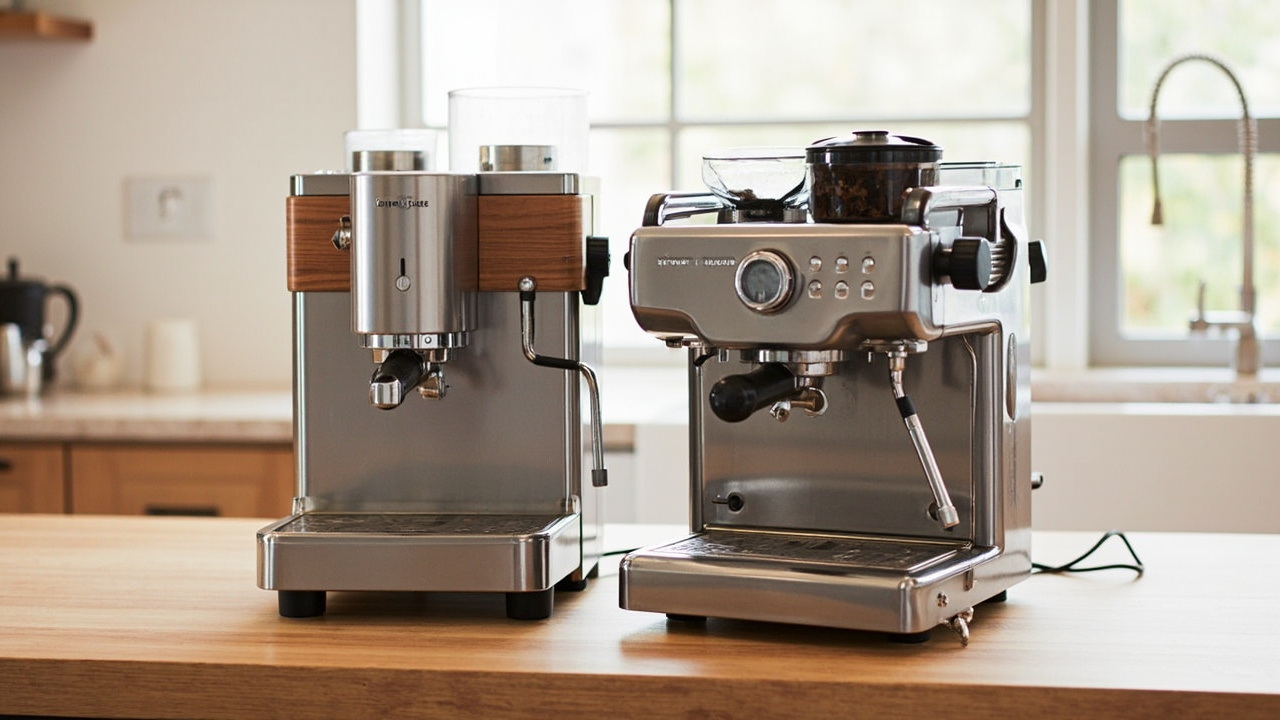
- Choose the Profitec Pro 600 ($2,399–$2,695) if you want a serious dual-boiler E61 with the same German build DNA as the Synchronika, you are happy with a vibration pump and tank-only water, and you would rather put the $1,200 savings into a grinder like a Niche Zero or a Eureka Mignon Specialita. CoffeeDant still ranks the Pro 600 as the best “balanced dual boiler” in 2026 (Source: CoffeeDant).
- Choose the ECM Synchronika ($3,250–$3,599) if you want the ultra-quiet rotary pump that lets you run the machine at 6 AM without waking anyone, you need direct water-line plumbing, and you care about flow profiling out of the box (the Synchronika ships with a flow-control needle valve on the E61 group). The Synchronika is the more polished machine of the two (Source: CoffeeDant Synchronika review, 2026).
- Skip both if you pull fewer than two espresso drinks per day. A $1,059 Profitec Go or a $700 Rancilio Silvia will cover daily home use and leave $1,500+ in your pocket for grinder and beans.
Key Comparison Points
Price vs Real Cost Per Use
The headline price gap is about $1,200. The real question is what that buys you, and how it amortizes over a realistic ownership window. Both machines can easily last 10–15+ years with proper care, so amortize across a decade.
| Cost Factor | Profitec Pro 600 | ECM Synchronika |
|---|---|---|
| Sticker Price (MSRP, USA) | $2,399–$2,695 (CoffeeDant 2026) | $3,250–$3,599 (Pro Coffee Gear, EspressoVS) |
| Brew Boiler (stainless) | 0.75 L | 0.75 L |
| Steam Boiler (stainless) | 1.0 L | 2.0 L |
| Pump Type | Vibration (rotary pump is the Pro 700 upgrade) | Rotary vane |
| Plumb-In | No (tank only, 2.8 L) | Yes (switchable reservoir / direct water) |
| Power Draw (max) | 1,400 W | 1,800 W |
| Heat-Up Time (cold start) | 15–25 minutes | 15–25 minutes |
| Flow Control | Optional (~$200–$300 Profitec Flow Profile Valve kit) | Yes (factory needle valve on E61 group) |
| Annual Electricity (~2 espressos + 30 min steam/day) | ~$13.80 (1.4 kW × 0.5 h × 365 × $0.18/kWh) | ~$17.75 (1.8 kW × 0.5 h × 365 × $0.18/kWh) |
| Likely Lifespan (community-reported) | 10–15 years (vibration pump has shorter duty cycle) | 12–20+ years (rotary pump is commercial-grade) |
| Cost per Year (10-yr amortized) | $240 + $13.80 = $253.80 | $340 + $17.75 = $357.75 |
| Cost per Year (12-yr amortized) | $200 + $13.80 = $213.80 | $283 + $17.75 = $300.75 |
At two drinks per day for ten years (~7,300 shots), the Pro 600 saves you about $1,040 over a decade purely on upfront amortization, plus another $40 in electricity. The Synchronika’s main counter-argument is longer expected lifespan (rotary pumps routinely last 20+ years in commercial service, while vibration pumps typically need replacement around years 8–12 in heavy home use). Even factoring that in, the Synchronika only closes the gap to ~$700 over 15 years — still a meaningful delta.
The bigger cost-per-use lever is flow control. The Synchronika ships with flow profiling out of the box. The Pro 600 requires the Profitec Flow Profile Valve kit (~$200–$300 retail). If flow profiling matters to your daily workflow (light roasts, manual pre-infusion tuning), the Synchronika’s price premium includes something you would otherwise have to buy and install yourself on the Pro 600.
One real-world 2026 caveat: Clive Coffee stopped stocking the Pro 600 in favor of the newer Profitec RIDE (Source: Clive Coffee Pro 600 listing). That makes long-term parts and warranty support worth confirming before buying. Di Pacci USA and Whole Latte Love still carry current inventory.

Build Quality and Durability
Both machines are made in Germany (both Profitec and ECM are part of the same ECM Manufacture family in Heidelberg), so build quality is not the differentiator it would be in a head-to-head between, say, a Profitec and a Breville. Where they diverge is in pump architecture and plumbing.
| Build Factor | Profitec Pro 600 | ECM Synchronika |
|---|---|---|
| Frame Material | Stainless steel with magnetic side panels (wood option) | Polished stainless steel with chrome accents |
| Boiler Construction | 0.75 L brew + 1.0 L steam, both stainless, independently insulated | 0.75 L brew + 2.0 L steam, both stainless, with outer insulation |
| Group Head | E61, brass | E61, brass |
| Pump Type | Vibration pump (quieter-than-average “silent” version) | Rotary vane pump (commercial-grade) |
| Plumb-In | Tank only, 2.8 L removable reservoir | Yes, factory plumb-ready, switchable tank/direct water |
| PID Display | Front-facing dual PID + integrated shot timer | Front-facing dual PID + integrated shot timer |
| Steam Wand | No-burn, ships 2-hole (4-hole 1.2 mm available as $20 upgrade) | No-burn, 4-hole commercial |
| Weight | 24 kg (53 lbs) | 31 kg (68 lbs) |
| Dimensions (W × D × H) | 305 × 450 × 395 mm (body) | 340 × 495 × 440 mm |
The Synchronika’s two big build advantages are the rotary pump and the double-sized steam boiler. The rotary pump is quieter (about 50–55 dB vs. 65–70 dB for vibration), lasts much longer, and lets you plumb directly into a waterline — which means you never refill a tank. The 2 L steam boiler delivers noticeably faster, more powerful steam recovery, which matters if you make back-to-back milk drinks.
The Pro 600’s build advantages are size, weight, and customization. At 24 kg vs 31 kg, the Pro 600 is significantly easier to move and fits on smaller counters. Profitec also sells magnetic wood side panels and a wider range of aesthetic customization, which sounds cosmetic but matters in a visible kitchen appliance. The vibration pump is louder than rotary, but CoffeeDant notes it is the “silent” version, so the gap is real but smaller than a typical vibration-vs-rotary comparison.
Both machines use the same E61 group, the same portafilter diameter (58 mm), and the same basic pre-infusion mechanism. They are essentially the same engineering idea, with Profitec optimizing for compactness and price, and ECM optimizing for the no-compromise prosumer experience.
Feature Breakdown
This is where the two machines diverge most clearly, and where the price gap starts to feel either justified or not, depending on your use case.
| Feature | Profitec Pro 600 | ECM Synchronika |
|---|---|---|
| PID on Both Boilers | Yes (independent) | Yes (independent) |
| Shot Timer | Yes (integrated in PID) | Yes (integrated in PID) |
| Pre-Infusion | Passive (E61 standard) | Active and passive |
| Flow Control / Profiling | Optional (Pro 600 + Flow Profile Valve kit) | Yes (factory needle valve) |
| Plumb-In Ready | No | Yes |
| Eco / Standby Mode | Yes (PID-controlled) | Yes (PID-controlled) |
| Steam Power (boiler size) | 1.0 L, 1.4 kW element | 2.0 L, 1.8 kW element |
| Heat-Up Time | 15–25 min cold start | 15–25 min cold start |
| Cup Warmer | Yes | Yes |
| Pressure Gauges | Two (brew + steam) | Two (brew + steam) |
| Smart Connectivity | No | No |
| Warranty (USA retail) | 2–3 years (retailer-dependent) | 3 years (Pro Coffee Gear) |
Key feature takeaways:
- PID and shot timer are equal. Both machines have independent PID control on brew and steam boilers, and both integrate the shot timer into the front display. There is no meaningful difference here in 2026.
- Pre-infusion favors the Synchronika. The Synchronika supports both active and passive pre-infusion, while the Pro 600 is passive only (the E61’s mechanical behavior). In practice, passive pre-infusion works fine for most beans; the active pre-infusion on the Synchronika is a workflow nicety, not a deal-breaker.
- Flow control is the single biggest functional difference. The Synchronika’s flow-control needle valve on the E61 group is genuinely useful for light-roast espresso, where pressure profiling can extract more sweetness. The Pro 600 can be upgraded with the Profitec Flow Profile Valve (~$200–$300 installed), so the gap is real but not unbridgeable.
- Plumb-in is a hard “yes or no.” If you want to run your machine from a waterline (no refilling tanks, no scale worries), the Synchronika is one of the few E61 dual boilers that does this out of the box. The Pro 600 is tank only.
- Steam power is meaningfully better on the Synchronika. The 2.0 L steam boiler is twice the size of the Pro 600’s 1.0 L, and the 1.8 kW element vs. 1.4 kW translates to noticeably faster milk texturing, especially when steaming multiple pitchers in a row. If you make 3+ lattes back-to-back, the Synchronika is the better tool.
Pros and Cons
Profitec Pro 600 — Pros
- About $1,200 cheaper than the Synchronika for a genuinely pro-grade dual-boiler E61.
- Compact and lighter (24 kg vs 31 kg), fits on smaller counters.
- Front-facing dual PID with integrated shot timer, same display sophistication as the Synchronika.
- Optional flow control via the Profitec Flow Profile Valve kit ($200–$300 add-on).
- Magnetic side panels with optional wood and color customization.
- Excellent community support — long-running, well-documented machine, easy to find parts and service guides.
- Same E61 group and 58 mm portafilter as the Synchronika, full accessory ecosystem compatibility.
Profitec Pro 600 — Cons
- Vibration pump is louder than the Synchronika’s rotary pump (65–70 dB vs 50–55 dB during extraction).
- Tank-only, no plumb-in option — you have to refill the 2.8 L reservoir.
- Smaller steam boiler (1.0 L) means slower recovery between milk drinks.
- No factory flow control — you have to buy and install the kit yourself.
- Availability is tightening in 2026 as Profitec shifts focus to the newer RIDE line (Source: Clive Coffee).
- Vibration pump has shorter expected lifespan under heavy use (typical replacement at 8–12 years vs 15–20+ for rotary).
ECM Synchronika — Pros
- Rotary pump is whisper-quiet, commercial-grade, and lasts 15–20+ years even in daily home use.
- Plumb-in ready — direct waterline connection, no tank refills, no scale worries.
- 2.0 L steam boiler delivers noticeably faster and more powerful steam.
- Factory flow control with needle valve on the E61 group.
- Active and passive pre-infusion (vs Pro 600’s passive only).
- 3-year warranty from major US retailers like Pro Coffee Gear.
- Heavier, more solid feel at 31 kg; some buyers see this as a feature.
ECM Synchronika — Cons
- $1,200+ more expensive than the Pro 600, before any accessories.
- Heavier and larger footprint, requires sturdy counter space.
- 1.8 kW power draw is meaningfully higher than the Pro 600’s 1.4 kW — small annual electricity cost difference.
- No active smart connectivity (no app, no scheduling).
- Higher replacement cost if the rotary pump eventually does need service ($300–$500 vs. ~$80–$150 for a vibration pump rebuild).
- Slower ROI for casual users — if you pull one espresso a day, you will never amortize the price premium.
Best For / Skip If
Best For — Profitec Pro 600
- First-time dual-boiler buyers who want pro-grade espresso without the full prosumer price.
- Home baristas who already own a good grinder (Niche Zero, Eureka Mignon Specialita, DF64) and want to spend the remaining budget on the machine.
- Anyone who cares about kitchen aesthetics and wants a smaller, lighter machine with customizable side panels.
- People who don’t plumb in and are happy refilling a 2.8 L tank every few days.
Best For — ECM Synchronika
- Plumbers-in who want to run their machine from a waterline and never refill a tank.
- Early-morning espresso drinkers who need a truly quiet machine (rotary pump at 50–55 dB).
- Light-roast enthusiasts who want flow control out of the box for pressure profiling.
- Multi-drink households (3+ milk drinks back-to-back) who benefit from the larger 2.0 L steam boiler.
- Buyers planning 15+ year ownership who want the longest-lasting pump architecture.
Skip If
- You pull fewer than 2 espressos per day — a $700–$1,000 single-boiler or heat-exchanger will do the same job for 60% less money.
- You don’t already own a $500+ grinder — at this machine tier, the grinder matters more than the machine. Spend there first.
- You are not ready for the workflow overhead of an E61 dual boiler (5-minute warm-up, pressure tuning, puck prep). Consider a Decent or a super-automatic like the Breville Oracle Jet instead.
- You want smart connectivity (app control, scheduling, recipes) — neither machine has any. The Decent DE1 or a Profitec RIDE is closer if you want modern connectivity.

Bottom Line
The Profitec Pro 600 and the ECM Synchronika are both genuinely excellent dual-boiler E61 machines, and either one will pull café-quality espresso for a decade or more. The $1,200 price gap buys you a rotary pump, a plumb-in option, a larger steam boiler, and factory flow control on the Synchronika. None of those are essential, but each one is meaningful for a specific kind of user.
If you are a typical home barista pulling 1–3 drinks a day, the Profitec Pro 600 at $2,399–$2,695 is the better value by a wide margin. You get the same German build, the same E61 group, the same PID and shot timer, and a smaller, lighter, prettier machine. Put the $1,200 savings into a Niche Zero or a Eureka Mignon Specialita and your shots will be at least as good as on the Synchronika.
If you specifically need the rotary-pump silence, the plumb-in flexibility, or the bigger steam boiler, the ECM Synchronika at $3,250–$3,599 is the right call. The Synchronika is the more refined machine, and it will outlast the Pro 600 by years if you are a heavy user. Just make sure the use case justifies the premium.
Buy smart. Get more value. For most readers, that means the Pro 600 plus a better grinder. The Synchronika is the right choice only if the pump, plumbing, and steam-power advantages line up with how you actually make coffee.
Sources
- CoffeeDant, “Profitec Pro 600 Review (2025): Dual Boiler, Flow Control & Real-World Testing” — https://coffeedant.com/espresso-machine/profitec-pro-600/
- CoffeeDant, “ECM Synchronika Review” — https://coffeedant.com/espresso-machine/ecm-synchronika/
- EspressoVS, “Profitec Pro 600 Review & Specs” — https://espressovs.com/machine/profitec-pro-600.html
- EspressoVS, “ECM Synchronika Review & Specs” — https://espressovs.com/machine/ecm-synchronika.html
- Espresso Setup Builder, “Profitec Pro 600 vs ECM Synchronika” — https://espressosetupbuilder.com/machines/compare/profitec-pro-600,ecm-synchronika
- Pro Coffee Gear, “ECM Synchronika Stainless Steel” — https://procoffeegear.com/products/ecm-synchronika
- Clive Coffee, “Profitec Pro 600” — https://clivecoffee.com/products/profitec-pro-600-espresso-machine
- Di Pacci USA, “Profitec Pro 600 Coffee Machine” — https://dipacciusa.com/products/profitec-pro-600-coffee-machine
- Reddit r/espresso, “Profitec Pro 600 vs ECM Synchronika” — https://www.reddit.com/r/espresso/comments/dwdqqb/profitec_pro_600_vs_ecm_synchronika/
- ECM Manufacture, “Synchronika II product page” — https://www.ecm.de/en/products/synchronika-ii/
- NoraIdeas, “Espresso Wars: ECM Synchronika vs Profitec Pro 600” — https://noraideas.com/ecm-synchronika-vs-profitec-pro-600/
Prices verified May–June 2026. Specs and availability subject to change. BuyCospa is reader-supported; when you buy through some links we may earn a commission at no extra cost to you.