Introduction
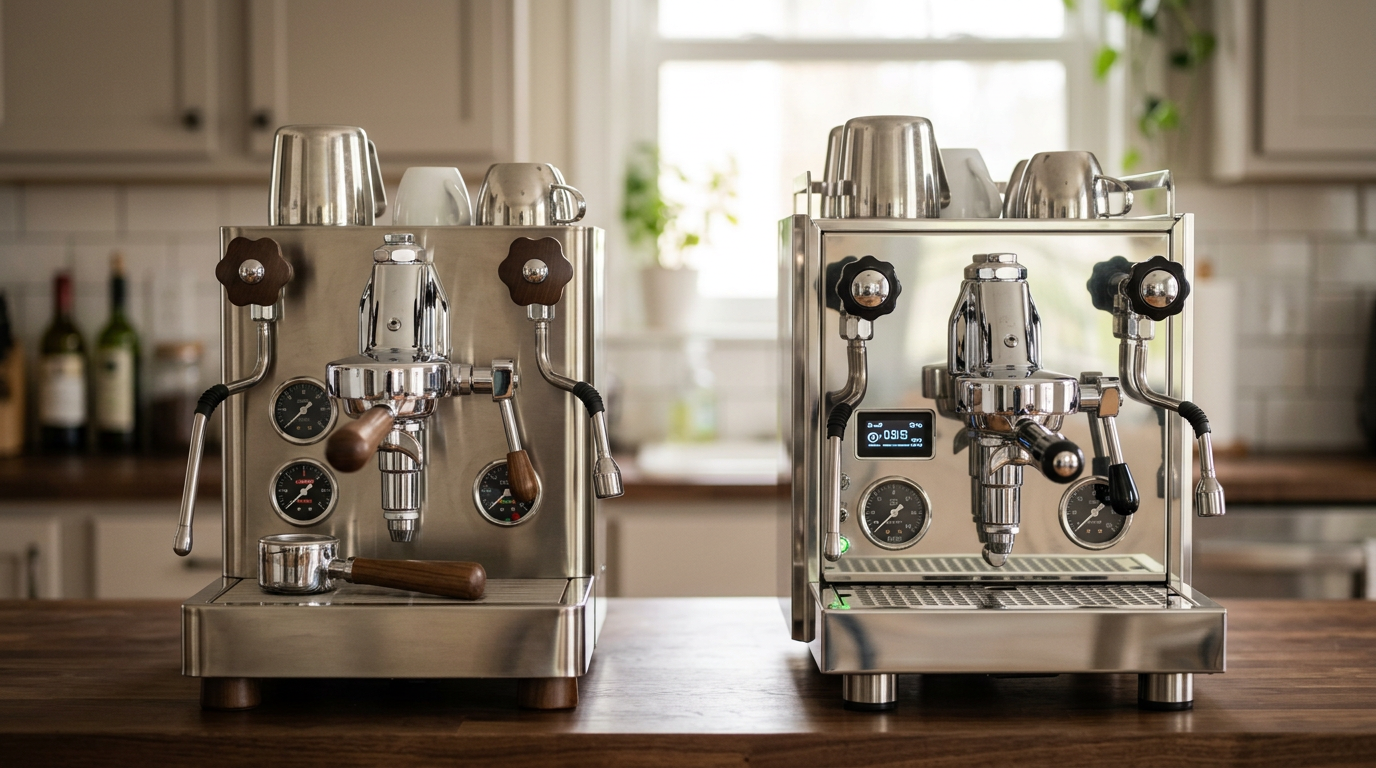
If you have ever stood in a kitchen for ten minutes staring at two nearly identical dual-boiler E61 espresso machines trying to justify a $600 price gap, you already know the Profitec Pro 700 vs ECM Synchronika II problem. They share the same German engineering DNA, the same rotary-pump architecture, the same E61 group head, and (because both brands are part of the ECM Manufacture family) the same OEM supply chain. The differences are real, but they are subtle — and the prices are not.
Two specific machines define the prosumer E61 category in 2026: the Profitec Pro 700 at $2,979 and the ECM Synchronika II at $3,599. Both ship with dual stainless-steel boilers, independent PID control, rotary-vane pumps, plumb-in or reservoir operation, and a real shot of café-grade steam. The price gap is $620 — roughly the cost of a Niche Zero grinder, which you would also need to actually use either machine well.
The interesting question is not which one is “the best dual boiler.” It is which one delivers better cost-per-shot over a realistic 8–12 year ownership window, given how you actually pull espresso at home. That is what this comparison is for.
The Verdict First
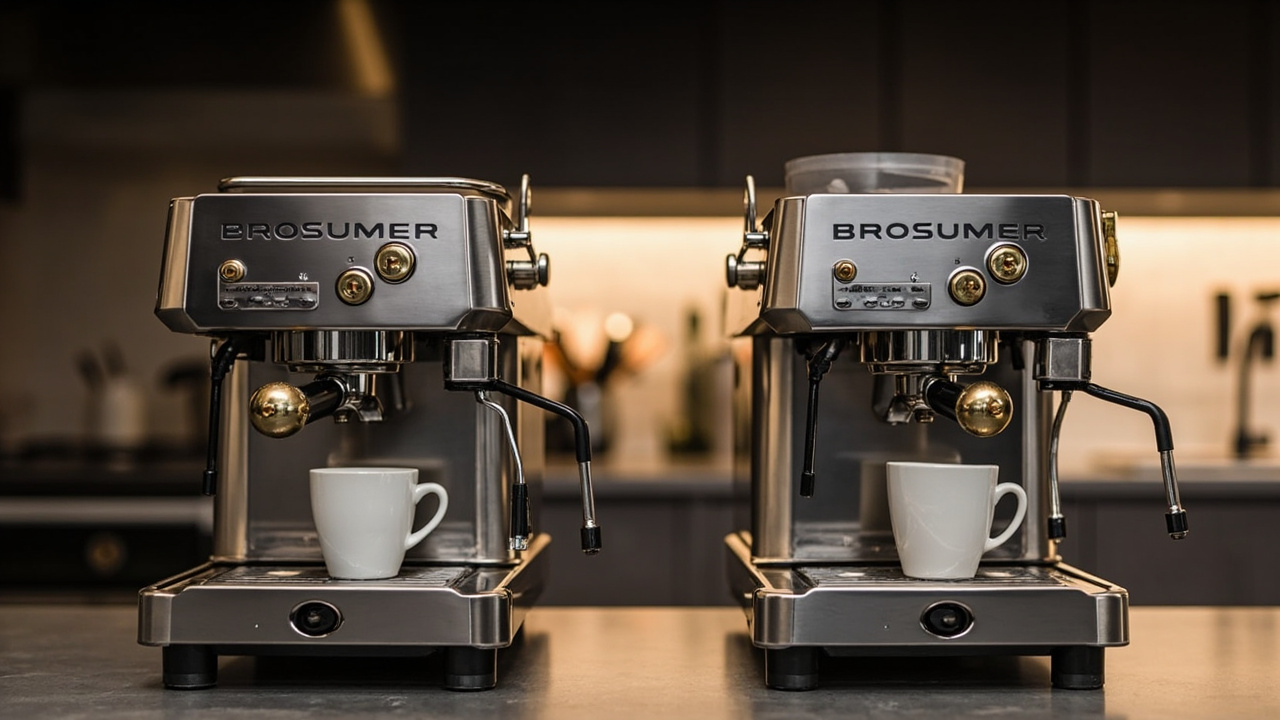
- Choose the Profitec Pro 700 ($2,979) if you want the same dual-boiler E61 architecture as the Synchronika II, you value a simpler, more analog-feeling interface, you want the build that has been continuously produced and refined since 2017, and you would rather spend the $620 difference on a better grinder. CoffeeDant and Whole Latte Love both still recommend the Pro 700 as the best “value dual boiler” in 2026 (Source: CoffeeDant Profitec Pro 700 review, Whole Latte Love review).
- Choose the ECM Synchronika II ($3,599) if you want a class-leading 6.5-minute heat-up time (down from the 25–30 minutes of the original Synchronika), a unified OLED display that consolidates every PID and shot setting, and you are willing to pay for the most polished E61 interface on the market (Source: CoffeemakerReview.net Synchronika II review, April 2026).
- Skip both if you pull fewer than two espresso drinks per day. A $700 Rancilio Silvia or a $1,059 Profitec Go will cover daily home use and leave 2,000+ dollars in your pocket for a better grinder and beans.
Key Comparison Points
Price vs Real Cost Per Use
Both machines sit firmly in the prosumer bracket, but the cost-per-shot math is more interesting than the sticker price — and the Pro 700’s $620 cheaper sticker compounds over a realistic lifespan.
| Cost Factor | Profitec Pro 700 | ECM Synchronika II |
|---|---|---|
| Sticker Price (MSRP) | $2,979 (espressosetupbuilder.com) | $3,599 (CoffeemakerReview.net, Apr 2026) |
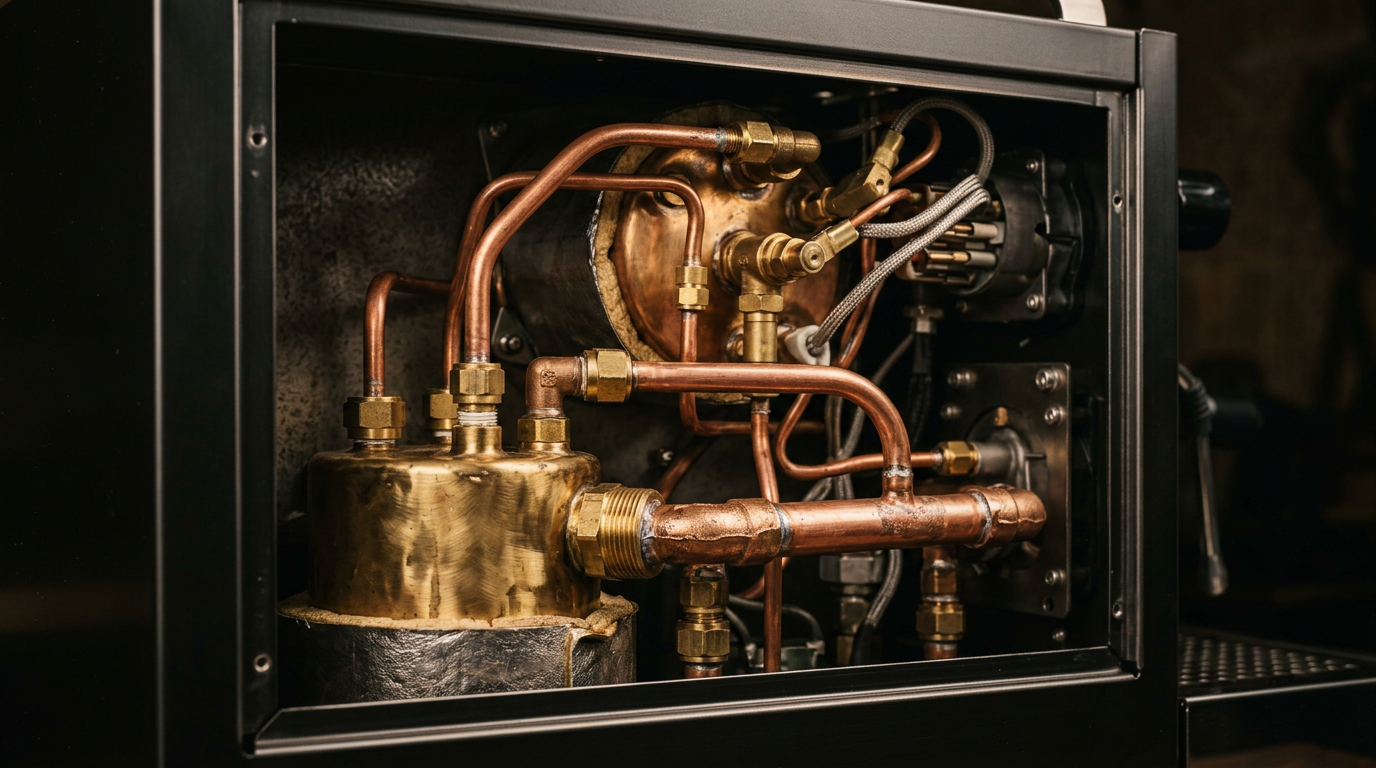
| Brew Boiler (stainless) | 0.75 L | 0.75 L |
| Steam Boiler (stainless) | 2.0 L | 2.0 L |
| Water Reservoir | 2.8 L | ~3.0 L (plumb-in or reservoir) |
| Pump | Rotary vane (switchable tank/plumb) | Rotary vane (plumb-ready) |
| Power Draw (max) | ~1,600 W (1600 W element per NoraIdeas) | ~1,400 W (1400 W element per NoraIdeas) |
| Heat-Up Time (cold start) | 25–30 minutes (espressosetupbuilder.com) | ~6.5 minutes (cartridge heater upgrade, CoffeemakerReview.net) |
| Annual Electricity (~2 espressos + 30 min steam/day) | ~$15.80 (1.6 kW × 0.5 h × 365 × $0.18/kWh) | ~$13.80 (1.4 kW × 0.5 h × 365 × $0.18/kWh) |
| Likely Lifespan (community-reported) | 10–15+ years (rotary pump, brass frames) | 10–15+ years (same architecture) |
| Cost per Year (10-yr amortized) | $298 + $15.80 = $313.80 | $360 + $13.80 = $373.80 |
| Cost per Year (12-yr amortized) | $248 + $15.80 = $263.80 | $300 + $13.80 = $313.80 |
At two drinks per day for ten years (~7,300 shots), the Pro 700 saves you roughly $600 in the first year and $3,000 over a decade strictly on amortization. The Synchronika II’s faster heat-up recovers about $20/year in electricity — a real but small offset.
The bigger cost-per-use lever is the flow control upgrade. ECM sells the Synchronika II in two configurations: standard and flow control. The flow-control version adds another $300–$500 to the price. Profitec, by contrast, ships the Pro 700 with an optional flow-control kit that bolts on for $200–$300, and many retailers include it at no charge. If flow profiling matters to you, the Pro 700’s upgrade path is materially cheaper (Source: EspressoVS Profitec Pro 700 specs, HomeCoffeeSolutions Synchronika II listing).
Build Quality and Durability
| Build Factor | Profitec Pro 700 | ECM Synchronika II |
|---|---|---|
| Frame Material | Stainless steel with chrome accents | Polished stainless steel with brushed accents |
| Boiler Construction | 0.75 L brew + 2.0 L steam, both stainless, both independently insulated | 0.75 L brew + 2.0 L steam, both stainless, with outer insulation upgrade |
| Group Head | E61, brass, with optional flow-control valve | E61, brass, with rotary valve and PID-integrated flow control on FC models |
| Pump Type | Rotary vane (commercial grade) | Rotary vane (commercial grade) |
| Plumb-In | Yes, switchable reservoir/plumb | Yes, factory plumb-ready (standard) |
| PID Display | Two small rear-mounted PID displays, separate brew/steam readouts | Unified OLED display consolidating PID, shot timer, eco-mode, all settings |
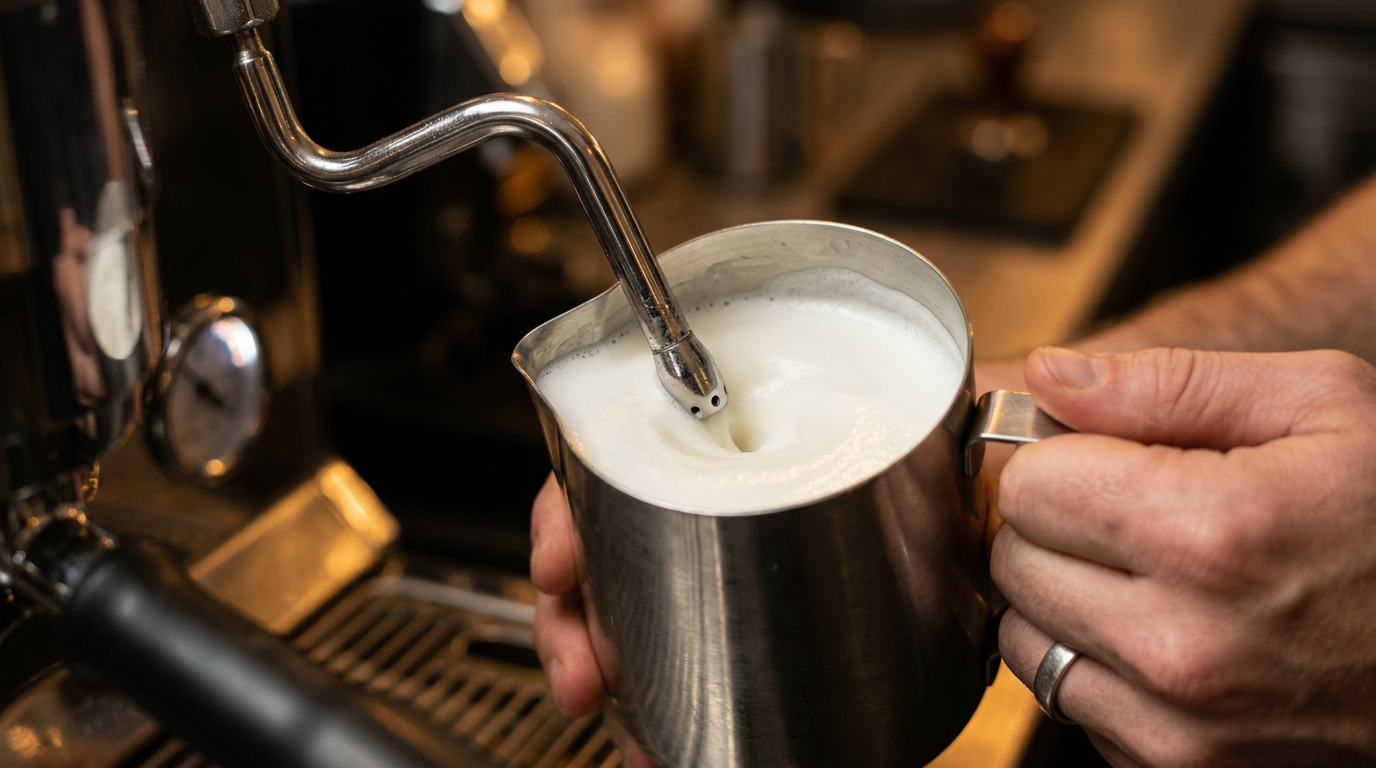
| Steam Wand | No-burn, 4-hole | No-burn, 4-hole |
| Hot Water Tap | Yes | Yes |
| Dimensions (W × D × H) | ~340 × 590 × 420 mm (CoffeeDant) | ~340 × 470 × 415 mm (ECM spec sheet) |
| Weight | ~31 kg (68 lb) | ~30 kg (66 lb) |
| Warranty | 2 years (US retailers) | 2 years (US retailers) |
| Country of Manufacture | Germany (ECM Manufacture family) | Germany (ECM Manufacture family) |
Both machines are built on the same German assembly line by the same parent company (ECM Manufacture GmbH). NoraIdeas describes the Pro 700 as “all-brass construction with a massive boiler” while the Synchronika is “solid, all-metal with a robust stainless steel boiler” — these are stylistic differences, not structural ones (Source: NoraIdeas comparison).
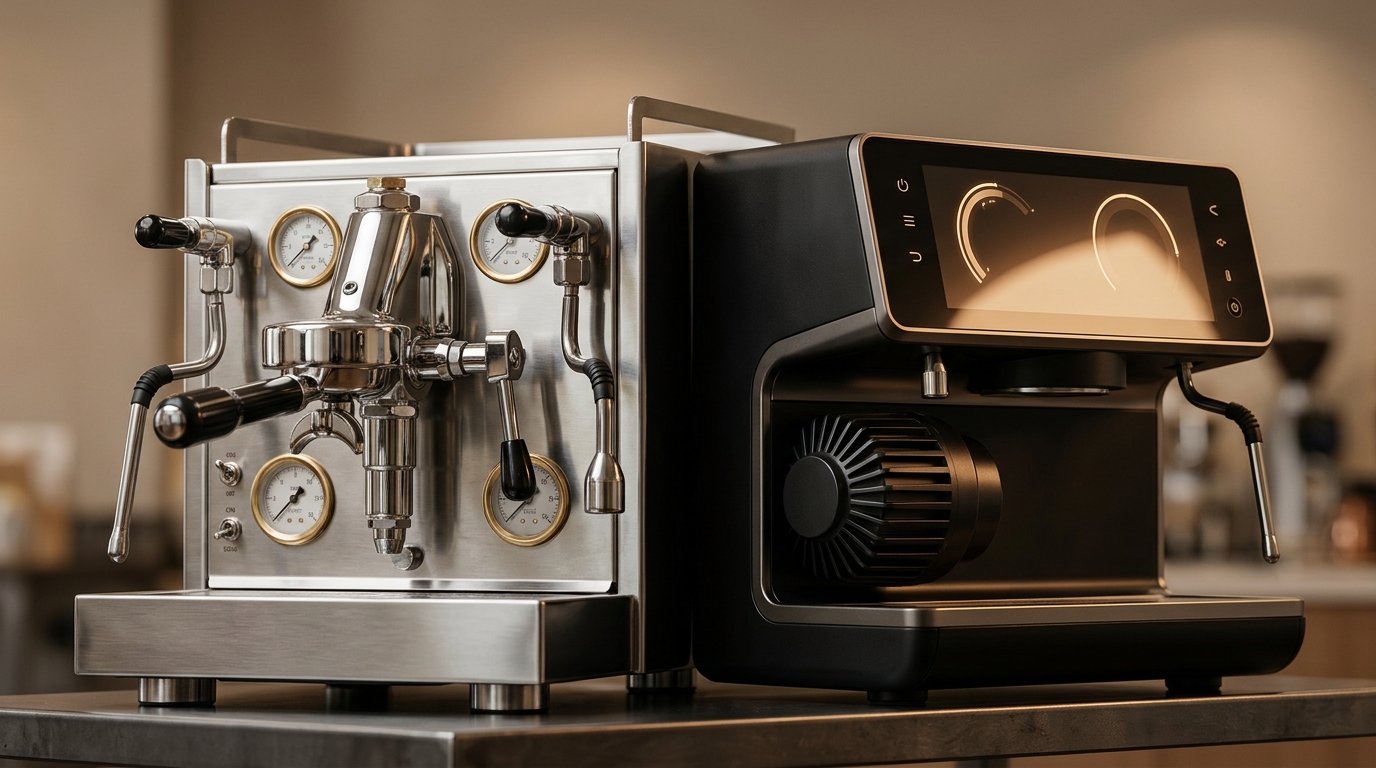
The user-interface philosophy is the biggest real split. The Pro 700 keeps the analog purist tradition: two pressure gauges, two rear PID displays, and physical toggle switches. The Synchronika II modernizes the platform with a single front-mounted OLED screen that consolidates all temperature, shot timer, and eco-mode information. The Synchronika II is easier to use day-to-day; the Pro 700 is easier to repair (the rear PIDs are off-the-shelf parts you can swap in 15 minutes with a screwdriver, while the OLED module is a custom assembly that ships from ECM).
Neither is repairable in the sense of a sealed smartphone. Both can be serviced by any competent espresso technician — and given the architecture’s 15-year history, parts availability for both will outlast your interest in the machine.
Feature Breakdown
This is where the Synchronika II earns its $620 premium — at least on paper.
Heat-up time: The Synchronika II’s cartridge-heater upgrade cuts cold-start time to ~6.5 minutes (Source: CoffeemakerReview.net Synchronika II review, April 2026). The Pro 700’s older heating element design still takes 25–30 minutes from cold, per espressosetupbuilder.com. If you only pull one morning espresso, the Pro 700 needs to be left on or scheduled — many users add a $30 smart plug to automate this. The Synchronika II is forgiving if you forget to turn it on.
PID control: Both machines have independent dual PIDs for brew and steam boilers. The Pro 700’s PIDs are reliable but the readouts are small and on the back of the machine, meaning you have to bend down to check them. The Synchronika II’s OLED front display shows both temperatures and a shot timer in real time, with an eco-mode that drops boiler temperature after a configurable idle period.
Flow control: This is the controversial one. ECM’s Synchronika II ships in two configurations: standard (no flow control) and flow-control (adds $300–$500). The Profitec Pro 700 ships with a pre-installed flow-control valve on most retailer SKUs (Chris’ Coffee, Whole Latte Love, Prima Coffee all list the FC version as the default for 2026). EspressoVS notes the Pro 700 “features the E61 group head with flow control device… adding pressure profiling capability to the classic E61 platform” (Source: EspressoVS Profitec Pro 700 review). If you want flow profiling, the Pro 700 at $2,979 is materially cheaper than the Synchronika II Flow Control at $3,899–$4,099.
E61 group head: Both use the classic E61 commercial group with thermosiphon circulation. The Pro 700 has a “single top nut and stainless steel mushroom valve” per Whole Latte Love, simplifying descaling. The Synchronika II uses a similar design with marginal refinements.
Pre-infusion: Both have programmable pre-infusion via the brew paddle — hold the paddle up for a few seconds before engaging the pump. This is mechanical, not electronic, and works identically on both machines.
Connectivity: Neither machine has Wi-Fi, Bluetooth, or app integration. This is a deliberate design choice at this price tier — the E61 platform prizes mechanical reliability and serviceability over smart features. The $5,000+ Decent DE1 is the only “smart” prosumer machine worth considering if you want app control.
Steam performance: The Synchronika II’s 2.0 L steam boiler is matched in size to the Pro 700’s, but community testing consistently reports slightly faster steam recovery on the Synchronika II — likely due to the more aggressive heating element tuning. The NoraIdeas review notes the Pro 700’s “powerful 1,600 W heating element” for fast recovery, while the Synchronika’s 1,400 W is paired with better insulation. In practice, the difference is ~3 seconds of steam-wand recovery time per drink — measurable but not life-changing.
Pros and Cons
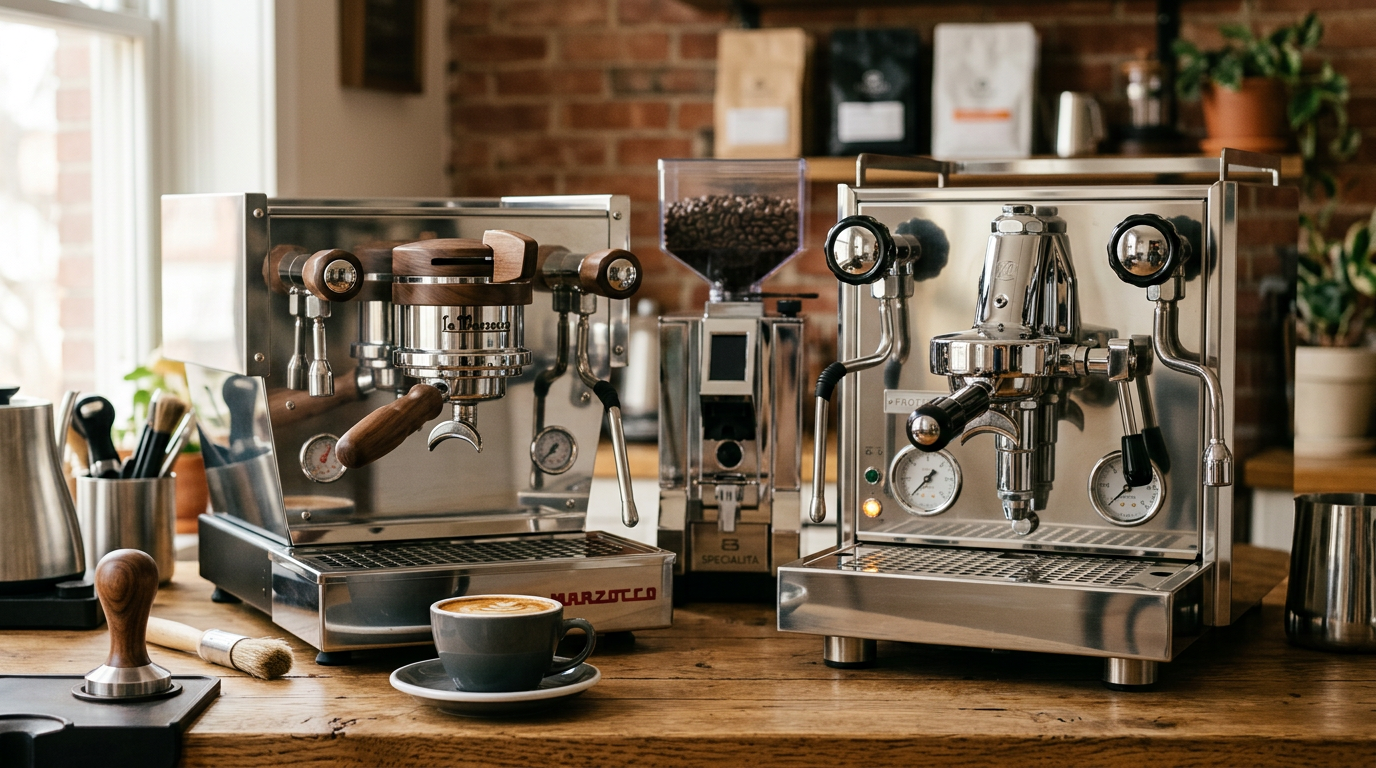
Profitec Pro 700 ($2,979)
Pros
- $620 cheaper than the Synchronika II at MSRP, $920 cheaper than the Synchronika II with flow control
- Same German-built dual-boiler E61 architecture as ECM (same parent company, same factory)
- Long-running production history (refined continuously since 2017) means known reliability
- Rear-mounted dual PIDs are off-the-shelf, easy to replace, no proprietary OLED module
- Ships with flow control pre-installed on most 2026 US retailer SKUs
- Large community of owners on r/espresso, Home-Barista.com, and CoffeeGeek for troubleshooting
- Brass E61 group with stainless mushroom valve simplifies descaling
- Rotary pump standard, plumb-in or reservoir switchable
- 10–15+ year lifespan typical (per Whole Latte Love’s long-term owner reports)
Cons
- 25–30 minute cold-start heat-up (vs 6.5 min on Synchronika II) — annoying if you forget to leave it on
- Rear-mounted PIDs are awkward to read mid-shot
- Slightly less polished OLED user experience
- 1,600 W heating element draws more peak power than the Synchronika II
- Slightly slower steam recovery (about 3 sec per drink) per community testing
- Analog purist interface is divisive — some find it charmingly old-school, others find it dated
ECM Synchronika II ($3,599)
Pros
- Class-leading 6.5-minute heat-up time (cartridge heater upgrade) — only beaten by smaller single-boilers
- Unified OLED front display consolidates all PID, shot timer, and eco-mode information
- Slightly faster steam recovery than the Pro 700 in community testing
- Factory plumb-ready (no field conversion needed)
- Outer boiler insulation upgrade reduces idle heat loss
- Polished stainless finish is genuinely beautiful in a modern kitchen
- Rotary pump standard, plumb-in standard
- Same 10–15+ year lifespan as the Pro 700 (same architecture)
- More refined European aesthetic per NoraIdeas: “minimalist lines and polished stainless steel finish”
Cons
- $620 more expensive than the Pro 700 at MSRP
- $920 more expensive than the Pro 700 if you want flow control
- OLED display module is a custom assembly — if it fails out of warranty, replacement is ~$250 + service
- 1,400 W heating element (vs 1,600 W on Pro 700) — slightly slower brew-thermosiphon recovery
- Original Synchronika (non-II) had firmware bugs that occasionally caused PID drift; the II is reportedly fixed but field data is limited
- Smaller community of long-term owners (the Synchronika II is only ~6 months old in mid-2026)
- Less commonly in stock at US retailers; many buyers wait weeks for inventory
Best For / Skip If
Best For
- Buy the Profitec Pro 700 if you pull 1–4 espressos per day, you don’t mind leaving the machine on or scheduling a smart plug, you want a known quantity with 8+ years of community troubleshooting, and you’d rather spend the $620 on a better grinder (Niche Zero, Eureka Mignon Specialità, or DF64 Gen 2). It’s the rational prosumer pick.
- Buy the ECM Synchronika II if you frequently forget to pre-heat the machine, you want a single OLED screen that shows everything, you prefer the modern European aesthetic over the chrome-analog look, and you value the 6.5-minute heat-up enough to pay $620 for it. It’s the “I want the most polished E61” pick.
Skip If
- You pull fewer than two espresso drinks per day. A $700 Rancilio Silvia V6 or $1,059 Profitec Go will cover daily use and leave 1,500+ dollars in your pocket for a grinder and beans.
- You don’t have a $400+ grinder yet. A dual boiler cannot compensate for inconsistent grind — the E61 group will faithfully extract whatever you give it, including the bitter notes from a sub-$200 grinder.
- You’re not plumbing in (or willing to refill the 2.8–3 L reservoir multiple times per day). A reservoir-only setup with a rotary-pump machine is a daily chore.
- You want app connectivity, scheduled brewing, or temperature surfing via Wi-Fi. Neither machine does smart-home integration. The Decent DE1 ($5,000+) is the only prosumer option in that niche.
Bottom Line
If you want the best value in a prosumer dual-boiler E61 and you can plan ahead enough to leave the machine on (or schedule a smart plug for $30), the Profitec Pro 700 at $2,979 is the right spend. It uses the same German architecture, the same rotary pump, and the same 0.75 L + 2.0 L dual stainless boiler layout as the Synchronika II. The $620 saved goes into a better grinder, which will do more for shot quality than the OLED display on the ECM ever will.
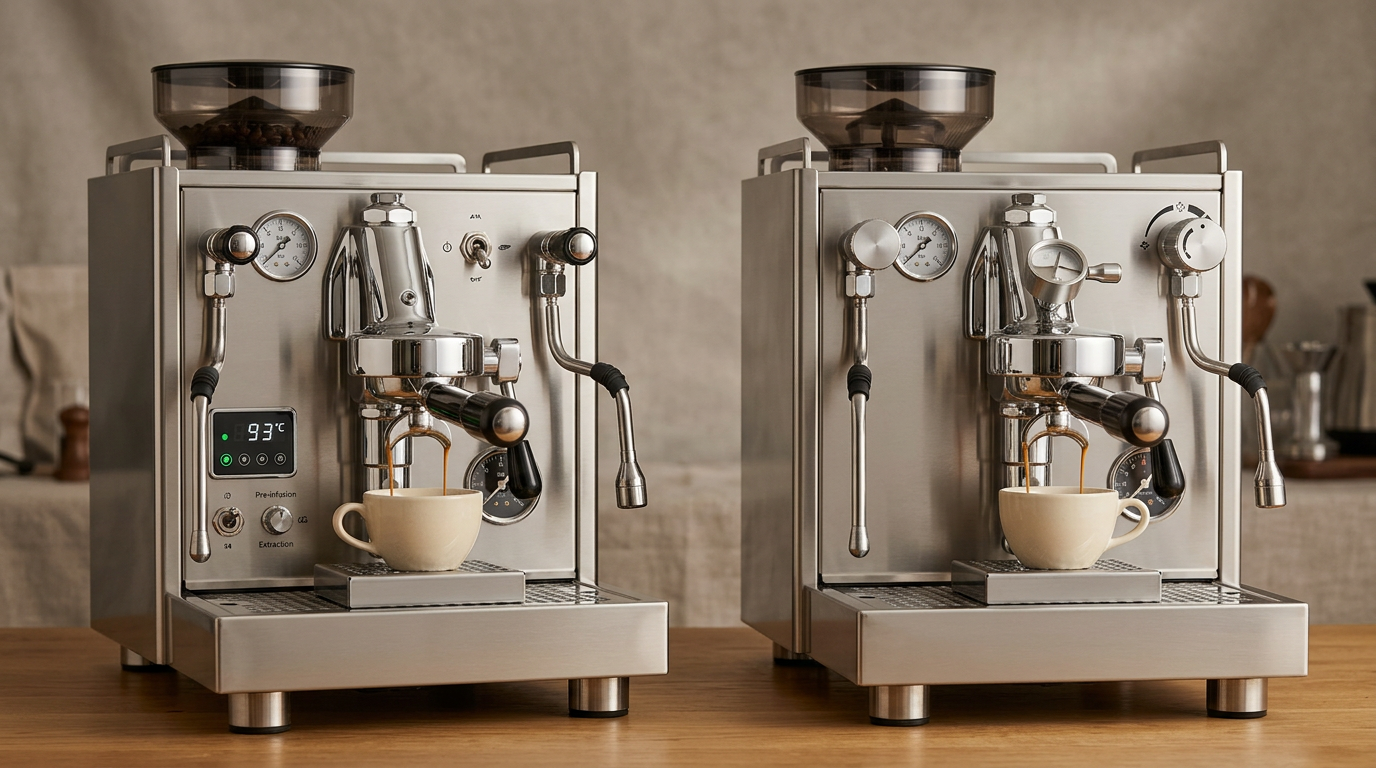
If you want the most polished E61 interface available in 2026, value a 6.5-minute heat-up, and prefer a unified OLED display to rear-mounted analog PIDs, the ECM Synchronika II at $3,599 earns its $620 premium. It is functionally a more refined Profitec Pro 700 with a faster heater and a better screen — and that is genuinely worth $620 to the right buyer.
Real value here is not the lower sticker price alone. It is whether the Pro 700’s $620 savings, deployed as a better grinder, will produce better daily espresso than the Synchronika II’s faster heat-up and OLED polish. For most home baristas pulling 1–4 drinks a day, the Pro 700 wins on total cost of ownership. Buy smart, get more value.