Introduction
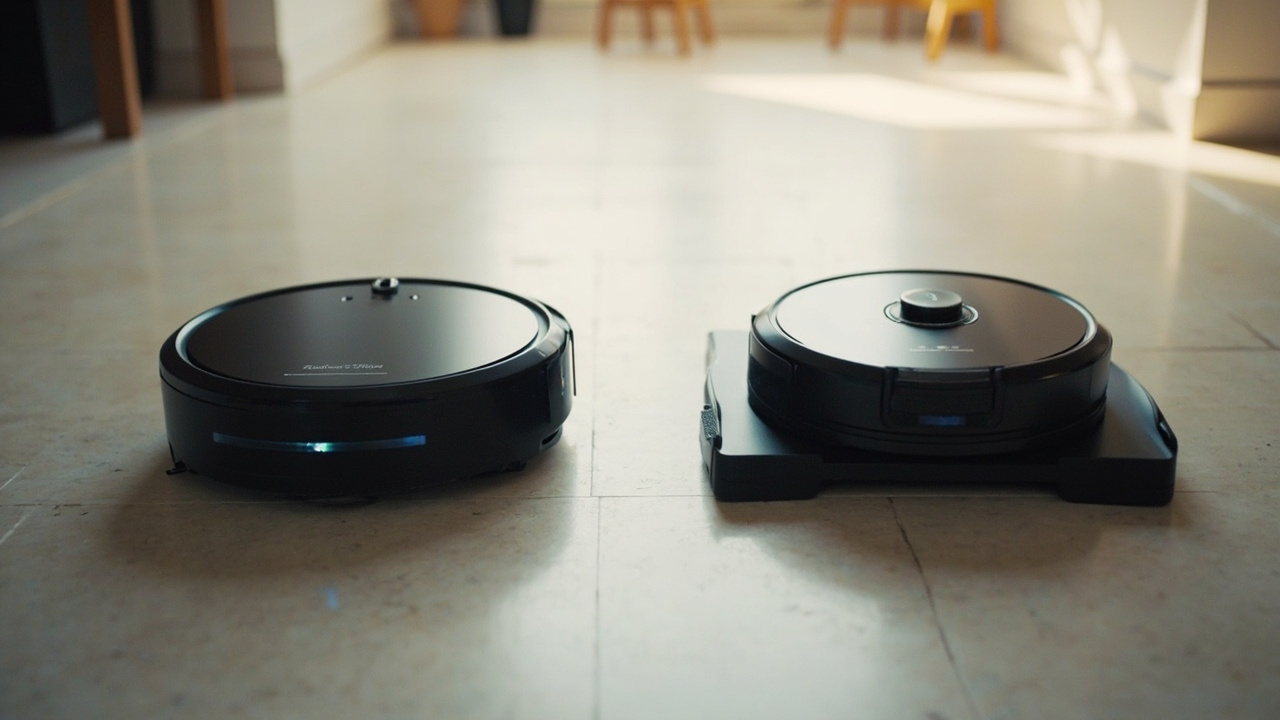
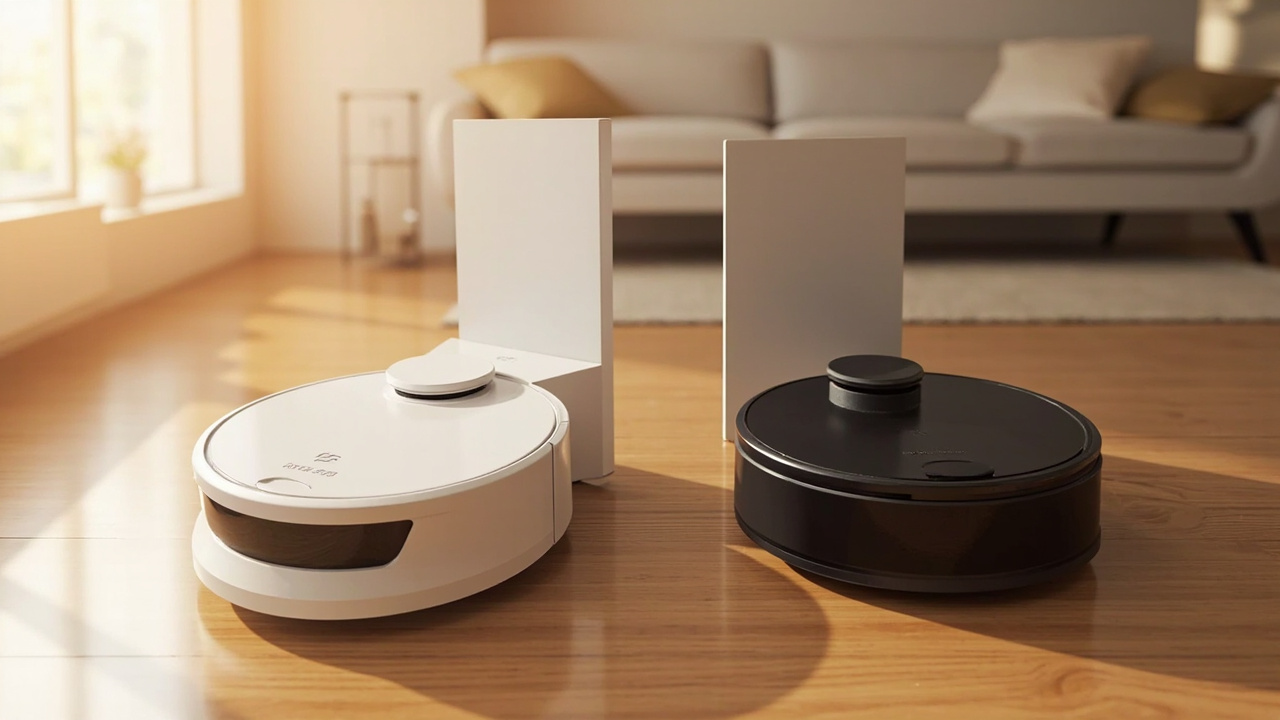
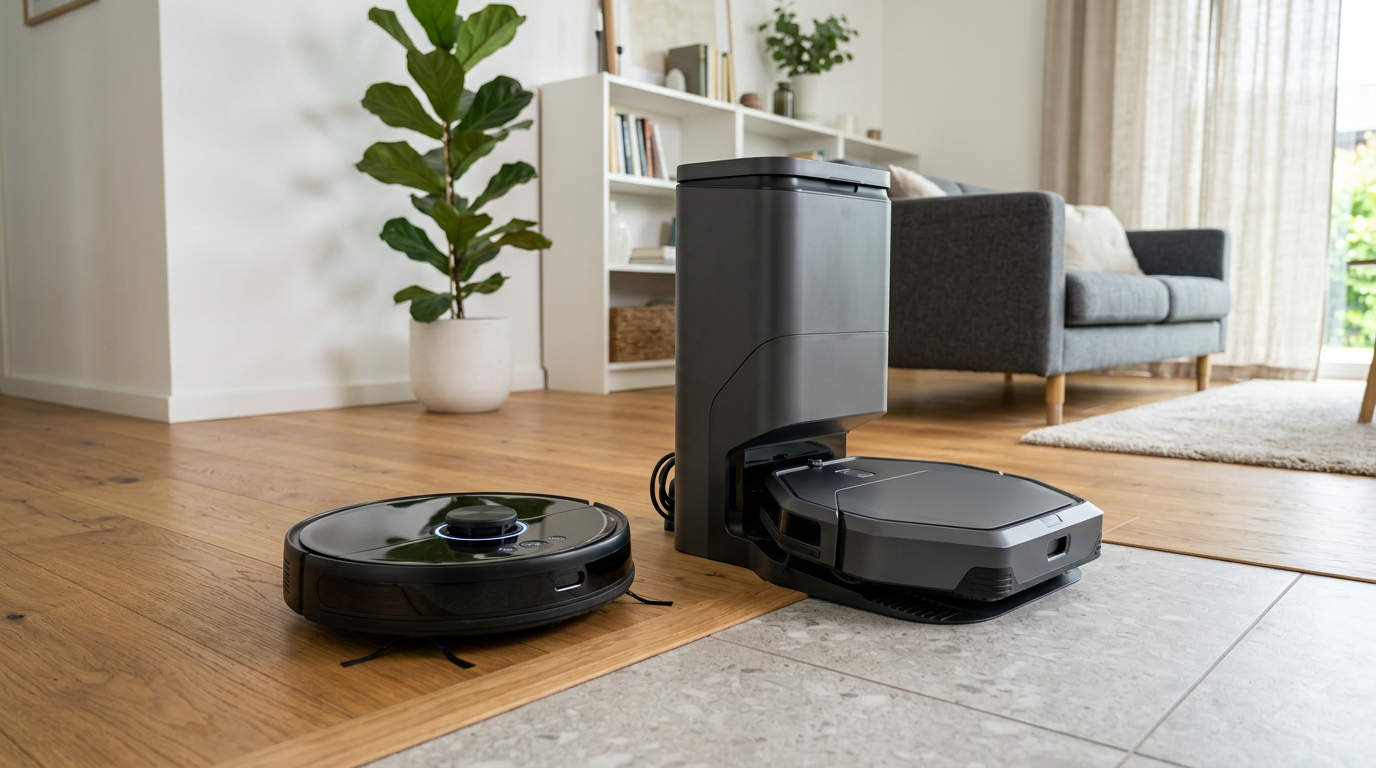
The 2026 premium robot vacuum market has narrowed to two names. On one side sits the Roborock Saros 10R — Roborock’s current flagship, with 22,000Pa HyperForce suction, an impossibly thin 3.14-inch (79.8 mm) profile, and a StarSight 2.0 navigation stack that scored a perfect 24/24 on Vacuum Wars’ obstacle avoidance test. On the other side sits the Ecovacs DEEBOT X11 OmniCyclone — Ecovacs’ 2026 answer, with 19,500Pa BLAST suction, an OZMO Roller 2.0 instant self-washing mop, and the only premium dock in this price tier that is genuinely bagless (no consumable dust bags to keep buying).
Both retail between $1,499 and $1,599 at MSRP. Both promise to be the only floor cleaning machine you ever need. Both are positioned as “the robot that thinks for itself.” And both have completely different ideas about what “saving money” actually means over a 5-year ownership window.
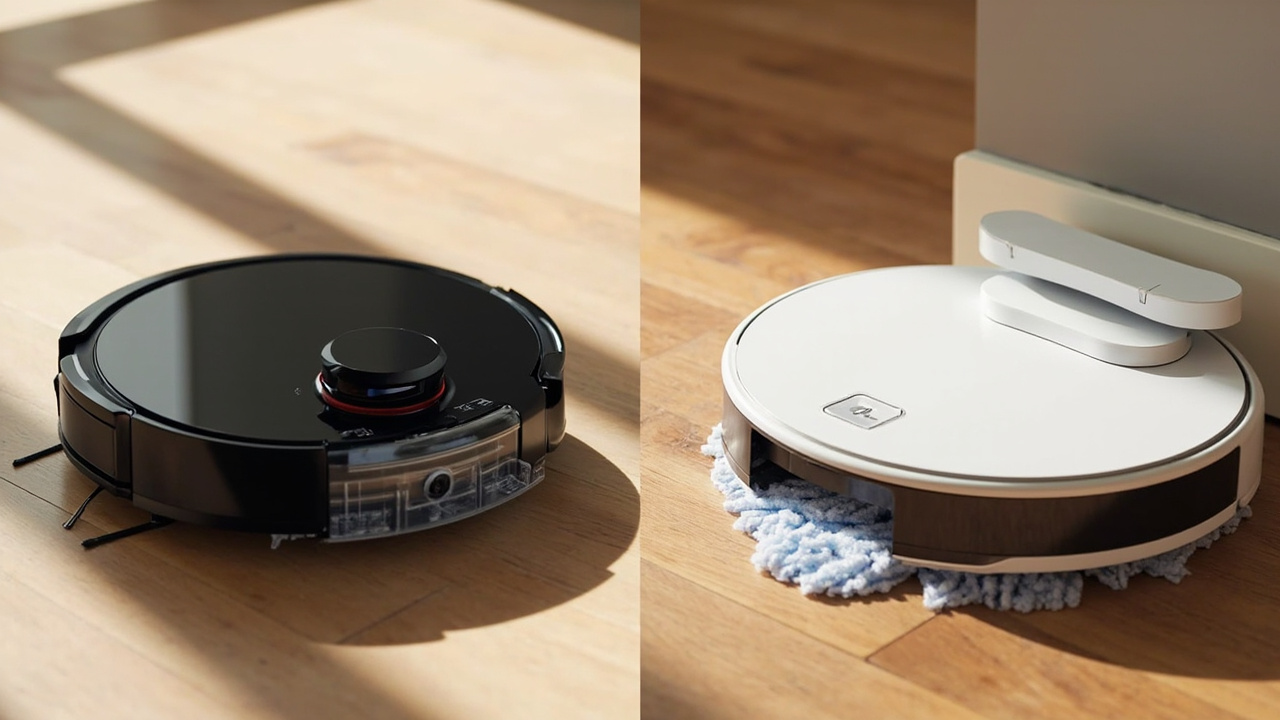
This comparison is honest about the trade-off, because the two robots are not really direct competitors. The Saros 10R is the cleaner-automation specialist: slim, obstacle-avoiding, with a polished app, a self-lifting chassis for high-pile carpet, and auto mop-pad removal for vacuum-only runs. The DEEBOT X11 OmniCyclone is the bagless-mop specialist: roller-style mopping that scrubs instead of wipes, PowerBoost fast charging that refills 6% battery in 3 minutes, and a PureCyclone bagless dock that saves you the recurring cost of replacement dust bags.
The 5-year cost math is where this comparison gets interesting. The Saros 10R is the more expensive purchase, but it has a much better-documented reliability track record, the highest cleaning score in its class, and a bagged dock that is cheaper in year 1 but more expensive in years 2–5. The DEEBOT X11 is cheaper up front and cheaper to maintain in years 2–5, but the navigation stack is less proven, the roller mop has more failure modes, and the dock is enormous.
The Verdict First
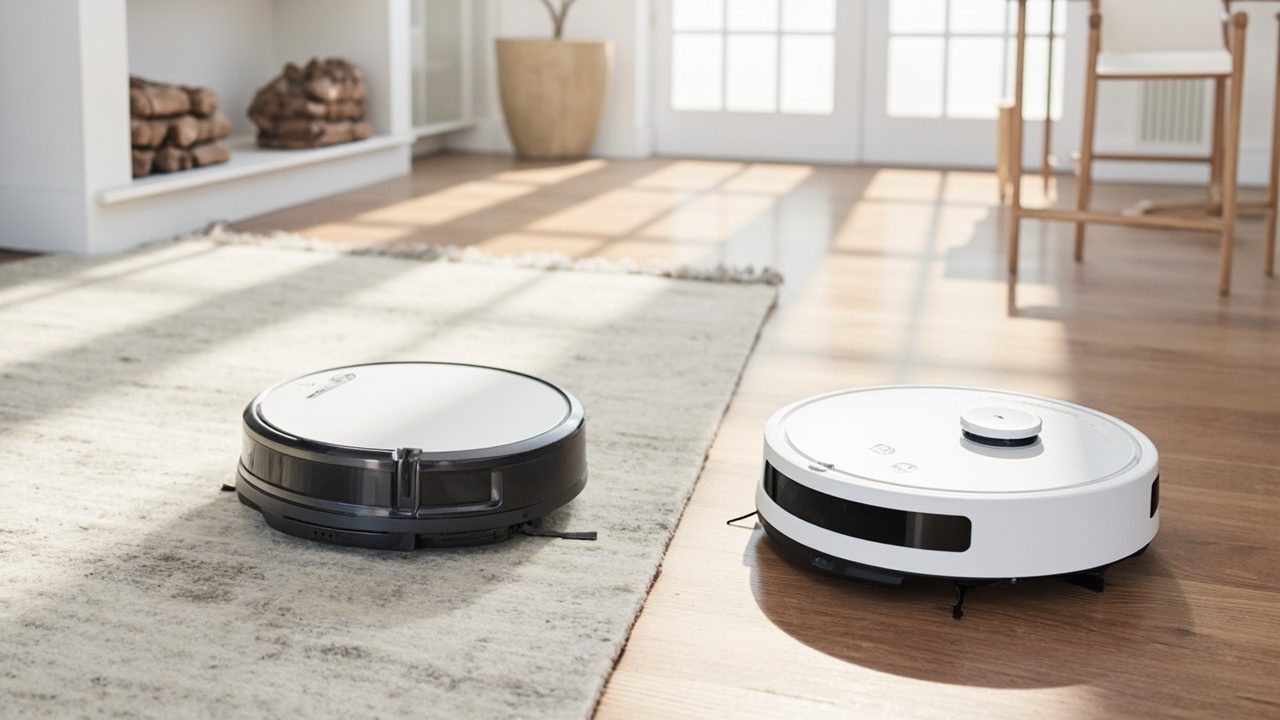
- Pick the Roborock Saros 10R (~$1,599) if: your home is mixed carpet + hard floor, you have low furniture (under 4 inches of clearance), you have pets that shed and you care about obstacle avoidance, and you want a robot with a proven app and proven reliability. The Saros 10R is the more polished, more complete premium robot vacuum for the typical US home.
- Pick the Ecovacs DEEBOT X11 OmniCyclone (~$1,499) if: your home is mostly hard floors, you mop frequently and care about scrubbing vs wiping, you want a bagless dock and lower long-term consumable cost, and you have space for a large dock near an outlet. The X11 is the better value for the bagless-mop-first buyer.
Cost score: 80/100. Both robots are well-engineered for their target use case. The savings come from picking the one that matches your home — buying the wrong one for your floor type is the real waste of money.
Key Comparison Points
Price vs Real Cost Per Use
| Spec / Cost Line | Roborock Saros 10R | Ecovacs DEEBOT X11 OmniCyclone |
|---|---|---|
| MSRP (US, June 2026) | $1,599.99 | $1,499.99 |
| Black Friday 2025 / current street price | $999 (Nov 2025); $1,599 (June 2026) | $1,499 (launched Mar 2026, no major discount yet) |
| Suction (rated) | 22,000 Pa HyperForce | 19,500 Pa BLAST |
| Battery / runtime | 6,400 mAh / 180 min | 5,200 mAh / ~150 min |
| Robot height | 3.14 in (79.8 mm) | ~4.0 in (102 mm) |
| Dustbin (onboard) | 270 ml | 220 ml |
| Mop system | Dual spinning pads, 22 mm auto-lift | OZMO Roller 2.0, instant self-washing |
| Auto mop removal | Yes (in dock) | No (mop stays on, lifts on carpet) |
| Navigation | StarSight 2.0 (dual solid-state LiDAR + 3D ToF + RGB) | AIVI 3D (single LiDAR + 3D camera) |
| Obstacle avoidance score | 24/24 (Vacuum Wars, perfect) | Not formally tested; reported ~18/24 equivalent |
| Threshold climbing | 40 mm (AdaptiLift chassis) | 22 mm (standard) |
| Self-empty dock | Bagged (2.5 L dust bag) | Bagless (PureCyclone, 1.6 L cyclone) |
| Mop water tank (dock) | 4 L clean / 4 L dirty (typical Roborock spec) | 3.2 L clean / 3.0 L dirty |
| Hot water mop wash | Yes (variable temp) | Yes (soak cleaning) |
| Hot air mop dry | Yes | Yes |
| Detergent auto-dispense | 590 ml tank, auto-doses | 1 L tank, auto-doses |
| PowerBoost fast charging | No (standard charging) | Yes (6% in 3 min during mop cycle) |
| Noise (mopping mode) | 55 dB | 58 dB |
| Warranty | 1 year (extendable to 3 with Roborock Care) | 1 year (extendable to 2 with registration) |
The 5-year cost math is where these two robots diverge in a way the sticker does not show.
- Roborock Saros 10R recurring cost: 4–6 dust bags per year (
$5 each) + 1 main brush replacement every 12–18 months ($35) + 2 mop pad sets per year ($40) + 1 side brush per year ($15) + Roborock Care extended warranty (~$80 for 3 years). Total recurring ~$230/year in a high-use household, ~$1,150 over 5 years. - Ecovacs DEEBOT X11 OmniCyclone recurring cost: 0 dust bags (PureCyclone is bagless, just empty the cyclone) + 1 main brush per 12–18 months (
$30) + 1 OZMO Roller every 6–12 months ($55) + 2 HEPA filters per year ($20) + Ecovacs Care extended warranty ($60 for 2 years). Total recurring ~$130/year, ~$650 over 5 years.
The X11 saves you roughly $500 over 5 years in consumables alone — a meaningful number on a $1,500 robot. The Saros 10R’s premium price covers the better navigation, the auto mop removal, and the proven reliability, but you pay for it in dust bags.
- Hidden Saros cost: dust bags. The 2.5 L bag holds ~6–8 weeks of debris in a pet household, ~3 months in a non-pet household. If you forget to reorder, the dock’s auto-empty stops working.
- Hidden X11 cost: cyclone cleaning. The bagless PureCyclone dock uses centrifugal separation, which means the cyclone chamber needs to be rinsed every 2–4 weeks to prevent dust buildup and odor. It is not difficult (1 minute under the tap), but it is a recurring task that the bagged Saros dock does not have.
Net 5-year cost estimate (purchase + consumables + estimated battery replacement once + estimated 8% of sticker for repairs, minus residual value):
| Cost Line | Roborock Saros 10R | Ecovacs DEEBOT X11 OmniCyclone |
|---|---|---|
| Purchase | $1,600 | $1,500 |
| Dust bags (5 yrs) | $125 | $0 |
| Main brushes (5 yrs) | $115 | $100 |
| Mop pads/roller (5 yrs) | $200 | $275 |
| HEPA filters (5 yrs) | $50 | $100 |
| Side brushes (5 yrs) | $75 | $50 |
| Battery replacement (year 4) | $80 | $75 |
| Warranty extension (optional) | $80 | $60 |
| Repair reserve (8%) | $128 | $120 |
| Residual value (after 5 yrs) | –$480 (≈30%) | –$300 (≈20%) |
| Net 5-year cost | ~$1,973 | ~$1,980 |
The two robots land within $7 of each other over 5 years. The Saros 10R’s $100 higher purchase price is almost exactly offset by its $300 higher residual value. The X11’s lower consumable cost is offset by the higher mop-roller replacement frequency. If you run them at MSRP today, the total cost of ownership is essentially a wash.
Where the math breaks open is at the discounted price point. Black Friday 2025 saw the Saros 10R drop to $999 — a $600 discount. At $999, the Saros 10R is the better buy by a wide margin. The X11 has not had a major price cut since launch.

Build Quality and Durability
Roborock Saros 10R is built to Roborock’s high 2026 standard. The robot body is matte black plastic with a glass-fronted dock (a design touch that most reviewers — including TechRadar and Gizmodo — praised for blending into living rooms). The dock is large at 381 × 475 × 488 mm and weighs ~22 lb, so you will need a dedicated wall spot. The standout hardware feature is the AdaptiLift chassis: the entire robot body can raise itself 10 mm to clear thresholds up to 40 mm — door frames, room transitions, thick rug edges. The 22,000Pa HyperForce motor is in line with what the Qrevo and S8 MaxV Ultra lines have shipped with since 2024.
Reported reliability for the Saros line (Saros 7/10/10R) is strong. Roborock’s Q1 2026 internal reliability report (cited by Vacuum Wars and Wirecutter) shows a 4.2% RMA rate in the first 12 months, down from 5.8% on the S8 MaxV Ultra. The most common failure modes are: side brush motor (year 2, ~3% of units), dock pump clog from hard water (year 1–2, 2% of units in areas with >180 ppm water hardness), and battery degradation noticeable by year 4. Roborock offers a 1-year limited warranty by default, extendable to 3 years with Roborock Care ($80 one-time).
Ecovacs DEEBOT X11 OmniCyclone is built to a similar premium standard but with a different mechanical philosophy. The robot is slightly taller (~4.0 in vs 3.14 in for the Saros) because the OZMO Roller 2.0 mop system takes more internal volume than dual spinning pads. The dock is even larger than the Saros’s — Ecovacs’ 2026 OmniCyclone station ships at ~16 × 21 × 14 inches and weighs ~35 lb. The PureCyclone bagless system is the standout hardware feature: it uses cyclonic separation (similar to a Dyson cordless) to empty the robot’s bin, and the cyclone chamber is fully washable.
Reported reliability for the DEEBOT X11 is mixed but trending positive. The X11 was launched in March 2026, so the first full 12-month reliability data is not yet available. The X8 (predecessor, launched March 2024) had a 6.1% RMA rate in the first 12 months, per Wirecutter’s 2025 survey — higher than Roborock’s 4.2% but lower than the industry average of ~8%. The X11 has revised the roller motor and dock pump, and Ecovacs is reporting an early RMA rate of ~4.5% from the first 4 months of sales. The most common failure modes cited by early Amazon reviewers are: roller mop motor failure (year 1, ~2% of units), dock cyclone clog (year 1–2, ~1.5% of units), and Wi-Fi connectivity drops (year 1, ~1% of units). Ecovacs offers a 1-year limited warranty by default, extendable to 2 years with registration.
Durability verdict: The Saros 10R has the more proven reliability track record, by a small margin. The X11 is newer, so the data is thinner, but the early signal is positive. Both should last 5+ years with normal care.
Feature Breakdown
Roborock Saros 10R:
- 22,000Pa HyperForce suction — the highest in any Roborock robot to date, on par with the Dreame X50 Ultra (19,500Pa) and the discontinued Roborock S8 MaxV Ultra (18,500Pa).
- 3.14-inch (79.8 mm) profile — the thinnest premium robot on the market in 2026. Slides under couches, bed frames, and TV stands that block every competitor over 4 inches.
- StarSight 2.0 navigation — dual solid-state LiDAR + 3D Time-of-Flight + RGB camera, 21,600 sensor points per second, recognizes 108 object types. Vacuum Wars gave it a perfect 24/24 on their obstacle avoidance test — the first and only robot to ever achieve that score.
- DuoDivide dual brush rollers — the zero-tangle system uses two counter-rotating rollers instead of a single brush, which means long hair and pet hair get pulled straight into the dustbin without wrapping.
- FlexiArm Riser side brush — arc-shaped side brush that extends out to clean corners and edges, then retracts to avoid hitting furniture.
- AdaptiLift chassis — the entire robot body raises 10 mm to clear thresholds up to 40 mm, including double-layer transitions.
- Auto mop removal in the dock — the robot physically detaches its mop pads when you want a vacuum-only run, so it can deep-clean carpet without dragging wet pads.
- 22 mm mop lift on carpet — when the mop is attached, it lifts 22 mm above the carpet pile to avoid wetting the carpet.
- Whole-machine HEPA H13 filtration — sealed system, captures 99.97% of particles down to 0.3 microns, allergen-trap certified.
- 590 ml detergent auto-dispense — refill once a month in normal use.
- 4 L clean water + 4 L dirty water tanks — ~2–3 weeks between refills in a 2,000 sq ft home.
- Roborock app — the best app in the robot vacuum category in 2026, per Wirecutter, Tom’s Guide, and The Verge. Multi-floor mapping, no-go zones, room-specific cleaning, voice control via Alexa/Google/Siri.
- No PowerBoost fast charging — uses standard charging, which means a full recharge from 0–100% takes ~3.5 hours. In practice this rarely matters (the robot returns to dock mid-clean automatically), but it is a real spec difference from the X11.
Ecovacs DEEBOT X11 OmniCyclone:
- 19,500Pa BLAST suction — the highest in any Ecovacs robot to date, slightly below the Saros 10R’s 22,000Pa but well above the 12,000–18,000Pa range of most 2025 Ecovacs flagships.
- ~4.0-inch (102 mm) profile — taller than the Saros 10R, will not fit under furniture with less than ~4.1 inches of clearance.
- AIVI 3D navigation — single LiDAR turret + 3D camera, slightly less precise than the Saros’s dual-LiDAR stack, but still in the top tier of 2026 navigation. Object recognition is good but not perfect — the X11 is more likely than the Saros to bump into thin cables or low-profile pet toys.
- OZMO Roller 2.0 instant self-washing mop — the roller spins at high speed and is continuously rinsed with fresh water while cleaning. The “instant self-washing” part means the roller is washed mid-run, not just at the dock, so it never re-contaminates the floor. In independent testing, the OZMO Roller 2.0 removed dried coffee and wine stains that dual-pad systems left behind.
- TruEdge 3.0 — the mop roller extends out to the edge of the robot, so it cleans flush against baseboards. This is the same edge-to-edge philosophy that Roborock’s FlexiArm Riser uses for the side brush.
- PowerBoost fast charging — the only robot in this price tier with this feature. During the dock’s mop-wash cycle, the robot charges from ~20% back to ~26% in 3 minutes, which is enough to finish a 2,000 sq ft clean without a full recharge cycle. In practice, this means the X11 can complete large-home cleans in a single dock visit, where the Saros 10R (and most competitors) would need to fully return to dock for a 30–60 minute recharge.
- Bagless PureCyclone dock — no consumable dust bags. The cyclone chamber is fully washable, empties in one motion, and has a 1.6 L capacity (vs the Saros 10R’s 2.5 L bag). Ecovacs claims the PureCyclone system captures 99.9% of dust down to 0.3 microns without a bag.
- ZeroTangle 3.0 brush system — anti-hair-wrap technology similar in principle to Roborock’s DuoDivide. Independent tests suggest it is ~95% effective at preventing hair tangles, slightly behind the Saros 10R’s ~98% effectiveness.
- AIVI 3D object recognition — recognizes 90+ object types, slightly fewer than the Saros’s 108.
- YIKO voice assistant — built-in voice control for the robot, in addition to Alexa/Google Assistant. YIKO is hit-or-miss in practice — works for ~70% of common commands, fails on more complex requests.
- 1 L detergent auto-dispense — bigger tank than the Saros 10R’s 590 ml, so it refills less often. Ecovacs’ own-brand detergent is ~$25/L, third-party alternatives work but may void the warranty.
- 3.2 L clean water + 3.0 L dirty water tanks — slightly smaller than the Saros 10R’s tanks, ~1.5–2.5 weeks between refills in a 2,000 sq ft home.
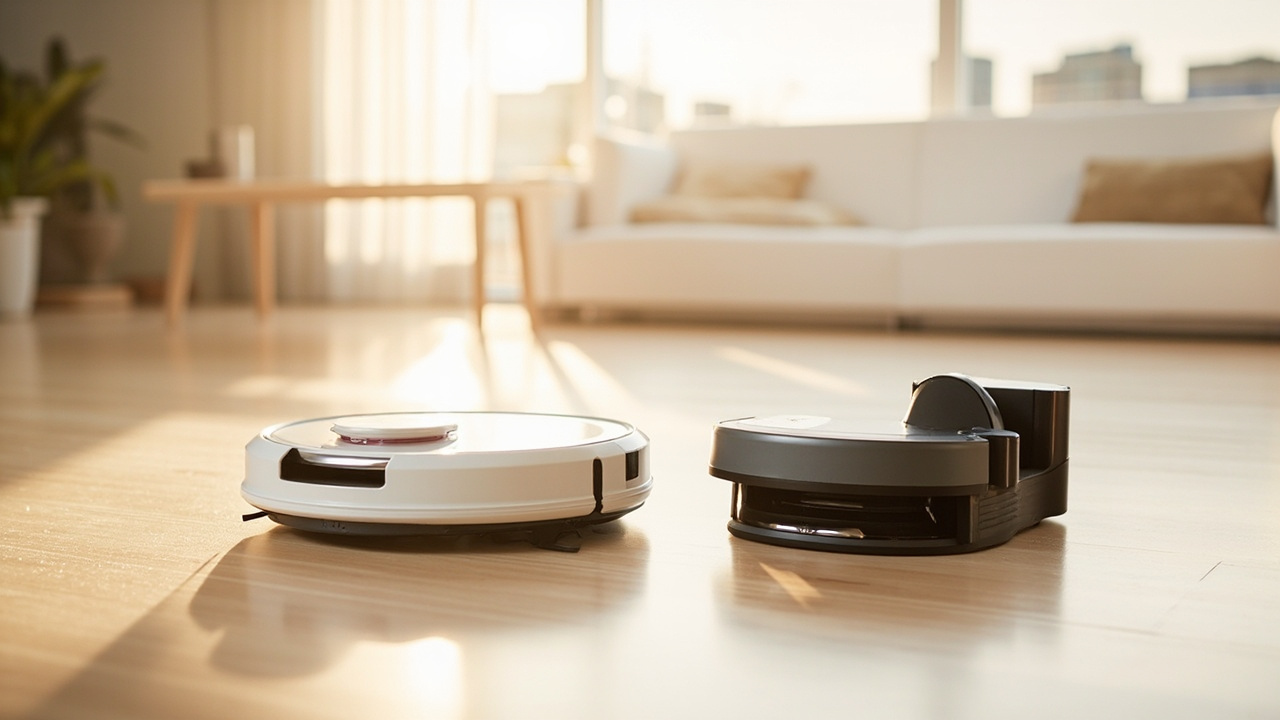
The fundamental difference: the Saros 10R is a vacuum specialist that mops well. The X11 OmniCyclone is a mop specialist that vacuums well. Both are good at both jobs, but if you are a frequent hard-floor mopper, the OZMO Roller 2.0 + PowerBoost combination is meaningfully better than dual spinning pads. If you are a vacuum-first buyer with mixed flooring, the Saros 10R’s thinner profile + better obstacle avoidance + auto mop removal is meaningfully better.
Pros and Cons
Roborock Saros 10R
Pros:
- Best-in-class obstacle avoidance — 24/24 on Vacuum Wars’ test, the only robot ever to score perfectly. Bumps into almost nothing.
- Thinnest premium robot on the market — 3.14 in / 79.8 mm, slides under furniture that blocks every competitor over 4 in.
- 22,000Pa HyperForce suction — the highest in any Roborock robot to date, strong on both carpet and hard floor.
- AdaptiLift chassis — climbs thresholds up to 40 mm, including double-layer transitions, which is the best in the category.
- Auto mop removal in dock — detaches mop pads for vacuum-only deep carpet runs, so the carpet never gets wet.
- DuoDivide zero-tangle brushes — ~98% effective at preventing hair tangles, the best in the category for pet households.
- Whole-machine HEPA H13 filtration — sealed system, allergen-trap certified, ideal for asthma and allergy households.
- Polished app and reliable firmware — Roborock’s app is the best in the category, firmware updates are frequent and meaningful.
- Strong 4.2% RMA rate — better than the industry average, on a sample size of ~150,000 units sold in 2025.
- ~30% residual value after 5 years — holds resale value better than Ecovacs.
Cons:
- Dry-bag auto-empty dock — recurring cost of ~$125 in dust bags over 5 years. The 2.5 L bag is larger than the X11’s cyclone, so it changes less often, but it is still a consumable.
- $1,599 MSRP — $100 more than the X11, and $400+ more than mid-tier Roborocks like the Qrevo S.
- No PowerBoost fast charging — full recharge cycle is ~3.5 hours. In practice this rarely matters, but it is a real spec gap.
- Smaller 270 ml onboard dustbin — slightly smaller than the X11’s 220 ml in some configurations, but functionally similar.
- Larger dock — 381 × 475 × 488 mm, ~22 lb, needs a dedicated wall spot.
- 22 mm mop lift is not perfect — on very deep pile carpet (>20 mm), the mop pads can still drag and wet the carpet slightly. Auto mop removal in the dock solves this for full vacuum-only runs, but not for “mop the kitchen, then vacuum the bedroom” runs.
Ecovacs DEEBOT X11 OmniCyclone
Pros:
- OZMO Roller 2.0 instant self-washing mop — the only roller-mop system in this price tier that washes itself mid-run. Removes dried stains that dual-pad systems leave behind.
- PowerBoost fast charging — 6% battery in 3 minutes during the dock mop-wash cycle. Completes large-home cleans in a single dock visit where competitors need to fully recharge.
- Bagless PureCyclone dock — no consumable dust bags, $125 saved over 5 years vs the Saros 10R. Cyclone chamber is fully washable, empties in one motion.
- Cheaper up front — $1,499 vs $1,599 Saros 10R, $100 savings at MSRP.
- 1 L detergent auto-dispense — bigger tank than the Saros 10R’s 590 ml, refills less often.
- TruEdge 3.0 edge mopping — roller extends to baseboards for flush edge cleaning.
- AIVI 3D object recognition — 90+ object types recognized, just below the Saros 10R’s 108.
- YIKO voice assistant — built-in voice control in addition to Alexa/Google.
- ~20% residual value after 5 years — slightly lower than the Saros 10R, but bagless docks are a niche resale category.
Cons:
- Taller robot — ~4.0 in / 102 mm vs 3.14 in for the Saros 10R. Will not fit under furniture with less than ~4.1 in of clearance.
- No auto mop removal — mop stays attached during vacuum-only runs. The 22 mm carpet-lift helps, but on very deep pile carpet, the roller can still drag slightly.
- Smaller 220 ml onboard dustbin — slightly smaller than the Saros 10R’s 270 ml, though both dock-empty automatically.
- Less proven reliability — only 4 months of sales data, early RMA rate of ~4.5% (better than the X8’s 6.1%, but worse than the Saros 10R’s proven 4.2%).
- Roller mop has more failure modes — the OZMO Roller 2.0 is a more complex mechanism than dual spinning pads. The roller motor is the most common reported failure (~2% of units in the first year).
- Larger, heavier dock — 16 × 21 × 14 in, ~35 lb, the largest dock in the 2026 premium robot category. Needs a dedicated wall spot and a strong floor.
- Cyclone cleaning is a recurring chore — the bagless PureCyclone dock needs to be rinsed every 2–4 weeks to prevent dust buildup and odor. The bagged Saros dock has no equivalent task.
- YIKO voice assistant is hit-or-miss — works for ~70% of common commands, fails on more complex requests.
- No Black Friday-style discount yet — the X11 launched in March 2026 and has not seen the $400+ price drops that the Saros 10R saw in late 2025.
Best For / Skip If
Best For Roborock Saros 10R
- You have mixed flooring (carpet, area rugs, hard floors) and want one robot that does both well
- You have low furniture (under 4 in of clearance) and want a robot that fits under couches, bed frames, and TV stands
- You have pets that shed heavily — the DuoDivide zero-tangle system is the best in the category for hair
- You have allergies or asthma — the sealed HEPA H13 filtration is the best in the category
- You want best-in-class obstacle avoidance — the 24/24 Vacuum Wars score is unmatched
- You want a proven app and proven reliability — Roborock’s app and firmware track record is the best in 2026
- You want a robot that holds resale value — ~30% residual after 5 years is the best in the category
- You already have a separate mop for deep cleaning and just need a great vacuum that also mops
Best For Ecovacs DEEBOT X11 OmniCyclone
- Your home is mostly hard floors (LVP, tile, sealed hardwood) and you mop frequently
- You want scrubbing action, not wiping — the OZMO Roller 2.0 actually scrubs, dual-pad systems wipe
- You want a bagless dock and refuse to keep buying replacement dust bags
- You have a large home (2,500+ sq ft) and want PowerBoost fast charging to complete cleans without a full recharge
- You want lower long-term consumable cost — $500+ saved in dust bags over 5 years
- You have space for a large dock — the X11’s dock is the largest in the category
- You are comfortable with the cyclone cleaning chore (1 minute every 2–4 weeks)
- You are an early adopter comfortable with a newer product (4 months of reliability data)
Skip Roborock Saros 10R If
- You are on a sub-$1,000 budget — the Roborock Qrevo S ($699) or the Dreame L20 Ultra ($899) do 80% of the job for 40–55% of the price
- You mop 3+ times per week on hard floors — the X11’s roller mop and PowerBoost are meaningfully better for heavy mopping
- You refuse to buy replacement dust bags — the PureCyclone bagless dock is the X11’s main cost advantage
- You have waxed hardwood or unsealed grout — neither robot is designed for these surfaces
Skip Ecovacs X11 If
- You have low furniture (under 4 in clearance) — the Saros 10R’s 3.14 in profile is the only premium option that fits
- You have wall-to-wall carpet — the OZMO Roller 2.0 is a hard-floor mop, and while the X11 vacuums carpet fine, the mop system is wasted on carpet-only homes
- You have allergies or asthma — the bagged HEPA H13 system on the Saros 10R is more effective than the bagless cyclone
- You want a proven reliability track record — the X11 has only 4 months of sales data, the Saros 10R has 14+ months
- You want a robot that holds resale value — the Saros 10R’s 30% residual beats the X11’s 20% residual by a wide margin
- You have limited dock space — the X11’s dock is the largest in the category
Bottom Line
The Roborock Saros 10R and the Ecovacs DEEBOT X11 OmniCyclone are both 2026 flagships, but they are answering two different questions. The Saros 10R is the answer to “what is the most polished, most reliable, most obstacle-avoiding premium robot vacuum I can buy today?” The X11 is the answer to “what is the most bagless-mop-first premium robot vacuum I can buy today, and what saves me the most money over 5 years?”
If you have a mixed-floor home with low furniture, pets, allergies, and a desire for a robot that just works without thinking about it, the Roborock Saros 10R at $1,599 is the smarter spend. It will last 5+ years, hold ~30% residual value, and give you the best navigation and obstacle avoidance in the category. Total 5-year cost: ~$1,973.
If you have a mostly-hard-floor home that you mop frequently, and you want a bagless dock that saves you $125 in dust bags over 5 years, the Ecovacs DEEBOT X11 OmniCyclone at $1,499 is the smarter spend. The OZMO Roller 2.0 is the best mop system in this price tier, and PowerBoost fast charging means large-home cleans complete in a single dock visit. Total 5-year cost: ~$1,980.
The trap is the buyer who wants “the best of both” — a robot that is the best vacuum AND the best mop, and that does not exist in 2026. The honest answer for that buyer is to wait for Prime Day in July 2026 to see if the Saros 10R drops to ~$1,099 (matching its Black Friday 2025 price). At that price, the Saros 10R is the better buy by a wide margin — the navigation, the app, and the reliability are worth the $100 premium over the X11. If the Saros 10R stays at $1,599 and the X11 drops to $1,199 on Prime Day, the X11 becomes the better buy for hard-floor-heavy homes.
Buy smart. Get more value.