Introduction
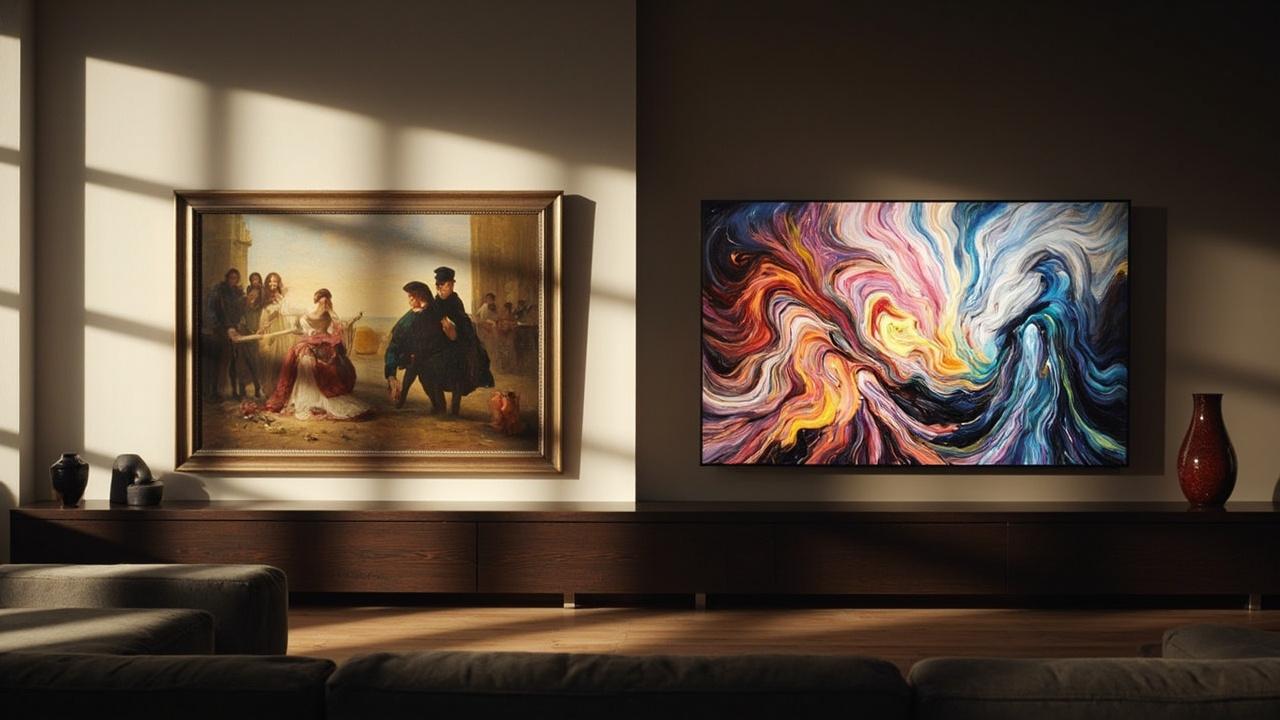
Art TVs are no longer a one-brand category. In 2017 Samsung invented the niche with The Frame, and for years it owned the living-room wall alone. As of 2026, the field is genuinely competitive: Samsung ships the second-generation Frame Pro with Mini LED backlighting and a Wireless One Connect Box, while Hisense releases the second-generation CanvasTV (S7SG) with a Hi-Matte anti-glare panel, a 144Hz Hi-QLED screen, and — most importantly — no art subscription (Sources: Samsung Frame Pro LS03HW product page, DisplaySpecifications CanvasTV 2026 launch report).
The headline price tells one story. The 5-year cost of ownership tells a different one.
- Samsung The Frame Pro 2026 (65” LS03HW): $2,000 MSRP. Add the $4.99/month Art Store subscription, add swappable magnetic bezels (~$29-$59 each), and the lifetime number climbs fast.
- Hisense CanvasTV 2026 (65” S7SG): ~$999-$1,499 retail at launch. Ships with a teak frame and an UltraSlim Wall Mount. The full art library is included — no subscription.
This is a comparison for someone who has already decided they want a TV that blends into the wall like a framed print, and is now trying to figure out if the Frame Pro’s better panel and ecosystem are worth a real premium — or whether the CanvasTV is the smarter long-term buy. The cost-per-year answer depends on three things: how long you keep the TV, whether you care about the museum art collection, and how much you value wireless cable management versus included frame hardware.

The Verdict First
- Pick the Samsung The Frame Pro 2026 (65”) if you care about the deepest art library in the category (5,000+ works from MoMA, The Met, Van Gogh Museum), you want Mini LED local dimming for dramatic chiaroscuro paintings, you need the Wireless One Connect Box to keep the wall truly cable-free, you want 7 years of Tizen OS updates, and you don’t mind paying for the optional $4.99/month Art Store subscription to unlock the full collection.
- Pick the Hisense CanvasTV 2026 (65” S7SG) if you want a real gallery-style art TV at roughly half the price, you don’t want a monthly art subscription (the CanvasTV ships with a 2,000+ piece library and accepts USB/Smartphone uploads for free), you want Dolby Vision HDR support (the Frame Pro does not support Dolby Vision), and you want Google TV as the smart platform rather than Tizen.
- Skip both if you only watch cable news and sitcoms — the art mode will never earn its keep. A $400 Hisense U6 or $500 Sony X80L is a smarter buy for a “TV you don’t care about when off” use case.
Cost score: 78/100. The Hisense CanvasTV 2026 is the better long-term value for the majority of buyers in this price range. The Samsung Frame Pro earns its premium only if you specifically want the museum-tier art library, Mini LED local dimming, and a truly wireless wall mount. For everyone else, the CanvasTV delivers 80-90% of the art-TV experience at roughly 50-65% of the price.

Key Comparison Points
Price vs Real Cost Per Use
The sticker price is where most reviews stop. The BuyCospa approach is to keep going.
| Spec / Cost Line | Samsung The Frame Pro 2026 (65”) | Hisense CanvasTV 2026 (65”) |
|---|---|---|
| MSRP (US, 2026 launch) | $2,000 | ~$1,099-$1,499 (typical retail) |
| Sizes | 65”, 75” ($2,800), 85” ($4,000) | 50”, 55”, 65”, 75”, 85” |
| Panel | Mini LED QLED, 4K | Hi-QLED (QLED-class), 4K |
| Refresh rate | 144 Hz | 144 Hz |
| Anti-glare coating | Advanced Glare Free (matte) | Hi-Matte (matte) |
| Art library included | ~30 free rotating works | 2,000+ works preloaded |
| Optional art subscription | $4.99/month or $49.99/year | None required |
| Frame included | No (magnetic bezels sold separately, ~$29-$59) | Yes — teak frame in box; white and walnut sold separately |
| Wall mount included | Slim Fit mount (basic); Wireless One Connect Box enables cable-free install | UltraSlim Wall Mount included |
| Smart OS | Tizen (7 years of updates) | Google TV |
| HDR support | HDR10, HDR10+, HLG (no Dolby Vision) | Dolby Vision, HDR10, HLG |
| Power draw (art mode, typical) | ~30-40 W | ~25-35 W |
| Power draw (movie mode, typical) | ~90-120 W | ~80-110 W |
| Annual electricity (mixed use, $0.18/kWh US avg) | ~$35-$50 | ~$30-$45 |
Sources: Samsung US Frame Pro 2026 launch pricing per The Gadget Flow’s review of the 2026 Samsung TV lineup (thegadgetflow.com); Hisense CanvasTV 2026 launch details from DisplaySpecifications launch report and the 65S7SG Amazon US/CA product listing.
5-year total cost of ownership (65” 2026 model, US, mixed use):
| 5-Year Cost Line | Samsung Frame Pro 2026 | Hisense CanvasTV 2026 |
|---|---|---|
| Purchase | $2,000 | $1,299 |
| Art Store subscription (5 yr × $59.88) | $300 (if you subscribe) | $0 |
| Custom magnetic bezel (1×, optional) | $40 | $0 (teak frame included) |
| Wall mount | $0-$80 (Slim Fit included; wireless kit varies) | $0 (UltraSlim included) |
| Electricity (5 yr) | ~$200 | ~$185 |
| Repair reserve (5% of MSRP) | $100 | $65 |
| Resale after 5 yr (typical) | -$600 (30%) | -$325 (25%) |
| Net 5-year cost | ~$2,040 | ~$1,224 |
| Approx. 5-yr cost per year of art-mode use | ~$408/yr | ~$245/yr |
The headline: over a 5-year hold, the Samsung Frame Pro costs roughly $800 more than the Hisense CanvasTV when you include a typical Art Store subscription, a custom bezel, and realistic resale values. The $700+ sticker gap closes somewhat (the Frame Pro holds resale better at 30% vs 25%), but it does not flip.
The Frame Pro starts making more sense if:
- You skip the Art Store subscription and rely on the ~30 free rotating works + your own uploads (cuts ~$300 over 5 years).
- You keep the TV 7+ years, where the Tizen OS update commitment and resale value advantage compound.
- You genuinely need Mini LED local dimming for dramatic dark-area art reproduction.
For buyers who plan to keep the TV 3-5 years and want a real art library out of the box, the Hisense CanvasTV is the more efficient spend per year of useful life.
Build Quality and Durability
Both TVs are designed to disappear into a wall. The execution differs, and the long-term durability picture has real implications.
Samsung The Frame Pro 2026 (LS03HW) uses Samsung’s Mini LED QLED panel with hundreds of independent local dimming zones — a meaningful upgrade from the edge-lit standard Frame. The Wireless One Connect Box transmits 4K video up to 10 meters (30 ft) wirelessly, so the only cable you see at the TV is the power cord. The matte “Advanced Glare Free” coating uses a micro-textured surface that virtually eliminates reflections without the color-washing common on older anti-glare panels. The frame is held on by magnets; the standard Frame Pro 2026 ships with a basic bezel, and the stylized wooden and metal bezels (Walnut, Teak, Modern White, etc.) are sold separately at $29-$59 each. The Tizen smart platform is promised 7 years of updates, the longest support commitment of any art TV in 2026.
Hisense CanvasTV 2026 (S7SG) uses a 4K Hi-QLED panel (Hisense’s branding for its quantum-dot QLED tier) with a 144Hz native refresh rate, ALLM, VRR, and MEMC. The Hi-Matte anti-glare coating mimics the texture of real artwork. Each CanvasTV ships with a refined teak frame in the box; white and walnut frames are available separately. The UltraSlim Wall Mount is included, and a rear cut-out on the chassis keeps the TV nearly flush against the wall. Audio is handled by a 2.0.2 multi-channel system — a real Atmos-compatible sound stage in the cabinet, though most buyers in this category will eventually add a soundbar. Google TV handles the smart platform, and Hisense typically commits to 3-4 years of OS updates on its mid-to-upper tier.
Real-world durability signals (2026 data):
- The original 2017-2022 Frame models have a strong 6-8+ year track record in owner reports (r/Samsung, r/4kTV). Mini LED is newer, so 10-year data does not exist yet, but the panel technology is mature enough to expect similar longevity.
- Hisense’s previous-generation CanvasTV (2024) has a 2-year owner report history with normal failure rates; the 2026 model adds more backlight zones, which is the most common failure point.
- The Wireless One Connect Box is Samsung’s biggest single point of failure (if the box dies, the TV loses its inputs). It is a sealed unit, not user-serviceable, and Samsung charges ~$250-$350 to replace out of warranty.
- Hisense’s bigger value-play risk: the smart TV platform is the budget tier, and the Hisense support lifetime is shorter than Samsung’s.
For a 5-year hold, both are solid. For a 7-10 year hold, Samsung’s longer OS support and the Frame’s track record tilt the durability edge to the Frame Pro.
Feature Breakdown
A side-by-side spec table for the 65” 2026 models, using publicly documented specs and Samsung/Hisense product pages as of June 2026:
| Feature | Samsung Frame Pro 2026 (65”) | Hisense CanvasTV 2026 (65”) |
|---|---|---|
| Panel type | Mini LED QLED | Hi-QLED (QLED-class) |
| Backlight zones | Hundreds (Mini LED FALD) | Direct LED (FALD zones not officially published) |
| Resolution | 4K (3840×2160) | 4K (3840×2160) |
| Refresh rate | 144 Hz | 144 Hz |
| VRR / ALLM | Yes | Yes |
| HDR formats | HDR10, HDR10+, HLG | Dolby Vision, HDR10, HLG |
| Dolby Vision | No | Yes |
| Dolby Atmos (decoding) | Yes | Yes |
| Anti-glare panel | Advanced Glare Free | Hi-Matte |
| Art library (works) | 5,000+ (Art Store subscription); ~30 free rotating | 2,000+ included; USB + phone upload free |
| Museum partners (Art Store) | The Met, MoMA, Van Gogh Museum, Louvre, Tate, MFA Boston, Art Basel | None publicly named |
| Motion art / video loops | Yes | Yes |
| Custom image upload | Yes (SmartThings app, USB) | Yes (Hi View app, USB) |
| Smart OS | Tizen | Google TV |
| OS update commitment | 7 years | ~3-4 years (typical Hisense tier) |
| Voice assistants | Alexa, Bixby, Google Assistant (via paired device) | Alexa, Google Assistant |
| HDMI ports | 4× HDMI (HDMI 2.1 on at least one) | 2× HDMI 2.1, 2× HDMI 2.0 |
| Wireless One Connect | Yes (up to 10 m) | No (wired, all ports on TV) |
| Bezel/frame system | Magnetic, swappable, sold separately | Teak frame included; white/walnut sold separately |
| Wall mount | Slim Fit mount (included) | UltraSlim Wall Mount (included) |
| Picture processor | NQ4 AI Gen3 | Hi-View Engine (4K), MediaTek Pentonic 700 |
| Built-in audio | 60W 2.0.2 | 2.0.2 multi-channel |
Sources: Samsung US Frame Pro LS03HW product page; Hisense 65S7SG CanvasTV Amazon US product listing and DisplaySpecifications launch report.
The three feature differences that actually matter:
- HDR format support. Hisense supports Dolby Vision; Samsung does not (the Frame Pro only supports HDR10, HDR10+, and HLG). For Netflix and Apple TV+ content mastered in Dolby Vision, the Hisense will deliver a slightly better HDR experience. For most other 4K content (HDR10+ on Amazon Prime, HDR10 on Blu-ray), the gap is smaller.
- Art library size and depth. Samsung’s 5,000+ works include museum partnerships you cannot get anywhere else. Hisense’s 2,000+ works are curated and free. If you specifically want to display a Van Gogh from The Met’s collection, the Samsung Art Store is the only legal way to do that on a TV. If you want a steady rotation of “good art,” Hisense has more than enough.
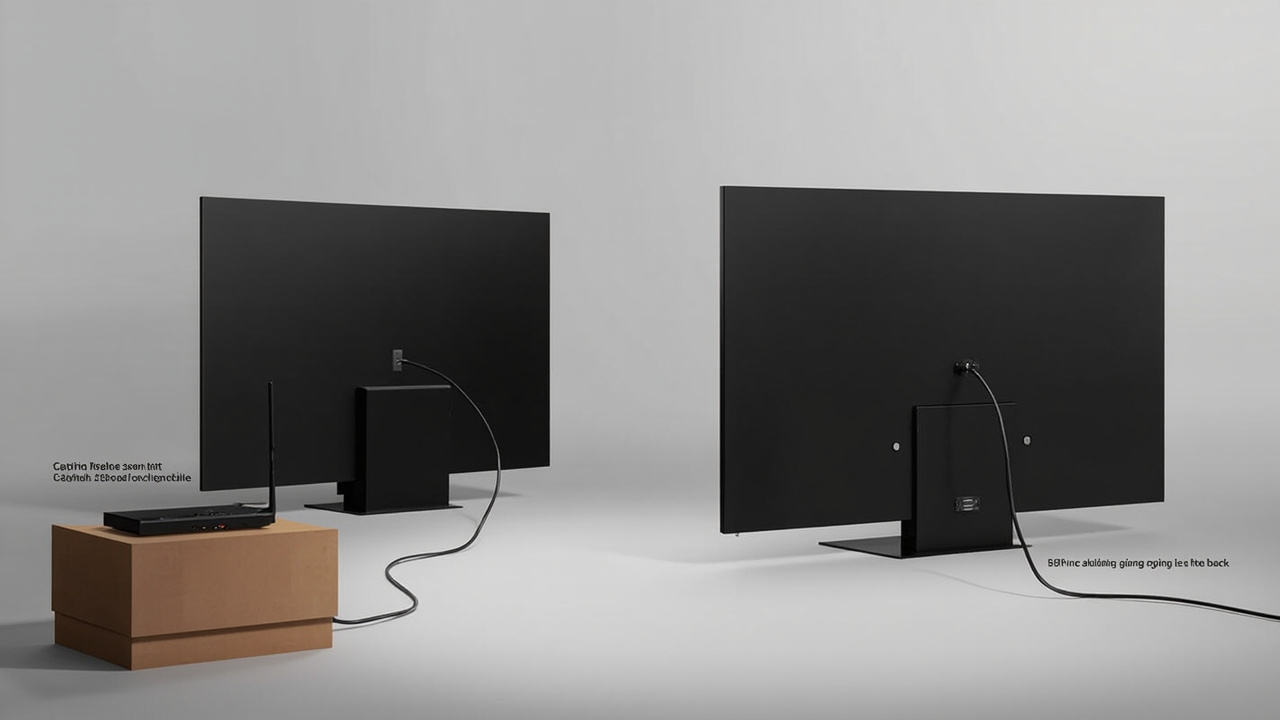
- Cable management. Samsung’s Wireless One Connect Box is the cleanest install in the art TV category — the wall has exactly one cable (power). Hisense’s UltraSlim Wall Mount gets the TV flush to the wall, but HDMI and other cables still run directly to the TV.
Pros and Cons
Samsung The Frame Pro 2026 (65”)
Pros:
- Mini LED QLED panel with hundreds of local dimming zones — best-in-class art reproduction for dramatic paintings
- 5,000+ work Art Store with real museum partnerships (MoMA, The Met, Van Gogh Museum)
- Wireless One Connect Box — cleanest wall install in the category
- 7-year Tizen OS update commitment (longest in art TV category)
- Strong resale value — approximately 30% after 5 years
- Advanced Glare Free matte coating that minimizes reflections without color wash
- 144Hz native refresh rate for gaming
Cons:
- $2,000 MSRP for 65” — about 40-100% more than CanvasTV at the same size
- Art Store subscription ($4.99/month or $49.99/year) is required to access the full 5,000+ library
- No Dolby Vision support (only HDR10, HDR10+, HLG)
- No frame/bezels included — bezel options sold separately at $29-$59
- Wireless One Connect Box is a single point of failure (out-of-warranty replacement ~$250-$350)
- Still uses a wired power cord to the TV itself
Hisense CanvasTV 2026 (65” S7SG)
Pros:
- Approximately half the price of the Samsung Frame Pro 65” for 80-90% of the art-TV experience
- 2,000+ art works included with no subscription required
- Dolby Vision HDR support (the Frame Pro does not have it)
- Teak frame and UltraSlim Wall Mount included in the box
- Google TV smart platform (more app support than Tizen in some regions)
- 5 size options from 50” to 85” — matches Samsung’s size range
- Lower annual electricity cost than the Mini LED Frame Pro
- Strong value for first-time art TV buyers
Cons:
- Hi-QLED panel uses direct LED backlight, not Mini LED — less precise local dimming for dark-area art
- Smaller art library (2,000+ vs 5,000+) and no museum partnerships
- No Wireless One Connect Box — all cables run directly to the TV
- Shorter OS update commitment (~3-4 years vs Samsung’s 7)
- Lower resale value (~25% after 5 years vs ~30% for Samsung)
- 2.0.2 built-in audio is decent but most buyers will add a soundbar
Best For / Skip If

Best for the Samsung Frame Pro 2026 (65”):
- Art enthusiasts who specifically want museum-tier works (MoMA, The Met) on their wall and are willing to pay $4.99/month for the full Art Store
- Buyers planning to keep the TV 7+ years and who value the 7-year Tizen OS update commitment
- Minimalists who want a truly wireless wall (only the power cord on the TV itself)
- Homeowners with strong midday sunlight in the room — the Advanced Glare Free coating handles glare noticeably better
- Buyers who want the strongest resale value in the art TV category
Best for the Hisense CanvasTV 2026 (65”):
- First-time art TV buyers who want to test the concept without a $2,000 commitment
- Buyers who don’t want a monthly art subscription — the 2,000+ included works are enough for most households
- Living rooms with mixed-use viewing (movies, streaming, gaming) where Dolby Vision support matters
- Anyone with a small-to-medium room where the Mini LED local-dimming advantage of the Frame Pro doesn’t show up clearly
- Buyers who want the teak frame in the box instead of as a separate purchase
Skip both if:
- You mostly watch cable news, sitcoms, or talk shows — the art mode will never be on, so a $500-$700 regular TV is a smarter spend.
- You’re decorating on a strict budget and the art TV is a “nice to have” — wait for a clearance sale on the previous-generation models, where you can get a 2024 Hisense CanvasTV or 2023 Samsung Frame at 30-50% off MSRP.
- Your wall is in a low-light basement or windowless room — the matte anti-glare coatings exist to fight reflections, and in a dark room a regular OLED often looks better for movie content.
Bottom Line
The “smart shopping” answer here is the one that most reviewers dodge: for the majority of buyers, the Hisense CanvasTV 2026 is the better long-term value. You get a real gallery-style art TV, a generous included art library, Dolby Vision HDR, Google TV, and an UltraSlim Wall Mount — for roughly 50-65% of the Samsung Frame Pro’s price. The 5-year cost-of-ownership gap is around $800, and that gap is hard to justify unless you specifically need museum art, Mini LED local dimming, or the wireless One Connect Box.
The Samsung Frame Pro 2026 is the right pick for a narrower audience: serious art collectors who want museum-tier works, minimalist homeowners who want a truly cable-free wall, and buyers planning a 7-10 year hold who value the 7-year Tizen update commitment and the stronger resale. For everyone else, the Hisense CanvasTV delivers the art TV experience that actually matters — at a price that respects your wallet.
Buy smart. Get more value. For most living rooms, that means the CanvasTV.