Introduction
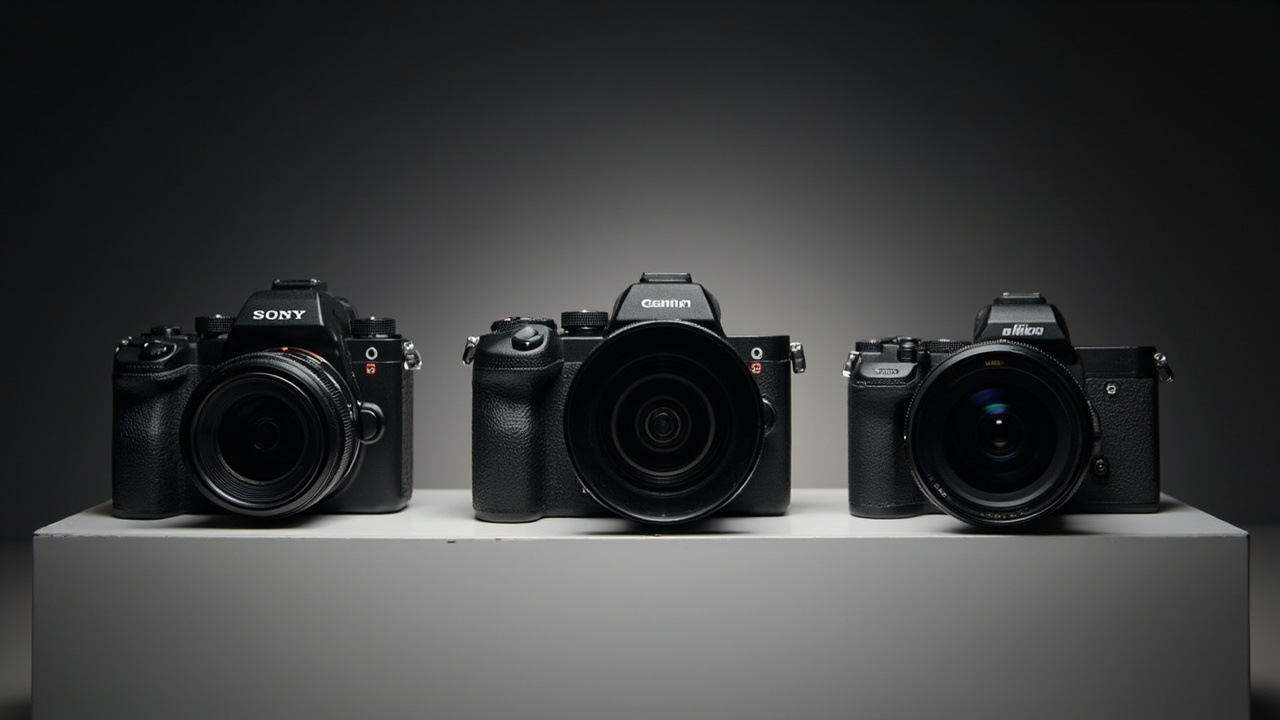
Two flagship mirrorless cameras arrived within 10 days of each other in late 2024 — and they could not be more different despite targeting the same professional buyer. The Sony A1 II ($6,499.99, available December 2024) and the Canon EOS R1 ($6,299.00, available November 2024) are both full-frame stacked-sensor monsters designed for the most demanding shooting conditions. Both shoot fast, both shoot video, both have AI-driven autofocus, and both cost roughly the price of a mid-range used car.
But this comparison is not about spec sheet superiority. It is about value — which camera saves you more money over a realistic 5-year ownership cycle, and which one is the better tool for the work you actually do.
The $200 MSRP gap between them is almost irrelevant. What matters is the system cost: the lenses you will buy, the cards that fit each body, the batteries you will cycle, and the weight you will carry. Those are the numbers that determine whether you walk away with $200 saved or $2,000 deeper in the hole.

The Verdict First
- Pick the Sony A1 II ($6,499.99) if you need 50.1MP resolution for commercial print, landscape, or detailed wildlife work, prefer the smaller and lighter body, want the deepest buffer in the class (400 JPEG / 240 compressed RAW at 30fps), or already own Sony E-mount lenses and want seamless system continuity.
- Pick the Canon EOS R1 ($6,299.00) if you shoot action-first (40fps vs 30fps), need 6K RAW internal video without cropping, want the longer battery life in the class, prefer the fully-articulating LCD for vlogging, or are coming from Canon DSLR and want the most familiar ergonomic transition.
Cost score: 76/100. Neither camera is a “value” pick — they are both $6,000+ professional tools. The Canon EOS R1 has a slight edge at the body level ($200 savings), but the Sony A1 II justifies its premium with double the resolution and a lighter body. The real savings depend entirely on which lenses you need.
Key Comparison Points
Price vs Real Cost Per Use
At body-only MSRP, the gap is only $200.99 — essentially nothing at this price tier. But the real cost of ownership spreads across the system.
| Spec | Sony α1 II | Canon EOS R1 |
|---|---|---|
| MSRP (body) | $6,499.99 (Nov 2024) | $6,299.00 (Nov 2024) |
| Sensor | 50.1 MP Exmor RS stacked BSI CMOS | 24.2 MP full-frame stacked BSI CMOS |
| Burst (electronic shutter) | 30 fps, 400 JPEG / 240 compressed RAW buffer | 40 fps, deep buffer |
| Max video | 8K 30p, 4K 120p (1.1x crop) | 6K RAW 60p, 4K 60p, 4K 120p |
| IBIS (CIPA claim) | Up to 8.5 stops | Not officially published in same standard |
| EVF | 0.64” 9.44M-dot OLED, 240 Hz | 0.64” 9.44M-dot OLED |
| Card slots | 1x CFexpress Type A + 1x SD UHS-II | 2x CFexpress Type B |
| Battery (CIPA) | ~400-500 shots | ~1,200 shots |
| Body weight (with battery & card) | 743 g | 1,115 g |
| USB charging | USB-C PD | USB-C PD |
Sources: Sony.com (α1 II spec page), Canon USA (EOS R1 spec page), Wikipedia (α1 II, EOS R1), November-December 2024 product launches.
The resolution gap is the headline. The Sony’s 50.1MP sensor produces files that can be cropped heavily and still deliver print-quality images. The Canon’s 24.2MP sensor is optimized for speed and low-light performance, not resolution. If you shoot wildlife, landscapes, or commercial print, the Sony wins on resolution. If you shoot sports, journalism, or events where you need to blast 40fps and sort later, the Canon wins on speed.
Buffer and card cost. The Sony A1 II’s CFexpress Type A cards are physically smaller but more expensive per gigabyte than Canon R1’s CFexpress Type B cards. A 256GB Sony CEA-G Type A card runs about $230; an equivalent 256GB Canon CFE-B card runs about $170. Over two cards, that is a $120 difference in Canon’s favor.
Battery life is the Canon R1’s clearest win. The LP-E19 battery delivers approximately 1,200 shots per charge (CIPA), while the Sony NP-FZ100 delivers approximately 400-500 shots. For a full day of sports or event shooting, the Canon might need one battery change versus the Sony needing two to three. At $80-100 per spare battery, this adds up over 5 years.
Body weight matters for handheld shooters. The Sony at 743g is the lighter body by 372g — nearly 40% lighter than the Canon. For a body you will carry all day, that is a meaningful difference.
Build Quality and Durability
Both are magnesium-alloy professional bodies with full weather sealing. Both are built to work in rain, dust, and temperature extremes.
- Sony A1 II: 743g with battery and card — the lighter and more compact of the two. The grip is deep and the balance works well with heavy telephotos. The 4-axis tilting LCD is the most versatile for shooting at unusual angles (it tilts up, down, and out to the side). No active cooling vent means the body is sealed without any intake openings — the Sony has fewer ingress points than the Canon.
- Canon EOS R1: 1,115g with battery and card — the heavier body. The fully-articulating vari-angle LCD is the most flexible for vlogging and self-recording, but the articulating mechanism adds a small seam that could collect dust. The active cooling vent on the back is a meaningful advantage for long-form 6K RAW recording but adds an ingress point.
Real-world durability: Both are too new for long-term reliability data, but both are built to the same professional standards as their predecessors. The original Sony A1 (2019) earned a reputation for reliability in professional sports and wildlife use. The Canon EOS-1D X Mark III (predecessor to the R1) was similarly reliable in professional hands.
The one practical concern: the Canon R1’s active cooling vent has been noted in early user forums as a potential long-term dust and moisture ingress point. The Sony A1 II is passively cooled with no vent.
Feature Breakdown
The two cameras take very different approaches to the same goal.
- Autofocus: Both have AI-driven subject detection, but the implementations differ. Sony’s Real-Time Recognition AF has been refined across five generations of cameras. Canon’s Dual-Pixel Intelligent AF with DIGIC Accelerator is newer but has shown exceptional results in early reviews for eye, body, and animal detection. In head-to-head comparisons (DPReview, PetaPixel, November 2024-January 2025), both systems perform at a similarly high level — the difference is marginal in real-world use.
- Video: The Canon R1’s 6K RAW internal recording at 60p is a meaningful advantage for serious videographers. The Sony A1 II’s 8K at 30p is impressive but capped at 30fps. For sports videography, the Canon offers higher frame rates in 4K (60p vs 30p) without cropping. The Sony has a 1.1x crop in 4K 120p; the Canon does not have an equivalent crop.
- Resolution vs Speed: The Sony’s 50.1MP sensor is a significant resolution advantage for cropped shooting, commercial print, and detail work. The Canon’s 24.2MP sensor is a speed advantage — smaller files mean faster write times, less storage, and more manageable post-processing.
- Ecosystem: If you already own Sony E-mount lenses, the A1 II is a no-brainer upgrade. If you own Canon RF lenses, the R1 is the clear path forward. Switching systems at this level means selling existing lenses and rebuying — a $3,000-$10,000 proposition that wipes out any body-level savings.
Pros and Cons
Sony A1 II
Pros:
- Highest resolution in the class at 50.1MP — allows heavy cropping without losing print quality
- 30fps with an enormous buffer (400 JPEG / 240 compressed RAW)
- 8K 30p video for cinema-quality stills extraction
- Lighter body (743g) — better for handheld and travel
- No active cooling vent — cleaner weather sealing
- Dual CFexpress Type A + SD slot — more flexible media choice
- Smaller form factor — fits better in smaller bags
Cons:
- Most expensive body in the comparison ($200 more than Canon R1)
- 4K 120p has a 1.1x crop
- No 6K RAW internal recording (8K only, no RAW)
- Lower battery life (~400-500 shots per charge)
- CFexpress Type A cards more expensive per gigabyte
- AI subject detection is excellent but not fundamentally different from predecessors
Canon EOS R1
Pros:
- Faster electronic shutter burst (40fps vs 30fps) — best-in-class speed
- 6K RAW internal recording at 60p — superior video feature set
- Significantly longer battery life (~1,200 shots per charge)
- No crop on 4K 120p video
- Lower card cost (CFexpress Type B is cheaper per gigabyte)
- Fully-articulating LCD — better for vlogging and self-recording
- Lower body price ($6,299 vs $6,499.99)
Cons:
- Lower resolution sensor (24.2MP vs 50.1MP) — limits print size and cropping
- Heavier body (1,115g) — more fatiguing for handheld all-day use
- Active cooling vent — potential long-term dust/moisture ingress concern
- No SD slot — requires CFexpress Type B cards only
- Larger body — less pocketable, harder to travel with
- Newer system (first flagship R-system body) — less lens ecosystem maturity vs Sony E-mount
Best For / Skip If
Buy the Sony A1 II if:
- You shoot landscapes, wildlife, commercial print, or any work where resolution matters
- You need to crop heavily and still maintain image quality
- You already own Sony E-mount lenses and want system continuity
- You prioritize a lighter body for travel, hiking, or handheld shooting
- You need 8K video for occasional cinema work (4K is more practical for most)
Skip the Sony A1 II if:
- You shoot primarily sports, action, or journalism where speed matters more than resolution
- You need the longest possible battery life for all-day shooting without changing batteries
- You are on a strict budget and the $200 difference matters
- You prefer a fully-articulating screen for vlogging
Buy the Canon EOS R1 if:
- You are a sports, action, or event photographer who needs the fastest burst in the class
- You need 6K RAW internal video without the complexity of an external recorder
- Battery life is critical — you do not want to carry multiple spare batteries
- You are already invested in the Canon RF ecosystem and want the flagship
- You prefer the more familiar Canon ergonomic layout coming from DSLR
Skip the Canon EOS R1 if:
- You need the highest possible resolution for print or heavy cropping
- You travel light and need the lightest possible body
- You prefer the Sony E-mount lens ecosystem
- You need the most video resolution (8K vs 6K RAW)
Bottom Line
The Sony A1 II vs Canon EOS R1 is not really a comparison about which camera is better — it is a comparison about which camera system fits the work you actually do. The Sony wins on resolution (50.1MP vs 24.2MP) and body weight (743g vs 1,115g). The Canon wins on burst speed (40fps vs 30fps), battery life (~1,200 vs ~500 shots), and video feature set (6K RAW at 60p).
The $200 body price difference is essentially irrelevant at this tier. What matters is the system: the lenses you will buy, the cards you will use, and the batteries you will carry. If you are already in one ecosystem, switching costs thousands of dollars in lenses alone — and no camera body saves you that much.
Buy smart. Get more value. — Choose the camera that matches your actual shooting needs, not the one with the better spec sheet.