Introduction
Spending $50-100/month on a gym membership you use twice a week hurts. So does a $3,000+ piece of fitness equipment collecting dust in the corner after three months.
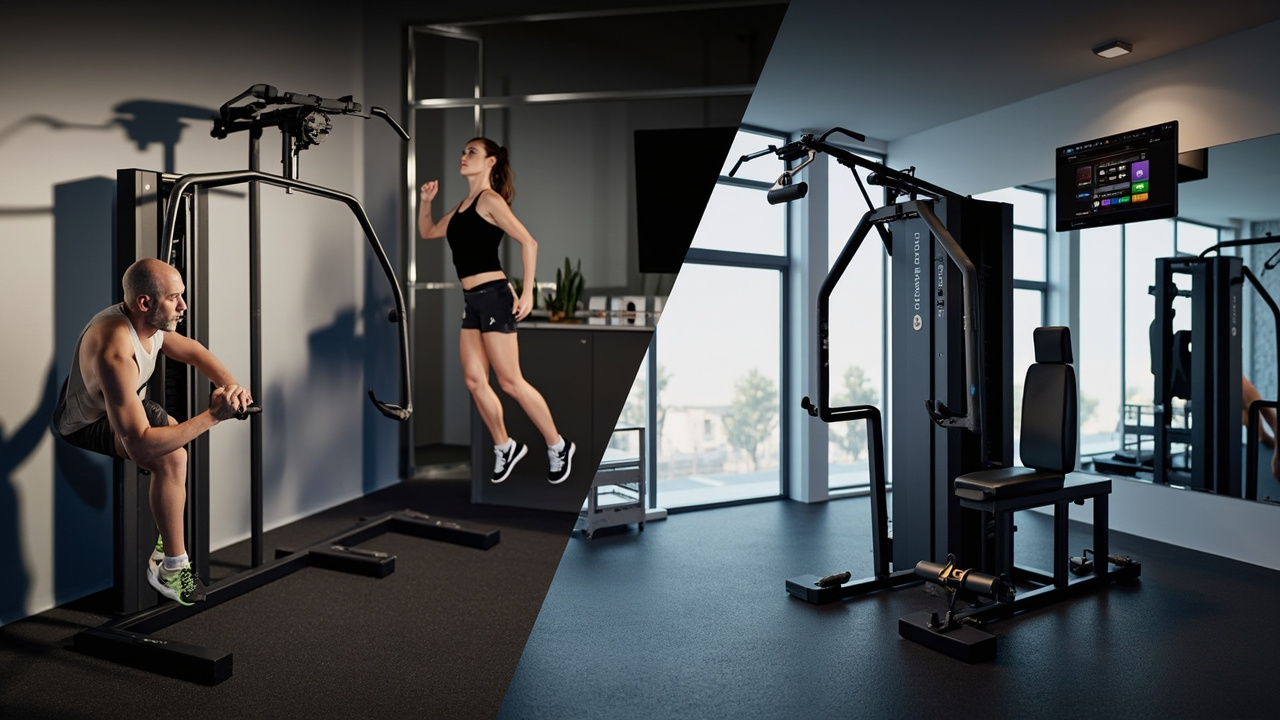
The smart home gym category promised to fix that: a wall-mounted or freestanding rig that brings a personal trainer, weights, and form feedback into your living room. In 2026, two names dominate the conversation: Tonal 2 and Tempo Studio.
- Tonal 2: $4,495 for the machine, plus $59/month for the membership. Wall-mounted, all-digital, up to 250 lbs of resistance per arm, 24” screen.
- Tempo Studio: $2,495 for the base, $39/month for the membership. Freestanding, free-weights included (barbell, dumbbells, weight plates), 3D motion sensors.
Both products are above USD 500, both are designed to last 5-10 years, and both lock you into a subscription. The question isn’t “which is better in a vacuum” — it’s which one will you actually still use in year three?
That’s what this comparison is built around: cost-per-use, real-world versatility, durability, and the subscription math that most reviews skip.
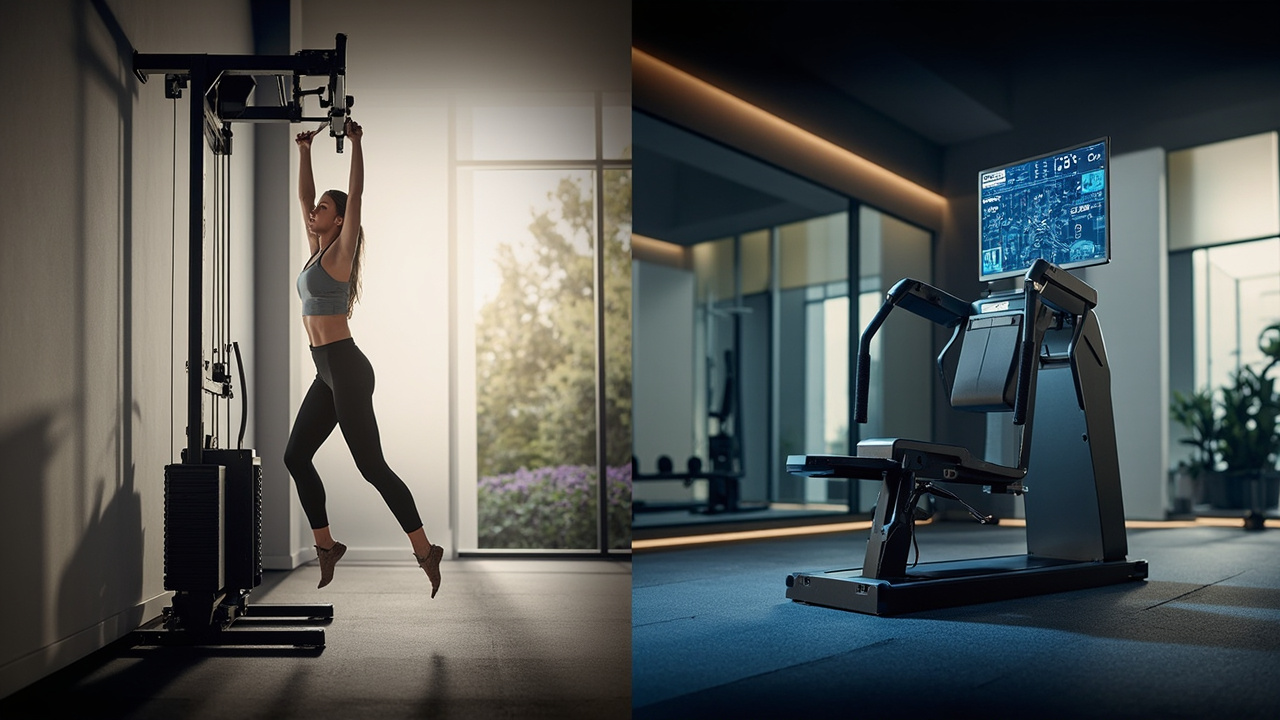
The Verdict First
For most buyers, Tempo Studio offers better long-term value. At $2,000 less upfront and $20/month cheaper, it covers the same training fundamentals, includes real free weights, and doesn’t lock you into a proprietary resistance system.
Pick Tonal 2 if: You have a small space, want AI-driven form feedback on every rep, and don’t care about heavy barbell work. The digital weight system is genuinely unique.
Pick Tempo Studio if: You want the most versatile training, plan to share the unit with a partner or family, and prefer real free weights to electromagnetic resistance.
Cost-per-use over 5 years (assuming 4 workouts/week):
| Scenario | Tonal 2 | Tempo Studio |
|---|---|---|
| Hardware | $4,495 | $2,495 |
| Membership (5 yrs) | $3,540 ($59 × 60) | $2,340 ($39 × 60) |
| 5-year total | $8,035 | $4,835 |
| Total workouts | ~1,040 | ~1,040 |
| Cost per workout | $7.73 | $4.65 |
That’s a $3,200 difference over five years — and it’s a real gap, not a margin trick. Tempo wins on cost-per-use even if you assume equal usage.
Key Comparison Points
Price vs Real Cost Per Use
Tonal 2 and Tempo Studio both sit in the premium tier, but the gap is wider than it looks on the homepage.
- Tonal 2: $4,495 MSRP, $59/month membership. Installation adds $249-449 depending on wall type. Total first-year cost: ~$5,500.
- Tempo Studio: $2,495 MSRP for the base model (with barbell, dumbbells, plates, recovery roller). $39/month membership. The Plus and Pro tiers go up to $3,495 and add more weight and accessories. No installation fee — it ships on a pallet and you set it up in a claimed 30 minutes.
Beyond the hardware, the membership math is where Tonal bleeds value. At $59/month, Tonal charges 51% more for the same “AI coach, on-demand classes, progress tracking” value proposition Tempo offers at $39/month. Over five years, that’s $1,200 in subscription alone.
Both companies have raised prices in the past. Tonal’s membership went from $49 to $59 in 2024. Tempo has held $39 since launch. Neither is a “set and forget” number, but Tempo’s track record is friendlier to budget-conscious buyers.
The hidden cost of Tonal: if you cancel the membership, the machine still works as a static weight display but you lose all the AI features, on-demand classes, and progress tracking. Tempo also locks content behind the membership, but its free-weight design still works as a normal barbell + dumbbell setup if you cancel — a meaningful escape hatch.
Build Quality and Durability
Both units are built to last a decade, but they take very different mechanical approaches.
- Tonal 2: Electromagnetic resistance, two cable arms, 24” HD touchscreen, total weight ~120 lbs. Wall-mounted (requires studs or reinforcement). The 2022 original Tonal drew complaints about arm motor failures after 2-3 years. Tonal 2 (April 2025) re-engineered the arms with a redesigned motor; early reliability data looks better, but it’s only ~12 months old.
- Tempo Studio: Steel frame, 32” reflective display (Pro), 3D time-of-flight sensor array, 130 lbs base + free weights (~50-200 lbs of plates depending on tier). Freestanding — no wall mount, no installer. The barbell is a standard 28mm Olympic bar; dumbbells are real steel hex dumbbells. If Tempo went out of business tomorrow, you would still own a usable home gym.
Warranty comparison:
- Tonal 2: 3-year limited warranty on parts, 5-year on the frame.
- Tempo Studio: 3-year limited warranty on hardware, 5-year on the frame.
Tied on warranty, but Tempo’s mechanical design is more repairable. Tonal’s cable motor is proprietary and must be serviced by Tonal-approved technicians.
The longevity question: Which will still work in 2031? Both companies have survived the 2022-2023 connected fitness cull (Peloton layoffs, Tonal’s own 35% staff cut, Mirror shutting down). Tempo is profitable as of 2024 reporting. Tonal remains venture-backed. For a $3,000+ purchase, company stability matters as much as the product.
Feature Breakdown
This is where the two products diverge philosophically.
| Feature | Tonal 2 | Tempo Studio |
|---|---|---|
| Resistance type | Digital electromagnetic, 1-250 lbs per arm | Free weights (barbell + dumbbells, up to ~135 lbs) |
| Form feedback | AI camera + force sensors, real-time coaching cues | 3D motion sensor, rep count + tempo tracking |
| Display | 24” built-in touchscreen | 32” reflective mirror display (Pro) |
| Workout types | Strength, drop sets, eccentric mode, chains, Pilates, yoga, mobility | Strength, HIIT, boxing, mobility, yoga, recovery |
| Live classes | Yes, daily | Yes, daily |
| Multi-user profiles | Unlimited household profiles | Unlimited household profiles |
| Onboard classes | 1,000+ | 1,000+ |
| Space required | Wall + ~7’ x 7’ workout area | ~6’ x 6’ footprint, freestanding |
| No subscription mode | Disabled (machine still turns on) | Free weights work standalone |
The single biggest differentiator is digital resistance vs free weights.
- Tonal’s digital resistance enables features no free-weight system can match: auto-adjusting weight mid-set (drop sets), eccentric overload, chains mode. These are real training tools, not gimmicks. Bodybuilders and physical therapists rate them highly.
- Tempo’s free weights are limited by gravity and your floor space, but they train stabilizer muscles, support Olympic lifts, and feel familiar to anyone who has been in a gym. They also don’t need electricity to work.
For accessory diversity, Tempo wins: it includes a barbell, dumbbells, plates, a weight bench (sold separately at $395), and a recovery roller. Tonal’s accessory ecosystem is smaller and only Tonal-branded (~$80-200 per handle, bench, etc.).
Cost Over Time (Subscription Math)
The two memberships aren’t equivalent in real value:
- Tonal membership ($59/month): Live and on-demand classes, AI form feedback, Smart View video review, multiple coach programs. Required for almost all functionality.
- Tempo membership ($39/month): Live and on-demand classes, 3D rep tracking, leaderboard, programs. Required for the class experience, but the mirror works as a display for any streaming app even without it.
A useful comparison: a personal trainer costs $50-100/session. A ClassPass averages $100-200/month. Both Tonal and Tempo undercut those by a wide margin, but Tempo is the only one that costs less than a mid-tier gym membership in many cities.
Pros and Cons
Tonal 2 — Pros
- Compact, wall-mounted design — fits a small apartment or garage corner. No floor footprint beyond a yoga mat.
- AI form feedback is genuinely useful — real-time coaching cues on tempo, range of motion, and form are closer to a real trainer than any other home system.
- Digital resistance unlocks unique training modes — drop sets, eccentric overload, and chains mode are real strength tools, not novelty features.
- Multi-user profiles with auto-recognition — household members get personalized weight recommendations on their first rep.
- Clean, modern aesthetic — looks like a piece of furniture, not gym equipment.
Tonal 2 — Cons
- $4,495 is the highest entry price in the category — and the $59/month subscription stacks on top.
- No free-weight functionality — if Tonal goes under, you own a 24” screen on a wall.
- Subscription is required for nearly all features — without $59/month, the value drops sharply.
- Wall installation — needs a reinforced wall with studs. Renters may have trouble. Installation fee $249-449.
- Reliability concerns from first-gen Tonal — 2022-2023 arm motor failures were a known issue. Tonal 2 has re-engineered the arms, but long-term data is still pending.
Tempo Studio — Pros
- $2,000 less upfront than Tonal 2 — and includes real free weights (barbell, dumbbells, plates).
- Real free weights — train the way gyms train: squats, deadlifts, overhead press, Olympic lifts. No proprietary resistance.
- Survives a subscription cancellation — if Tempo shuts down, you still own a barbell + dumbbells + mirror.
- Freestanding, no install fee — ships in a box, sets up in 30 minutes (per company).
- 3D sensor tracks full-body movement — captures form from the side, not just a forward-facing camera.
- Larger display on the Pro model — 32” reflective mirror is great for yoga, mobility, and form checks.
Tempo Studio — Cons
- 3D form feedback is less granular than Tonal’s AI — Tempo counts reps and tracks tempo; it doesn’t cue you on mid-rep form corrections the way Tonal does.
- Free weights are limited to ~135 lbs total — serious powerlifters will outgrow the included plates quickly.
- Larger footprint — even though it doesn’t need a wall mount, the unit itself is bigger than Tonal.
- No digital resistance features — no auto-drop sets, no eccentric mode, no chains. You’re doing traditional sets.
- Slightly less polished app ecosystem — Tempo’s class library is large but its app reviews are a step behind Tonal’s.
Best For / Skip If
Tonal 2 is best for:
- People with limited floor space and reinforced walls
- Lifting enthusiasts who value AI form feedback over free-weight versatility
- Households where multiple members want personalized coaching cues
- Users upgrading from dumbbells who want the smartest “next step” home gym
Skip Tonal 2 if:
- You’re a powerlifter, CrossFitter, or Olympic lifter — Tonal’s 250 lb max and cable-based design will feel limiting
- You’re a renter without permission to wall-mount
- You don’t want a $59/month subscription ever
- You’d be uncomfortable owning a $4,500 product from a venture-funded company
Tempo Studio is best for:
- Buyers who want the most versatile home gym for under $3,000
- People who already do barbell work at a gym and want the same feel at home
- Renters, since the unit is freestanding and moves with you
- Households where one partner is a beginner and another is advanced (real weights scale)
- Anyone who values the “company could disappear and I still have a gym” peace of mind
Skip Tempo Studio if:
- You only want to do bodyweight, yoga, and light dumbbell work — the system is overkill
- You want AI-driven form coaching cues on every rep
- You have a strict space constraint and the freestanding unit won’t fit
- You need to lift more than 135 lbs in total free-weight loads
Bottom Line
Both products are good at what they do, and either is a better long-term bet than a 5-year gym membership at $80/month ($4,800+). But “good” isn’t the same as “good value.”
The 5-year cost of Tonal 2 is $8,035. The 5-year cost of Tempo Studio is $4,835. That’s a $3,200 gap for training outcomes that are 90% equivalent for anyone who isn’t a competitive powerlifter or a strength sport athlete.
The decision tree is short:
- Want real free weights, less subscription lock-in, and $2,000 savings? → Tempo Studio.
- Have wall space, a bigger budget, and care about AI form feedback on every rep? → Tonal 2.
- Want both? → Buy a $500 barbell + adjustable dumbbells + a $20/month app and pocket the other $3,000.
At BuyCospa, we don’t pick the “premium” option for the sake of it. We pick the one that delivers more value per dollar over years of real use. For the smart home gym category in 2026, that’s Tempo Studio for most buyers — with a clear exception for the AI-training purist who already knows they want Tonal.
Buy smart. Get more value. Sometimes the smarter buy is the cheaper one.