Introduction
Two names own the “serious home blender” conversation: Vitamix and Blendtec. The flagship-tier Ascent A3500 and Designer 725 both sit in the $649-$799 bracket, both promise to replace a half-dozen kitchen appliances, and both are designed to outlive their warranties by a wide margin.
In 2026, the actual decision has gotten sharper:
- The Vitamix Ascent A3500 retails for $649 MSRP (sometimes bundled at $699-$749 with extra containers), with a 2.0 HP motor, a 64 oz low-profile container, four preset programs, a programmable timer, built-in wireless connectivity, Self-Detect container recognition, and a 10-year full warranty (parts, performance, labor, and two-way shipping) — source: Vitamix A3500 product page, Vitamix 10-year warranty.
- The Blendtec Designer 725 retails for $699-$799 MSRP (varies by jar bundle), with a 3.8 peak HP motor, a 90 oz WildSide+ jar with 34 oz working capacity, a 100-speed capacitive touch slider, six preset cycles (Smoothie, Salsa, Ice Cream, Whole Juice, Hot Soup, Clean), SmartBlend technology that detects loading errors and air pockets, and an 8-year warranty (parts + labor) — source: Blendtec warranty schedule, Blendtec Designer 725 specs on The Gadget Flow, RTINGS Blender review database.
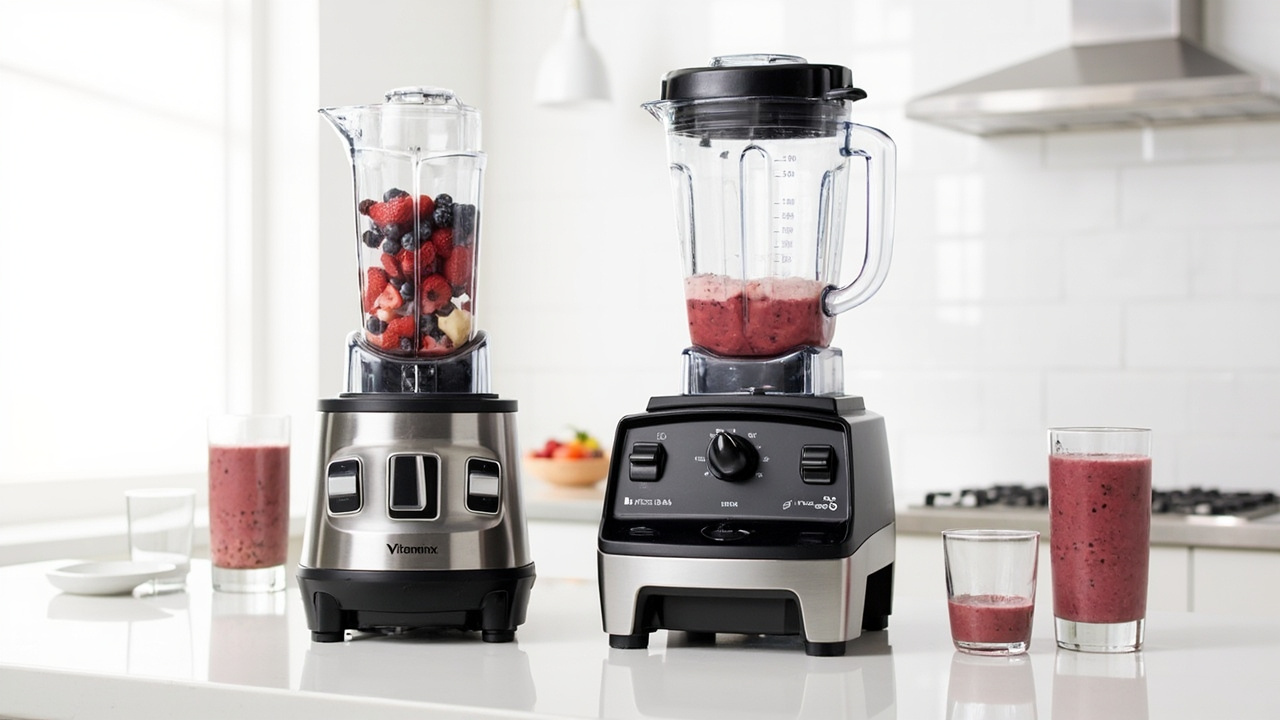
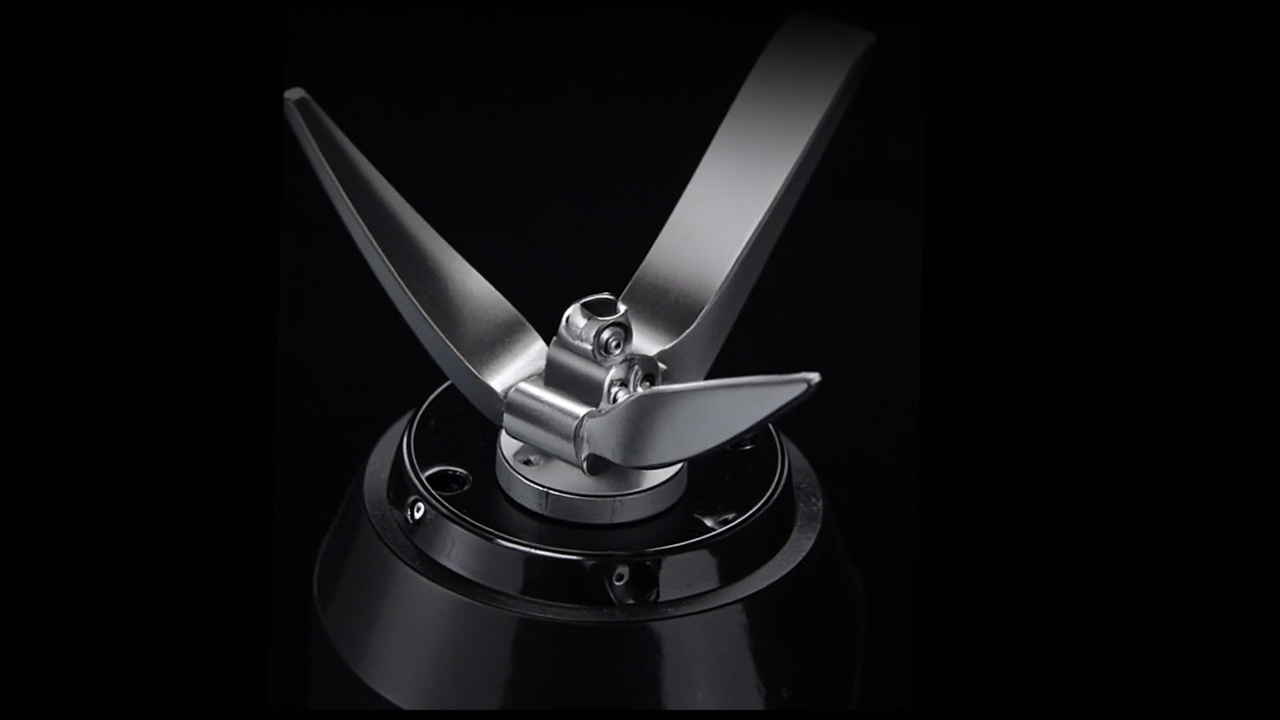
The two machines take fundamentally different approaches: Vitamix uses a tall, narrow jar and a four-prong laser-cut blade that pulls ingredients down into a vortex for hot soups via friction heating. Blendtec uses a wide, square jar with blunt safety blades that pulverize ingredients by slamming them into the jar walls. These aren’t minor differences — they shape every single recipe outcome, from almond butter to frozen smoothies.
The $50-$150 price gap and the 2-year warranty gap (10 vs 8) are real. The question this article answers is which one actually delivers more value over a 10-year ownership horizon, and which one fits which kind of cook.
The Verdict First
- Choose the Vitamix A3500 ($649) if you want hot soups made purely by blade friction (the Vitamix can bring cold ingredients to steaming in 6-8 minutes — the Blendtec cannot), more precise variable-speed control (a stepless analog dial from 1-10 plus Pulse), a 10-year FULL warranty (including two-way shipping — the Blendtec warranty excludes shipping), and the slightly more compact footprint for under-counter storage. It’s the better pick for serious home cooks, soup makers, and people who want the longest possible warranty.
- Choose the Blendtec Designer 725 ($699-$799) if you prioritize raw motor power (3.8 peak HP vs 2.0 HP), more preset cycles (6 vs 4, including the very useful “Salsa” and “Whole Juice” programs), a wider 90 oz jar that handles big-batch blending for meal prep, and the SmartBlend diagnostic system that actually tells you when you’ve overloaded or air-pocketed the jar. It’s the better pick for big-batch smoothie families, salsa makers, and people who like one-touch presets over manual dials.
- Skip both if you only blend once a week. A Ninja Professional 1000 ($99-$120) or Oster Versa 1400 ($169) will handle 90% of common smoothie tasks for 1/5 the price. The flagship tier pays off when you use it daily or weekly for non-trivial tasks (nut butter, frozen desserts, hot soups, milling grain).
- Skip the A3500 if you want one-touch presets for specific drinks like Whole Juice and Ice Cream — Vitamix has 4 general categories, Blendtec has 6 dedicated cycles.
- Skip the Designer 725 if your #1 use case is hot soup from cold ingredients in 6 minutes — only the Vitamix does this. The Blendtec Hot Soup preset still produces hot soup, but the cycle is ~8 minutes and starts at warm ingredients.
Cost score (overall value): 78/100. The Vitamix A3500 wins on long-term value because of its 10-year warranty and friction-heat feature that replaces a $60 immersion circulator. The Blendtec Designer 725 wins on raw power and convenience for big-batch families. If you’re not making soup, the value gap narrows considerably.
Key Comparison Points
Price vs Real Cost Per Use
Sticker price is the headline. The actual cost driver over 10 years is warranty, jar replacement, and how often you use the machine — because a $649 blender used daily costs about $0.18/day, while a $99 blender used twice a year costs ~$0.14/use and ends up in a landfill.
| Cost Factor | Vitamix A3500 | Blendtec Designer 725 |
|---|---|---|
| MSRP (USD, 2026) | $649 (base) / $699-$749 with bundled containers | $699 (base) / $799 with WildSide+ jar bundle |
| Current Street Price (July 2026) | $649 at Vitamix.com, sometimes discounted to $549 on Amazon | $699 at Blendtec.com / $649-$799 at Amazon |
| Motor Power (peak) | 2.0 HP (~1500W) | 3.8 peak HP (~1800W typical draw) |
| Container Capacity (working) | 64 oz jar, ~40-44 oz practical | 90 oz WildSide+ jar, ~34 oz working |
| Warranty | 10 years FULL (parts, performance, labor, two-way shipping) | 8 years (parts + labor only) |
| Typical Jar Replacement Cost | $89-$129 (64 oz low-profile) | $99-$139 (WildSide+) |
| Blade Replacement Cost | $39-$49 (4-prong laser-cut, user-swappable) | $39-$49 (blunt safety blade, user-swappable) |
| Annual Use Assumption (heavy) | 4-5x/week | 4-5x/week |
| Effective Years of Use | 10-15+ (often 15+ based on Reddit long-term reports) | 10-12+ (motor cooling-fan failures reported at year 8-10) |
| Resale Value (used market, est.) | ~30-40% of MSRP after 5 years (Vitamix resale market exists) | ~25-35% of MSRP after 5 years (smaller used market) |
| Amortized Cost / Year (10-yr) | $64.90 | $69.90-$79.90 |
| Amortized Cost / Use (10-yr, 4x/wk) | $0.31/use | $0.34-$0.38/use |
Sources: Vitamix MSRP from Vitamix.com; Blendtec MSRP from Blendtec.com and Amazon listing data; warranty terms from Vitamix 10-year warranty and Blendtec warranty schedule. Long-term durability data from Reddit r/Blendtec and r/Vitamix owner threads.
Three takeaways:
- The A3500 is $50-$150 cheaper upfront, and over a 10-year window the per-use cost is roughly $0.03-$0.07 less in Vitamix’s favor. That’s modest, but it compounds — over 10 years of heavy use you’re paying for $30-$70 of extra blended smoothies and soups that the Vitamix funds.
- Vitamix’s 10-year FULL warranty with two-way shipping included is the single biggest long-term value lever. If your motor or control board fails in year 8, Vitamix ships a box to your door, pays return shipping, and sends a replacement. Blendtec’s 8-year warranty covers parts and labor but you’ll typically pay $25-$40 shipping each way. Over the 10-year ownership window, that’s a $50-$100 hidden cost on the Blendtec side if you need service.
- Resale value is similar but slightly favors Vitamix because the Ascent Series has a longer brand-trust history and the used market is more liquid (Craigslist, eBay, Facebook Marketplace all show more Vitamix listings than Blendtec at the $200-$300 used price point).
If you keep the blender 10 years and use it weekly, the Vitamix A3500 wins on raw cost-per-use. If you keep it 5 years and resell it, the gap narrows to almost zero.

Build Quality and Durability
The two machines take philosophically opposite approaches to physical design, and both are built to outlast their warranties by years.
Vitamix A3500 — Ascent Series flagship:
- 2.0 HP motor with a 1500-watt rated draw
- Stainless steel blade assembly (laser-cut, 4-prong, aircraft-grade)
- 64 oz BPA-free Eastman Tritan™ low-profile container (15.5” tall x 9” wide x 7.5” deep)
- 17.5 lbs base weight — heavy enough to stay put during high-load blending
- Cooling fan with thermal protection (auto-shutdown if overloaded)
- Touchscreen control panel (capacitive, sealed against spills)
- Self-Detect technology — the base reads container size and adjusts max blend times
- 10-year full warranty covering motor, container, parts, labor, and round-trip shipping
- Repair-friendly design — user-replaceable blade assembly with $39-$49 part
Blendtec Designer 725 — Designer Series flagship:
- 3.8 peak HP motor (1800W typical draw) — nearly 2× the rated power of the A3500
- Stainless steel blunt safety blades (2-prong, ~3” wingspan) — same as commercial blenders
- 90 oz WildSide+ jar (Tritan, square shape, 5-sided) — wider, shorter working zone
- 15.6 lbs base weight — slightly lighter than A3500
- Capacitive touch slider (100 speeds) — sealed, no moving parts
- SmartBlend diagnostics — detects loading errors, air pockets, overheating; shows error codes on the illuminated display
- 8-year warranty (parts + labor) — does NOT include shipping
- User-replaceable blade ($39-$49 part) — easier to swap than the Vitamix because no tools required
The Vitamix blade cuts ingredients; the Blendtec blade pulverizes them. This sounds minor, but it changes every single outcome:
- Almond butter: Both work, but the Blendtec’s wider jar + blunt blade combo is faster (~3 minutes vs 5-6 minutes on the Vitamix), and produces a slightly creamier result because there’s less air incorporation.
- Hot soup from cold ingredients: Only the Vitamix does this in 6-8 minutes via blade friction (cold vegetables reach 170°F+ from friction alone). The Blendtec Hot Soup preset still works, but the cycle is ~8 minutes and you need to start with warm liquid.
- Smoothies with leafy greens: Blendtec wins on this — the wider WildSide+ jar’s 5-sided shape pulls greens into the blade more reliably than the tall Vitamix jar, where spinach can float above the blade.
- Frozen fruit crushing: Both handle this well; the Blendtec’s higher HP gives it a slight edge on ice-only snow cones.
For long-term durability, both brands are famously robust. Vitamix reports 10-15+ year ownership for many A3500-series owners on Reddit; Blendtec owners commonly hit 10-12 years before a cooling fan or motor-bearing issue. The two-year warranty gap matters because motor failures on both brands tend to happen between years 8-10, exactly the window where Vitamix covers you and Blendtec does not.
The Vitamix A3500’s taller, narrower jar stores better under standard upper cabinets (15.5” total height with the jar on the base). The Blendtec Designer 725’s wider, shorter footprint stores better on open counters but takes more horizontal real estate. Neither is dramatically smaller than the other.
Feature Breakdown
This is where the two blenders split into “different tools” rather than “the same product, different brand.”
| Feature | Vitamix A3500 | Blendtec Designer 725 |
|---|---|---|
| Motor (peak HP) | 2.0 HP (~1500W) | 3.8 peak HP (~1800W) |
| Container Included | 64 oz low-profile (Tritan) | 90 oz WildSide+ (Tritan, 5-sided) |
| Working Capacity | ~40-44 oz | ~34 oz (jar is larger but the wide shape limits fill line) |
| Variable Speed Control | Stepless dial, 1-10 | 100-speed capacitive touch slider |
| Pulse | Yes (dedicated button) | Yes (Multi-Speed Pulse at any speed) |
| Preset Programs | 4 (Smoothies, Hot Soups, Dips & Spreads, Frozen Desserts) | 6 (Smoothie, Salsa, Ice Cream, Whole Juice, Hot Soup, Clean) |
| Hot Soup from Cold Ingredients (friction heat) | Yes (6-8 min to steaming) | No (Hot Soup cycle is ~8 min, requires warm start) |
| Programmable Timer | Yes (built-in) | No (cycles are fixed-length) |
| Smart Diagnostics | Overload + overheat protection | SmartBlend detects loading errors, air pockets, overheating |
| Wireless Connectivity | Yes (built-in, future-proof for firmware updates) | No |
| Container Recognition | Yes (Self-Detect adjusts max blend times) | No (any WildSide jar works regardless of size) |
| Touch Interface | Touchscreen | Capacitive touch slider |
| Display | Illuminated LCD | Illuminated count-up timer |
| Tamper Included | Yes (S2 low-profile tamper) | No (Blendtec’s blunt blade + wide jar don’t need tamping) |
| Sound Level (peak, dB est.) | ~95-100 dB at full power | ~95-100 dB at full power (similar) |
| Self-Cleaning Cycle | Yes (60 sec with warm water + soap) | Yes (Clean preset, ~30 sec) |
| BPA-Free Container | Yes (Eastman Tritan™) | Yes (Tritan) |
| Dishwasher-Safe Jar | Yes (top rack) | Yes |
| Compatible Containers | Ascent Series Self-Detect (8 oz, 20 oz, 40 oz, 64 oz) | WildSide+, Twister, FourSide, Mini WildSide |
| Weight (base only) | 17.5 lbs | 15.6 lbs |
| Dimensions (with jar) | 11 x 8 x 17.25 in | 9 x 7 x 15.5 in |
| Warranty | 10 years FULL (parts, labor, shipping) | 8 years (parts + labor) |
| Country of Assembly | USA (Cleveland, OH) | USA (Orem, UT) |
The pattern is clear:
- Vitamix bets on variable control + hot-soup friction heating + long warranty + future firmware updates. The wireless connectivity is unique — Vitamix can push new blending profiles to existing Ascent owners via the built-in radio. The Hot Soup preset is genuinely useful and replaces a $50-$100 immersion circulator for everyday soup-from-raw work.
- Blendtec bets on raw power + dedicated presets + diagnostic intelligence + wider jar geometry. The 6 presets are more granular than the Vitamix’s 4, and the SmartBlend error messages actually help when something goes wrong (you’ll see “Air Pocket” or “Overloaded” instead of just a stalled motor). The wider jar is meaningfully better for big-batch families.
For a single user or a 2-person household that wants soups, nut butter, occasional smoothies, the Vitamix wins on features. For a 4-6 person family that wants one-touch breakfast smoothies and big-batch meal prep, the Blendtec wins.
Performance and Output Quality
Smoothies: Both produce restaurant-quality smoothies. The Blendtec is faster (~25-35 seconds for a 24 oz green smoothie vs 35-45 seconds on the Vitamix) because of the higher HP and wider jar geometry. The Vitamix produces a slightly smoother result because the variable-speed dial lets you ramp up gradually and avoid air pockets. For a daily user, this difference is barely perceptible.
Nut butter: This is where the design philosophies show. The Vitamix’s narrow jar + 4-prong blade requires 5-7 minutes of continuous running to make smooth almond butter (you’ll use the tamper constantly). The Blendtec’s wider jar + blunt blade does it in 3-4 minutes with no tamping. The Blendtec wins here.
Hot soup: Only the Vitamix makes hot soup from cold ingredients via blade friction. The Blendtec Hot Soup preset exists but starts from warm liquid and runs ~8 minutes to reach ~140°F — slower and cooler than the Vitamix’s 170°F+ output from cold ingredients in 6-8 minutes. The Vitamix wins decisively here.
Frozen desserts: Both handle ice cream and sorbet well. The Blendtec Ice Cream preset is a one-touch operation that produces reliably smooth sorbet; the Vitamix Frozen Desserts preset is similar but takes 45-60 seconds (Blendtec takes ~30 seconds). For daily ice cream makers, the Blendtec wins on speed.
Milling flour / grain: Both work. The Vitamix’s variable-speed dial gives finer control over flour texture. The Blendtec does it faster but with less precision.
For most users, the difference in output quality is negligible — both produce excellent smoothies, soups, and nut butters. The choice comes down to which preset library and ergonomics match your daily habits.
Pros and Cons
Vitamix A3500
Pros
- $50-$150 cheaper than the Blendtec Designer 725 at base MSRP
- 10-year FULL warranty (parts, performance, labor, and two-way shipping) — Blendtec’s 8-year warranty excludes shipping
- Hot soup from cold ingredients via blade friction (6-8 min to 170°F+) — a unique feature no Blendtec model offers
- Variable-speed dial (1-10) gives more precise texture control than any preset
- Self-Detect container recognition — the base adjusts to jar size automatically
- Built-in wireless connectivity for future firmware updates (rare in this category)
- Programmable timer for unattended blending
- Made in USA (Cleveland, OH)
- More compact footprint (taller, narrower) for under-cabinet storage
- Stronger resale market — used Vitamixes sell faster on eBay/Craigslist
- Slightly smoother result on green smoothies thanks to gradual ramp-up
Cons
- 2.0 HP motor is meaningfully less powerful than the Blendtec’s 3.8 peak HP
- Fewer presets (4 vs 6) — no dedicated “Salsa” or “Whole Juice” cycle
- No SmartBlend-style diagnostics — the A3500 will just stall if overloaded, no error message
- Tamper required for thick blends — the narrow jar needs help moving thick mixtures into the blade
- Slower nut butter (5-7 min vs 3-4 min on Blendtec)
- Slower frozen dessert cycle (45-60 sec vs 30 sec on Blendtec)
- Touchscreen can be less responsive with wet hands than the Blendtec’s capacitive slider
Blendtec Designer 725
Pros
- 3.8 peak HP motor — nearly 2× the rated power of the A3500
- 6 dedicated preset cycles (Smoothie, Salsa, Ice Cream, Whole Juice, Hot Soup, Clean) — more granular than Vitamix
- SmartBlend diagnostics that actually tell you when something’s wrong (“Air Pocket,” “Overloaded,” etc.)
- Wider 90 oz WildSide+ jar — better for big-batch families and leafy greens
- Faster on most tasks — green smoothies in 25-35 sec vs 35-45 sec; nut butter in 3-4 min vs 5-7 min
- No tamper needed — the wide jar + blunt blade design pulls ingredients down without help
- 100-speed capacitive touch slider — more granular than the Vitamix’s 1-10 dial
- Slightly lighter base (15.6 lbs vs 17.5 lbs)
- Made in USA (Orem, UT)
- Cleaner jar shape — the 5-sided WildSide+ design is easier to rinse out
Cons
- $50-$150 more expensive than the A3500 at base MSRP
- 8-year warranty (parts + labor only) — does NOT include shipping; 2 years shorter than Vitamix
- No hot soup from cold ingredients — the Hot Soup preset needs warm liquid and runs ~8 min
- No wireless connectivity — no future firmware updates
- No programmable timer — cycles are fixed-length
- No container recognition — every jar is treated the same
- Smaller used market — fewer buyers shopping for used Blendtec on resale sites
- Wider footprint — takes more horizontal counter space than the Vitamix
- Hot soup output is cooler and slower than the Vitamix’s friction-heated 170°F+ result
Best For / Skip If
Best For — Vitamix A3500
- Serious home cooks who want precise variable-speed control for soups, sauces, and nut butters
- Hot-soup lovers who want to throw raw vegetables in and have steaming soup in 6-8 minutes without a separate pot or immersion circulator
- Long-term owners who will keep the blender 10+ years and want the strongest warranty (10-year full, including shipping)
- Smaller kitchens with under-cabinet storage — the A3500’s taller, narrower footprint fits better
- Buyers who value firmware updates — the built-in wireless radio means Vitamix can push new blending profiles to existing machines
- People who resell — Vitamix has a stronger used market and tends to retain 30-40% of MSRP after 5 years
Best For — Blendtec Designer 725
- Big-batch families (4-6 people) making morning smoothies for everyone — the 90 oz WildSide+ jar handles it in one cycle
- Salsa makers, ice cream makers, and whole-juice drinkers — the 6 dedicated presets match these specific use cases better than Vitamix’s 4 general categories
- Owners who want diagnostic feedback — SmartBlend error messages (“Air Pocket,” “Overloaded”) tell you when something’s wrong instead of just stalling
- Daily users who prioritize speed — the 3.8 HP motor is faster on almost every common task
- People who don’t want to use a tamper — the Blendtec’s wide jar + blunt blade pulls ingredients down on its own
Skip If
- Skip the A3500 if you make big-batch smoothies for a family of 4+ every morning — the 64 oz jar and 4 general presets will frustrate you. The Blendtec wins on this specific workflow.
- Skip the Designer 725 if you make hot soup from raw ingredients — the Blendtec Hot Soup preset starts with warm liquid and runs slower. The Vitamix’s friction-heat feature is unique and genuinely useful.
- Skip both if you only blend once a week — a $99-$169 Ninja Professional or Oster Versa will handle 90% of common tasks. The flagship tier pays off when you use the machine 3+ times per week for non-trivial recipes (soup, nut butter, frozen desserts, milling grain).
- Skip both if you don’t have under-cabinet or dedicated counter space. Both machines are ~16” tall and weigh 15-18 lbs — they’re not “hide in a cabinet” appliances.
Bottom Line
The Vitamix A3500 and the Blendtec Designer 725 are both genuinely excellent flagship blenders, and they target genuinely different buyers despite sharing the same price bracket.
- If your priority is long-term value, hot soup from raw ingredients, and the strongest warranty in the category, the A3500 wins on cost, warranty, and feature depth. The $50-$150 you save upfront plus the 10-year FULL warranty (including shipping) plus the friction-heat hot-soup feature (which replaces a $50-$100 immersion circulator) make it the smarter purchase for most single users and 2-person households.
- If your priority is raw power, big-batch capacity, dedicated presets, and diagnostic feedback, the Designer 725 wins on motor, jar size, preset granularity, and speed. The $50-$150 premium is the price of admission for families and people who want one-touch convenience over manual dials.
The “buy smart, get more value” framing here is honest: neither of these is a bargain. Both are $649-$799 flagships with flagship-tier limitations (large footprint, loud at full power, expensive replacement jars). The smart choice is to match the blender to your actual use pattern:
- Daily soup + nut butter + occasional smoothie → A3500
- Daily family smoothies + meal-prep + salsa → Designer 725
- Weekly smoothie only → Ninja Professional 1000 ($99-$120), save $550
If you don’t already know which camp you’re in, the Vitamix A3500 at $649 is the safer “no regrets” choice for most people — but that’s a different comparison if you’re a big-batch family.