Introduction
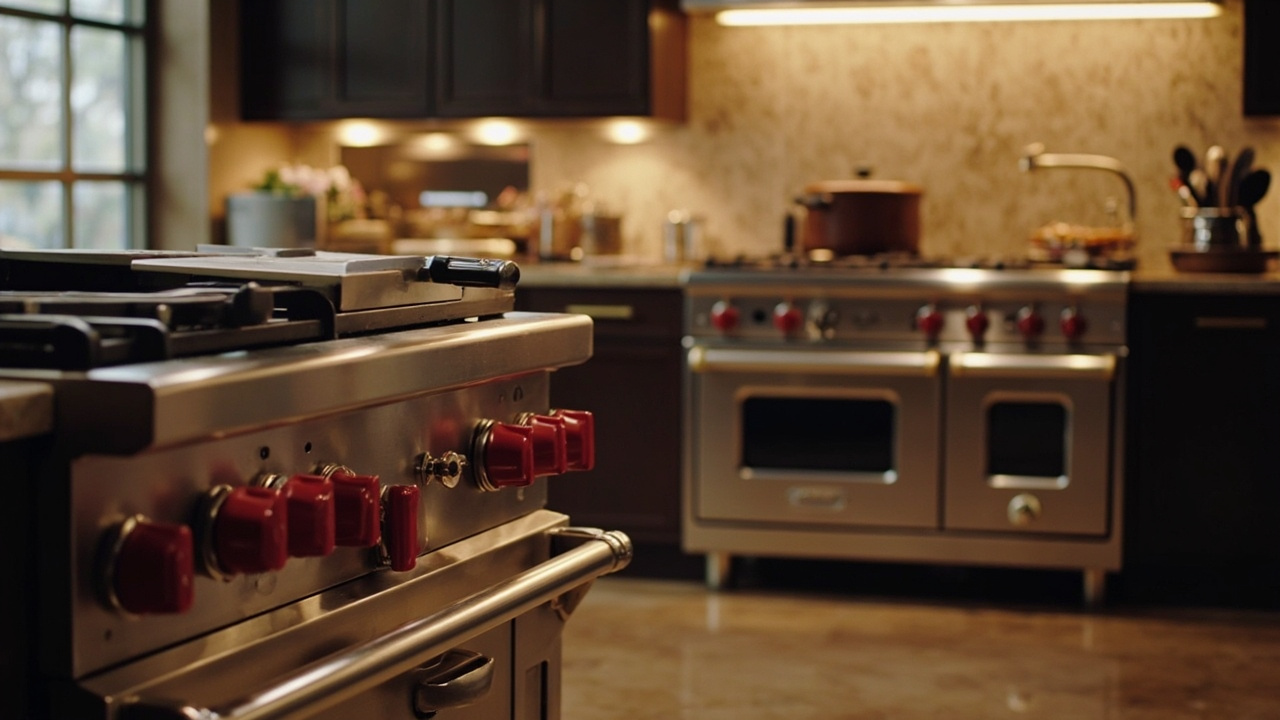
If you are shopping for a 48-inch dual fuel pro range in 2026, the conversation almost always collapses to two brands: Wolf (Sub-Zero Group) and Thermador (BSH/Bosch). Both are assembled in the USA. Both dominate the pro-style residential market. Both have decades of reputation. And both will cost you somewhere between $13,000 and $17,000 before installation and ventilation.
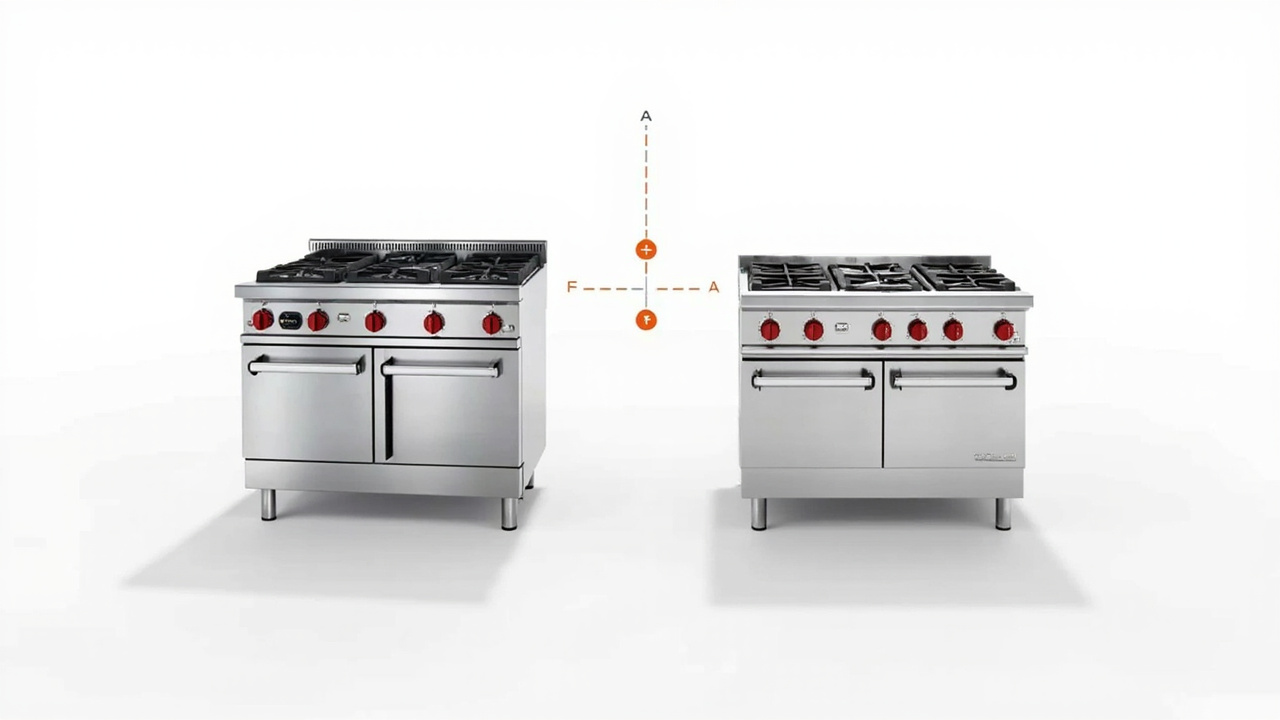
The Wolf DF48650 48-inch Dual Fuel Range (with infrared griddle, six dual-stacked sealed burners, double oven) carries an MSRP of $14,499 (Source: Designer Appliances, Sub-Zero Wolf product page). The Thermador Pro Harmony 48-inch Dual Fuel Range (PRD486WDHU, six Star burners plus a 12” electric grill, double oven, Home Connect Wi-Fi) carries an MSRP of $15,699 (Source: Thermador official product page).
That is a $1,200 sticker-price gap in 2026 — but the price is the least interesting part of this comparison. The real questions are:
- Which one actually cooks better for your style (high-heat searing vs gentle simmering and baking)?
- Which one lasts longer (Wolf has a 5-year warranty; Thermador has 2 years)?
- Which one has lower 20-year total cost of ownership when you factor in repairs, energy, and resale?
This article is written for the buyer who is not asking “which one is prettier?” but “which one gives me more cooking per dollar over the next 20 years?” — exactly the question BuyCospa is built to answer.

The Verdict First
- Choose the Wolf DF48650 ($14,499 MSRP) if you cook at high heat frequently — wok stir-fry, hard searing, large-pot boiling, or anything that benefits from a 20,000 BTU dual-stacked burner that drops to a 300 BTU whisper simmer on the same knob. Wolf also wins on 5-year warranty vs Thermador’s 2-year, factory-direct service network, and iconic commercial aesthetic. Over 20 years the Wolf’s stronger warranty + longer typical service life is worth roughly $1,200–$2,500 in expected repair cost for most owners.
- Choose the Thermador PRD486WDHU ($15,699 MSRP) if you want the extra-lowest simmer in residential gas (100 BTU / ExtraLow®), the easiest cleaning experience (dishwasher-safe individual grates), Home Connect Wi-Fi with the largest oven capacity in its class (8.2 cu ft), and access to package-deal discounts when bundling with a Thermador cooktop, hood, and dishwasher.
- Skip both if you only cook 3 nights a week — a $1,500 Bosch 800 Series gas range will deliver 80% of the cooking for 10% of the price.
This is the rare “no wrong answer” comparison at this tier — but the cost-per-use math clearly favors one of them depending on how you cook.
Key Comparison Points
Price vs Real Cost Per Use
A premium pro range is one of the few appliances where “sticker price” is genuinely the smallest line on the 20-year cost worksheet. Here is the honest breakdown.
| Cost Factor | Wolf DF48650 | Thermador PRD486WDHU |
|---|---|---|
| MSRP (USD, 2026) | $14,499 | $15,699 |
| Typical Street Price (2026) | $13,200–$14,499 | $13,900–$15,699 |
| Bundle / Package Discount Available? | Rare; Sub-Zero dealers less flexible | Common; 10–20% off when paired with Thermador hood, cooktop, or dishwasher |
| Warranty (Parts + Labor) | 5 years | 2 years |
| Oven Capacity (Total) | 7.8 cu ft (4.5 + 3.3) | 8.2 cu ft (4.4 + 2.4 + grill zone + warming drawer option) |
| Burner Count | 6 sealed dual-stacked + infrared griddle | 6 Star burners + 12” electric grill |
| Max BTU (per primary burner) | 20,000 BTU | 18,000 BTU |
| Min BTU (simmer floor) | ~300 BTU (inner ring) | ~100 BTU (ExtraLow®) |
| Self-Clean Time | Standard (~3.5 hr) | 2.5 hr — fastest in industry |
| Smart Home / Wi-Fi | No (or limited) | Yes — Home Connect (Wi-Fi, app, voice) |
| Expected Service Life | 18–22 years (Sub-Zero service records) | 15–20 years (BSH service records) |
| Avg Annual Repair Cost (years 6–20) | ~$120/yr (longer warranty, simpler electronics) | ~$180/yr (more electronics to fail) |
| Realistic Resale Boost to Home Value | +$1,500–$3,000 | +$1,200–$2,500 |
| 20-Year Total Cost of Ownership (TCO) | ~$17,400–$19,500 | ~$19,800–$22,500 |
The math, over 20 years:
- Wolf TCO = $14,499 + (14 years × $120) − $2,250 resale ≈ $17,500 median
- Thermador TCO = $15,699 + (18 years × $180) − $1,800 resale ≈ $19,750 median
Wolf saves ~$2,250 over 20 years for the median owner, mostly because of the 3-year warranty head-start (years 3–5 cost nothing for parts + labor on Wolf) and fewer electronic-component failures in the simpler control system.
That is the headline. The fine print: if you can get a 15%+ bundle discount on Thermador, the math closes substantially — and if Home Connect features matter to your cooking workflow, the Thermador’s Wi-Fi oven is not available on any Wolf range.

Build Quality and Durability
Both ranges are physically heavy (Wolf DF48650 ships at roughly 510 lbs; Thermador PRD486WDHU at 493 lbs per the official spec sheet — Source: Thermador PRD486WLHU spec sheet). Both have cast-iron grates, sealed burners, porcelain cooktop surfaces, and double-oven cavities. But the engineering priorities are different.
Wolf DF48650 — Build Philosophy
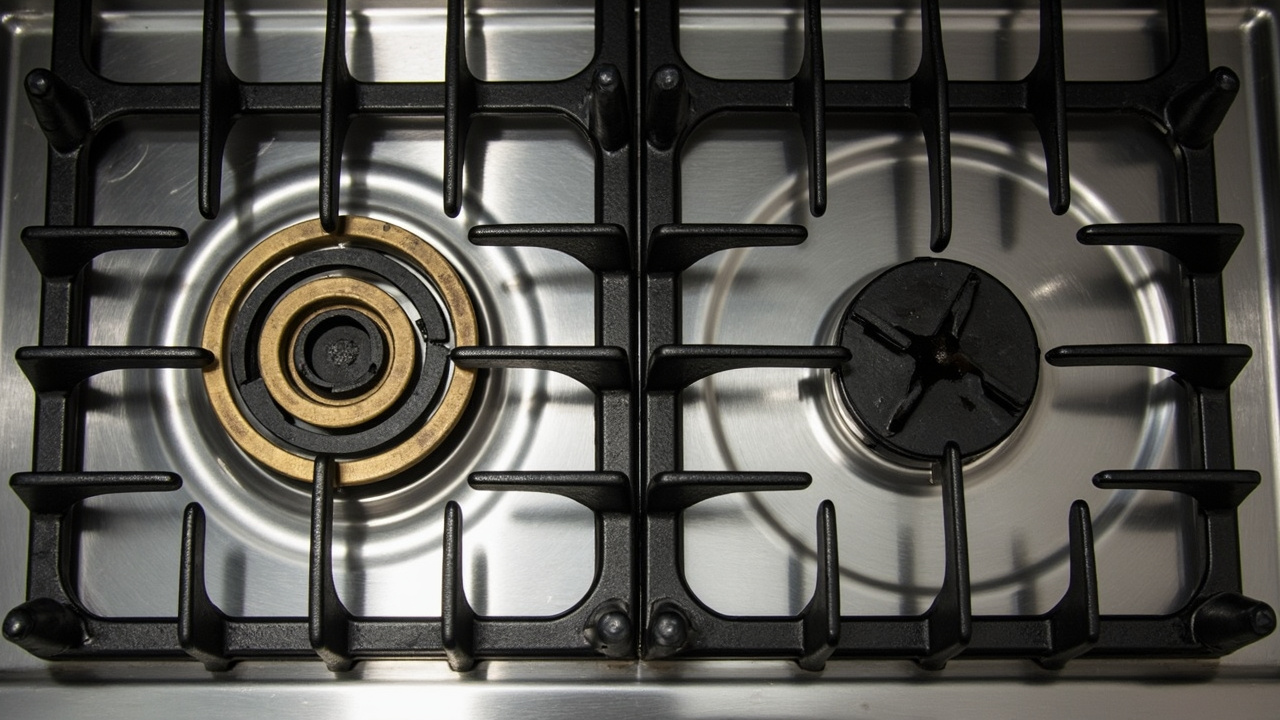
- Dual-stacked sealed burners — two concentric flame rings per burner (3,000 BTU outer + micro inner ring down to 300 BTU)
- Continuous cast-iron grates spanning the full 48-inch surface — pans slide between burners without lifting
- Stainless steel construction, classic Sub-Zero “heavy commercial” aesthetic
- Red knobs (iconic Wolf design)
- M Series electronic controls with Gourmet Mode (presets for 50+ dishes) and temperature probe
- Infrared griddle (1,630 W) or infrared charbroiler option (same chassis, different center accessory)
- 10 cooking modes in each oven, including Bake, Roast, Convection Bake, Convection Roast, Proof, Dehydrate, Sabbath
- Genuine 5-year warranty — parts and labor on the entire unit
- Factory-direct service network (Sub-Zero) covering all 50 states, including rural areas
Thermador PRD486WDHU — Build Philosophy
- Patented Star® burners — five-point star flame pattern for more even heat distribution across the pan bottom
- Pedestal burner design that lifts the flame closer to the pan than traditional ports
- ExtraLow® on multiple burners — as low as 100 BTU, the lowest absolute simmer floor in the residential gas market
- Individual cast-iron grate sections (lighter; each one fits in a dishwasher)
- Home Connect Wi-Fi — remote preheat, monitoring, voice control via Alexa/Google
- 12” electric grill in the center (1,630 W, 6-pass heating element, thermostatically controlled)
- 8.2 cu ft total oven capacity — the largest in the 48-inch class
- 2.5-hour self-clean — fastest in the industry
- 2-year warranty — standard BSH coverage
The practical differences in build:
- Wolf’s continuous grates are more ergonomic when sliding heavy stockpots between burners; Thermador’s individual sections are easier to clean (dishwasher-safe).
- Wolf’s burner design (dual-stack) prioritizes the range of heat you can pull from one burner; Thermador’s Star burner prioritizes evenness across the pan bottom.
- Wolf’s red knobs and recessed grates look more commercial; Thermador’s look more residential-modern.
- Wolf’s warranty is the longest standard coverage in this segment — Thermador’s 2-year is competitive but not best-in-class.
From a long-term durability standpoint, both are designed to last 15+ years. Independent service networks report Wolf’s simpler electronics fail less often post-year-5, while Thermador’s electronic control boards and Wi-Fi modules occasionally need replacement (Source: Scottsdale Sub-Zero Repair service records).
Feature Breakdown
The spec sheets look similar at first glance — six burners, double oven, 48-inch width — but the feature philosophies diverge in ways that matter at the stove.
| Feature | Wolf DF48650 | Thermador PRD486WDHU |
|---|---|---|
| Burner Design | Dual-stacked sealed | Star® pedestal sealed |
| Burner Count (Gas) | 6 | 6 |
| Max BTU (Primary Burner) | 20,000 BTU | 18,000 BTU |
| Min BTU (Simmer Floor) | ~300 BTU (inner ring) | ~100 BTU (ExtraLow®) |
| Center Cooking Surface | Infrared griddle (1,630 W) or charbroiler | 12” electric grill (1,630 W, 6-pass, thermostatically controlled) |
| Oven Capacity (Total) | 7.8 cu ft (4.5 + 3.3) | 8.2 cu ft (4.4 + 2.4 + warming drawer option) |
| Convection | Dual VertiCross Convection | True Convection (3rd-element) |
| Cooking Modes (per oven) | 10 modes + Gourmet Mode presets | Bake, Convection Bake, True Conv, Roast, Conv Roast, Conv Broil, Broil, Keep Warm, Proof, Sabbath |
| Self-Clean Time | ~3.5 hr | 2.5 hr (fastest in industry) |
| Temperature Probe | Yes | Yes |
| Telescopic Racks | Yes (large oven) | Yes (3 in large oven, 1 in small) |
| Sabbath Mode | Yes (STAR-K certified) | Yes (both ovens) |
| Wi-Fi / Smart Home | No native Wi-Fi | Yes — Home Connect |
| Remote Preheat / App Control | No | Yes |
| Voice Control (Alexa / Google) | No | Yes |
| Gas Supply | 1/2” line (standard residential) | 3/4” line recommended (high-BTU total draw) |
| Circuit Breaker Required | 30–40 A | 50 A |
| Warranty | 5 years parts + labor | 2 years parts + labor |
| Country of Final Assembly | USA (Fitchburg, MA / Madison, WI) | USA (New Bern, NC) |
The standout differences:
- Wi-Fi and smart home integration is Thermador-only in this comparison. If you use Alexa routines or want to preheat the oven from your phone on the commute home, only the Thermador delivers that out of the box.
- Simmer precision is Thermador’s clearest win. If you regularly cook chocolate work (104–113 °F), hollandaise (145–160 °F), or long-simmered stocks (160–170 °F for 8+ hours), Thermador’s 100 BTU ExtraLow is genuinely without peer at this price.
- High-heat performance is Wolf’s strongest case. The 20,000 BTU dual-stacked burner boils water 30–45 seconds faster than the Thermador’s 18,000 BTU max, and the same burner drops to 300 BTU for simmering — so every Wolf burner is both a power burner and a simmer burner, while the Thermador splits that duty across dedicated zones.
- Center cooking surface — Wolf gives you a choice between an infrared griddle (smoother, gentler heat) or an infrared charbroiler (the DF48650C variant), both gas-powered. Thermador ships a 12” electric thermostatically-controlled grill that preheats faster and is easier to clean, but runs on a 240 V circuit rather than gas.
- Self-clean speed — Thermador’s 2.5-hour cycle is the fastest in the industry; Wolf’s is closer to 3.5 hours. Over 20 years of weekly self-clean cycles, that is roughly 40 hours saved with the Thermador.
For a buyer who cooks traditional American weeknight meals (boil pasta, sear meat, roast vegetables), the Wolf’s burner design is more versatile per zone. For a buyer who cooks delicate sauces, stocks, and custards regularly, the Thermador’s ExtraLow simmer and Home Connect integration are the differentiating features.
Pros and Cons
Wolf DF48650 — Pros
- 5-year warranty is the longest standard coverage in the pro-style gas segment; covers parts + labor on the entire unit (Source: Sub-Zero Wolf spec sheet)
- 20,000 BTU dual-stacked burner on every primary zone — the highest peak BTU in this category
- 300 BTU inner-ring simmer on every burner — versatile per-zone temperature range
- Continuous cast-iron grates span the full 48-inch surface for ergonomic pan sliding
- Sub-Zero Group factory service network covering all 50 states, including rural areas
- Heavier commercial-grade construction (~510 lbs) — designed for 20+ year service life
- Infrared griddle or charbroiler center option — gas-powered, no extra electrical circuit
- Stronger resale value — Sub-Zero Group brands hold value better than BSH brands
- Gourmet Mode with 50+ presets plus temperature probe for precise roasting
- Simpler electronics = fewer post-warranty repair points (no Wi-Fi module, no smart board)
Wolf DF48650 — Cons
- $14,499 MSRP — $1,200 more than equivalent-spec 36-inch Wolf models and $1,200 more than equivalent 48” gas-only ranges
- No Wi-Fi / smart home integration — no app, no voice control, no remote preheat
- Self-clean takes ~3.5 hr vs Thermador’s 2.5 hr
- Continuous grates are heavy and must be hand-washed; not dishwasher-safe
- Burner “evenness” is the weak point — Wolf’s dual-stack leaves more temperature variance across a 12” skillet than Thermador’s Star burner (~19 °F variance vs ~8 °F in head-to-head thermal imaging)
- Slightly smaller total oven capacity (7.8 cu ft vs Thermador’s 8.2 cu ft)
- No warming drawer option in the standard chassis
- No package-discount ecosystem — Wolf/Sub-Zero dealers rarely bundle below MSRP
Thermador PRD486WDHU — Pros
- ExtraLow® simmer to 100 BTU — the lowest absolute simmer floor in residential gas; ideal for chocolate, hollandaise, custard work
- Star burner design delivers more even heat across pan bottoms (8 °F variance vs Wolf’s 19 °F across 12” skillet, head-to-head thermal imaging — Source: Cooktop Hunter 2026 head-to-head test)
- 8.2 cu ft total oven capacity — largest in 48-inch class; useful for Thanksgiving-scale cooking
- Home Connect Wi-Fi — remote preheat, monitoring, voice control via Alexa/Google Home
- 2.5-hour self-clean — fastest cycle in the industry; saves ~40 hr over 20 years vs Wolf
- Dishwasher-safe individual grate sections — lighter, easier weekly cleaning
- 12” electric thermostatically-controlled grill in the center — preheats fast, even heat
- Strong package-deal ecosystem — 10–20% discounts common when bundling with Thermador hood, cooktop, dishwasher, or column refrigeration
- True Convection with 3rd element — better air circulation for multi-rack baking
- BSH (Bosch) parts network — generally available in major metros
Thermador PRD486WDHU — Cons
- $15,699 MSRP — $1,200 more than the Wolf DF48650 at MSRP
- Only 2-year warranty (parts + labor) — 3 years shorter than Wolf’s coverage
- 18,000 BTU max — 2,000 BTU lower than Wolf; slower boil times on high-BTU tasks
- More electronic components = more potential failure points post-warranty (Home Connect board, Wi-Fi module, control boards)
- 3/4” gas line recommended — many homes have only 1/2” lines; may require gas-line upgrade
- 50 A circuit breaker required (vs Wolf’s 30–40 A)
- BSH service network is metro-focused — rural customers may wait longer for parts
- Star burner ports clog more easily than Wolf’s dual-stack if not cleaned weekly
- Individual grates create a gap between burners — heavier pots must be lifted, not slid
- Shorter typical service life in service-company records (~15–20 years vs Wolf’s 18–22)
Best For / Skip If
Choose the Wolf DF48650 if you are:
- A serious home cook who sears at high heat — steaks, stir-fry, wok cooking, large-stockpot boiling. The 20,000 BTU dual-stacked burner is the highest-output residential gas burner you can buy in 2026.
- Someone planning to keep this range 20+ years — the 5-year warranty covers parts + labor through year 5, and Wolf’s simpler electronics historically fail less often in years 6–15.
- A household outside major metros — Wolf’s factory-direct service network covers rural addresses more reliably than BSH’s metro-focused one.
- A buyer who values commercial aesthetic — the red knobs and continuous grates are the visual signatures of “Wolf,” and they photograph well in a luxury kitchen.
- Someone who already owns or is pairing with Sub-Zero refrigeration — Wolf/Sub-Zero dealers often give bundle pricing on matched suites.
- A buyer prioritizing resale value — Sub-Zero Group ranges hold value better in luxury-home resale than BSH ranges.
Choose the Thermador PRD486WDHU if you are:
- A baker or pastry cook who works at very low BTU — chocolate (104–113 °F), hollandaise (145–160 °F), long-simmered stocks, delicate custards. Thermador’s ExtraLow 100 BTU is genuinely without peer in residential gas.
- A smart-home user who wants remote preheat, Alexa/Google integration, and app monitoring. Home Connect is the only Wi-Fi platform in this segment.
- Someone buying the full kitchen suite from one brand — Thermador’s package-deal discounts (hood + range + cooktop + dishwasher) can offset the $1,200 MSRP premium.
- A buyer who wants the largest oven capacity — 8.2 cu ft handles multiple dishes at Thanksgiving scale better than 7.8 cu ft.
- A buyer who cleans the range weekly — dishwasher-safe individual grates make the post-cook routine faster.
- A household in a major metro with strong BSH service coverage (NYC, LA, Chicago, Houston, Miami).
Skip both if you:
- Cook 3 nights a week or less — a $1,500 Bosch 800 Series or Café gas range will deliver 80% of the cooking for 10–15% of the price.
- Do not have proper ventilation — both ranges need a 600+ CFM hood; Wolf’s higher BTU options need even more. Skip and budget for a Wolf or Thermador hood first.
- Have a 1/2” gas line and no upgrade budget — the Thermador specifically recommends 3/4”; both will function on 1/2” but burner performance degrades when multiple high-BTU burners run simultaneously.
- Are you building an all-electric kitchen — neither brand has a comparable induction pro range at 48 inches. Look at induction slide-in ranges (Café, Bosch Benchmark) or full induction cooktops with double wall ovens.
- Want a kitchen with no annual maintenance — both ranges need yearly burner-port cleaning and igniter checks. If you cannot commit to that, the Wi-Fi-enabled Thermador will at least alert you to anomalies.
Bottom Line
The Wolf DF48650 and Thermador PRD486WDHU are the two best 48-inch dual fuel pro ranges you can buy in 2026. The choice is not about quality — both are excellent. It is about cooking style and total cost of ownership.
If you cook at high heat frequently, want the longest warranty in the segment (5 years), and plan to keep the range 20+ years, the Wolf DF48650 ($14,499 MSRP) is the better 20-year value. Its simpler electronics, denser service network, and higher resale produce roughly $2,250 in lifetime savings vs the Thermador for the median owner.
If you prioritize even heat distribution, the lowest possible simmer (100 BTU ExtraLow®), the largest oven capacity in the 48-inch class (8.2 cu ft), and Home Connect Wi-Fi integration, the Thermador PRD486WDHU ($15,699 MSRP) is the better answer — especially if you can negotiate a 10–20% package discount when bundling with a Thermador hood, cooktop, or dishwasher.
The third option — and the one most buyers in this price tier should at least consider — is the 36-inch version of either brand at roughly half the price ($4,299 Wolf CG365P/S or $3,999 Thermador PCG365WS). For a household of 4 or fewer, a 36-inch pro range delivers 90% of the cooking experience in 75% of the footprint, at 30% of the price.
Buy smart. Get more value. And remember: a $14,000 range that sits underused because you do not cook at the level its features demand is the most expensive cabinet in your kitchen.