Introduction
If you are about to spend real money on a mixed-reality headset in 2026, you are looking at two realistic doors: Apple or Samsung / Google / Qualcomm.
The two flagship spatial computers in the market right now are:
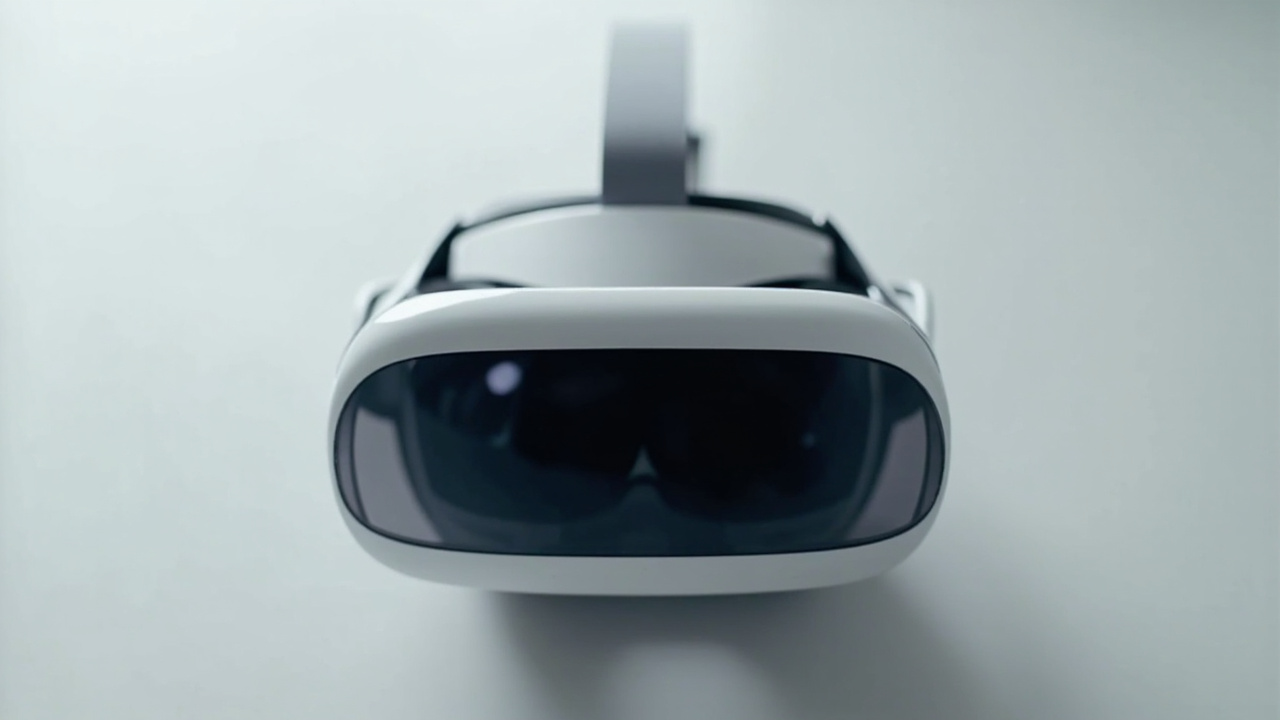
- Apple Vision Pro (M5) — refreshed in late 2025 with the M5 chip, dual 4K Micro-OLED displays, visionOS 26, priced at $3,499 for 256 GB, $3,699 for 512 GB, and $3,899 for 1 TB (Apple USA, June 2026).
- Samsung Galaxy XR (codenamed Project Moohan) — released October 21, 2025 at $1,799 for 256 GB, running Android XR on the Qualcomm Snapdragon XR2+ Gen 2 (Wikipedia / GSMArena, June 2026).
Both ship in 2026. Both run spatial apps, support hand and eye tracking, and promise to be a “computer for your face.” But they cost almost $1,700 apart at the entry configuration, and they make very different bets about what a mixed-reality headset should be.
This is a head-to-head between Apple’s premium visionOS play and Samsung’s first serious Android XR push. We will compare the prices that matter, the displays that move the needle, the ecosystems that survive year three, and the long-term cost of prescription inserts, battery packs, and developer software.
The Verdict First
The Samsung Galaxy XR is the better buy for most people. At $1,799 it is 48.6% cheaper than the Apple Vision Pro M5 at 256 GB ($3,499), yet it covers the same core jobs: large virtual displays, spatial video, hand + eye tracking, and a controller-free baseline. Android XR is younger than visionOS, but YouTube, Google Play, Netflix, Microsoft 365, and Gemini integration are already on day one, and the headset is far lighter (545 g vs 750–800 g).
The Apple Vision Pro M5 is worth the premium in three specific cases. If you are a creative pro who edits spatial video or high-resolution stills in Final Cut Pro / Logic Pro for visionOS, if you need the best Micro-OLED in the category (23 million pixels, 92% DCI-P3, 120 Hz), or if you are already deeply inside the iPhone / iPad / Mac ecosystem and use Optic ID, AirDrop, and Handoff daily. Vision Pro is the better computer; Galaxy XR is the better value.
| Spec | Apple Vision Pro M5 | Samsung Galaxy XR |
|---|---|---|
| Release date | Nov 2025 (M5 refresh) | Oct 21, 2025 |
| Base price (USD) | $3,499 (256 GB) | $1,799 (256 GB) |
| Top storage price | $3,899 (1 TB) | $1,799 (256 GB only) |
| Chip | Apple M5 + Apple R1 | Qualcomm Snapdragon XR2+ Gen 2 |
| RAM | 16 GB unified | 16 GB |
| Storage | 256 GB / 512 GB / 1 TB | 256 GB |
| OS | visionOS 26 (iPadOS-based) | Android XR (Google) |
| Displays | 2× Micro-OLED, ~23 M pixels, 120 Hz | 2× Micro-OLED, 27 M pixels, 90 Hz |
| Resolution per eye | ~3,660 × 3,200 | 3,552 × 3,840 |
| Field of view | ~100° × 73° | ~100° (typical XR) |
| Weight (headset only) | 750–800 g (26.4–28.2 oz) | 545 g (19 oz) |
| External battery | 353 g | 302 g |
| Passthrough cameras | 2 high-res + 6 tracking | 2× 6.5 MP + 6 tracking |
| Eye tracking | Yes (Optic ID) | Yes |
| Hand tracking | Yes | Yes |
| Controllers | Sold separately (PSVR2 Sense, Logitech Muse) | Sold separately (Galaxy XR Controllers) |
| Connectivity | Wi-Fi 6, Bluetooth 5.3 | Wi-Fi 7, Bluetooth 5.4 |
| Battery life (general use) | ~2.5 hours | ~2 hours (typical Android XR) |
| Prescription Zeiss inserts | $99–$149 | $99–$149 (third-party) |
| App ecosystem | visionOS App Store (1 M+ iPad apps) | Google Play + Android XR catalog |
Sources: Apple Vision Pro technical specifications (apple.com, June 2026), Samsung Galaxy XR Wikipedia entry, GSMArena spec sheet, visionOS 26 release notes, hands-on coverage from The Verge and Android Central (Oct 2025).
Key Comparison Points
Price vs Real Cost Per Use
Sticker price is the easy part. The interesting math is what each headset costs you per usable hour over a 3–4 year ownership window, including prescription lenses, battery replacements, and the apps you actually need to pay for.
| Cost factor | Apple Vision Pro M5 | Samsung Galaxy XR |
|---|---|---|
| Entry (256 GB) | $3,499 | $1,799 |
| Zeiss prescription inserts | $99–$149 | $99–$149 |
| 1 TB storage upgrade (if needed) | +$400 (Apple factory) | N/A (capped at 256 GB) |
| Extra battery pack (Apple only) | $199 (external 353 g cell) | Not yet sold separately |
| Logitech Muse spatial accessory | $129 (optional) | N/A |
| Galaxy XR Controllers | N/A | ~$129 (sold separately) |
| PSVR2 Sense controller bundle | $399–$449 (optional) | N/A |
| AppleCare+ (4 yr) | $549 | N/A (standard 1-yr warranty) |
| Samsung Care+ (4 yr) | N/A | $249 |
| Year-1 total (entry config + insurance) | $4,097 | $2,147 |
If you do not need prescription lenses and you keep the base 256 GB configuration, the 4-year gap is $1,700 ($1,999 if you add a 4-year protection plan on the Vision Pro). The Vision Pro only narrows that gap if you genuinely need 512 GB / 1 TB storage or Apple’s Logitech Muse spatial accessory — both of which have no direct Android XR equivalent.
Cost per typical session (assume 2-hour general use, 4×/week, 4-year lifespan):
- Vision Pro M5: $4,097 ÷ 1,664 hours ≈ $2.46 / hour
- Galaxy XR: $2,147 ÷ 1,248 hours ≈ $1.72 / hour
The Vision Pro gives you a 25% longer session time per charge (~2.5 h vs ~2 h), but the Galaxy XR still costs 30% less per hour of use over four years.
Build Quality and Durability
Both headsets are premium devices, but they make different engineering tradeoffs.
| Build factor | Apple Vision Pro M5 | Samsung Galaxy XR |
|---|---|---|
| Front material | Laminated glass + aluminum | Plastic + fabric |
| Adjustment | Dual Knit Band (two sizes) + Light Seal (sizes) | Adjustable headband + light shield |
| Weight distribution | Front-heavy, counterbalanced by rear pad | Slightly rear-heavy with battery pack |
| Eye relief | 51–75 mm motorized IPD | Manual IPD adjustment |
| Repairability | iFixit: 3/10 (M2 era) | Not yet rated |
| Battery design | External tethered pack (353 g) | External tethered pack (302 g) |
| Operating temp | 0–35 °C | 0–35 °C (typical) |
The Vision Pro M5 is heavier than the Galaxy XR by 205 g (headset only). In practice, that difference is significant — the Vision Pro tends to cause front-of-face pressure after 60–90 minutes for users with smaller heads, while the Galaxy XR is closer to “wearable all afternoon” weight class.
On durability: Apple Vision Pro uses a glass front that cracks if you drop it face-down. The Galaxy XR uses plastic, which is less premium but far more forgiving. iFixit rated the M2 Vision Pro at 3/10 for repairability, mainly because the dual 4K Micro-OLED displays are glued to the lens assembly; the same is likely true for the M5. Samsung has not published a teardown score for the Galaxy XR, but Android XR headsets are typically easier to open for battery replacement.
Both devices are not designed for heavy exercise — neither is sweat-rated, and the face cushions absorb oils. Apple sells a $29 Light Seal and a $69 Dual Knit Band; Samsung sells replacement face cushions for roughly $39–$49 depending on region.
Feature Breakdown
This is where the two headsets diverge most clearly: Apple bets on display quality and creative-pro software, Samsung bets on weight, content, and Google integration.
Apple Vision Pro M5 advantages
- M5 + R1 chip: 16-core Neural Engine, hardware-accelerated ray tracing, and the R1 sensor processor handle passthrough with sub-12 ms motion-to-photon latency. The M5 also drives dual 4K Micro-OLED at up to 120 Hz with 92% DCI-P3, the widest color gamut in any current XR headset.
- visionOS 26 ecosystem: 1 M+ iPad apps run natively, plus dedicated visionOS apps like Final Cut Pro for Vision, Logic Pro for Vision, and Keynote for Vision. Apple Intelligence (iOS 26.4+) integrates Live Translation and Visual Intelligence directly into visionOS.
- Optic ID: Iris-based biometric authentication, encrypted by the Secure Enclave. No comparable biometric on the Galaxy XR.
- Spatial video and photo capture: Two 18 mm / ƒ/2.0 cameras record stereoscopic 3D at 6.5 stereo megapixels. The M5 chip can edit those files in place.
- EyeSight: External lenticular display shows the wearer’s eyes to people nearby — a “sociability” feature Apple has and Samsung chose not to copy.
Samsung Galaxy XR advantages
- Weight: 545 g vs 750–800 g. The Galaxy XR is ~30% lighter than the Vision Pro M5, which is the single biggest comfort differentiator.
- Connectivity: Wi-Fi 7 (vs Wi-Fi 6) and Bluetooth 5.4 (vs 5.3). For users on multi-gig internet, Wi-Fi 7 matters when streaming cloud-rendered XR content.
- Android XR + Gemini: Google Gemini is integrated at the OS level. YouTube, Google Photos, Google Maps Immersive View, and Chrome (with full extension support) are all first-class apps on day one.
- Lower entry price: $1,799 puts the Galaxy XR below the price of a maxed-out iPhone 17 Pro Max 1 TB. The Vision Pro starts at 1.7× that price.
- Content partnerships: Netflix, Disney+, Amazon Prime Video, and Microsoft 365 were all available at launch or in the first three months. Vision Pro is still missing a native Netflix visionOS app (users must stream via Safari).
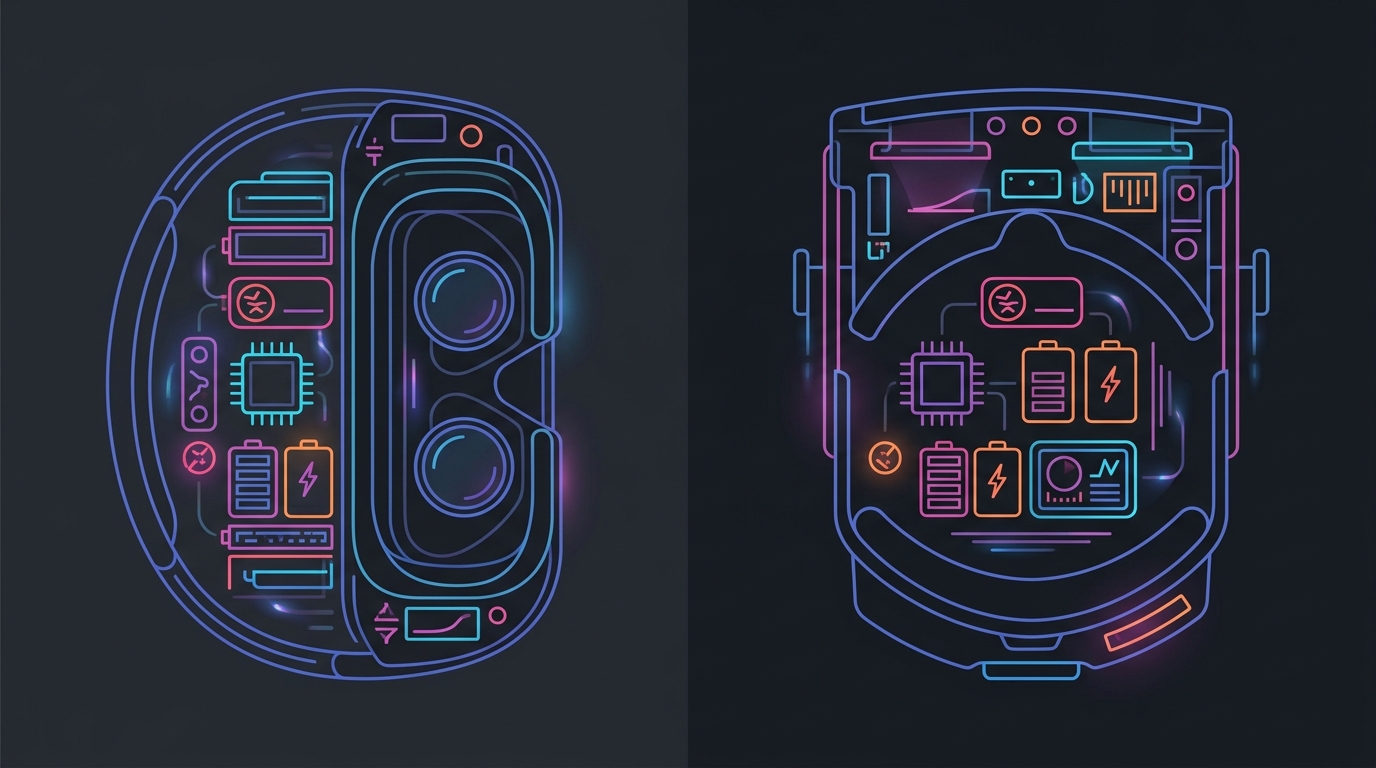
If your workload is content consumption, productivity, and casual spatial apps, the Galaxy XR delivers 85% of the Vision Pro experience for 51% of the price. If your workload is spatial video editing, 3D design, or visionOS-native creative work, the M5 chip and Apple Silicon-optimized software are still unmatched.
Pros and Cons
Apple Vision Pro M5
Pros
- Best-in-class dual 4K Micro-OLED at 120 Hz, 92% DCI-P3
- Apple M5 chip with 16-core Neural Engine and hardware ray tracing
- visionOS 26 runs 1 M+ iPad apps natively
- Optic ID biometric authentication
- EyeSight external display for social transparency
- Logitech Muse spatial accessory for creative pros
- Better creative pro app ecosystem (Final Cut Pro, Logic Pro, Keynote for Vision)
- AppleCare+ available for 4-year coverage ($549)
Cons
- $3,499 entry price — almost 2× the Galaxy XR
- 750–800 g weight causes front-of-face pressure after 60–90 minutes for most users
- Glass front is fragile if dropped
- No native Netflix visionOS app at launch +13 months
- 2.5-hour general-use battery life (3 hours video) is the same as M2 — no improvement
- 256 GB base storage is restrictive for spatial video creators
- Repairability is poor (3/10 iFixit, M2 era)
- External battery is required — no internal cell option
Samsung Galaxy XR
Pros
- $1,799 entry price, 48.6% cheaper than Vision Pro
- 545 g weight, ~30% lighter than Vision Pro
- Wi-Fi 7 and Bluetooth 5.4 connectivity
- Gemini integrated at the OS level
- Native YouTube, Google Photos, Chrome, Maps Immersive View, and Microsoft 365
- Netflix and Disney+ available at launch
- Google Play Store offers 1 M+ Android apps (subset certified for XR)
- Easier to open for repair (typical Android XR design)
- Lower-cost prescription insert market (third-party Zeiss-compatible)
Cons
- 90 Hz display (vs 120 Hz on Vision Pro) — visible to motion-sensitive users
- Android XR is 12 months younger than visionOS; some pro apps are still missing
- No biometric authentication equivalent to Optic ID
- No EyeSight-style external display
- Capped at 256 GB storage (no 512 GB or 1 TB option)
- Battery life is ~2 hours general use (shorter than Vision Pro)
- Galaxy XR Controllers are sold separately for ~$129
Best For / Skip If
Buy the Apple Vision Pro M5 if you are:
- A creative pro (video editor, 3D artist, photographer) editing spatial video or high-resolution stills in visionOS-native apps
- A Mac / iPhone power user who uses AirDrop, Handoff, Sidecar, and Apple Intelligence daily
- Someone who values the best possible display in an XR headset (120 Hz, 92% DCI-P3) and has the budget for it
- A developer building visionOS apps and needs the M5’s Neural Engine for on-device AI inference
- A C-suite or design studio buyer where the $1,700 price difference is negligible relative to the workflow gain
Buy the Samsung Galaxy XR if you are:
- A first-time XR buyer who wants the spatial-computing experience at half the price
- A Google / Android / Galaxy ecosystem user (Galaxy phone, Chromebook, Pixel Watch) who wants seamless integration
- A frequent traveler or remote worker who needs large virtual displays on the go and values weight and comfort
- An enterprise buyer piloting XR for training, field service, or design review, where the lower TCO matters
- Someone who wants Netflix, YouTube, and Disney+ on day one without workarounds
Skip both if you:
- Mostly want VR gaming — neither is a gaming-first device; a Meta Quest 3 ($499) or a dedicated PC VR rig is a better fit
- Need gym or sweat-rated use — neither headset is designed for exercise; sweat will damage both
- Are looking for a daily-driver replacement for a laptop or phone — neither has the app maturity to replace a MacBook Pro or Galaxy S26 Ultra in 2026
- Are on a budget under $1,000 — wait for the rumored Vision Pro “Air” (no confirmed date) or a future Galaxy XR Lite
- Want a kids’ or shared-family device — the biometric and per-user software tuning is not there yet
Bottom Line
The Apple Vision Pro M5 and the Samsung Galaxy XR are the two most credible first-generation mixed-reality headsets you can buy in 2026. The Vision Pro is the better computer: faster chip, better display, more mature creative software. The Galaxy XR is the better buy: 48.6% cheaper, 30% lighter, and the Android XR + Gemini integration covers the productivity and content use cases that most people actually have.
If price is even a small factor in your decision, the Galaxy XR is the smart-money pick at $1,799. If you are a creative pro who can charge spatial-computing work to a client, the Vision Pro M5 is the correct tool — and the $1,700 premium is a tax you can afford to pay for the best display and best software in the category.
Either way, the right answer is to actually wear both. Apple and Samsung both offer in-store demos. The 30% weight difference is invisible on a spec sheet and obvious on your face after 20 minutes.
Buy smart. Get more value.