Introduction
In 2026, the two single-cabinet flagship Dolby Atmos soundbars you actually cross-shop are the Sonos Arc Ultra and the Sony Bravia Theatre Bar 9 (HT-A9000). The Sonos launched on October 29, 2024 at $999 USD and is still the headline Atmos bar in the Sonos lineup in mid-2026. The Sony Bravia Theatre Bar 9 launched in mid-2024 at $1,399.99 USD / £1,399 and replaced the older HT-A7000 as Sony’s top single-cabinet bar (Sources: TechRadar Sonos Arc Ultra, What Hi-Fi? Bravia Theatre Bar 9 review, Sony HT-A9000 spec page).
Both decode Atmos and DTS:X. Both promise convincing surround from a single bar. The street price, however, has a $400 gap at MSRP, the channel count and HDMI situation are very different, and only one of them will actually feed lossless Atmos from a Blu-ray player or gaming console without compromise.
This is a comparison for people who care about the 5-year cost-per-use of their TV audio, not the brand of the speaker grille.
The Verdict First
- Choose the Sonos Arc Ultra ($999) if you want the cleanest single-cabinet install, you already live in the Sonos ecosystem (Beam, Era 100/300, Sub 4), and you care about AirPlay 2 + Spotify Connect + Sonos Radio for music playback. You also accept that the Arc Ultra has no HDMI inputs at all — only HDMI eARC — so the bar cannot pass 4K@120 HDR or Dolby Vision gaming from a console, and a 4K Blu-ray player connected directly to the TV must rely on the TV’s eARC to feed lossless Atmos back to the bar.
- Choose the Sony Bravia Theatre Bar 9 ($1,399.99) if you want true HDMI 2.1 passthrough (4K@120, 8K HDR, VRR, ALLM) for a PS5 Pro, Xbox Series X, or RTX 5090 gaming PC, if you want a wider, more speaker-like soundstage out of the box (RTINGS gives it an edge for stereo width and Atmos surround), and if you do not want to be locked into the Sonos app. The trade-off is the $400 premium, a slightly more “hi-fi” sound signature, and the fact that Sony’s “Voice Zoom” and room calibration can require a Sony Bravia TV to unlock the full feature list (Sources: What Hi-Fi? Arc Ultra vs Bar 9, RTINGS Bar 9 vs Arc Ultra).
- Skip both if you only watch broadcast TV and sitcoms. A $200 Vizio V-Series or a Sonos Beam Gen 2 covers 80% of use cases for under $500. The premium tier only pays for itself when you actually feed the bar Atmos content from Netflix, Disney+, Apple TV+, or Blu-ray and you sit more than 6 feet from the screen.
Cost score: 80/100. The Sonos Arc Ultra is the better day-one value for most buyers (you save $400 upfront, the ecosystem expansion is opt-in, and the Atmos performance out of one cabinet is genuinely class-leading). The Bravia Theatre Bar 9 is the right pick for a narrower audience: gamers with next-gen consoles, owners of Bravia TVs who want Voice Zoom and Acoustic Center Sync, and listeners who prefer Sony’s slightly warmer, wider sound signature over Sonos’s tighter presentation.
Key Comparison Points
Price vs Real Cost Per Use
The sticker price is only the first move. The real cost-per-use is shaped by whether you buy a sub, whether you buy rears, and how long you keep the bar.
| Cost Factor | Sonos Arc Ultra | Sony Bravia Theatre Bar 9 (HT-A9000) |
|---|---|---|
| Launch Date | Oct 29, 2024 | Mid-2024 |
| MSRP (USD) | $999 | $1,399.99 |
| Current Street Price (US, June 2026) | $949 (Sonos store, occasional sale) | $1,199–$1,399 (Sony store + Amazon) |
| Channels | 9.1.4 (virtual, from one cabinet) | 7.1.2 native + virtualization (13 drivers) |
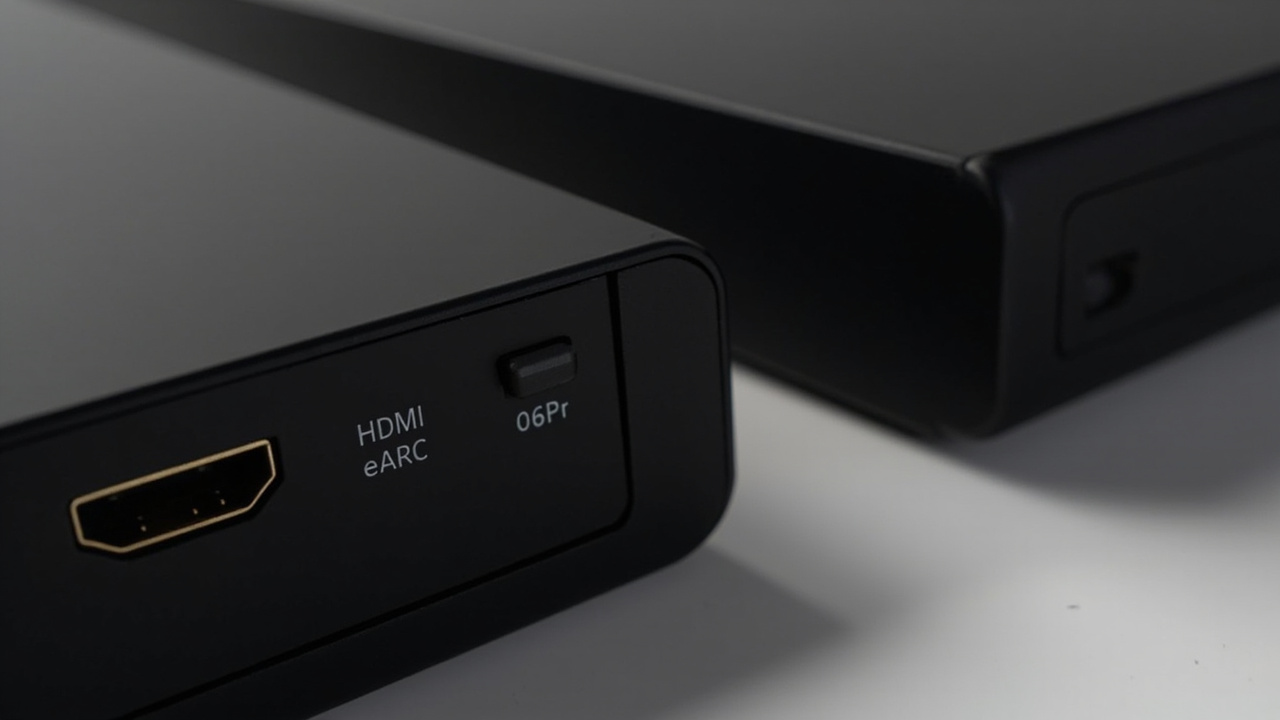
| HDMI Ports | 1 × HDMI eARC (no passthrough) | 1 × HDMI 2.1 in + 1 × HDMI 2.1 out (eARC) |
| 4K@120 / 8K / VRR / ALLM Passthrough | No (eARC only) | Yes |
| Wireless Sub (Optional) | Sonos Sub 4 — $799 | Sony SA-SW5 or SA-SW3 — $400–$700 |
| Optional Rears | Sonos Era 300 pair — $478/pair | Sony SA-RS3S or SA-RS5 pair — $400–$700 |
| Full “Match Samsung 11.1.4” Cost | $999 + $799 + $478 = $2,276 | $1,399 + $500 sub + $550 rears ≈ $2,450 |
| Typical Owner Setup (bar only, 5 yrs) | $999 | $1,399 |
| Amortized Cost / Year (5-yr) | $199.80 | $279.80 |
| Amortized Cost / Year (7-yr) | $142.71 | $199.99 |
Two takeaways:
- The Sonos saves you $400–$450 on day one at MSRP. Over 5 years of bar-only use, that’s a real $400 swing before sound quality even enters the room.
- If you add a sub and rears, the gap narrows to roughly $175 (Sony is more expensive on accessories too). At that point you’re buying for sound, not price — and both are defensible. The Sonos Sub 4 has been praised for its depth and musicality; the Sony SW5 is bigger and pulls harder on explosions (Sources: Sonos Sub 4 spec, Sony SA-SW5 spec).
A real-world example: someone who watches 4 hours of TV a day for 5 years logs 7,300 listening hours. Spread the $999 Arc Ultra over that and you’re at $0.137 per hour. The Bravia Bar 9 lands at $0.192 per hour. For bar-only use, the Sonos is ~29% cheaper per hour. For a full 7.1.4 setup, the gap collapses to ~7%.

Build Quality and Durability
These are both premium single-cabinet bars, but the design philosophy is noticeably different.
Sonos Arc Ultra — refined successor to the 2020 Arc:
- 1,170 × 87 × 130 mm (46.1 × 3.4 × 5.1 in) — longer, slimmer than its predecessor
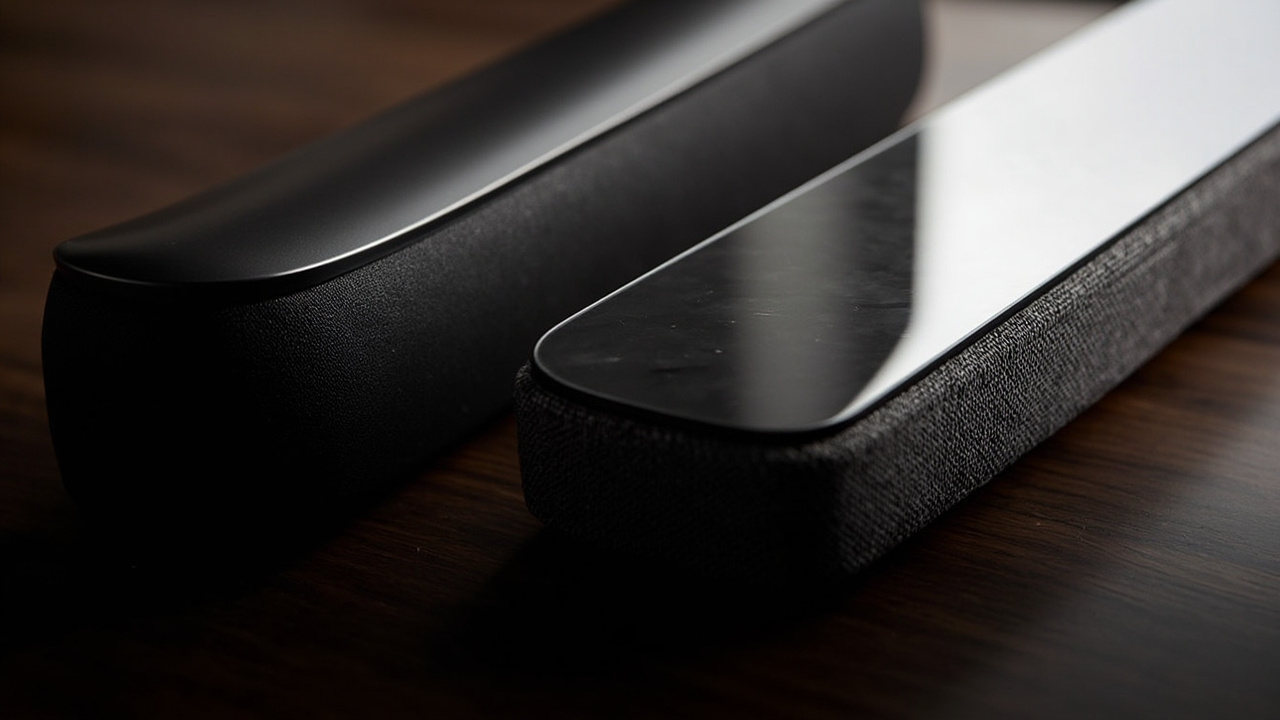
- Matte black or white finish with a perforated wraparound grille
- Capacitive touch controls on top (play, pause, volume, mic mute)
- Built-in mics for Sonos Voice Control and Amazon Alexa
- No IP rating; intended for indoor TV use only
- One HDMI eARC port on the back, plus Wi-Fi 6 and Bluetooth 5.3 (a meaningful upgrade over the original Arc, which had no Bluetooth at all)
- Ships with an HDMI 2.1 certified eARC cable (Source: Sonos Arc Ultra product page)
Sony Bravia Theatre Bar 9 (HT-A9000) — the design-forward Sony:
- 1,300 × 64 × 113 mm (51.2 × 2.5 × 4.4 in) — wider, flatter
- Glass-top touch surface with a fabric grille
- Built-in mics for auto-calibration (Sound Field Optimization)
- Two HDMI ports: 1 HDMI 2.1 in + 1 HDMI 2.1 out (eARC) — the in-port supports 4K@120, 8K@60, Dolby Vision, HDR10, VRR, ALLM
- Wi-Fi (Spotify Connect, Chromecast, AirPlay 2) + Bluetooth 5.2
- Acoustic Center Sync (works only with compatible Bravia TVs — turns the TV speakers into the center channel)
- No IP rating; indoor use
Two things stand out in long-term ownership:
- Sonos has had real software pain since 2024. The redesigned Sonos S2 app (May 2024) removed features like queue position, group volume, and local library support. The September 2025 update (app 80.27.6) finally restored the queue position display — 15 months after it was removed (Source: Headphonesty Sonos update article). The October 2025 firmware patch (91.0-70011) also fixed popping artifacts on the Arc Ultra. The app is stable now, but for a $1,000+ bar, “stable now” is the bar — and Sonos’s track record for the past two years is mixed.
- Sony’s bar leans on a Bravia TV for the full experience. Acoustic Center Sync and the best Auto Sound Field Optimization only fire when paired with a compatible 2023+ Bravia TV. If you do not own a Bravia, you still get a great bar — but you will not get the “magic” demos that Sony’s marketing leans on.
In raw physical build, both are excellent. The Sonos looks more like a Sonos product (curved, perforated, refined). The Sony looks more like a piece of home theater gear (sleek, low-profile, glass-top). Pick by aesthetic.
Feature Breakdown
This is where the two bars diverge most.
| Feature | Sonos Arc Ultra | Sony Bravia Theatre Bar 9 |
|---|---|---|
| Dolby Atmos | Yes (9.1.4 virtual) | Yes (7.1.2 + virtualization) |
| DTS:X | Not officially supported | Yes |
| HDMI 2.1 Passthrough (4K@120 / 8K) | No (eARC only) | Yes (1 in / 1 out, HDMI 2.1) |
| Dolby Vision Passthrough | Relies on TV’s eARC | Yes (passthrough through HDMI 2.1) |
| VRR / ALLM (Gaming) | No (eARC path only) | Yes |
| AirPlay 2 | Yes | Yes |
| Spotify Connect | Yes | Yes |
| Chromecast built-in | No | Yes |
| Bluetooth | Yes (5.3) | Yes (5.2) |
| Voice Assistants | Sonos Voice Control + Amazon Alexa | Google Assistant (via TV) |
| Room Calibration | Trueplay (iOS only) | Sound Field Optimization (built-in mic) |
| Multi-room / Multiroom Expansion | Sonos ecosystem | Sony ecosystem (limited) |
| Works Without Wi-Fi (TV only) | Yes (HDMI eARC) | Yes (HDMI eARC) |
| Sub 4 / SW5 Wireless Sub Support | Yes (Sub 4, $799) | Yes (SW3 $399 / SW5 $699) |
| Rear Speaker Support | Yes (Era 300, $478/pair) | Yes (RS3S $299/pair / RS5 $599/pair) |
Two practical implications:
- For PS5 Pro / Xbox Series X / RTX 5090 owners, the Sony is the only real option in this price tier. The Sonos’s lack of HDMI inputs means the console connects to the TV, the TV passes compressed Atmos back via eARC — which is fine for Atmos, but 4K@120 HDR + Dolby Vision VRR is a different conversation. The Sony Bravia Theatre Bar 9 will pass those signals untouched to a 4K@120/VRR-capable TV while decoding Atmos on its own. If you game on a premium OLED, this matters.
- For Sonos multiroom owners, the Arc Ultra slots into the only mature whole-home audio ecosystem on the market. You can group it with Era 100s in the kitchen, a Sonos Roam 2 in the bathroom, a Sub 4 in the family room, and control the lot from one app. Sony’s multiroom story (Sony | Music Center) exists, but it has a fraction of the speaker catalog and a much smaller user base (Sources: Sonos ecosystem, Sony SA-RS5 rears).
A note on DTS:X: the Sonos Arc Ultra does not officially decode DTS:X (Sonos’s stance has been “we focus on Atmos, and our ecosystem partners support the rest”). The Sony decodes both Atmos and DTS:X. If you own a lot of Blu-rays with DTS:X soundtracks (a small but loyal audience), the Sony is a non-negotiable pick.
Pros and Cons
Sonos Arc Ultra — Pros
- $999 is $400 cheaper than the Bravia Bar 9 at MSRP; typically sells for $899–$949 in 2026
- Mature Sonos multiroom ecosystem — best-in-class expansion to subs, surrounds, and whole-home groups
- AirPlay 2, Spotify Connect, Bluetooth 5.3, and Sonos Radio
- Excellent 9.1.4 virtual Atmos from a single cabinet
- 5-year warranty (Sonos) is competitive
- Refined design with capacitive touch controls
Sonos Arc Ultra — Cons
- No HDMI inputs at all — eARC-only, so no 4K@120 / VRR passthrough for next-gen consoles
- No DTS:X support
- Sonos app has had a rocky 24 months — feature regressions and re-introductions
- Trueplay room calibration is iOS only (Android users get no equivalent)
- Sound Motion woofer is good for music, but out-of-the-box bass is shallower than the Sony with a sub
- Full 5.1.4 expansion ($2,276) costs more than the Sony’s equivalent setup
Sony Bravia Theatre Bar 9 — Pros
- HDMI 2.1 in + out (4K@120, 8K@60, VRR, ALLM, Dolby Vision) — the right bar for next-gen gaming
- 13 drivers, wider stereo image, more “hi-fi” sound signature out of the box
- DTS:X support (in addition to Atmos)
- Chromecast built-in, AirPlay 2, Spotify Connect
- Sound Field Optimization works with built-in mic (no phone app needed)
- Acoustic Center Sync with compatible Bravia TVs (TV speakers become the center channel)
Sony Bravia Theatre Bar 9 — Cons
- $1,399.99 MSRP — $400 premium over the Arc Ultra
- The “best” feature (Acoustic Center Sync) only works with a Sony Bravia TV
- Sony’s whole-home multiroom ecosystem is much smaller than Sonos’s
- Larger footprint (1,300 mm wide) — may not fit under smaller 55-inch TVs
- Glass top shows fingerprints and dust more obviously than the Sonos grille
- Sony’s accessory subs (SW3/SW5) and rears (RS3S/RS5) are not class-leading in their own right
Best For / Skip If
Buy the Sonos Arc Ultra if you are:
- An existing Sonos household (Beam, Era, Sub, Roam, Move) who wants Atmos in the main room
- A music-first buyer — the Arc Ultra is one of the best single-bar speakers for stereo music at any price
- An Apple-centric household (iPhone, Apple TV 4K, AirPods) who wants AirPlay 2 handoff
- An apartment or small-room dweller who will never add a sub or rears
- Someone who watches a mix of streaming Atmos content and just wants it to “work” with the TV remote
Buy the Sony Bravia Theatre Bar 9 if you are:
- A PS5 Pro, Xbox Series X, or high-end PC gamer who needs 4K@120 / VRR / ALLM passthrough
- An owner of a 2023+ Sony Bravia TV who wants Acoustic Center Sync
- A Blu-ray collector with DTS:X titles in your library
- A wider-room listener (3.5 m+ seating distance) who values the Sony’s slightly wider, more “hi-fi” soundstage
- Someone who wants one bar that does HDMI 2.1 and Atmos and DTS:X and Chromecast — and is willing to pay $400 extra for it
Skip both if you are:
- Only watching broadcast TV and sitcoms (a $200 Vizio V-Series or Sonos Beam Gen 2 is enough)
- Not actually sitting more than 6 feet from the screen (single-bar Atmos virtualization needs distance to work)
- Already happy with a 2.1 or 3.1 setup — the upgrade may not be perceptible
- Looking for a true 5.1.4 physical system — at this budget, a Denon AVR + KEF Q series package will beat either single bar for surround accuracy
Bottom Line
The Sonos Arc Ultra at $999 is the smarter buy for the majority of premium single-bar shoppers in 2026. It is $400 cheaper on day one, integrates into the only mature whole-home audio ecosystem on the market, and the 9.1.4 virtual Atmos out of one cabinet is genuinely impressive for music and Atmos TV content.
The Sony Bravia Theatre Bar 9 at $1,399.99 is the better specialist buy — the right pick if you have a next-gen console, a Sony Bravia TV, or a wider room that rewards the Sony’s wider soundstage. The HDMI 2.1 in/out and DTS:X support are real, measurable advantages that the Sonos cannot match.
Whichever you pick, the rule is the same: buy the bar that matches the rest of your system, not the spec sheet. A Sonos household with two Era 300s in the living room is a $1,477 Sonos system that will outperform the Sony alone. A PS5 Pro + Bravia A95L owner is a Sony household where the Bravia Theatre Bar 9 + Acoustic Center Sync is the right call.
Buy smart. Get more value.