Introduction
There is a third horse in the $650+ console race in 2026, and almost nobody has written the head-to-head yet.
For most of this generation, the “premium console” question had only two answers: Sony’s PS5 Pro at $699 (launched November 7, 2024) and Microsoft’s Xbox Series X at $649.99 (price raised from $499.99 in October 2025). Both are documented in our previous PS5 Pro vs Xbox Series X 2026 comparison. In 2026 that two-horse race quietly became a three-horse race: Valve’s Steam Machine is launching this year as a compact, AMD-powered, SteamOS-based living-room PC, and the word on the street is that the 2 TB model will land somewhere in the $799-$999 range (tech-insider.org, June 12, 2026).
Valve designer Pierre-Loup Griffais told interviewers in November 2025 that the company will not subsidize the box the way Sony and Microsoft do: “No, it’s more in line with what you might expect from the current PC market” (tech-insider.org). That single sentence reframes the entire comparison. If the Steam Machine is a PC with a console UI, the math you should be doing is closer to a small-form-factor gaming PC than to a traditional console, and the “winner” depends entirely on whether you want hardware muscle, an exclusive pipeline, or an all-you-can-play subscription.
If you are spending $650 or more on a living-room box this year, the choice is now genuinely interesting — and genuinely expensive. This article breaks down the three consoles on total 5-year cost of ownership, GPU performance, game libraries, hardware longevity, and the exact reader profile each one actually suits.
The Verdict First
- Pick the PS5 Pro ($699) if you want the most powerful dedicated console hardware of this generation, you buy most of your games à la carte, and you want the largest install base to play online with (roughly 93 million PS5s sold as of March 2026 per Wikipedia, PlayStation 5). Trade-off: PS Plus Premium is required for online multiplayer and runs about $17.99/month in the US (Wikipedia, PlayStation Plus).
- Pick the Xbox Series X ($649.99) if you would otherwise buy 8+ new full-price games per year, you value day-one first-party access (all Xbox Game Studios, Bethesda, and Activision Blizzard titles land on Game Pass at launch), and you want cloud gaming on phones, smart TVs, and Steam Deck. The console + Game Pass Ultimate at $22.99/month is the real all-in price (Wikipedia, Xbox Game Pass).
- Pick the Steam Machine 2TB (projected ~$799-$999) if you already own a large Steam library, you want an open platform you can extend with Epic, GOG, emulators, or full desktop Linux, and you are willing to pay PC prices for a PC that happens to live next to your TV. Trade-off: no first-party exclusives, no HDMI 2.1 (DisplayPort 1.4 only for 4K/120 Hz), and several anti-cheat-heavy multiplayer games (notably Valorant) still do not work on Linux.
Cost score (overall value): 78/100. At 5-year ownership, the Xbox Series X is the cheapest for a wide-library gamer (about $1,834 net cost after Game Pass math), the PS5 Pro is the cheapest for a “buy what I want, keep it forever” gamer (about $2,583 net cost with 3 games/year), and the Steam Machine is the most expensive up front but starts to pay back if your existing Steam library is large enough that you would never have re-bought those games on console. The headline savings versus picking wrong is about $180-$420 over five years.
Key Comparison Points
Price vs Real Cost Per Use
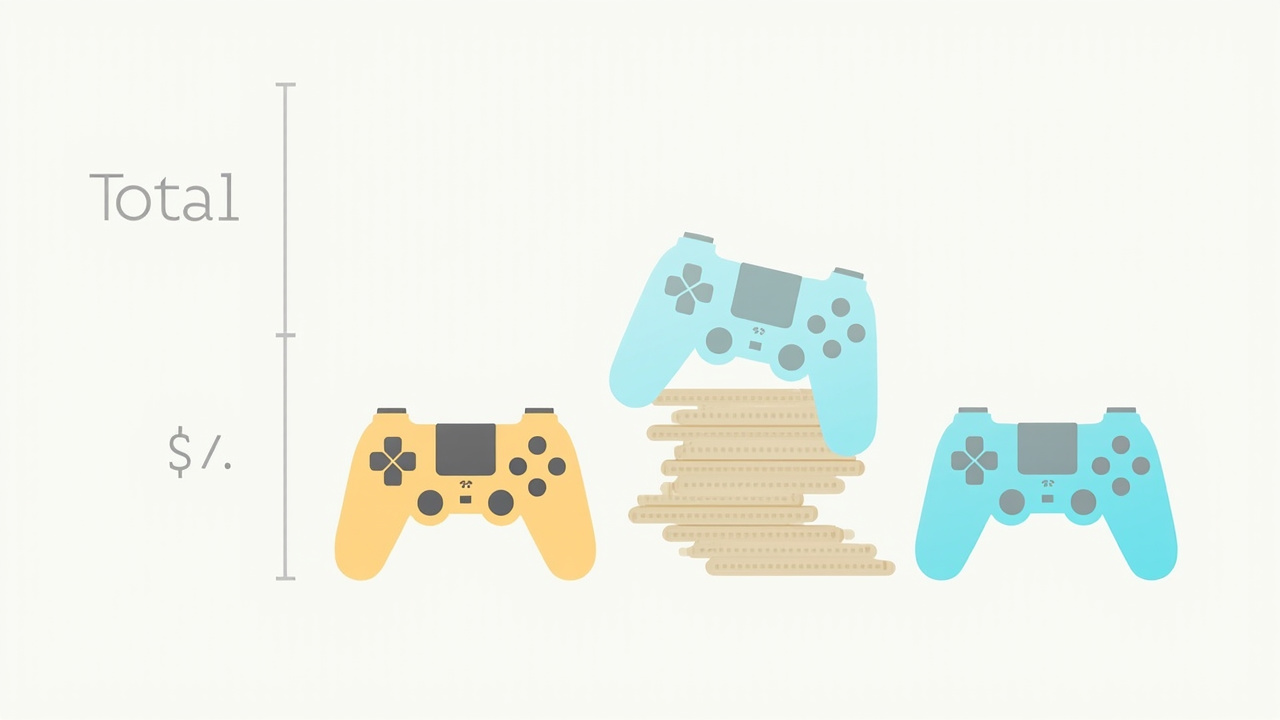
Sticker prices tell you almost nothing here. The real question is what each console costs over five years once you add the online subscription, average game spend, and resale value.
| Item | PS5 Pro | Xbox Series X | Steam Machine 2TB (projected) |
|---|---|---|---|
| Console price | $699 (Wikipedia) | $649.99 (Wikipedia, Oct 2025) | $799-$999 estimated (Valve has not announced official MSRP) |
| Online subscription (annual) | PS Plus Premium $215.88/yr (US list) | Game Pass Ultimate $275.88/yr (Wikipedia) | $0 mandatory (Steam is free; online play uses each game’s own service) |
| Avg full-price game (2026) | $69.99-$79.99 | $69.99-$79.99 (or included in Game Pass) | $29.99-$59.99 typical Steam sale price; $69.99 day-one AAA |
| 5-yr subscription total | ~$1,079 | ~$1,379 | $0 |
| 5-yr cost @ 6 full games bought/yr | $699 + $1,079 + $2,100 = $3,878 | $649.99 + $1,379 + $0 = $2,029 | $899 + $0 + $1,440 (Steam sale prices) = $2,339 |
| 5-yr cost @ 3 full games bought/yr | $699 + $1,079 + $1,050 = $2,828 | $649.99 + $1,379 + $0 = $2,029 | $899 + $0 + $720 (Steam sale prices) = $1,619 |
| Resale after 5 yrs (estimate) | $175-$245 (~30% retention) | $130-$195 (~25% retention) | $250-$400 (~35-40% retention, small-form-factor PC market) |
| Net 5-yr cost (heavy gamer, 6+ games/yr) | ~$3,633 | ~$1,834 | ~$1,989 |
| Net 5-yr cost (moderate gamer, 3 games/yr) | ~$2,583 | ~$1,834 | ~$1,219 |
Reading the table:
- The Xbox Series X is the cheapest option for almost any “I want to play a lot of different games” profile, because Game Pass Ultimate’s library replaces about $2,100/year in software spend. Its weak spot is the $22.99/month subscription which only beats out if you actually use the library.
- The Steam Machine is the cheapest option for a moderate Steam-library gamer (3 games/yr) because there is no console subscription tax at all, and Steam sale prices typically run 40-60% off MSRP within the first year of release. If you already own 50+ Steam games, your effective “new spend” is even lower.
- The PS5 Pro is the most expensive option in either scenario, but it carries the strongest exclusive pipeline (Marvel’s Spider-Man 2, Horizon, God of War, Final Fantasy XVI) and the deepest install base. You are paying for “I get to play what I want, when I want, with the people I want.”
The Steam Machine’s subscription number is genuinely $0 because there is no Sony/Microsoft-style paid online play tier. Steam multiplayer games each handle their own networking (Steamworks, but free). That line item alone removes $1,079-$1,379 from the 5-year bill versus the two consoles.
Build Quality and Durability
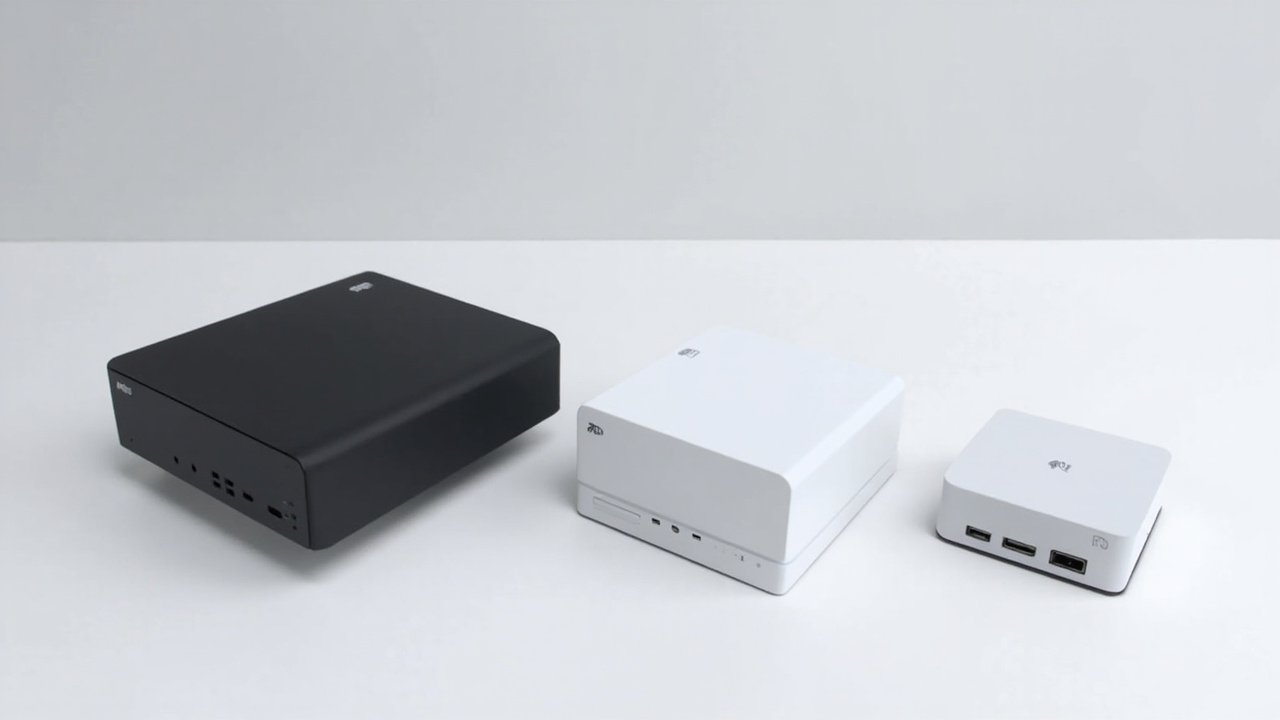
All three devices are designed to sit on a TV stand for five-plus years. The differences are in cooling headroom, storage expandability, port layout, and whether the device can be opened and upgraded.
| Spec | PS5 Pro | Xbox Series X | Steam Machine |
|---|---|---|---|
| Dimensions | 388 × 216 × 89 mm (15.3 × 8.5 × 3.5 in) | 301 × 151 × 151 mm (11.9 × 5.9 × 5.9 in) | 152 × 162.4 × 156 mm (6.0 × 6.4 × 6.1 in) |
| Weight | 3.1 kg (6.8 lb) | 4.45 kg (9.8 lb) | ~1.5-1.8 kg (3.3-4.0 lb, estimated) |
| Storage | 2 TB custom PCIe 4.0 NVMe SSD | 1 TB standard / 2 TB Galaxy Black SE | 512 GB or 2 TB NVMe SSD + microSD slot |
| Wi-Fi | Wi-Fi 7 | Wi-Fi 5 (Ethernet more common) | Wi-Fi 6E expected (Valve has not finalized) |
| HDMI | HDMI 2.1 (4K/120 Hz, VRR, ALLM) | HDMI 2.1 (4K/120 Hz, VRR, ALLM, FreeSync) | HDMI 2.0 only — 4K/120 Hz requires DisplayPort 1.4 |
| Optical drive | 4K UHD Blu-ray | 4K UHD Blu-ray | None |
| Repair / upgrade | Sealed, no user-serviceable parts | Sealed, no user-serviceable parts | Open platform, user can install other stores, OS, emulators |
| Noise under load | Quiet, ~30 dB at 1 m | Very quiet, ~26 dB at 1 m | Not yet measured |
Reading the table:
- The Steam Machine is by far the smallest (about the size of a large coffee mug). That is genuinely useful if your TV cabinet is full, but the missing HDMI 2.1 is a real compromise. If you have a 4K/120 Hz TV and want the full refresh-rate experience, you need a DisplayPort-capable display or you are capped at HDMI 2.0’s 4K/60 Hz. This is the single biggest hardware trade-off and is the result of Valve choosing open-source drivers (the HDMI Forum does not publish open HDMI 2.1 documentation).
- Both the PS5 Pro and Xbox Series X are sealed consoles with no user serviceability. If your SSD fails at year 4, you are paying Sony or Microsoft for repair or buying a new unit. The Steam Machine is an open PC — you can swap the SSD, install another OS, or repurpose it as a desktop when it ages out of gaming.
- The Xbox Series X has the quietest cooling in third-party measurements (Digital Foundry, multiple console launches). The PS5 Pro is a close second. Steam Machine cooling data is not yet available because reviewers do not have retail units as of June 2026.
The longevity question matters for the cost-per-use calculation: a console that lasts 7 years (Steam Machine, open platform) effectively halves its per-year cost compared to one that lasts 5 (PS5 Pro). If the Steam Machine’s component pricing stays reasonable through 2027-2028, it has the longest useful lifespan of the three by a wide margin.
Feature Breakdown
Performance (raw TFLOPS and architecture)
| Spec | PS5 Pro | Xbox Series X | Steam Machine |
|---|---|---|---|
| CPU | Custom AMD Zen 2, 8 cores, 3.85 GHz | Custom AMD Zen 2, 8 cores, 3.8 GHz | Semi-custom AMD Zen 4, 6c/12t, 4.8 GHz |
| GPU architecture | Custom RDNA 2, 60 CUs | Custom RDNA 2, 52 CUs | Semi-custom RDNA 3, 28 CUs @ 2.45 GHz |
| GPU TFLOPS | ~16.7 TFLOPS (with AI upscaling) | 12 TFLOPS | ~7-8 TFLOPS estimated (no proprietary upscaler) |
| System RAM | 16 GB GDDR6 | 16 GB GDDR6 | 16 GB DDR5 (shared) |
| Dedicated VRAM | 16 GB unified | 10 GB GPU + 6 GB standard | 8 GB GDDR6 dedicated |
| Upscaling tech | PlayStation Spectral Super Resolution (AI) | AMD FSR 2/3 | AMD FSR 3 / Lossless Scaling (open) |
| Effective 4K/60 performance | Excellent, often 4K/60 native or PSSR upscaled | Excellent, often 4K/60 native | Good, FSR-upscaled on demanding titles |
Reading the table:
- The PS5 Pro is the most powerful of the three on raw TFLOPS and is the only one with a proprietary AI upscaler (PSSR) tuned specifically for its hardware.
- The Xbox Series X is essentially the same generation of AMD silicon as the PS5 Pro but clocked lower and without the AI upscaler. The performance gap in real-world 4K games is usually 5-15% in the PS5 Pro’s favor.
- The Steam Machine is on a newer AMD generation (Zen 4 + RDNA 3) but with a much smaller GPU (28 CUs vs. 52-60 on the consoles). Digital Foundry’s pre-release analysis places it between the Xbox Series S and the PlayStation 5 in raw rasterization. The newer architecture helps on a per-watt basis, but the smaller die area hurts on absolute frame rates.
The honest summary: on a 4K/60 Hz display with the same demanding AAA game (Cyberpunk 2077, Alan Wake 2), the PS5 Pro will give you the highest settings and most consistent frame rate, the Xbox Series X is close behind, and the Steam Machine will need FSR 3 to keep up. On 1440p/60 Hz or 1080p/120 Hz, all three are very good.
Game libraries and exclusives
| Library aspect | PS5 Pro | Xbox Series X | Steam Machine |
|---|---|---|---|
| First-party exclusives | Spider-Man 2, God of War, Horizon, Final Fantasy XVI, Last of Us, Death Stranding 2 | Halo Infinite, Starfield, Forza Horizon 5, Gears 5, all future Bethesda/Activision Blizzard | None — depends entirely on what you sideload |
| Day-one AAA | Yes, most major releases | Yes, all first-party + Bethesda + ABK on Game Pass | Yes, most major releases via Steam |
| Back catalog depth | Excellent (PS1/PS2/PSP via PS Plus Premium) | Excellent (Xbox 360/OG Xbox via backward compatibility) | Effectively unlimited — your existing Steam library + Proton for Windows games |
| Subscription model | PS Plus Essential / Extra / Premium | Game Pass Ultimate (Console + PC + Cloud) | None mandatory (Steam is à la carte) |
| Cross-platform multiplayer | Yes | Yes | Yes (where Linux/Proton supports the anti-cheat) |
| VR support | PSVR2 (separate $549-$599 headset) | None first-party | Steam Frame (separate VR headset, sold alongside Steam Machine) |
| Cloud gaming | PS Plus Premium streaming | Xbox Cloud Gaming (built into Game Pass Ultimate) | None first-party (you can install GeForce Now client) |
Reading the table:
- The PS5 Pro wins on first-party exclusives, period. If you care about Marvel’s Spider-Man 2, Final Fantasy XVI, or the next God of War, the choice is made for you.
- The Xbox Series X wins on subscription value if you would otherwise buy a lot of games. Game Pass Ultimate’s library of 400+ titles makes the console + subscription package cheaper than PS Plus + buying games for almost any “wide-library” gamer.
- The Steam Machine wins on openness and back-catalog depth. If you own 100+ Steam games already, your marginal cost to play them on a new box is $0. If you want to play a 25-year-old Windows game that never got a console port, the Steam Machine will probably run it via Proton. If you want to install RetroArch and emulate your own legally owned retro library, you can do that too.
The library trade-off is philosophical: Sony and Microsoft have decided you should pay them $18-$23/month for access to a curated garden. Valve has decided you should pay them nothing and just buy what you want, when you want, with deep sale discounts. Both models work; the question is which one matches how you actually buy games.
Pros and Cons
PS5 Pro — Pros
- Most powerful dedicated console hardware of this generation (~16.7 TFLOPS, custom RDNA 2, AI upscaling)
- Strongest first-party exclusive pipeline (Spider-Man 2, God of War, Horizon, Final Fantasy XVI)
- Largest install base (~93 million PS5s sold, easier to find online multiplayer partners)
- Wi-Fi 7 + HDMI 2.1 for full 4K/120 Hz on modern TVs
- Quiet, compact, well-engineered cooling
- 2 TB SSD at launch (no need to upgrade storage immediately)
PS5 Pro — Cons
- Most expensive 5-year cost in any usage scenario that does not max out exclusives
- PS Plus Premium required for online multiplayer ($215.88/year in the US)
- Sealed platform — no sideloading, no other storefronts, no user upgrades
- Warranty and repair are Sony-only; sealed design means out-of-warranty failure = replace the box
Xbox Series X — Pros
- Cheapest 5-year cost for any “wide-library” gamer thanks to Game Pass Ultimate
- All first-party + Bethesda + Activision Blizzard titles on Game Pass at launch
- Best backward compatibility in the industry (multi-generational Xbox library)
- Xbox Cloud Gaming included with Game Pass Ultimate (phone, smart TV, Steam Deck)
- Quietest cooling of the three (Digital Foundry measurements)
Xbox Series X — Cons
- Smaller exclusive pipeline than Sony (Halo, Forza, Gears, Starfield are good but fewer blockbusters per year)
- Smaller install base than PS5 (fewer people to play online with on day one of new multiplayer games)
- Game Pass Ultimate price keeps climbing ($22.99/month in 2026, up from $19.99 at launch)
- Wi-Fi 5 only — Ethernet is strongly recommended for multiplayer
- 1 TB standard storage is tight for modern games (the 2 TB Galaxy Black SE is more expensive)
Steam Machine — Pros
- Open platform — install Epic, GOG, emulators, full desktop Linux
- No mandatory subscription — Steam is à la carte, multiplayer is free
- Cheapest 5-year cost for a moderate Steam-library gamer
- Smallest physical footprint (about 1/3 the volume of either console)
- Longest useful lifespan of the three — can be repurposed as a desktop PC at end of gaming life
- Works with your existing Steam library — if you own 50+ games already, marginal cost is effectively $0
- Steam Frame VR is sold alongside it for native PCVR (separate purchase)
Steam Machine — Cons
- No first-party exclusives — every game is available on multiple platforms
- No HDMI 2.1 — full 4K/120 Hz requires DisplayPort 1.4 (the HDMI Forum does not provide open HDMI 2.1 docs)
- No optical drive — cannot play 4K UHD Blu-ray movies or disc-based games
- Some multiplayer games with aggressive anti-cheat do not work under Linux (notably Valorant, Destiny 2’s competitive playlists have intermittent issues)
- No official MSRP yet as of June 2026 — third-party estimates of $799-$999 may not match the final price
- No cloud gaming service — you cannot stream games to your phone the way Xbox Cloud Gaming or PS Plus Premium streaming allow
- No physical game sales ecosystem — Valve has effectively ended Steam’s physical distribution, so every game is a digital download
Best For / Skip If
Pick the PS5 Pro if you are:
- A single-player AAA enthusiast who plays 3-5 major Sony exclusives per year
- Someone whose friend group already plays on PS5 (largest install base)
- Willing to pay $18/month for PS Plus Premium in exchange for online multiplayer + PS1/PS2/PSP catalog
- Comfortable with a sealed platform and trusting Sony’s 5-year hardware support
Skip the PS5 Pro if you are:
- A wide-library gamer who plays 6+ new releases per year (Game Pass math will save you more)
- A Steam library owner with 50+ games (the Steam Machine will let you play those at no marginal cost)
- Looking for the cheapest $650+ console to buy (Xbox Series X at $649.99 is cheaper)
- Someone who wants VR (PSVR2 is $549-$599 extra; Steam Frame is included in the Steam hardware family)
Pick the Xbox Series X if you are:
- A wide-library gamer who plays lots of different genres and would otherwise buy 8+ games per year
- Someone who values day-one first-party access (Halo, Forza, Gears, Starfield, future Bethesda titles)
- A cloud-gaming user who plays on phone, smart TV, or Steam Deck during commute/travel
- Comfortable paying $23/month for Game Pass Ultimate in exchange for a 400+ title library
Skip the Xbox Series X if you are:
- A “buy the games I want, keep them forever” gamer (your spend would be much higher than the math suggests)
- Someone whose friends all play on PS5 (smaller install base means harder to find online partners for new multiplayer games)
- Looking for the most powerful console hardware (PS5 Pro is faster)
- A Steam library owner with 50+ games (Steam Machine will let you play those at no marginal cost)
Pick the Steam Machine if you are:
- An existing Steam library owner with 50+ games (your marginal cost is effectively $0)
- Someone who values open platforms and wants to install Epic, GOG, emulators, or full desktop Linux
- A VR-curious gamer who might also buy the Steam Frame headset
- Comfortable paying PC prices for a PC-class device (the projected $799-$999 is more than either console)
- A long-horizon owner who wants a box that can be repurposed as a desktop in 5-7 years
Skip the Steam Machine if you are:
- Looking for the cheapest $650+ console to buy today (Xbox Series X at $649.99 is cheaper)
- A single-player AAA enthusiast who plays Sony exclusives (none of them are on Steam)
- Someone whose TV is HDMI 2.1 only (no DisplayPort input means you are capped at HDMI 2.0’s 4K/60)
- A competitive multiplayer gamer who plays Valorant or other anti-cheat-heavy titles that do not work on Linux
- Someone who wants cloud gaming to their phone or tablet (no equivalent service on Steam)
Bottom Line
The $650+ console market in 2026 is the most interesting it has been since the Xbox 360 vs PS3 era — and that is because there are finally three genuinely different value propositions on the table.
The Xbox Series X at $649.99 is the smartest pick for a wide-library gamer who would otherwise buy a lot of games, because Game Pass Ultimate’s 400+ title library replaces about $2,100/year in software spend. Net 5-year cost is about $1,834 — the cheapest of the three by a clear margin.
The Steam Machine at a projected $799-$999 is the smartest pick for anyone who already owns a meaningful Steam library (50+ games) and is comfortable with an open PC-class platform. Net 5-year cost for a moderate gamer is about $1,619, and that number drops further if your existing library is larger. The trade-offs are real (no HDMI 2.1, no optical drive, no first-party exclusives, some anti-cheat-heavy multiplayer games do not work) but they are honest trade-offs, not hidden ones.
The PS5 Pro at $699 is the smartest pick for a single-player AAA enthusiast whose friend group already plays on PlayStation. Net 5-year cost is about $2,583 for a moderate gamer and about $3,633 for a heavy gamer — the most expensive of the three in either scenario — but you are paying for the strongest exclusive pipeline, the largest install base, and the most powerful dedicated console hardware available in 2026.
The headline savings from picking the right one for your actual habits is about $180-$420 over five years. That is not a small number for a category where the consoles themselves only cost $650-$999 to begin with.
“Buy smart. Get more value.” In 2026, that means matching the console to the games you actually play — not buying the most powerful box, not buying the cheapest box, and definitely not buying the most hyped box.