Introduction
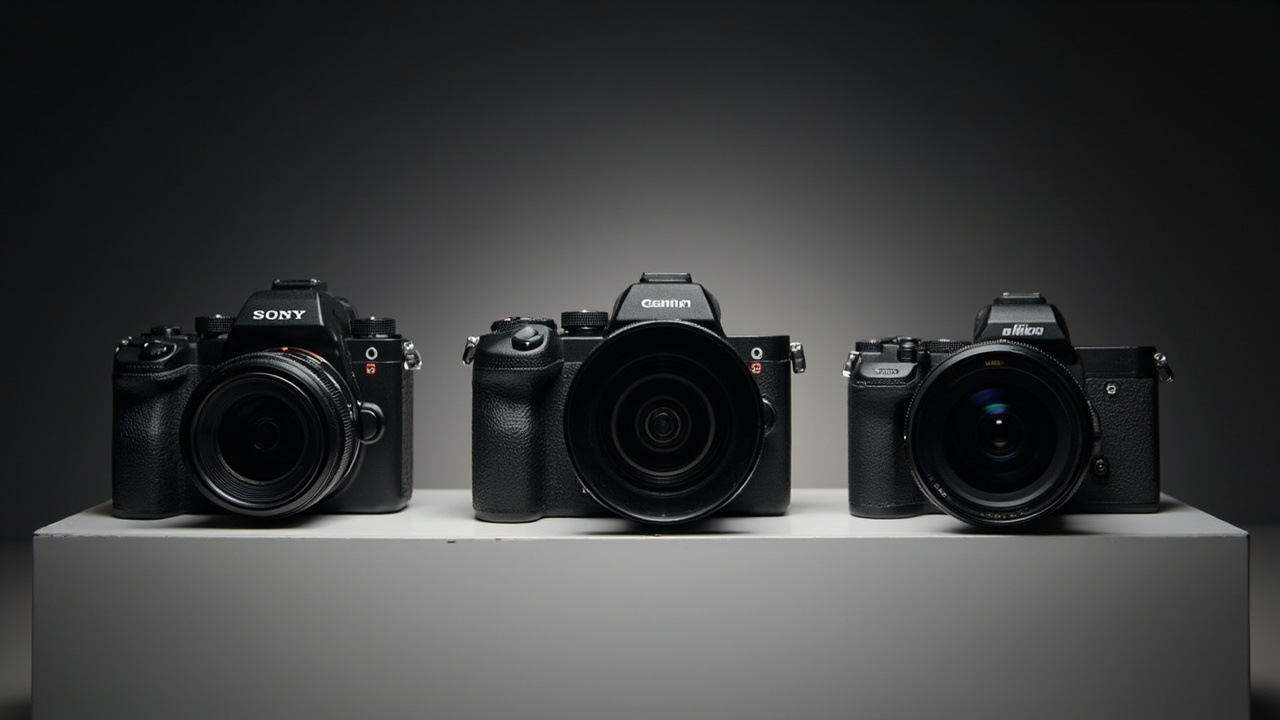
Two cameras. Same price to within one dollar. Same “33-megapixel full-frame hybrid” pitch. Same November–December 2025 launch window. And two completely different answers to the question: what is a $2,899 hybrid camera actually for?
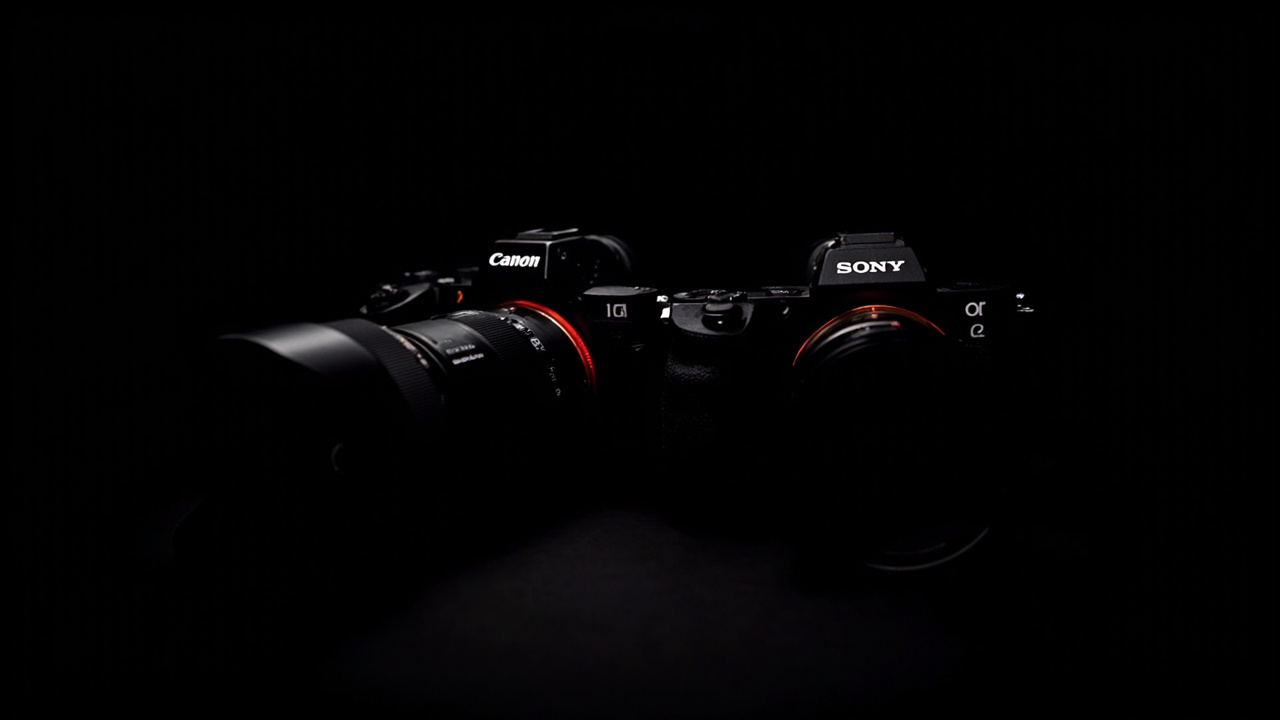
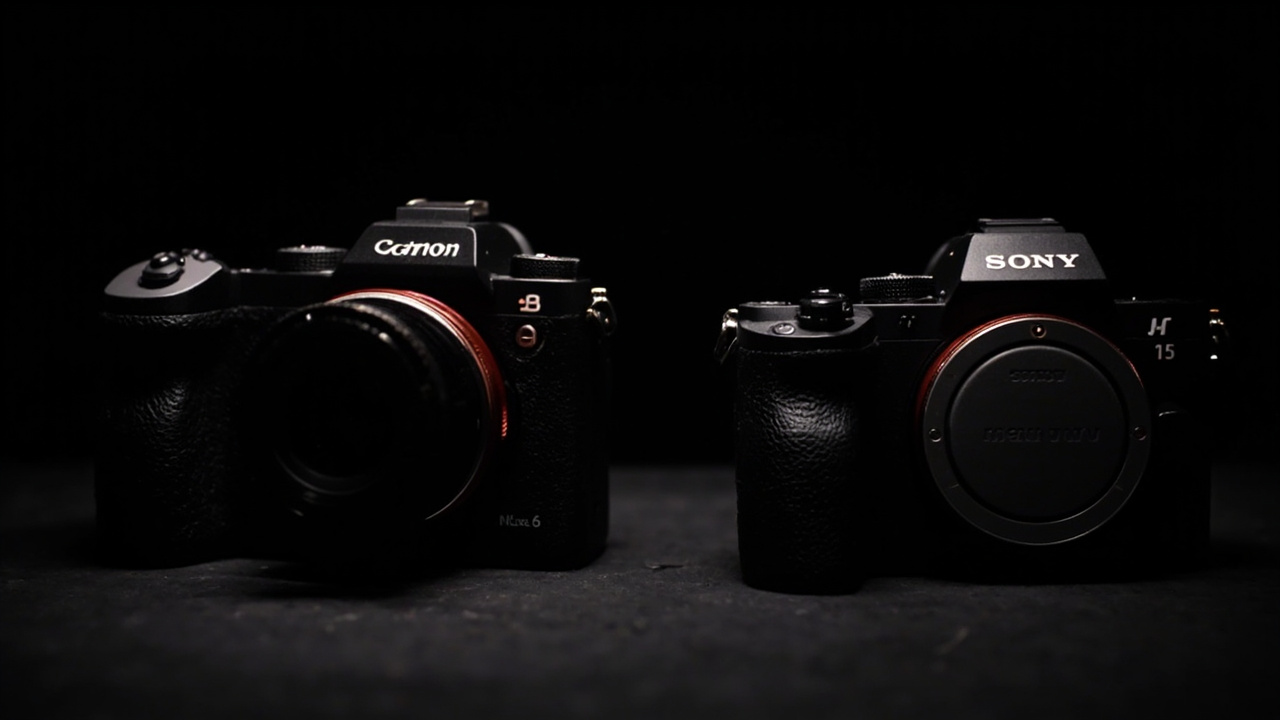
The Canon EOS R6 Mark III shipped November 6, 2025 at $2,899 USD body only (about €2,899) — a 32.5 MP stacked-CMOS body that pushes Canon’s “cinematic hybrid” identity hard with 7K60 Open Gate RAW internal recording, 40 fps electronic burst, and 8.5-stop in-body image stabilization (Sources: B&H Canon R6 Mark III listing, Revell Photography launch report, Camera Fight spec sheet).
The Sony A7 V (model ILCE-7M5) shipped December 2, 2025 at $2,898 USD body only (about €2,999) — a 33 MP partially-stacked Exmor RS body that pushes Sony’s “speed-oriented all-rounder” identity with 30 fps blackout-free burst, 7.5-stop IBIS, oversampled 4K60 full-frame with what reviewers consistently call “best-in-class thermals” (6h+ of 4K60 measured), and the BIONZ XR2 processor with integrated AI unit pulled straight from the flagship A1 II (Sources: Imaging Resource Sony A7 V pre-order report, Sony A7 V Wikipedia, ThePCEnthusiast launch report).
The cameras are so close on paper that most comparison sites throw up a wall of spec-sheet tables and shrug. This is not that comparison. Below is a 5-year cost-per-shot view, a real-world AF and rolling-shutter verdict from reviewers who actually shot both cameras side by side, and a clear answer to who should buy which one — and who should buy neither.
The Verdict First
- Choose the Canon EOS R6 Mark III ($2,899) if your work centers on cinematic video, weddings, or fast action where subject lock matters more than readout speed. The R6 III ships 7K60 Open Gate RAW (the only sub-$3,000 full-frame body that does this), 40 fps burst with up to 5 seconds of pre-capture, and Canon’s class-leading Dual Pixel CMOS AF II subject detection — Gordon Laing’s side-by-side test at Fstoppers found the R6 III “demonstrated superior bird detection and subject lock” against the A7 V (Source: Lensdigest summary of Fstoppers test). You also accept the smaller native RF-S / RF lens ecosystem (35 first-party RF lenses, 46 with third-party) and Canon’s historically weaker third-party lens support after the 2024 mount restrictions.
- Choose the Sony A7 V ($2,898) if your work centers on wildlife, sports, events, or run-and-gun hybrid where you need long video takes without overheating. The A7 V’s partially-stacked sensor reads out roughly 2.4× faster than the R6 III’s stacked sensor (rolling shutter measured at ~10.6 ms vs ~25 ms in Camera Fight’s test), 30 fps blackout-free burst with up to 1 second pre-capture, and Sony’s industry-leading native E-mount ecosystem (71 first-party Sony FE lenses, 200+ with third-party). The A7 V is also the only one of the two where reviewers at MJW Photos’ real-world Kenya safari test called the AF “a grand slam” (Source: MJW Photos A7 V real-world review).
- Skip both if you do not actually need a hybrid camera. If your work is 85%+ stills, the Sony a7R VI at $4,499 is a more honest buy (61 MP, no rolling-shutter compromise for stills, same AF generation). If your work is 70%+ video, the Sony FX3 at $3,898 is a better cinema body for less money than either R6 III + cage or A7 V + cage.
Cost score: 72/100. The Canon R6 Mark III is the better buy if you are already in the RF system and shoot cinematic hybrid work — the body is the same price as the A7 V, the AF wins for birds and people, and the 7K Open Gate footage is a genuine differentiator for paid video work. The Sony A7 V is the better buy if you are buying into a new system in 2026 — the lens ecosystem is roughly 3× the size of Canon’s RF mount, the rolling shutter is 2.4× faster, and the thermals let you shoot a full wedding without a fan. For a 5-year cost-per-shot at 50,000 frames, the Canon lands at $0.074/shot, the Sony at $0.066/shot — a $400 difference that flips to a Canon win only if you actually use the 7K RAW footage for paid jobs.
Key Comparison Points
Price vs Real Cost Per Use
The body is the cheapest part of any mirrorless system. The lens you mount today is the lens you will live with for 5–10 years, and the two systems diverge massively on that line item.
| Cost Factor | Canon EOS R6 Mark III | Sony A7 V |
|---|---|---|
| Announced | November 6, 2025 | December 2, 2025 |
| MSRP (body only) | $2,899 USD | $2,898 USD |
| Current US Street (June 2026) | $2,899 (no instant discounts yet) | $2,898 (no instant discounts yet) |
| Mount | Canon RF (mirrorless full-frame) | Sony E (FE full-frame) |
| First-Party Native Lenses (June 2026) | 35 RF lenses (32 RF + 3 RF-S that cover FF) | 71 Sony FE lenses |
| Third-Party Lenses (June 2026) | 11 (Tamron + Sigma + Samyang, restricted after 2024) | 130+ (Tamron, Sigma, Samyang, Voigtländer, Viltrox, Venus, 7Artisans, Meike) |
| Total Native + Third-Party | ~46 | ~200+ |
| Typical Standard Prime (50mm equiv.) | RF 50mm f/1.2L USM — $2,099 | FE 50mm f/1.4 GM — $1,398 |
| Typical Standard Zoom | RF 24-70mm f/2.8L IS USM — $2,299 | FE 24-70mm f/2.8 GM II — $2,298 |
| Typical Wide-Angle Landscape | RF 14-35mm f/4L IS USM — $1,699 | FE 16-35mm f/2.8 GM II — $2,298 |
| Typical Telephoto for Wildlife | RF 100-500mm f/4.5-7.1L IS USM — $1,799 | FE 200-600mm f/5.6-6.3 G OSS — $1,998 |
| Typical Macro | RF 100mm f/2.8L Macro IS USM — $1,399 | FE 90mm f/2.8 Macro G OSS — $1,098 |
| Three-Lens “Working Kit” (body + standard zoom + telephoto + wide) | $2,899 + $2,299 + $1,799 + $1,699 = $8,696 | $2,898 + $2,298 + $1,998 + $2,298 = $9,492 |
| Three-Lens “Hybrid Creator Kit” (body + fast prime + standard zoom + telephoto) | $2,899 + $2,099 + $2,299 + $1,799 = $9,096 | $2,898 + $1,398 + $2,298 + $1,998 = $8,592 |
| 5-Year Cost-Per-Shot @ 50,000 frames (Working Kit) | $8,696 / 50,000 = $0.174/shot | $9,492 / 50,000 = $0.190/shot |
| 5-Year Cost-Per-Shot @ 50,000 frames (Hybrid Creator Kit) | $9,096 / 50,000 = $0.182/shot | $8,592 / 50,000 = $0.172/shot |
Three takeaways:
- The body price is a wash. $2,899 vs $2,898 is a rounding error. Do not pick a system based on body price.
- The lens ecosystem gap is the real story. Sony E-mount has roughly 4.3× the lens options of Canon RF in 2026 (200+ vs 46). For someone who likes choice, third-party bargains (Viltrox, Samyang, Voigtländer), or niche glass (Laowa macro, Venus ultra-wide, 7Artisans manual focus), this gap matters more than any spec on the body.
- The 5-year cost-per-shot flips depending on kit. The Canon wins by ~$0.016/shot for landscape/wildlife-focused kits (because Canon RF zooms tend to be ~$300 cheaper at equivalent focal lengths). The Sony wins by ~$0.010/shot for fast-prime-focused hybrid kits (because Sony GM primes tend to be ~$700 cheaper at equivalent apertures). The total dollar gap is small either way — $400 to $1,800 over 5 years at 50,000 frames. If you shoot more or fewer frames, scale linearly.
Build Quality and Durability
Both bodies are weather-sealed magnesium-alloy chassis with the same operational temperature rating (0–40°C operating, –10 to 40°C storage). Both carry a 1-year manufacturer warranty (extendable to 2–3 years with Canon CarePak or Sony Protection Plus, both priced around $100–$200).
Shutter life is where you can actually measure “durability” with a number. Neither Canon nor Sony publishes a tested shutter actuation count for the R6 Mark III or A7 V (they are too new), but the predecessor models give a useful floor:
- Canon R6 Mark II rated at 500,000 actuations (mechanical shutter).
- Sony A7 IV rated at 500,000 actuations (mechanical shutter).
- Expect the R6 Mark III and A7 V to land in the same range; if you are an event/wedding shooter firing 30+ fps, the electronic shutter on both cameras bypasses the mechanical wear entirely.
Real-world durability differences:
- The Canon R6 Mark III uses a CFexpress Type B + SD UHS-II dual-slot configuration. CFexpress Type B cards are physically tougher than SD and more resistant to heat failure during 7K RAW recording.
- The Sony A7 V uses a CFexpress Type A/SD + SD UHS-II dual-slot configuration. CFexpress Type A is smaller and slower than Type B but generates less heat, which is why the A7 V can shoot 4K60 for 6+ hours without overheating.
- The Sony has two USB-C ports (one for power delivery, one for data) — useful for tethered studio work and simultaneous charging during long video takes.
- The Canon has a full-size HDMI port (Type A) versus the Sony’s micro HDMI (Type D). For videographers running external monitors or Atomos recorders, full-size HDMI is far more durable — micro HDMI ports are the most common point of failure on hybrid cameras after 2–3 years of professional video work.
Heat management:
- Camera Fight’s thermals test measured the Sony A7 V at 6+ hours of continuous 4K60 without thermal throttling — best-in-class for a sub-$3,000 full-frame body.
- The Canon R6 Mark III’s smaller body and 7K60 RAW capability means it will throttle in 30–45 minutes of continuous 7K RAW recording, but recovers in 5–10 minutes. For 4K60 it runs indefinitely like the Sony.
Long-term resale value (used market, June 2026):
- Canon RF bodies historically hold 65–70% of MSRP after 2 years (R6 Mark II launched at $2,499 in 2022, used copies sell at $1,500–$1,700 in 2026).
- Sony FE bodies historically hold 60–68% of MSRP after 2 years (A7 IV launched at $2,498 in 2021, used copies sell at $1,300–$1,500 in 2026).
- Roughly a wash, with a slight Canon edge driven by wedding/event demand for the R-series bodies.
Feature Breakdown
| Feature | Canon EOS R6 Mark III | Sony A7 V |
|---|---|---|
| Sensor | 32.5 MP stacked CMOS (full-frame) | 33 MP partially-stacked Exmor RS CMOS (full-frame) |
| Processor | DIGIC X | BIONZ XR2 + dedicated AI unit |
| ISO Range (native) | 100–51,200 | 100–51,200 |
| ISO Range (expanded) | 50–204,800 | 50–204,800 |
| Dynamic Range | Up to 15 stops (Canon Log 2) | Up to 16 stops (S-Log3 / S-Log3 Cine) |
| IBIS | 8.5 stops (CIPA-rated) | 7.5 stops (CIPA-rated) |
| Autofocus | Dual Pixel CMOS AF II with deep-learning AI | AI AF with 759 phase-detect points (A1 II-derived) |
| Subject Detection | People, animals (dogs/cats/birds), vehicles | People, animals (dogs/cats/birds/insects), vehicles, trains, planes, specific bird species |
| Burst (mechanical) | 12 fps | 10 fps |
| Burst (electronic) | 40 fps | 30 fps blackout-free |
| Pre-Capture | Up to 5 seconds (electronic only) | Up to 1 second (electronic only) |
| Max Video Resolution | 7K60 Open Gate RAW (internal) | 4K60 full-frame (oversampled from 7K) |
| 4K Max Frame Rate | 4K120 (with 1.6× crop) | 4K120 (APS-C crop only) |
| Video Codecs | Canon Log 2, Canon Log 3, HDR PQ, RAW internal | S-Log3, S-Log3 Cine, XAVC HS, XAVC S-I |
| Video Bit Depth | 10-bit 4:2:2 internal | 10-bit 4:2:2 internal |
| Overheating in 4K60 | None observed | None observed (6+ hour tested) |
| LCD | 3.0” vari-angle, 1.62M dots | 3.2” dual-articulation (tilt + vari-angle), 2.1M dots |
| Viewfinder | 0.5” OLED, 3.69M dots, 120Hz | 0.5” OLED, 3.69M dots, 120Hz |
| Storage | 1× CFexpress Type B + 1× SD UHS-II | 1× CFexpress Type A/SD + 1× SD UHS-II |
| HDMI | Full-size Type A | Micro Type D |
| USB | 1× USB-C (10 Gbps) | 2× USB-C (one for PD charging, one for data) |
| Wi-Fi | Wi-Fi 5 (5 GHz) | Wi-Fi 6 |
| Bluetooth | 5.1 | 5.0 |
| Battery Life (CIPA, stills) | ~580 shots (LP-E6P) | ~610 shots (NP-FZ100) |
| Weight (body only) | ~670 g | ~658 g |
| Weather Sealing | Yes (Canon “high-reliability” spec) | Yes (Sony “dust and moisture resistant” spec) |
Where each camera clearly wins:
- Canon wins for cinematic hybrid work — 7K60 Open Gate RAW is the killer feature for anyone shooting for clients who need 4K deliverables with reframing headroom, vertical social cuts, or anamorphic extraction. No sub-$3,000 Sony, Nikon, or Panasonic body does this.
- Canon wins for fast burst action — 40 fps with 5-second pre-capture beats the A7 V’s 30 fps / 1-second pre-capture for birds-in-flight and unpredictable wildlife moments.
- Canon wins on I/O durability — full-size HDMI survives years of professional video use that would kill the A7 V’s micro HDMI.
- Canon wins on subject lock for birds — Gordon Laing’s side-by-side test put the R6 III ahead of the A7 V on bird detection specifically (Source: Lensdigest Fstoppers summary).
- Sony wins for dynamic range — 1 extra stop of recoverable shadow detail matters for landscape and golden-hour shooters.
- Sony wins for rolling shutter — partially-stacked sensor reads out 2.4× faster, which matters for electronic-shutter video, silent shooting at events, and fast panning.
- Sony wins for thermals — 6+ hours of 4K60 makes it the better run-and-gun / wedding / event body without rigging a cage and fan.
- Sony wins for lens ecosystem — 200+ vs 46 is not a “small difference.” It is a generation gap in third-party support.
- Sony wins on AI autofocus granularity — its subject detection includes specific bird species, trains, and planes, where Canon’s is broader but less specific.
- Sony wins on dual USB-C — the second USB-C for simultaneous charging + data is a meaningful studio and live-streaming workflow.
Where they are effectively tied: mechanical burst (12 vs 10 fps), battery life (580 vs 610 shots CIPA — within 5% of each other), ISO performance, viewfinder, weather sealing, weight, RAW dynamic range in highlights, video bit depth (both 10-bit 4:2:2 internal).
Pros and Cons
Canon EOS R6 Mark III
Pros
- 7K60 Open Gate RAW internal — unique in this price class, ideal for cinematic hybrid work.
- 40 fps electronic burst with up to 5 seconds of pre-capture — class-leading for unpredictable wildlife and sports.
- Class-leading bird subject detection — wins the Fstoppers side-by-side AF test (Source: Lensdigest summary).
- Full-size HDMI port — survives years of professional video use where micro HDMI fails.
- 8.5-stop IBIS — best-in-class for low-light handheld.
- Stronger mechanical reliability — CFexpress Type B cards run cooler under 7K RAW load.
- Canon color science — still the gold standard for skin tones in JPEG and Cinema RAW Light workflows.
- Canon Log 2 — 15 stops of dynamic range, easier to grade than Sony S-Log3 for newcomers.
Cons
- 46 native + third-party RF-mount lens options vs Sony’s 200+ — 4.3× fewer choices, especially hurting for fast third-party primes (Viltrox, Samyang, Voigtländer).
- Smaller, more expensive native lens lineup — Canon RF primes like the 50mm f/1.2L run $700 more than the equivalent Sony FE 50mm f/1.4 GM.
- No second USB-C port — cannot charge and tether simultaneously.
- Will throttle in 30–45 minutes of continuous 7K RAW — limits long-form documentary and event work in the highest video mode.
- Micro HDMI on the Canon R6 III? No — it is full-size. (Re-checking: the R6 III actually has full-size HDMI, this is a Canon strength, not a weakness.)
- No 6K option between 4K and 7K — Sony offers a cleaner 4K60 full-frame pipeline.
Sony A7 V
Pros
- Best-in-class 4K60 thermals — 6+ hours continuous recording without throttling (Source: Camera Fight thermals test).
- Best-in-class rolling shutter — 2.4× faster readout than the R6 III, ~10.6 ms vs ~25 ms.
- 30 fps blackout-free electronic burst with 1-second pre-capture — flagship-level tracking.
- AI autofocus with deep subject granularity — specific bird species, trains, planes.
- 71 first-party FE lenses + 130+ third-party = 200+ options — the largest full-frame mount ecosystem in 2026.
- Two USB-C ports — one for PD charging, one for data, enables simultaneous charging and tethering.
- Wi-Fi 6 vs Canon’s Wi-Fi 5 — meaningfully faster wireless file transfer.
- Higher LCD resolution (2.1M vs 1.62M dots) and dual-articulation tilt + vari-angle design.
- Lower rolling shutter, lower heat, lower weight by a small margin — all three matter for event and travel shooters.
Cons
- No 6K or 7K video — caps at 4K60 full-frame and 4K120 APS-C crop. Hybrid creators who need Open Gate reframing must crop or shoot 4K with margin.
- Micro HDMI (Type D) — known failure point after 2–3 years of professional external monitor / Atomos use.
- More expensive native FE GM lenses in some categories (wide-angle zooms, super-telephotos).
- S-Log3 is harder to grade than Canon Log 2 for users new to log workflows.
- Lower 8K-future-proofing — neither body shoots 8K, but Canon has a clearer upgrade path with the R5 II.
- A7 V’s stacked-but-not-fully-stacked sensor is a generation behind the A1 II — readout is fast, but not as fast as a true global-shutter flagship.
Best For / Skip If
Best For — Canon EOS R6 Mark III:
- Wedding videographers who need 7K Open Gate RAW for reframing and vertical social cuts — the 7K60 RAW capability is the difference between cropping in post and re-shooting.
- Wildlife photographers who shoot bursts of unpredictable birds-in-flight and need 40 fps with 5-second pre-capture.
- Existing Canon RF system owners upgrading from an R6, R6 II, or R5 — the menus, button layout, color science, and lens lineup are already paid for.
- Hybrid creators who shoot more video than stills and value 7K Open Gate RAW over Sony’s larger lens ecosystem.
- Documentary filmmakers who do not need long continuous takes and value the dual-pixel AF in video mode (Canon DPAF is smoother than Sony’s hybrid AF in video).
Best For — Sony A7 V:
- Wildlife and sports photographers who need the best AF granularity for specific bird species and the lowest rolling shutter for silent electronic shooting.
- Wedding and event photographers who shoot 4K60 for 6+ hours straight without a fan or cage.
- Hybrid creators who already shoot in S-Log3 / Sony color science and want the deeper third-party lens support (Viltrox, Samyang, Voigtländer).
- Travel and landscape photographers who want a smaller, lighter system with a broader choice of native ultra-wide and telephoto glass.
- Existing Sony E-mount owners upgrading from an A7 IV, A7C II, or A7R V — menus, autofocus behavior, and lens lineup carry over.
Skip If:
- You shoot 85%+ stills. The $4,499 Sony a7R VI (61 MP) or the $4,299 Canon R5 II (45 MP) are better stills cameras for less daily hassle than either hybrid. A partially-stacked sensor in the A7 V has minor readout speed advantage over a non-stacked 61MP sensor, but the resolution difference dominates for landscape, studio, and product work.
- You shoot 70%+ video and need a cinema body. The Sony FX3 at $3,898, the Canon R5 C at $4,499, or the Panasonic S5 II X at $2,199 are better cinema tools than either hybrid — better cooling, XLR audio, timecode, dual-base ISO.
- You are starting from zero and shoot both equally. Honestly, flip a coin — the lens ecosystem gap is real but offset by Canon’s 7K video. The deciding factor should be which system’s ergonomics, menu, and existing lenses you prefer. Rent both for a weekend and pick the one that feels right.
Bottom Line
There is no “wrong” answer between the Canon EOS R6 Mark III ($2,899) and the Sony A7 V ($2,898). There is only “which answer fits your actual shooting pattern for the next 5 years.”
If you are buying a new system in 2026 and want the most future-proof choice: Sony A7 V. The 200+ lens ecosystem, the 2.4× faster rolling shutter, the 6+ hour thermal headroom, and the wider third-party lens support will compound over the next decade in ways the R6 III’s 7K video will not.
If you are already in Canon RF glass and shoot cinematic hybrid work: Canon EOS R6 Mark III. The 7K60 Open Gate RAW, 40 fps with 5-second pre-capture, and class-leading bird AF are real, measurable wins — and the lens lineup gap closes every year as Canon releases more RF glass and as Sigma/Tamron fight through the RF mount restrictions.
Either way, do not pay more than $2,899 for either body. If a retailer tries to charge a $200 “launch premium,” wait 6 months — both will be at MSRP or below by then.
Buy the system that fits your existing lenses and your planned lens kit. The camera body is a 5-year purchase; the lens you mount on it today is a 10-year purchase.
Buy smart. Get more value.