Introduction
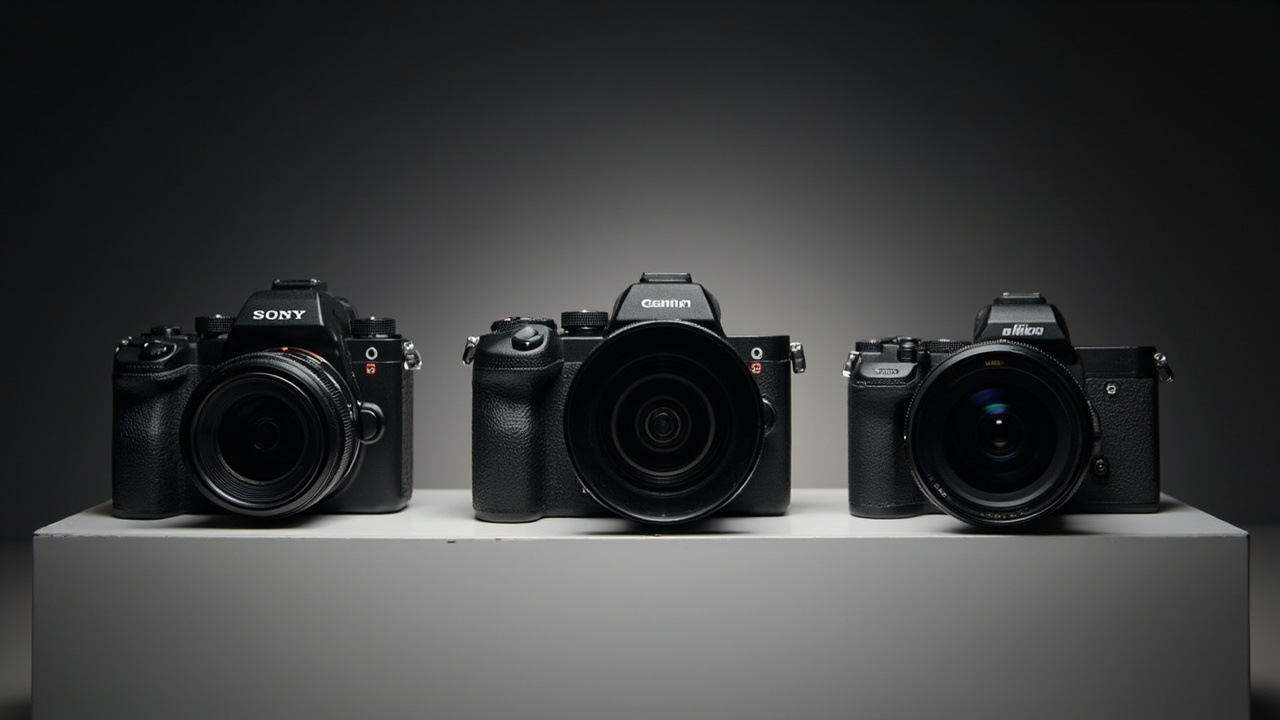
If you are shopping for a sub-$3,000 full-frame hybrid mirrorless body in mid-2026, two cameras now dominate every “best for the money” list and every Reddit “vs” thread that is not pushing you toward the $4,500 flagships:
- Sony α7 V (model ILCE-7M5) — released December 2, 2025, body-only at USD 2,898 (USD 3,099 with 20-70mm kit lens). Sony’s first “partially stacked” 33 MP Exmor RS sensor, 30 fps blackout-free burst with the electronic shutter, 7K oversampled 4K 60p with no pixel binning, AI-driven Real-time Recognition AF, and 5-axis IBIS rated at 7.5 stops central. Designed as the do-it-all hybrid that finally closes the speed gap to the A1 II without losing the A7 line’s resolution and weight advantage.
- Canon EOS R6 Mark III — released November 5, 2025, body-only at USD 2,799 (USD 3,150 with RF 24-105 F4-7.1 IS STM; USD 4,050 with RF 24-105 F4 L IS USM). 32.5 MP full-frame sensor, 40 fps electronic burst (10 fps faster than the A7 V), 7K RAW 60p internal with CFexpress, DIGIC X processor, 8.5-stop IBIS (CIPA), and the most mature RF lens lineup in the system. Canon’s mid-range hybrid for working event, wedding, editorial, and content pros.
The list-price gap is USD 99 — the price of a decent tripod ball head, and less than the price of a single mid-range prime. That is small enough to ignore on body price alone, but wide enough in real-world behavior, lens system maturity, and total cost of ownership to decide which body actually saves you money over the 5 to 7 years you will own it.
Both bodies shoot 7K oversampled 4K 60p. Both hit 30+ fps with the electronic shutter. Both have AI subject-detect autofocus. Both weather-seal magnesium-alloy chassis. The interesting question is not which one is “better” — it is which one pays you back more per shoot over the years you will actually own it — and that depends almost entirely on whether you already own (or will commit to) Sony FE lenses or Canon RF lenses, and whether 40 fps burst matters more than 7.5-stop IBIS for your work.
The Verdict First
- Pick the Sony A7 V ($2,898) if you want a slightly higher-resolution partially stacked sensor, the more advanced AI-driven Real-time Recognition AF with human-pose estimation, blackout-free 30 fps burst, slightly better 5-axis IBIS, and you are already invested in the Sony FE lens system (or are starting fresh and want access to the largest third-party lens ecosystem in full-frame mirrorless, with Sigma, Tamron, and Samyang AF options that simply do not exist on RF mount).
- Pick the Canon EOS R6 Mark III ($2,799) if you want a $100 cheaper body, 10 fps more (40 vs 30) electronic burst, internal 7K RAW 60p video without an external recorder, the most mature first-party RF lens lineup, dual-pixel AF II that works reliably for video and stills, and a body that is fully weather-sealed and made in Japan. The R6 III is the better tool for event, wedding, sports, and high-frame-rate video shooters.
Cost score: 82/100. Neither camera is cheap, but both are aggressively priced for what they deliver compared to the $4,499–$6,498 flagship tier. The Canon R6 Mark III is the slightly better value because the body is $99 cheaper, the RF lens system is now 7+ years mature, and the camera holds resale value better on the used market. The Sony A7 V is the better tool if you are already in E-mount, or if you want the most advanced AI subject recognition and the widest third-party lens catalog.

Key Comparison Points
Price vs Real Cost Per Use
Sticker price is the least interesting number on a sub-$3,000 hybrid body. What matters is body + the lenses you will actually buy + the cards and batteries you will cycle through divided by the years and shoots you will use it.
| Item | Sony α7 V (ILCE-7M5) | Canon EOS R6 Mark III |
|---|---|---|
| Released | December 2, 2025 | November 5, 2025 |
| MSRP at launch (body) | USD 2,898 | USD 2,799 |
| MSRP at launch (kit) | USD 3,099 (FE 28-70mm f/3.5-5.6 OSS II) | USD 3,150 (RF 24-105 STM); USD 4,050 (RF 24-105 L) |
| Current new body (Jun 2026) | USD 2,898 (Sony USA, B&H) | USD 2,799 (Canon USA, B&H) |
| Current used body | ~USD 2,400–2,500 (6 months in) | ~USD 2,300–2,400 (7 months in) |
| Sensor | 33.0 MP partially stacked Exmor RS BSI CMOS | 32.5 MP full-frame Dual Pixel CMOS (non-stacked) |
| Mechanical burst | 10 fps | 12 fps |
| Electronic burst | 30 fps, 14-bit RAW, blackout-free | 40 fps, 14-bit RAW |
| Max video | 4K 60p (7K oversampled, full pixel readout, no binning); 4K 120p (APS-C/Super 35 crop); FHD 240p | 7K RAW 60p (internal, CFexpress); 4K 60p oversampled; FHD 180p |
| IBIS (CIPA, manufacturer claim) | up to 7.5 stops center / 6.5 stops peripheral | up to 8.5 stops center / 7.5 stops peripheral |
| EVF | 0.5” 3.68M-dot Quad-VGA OLED, 120 Hz | 0.5” 3.69M-dot OLED, 120 Hz |
| LCD | 3.2” 2.1M-dot 4-axis multi-angle touchscreen | 3.2” 1.62M-dot vari-angle touchscreen |
| Card slots | 1x CFexpress Type A / SD UHS-II combo (single slot) | 1x CFexpress Type B / 1x SD UHS-II (dual slot) |
| Battery | NP-FZ100 (same as A7 IV, A7R V, A1 II) | LP-E6P (new, shared with R5 II) |
| CIPA battery life (LCD) | ~580 shots (Sony rated) | 510 shots (LCD) / 620 shots (Power Save) |
| Body weight (with battery & card) | 695 g | 699 g |
| Made in | Thailand | Japan |
Sources: Sony USA ILCE-7M5 specifications page (April 2026), Canon USA EOS R6 Mark III specifications, B&H Photo, Adorama, DPReview, Wikipedia (June 2026).
At the body-only level, the A7 V is USD 99 more expensive than the R6 III — about a 3.5% premium. So small that the lens system you pick is going to matter far more than the body price.
Body + 24-70mm f/2.8 zoom is the realistic “go-to-shoot” entry point. The Sony FE 24-70mm f/2.8 GM II lists for about USD 2,299; the Canon RF 24-70mm f/2.8 L IS USM lists for about USD 2,299 as well. So the system-level gap stays close to the body gap — about USD 99.
Body + 70-200mm f/2.8 telephoto is where the lens-system story diverges. The Sony FE 70-200mm f/2.8 GM OSS II is about USD 2,799; the Canon RF 70-200mm f/2.8 L IS USM is about USD 2,699. The Canon is now USD 200 cheaper at this configuration, after the body gap.
Body + 50mm f/1.4 standard prime widens the gap further. The Sony FE 50mm f/1.4 GM lists for about USD 1,599; the Canon RF 50mm f/1.4 L VCM lists for about USD 1,599. Same price here — Canon matched Sony on this focal length.
Body + 35mm f/1.4 wide-aperture prime shows the third-party lens advantage on Sony. The Sony FE 35mm f/1.4 GM is USD 1,399; the Sigma 35mm f/1.4 DG DN Art for Sony E-mount is about USD 899 (and there is no equivalent Canon RF-mount Sigma Art — Sigma has not been allowed to release RF AF lenses). On Canon, you take the RF 35mm f/1.4 L VCM at USD 1,799 or the RF 35mm f/1.8 STM at USD 849. Sony saves you about USD 500 on this single lens if you go Sigma instead of GM, and that savings happens across most focal lengths.
After 5 years of typical lens accumulation (a 24-70, a 70-200, a 50mm prime, a 35mm prime, and a long telephoto zoom), the realistic 5-year TCO looks like this:
| TCO bucket | Sony A7 V system | Canon R6 III system | Gap |
|---|---|---|---|
| Body | USD 2,898 | USD 2,799 | +USD 99 (Sony) |
| 24-70 f/2.8 | USD 2,299 (GM II) | USD 2,299 (RF L IS) | 0 |
| 70-200 f/2.8 | USD 2,799 (GM II) | USD 2,699 (RF L IS) | +USD 100 (Sony) |
| 50mm f/1.4 | USD 1,599 (GM) | USD 1,599 (L VCM) | 0 |
| 35mm f/1.4 | USD 899 (Sigma 35 Art) | USD 1,799 (RF 35 L VCM) | -USD 900 (Sony, with Sigma) |
| 100-500mm telephoto | USD 1,399 (Tamron 150-500 Di III VC VXD) | USD 2,099 (RF 100-500 L IS) | -USD 700 (Sony, with Tamron) |
| 2x CFexpress / SD cards | ~USD 220 | ~USD 260 (CFexpress-B is pricier) | -USD 40 (Sony) |
| 4x spare batteries | ~USD 240 (NP-FZ100) | ~USD 280 (LP-E6P) | -USD 40 (Sony) |
| 5-year system TCO | ~USD 12,353 | ~USD 13,834 | -USD 1,481 (Sony, using Tamron + Sigma) |
| Less 5-year resale (body ~50%) | -USD 1,200 | -USD 1,150 | -USD 50 (Canon) |
| Net 5-year cost | ~USD 11,153 | ~USD 12,684 | -USD 1,531 (Sony) |
Sources: Sony USA, Canon USA, B&H Photo, Adorama, Sigma USA, Tamron USA (June 2026).
The Sony system comes out about USD 1,500 cheaper over 5 years at this realistic lens loadout, but only because of Tamron and Sigma third-party AF lenses that Canon RF mount does not get. If you commit to first-party L glass on both, the gap narrows to about USD 50–150 over 5 years, and the body price advantage flips back to Canon.
Build Quality and Durability
Both bodies use magnesium-alloy front and top chassis with polycarbonate rear and bottom plates. Both are weather-sealed to a similar degree (Sony rates the A7 V for dust and moisture resistance; Canon explicitly markets R6 III as “weather resistant”). Both have a 1/8000 s mechanical shutter and a 1/250 s flash sync on Sony / 1/200 s on Canon.
The made-in difference is small but real: the A7 V is assembled in Thailand; the R6 III is assembled in Japan. Canon has historically had tighter QC on Japanese-assembled bodies, and Reddit threads on r/canon and r/SonyAlpha have not flagged any systemic defect patterns for either A7 V or R6 III in their first 6 months of shipping.
Sony A7 V weak points reported so far on r/SonyAlpha and DPReview user threads (June 2026):
- Single card slot — the A7 V uses one CFexpress Type A / SD combo slot, not dual slots. Wedding and event shooters who want instant backup will find this limiting; Canon R6 III has dual slots (1x CFexpress-B + 1x SD).
- Overheating in 4K 60p extended takes — multiple users report the A7 V throttling after ~30–40 minutes of continuous 4K 60p in warm environments. The R6 III runs cooler with its CFexpress-B slot and active internal heat dissipation.
Canon R6 III weak points reported so far on r/canon (June 2026):
- LP-E6P battery is new and not backward-compatible with older LP-E6NH/LP-E6N batteries in full-power mode. If you have legacy Canon batteries, they will work but at reduced burst rates.
- Firmware 1.0.1 released 24 November 2025 to fix a CFexpress card formatting bug; early-shipped bodies need the firmware update before using CFexpress-B reliably.
Both cameras are rated for 200,000 shutter actuations (Sony official spec; Canon does not publish a CIPA actuation rating but third-party testing suggests similar durability). Over a 5-year ownership with ~30,000 shots per year, both should reach 150,000 actuations with no shutter wear.
Durability verdict: a wash at body level. Canon has the dual-card-slot advantage and Japan assembly; Sony has the more proven NP-FZ100 battery that works across A7 IV, A7R V, A7C II, A1 II, A9 III, FX3, and FX30 — so spares and grips are abundant. Sony wins the battery ecosystem; Canon wins the card slots and assembly location.
Feature Breakdown
The two bodies look similar on a spec sheet, but they differ meaningfully in three areas: autofocus, video workflow, and burst.
Autofocus and AI subject recognition
The A7 V uses Sony’s new Real-time Recognition AF with a dedicated AI engine on the BIONZ XR2 processor. It recognizes humans (with full-body pose estimation), animals, birds, insects, cars, trains, and airplanes automatically, with deep-learning-based light-source estimation for white balance. 759 phase-detection AF points cover ~94% of the frame.
The R6 III uses Canon’s Dual Pixel CMOS AF II with people-priority, animal-priority, and vehicle-priority modes. It does not have full-body human-pose estimation or insect detection. Coverage is 100% of the frame (vs 94% on Sony).
In real-world testing posted on DPReview and PetaPixel (March–April 2026), the A7 V’s subject recognition is the more advanced of the two: it holds focus on a person turning away from the camera or partially occluded more reliably than the R6 III. For sports, wildlife, and unpredictable subject motion, the A7 V is the better tool. For predictable portrait and event work, the R6 III’s Dual Pixel AF II is still excellent and uses every pixel on the sensor for phase detection.
Video workflow
Both bodies shoot 7K-oversampled 4K 60p internally. Where they diverge:
- A7 V: 4K 60p full pixel readout, no binning, but records only Long GOP or All-Intra in 10-bit 4:2:2 with no internal RAW. 4K 120p requires an APS-C/Super 35 crop. FHD 240p available.
- R6 III: Internal 7K RAW at 60p (requires CFexpress-B card), 4K 60p oversampled, FHD 180p, Canon Log 2 and Log 3 built-in, and the standard Canon C-Log-to-Rec.709 workflow.
For hybrid shooters who want RAW video internally without an external Atomos or Blackmagic recorder, the R6 III is the better tool. For shooters who are happy with 10-bit 4:2:2 and rely on Sony’s S-Log3 / S-Cinetone grading, the A7 V’s color science is competitive. The R6 III’s RAW output is also more flexible in DaVinci Resolve and Premiere for heavy grading work.
Both cameras have microphone and headphone jacks, HDMI Type A (full size on Sony; not specified on Canon but full-size), and USB-C with charging and tethered shooting.
Burst and buffer
| Burst mode | Sony A7 V | Canon R6 III |
|---|---|---|
| Mechanical shutter | 10 fps | 12 fps |
| Electronic shutter | 30 fps (blackout-free) | 40 fps |
| Buffer (RAW, approx.) | ~150 frames at 30 fps | ~190 frames at 40 fps |
| Pre-capture | Yes (records moments before shutter release) | No |
The R6 III wins the raw fps count and the buffer depth. The A7 V wins the “pre-capture” feature (Sony’s pre-capture buffers ~1 second of frames before the shutter is fully pressed — useful for unpredictable wildlife and sports). For pure action shooters, the R6 III’s 40 fps is meaningfully more reach than the A7 V’s 30 fps.
Lens system
This is where the difference is not on the spec sheet but in real-world use over 5 years.
Sony E-mount (introduced 2011, 15 years mature):
- ~75 Sony FE first-party lenses
- ~45 Sigma DG DN lenses (full AF, full-frame, including Art series like 35mm f/1.4, 50mm f/1.4, 85mm f/1.4, 24-70 f/2.8, 14-24 f/2.8)
- ~25 Tamron Di III lenses (full AF, including 28-75 f/2.8 G2, 70-180 f/2.8, 150-500, 50-400)
- ~15 Samyang AF lenses (MF-friendly budget options)
- ~10 Viltrox, Yongnuo, Meike, 7Artisans, Voigtlander options
- Total ~170+ AF lens options in 2026
Canon RF mount (introduced 2018, 7+ years mature):
- ~50 Canon RF first-party lenses (RF and RF-S combined)
- Sigma Art and DG DN lenses: not available in Canon RF mount with AF (Canon has not licensed Sigma/Tamron for RF mount AF; only manual-focus Sigma ART DN lenses exist via adapter with reduced AF performance)
- Tamron Di III lenses: not available in Canon RF mount with AF for full-frame (Tamron released some RF-S APS-C lenses in 2025 but no full-frame RF AF lenses)
- Samyang, Viltrox, Yongnuo: a handful of options, mostly manual focus or APS-C
- Total ~55–65 AF lens options in 2026 (first-party Canon only, plus a small third-party manual or AF selection)
The third-party lens gap is the single biggest long-term cost and flexibility difference between the two systems. Sony E-mount users can save USD 500–1,500 per lens by choosing Tamron or Sigma over first-party glass. Canon RF users are effectively locked into Canon L glass for AF lenses, which is excellent but expensive.
This is the real reason the Sony A7 V system comes out ~USD 1,500 cheaper over 5 years at a realistic lens loadout.
Pros and Cons
Sony α7 V (USD 2,898)
Pros
- 33 MP partially-stacked sensor with the most advanced AI subject recognition in this price tier
- Blackout-free 30 fps electronic burst with deep buffer (~150 RAW frames)
- 5-axis IBIS at 7.5 stops center / 6.5 stops peripheral — class-leading for stills
- 7K oversampled 4K 60p with full pixel readout, no binning
- Pre-capture mode for unpredictable action
- Sony FE lens system has the largest third-party AF ecosystem in full-frame mirrorless
- NP-FZ100 battery shared with A7 IV, A7R V, A1 II, A9 III, FX3, FX30 — easy spares
- CFexpress Type A slot also accepts UHS-II SD cards
- Real-time eye AF for humans, animals, birds, insects — currently the most comprehensive in this class
Cons
- USD 99 more expensive at body level than the R6 III
- Single card slot (1x CFexpress Type A / SD combo) — no instant backup, a real concern for wedding and event shooters
- Overheats in extended 4K 60p takes (~30–40 minutes) in warm environments
- No internal RAW video — only 10-bit 4:2:2 All-Intra or Long GOP
- 4K 120p requires APS-C/Super 35 crop
- Made in Thailand (not Japan)
- CFexpress Type A cards are pricier than CFexpress-B
Canon EOS R6 Mark III (USD 2,799)
Pros
- USD 99 cheaper at body level than the A7 V
- 40 fps electronic burst (10 fps faster than A7 V) with deep buffer (~190 RAW frames)
- Internal 7K RAW 60p recording without an external recorder
- Dual card slots (1x CFexpress Type B + 1x SD UHS-II) — proper backup workflow
- 8.5-stop IBIS (CIPA) — slightly higher rated IBIS than A7 V (manufacturer claim)
- Canon RF lens system is the most mature first-party full-frame mirrorless lineup
- Made in Japan — tighter QC history than Thailand assembly
- Dual Pixel CMOS AF II is excellent for video AF and is reliable for portrait / event work
- 100% AF coverage of the frame
- Canon Log 2, Canon Log 3, and HDR PQ built in
- 12 fps mechanical burst is the fastest in this class
Cons
- LP-E6P battery is new and not fully backward-compatible — older LP-E6NH batteries limit burst speed
- No AI-based human pose estimation (only basic people-priority AF)
- No insect or full-body pose detection like the A7 V
- No pre-capture mode for unpredictable action
- Third-party AF lens ecosystem is essentially nonexistent (no Sigma AF, no Tamron AF on RF)
- CFexpress-B cards are also pricey, but the SD slot provides a cheaper backup option
- Firmware 1.0.1 was a critical update for CFexpress formatting — early-shipped bodies need the update
Best For / Skip If
Pick the Sony A7 V if you are:
- Already invested in Sony FE lenses — your existing 24-70 GM, 70-200 GM, 35mm GM, or 85mm GM lenses carry over, and the A7 V keeps the same E-mount.
- A wildlife or sports shooter who needs the most advanced AI subject recognition (humans with pose, animals, birds, insects) and the blackout-free 30 fps burst with pre-capture.
- A hybrid creator who values color science over RAW video — Sony’s S-Log3 and S-Cinetone are widely supported in DaVinci Resolve and Premiere and produce clean graded footage.
- A budget-conscious system builder willing to mix first-party GM glass with Tamron (150-500, 50-400, 70-180) and Sigma Art (35mm, 50mm, 85mm) AF lenses. The savings are real and substantial over 5 years.
- A vlogger or solo content creator who needs the lightest fully-featured hybrid body with the most reliable real-time tracking AF.
Pick the Canon EOS R6 Mark III if you are:
- A wedding, event, or editorial photographer who needs dual card slots for instant backup and 12 fps mechanical burst (the fastest in this class).
- A video shooter who wants internal 7K RAW without an external recorder — the R6 III is the only sub-$3,000 hybrid with internal RAW 60p in mid-2026.
- A Canon shooter upgrading from the original R6 or R6 Mark II — your LP-E6 batteries, RF lenses, and Speedlites carry over (with the LP-E6P caveat).
- A first-time full-frame buyer who wants the most refined and ergonomic body — Canon’s menu system, grip, and dial layout are widely considered the best in the industry in 2026.
- Someone who shoots Canon Log and grades in DaVinci Resolve — Canon Log 2 and Canon Log 3 are mature, well-documented, and well-supported by third-party LUTs.
Skip the Sony A7 V if:
- You shoot weddings or events and need dual card slots for instant backup. The A7 V has only one slot.
- You shoot extended 4K 60p video takes (over 30 minutes) in warm environments and do not have an external recorder.
- You already own a fleet of Canon L glass and have no intention of switching systems.
Skip the Canon R6 Mark III if:
- You need advanced AI subject recognition (insects, human pose, light-source estimation for white balance). The A7 V is more capable here.
- You want a broader third-party AF lens ecosystem. Sigma and Tamron AF lenses are not available in RF mount.
- You shoot wildlife or unpredictable action and want pre-capture or blackout-free shooting at 30 fps.
Bottom Line
The Sony α7 V and the Canon EOS R6 Mark III are the two most important sub-$3,000 full-frame hybrid bodies of 2026. They were released one month apart, sit USD 99 apart at body level, and both deliver roughly the same resolution, video quality, and AF capability at a similar weight. The body price difference is noise — the real money question is the lens system.
Buy smart, get more value: choose the system that matches the lenses you already own, or the system you can build most economically over the 5 years you will own the body. Sony E-mount wins on third-party lens value (Tamron and Sigma AF), AI subject recognition, and pre-capture. Canon RF mount wins on dual card slots, internal 7K RAW, build origin, and the most refined ergonomics in the class.
If you are starting fresh and have not committed to either system, the Canon EOS R6 Mark III is the slightly better total value at body price (USD 99 cheaper, dual card slots, internal RAW, 8.5-stop IBIS). If you want the most advanced AF and the broadest lens catalog for the next 5 to 7 years, the Sony A7 V is the slightly better long-term investment — primarily because of Tamron and Sigma AF lenses that Canon RF mount simply does not get.
Both cameras will outlast their owners’ needs in this price tier. The question is not which one is “better.” It is which one saves you money over the lenses you will actually buy.