Introduction
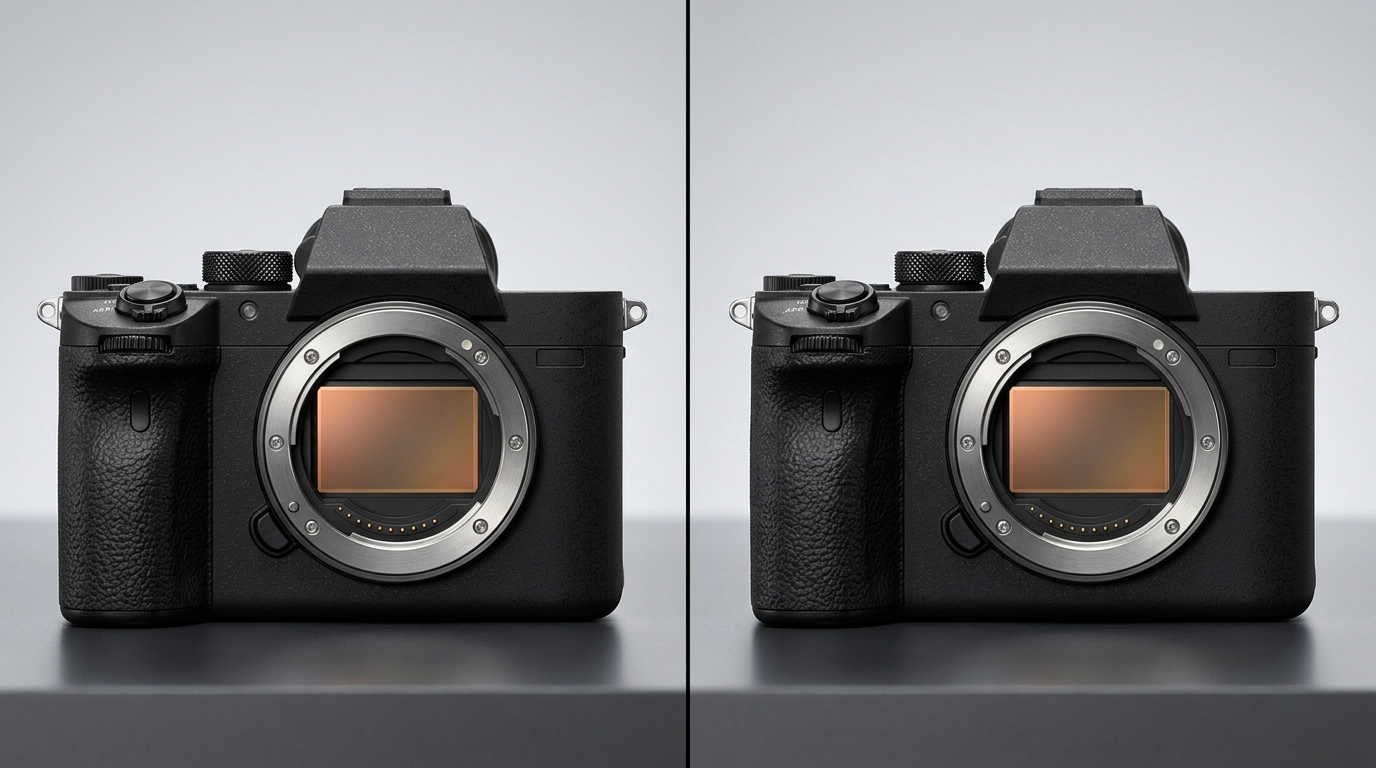
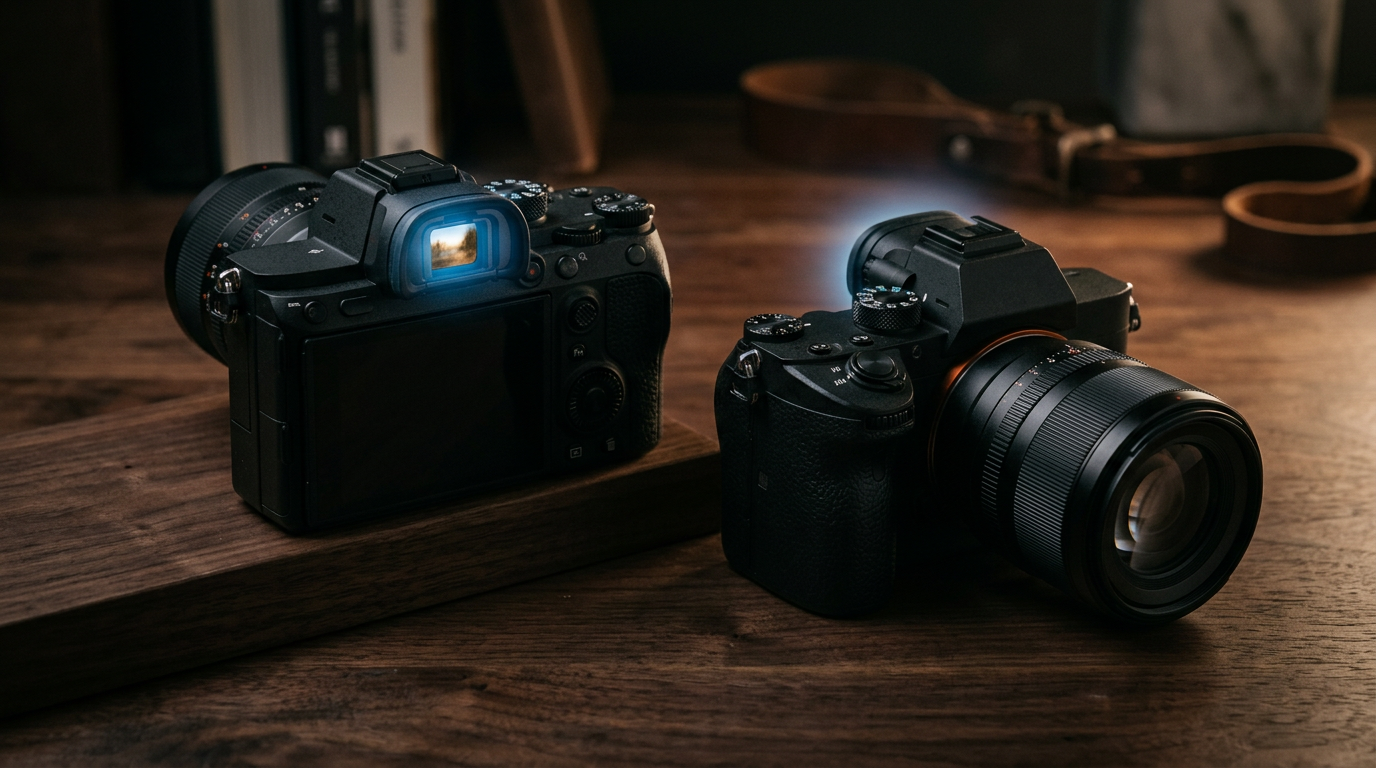
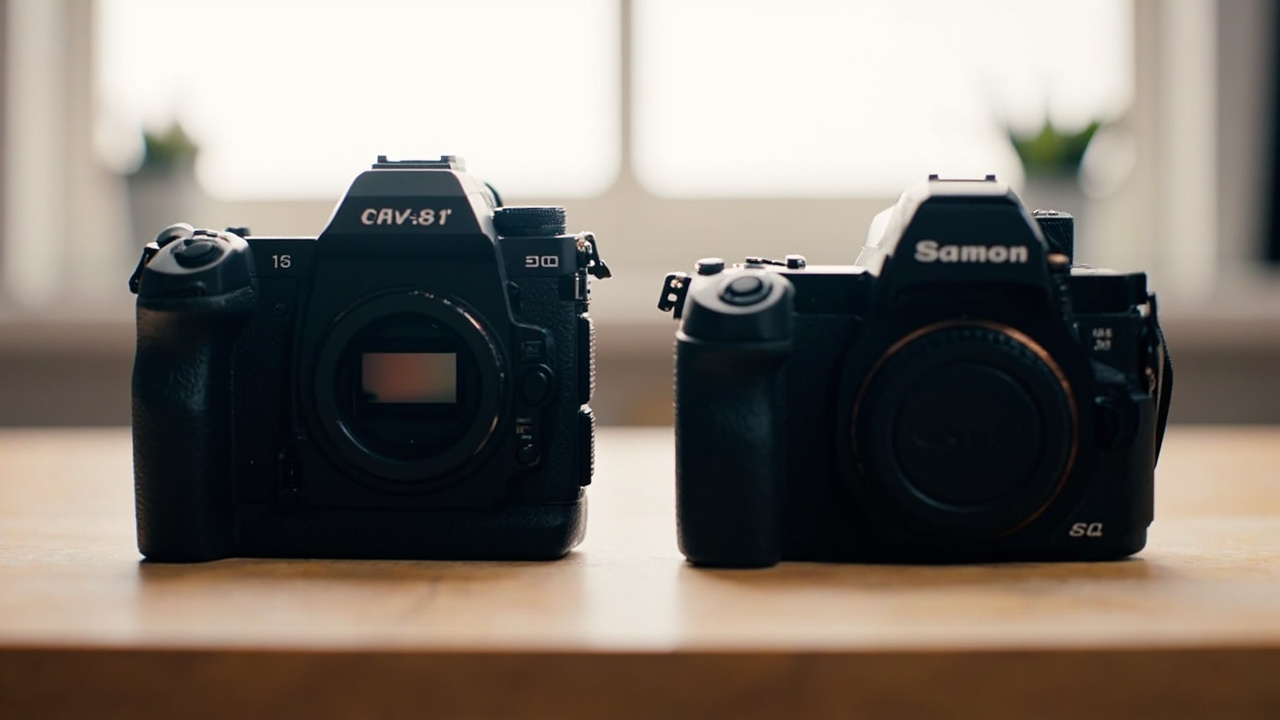
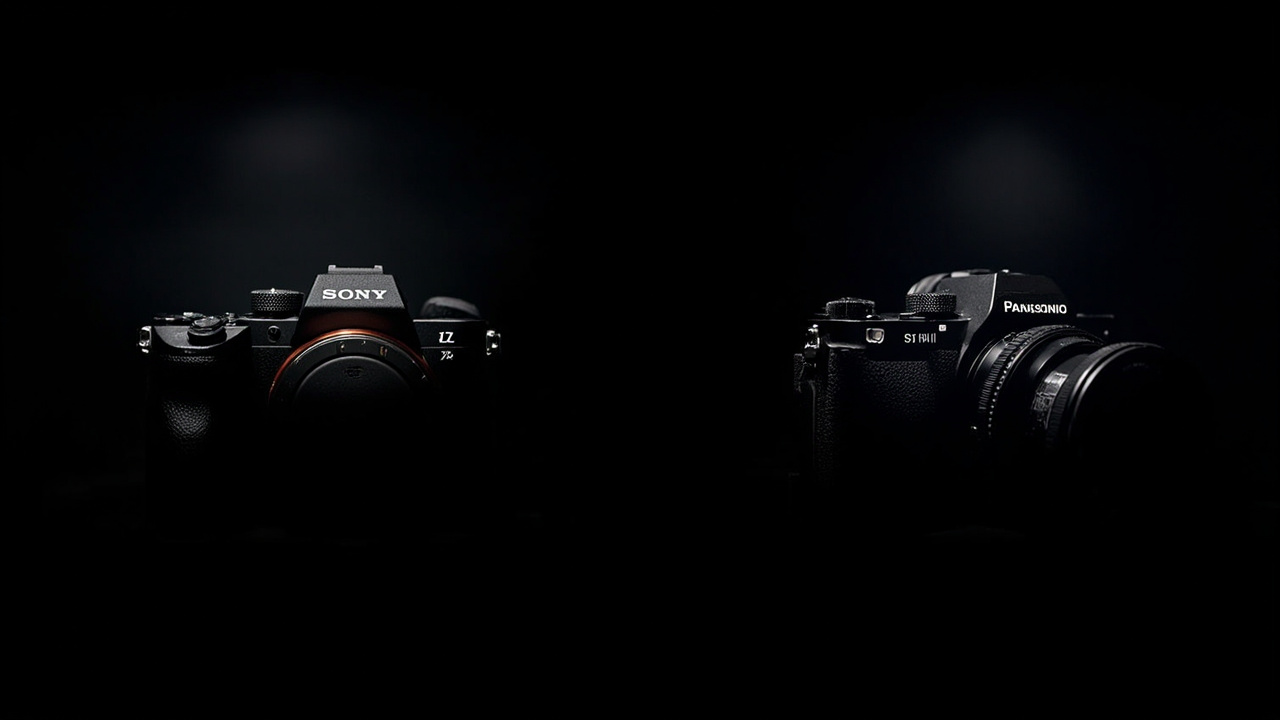
If you are shopping the high-resolution end of the full-frame mirrorless market in mid-2026, the new release calendar has changed the math on what the “expensive” option actually costs. Two bodies now define the segment above $3,000, and they sit almost exactly $1,200 apart at list price:
- Sony α7R VI (ILCE-7RM6) — released May 13, 2026, body-only at USD 4,498 at Sony USA and B&H as of late June 2026 (Source: Wikipedia: Sony α7R VI, MSRP $4,498 / £4,399 / €5,099). Sony’s first fully-stacked 66.8 MP Exmor RS sensor, BIONZ XR2 with integrated AI unit, blackout-free 30 fps electronic burst, 8K/30p oversampled video, and 8.5-stop IBIS. Aimed at studio, landscape, architecture, and high-end commercial still shooters who refused to give up resolution for speed.
- Panasonic Lumix DC-S1RII — released February 2025, body-only at USD 3,297.99 at B&H and Panasonic USA in June 2026 (Source: Wikipedia: Panasonic Lumix S1RII). 44.3 MP BSI CMOS, up to 40 fps electronic burst, 8K/30p video, internal ProRes RAW, L-Mount Alliance access (Leica SL, Sigma DG DN, Panasonic L), and a hybrid stills-and-video body aimed at working creators and L-mount system loyalists.
The list-price gap is USD 1,200.01 — large enough to fund a serious lens, a spare battery, and a pair of fast UHS-II cards. The interesting question is not which one is “best.” It is which body pays you back more per shoot over the 5 to 7 years you will own it — and that depends almost entirely on whether you need 66.8 MP of stacked-sensor resolution or 44 MP of L-mount hybrid value, and whether you are willing to commit to Sony’s mature E-mount lens wall or Panasonic’s open-but-shallow L-mount alliance.
The Verdict First
- Pick the Sony α7R VI ($4,498) if you are a studio, landscape, architecture, or commercial still-life shooter who genuinely needs 66.8 MP of fully-stacked resolution, 8K/30p oversampled video, 8.5-stop IBIS, and the deep, mature Sony E-mount lens catalog (200+ first- and third-party AF lenses). The A7R VI is the first Sony R-series body where you no longer trade speed for resolution — it shoots 30 fps electronic with full AF/AE.
- Pick the Panasonic Lumix S1R II ($3,297.99) if you are a hybrid stills-and-video creator, an L-mount system loyalist, or a working photographer who values internal ProRes RAW, 8K open-gate, 40 fps burst, and the L-Mount Alliance’s mix of Leica SL, Sigma DG DN, and Panasonic L glass. You give up ~22 MP of resolution and the deepest lens wall, but you save $1,200 at body and gain a stronger video feature set per dollar.
- Skip both if your real use case is casual travel, social media, or video-first content creation. The Sony A7 IV ($2,498) and Panasonic S5 II ($1,999) cover 80% of “looks like a flagship” needs for under $2,500.
Cost score (overall value): 76/100. Neither camera is cheap. The Panasonic S1R II is the better value per dollar for hybrid shooters — 44.3 MP, 8K, 40 fps, and L-mount access for $1,200 less than the Sony. The Sony A7R VI is the better tool if you genuinely need 66.8 MP and the deepest lens wall in mirrorless — but that $1,200 is real money that has to earn its way back over years of work.
Key Comparison Points
Price vs Real Cost Per Use
The sticker price is only the first line. The real cost is body + the lenses you will actually buy + the cards and batteries you will cycle through, divided by the years and shoots you will use it. The $1,200 list-price gap between the A7R VI and the S1R II is the single largest variable in any 5-year TCO calculation for these two bodies.
| Item | Sony α7R VI | Panasonic Lumix S1R II |
|---|---|---|
| Launch date | May 13, 2026 | February 2025 |
| MSRP at launch (body only) | USD 4,498 | USD 3,499 (Feb 2025) / $3,297.99 (current) |
| Current street price (June 2026) | $4,498 (Sony USA, B&H; no discounts yet) | $3,297.99 (B&H, Panasonic USA, Adorama) |
| List-price gap (body) | — | −$1,200.01 in S1R II’s favor |
| Battery model | NP-FZ100 (also fits A7 IV, A7R V, A1 II) | DMW-BLK22 (also fits S5 II, S5 IIX, GH6) |
| Replacement battery (list) | ~$78 (Sony NP-FZ100) | ~$89 (Panasonic DMW-BLK22) |
| Card format | 2× CFexpress Type A + SD UHS-II | 1× CFexpress Type B + SD UHS-II |
| CFexpress Type A 320 GB | ~$239 (Sony CEA-G320T) | N/A (S1R II does not use Type A) |
| CFexpress Type B 512 GB | N/A (A7R VI does not use Type B) | ~$199 (ProGrade Cobalt) |
| SD UHS-II 256 GB (V90) | ~$49 | ~$49 |
| Sensor-shift multi-shot high-res mode | Yes (up to 240 MP composite, firmware) | Yes (up to 177 MP composite, handheld mode) |
| Realistic working life (shutter + EVF + battery cycles) | 7-9 yrs | 7-9 yrs |
| CIPA shutter rating (mechanical) | 500,000 actuations (typical R-series spec) | 400,000 actuations |
| Estimated 5-yr body depreciation | ~30% (Sony R-series holds value well) | ~40% (L-mount body resale softer than Sony) |
| Estimated 5-yr cost / year (body only) | $629.72 | $527.68 |
| Estimated 5-yr cost / year (body + 2 batteries + 2 cards) | $711.92 | $599.28 |
Sources: Wikipedia: Sony α7R VI and Panasonic Lumix S1RII for launch dates and MSRP; B&H Photo, Sony USA, Panasonic USA current listings for street prices as of June 2026; Sony and Panasonic accessory pages for battery and card list prices.
Three takeaways:
- Day-one gap: $1,200.01 in the S1R II’s favor. That alone buys a Sigma 24-70mm f/2.8 DG DN Art L-mount ($1,099), an extra DMW-BLK22 battery, and a CFexpress Type B card — or it covers a Sony FE 24-70mm f/2.8 GM II ($2,299) with money left over.
- Per-year gap over 5 years: ~$112.64/yr in S1R II’s favor at body-only, ~$112.64/yr after the same accessory kit. Not a small number over a 5-year ownership cycle — that is $563.20 in real dollars you keep in your pocket.
- Sensor-shift multi-shot modes soften the resolution gap. Both cameras offer in-body pixel-shift high-res composite modes (Sony up to ~240 MP via firmware, Panasonic up to 177 MP handheld). For architecture and still-life work where the subject is stationary, the 22 MP raw resolution gap (66.8 vs 44.3) is largely erased.
For a hobbyist landscape shooter who will own the body for 5 years and shoot ~3,000 frames a year, the S1R II saves roughly $1,200 upfront and ~$563 over the ownership cycle. For a working architectural or studio shooter who needs every megapixel of the 66.8 MP stacked sensor, the A7R VI’s premium is paid back by fewer reshoots, larger prints, and the deepest lens wall in mirrorless.
Build Quality and Durability
Both bodies are weather-sealed magnesium-alloy chassis with active cooling for video, but they handle very differently in the hand and are designed around different priorities.
| Spec | Sony α7R VI | Panasonic Lumix S1R II |
|---|---|---|
| Body material | Magnesium alloy + polycarbonate top plate | Magnesium alloy + polycarbonate top plate |
| Weather sealing | Yes (Sony “dust & moisture resistant” rating) | Yes (Panasonic “dust & splash resistant”) |
| Operating temperature | 0 °C to 40 °C | -10 °C to 40 °C |
| Weight (body, with battery & card) | 713 g (25 oz) | ~795 g (rumored; Panasonic official ~795 g) |
| Dimensions (W × H × D) | 132.7 × 96.9 × 82.9 mm | ~134.3 × 102.3 × 84.0 mm |
| Grip depth / ergonomics | Deep redesigned grip, repositioned AF-ON | S1R-series deep grip, classic L-mount heft |
| EVF | Quad-XGA OLED, 0.9× magnification, ~9.44M dots | OLED EVF, 0.78× magnification, 5.76M dots (S1R II) |
| Rear LCD | 3.2” 4-axis multi-angle touchscreen, 2.1M dots | 3.0” vari-angle touchscreen, 1.8M dots |
| IBIS rating | 8.5 stops (Sony claim, center) | 8 stops (Panasonic claim, center); Dual I.S. 2 with stabilized lenses |
| Card slots | 2× CFexpress Type A / SD UHS-II (shared) | 1× CFexpress Type B + 1× SD UHS-II (separate) |
| Battery life (CIPA, LCD) | ~710 shots | ~360 shots (rumored) |
| Active cooling fan | No (passive only) | Yes (active cooling for unlimited 8K/4K record times) |
| Illuminated buttons | Yes | No (Panasonic reserves these for the S1 II / GH7 line) |
Sources: Wikipedia: Sony α7R VI and Panasonic Lumix S1RII; Sony USA and Panasonic USA official spec sheets (June 2026).
A few honest notes:
- The Sony A7R VI is meaningfully lighter — about 80 g — and the redesigned grip with the relocated AF-ON button is widely praised in early Sony hands-on coverage as a real ergonomic improvement over the A7R V. For long handheld landscape or event days, 80 g matters.
- The Panasonic S1R II has an active cooling fan, which means unlimited 8K and 4K record times in moderate ambient temperatures. The Sony A7R VI’s passive cooling is rated for “extended” 8K/30p takes but throttles earlier in hot environments (35 °C+). If you shoot long hybrid interviews or documentary takes, the fan is the cleaner tool.
- The A7R VI’s Quad-XGA EVF (9.44M dots, 0.9×) is a meaningful step up from the S1R II’s 5.76M-dot EVF at 0.78×. For manual-focus legacy glass or critical focus in bright daylight, the Sony EVF is one of the best you can buy in 2026.
- The S1R II’s -10 °C operating rating vs Sony’s 0 °C floor is a real advantage for landscape shooters working in alpine or arctic conditions. It is a small spec, but it is the kind of small spec that matters when you need it.
For most working photographers, the durability gap is closer than the spec sheet suggests. The Sony wins on weight, EVF, and grip ergonomics; the Panasonic wins on active cooling and cold-weather operation.
Feature Breakdown
The A7R VI and the S1R II target slightly different buyers, even though both sit at the high-resolution end of full-frame mirrorless. The Sony is a “first do no harm” all-rounder that finally closes the speed gap; the Panasonic is a hybrid creator body that pairs high resolution with the strongest video feature set in the price band.
| Feature | Sony α7R VI | Panasonic Lumix S1R II |
|---|---|---|
| Sensor | 66.8 MP fully-stacked Exmor RS BSI CMOS | 44.3 MP BSI CMOS (partially-stacked on later firmware) |
| Image processor | BIONZ XR2 with AI engine | Panasonic L² (L-squared) engine |
| Native ISO range | 100–32,000 (expandable 50–102,400) | 80–25,600 (expandable 40–51,200) |
| Max burst (electronic) | 30 fps (full AF/AE, blackout-free) | 40 fps (electronic) / 10 fps (mechanical) |
| Buffer (RAW, lossless) | ~140 frames at 30 fps | ~70 frames at 40 fps |
| Video max resolution | 8K/30p (XAVC HS, 10-bit 4:2:2, oversampled from 8.2K) | 8K/30p (ProRes RAW internal via CFexpress) |
| Video max frame rate (4K) | 4K/120p (APS-C crop) | 4K/120p (full-width), 5.8K ProRes RAW internal |
| Open-gate / anamorphic | No (16:9 only) | Yes (6.4K open gate, up to 8.1K via firmware) |
| Internal ProRes RAW | No (XAVC HS / XAVC S-I only) | Yes (5.8K ProRes RAW HQ) |
| Log gamma | S-Log3, S-Cinetone, HLG | V-Log (paid unlock or bundled, varies by region) |
| AI subject detection | Human, animal, bird, insect, car/train, airplane | Human, animal, bird, car, motorcycle, train, airplane |
| Real-time recognition AF | Yes (advanced human pose estimation) | Yes (AI subject detect, real-time tracking) |
| AF points | 759 phase-detection points, ~94% coverage | Hybrid PDAF + CDAF, full coverage |
| Pixel-shift multi-shot | Yes (up to 240 MP composite, firmware) | Yes (up to 177 MP, handheld mode supported) |
| Pre-capture / burst buffer | Yes (records 0.5–1 sec before shutter) | Yes (Pre-Burst mode up to 1.5 sec) |
| Wireless | Wi-Fi 6E, Bluetooth 5.3 | Wi-Fi 5 (802.11ac), Bluetooth 5.0 |
| USB | 2× USB-C (one USB 10 Gbps) | 1× USB-C (USB 3.2 Gen 2, 10 Gbps) |
| HDMI | HDMI Type-A (full size) | HDMI Type-A (full size) |
| Cooling | Passive (heat pipe / graphite) | Active (built-in fan) |
| L-mount lens compatibility | N/A (Sony E-mount only) | Full L-Mount Alliance (Leica SL, Sigma DG DN, Panasonic L) |
Sources: Wikipedia: Sony α7R VI and Panasonic Lumix S1RII; Sony USA and Panasonic USA official product pages (June 2026).
Three feature takeaways:
- Resolution gap is real but not absolute. The A7R VI’s 66.8 MP stacked sensor is a generational leap over the A7R V’s 61 MP non-stacked chip, and the S1R II’s 44.3 MP is a deliberate hybrid trade. For landscape and architecture work where you crop heavily or print large, the 22 MP difference is meaningful. For portrait and editorial work where you rarely crop, the S1R II’s 44 MP is already overkill.
- The S1R II is the cleaner hybrid video tool. Internal ProRes RAW, open-gate 6.4K, active cooling for unlimited record times, and V-Log gamma are the features working video shooters ask for first. The A7R VI’s 8K/30p is oversampled and beautiful but capped by heat in long takes.
- Lens ecosystem is the sleeper decision. Sony’s E-mount has 200+ AF lenses from Sony, Sigma, Tamron, Zeiss, Voigtlander, and Samyang — the deepest mount in mirrorless. The L-Mount Alliance is smaller (~70 native AF lenses) but includes legendary Leica SL glass. If you already own L-mount glass, the S1R II is a no-brainer. If you are starting fresh and want maximum choice, the Sony wins.
Pros and Cons
Sony α7R VI
Pros
- 66.8 MP fully-stacked sensor is the highest-resolution stacked full-frame chip on the market in 2026, delivering both 30 fps speed and the detail of medium-format-class resolution.
- 8.5-stop IBIS and Quad-XGA 9.44M-dot EVF are class-leading for handheld low-light work and manual-focus legacy glass.
- Deepest AF lens catalog in mirrorless (Sony FE + Sigma DN + Tamron + Zeiss + Voigtlander), giving you every focal length and price point you could want.
- Stronger resale value — Sony R-series bodies typically depreciate ~30% over 5 years vs ~40% for L-mount bodies.
- Lightest body in this comparison class at 713 g with battery and card.
- Pre-capture and advanced AI subject detection (human pose, animal, bird, insect, car/train, airplane).
Cons
- $4,498 body-only is $1,200 more than the S1R II — that money has to earn its way back over years of work.
- No internal ProRes RAW — XAVC HS / XAVC S-I only, which is fine for most workflows but limiting for high-end color grading.
- No active cooling fan — 8K/30p record times are capped in hot environments, and 4K/60p can throttle after ~30 minutes at 30 °C+.
- No open-gate / anamorphic video mode — the 16:9 sensor area is the only video crop.
- CFexpress Type A cards are more expensive than Type B (a 320 GB Sony CEA-G320T is ~$239 vs ~$199 for a 512 GB Type B).
- 0 °C operating temperature floor vs -10 °C on the Panasonic — a real limit for cold-weather landscape shooters.
Panasonic Lumix S1R II
Pros
- $3,297.99 body-only — $1,200 less than the Sony A7R VI for 67% of the resolution and 80%+ of the still-image feature set.
- Internal 5.8K ProRes RAW, 8K/30p, 6.4K open-gate, and 4K/120p full-width — the strongest video feature set per dollar in the high-resolution full-frame class.
- Active cooling fan enables unlimited 8K and 4K record times in moderate ambient temperatures.
- L-Mount Alliance access — Leica SL, Sigma DG DN, and Panasonic L glass in a single mount.
- Faster 40 fps electronic burst than the A7R VI’s 30 fps, with a 70-frame RAW buffer.
- Better cold-weather tolerance — -10 °C operating floor vs 0 °C on the Sony.
Cons
- 44.3 MP is meaningfully less than 66.8 MP for heavy cropping, large prints, and commercial work where every pixel counts.
- L-mount lens catalog is smaller and more expensive than Sony E-mount — fewer third-party AF options at the budget end, and Leica SL glass is priced at a premium.
- EVF is a generation behind — 5.76M dots and 0.78× magnification vs the A7R VI’s 9.44M dots and 0.9× magnification.
- Heavier body at ~795 g — about 80 g more than the A7R VI.
- Softer resale value — L-mount bodies typically depreciate ~40% over 5 years vs ~30% for Sony R-series.
- Battery life CIPA rating is roughly half the Sony’s — ~360 shots vs ~710 shots (real-world is closer than the spec, but the spec matters for event and wedding days).
- No illuminated buttons — a small ergonomic miss for low-light shooters.
Best For / Skip If
Best For: Buy the Sony A7R VI if you are…
- A studio, landscape, architecture, or commercial still-life shooter who needs 66.8 MP of resolution, 8.5-stop IBIS, and the deepest lens wall in mirrorless.
- A working portrait or editorial photographer who prints large, crops aggressively, and values 16+ stops of dynamic range for shadow recovery.
- A hybrid creator who mostly shoots stills with occasional 8K video and can live with passive cooling for short takes.
- A Sony E-mount system loyalist with an existing FE lens investment (GM, GM II, G, Sigma DN Art, Tamron).
Best For: Buy the Panasonic S1R II if you are…
- A hybrid stills-and-video creator who wants internal ProRes RAW, open-gate video, and active cooling for unlimited record times.
- An L-mount system loyalist (Leica SL, Sigma DG DN, Panasonic L glass) who wants to stay in the L-Mount Alliance ecosystem.
- A landscape or architecture shooter working in cold climates who values the -10 °C operating floor and the L-mount Leica SL wide-angle lineup.
- A working photographer who values per-dollar value and can live with 44.3 MP instead of 66.8 MP.
Skip the A7R VI if you…
- Shoot mostly video, social media, or casual travel — the A7 IV ($2,498) or A7C II ($2,198) is a smarter spend.
- Already own L-mount glass and don’t want to re-buy into E-mount — the S1R II or S1R (original, ~$2,200 used) is the cleaner choice.
- Need active cooling for long video takes — the Sony A7S III ($3,498) or A1 II ($6,498) are better video-first bodies.
Skip the S1R II if you…
- Need every megapixel you can get — the A7R VI or the medium-format Fujifilm GFX 100 II ($7,499) are the resolution-first choices.
- Shoot in bright daylight with manual-focus legacy glass and depend on a class-leading EVF — the A7R VI’s 9.44M-dot Quad-XGA EVF is meaningfully better.
- Own a deep Sony E-mount lens kit and don’t want to sell it to switch mounts.
Bottom Line
The Sony A7R VI is the better tool for resolution-first still shooters who can afford the $4,498 body and want the deepest lens wall in mirrorless. The Panasonic Lumix S1R II is the better value for hybrid stills-and-video creators who want ProRes RAW, open-gate, and active cooling for $1,200 less. Neither is a bad buy if matched to the work.
The real question is not which camera wins on a spec sheet — it is which body pays you back more per shoot over the 5 to 7 years you will own it. For a working landscape or studio shooter, the answer is the A7R VI: the 66.8 MP stacked sensor, 8.5-stop IBIS, and 9.44M-dot EVF will deliver on every paid job that demands resolution. For a working hybrid creator who shoots as much video as stills, the answer is the S1R II: $1,200 less at body, internal ProRes RAW, active cooling, and the L-Mount Alliance’s glass catalog.
That is the BuyCospa lens: buy smart, get more value. Match the body to the work, and the rest of the cost-per-shoot math takes care of itself.