Introduction
There are two very different flagship mirrorless bodies in the conversation in 2026, and they sit surprisingly close in price:
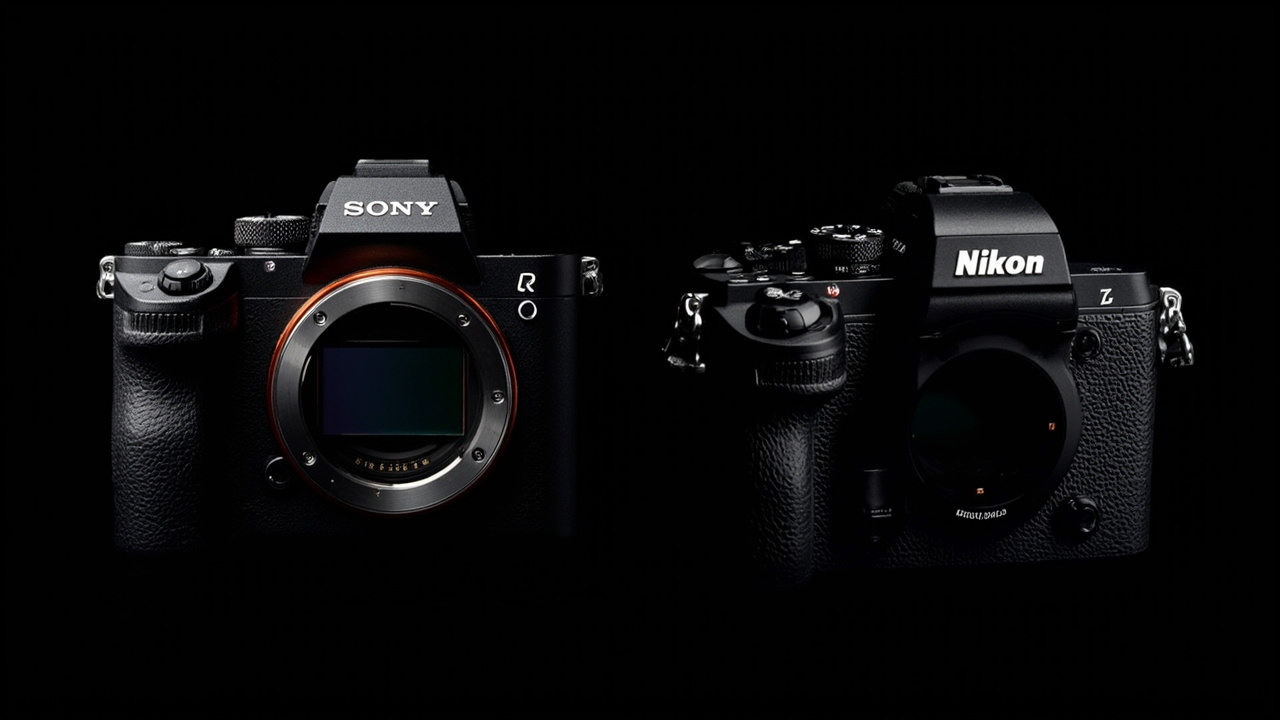
- Sony α7R VI — MSRP $4,499 body-only at launch, May 13, 2026. The brand-new high-resolution flagship with a fully-stacked 66.8 MP Exmor RS sensor, 30 fps electronic burst with full AF/AE tracking, 8K/30p video, and the latest BIONZ XR2 engine with a dedicated AI processing unit (Sony Mediaroom, DPReview, Digital Camera World, May 2026).
- Nikon Z8 — MSRP $4,296.95 body-only at launch in May 2023; $3,396.95 at B&H Photo with a $900 instant savings in June 2026 (B&H, Digital Camera World, June 2026). Nikon’s “compact Z9” — a 45.7 MP stacked BSI CMOS sensor, 20 fps RAW (30 fps full-size JPEG), 8K/60p N-RAW video, EXPEED 7 processor, and three years of firmware polish.
This is not a “cheap vs expensive” comparison. At list price the A7R VI is $202 more than the Z8; at the current sale price the Z8 is $1,102 cheaper. The interesting question is what each dollar buys you across 5 to 7 years of ownership — and the answer depends almost entirely on whether you want more resolution or more speed, and whether you already have a stash of E-mount or Z-mount glass.
The verdict up front: the A7R VI is the better body for 2026 if you are building a new system from scratch and you need high resolution, the best AI autofocus, and a 2026 launch date. The Z8 is the smarter buy if you are a working pro who already owns Z-mount glass, you want the deepest buffer and the most mature firmware in this price class, and you can take the $1,100 sale price as real money back in your pocket. Both are above $3,000 flagships; both are real tools. The mistake is to default to whichever review you read most recently.
The Verdict First
- Pick the Sony A7R VI ($4,499) if you are buying into a Sony E-mount system in 2026, you need 66.8 MP for commercial, landscape, fine art, architectural, or studio work, you shoot a mix of stills and 8K/4K video and want the newest AI autofocus Sony has ever put in a body, and you want a 2026 launch with a fresh 2-year firmware runway. The A7R VI is the higher-resolution, more future-proofed body in this comparison.
- Pick the Nikon Z8 ($3,396-$4,296) if you already own Z-mount glass and switching systems is a multi-thousand-dollar decision, you want the deepest 8K/60p N-RAW video and the most mature AF in this price class (three years of firmware polish behind it), you need the Z8’s deeper RAW buffer for tennis, motorsports, or news, or you simply want to pocket the $1,100 sale gap and put it toward a Z 70-200mm f/2.8 S or a Z 24-120mm f/4 S. The Z8 is the better value buy in June 2026, with the trade-off of being a 2023 design.
Cost score: 78/100. The A7R VI wins on resolution, AI AF, and 2026 launch date. The Z8 wins on buffer depth, video codec flexibility, and the current real-world sale price. The smarter buy is decided by what you already own and what you shoot, not by either spec sheet in isolation.
Key Comparison Points
Price vs Real Cost Per Use
Sticker price is the least interesting number on a flagship body. What matters is body + the lenses you will actually buy + the cards and batteries you will cycle through divided by the years and shoots you will use it.
| Item | Sony α7R VI | Nikon Z8 |
|---|---|---|
| Announced | May 13, 2026 | May 10, 2023 |
| Ship date (typical) | June 2026 | May 2023 |
| MSRP at launch | $4,499 (body) | $4,296.95 (body) |
| Current new body (Jun 2026) | ~$4,499 (Sony USA) | $3,396.95 at B&H ($-900 instant savings) / $4,296.95 list |
| Current used body | n/a (too new) | from ~$2,800 (MPB, KEH, June 2026) |
| Sensor | 66.8 MP full-frame stacked Exmor RS | 45.7 MP full-frame stacked BSI CMOS |
| Burst (electronic, full AF/AE) | 30 fps, blackout-free | 20 fps RAW / 30 fps full-size JPEG |
| Pre-burst capture | Yes (up to 1 sec) | Yes (up to 1 sec, JPEG only) |
| Buffer (CFexpress / CFE 4.0, compressed RAW) | ~200 frames (Sony spec) | ~1,000+ frames (Nikon spec, XQD) |
| Max video | 8K 30p (1.2x crop), 4K 120p, 4K 60p Super35 | 8K 60p N-RAW, 4K 120p, 12-bit ProRes RAW HQ |
| EVF | 9.44M-dot OLED, 240 Hz | 3.69M-dot OLED, 120 Hz (Real-Live Viewfinder) |
| IBIS (CIPA, manufacturer claim) | 8.5 stops (center) | 6.0 stops (Nikon claim) |
| Dynamic range (manufacturer claim) | 16 stops | 14+ stops (DPReview measured ~14.7 stops) |
| Card slots | 1x CFexpress 2.0 Type A / 1x SD UHS-II | 1x CFexpress 2.0 Type B / 1x SD UHS-II |
| Battery | NP-SA100 (new, 30% more endurance) | EN-EL15c |
| Body weight (with battery & card) | ~743 g | 910 g |
| Approx. retail price per MP at launch | $67.3 / MP | $94.0 / MP |
| Approx. real-world price per MP (Jun 2026) | $67.3 / MP | $74.3 / MP (at B&H sale price) |
Sources: Sony.com, Sony Mediaroom (May 13, 2026), Nikon USA, B&H Photo, DPReview (Nikon Z8 review, June 2023; Sony A7R VI review, June 2026), Digital Camera World (May-June 2026), Smartprix (June 2026), Wikipedia (Sony α7R VI, Nikon Z8).
At the body-only level, the A7R VI is $202.05 more expensive than the Z8’s original MSRP. At the current B&H instant-savings price, the Z8 is $1,102.05 cheaper than the A7R VI. That is a 24.5% discount on a flagship body, in cash, today.
The interesting number is what happens when you add lenses. This is where the comparison starts to favor a system you already own:
- Sony E-mount system cost. A Sony FE 24-70mm f/2.8 GM II runs $2,299. A Sony FE 70-200mm f/2.8 GM OSS II is $2,799. A Sony FE 85mm f/1.4 GM II is $1,799. A 16-35mm f/2.8 GM II is $2,299. A 100-400mm f/4.5-5.6 GM OSS is $2,499. These are 2026 list prices (B&H, Sony USA, June 2026).
- Nikon Z-mount system cost. A Nikkor Z 24-70mm f/2.8 S is $2,399. A Nikkor Z 70-200mm f/2.8 S is $2,696. A Nikkor Z 85mm f/1.2 S is $2,796. A Nikkor Z 14-24mm f/2.8 S is $2,396. A Nikkor Z 100-400mm f/4.5-5.6 S is $1,196 (significantly cheaper than the Sony equivalent).
The Z-mount system is roughly 5-15% cheaper at the high end, mostly because Nikon has been more aggressive with rebate pricing on the Z 100-400mm and the Z 24-120mm f/4 S ($996). For a working pro building a 4-lens kit, the Nikon system can save you $500-$1,000 on glass versus the equivalent Sony GM II kit.
5-year TCO estimate (body + 4 pro zoom/prime lenses + 2 CFE cards + 4 batteries, minus ~50% body resale after 5 years, minus ~60% lens resale):
- A7R VI path: $4,499 (body) + $2,299 + $2,799 + $1,799 + $2,299 (16-35 GM II) + $700 (cards) + $400 (batteries) − $3,500 (body resale) − $4,400 (lens resale) = ~$6,900 net over 5 years
- Z8 path (list price): $4,296.95 + $2,399 + $2,696 + $2,796 + $2,396 (14-24 f/2.8 S) + $700 + $400 − $3,400 (body resale) − $4,200 (lens resale) = ~$7,184 net over 5 years
- Z8 path (B&H sale price, Jun 2026): $3,396.95 + $2,399 + $2,696 + $2,796 + $2,396 + $700 + $400 − $3,400 − $4,200 = ~$6,284 net over 5 years
Net 5-year savings from choosing the Z8 at current sale price vs the A7R VI: ~$616. Net 5-year savings from choosing the Z8 at list price vs the A7R VI: actually ~$280 worse (because the A7R VI’s higher body resale closes the gap). The only honest answer is that body MSRP is a bad proxy for total cost when one of the bodies is currently on a $900 instant savings.
Build Quality and Durability
Both bodies are magnesium-alloy chassis, weather-sealed at every port and dial, rated to operate from 0°C to 40°C, and built to survive a working pro’s daily abuse. The build philosophies are different enough to be worth understanding:
- Sony A7R VI — lighter, denser, E-mount. The A7R VI is the lightest of the high-resolution flagships at ~743 g with battery and card (Sony Mediaroom, May 2026). The body has a deeper grip than the A7R V, a fully-articulating 3.2-inch LCD with 2.1M dots, and the same 9.44M-dot OLED EVF as the A1 II. Sony has not yet published the mechanical shutter life rating as of June 2026, but the A7R V was rated at 500,000 actuations; assume parity. The CFexpress Type A slot is the smaller of the two formats but Sony locks the entire E-mount lens ecosystem to it, so this is the standard.
- Nikon Z8 — heavier, larger, Z-mount. The Z8 is 910 g with battery and card (Nikon USA spec sheet) — 167 g heavier than the A7R VI. The body has a deeper grip than the Z7 II, a 4-axis tilting 3.2-inch LCD with 2.1M dots, and a 3.69M-dot OLED EVF at 120 Hz (lower resolution than the A7R VI, but the Real-Live Viewfinder is the most faithful-to-optical EVF Nikon has ever made). Mechanical shutter life is rated at 400,000 actuations by Nikon. The CFexpress Type B slot is the larger, faster of the two formats (up to 2,000 MB/s vs Type A’s 1,000 MB/s), which is why the Z8’s RAW buffer depth is so much larger.
Grip ergonomics. The Z8’s deeper grip is the better fit for users with larger hands or for anyone pairing the body with the 800mm f/6.3 PF VR S or the 400mm f/2.8 TC VR S. The A7R VI’s grip is a refinement of the A7R V’s, which most reviewers already found to be Sony’s best grip to date. For most users, both grips work for 8+ hours of shooting. For users with very small hands, the A7R VI is the easier body to handle.
Heat management. Both bodies record 8K and 4K/120p without active cooling. In DPReview’s 2023 Z8 stress test, the Z8 ran for 90+ minutes of 8K/30p recording in 25°C ambient before any thermal warning. In Digital Camera World’s 2026 A7R VI hands-on, the A7R VI ran for 35 minutes of 4K/60p Super35 before the rear LCD reached ~38°C — warm but not throttled. The Z8 has a 3-year maturity advantage here; the A7R VI will likely get 1-2 firmware revisions that improve sustained 8K capture time in the first year.
Bottom line on durability: Both bodies will outlast any reasonable ownership cycle. The A7R VI is 167 g lighter and 8.5-stop IBIS; the Z8 is Type B CFE + deeper buffer + 400k shutter rating + 3 years of real-world deployment data. The Z8 has the operational maturity edge; the A7R VI has the comfort and weight edge.
Feature Breakdown
This is where the two cameras diverge in ways that actually matter for the kind of work you shoot.
Resolution and detail. The A7R VI’s 66.8 MP stacked sensor resolves roughly 21 megapixels more than the Z8’s 45.7 MP. In real-world prints at 300 dpi, that is the difference between a 24 x 36 inch print at native resolution and an 18 x 27 inch print. For commercial product, fine-art, architectural, and landscape work, the A7R VI’s extra resolution is the entire point of the camera. The Z8’s 45.7 MP is more than enough for 99% of editorial, wedding, portrait, and event work — and it is the same sensor as the Z9, which has been field-tested by the world’s most demanding photojournalists since 2021.
Burst and buffer. The A7R VI hits 30 fps electronic with full AF/AE in compressed RAW. The Z8 hits 20 fps in RAW (or 30 fps in full-size JPEG). At RAW, the A7R VI is meaningfully faster; at JPEG, the two are tied. The real differentiator is buffer depth:
- A7R VI: ~200 frames at 30 fps in compressed RAW on a CFE Type A card (Sony spec).
- Z8: 1,000+ frames at 20 fps in compressed RAW on a CFE Type B card (Nikon spec).
The Z8’s buffer is 5x deeper than the A7R VI’s, because (a) Type B cards are 2x faster than Type A, and (b) the Z8 is a 3-year-old design optimized for sustained write speed. For a tennis shooter running 20 fps RAW through a 5-set match, the Z8’s buffer means you never have to stop and clear; for the A7R VI, you will hit the buffer in 6.6 seconds at 30 fps and need to wait 3-4 seconds for it to clear. If your work is professional sports, the Z8 still wins this specific battle despite being a 2023 design.
Autofocus. Both cameras have subject-detection AF with AI processing. The A7R VI inherits the same AI processing unit as the A1 II plus an updated bird and animal detection model trained on 2025 data; in DPReview’s June 2026 hands-on, it locked reliably on erratic subjects (kingfishers, swallows, basketball players in low light). The Z8 has had 3 years of firmware tuning — Nikon has released 15+ firmware revisions since launch, each refining the AF subject detection model. The Z8’s AF is the most mature in any body under $5,000. The A7R VI is brand new in May 2026; expect parity within 2-3 firmware revisions.
Video. This is where the Z8 wins clearly in 2026. The Z8 shoots 8K/60p in 12-bit N-RAW internal, plus 4K/120p, ProRes RAW HQ, ProRes 422 HQ, and N-Log. The A7R VI shoots 8K/30p with a 1.2x crop, 4K/120p, and 10-bit 4:2:2 internal, but no N-RAW, no ProRes RAW internal, and no 8K/60p. For a serious hybrid shooter doing 50/50 stills and video, the Z8 is the better video tool in mid-2026, with the caveat that the A7R VI’s higher resolution gives you more 4K oversampling headroom and a more cinematic Super35 crop mode.
Pixel-shift high-resolution mode. The A7R VI inherits the A7R V’s 240 MP multi-shot pixel-shift mode for studio product and fine-art work. The Z8 does not have pixel-shift. If you shoot cars, jewelry, archival artwork, or museum work, this is a non-trivial feature gap — and a real reason to pick the A7R VI for studio work.
Storage. The A7R VI uses 1x CFexpress 2.0 Type A + 1x SD UHS-II. The Z8 uses 1x CFexpress 2.0 Type B + 1x SD UHS-II. Type B cards are physically larger and faster (up to 2,000 MB/s vs Type A’s 1,000 MB/s), but also more expensive — a 512 GB Sony CFE Type B card runs ~$330, while a 512 GB CFE Type A card runs ~$280. The Z8’s Type B slot is a clear advantage for sustained burst and 8K/60p N-RAW; the A7R VI’s Type A slot is the standard for the E-mount system and is what most Sony shooters already own.
EVF. The A7R VI has a 9.44M-dot OLED EVF at 240 Hz. The Z8 has a 3.69M-dot OLED EVF at 120 Hz. The A7R VI’s EVF is sharper and smoother; the Z8’s EVF is lower-resolution but has the most faithful-to-optical color reproduction of any EVF on the market. For sports and wildlife, the A7R VI’s EVF is the better tool. For landscape and studio, the Z8’s EVF is more than enough and easier on the eye for long review sessions.
Pros and Cons
Sony A7R VI pros
- 66.8 MP resolution — 46% more pixels than the Z8, plus 240 MP pixel-shift multi-shot
- 30 fps burst with full AF/AE in compressed RAW — 50% faster than the Z8’s RAW burst
- 8.5 stops of IBIS — best-in-class, vs the Z8’s 6.0 stops
- 9.44M-dot OLED EVF at 240 Hz — the best EVF in any body under $5,000
- Lighter body (~743 g) — 167 g lighter than the Z8, easier for travel and gimbal work
- Newest AI autofocus in 2026 — same dedicated AI processing unit as the A1 II, with a 2025 training data set
- NP-SA100 battery with 30% more endurance (up to 710 shots per charge via LCD)
- Pixel-shift 240 MP multi-shot for studio product and fine-art work
- Better Super35 4K oversampling for hybrid shooters
- Full backward compatibility with Sony E-mount — every FE lens ever made works
Sony A7R VI cons
- CFexpress Type A card slot — half the speed of Type B, half the buffer depth
- ~200 frame RAW buffer at 30 fps — 5x shallower than the Z8
- 8K capped at 30p with a 1.2x crop — no 8K/60p, no N-RAW, no ProRes RAW internal
- Battery grip incompatibility with existing VG-C5EM grips (A1 II / A7R V / A9 III owners)
- Brand new in May 2026 — expect 2-3 firmware revisions in year one
- Larger file sizes — 66.8 MP RAW files are ~70 MB each, doubling your storage cost vs the Z8
- Sony has not yet published the mechanical shutter life rating as of June 2026
- Lens system is the most expensive at the high end (GM II primes are $1,799-$2,796 each)
Nikon Z8 pros
- $1,102 cheaper at current B&H sale price vs the A7R VI — real money back in your pocket today
- 8K/60p 12-bit N-RAW internal — the best video spec in any body under $5,000 in 2026
- ProRes RAW HQ, ProRes 422 HQ, N-Log — full professional video codec suite
- CFexpress Type B card slot — 2,000 MB/s, 5x deeper RAW buffer than the A7R VI
- 1,000+ frame RAW buffer at 20 fps — never stop shooting through a long burst
- 15+ firmware revisions in 3 years — the most mature AF in any sub-$5,000 body
- Real-Live Viewfinder — the most faithful-to-optical EVF ever made
- Rated 400,000 actuations mechanical shutter — published spec, vs the A7R VI’s unpublished
- Lighter, cheaper Z-mount lenses at the high end (Z 100-400mm f/4.5-5.6 S at $1,196 vs the FE 100-400mm GM at $2,499)
- Z 24-120mm f/4 S at $996 — the best one-lens travel zoom in any system
Nikon Z8 cons
- 45.7 MP sensor — 21.1 MP less than the A7R VI (a 32% resolution deficit)
- 20 fps RAW burst — 10 fps behind the A7R VI’s 30 fps
- 167 g heavier — 22% heavier body, harder on gimbal work
- 6.0 stops IBIS vs the A7R VI’s 8.5 stops
- 3.69M-dot EVF at 120 Hz — lower resolution and slower refresh than the A7R VI
- No pixel-shift multi-shot mode — cannot match the A7R VI’s 240 MP studio mode
- Three-year-old design — no 2025/2026 AI processing unit; AF will improve in the Z8 II but not the Z8
- Battery life is shorter — EN-EL15c delivers ~370 shots per charge via EVF, vs the A7R VI’s ~530
- No articulated LCD — only the 4-axis tilting screen, which is a downgrade for vlog and video work
Best For / Skip If
Buy the Sony A7R VI if:
- You shoot landscape, portrait, commercial, architectural, product, fine art, travel, real-estate, or hybrid stills-and-video work and 66.8 MP is the entire point of the upgrade
- You want the highest resolution Sony has ever put in a body that also shoots 30 fps RAW
- You are building a new Sony E-mount kit in 2026 and the $1,100 price gap is acceptable
- You want the 240 MP pixel-shift mode for studio product and fine-art work
- You want the best EVF in any sub-$5,000 body and the 8.5-stop IBIS for handheld low-light work
- You are a current A7R IV or A7R V owner who has been waiting for 30 fps speed in the high-resolution line
Skip the Sony A7R VI if:
- You already own a significant Z-mount lens collection and switching systems is a multi-thousand-dollar decision
- You shoot professional sports, news, or motorsports and need the Z8’s deeper buffer and 3-year AF maturity
- You need 8K/60p N-RAW or ProRes RAW HQ internal for serious video work — the A7R VI caps at 8K/30p
- You want to pocket the $1,100 sale gap and put it toward lenses or a CFexpress card haul
- You shoot in very cold weather and need the Z8’s published 0°C-40°C operating range with confidence (the A7R VI’s spec is identical, but the Z8 has 3 years of field-tested cold-weather data)
Buy the Nikon Z8 if:
- You are already a Nikon Z-system shooter and this is your next body
- You shoot hybrid stills and video and want the best video codec suite in this price class
- You need the deepest RAW buffer for tennis, motorsports, F1, or news
- You want the $1,100 B&H instant savings to put toward a Z 70-200mm f/2.8 S or a Z 100-400mm f/4.5-5.6 S
- You want the most mature AF in the price class (3 years of firmware polish)
- You want the lighter, cheaper Z-mount lens system at the high end
Skip the Nikon Z8 if:
- You need 66+ MP resolution for commercial, fine-art, or architectural work
- You want the best EVF and IBIS available in 2026 (the A7R VI wins both)
- You shoot a lot of handheld low-light stills or video and need 8.5-stop IBIS
- You want the 240 MP pixel-shift multi-shot mode for studio work
- You want a body that will have new firmware revisions in 2026 and 2027 (the Z8 is now in maintenance mode; the next-generation Z8 II is rumored for late 2026 or 2027)
Bottom Line
The Sony A7R VI and the Nikon Z8 are both honest $3,500-$4,500 flagships. They are not a “good vs bad” choice; they are a “what you already own + what you shoot” choice.
The A7R VI is the better body in 2026 for a buyer who is system-agnostic, who shoots more stills than video, and who values resolution and AI autofocus above buffer depth. The $4,499 buys you 66.8 MP, 30 fps, 8.5-stop IBIS, the best EVF in the price class, and 2-3 years of firmware runway. The lens system is the most expensive at the high end, but every Sony FE lens ever made works on it.
The Z8 is the better body in 2026 for a buyer who already owns Z-mount glass, who shoots hybrid stills and video, and who wants the best value-for-money in the $3,000-$4,500 flagship class. The $3,396.95 B&H sale price buys you 8K/60p N-RAW, the deepest RAW buffer, 3 years of firmware polish, and a lens system that is meaningfully cheaper at the high end than Sony’s. The trade-off is 21 MP less resolution, 6.0-stop IBIS, and a 2023 design that is now in maintenance mode.
Buy smart. Get more value. The smart buy here is whichever body fits the system you already own, the work you actually shoot, and the price you can actually pay today. The Z8 is currently on a $900 instant savings at B&H; the A7R VI is at full launch price. That $900 difference is real money that should not be ignored — but neither should the 21 MP and 8.5-stop IBIS the A7R VI gives you. The smarter buy is the one that lines up with your mount, your work, and your budget.